
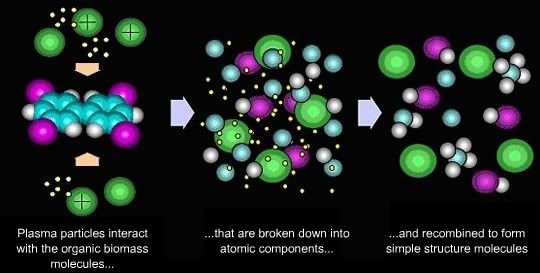
 Taiwan's Feng Chia University has succeeded in boosting the production of hydrogen from biomass to 15 liters per hour, one of the world's highest biohydrogen production rates, a researcher at the university said Friday. The research team managed to produce hydrogen and carbon dioxide (which can be captured and stored) from the fermentation of different strains of anaerobes in a sugar cane-based liquefied mixture. The highest yield was obtained by the Clostridium bacterium.

Tonga sees future in coconut biodiesel
Quicknote biofuel economics
 Small island states often have the disadvantage of being entirely dependent on imported petroleum products. Most of these remote nations have energy intensive economies (often single sector economies, based on tourism, fisheries or agriculture), produce no oil themselves, have limited economic means with which to hedge against oil price fluctuations, which results in over-dependence and a state of permanent energy insecurity. Moreover, as we reported earlier, small island states are the first to experience the real impacts of climate change (in particular sea level changes).
Luckily, many of these islands have natural resources that allow for the production of competitive biofuels (see an overview of biofuels in the Pacific). Some even have the potential to meet their own fuel needs with an excess that can be exported. One such case comes from the Kingdom of Tonga, the Pacific island group that can be found some 2000 kilometres east of Australia. A team of chemical engineers from the Brigham Young University is there to show how oil from coconuts, fig trees or African palm can be transesterified into biodiesel.
As Tonga Now reports, demonstrations of the process are being carried out at local schools by a team of 26 from the Brigham Young University's Chemical Engineering school in Provo, Utah. According to the team leader, Dr. Randy Lewis, they wanted to share their expertise with Tongans, to make them less vulnerable to high oil prices.
Tonga could cut its dependence on petro-diesel by switching to locally produce biodiesel. All it takes is for the islands to stock up on sodium hydroxide and methanol, chemicals needed to transesterify vegetable oil into useable fuel.
A spokesperson for the ministry of Land, Survey and Natural Resources says the island state is considering the production of biodiesel as a source of income for the Kingdom, a potential export opportunity: “If it will be proven cheaper, then it can be produced locally, with a minimum import of methanol and hydroxide. It will be a form of employment, and can be exported to other countries that produce biodiesel, which in turn can boost the exportation level", the spokesperson said.
The island state consists of around 169 islands of which half are inhabited by 100,000 people who are mainly employed in agriculture (65%). The only major cash crops produced on the islands are vanilla, squash and especially copra and coconuts, key to Tonga's largely rural economy. The coconut industry has been plagued by depressed copra prices for years, which is why biodiesel made from coconut oil offers new hope. Moreover, plans to diversify the economy by investing into fisheries and the tourism industry will be facilitated if competitive biofuels can replace imported oil products.
The potential for coconut based biodiesel large enough for Tonga to consider exports. “With many countries and organisations such as the European Union, and the Pacific Islands Forum placing emphasis on renewable energy, the idea of biodiesel using coconut oil seem promising for Tonga,” the spokesperson concluded.
A similar example of the benefits of coconut biodiesel, this time on Vanuatu, is presented in an recent article by the UN's Small Island Nation's website. In Vanuatu, an entrepreneur helps small farmers make a better livelihood by involving them in cottage biodiesel industries. As in Tonga, they cannot count on a steady income and the local economy suffers because of global copra price fluctuations. Biofuels can change this situation [entry ends here].
 bioenergy :: biofuels :: energy :: sustainability :: coconut :: biodiesel :: energy dependence :: small island states :: Tonga ::
Article continues
Small island states often have the disadvantage of being entirely dependent on imported petroleum products. Most of these remote nations have energy intensive economies (often single sector economies, based on tourism, fisheries or agriculture), produce no oil themselves, have limited economic means with which to hedge against oil price fluctuations, which results in over-dependence and a state of permanent energy insecurity. Moreover, as we reported earlier, small island states are the first to experience the real impacts of climate change (in particular sea level changes).Luckily, many of these islands have natural resources that allow for the production of competitive biofuels (see an overview of biofuels in the Pacific). Some even have the potential to meet their own fuel needs with an excess that can be exported. One such case comes from the Kingdom of Tonga, the Pacific island group that can be found some 2000 kilometres east of Australia. A team of chemical engineers from the Brigham Young University is there to show how oil from coconuts, fig trees or African palm can be transesterified into biodiesel.
As Tonga Now reports, demonstrations of the process are being carried out at local schools by a team of 26 from the Brigham Young University's Chemical Engineering school in Provo, Utah. According to the team leader, Dr. Randy Lewis, they wanted to share their expertise with Tongans, to make them less vulnerable to high oil prices.
Tonga could cut its dependence on petro-diesel by switching to locally produce biodiesel. All it takes is for the islands to stock up on sodium hydroxide and methanol, chemicals needed to transesterify vegetable oil into useable fuel.
A spokesperson for the ministry of Land, Survey and Natural Resources says the island state is considering the production of biodiesel as a source of income for the Kingdom, a potential export opportunity: “If it will be proven cheaper, then it can be produced locally, with a minimum import of methanol and hydroxide. It will be a form of employment, and can be exported to other countries that produce biodiesel, which in turn can boost the exportation level", the spokesperson said.
The island state consists of around 169 islands of which half are inhabited by 100,000 people who are mainly employed in agriculture (65%). The only major cash crops produced on the islands are vanilla, squash and especially copra and coconuts, key to Tonga's largely rural economy. The coconut industry has been plagued by depressed copra prices for years, which is why biodiesel made from coconut oil offers new hope. Moreover, plans to diversify the economy by investing into fisheries and the tourism industry will be facilitated if competitive biofuels can replace imported oil products.
The potential for coconut based biodiesel large enough for Tonga to consider exports. “With many countries and organisations such as the European Union, and the Pacific Islands Forum placing emphasis on renewable energy, the idea of biodiesel using coconut oil seem promising for Tonga,” the spokesperson concluded.
A similar example of the benefits of coconut biodiesel, this time on Vanuatu, is presented in an recent article by the UN's Small Island Nation's website. In Vanuatu, an entrepreneur helps small farmers make a better livelihood by involving them in cottage biodiesel industries. As in Tonga, they cannot count on a steady income and the local economy suffers because of global copra price fluctuations. Biofuels can change this situation [entry ends here].
bioenergy :: biofuels :: energy :: sustainability :: coconut :: biodiesel :: energy dependence :: small island states :: Tonga :: Article continues
posted by Biopact team at 4:55 PM
0 comments
links to this post


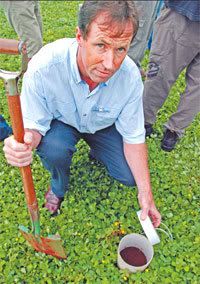 New research confirms the huge and revolutionary potential of soils to reduce greenhouse gases on a large scale, increase agricultural production while at the same time delivering carbon-
 Field trials could be underestimating the potential for cross-pollination between genetically modified and conventional crops, according to new research by the University of Exeter. The research team recommends a new method for predicting the potential for cross-pollination, which takes account of wind speed and direction.
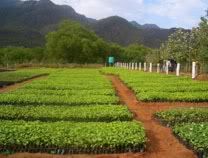 An ambitious goal to halve Sweden's dependence on fossil fuels by 2020 has prompted it to actively seek out countries that can meet its rising demand for biofuels - an increasingly viable fuel alternative to pricey crude oil. Sweden already imports 75% of its ethanol from Brazil (
 Mauri Pekkarinen, the Finnish Trade and Industry minister, says that the share of biofuels in transport should be raised to 30% by 2020, up from the current 10% target. Mr Pekkarinen
  Yesterday, President George Bush outlined a proposal to tackle climate change. The US wants to organise a summit of the 15 biggest polluters to draw up a strategy by 2008 to reduce greenhouse gas emissions. According to the plan, the free market, technology and voluntary, national targets alone should be sufficient to address the planetary crisis. The US did not ratify the Kyoto Protocol, which expires in 2012. Critics say the plan is weak and vague, looks at the short term only, ignores years of ongoing multilateral efforts, will delay concrete action and rejects measurable and enforceable targets.
 Researchers from the Universidad Autónoma del Estado de México (UAEM) and its Laboratorio de Síntesis y Caracterización de Materiales, recently investigated the electrical properties of composites based on acrylated-epoxidized soybean oil (AESO)-co-butyl methacrylate (BMA) with carbon black (CB). Their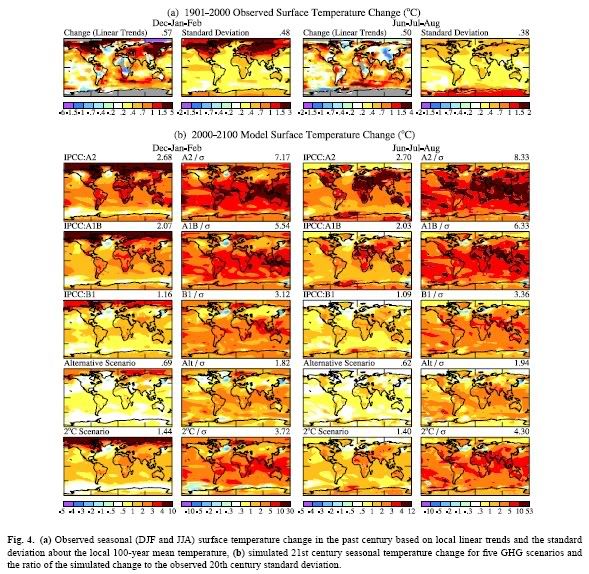
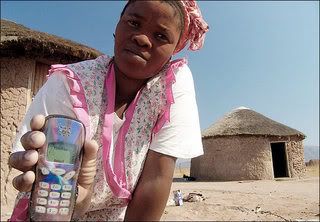 A young Nigerian entrepreneur, Husainin Solomon, has risen up to the challenge to satisfy the quest of mobile telecom operators’ search for cheap energy in the country, by producing biofuels as a competitive and green alternative fuel to power base stations.
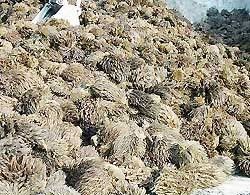 Palm oil may have a bad reputation for the role it plays in tropical deforestation, but is definitely here to stay, as the industry is highly profitable and offers a ready replacement for petroleum products, prices of which will keep rising. However, in order to limit the expansion of plantations, it is crucial to get the most out of each hectare of the plantations that already exist. One way to do so is by recuperating the vast waste-streams that result from the processing of palm fruits. If these waste streams can be turned into value-added products, the pace of the expansion of new plantations may be somewhat slowed down.
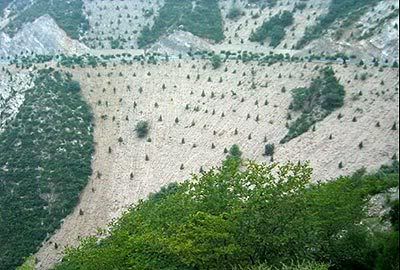 Over the past few years, many research efforts have been undertaken to make use of these waste products. Some of those look at utilizing the biomass as an energy source for green electricity and power (to power palm oil mills) or as a feedstock for the production of second-generation biofuels. Others have shown that a whole range of bio-based products can be made from the residues - products such as renewable and biodegradable plastics, packaging, paper and specialty products such as geo-textiles (photo).
 The European Union (EU) and the Organization of the Petroleum Exporting Countries (OPEC) held a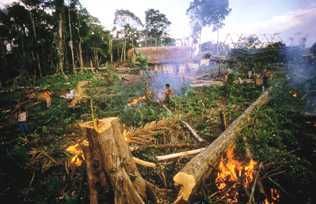
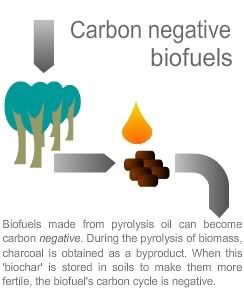 In a very interesting development, Dynamotive USA, a wholly-owned subsidiary of
  The Brazilian government is mulling the hike of an obligatory 23% ethanol mix in all gasoline to 25% with increased urgency as local prices plunge, an Agricultural Ministry official told
  The Brazilian government has urged the new president of Nigeria to include a biofuel development plan for the troubled Delta region in his program. President Umaru Yar´Adua, who takes office today, has indeed done so and has announced that solving the social crisis in the Niger Delta is his priority.
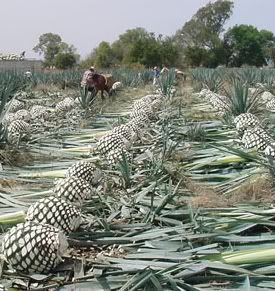 Mexican farmers who grow blue agave for the production of tequila have been plagued by low prices for years. As maize (corn) prices are booming because of the ethanol market in the U.S., they are now abandoning the blue agave en masse, to jump on the opportunity to grow maize.
 Despite big pop concerts and promises to dramatically boost aid, rich nations have cut contributions to Africa and ignored vows to improve trade conditions for the continent,
 Brazil is becoming very creative and serious about its intentions to help Africa tap its vast biofuel potential. The green energy leader recently established an agronomic research center in Ghana, aimed at transferring knowledge on bioenergy and technology, and a host of bilateral agreements in the sector were signed (
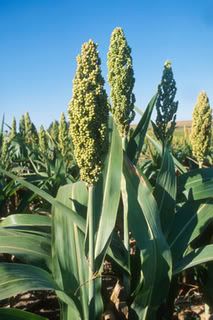 Chevron Corporation and the Texas A&M Agriculture and Engineering BioEnergy Alliance (Texas A&M BioEnergy Alliance)
  Previously we had a look at the work of German scientists from the Max Planck Institute who developed a simple but ingenious and efficient way to produce renewable coal from biomass, called
  In
In 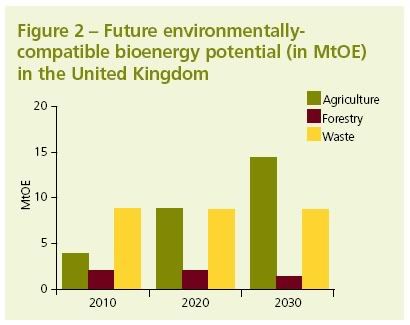
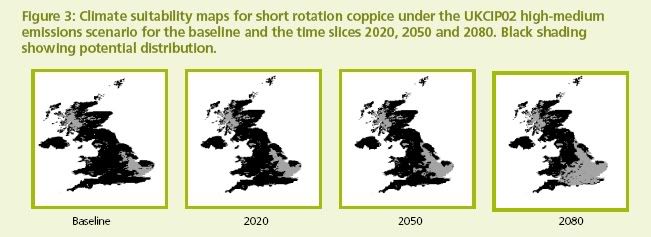

 Brazil has been very active again these past few days, with some interesting developments in the field of bilateral cooperation, work on biofuels infrastructures (a second ethanol pipeline and waterway infrastructures) and Petrobras' announcement that biofuels have become one of its main strategic sectors, especially the development of its proprietary fuel known as 'H-Bio'. A company's spokesman has also elaborated on Petrobras' plans to further help Africa (in particular Nigeria) to kickstart a biofuels industry. Finally, the rapid mechanisation of sugar cane harvesting in Brazil is resulting in a growing number of cane cutters losing their jobs. The question of finding alternative forms of employment for them is becoming an important issue of discussion.
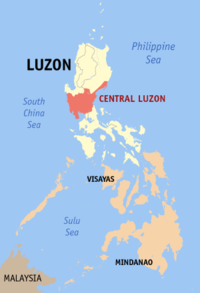 The Philippines are rapidly becoming an attractive investment hub for the South East and East Asian renewable fuel market. The country's recent biofuel legislation in combination with an active effort to attract foreign direct investment is drawing in companies from China, Japan, the EU and the US. The island state's suitable agro-climatic conditions and its availability of land and labor plays a key role, as does its central geographical position in the region.








Saturday, June 02, 2007
The bioeconomy at work: new additive strengthens biodegradable plastics
However, such plastics are not yet optimal for daily use, as they are slightly more fragile than their petroleum-based rivals. DuPont now announces the market introduction of Biomax Strong 120, a polymer additive that tackles the problem by improving the performance of bio-based polylactic acid (PLA) packaging.
The additive toughens PLA packaging materials while maintaining its compliance with food contact requirements in the US and in Europe. The company introduced a similar additive in August 2006 for non-food applications.
As a performance modifier in PLA, both grades of Biomax Strong enhance impact strength, flexibility and melt stability - especially important in rigid applications such as cast sheets for thermoforming and injection molding. When Biomax Strong is used at recommended levels (1-5 wt%) in PLA, packaging made with the additive outperforms traditional products with minimal impact on haze or transparency.
Some companies predict that the market for bio-based plastics will grow by about 20 percent a year as the products are an alternative to petroleum-based packaging such as the widely-used polyethylene terephthalate (PET). In Europe, the bio-based economy also enjoys strong support from citizens (earlier post) who are becoming increasingly environmentally conscious. The bioplastic shopping bag and the plant-based "PET-bottle" are the most obvious symbols of this transition to the bioeconomy:
On the front of PLA-based bioplastics, NatureWorks is one of the main movers behind the biodegradable packaging trend. Companies like US-based Naturally Iowa have been using PLA for packaging products like organic milk. Retailers like Delhaize in Belgium and Auchan in France have also been testing PLA for various food packaging.
Demand for bioplastics in Europe experienced its first boom last year, according to a survey by the European Bioplastics Association, which has about 70 members (previous post). Currently bioplastics account for less than one percent of the European plastics market. But serious investments and research programs are underway, with the EU's SustainPack project, the largest of its kind, promising to bring radically new and highly competitive forms of bio-based packaging to market between 2010 and 2015 (earlier post).
Article continues
posted by Biopact team at 6:21 PM 0 comments links to this post
