
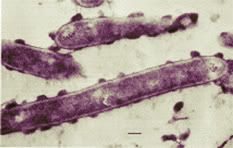
 Taiwan's Feng Chia University has succeeded in boosting the production of hydrogen from biomass to 15 liters per hour, one of the world's highest biohydrogen production rates, a researcher at the university said Friday. The research team managed to produce hydrogen and carbon dioxide (which can be captured and stored) from the fermentation of different strains of anaerobes in a sugar cane-based liquefied mixture. The highest yield was obtained by the Clostridium bacterium.

Corn ethanol does not reduce greenhouse gas emissions - report
 The Canadian federal government has invested massively in biofuels made from local crops, such as corn or rapeseed. But the effor will be of little benefit in cutting dependence on fossil fuels or reducing greenhouse emissions, suggests a study by the Canadian Library of Parliament.
The report casts doubt on one of the biggest green initiatives in the Conservative budget - a US$1.5-billion investment over seven years to promote renewable fuels such as corn-based ethanol. Ottawa has introduced a regulation requiring that Canadian gasoline consist of five per cent renewable content by 2010. It also intends to require that diesel fuel and heating oil contain two per cent renewable content by 2012.
However, a study by Frederic Forge of the library's science and technology division says regulations to promote biofuels will have "relatively minor impact" on reducing greenhouse emissions across Canada.
"In fact, if 10 per cent of the fuel used were corn-based ethanol (in other words, if the E-10 blend were used in all vehicles) Canada's greenhouse gas emissions would drop by approximately one per cent," says the report.
The findings once again show what other researchers have found before (here and here): both the energy balance and the greenhouse gas emissions balance of biofuels made from crops grown in the North, is mediocre.
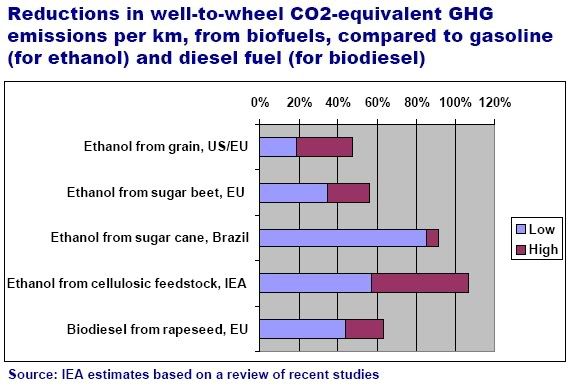
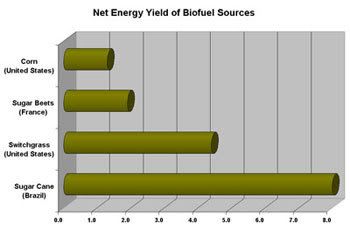 As usual, we feel obliged to refer to the energy and GHG balance of ethanol produced in the South (see graph 1, click to enlarge). Brazilian sugarcane ethanol reduces CO2 emissions by 85% (low estimate) to 90% (high estimate) on a well-to-wheel (farm-to-tailpipe) basis. For corn ethanol, estimates differ, but some even suggest a negative GHG balance. Likewise, the energy balance of Brazilian ethanol is between 8 and 10, that of corn only between 1 and 1.2 (here too, some have found a negative balance) (see graph 2, click to enlarge). The picture remains largely the same with the introduction of cellulosic ethanol.
Transporting biofuels from the South to the North (in tankers), does not alter the energy and GHG balance in any significant way (earlier post). In short, if Canada really wants to help reduce its greenhouse gas emissions, it should import biofuels from the Global South instead. That is what the experts say (earlier post and here):
 biomass :: bioenergy :: biofuels :: energy :: sustainability :: ethanol :: climate change :: greenhouse gas emissions :: energy balance ::
 The Canadian report also show that locally produced biofuels won't have much impact in reducing dependence on oil and gas: "Global production is still too small and the need for raw materials is still too high for biofuels to have a significant impact on the fuel market and be able to compete with fossil fuels."
It cites an article in New Scientist as concluding that Canada would have to use 36 per cent of its farmland to produce enough biofuels to replace 10 per cent of the fuels now used in transportation.
The drive to increase production of biofuels is also under way in the United States and other countries, leading to concern that global food prices could rise as farmland is diverted from food to energy production.
"Some observers believe that there is already competition between the two markets: according to the United Nations Food and Agriculture Organization, the rising demand for ethanol derived from corn is the main reason for the decline in world grain stocks during the first half of 2006."
The study calls for greater focus on biodiesel, which in Canada is manufactured mainly from canola, and which brings a better payoff than ethanol in reduced emissions.
The author also underlines the potential of cellulosic ethanol, which is made of waste products like straw and wood chips, rather than from food crops. Iogen, an Ottawa-based company, is a world leader in this technology, and is currently negotiating to build its first commercial plant.
Asked about the study outside the House of Commons on Friday, Environment Minister John Baird said: "I think there's an issue between the tailpipe and the whole cycle and that's, I think, the substance of the report."
He said he is a supporter of ethanol and insisted that it cuts pollution: "If you look at the cycle base, the entire cycle, I think it does."
Baird said he is enthusiastic about cellulosic ethanol: "I'm very big on Iogen's technology. Because it doesn't just use the corn, it uses the entire stock, and it's a world leader."
The budget provides $500 million for "next generation" biofuels, and it is expected that this will be used in part to support the Iogen process.
More information:
Frederic Forge: Biofuels - An Energy, Environmental or Agricultural Policy? [*.hmtl, or *.pdf version], Science and Technology Division, Library of Parliament, Canada, 8 February 2007
Canada.com: Ethanol investments won't do much to cut greenhouse gas emissions: report - March 30, 2007.
Globe & Mail: Ottawa's biofuel plan will have 'minor impact,' study says.Increased use of renewable resources won't dramatically reduce emissions: report - March 30, 2007
Article continues
posted by Biopact team at 1:42 PM
5 comments
links to this post


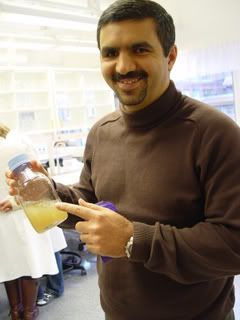 A research team at University College of Borås in Sweden, headed by Professor Mohammad Taherzadeh, in collaboration with scientists from Göteborg University has made a unique
 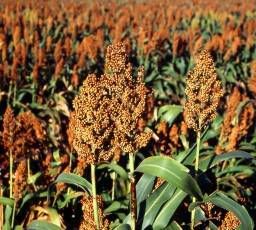 The Philippine Department of Agriculture (DA) announced it will conduct planting trials at its research center in Capiz - in the Western Visayas province - to study the adaptability of high yield sweet sorghum varieties to local conditions. The varieties were developed by the International Crops Research Institute for the Semi-Arid Tropics (ICRISAT) (
 Brazil's President Luiz Inácio Lula da Silva will be visiting with President Bush tomorrow in Camp David, to follow up on the biofuel partnership both nations created (
 The advantage of bioenergy is that it offers a multitude of different energy products (gaseous, liquid, solid fuels), derived from a great variety of biomass resources that are transformed into finished products by a considerable and growing number of different technologies. The field of bioenergy deals with a range of interacting scientific disciplines, from biology and agronomy, to chemistry, physics and even the social sciences. No wonder this complexity results in a vocabulary of specific terms that can be quite overwhelming to those who are new to the subject. 'BTL', 'Fischer-tropsch', 'transesterification', 'short-rotation coppice', 'thermal depolymerisation', 'synthetic biofuels', 'bio-energy with carbon storage', 'biohydrogen', 'pyrolisis oil', 'biobutanol'... it is easy to lose your way in this dense jungle of concepts, technologies and terms.
 The World Bank can help Brazil export its expertise for making sugarcane ethanol to developing countries in Africa and elsewhere, the Bank's vice-president for Latin America thinks. "Brazil sees (sharing technology) as a way of helping to build an ethanol market in the world," Pamela Cox
  Late last year, Ghana hosted an UNCTAD-led international workshop on the development of a biofuels industry in West-Africa, which resulted in the establishment of a common fund, to which the Indian government contributed US$250 million (
 Chinese scientists are working on new technologies and breeding oil-rich rapeseed varieties to fuel the People's Republic fast-growing economy with biofuels.
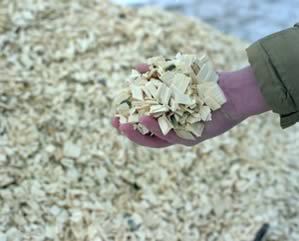 A plan to boost the supply of environment-friendly woodfuel to cut greenhouse gases and produce enough energy to power 250,000 homes was unveiled by Britain's Forestry Commission. The commission developed the strategy in response to last April's Biomass Task Force report, taking into account the recommendations of the
 At the Biopact, we try to take a cautious position in the debate about the environmental and
 The U.S. Energy Department
  Earlier we referred to so-called "mermaid's tears" (picture), fine petroleum-based plastic particles that pollute our oceans and enter the food chain (
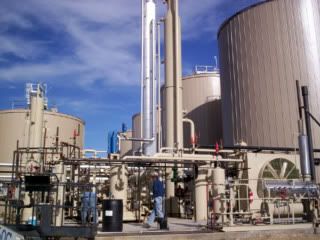 Already practised in Europe on a relatively large scale (
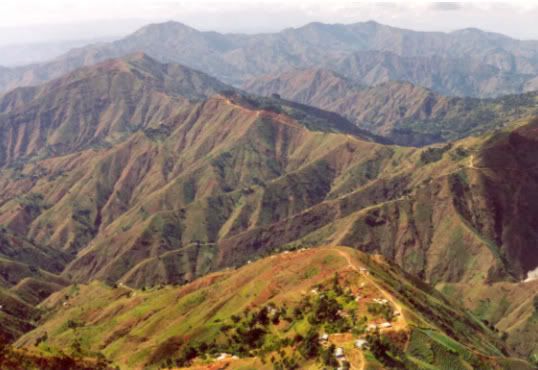 In a courageous effort, a French group has started producing biodiesel in Haïti, one of the poorest countries in the Western hemisphere. Years of mismanagement, political instability, and economic decline have led the hilly island state to the brink of environmental collapse. Haïti is plagued by degradation on an unprecedented scale, with virtually all forest gone, and with devastating floods, heavy soil erosion and declining agricultural yields as a result (a good overview of this dramatic situation can be found in Jared Diamond's book
  Several projects are underway to build genuinely green cars that not only run on biofuels, but that are made from plant-based parts as well. Who needs oil when you can go 'bio' all the way? A
  Yesterday's announcement of a 30 year ethanol supply agreement between Brazilian producer Sao Martinho and Japan's Mitsubishi Corporation (
 A very exciting bit of news for those of us who track the rapid developments in the bioeconomy: researchers at Saint Louis University in the U.S. have

 The European biodiesel industry is going through a deep crisis. In several countries, including in biodiesel leader Germany, generous tax exemptions are being lifted and the green fuel now has to compete on the free market with petro-diesel. None of the major biodiesel producers on the continent succeeds in producing an affordable fuel. The result: demand has dropped considerably and plants are operating well below their capacity. Some are warning the industry faces collapse.

 Divisions of two of Germany's largest research organisations, the
 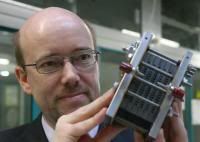 Prof. Dr.-Ing. Kai Sundmacher, director of the Max-Planck-Institut, outlines the goals of the project: to design process and production steps that result in efficient biomass gasification to tap the hydrogen that is contained in the resource, and to analyse the optimal use of the different products from gasified biomass for the production of bio-electricity. The hydrogen-carbon rich gas mixture obtained from such gasification processes must be upgraded and purified first before it can be utilized in fuel cells. Optimisation of this process is a new terrain that is only beginning to be researched. Gasification of a great variety of biomass types results in different gas mixtures, the properties of which will be analysed. Three institutes are joining forces to achieve these goals:








Saturday, March 31, 2007
Pre-combustion CO2 capture from biogas - the way forward?
At the Biopact, we follow these developments, because CCS can be applied to biofuels as well. Whereas CCS applied to fossil fuels results in slightly positive or carbon neutral energy, 'Bio-energy with Carbon Storage' (BECS) systems are radically carbon negative. Scientists looked at BECS in the context of so-called 'Abrupt Climate Change' (ACC), which is basically an apocalyptic global warming scenario. In case ACC were to occur, BECS would be one of the only realistic mitigation options, because the system allows societies to reduce CO2 emissions radically while still using energy at the same time. BECS is the only carbon negative energy system in existence. But for BECS to work, CCS technologies must be reliable and commercially viable. And this is where a major problem arises.
CCS costs
Several carbon capture technologies exist, only one of which stands out for being very simple, scaleable, tested and low-cost, namely CO2 capture from biogas fermenters. The Biopact will present this route, which is part of a broader concept, to the EU's public consultation on CCS.
Broadly speaking, there are two different stages at which the CO2 from fuels can be captured: either before the fuel is used in power plants (pre-combustion capture) or after burning it (post-combustion capture from flue gas).
The main problem with post-combustion capture is the low concentration of CO2 in the flue gas. Depending on which industry is concerned, this concentration can range between a few percent only to 15%. Other gases such as oxygen, water vapour or nitrogen also occur in flue gas. It would be out of the question to seek to compress them all for storage, from the standpoint of both the energy costs and the storage capacity. Separation methods are thus required so as to trap the CO2 preferentially, so that it can be compressed and make optimal use of the storage capacity of a sequestration site.
Within the post-combustion category the following CO2 capture techniques can be distinguished:
- absorption with solvents (generally amines)
- calcium cycle separation: quicklime-based capture that yields limestone, which is then heated, thereby releasing CO2 and producing quicklime again for recycling.
- cryogenic separation: based on solidifying CO2 by frosting it to separate it out; the low concentration of CO2 in the flue gas makes this uneconomical
- membrane separation: work is required on developing the membranes themselves, on their optimisation for large-scale generation conditions, and on minimising the energy required for separation
- adsorption: the fixation of CO2 molecules on a surface. The adsorbing material (mostly zeolites) undergoes a series of pressure or temperature variations to store/release CO2 as required
- Oxy-fuel combustion capture: not CO2 capture in the true sense of the term; the objective is to increase the CO2 fraction in the flue gas to 90% by performing combustion in the presence of pure oxygen. However, separating out the oxygen from air, performed mainly using the cryogenic principle, is both costly and energy-consuming.
The goal of pre-combustion capture techniques is to trap the carbon prior to combustion: the fuel is converted on entering the installation into synthesis gas – a mixture of carbon monoxide (CO) and hydrogen, through gasification, shift reaction or partial oxidation, after which the CO is separated mainly via:- steam reforming in the presence of water: the CO present in the mixture reacts with the water during the shift conversion stage to form CO2 and hydrogen. The CO2 is then separated from the hydrogen, which can be used to produce energy (electricity or heat) without giving off CO2
CO2 capture from biogasAll the above technologies are currently too costly to make CCS commercially viable (see table). The alternative suggested by the Biopact is significantly lower-cost and consists of pre-combustion CO2 capture from anaerobically fermented biogas:
The advantage of biogas is the fact that the fermentation of biomass results in a gas the CO2 fraction of which is much larger than that of flue gas. Depending on the feedstocks and the production process, biogas contains between 35 and 45% of CO2. The remainder is methane (CH4), with some trace gases and elements. This large CO2 fraction makes pre-combustion CO2 capture technologies commercially viable. Comparisons show that CO2 capture from biogas is between 4 and 6 times less costly than other pre- and post-combustion separation techniques.
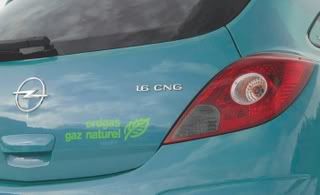
To put it in simple terms: biogas can be purified, the CO2 stored and the resulting high quality methane used as an ultra-clean and carbon-negative biofuel. The biomethane can be used either in power plants, or in CNG-capable vehicles.
Contrary to other CCS strategies, our system is independent of power-plants (because the CO2 capture occurs before the combustion of the methane) and thus independent of heavily urbanised or populated regions (where power plants are located). The system can be located close to the sequestration site, so that CO2 transport costs are reduced significantly too. On the other hand, the carbon-negative biomethane resulting from the process would then have to be shipped to power plants. This can be done by (existing) pipelines or by LNG tankers.
The Biopact is researching possible sites for this system - even though our expertise on this front is quite limited. The ideal-type system would look like this:
1. a sequestration site close to an existing LNG facility (possibly nearby depleted natural gas fields or oil fields where the CO2 can be stored while enhancing oil recovery)
2. dedicated energy crop plantations would be established nearby
3. the biomass - which sucks up atmospheric CO2 - is anaerobically fermented into biogas
4. the CO2 fraction is separated, transported (piped) and injected into the sequestration site (the gas field)
5. the pure biomethane (99% CH4) is liquefied at the existing LNG facility, and exported to world markets
6. as a carbon negative gas, it would fetch premium prices, provided a global market for CO2 comes into existence
Alternatively - but this obviously remains a concept that would require serious investments - we start from scratch and build a new LNG facility close to a near-shore/on-shore sequestration site where our biogas system would be located. The ultra-clean, carbon negative biomethane would then be liquefied and shipped to world markets.
Take into consideration that biogas made from dedicated energy crops in large-scale production facilities in the tropics is expected to be competitive with natural gas (if natural gas prices stay as high as they are today, there would even be a serious margin, making biogas considerably cheaper).
To fill the largest LNG tanker currently on the market - with a capacity of 250,000 tons of liquefied natural gas, equivalent to around 300 million cubic meters of natural gas - with pure biomethane, one would need between 450 and 650 million cubic meters of biogas. This amount can be obtained from around 60,000 hectares of cassava, or 40,000 hectares of sugarcane.
Comparing different 'BECS' systems
'Biogas with carbon storage' can be considered to be a BECS system that results in a biofuel that can be used in power plants as well as in automotive applications (CNG-capable vehicles, fuel cell vehicles). But overall, the carbon capture stage would be considerably lower-cost than BECS relying on solid biofuels (wood co-fired in coal plants, or in dedicated biomass power plants). Because with solid biofuels, only post-combustion CO2 capture is feasible or, alternatively, the expensive pre-combustion capture techniques based on gasification.
Similarly, an alternative clean carbon-negative automotive biofuel would be obtained from biomass-to-liquids, the CO2 of which is captured in the pre-combustion stage; biomass would be gasified, the CO from this syngas would be removed by steam reforming, after which the remaning hydrogen-rich gas is synthesised via the Fischer-Tropsch process into so-called 'synthetic biofuels'. The problem is that this pre-combustion CO2 separation is far more expensive than CO2 removal from biogas.
Finally, a word on the potential of biogas. According to a recent study by the Institut für Energetik und Umwelt, based in Leipzig, and by the Öko-Instituts Darmstadt, the gas can be produced on a very large scale. The study shows that the EU can produce 500 billion cubic meters of natural gas equivalent biogas per annum by 2020, enough to displace all imports of Russian natural gas (earlier post).
In the tropics and subtropics, production would be more cost-effective and energy efficient. By feeding biomethane produced in the South into existing LNG export hubs (such as those in Nigeria, Malaysia, Indonesia, Papua New Guinea (planned), Brunei, Equatorial Guinea (planned), Venezuela, Bolivia (planned) or Angola (planned)), it can be shipped to LNG terminals in the North and fetch premium prices. Purification and liquefaction of biogas into renewable LNG is already a commercial reality in the US.
Conclusion
The system as we described it here, is only at the conceptual stage. One aspect of the carbon negative energy system, the cost-sensitive CO2 capture process, is relatively low-cost compared to other techniques associated with the use of fossil fuels or with solid biofuels. The Biopact is writing an introductory dossier on the concept, and will present it to the EU's public consultation on CCS.
More information:
On the low costs of geological assessments, see:
S. J. Friedmann, J. Dooley, H. Held, O. Edenhofer, "The low cost of geological assessment for underground CO2 storage: Policy and economic implications", [*.pdf] Lawrence Livermore National Lab, Energy & Conversion Management, February 15, 2005.
On the cost of different carbon capture techniques:
Mahasenan N, Brown DR. “Beyond the Big Picture: Characterization of CO2-laden Streams and Implications for Capture Technologies”. In: Proceedings of 7th International Conference on Greenhouse Gas Control Technologies. Volume 1: Peer-Reviewed Papers and Plenary Presentations, IEA Greenhouse Gas Programme, Cheltenham, UK, 2004
On CCS in general:
The IEA's CO2 Capture and Storage website, part of the IEA Greenhouse Gas R&D Programme.
UK Carbon Capture and Storage Consortium.
IEA's Clean Coal Center: Carbon Capture and Storage (Sequestration).
EurActiv dossier on CCS.
On the EU's public consultation round on CCS:
European Commission, DG Environment: "Capturing and storing CO2 underground - Should we be concerned?" (public consultation website).
Article continues
posted by Biopact team at 5:17 PM 5 comments links to this post
