
 A project to evaluate barley’s potential in Canada’s rapidly evolving biofuels industry has received funding of $262,000 from the Biofuels Opportunities for Producers Initiative (BOPI).
Western Barley Growers Association [*.pdf] - May 27, 2007. A project to evaluate barley’s potential in Canada’s rapidly evolving biofuels industry has received funding of $262,000 from the Biofuels Opportunities for Producers Initiative (BOPI).
Western Barley Growers Association [*.pdf] - May 27, 2007.
PNOC-Alternative Fuels Corporation (PNOC-AFC), the biofuel unit of Philippine National Oil Company, is planning to undertake an initial public offering next year or in 2009 so it can have its own cash and no longer rely on its parent for funding of biofuels projects.
Manila Bulletin - May 27, 2007.
TMO Renewables Limited, a producer of ethanol from biomass, has licensed the ERGO bioinformatics software developed and maintained by Integrated Genomics. TMO will utilize the genome analysis tools for gene annotation, metabolic reconstruction and enzyme data-mining as well as comparative genomics. The platform will enable the company to further understand and exploit its thermophilic strains used for the conversion of biomass into fuel.
CheckBiotech - May 25, 2007.
Melbourne-based Plantic Technologies Ltd., a company that makes biodegradable plastics from plants, said 20 million pounds (€29/US$39 million) it raised by selling shares on London's AIM will help pay for its first production line in Europe.
Plantic Technologies [*.pdf] - May 25, 2007.
Shell Hydrogen LLC and Virent Energy Systems have announced a five-year joint development agreement to develop further and commercialize Virent's BioForming technology platform for the production of hydrogen from biomass.
Virent Energy Systems [*.pdf] - May 24, 2007.
Spanish energy and engineering group Abengoa will spend more than €1 billion (US$1.35 billion) over the next three years to boost its bioethanol production, Chairman Javier Salgado said on Tuesday. The firm is studying building four new plants in Europe and another four in the United States.
Reuters - May 23, 2007.
According to The Nikkei, Toyota is about to introduce flex-fuel cars in Brazil, at a time when 8 out of 10 new cars sold in the country are already flex fuel. Brazilians prefer ethanol because it is about half the price of gasoline.
Forbes - May 22, 2007.
Virgin Trains is conducting biodiesel tests with one of its diesel engines and will be running a Voyager train on a 20 percent biodiesel blend in the summer.
Virgin Trains Media Room - May 22, 2007.
Australian mining and earthmoving contractor Piacentini & Son will use biodiesel from South Perth's Australian Renewable Fuels across its entire fleet, with plans to purchase up to 8 million litres from the company in the next 12 months. Tests with B20 began in October 2006 and Piacentinis reports very positive results for economy, power and maintenance.
Western Australia Business News - May 22, 2007.
Malaysia's Plantation Industries and Commodities Minister Datuk Peter Chin Fah Kui announces he will head a delegation to the EU in June, "to counter European anti-palm oil activists on their own home ground". The South East Asian palm oil industry is seen by many European civil society organisations and policy makers as unsustainable and responsible for heavy deforestation.
Malaysia Star - May 20, 2007.
Paraguay and Brazil kick off a top-level seminar on biofuels, cooperation on which they see as 'strategic' from an energy security perspective. 'Biocombustiveis Paraguai-Brasil: Integração, Produção e Oportunidade de Negócios' is a top-level meeting bringing together the leaders of both countries as well as energy and agricultural experts. The aim is to internationalise the biofuels industry and to use it as a tool to strengthen regional integration and South-South cooperation.
PanoramaBrasil [*Portuguese] - May 19, 2007.
Portugal's Galp Energia SGPS and Petrobras SA have signed a memorandum of understanding to set up a biofuels joint venture. The joint venture will undertake technical and financial feasibility studies to set up a plant in Brazil to export biofuels to Portugal.
Forbes - May 19, 2007.
The Cypriot parliament has rejected an amendment by President Papadopoulos on the law regarding the use of biofuels that contain genetically modified substances. The amendment called for an alteration in the law that currently did not allow the import or use of biofuels that had been produced using GM substances, something that goes against a recent EU Directive on GMOs.
Cyprus Mail - May 18, 2007.
According to Salvador Rivas, the director for Non-Conventional Energy at the Dominican Republic's Industry and Commerce Ministry, a group of companies from Brazil wants to invest more than 100 million dollars to produce ethanol in the country, both for local consumption and export to the United States.
Dominican Today - May 16, 2007.
EWE AG, a German multi-service energy company, has started construction on a plant aimed at purifying biogas so that it can be fed into the natural gas grid. Before the end of the year, EWE AG will be selling the biogas to end users via its subsidiary EWE Naturwatt.
Solarthemen [*German] - May 16, 2007.
Scania will introduce an ethanol-fueled hybrid bus concept at the UITP public transport congress in Helsinki 21-24 May 2007. The full-size low-floor city bus is designed to cut fossil CO2 emissions by up to 90% when running on the ethanol blend and reduce fuel consumption by at least 25%.
GreenCarCongress - May 16, 2007.
A report by the NGO Christian Aid predicts there may be 1 billion climate refugees and migrants by 2050. It shows the effects of conflicts on populations in poor countries and draws parallels with the situation as it could develop because of climate change.
Christian Aid - May 14, 2007.
Dutch multinational oil group Rompetrol, also known as TRG, has entered the biofuel market in France in conjunction with its French subsidiary Dyneff. It hopes to equip approximately 30 filling stations to provide superethanol E85 distribution to French consumers by the end of 2007.
Energy Business Review - May 13, 2007.
A group of British organisations launches the National Forum on Bio-Methane as a Road Transport Fuel. Bio-methane or biogas is widely regarded as the cleanest of all transport fuels, even cleaner than hydrogen or electric vehicles. Several EU projects across the Union have shown its viability. The UK forum was lauched at the Naturally Gas conference on 1st May 2007 in Loughborough, which was hosted by Cenex in partnership with the NSCA and the Natural Gas Vehicle Association.
NSCA - May 11, 2007.
We reported earlier on Dynamotive and Tecna SA's initiative to build 6 bio-oil plants in the Argentinian province of Corrientes (here). Dynamotive has now officially confirmed this news.
Dynamotive - May 11, 2007.
Nigeria launches a national biofuels feasibility study that will look at the potential to link the agricultural sector to the automotive fuels sector. Tim Gbugu, project leader, said "if we are able to link agriculture, we will have large employment opportunity for the sustenance of this country, we have vast land that can be utilised".
This Day Onlin (Lagos) - May 9, 2007.
Brazilian President Luiz Inácio Lula da Silva meets with the CEO of Portuguese energy company Galp Energia, which will sign a biofuel cooperation agreement with Brazilian state-owned oil company Petrobras.
GP1 (*Portuguese) - May 9, 2007.
The BBC has an interesting story on how biodiesel made from coconut oil is taking the pacific island of Bougainville by storm. Small refineries turn the oil into an affordable fuel that replaces costly imported petroleum products.
BBC - May 8, 2007.
Indian car manufacturer Mahindra & Mahindra is set to launch its first B100-powered vehicles for commercial use by this year-end. The company is confident of fitting the new engines in all its existing models.
Sify - May 8, 2007.
The Biofuels Act of the Philippines has come into effect today. The law requires all oil firms in the country to blend 2% biodiesel (most often coconut-methyl ester) in their diesel products.
AHN - May 7, 2007.
Successful tests based on EU-criteria result in approval of 5 new maize hybrids that were developed as dedicated biogas crops [*German].
Veredlungsproduktion - May 6, 2007.
With funding from the U.S. Department of Labor Workforce Innovation for Regional Economic Development (WIRED), Michigan State University intends to open a training facility dedicated to students and workers who want to start a career in the State's growing bioeconomy.
Michigan State University - May 4, 2007.
Researchers from the Texas A&M University have presented a "giant" sorghum variety for the production of ethanol. The crop is drought-tolerant and yields high amounts of ethanol.
Texas A & M - May 3, 2007.
C-Tran, the public transportation system serving Southwest Washington and parts of Portland, has converted its 97-bus fleet and other diesel vehicles to run on a blend of 20% biodiesel beginning 1 May from its current fleet-wide use of B5.
Automotive World - May 3, 2007.
The Institut Français du Pétrole (IFP) and France's largest research organisation, the CNRS, have signed a framework-agreement to cooperate on the development of new energy technologies, including research into biomass based fuels and products, as well as carbon capture and storage technologies.
CNRS - April 30, 2007.
One of India's largest state-owned bus companies, the Andra Pradesh State Road Transport Corporation is to use biodiesel in one depot of each of the 23 districts of the state. The company operates some 22,000 buses that use 330 million liters of diesel per year.
Times of India - April 30, 2007.
Indian sugar producers face surpluses after a bumper harvest and low prices. Diverting excess sugar into the ethanol industry now becomes more attractive. India is the world's second largest sugar producer.
NDTVProfit - April 30, 2007.
Brazilian President Luiz Inacio Lula da Silva and his Chilean counterpart Michelle Bachelet on Thursday signed a biofuel cooperation agreement designed to share Brazil's experience in ethanol production and help Chile develop biofuels and fuel which Lula seeks to promote in other countries. More info to follow.
People's Daily Online - April 27, 2007.
Italy's Benetton plans to build a €61 million wood processing and biomass pellet production factory Nagyatád (southwest Hungary). The plant will be powered by biogas.
Budapest Sun - April 27, 2007.
Cargill is to build an ethanol plant in the Magdeburger Börde, located on the river Elbe, Germany. The facility, which will be integrated into existing starch processing plant, will have an annual capacity of 100,000 cubic meters and use grain as its feedstock.
FIF - April 26, 2007.
Wärtsilä Corporation was awarded a contract by the Belgian independent power producer Renogen S.A. to supply a second biomass-fuelled combined heat and power plant in the municipality of Amel in the Ardennes, Belgium. The new plant will have a net electrical power output of 3.29 MWe, and a thermal output of up to 10 MWth for district heating. The electrical output in condensing operation is 5.3 MWe.
Kauppalehti - April 25, 2007.

|
|
|
|
|

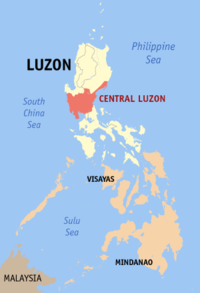 The Philippines are rapidly becoming an attractive investment hub for the South East and East Asian renewable fuel market. The country's recent biofuel legislation in combination with an active effort to attract foreign direct investment is drawing in companies from China, Japan, the EU and the US. The island state's suitable agro-climatic conditions and its availability of land and labor plays a key role, as does its central geographical position in the region.
 bioenergy :: biofuels :: energy :: sustainability :: sugar cane :: ethanol :: biomass :: South Korea :: Japan :: Philippines ::







0 Comments:
Post a Comment
Links to this post:
Create a Link
<< Home