
 Taiwan's Feng Chia University has succeeded in boosting the production of hydrogen from biomass to 15 liters per hour, one of the world's highest biohydrogen production rates, a researcher at the university said Friday. The research team managed to produce hydrogen and carbon dioxide (which can be captured and stored) from the fermentation of different strains of anaerobes in a sugar cane-based liquefied mixture. The highest yield was obtained by the Clostridium bacterium.

Chile and the U.S. to cooperate on biofuels development
U.S. Treasury Secretary Henry Paulson and his delegation of U.S. Department of Energy officials conclude their tour of South America by signing [*Spanish] a biofuels research and development cooperation agreement with Chile. Earlier they visited Brazil where the previously signed U.S.-Brazil ethanol agreement was further discussed. However, Brazil did not succeed in persuading the American delegation to plea for a reduction of U.S. farm subsidies.
Paulson met with Chilean president Michelle Bachelet and stressed that the U.S. bioenergy initiative is focused on the entire Latin-American region. It will be managed by the Department of Energy (USDOE).
Noting that a number of Latin American nations struggle to meet energy demand, Paulson said the region has a common interest in sharing technology and developing new energy sources - especially clean and renewable ones.
In Chile, the U.S. wants to help develop biofuel research and production from new, non-food crops that thrive in arid environments. Both countries could greatly benefit from this, as both in Chile and the U.S., new farmland is scarce, but semi-arid zones are plenty. Technologies will be shared to convert biomass into liquid fuels and other biomaterials.
Chile currently suffers under a great energy deficit, and has had to take emergency measures to get both natural gas and liquid fuels supplied from neighboring countries. Lack of investment in energy infrastructures during previous governments is partly to blame. High energy costs and energy dependence are factors as well.
For the U.S., Paulson stressed, energy security is not only a national issue; the security of supplies in other countries is important for geostrategic reasons. "All of us stand to benefit from security of energy supplies", Paulson said.
Some analysts see Washington's biofuels initiative in the region as a way to counter the rising influence of Venezuala's Hugo Chávez, who is an outspoken critic of the U.S. and who uses petroleum as a geopolitical weapon:
 energy :: sustainability :: biomass :: bioenergy :: biofuels :: energy security :: geopolitics :: United States :: Chile ::
Meeting with Finance Minister Andres Velasco, Paulson praised Chile's committment to neo-liberal market economics, despite Bachelet being a social-democrat and despite the region's turn to the left.
The Secretary further visited Urugay and Brazil, where new bilateral relations were discussed. The Brazilian government, who leads the G20 group of developing nations in trade negotiations, aims to get the U.S. to reduce its annual farm subsidies from the current $17billion to $12 billion - a precondition for the G20 to accept any Doha deal. The American delegation did not signal any way forward on this longstanding issue.
The U.S. delegation met in Montevideo with Uruguay's president Tabaré Vázquez, and with the Ministers of Economy of Uruguay, Mexio and Chile to discuss bilateral and multilateral cooperation on other fronts. Paulson stressed the U.S. is willing to cooperate with Latin American countries, on the condition that they are clearly committed to free market economics.
References:
Ministerio de Hacienda: Chile y Estados Unidos anuncian colaboración energética centrada en desarrollo de biocombustibles - July 13, 2007.
Gobierno de Chile: Presidenta Bachelet se reunió con secretario del tesoro de Estados Unidos - July 13, 2007.
U.S. Dept. of the Treasury: Treasury Secretary Paulson Visits Brazil, Uruguay and Chile This Week - July 11, 2007.
Article continues
Paulson met with Chilean president Michelle Bachelet and stressed that the U.S. bioenergy initiative is focused on the entire Latin-American region. It will be managed by the Department of Energy (USDOE).
Noting that a number of Latin American nations struggle to meet energy demand, Paulson said the region has a common interest in sharing technology and developing new energy sources - especially clean and renewable ones.
In Chile, the U.S. wants to help develop biofuel research and production from new, non-food crops that thrive in arid environments. Both countries could greatly benefit from this, as both in Chile and the U.S., new farmland is scarce, but semi-arid zones are plenty. Technologies will be shared to convert biomass into liquid fuels and other biomaterials.
This initiative is aimed at cooperating and jointly researching biofuel development. We will focus on biofuels that have the following characteristics: they are clearly 'clean' [i.e. they help reduce greenhouse gas emissions and air pollution], energy efficient and at the same time are derived from new, non-food crops. - Andres Velasco, Chile's Finance MinisterThe cooperation will be coordinated by a consortium of universities, research organisations and industry, united in the Corporación de Fomento de la Producción (CORFO), already active in researching renewable energies.
Chile currently suffers under a great energy deficit, and has had to take emergency measures to get both natural gas and liquid fuels supplied from neighboring countries. Lack of investment in energy infrastructures during previous governments is partly to blame. High energy costs and energy dependence are factors as well.
For the U.S., Paulson stressed, energy security is not only a national issue; the security of supplies in other countries is important for geostrategic reasons. "All of us stand to benefit from security of energy supplies", Paulson said.
Some analysts see Washington's biofuels initiative in the region as a way to counter the rising influence of Venezuala's Hugo Chávez, who is an outspoken critic of the U.S. and who uses petroleum as a geopolitical weapon:
energy :: sustainability :: biomass :: bioenergy :: biofuels :: energy security :: geopolitics :: United States :: Chile :: Meeting with Finance Minister Andres Velasco, Paulson praised Chile's committment to neo-liberal market economics, despite Bachelet being a social-democrat and despite the region's turn to the left.
The Secretary further visited Urugay and Brazil, where new bilateral relations were discussed. The Brazilian government, who leads the G20 group of developing nations in trade negotiations, aims to get the U.S. to reduce its annual farm subsidies from the current $17billion to $12 billion - a precondition for the G20 to accept any Doha deal. The American delegation did not signal any way forward on this longstanding issue.
The U.S. delegation met in Montevideo with Uruguay's president Tabaré Vázquez, and with the Ministers of Economy of Uruguay, Mexio and Chile to discuss bilateral and multilateral cooperation on other fronts. Paulson stressed the U.S. is willing to cooperate with Latin American countries, on the condition that they are clearly committed to free market economics.
References:
Ministerio de Hacienda: Chile y Estados Unidos anuncian colaboración energética centrada en desarrollo de biocombustibles - July 13, 2007.
Gobierno de Chile: Presidenta Bachelet se reunió con secretario del tesoro de Estados Unidos - July 13, 2007.
U.S. Dept. of the Treasury: Treasury Secretary Paulson Visits Brazil, Uruguay and Chile This Week - July 11, 2007.
Article continues
posted by Biopact team at 3:43 PM
0 comments
links to this post


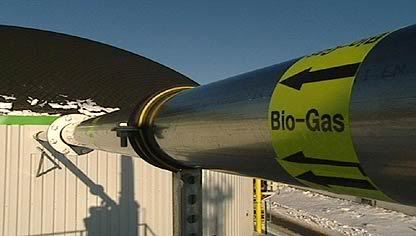
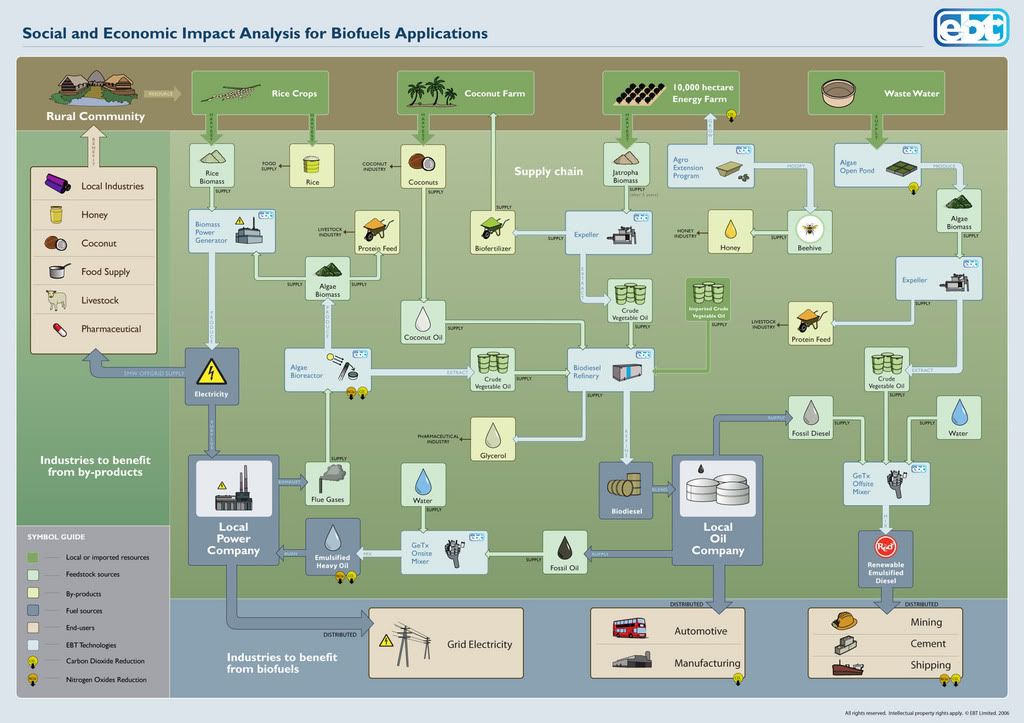

 If China wants to keep growing economically, it has no choice but to transit towards a sustainable and highly efficient bio-based economy. The People's Republic has understood this and the idea of such a 'circular' and 'cradle-to-cradle' economy in which products and processes rely on biomass and biotechnology is now an official policy in the new Five Year Plan.
 The joint statement, which comes during the
  Irish rocker and activist Bob Geldof has thrown his weight behind a new project aimed at producing electricity from plant seeds in Africa. Geldof has
  Opinions people have about innovations are influenced by the context in which they form their opinion. For example, opinions about a novel energy source like biomass are influenced by thoughts regarding other energy sources. The less knowledge, interest or time people have, the stronger this effect. Sustainable energy options must therefore be promoted in the right context says Dutch researcher Wouter van den Hoogen.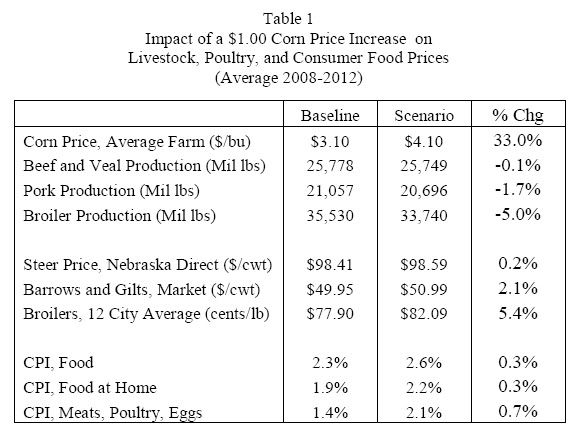
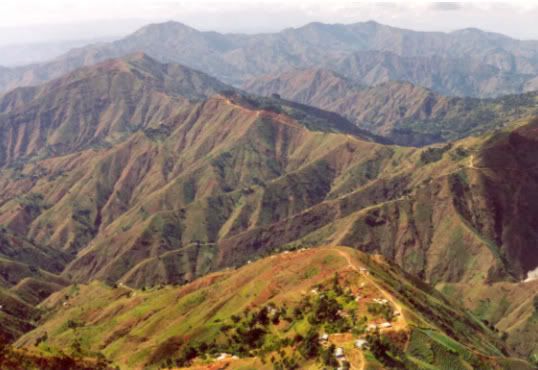 Canada and Brazil may join forces for the production of biofuels in Haiti, one of the top advisers of President Luiz Inacio Lula da Silva said on Wednesday. Canada's Governor General Michaelle Jean, herself born in Haiti, was in Brazil on a seven-day official visit and discussed the matter during her meeting with Silva in this capital city, international affairs adviser Marco Aurelio Garcia
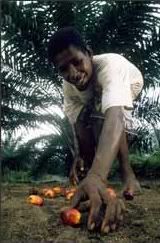 In a very important development, Synthetic Genomics, a privately-held company dedicated to commercializing synthetic genomic processes and naturally occurring processes for alternative energy solutions, and the Asiatic Centre for Genome Technology Sdn Bhd (ACGT), a center that focuses on the application of genome technology to improve oil palm and other crops, today
 According to
  Climate change, and the resulting shortage of ecological resources, could be to blame for armed conflicts in the future, according to David Zhang from the University of Hong Kong and colleagues. Their
  From Italy comes an interesting case study showing the need for countries in the North to import biofuels from the South. Italian food manufacturers have warned that the price of pasta, one of the country's staple foods, will go up by about 20% in the coming months. Global warming and the growing use of durum wheat as a biofuel feedstock are blamed. But the deeper reason lies with European and American tariffs on imported ethanol, which allow durum wheat to be used as a raw material for ethanol in the first place.
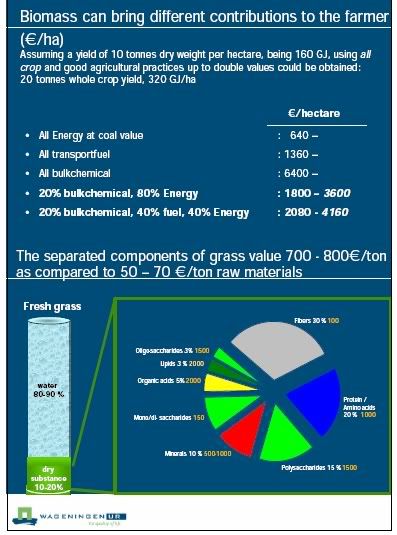
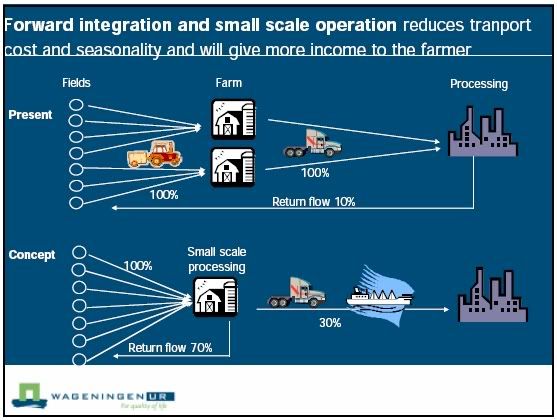
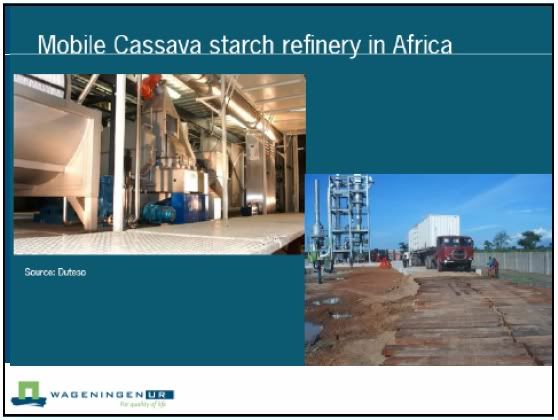
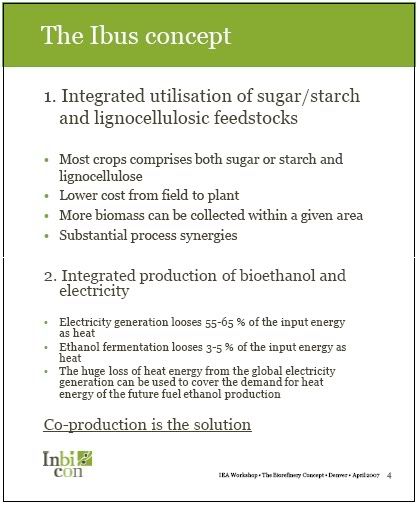
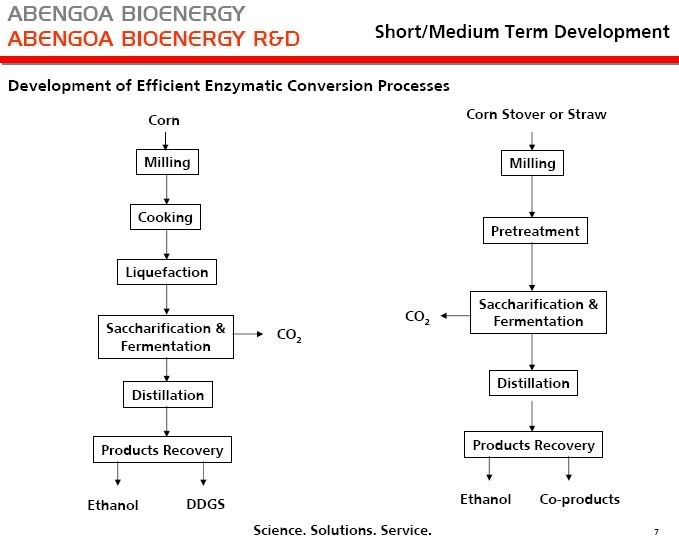
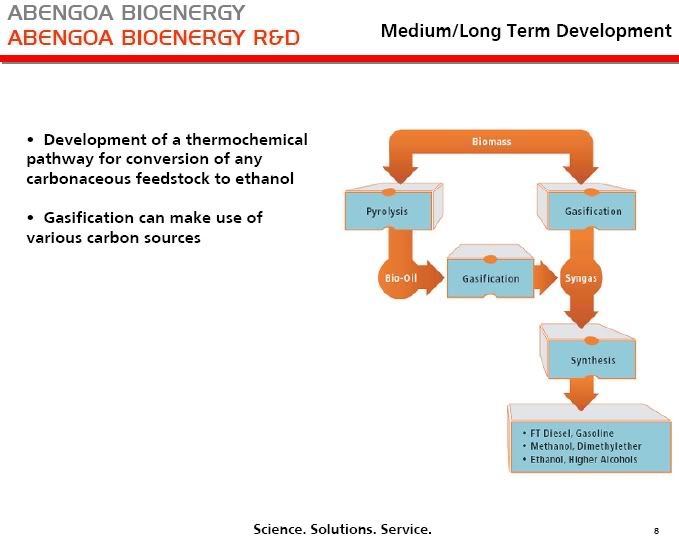
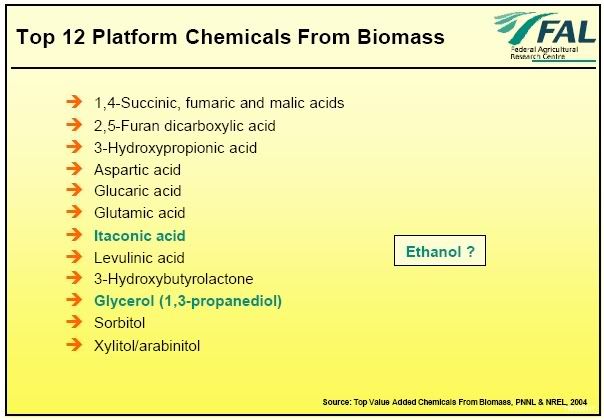
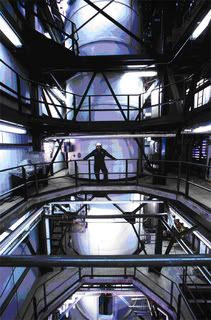 The executive committee of IEA Bioenergy recently held its 59th meeting where it discussed the concept of the integrated biorefinery. Twelve leading experts presented case-studies and analyses on the barriers and opportunities ahead for such efficient factories that will drive the nascent bioeconomy.









 In the food versus fuel debate, some myths must be dispelled, such as the idea that there is somehow not enough food being produced for all people on the planet. Or that biofuels will threaten future food supplies. The fact is that there is an
 The International Energy Agency (IEA) just released its
 The University of Copenhagen's Faculty of Life Sciences and the Faculty of Natural Sciences have launched a major bioenergy and biofuel research and education program called
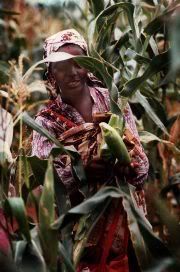 In a major breakthrough for African biotechnology, scientists developed a maize variety that is resistant to one of the continent's most destructive crop diseases. Maize streak viruses (MSV), geminiviruses that can destroy most of a maize crop, are endemic to sub-Saharan Africa and adjacent Indian Ocean islands where they are transmitted by leafhoppers in the genus
  The timing of infection, the maize genotype, and prevailing climatic conditions can all influence the extent of damage wreaked by this viral pathogen. Young plants cannot survive the infection but older plants are better able to contain the infection, resulting in smaller losses of grain. However, drought can have a devastating effect on maize fields over a wide geographical area. Under warm and wet conditions, a long-bodied morph of the leafhopper C. mbila (picture) emerges, but this form only travels short distances of 10 meters or less, thus limiting its damage to crops. Under drought conditions, a stronger, short-bodied morph that can fly great distances spreads the disease over large areas, thus exacerbating the effects of the drought itself.







Saturday, July 14, 2007
Emigration of unskilled workers increases child labor
The researchers say that the problem of child labor is arguably one of the most important issues of our time:
According to the International Labor Organization (ILO), about 15 percent of children worldwide between the ages of 5 and 14 are classified as child laborers. Of these working children, about 171 million children work in hazardous conditions and 5.7 million are forced to work against their will.
In contrast to prior economic models about child labor that assume altruistic parents reluctant to part with their children, Dinopoulos and Zhao propose a model that incorporates the idea that at least some children go to work because their parents are eager for the additional income:
The study also assumes that while skilled and educated adults can do things children cannot do - working as foremen, supervisors or machine operators - children can perform similar work as unskilled adult workers, especially in the agrarian sector.
The analysis further shows other conditions under which globalization-related changes can affect the incidence of child labor, including trade policies that encourage the production of child-labor intensive products and taxes that discourage foreign investment in child-labor-free sectors in developing countries.
When it comes to the poverty-alleviating power of bioenergy, it is clear that the sector is no panacea. As Dinopoulous and Zhao show, child labor often occurs in the agrarian sector. So in the context of biofuels, the issue remains highly complex and carries risks:
- biofuel production may offer jobs and additional incomes for rural populations, reducing emigration pressures, and thus indirectly lead to a reduction of child labor
- but biofuel production may just as well entice parents who see the opportunity for additional incomes to push their children into farm labor directly
As for all products, national governments must be encouraged to monitor and fight child labor, in biofuel production as well; wealthy nations and consumers can contribute by demanding full transparency from companies who produce exportable goods in developing countries. When it comes to biofuels, social sustainability criteria will obviously have to include clear provisions aimed at monitoring and preventing child labor.Picture: Bitter chocolate: An African child drying cacao beans in West Africa's plantations. Credit: Project Hope and Fairness.
Map: Key migrant routes from Africa to Europe. Courtesy: BBC.
References:
Elias Dinopoulos and Laixun Zhao, "Child Labor and Globalization" [*abstract], Journal of Labor Economics, 2007, vol. 25, no. 3.
BBC: Destination Europe: Key facts: Africa to Europe migration.
Article continues
posted by Biopact team at 5:03 PM 0 comments links to this post
