- Traditional communities in Pará, Brazil’s top cocoa-producing state, are managing native species that naturally resist pests and extreme weather.
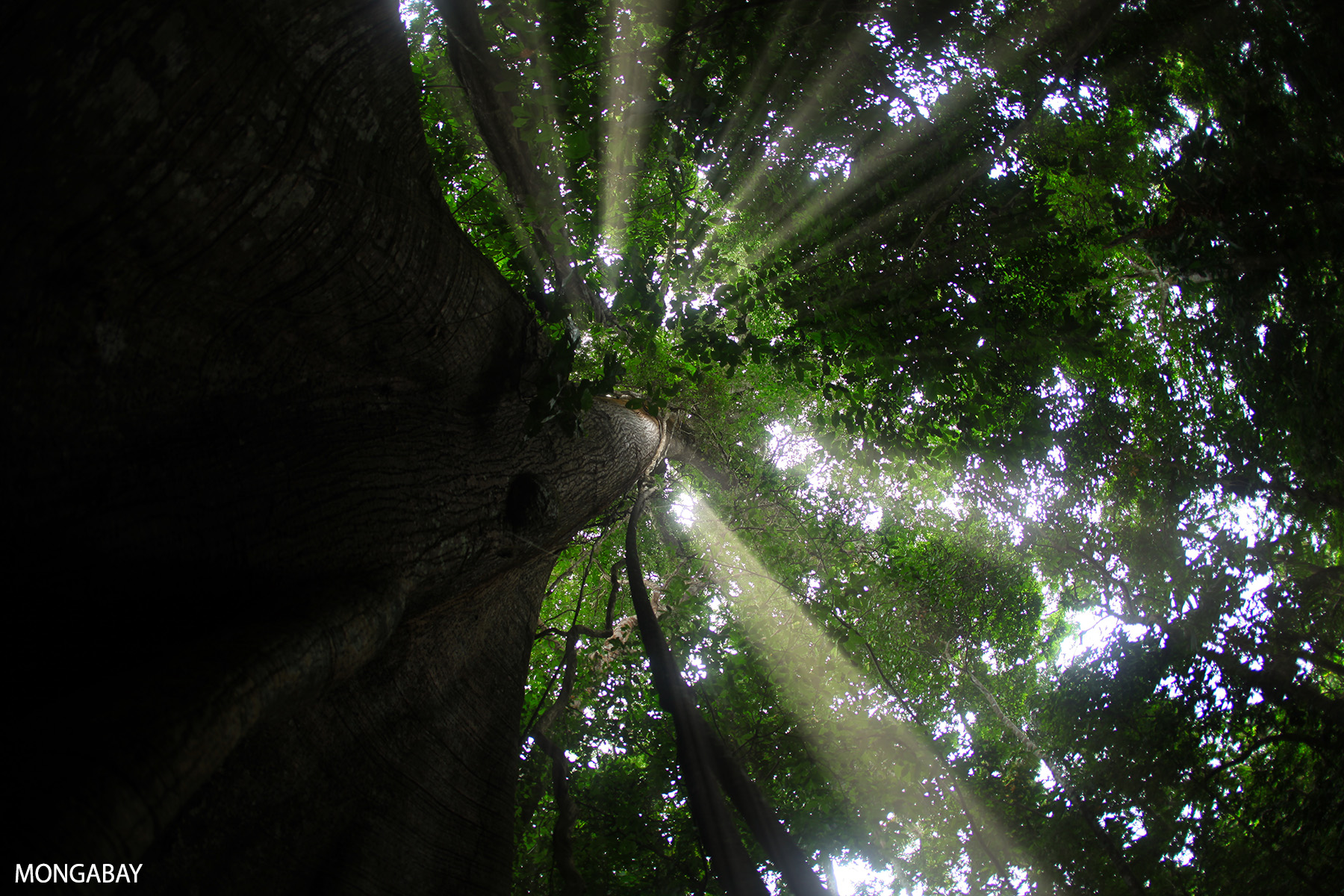
- The dense forest canopy of the floodplains provides natural irrigation and protection for cocoa trees against extreme droughts, heavy rain and pests.
- Global demand for organic and ethically sourced chocolate is expected to rise, positioning Amazonian states to fill international supply gaps, despite hurdles.
- Experts compare Pará’s emerging artisanal chocolate sector to Burgundy wine or Ethiopian coffee due to the unique “terroir” flavors of its native beans.
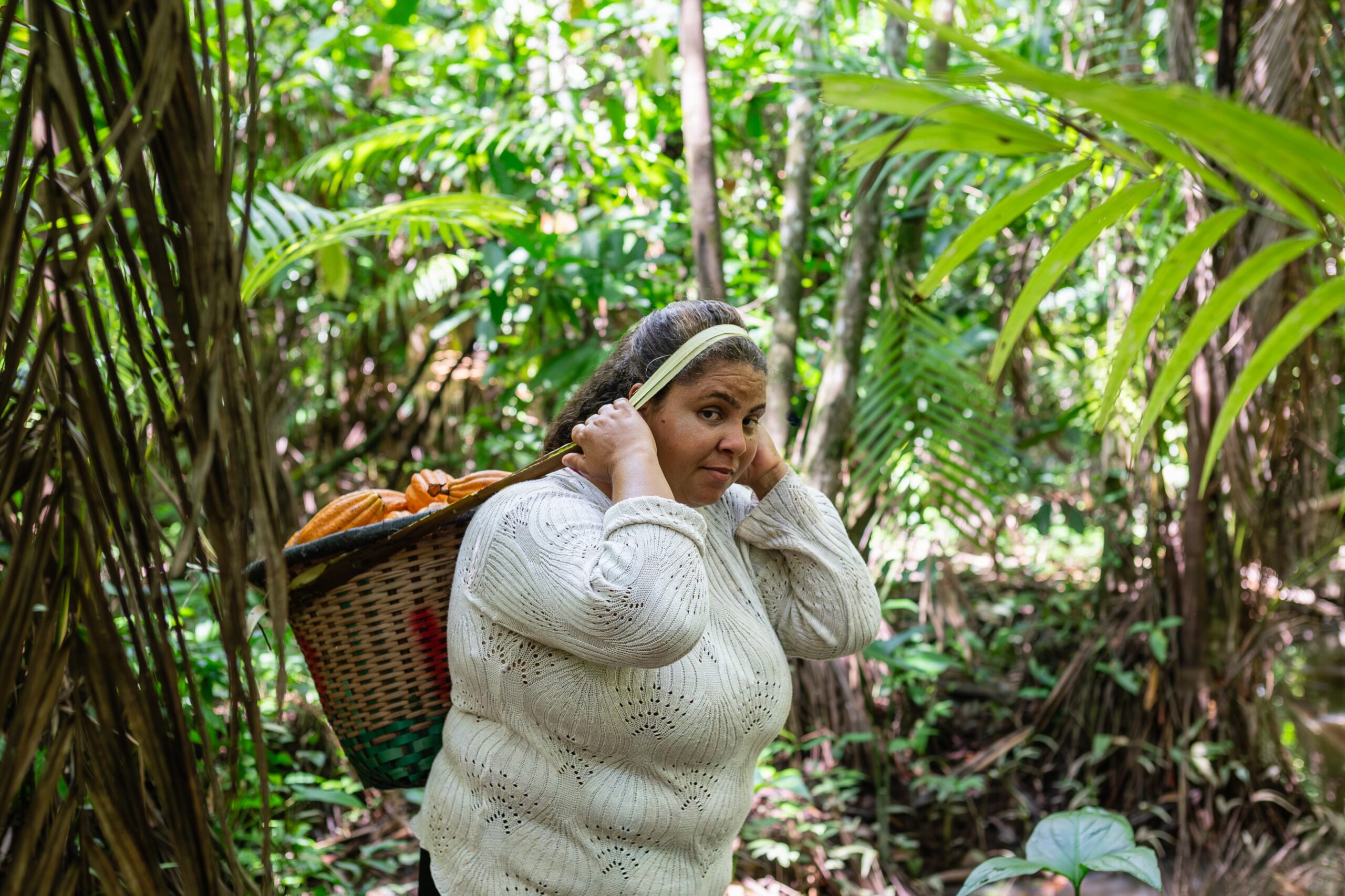
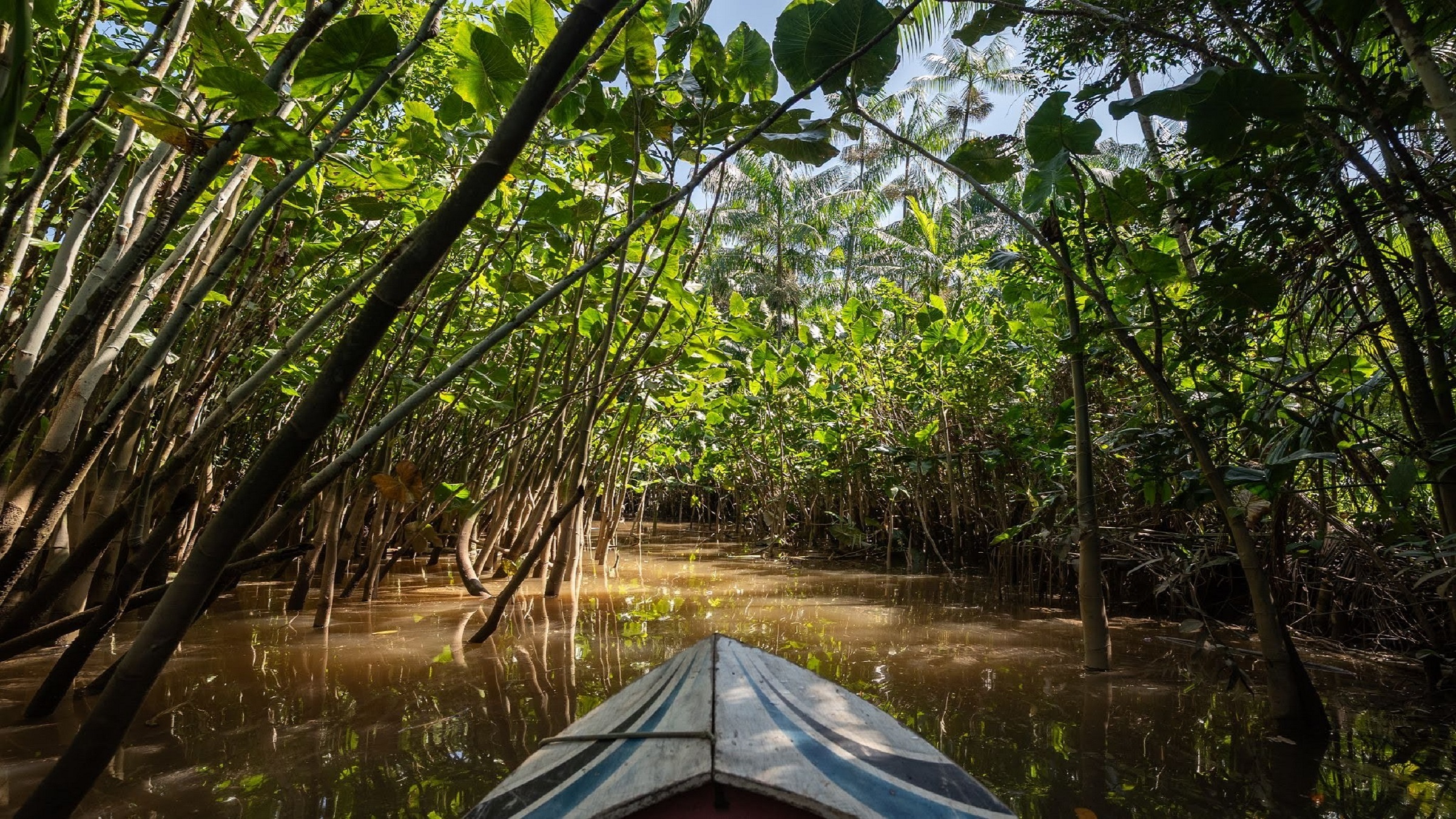
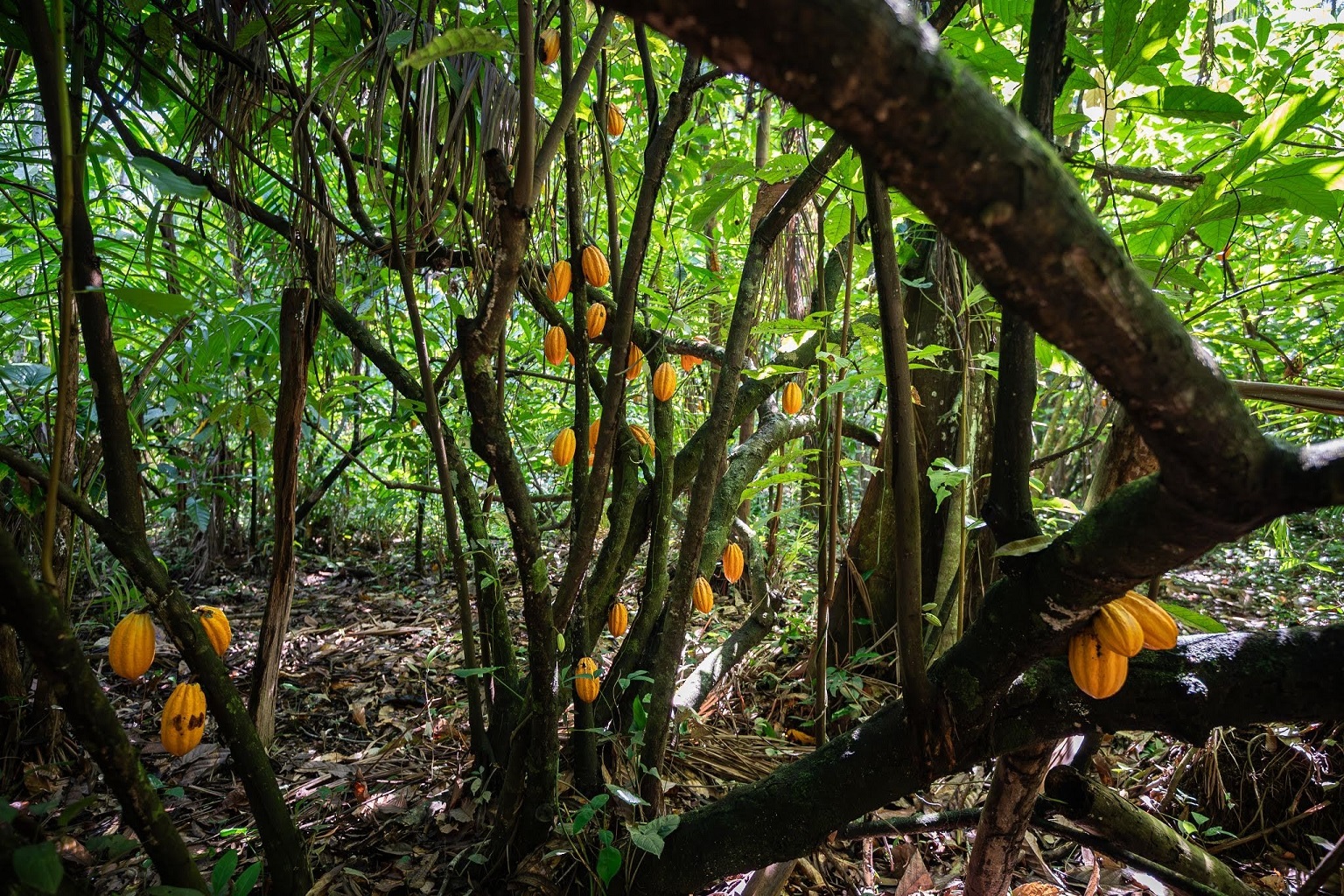
BACARENA, Brazil — Sunlight peeps through dense Amazonian foliage as Elene Elda Mota and her husband Giovanne guide their small motorboat down a narrow stream. Equipped with machetes and baskets, they disembark and make their way through the thick forest until they reach a tree bearing dozens of bright yellow cocoa pods. Here, in the Amazon floodplains of Barcarena, in northern Pará state, near where some Amazon rivers meet the Atlantic Ocean, cocoa grows in a natural agroforestry system. “Our cocoa is native cocoa,” Elene said. “We don’t plant our cocoa, we just manage it.”
Protected and irrigated by the forest canopy of the floodplains, Elene’s cocoa is more resistant to pests like vassoura de bruxa, a fungus that devastated Brazilian crops in the 1980s, as well as climate change impacts like droughts and heavy rains.
It also offers a diverse range of earthy, fruity and acidic flavors, which Elene has utilized to produce an expanding range of artisanal cocoa and chocolate products. Caramelized cocoa nibs are her best seller, she said, and she also produces artisanal chocolate bars, creams and other sweet spreads, cocoa powders and oils.
In recent years, the Amazon state of Pará, Brazil’s largest cocoa producer, has emerged as a new frontier, or terroir, for fine and artisanal chocolate. Like Burgundy wine from France or Ethiopian coffee, the concept of its terroir flavor is rooted in the interplay between local climate, soil and biodiversity.
“Native cocoa benefits from abundant and diverse local pollinators,” Marlucia Martins, a researcher and postgraduate coordinator at the Paraense Emílio Goeldi Museum, told Mongabay. “Which improves reproduction and results in better-quality fruit, more resistant to disease, higher in quantity and superior in flavor.”
Traditional communities, including ribeirinhos like Elene and Geovanne, as well as Indigenous and Quilombola groups, are on the frontline of Pará’s “bean to bar” chocolate scene, combining ancestral knowledge with modern fermentation and processing techniques.
Between 2000 and 2024, Pará underwent a long-term structural transformation in cocoa production, marked by its market share rising from 14.4% to 46.2% in Brazil, according to data from a report produced by Amazon Foundation for Support of Studies and Research (FAPESPA) in partnership with the Pará state government.
Meanwhile, average yields improved from under 0.75 to over 0.84 tons per hectare, and reforested cocoa areas expanded more than fourfold from 38,000 hectares (93,900 acres) to 165,000 hectares (407,723 acres). Yet logistics bottlenecks, limited access to credit and inadequate public policies present challenges.
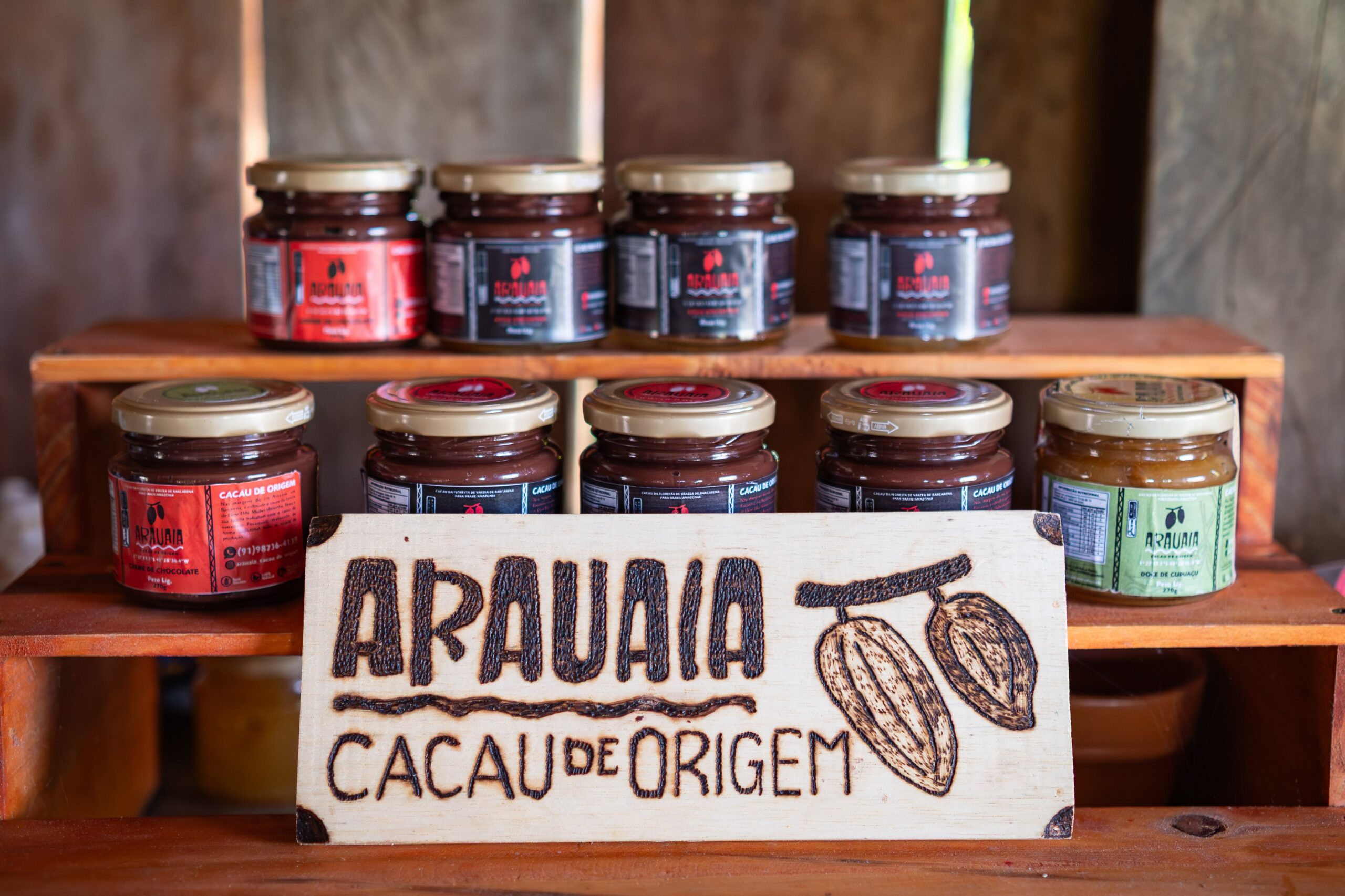
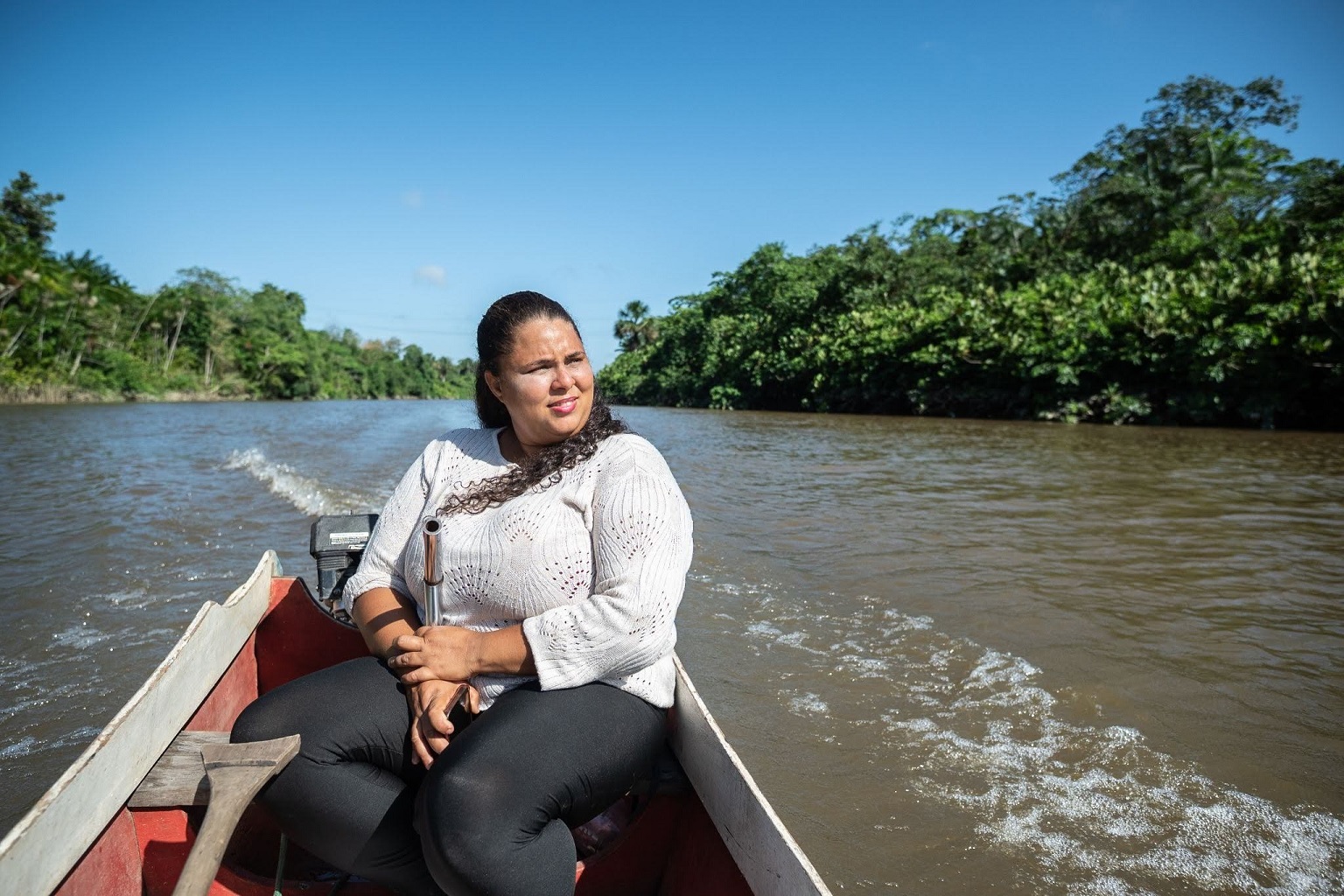
“I named my brand after the river where I live, you know? I was born here and I grew up here,” she said. “My roots are all here. So, I wanted to pay homage to my river.”
The city is home to the Vila do Conde port, today the busiest of Brazil’s northern region, from where international shipping firms export millions of tonnes of minerals, grains and other commodities across the globe each year. The city also has two huge bauxite and aluminum plants that are set to expand capacity in coming years.
As well as wild cocoa, Elene and Geovanne cultivate other native Amazonian fruits like açaí and cupuaçu in the two and a half hectares (6 acres) of floodplain forest behind their home.
How is the chocolate made?
Peak cocoa fruiting usually runs from March to June, sometimes requiring Elene and Geovanne to collect pods while standing knee‑deep in water. In addition to their own harvest, they also buy cocoa from friends and neighbors.
Once gathered, the pods are broken open, and the sticky white beans inside are fermented for five to seven days; an essential step for producing high‑quality artisanal chocolate.
After fermentation, the beans are dried in the sun, roasted and peeled. The peeled cocoa is then beaten in a mortar into a mass, which is placed in a chocolate melanger for refining before being packaged and sold.
“My grandmother used to make cocoa bread, which was made from crushed cocoa pulp,” she said. “She’d roll it into a little ball, wrap it in cocoa leaves, let it harden and then grate it to make hot chocolate.”
In the past, the family would sell their cocoa harvests to middlemen who would typically pay much lower prices, a common challenge that small producers in isolated regions face. The middlemen then sell to larger cocoa traders.
Elene started producing chocolate in 2013 after attending a series of local courses and workshops, learning vital techniques like fermentation. From there, she started slowly building a brand, selling at markets, fairs and other events in Barcarena and nearby Belém.
“We built it up slowly,” she said. “Putting a bit of money aside here and there.”
She said one of her most important investments was the melanger refining machine that cost 6,000 reais ($1,200). Before it, the family would spend “nights and nights” working away with the pilão to crush the dried and peeled cocoa into a mass fine enough to make chocolate.
While cocoa prices have fallen significantly compared to record highs in 2024, when prices climbed 150% to a record breaking $12,5 per metric tonne following catastrophic droughts that wrecked harvests in the Ivory Coast and Ghana (the world’s two largest producers), they remain well above pre-crisis levels.
Closer to home, the 2023-2024 Amazon drought also damaged local cocoa production, including Elene’s in Barcarena, though on a far lesser scale.
Cocoa bottlenecks and opportunities
Given that chocolate demand is expected to rise in coming years, with organic and ethically sourced options driving much of the growth, according to industry associations, Pará and other Amazonian states could be well-positioned to fill supply gaps.
“Cocoa production in Brazil is expected to increase significantly in the coming years to meet this growing international demand,” said Rafael de Sá Marques, director of the Department of Genetic Heritage and Productive Chains of Biomes and the Amazon, during an online event organized by the Foreign Press Association (AIE).
Elene and Geovanne’s and other similar floodplains cocoa agroforestry systems are a “sustainable and productive way to ensure food security while preserving biodiversity,” according to a 2025 paper published in the Springer Nature Link journal.
Still, as with the Brazilian Amazonian bioeconomy overall, there are serious bottlenecks to expanding the reach of floodplains cocoa chocolate and improving the livelihoods of its producers.
Elene’s ambition is to expand her business by opening a small factory and a restaurant by the edge of the river Arauaia. However, obtaining credit is difficult; interest rates are high; and furthermore, existing credit programs often do not cover costs for factory construction or specialized machinery needed by small-scale producers, she said. Then there is the issue of scale, while market requirements like standardization of products and packaging remain challenges.
“Because large-scale production operates within the logic of monoculture, the logic of diversity will never be compatible with large-scale production,” Martins said. “So, it’s necessary to understand these limitations.”
One of the most cited ways to strengthen family farmers is for them to form cooperatives with other producers to sell in higher volumes and secure better prices. However, without correct management, support and technical assistance, many cooperatives, especially those ridden with internal disputes, can fall short of their potential or outright fail, causing debts. Elene herself said that she had previously been part of a cooperative that “didn’t work out.”
While floodplains cocoa is more resistant than planted cocoa, events such as the 2023-24 record drought in the Amazon can be disastrous for small producers operating on thin margins. Meanwhile, there have been at least two major industrial accidents in Barcarena in the last decade that have affected water quality. Still, Elene is optimistic.
“Why shouldn’t I honor my river in my chocolate brand and take the name of my river to the world, so that my river can be valued and known?”
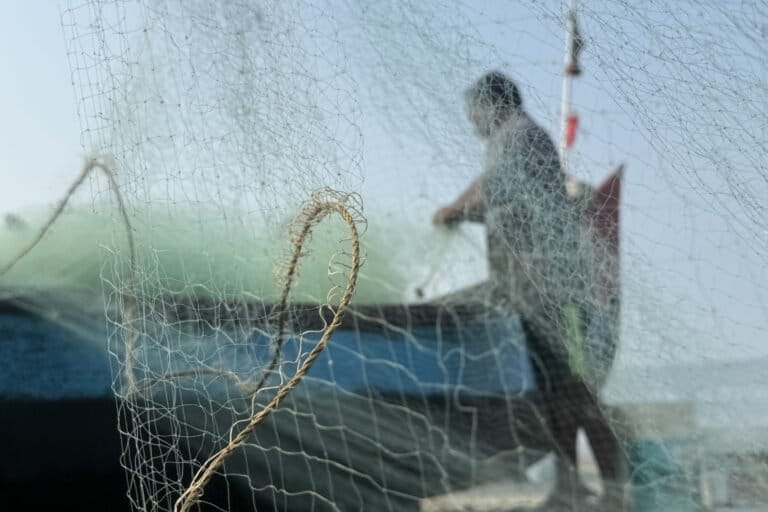
Banner image: Cocoa producer Giovanne holds a native Amazon species, which is naturally resistant to pests and extreme weather. Image by Cícero Pedrosa Neto.
This story had financial support from the Pulitzer Center’s Rainforest Journalism Fund.
What does bioeconomy truly mean? Indigenous groups seek answer to dodge capitalist traps
Citation:
de Almeida, C. M. V. C., Müller, M. W., Gama-Rodrigues, A. C., & Gama-Rodrigues, E. F. (2025). Cocoa agroforests in the Brazilian Amazonia floodplains: a review. Agroforestry Systems, 99(5), 124. doi: 10.1007/s10457-025-01227-3
FEEDBACK: Use this form to send a message to the author of this post. If you want to post a public comment, you can do that at the bottom of the page.
Cite this article
Cícero Pedrosa Neto, Sam Cowie (2026). Amazon floodplains cocoa offers a climate-resilient and sustainable chocolate. Mongabay Conservation news. DOI: https://doi.org/10.66709/news-321624Credits