- Tropical forests exchange more CO2 with the atmosphere than any other terrestrial biome, meaning that even a relatively small shift in the balance of carbon uptake and release there could have a big impact on global climate. Despite this, research on tropical soil responses to warming has lagged behind.
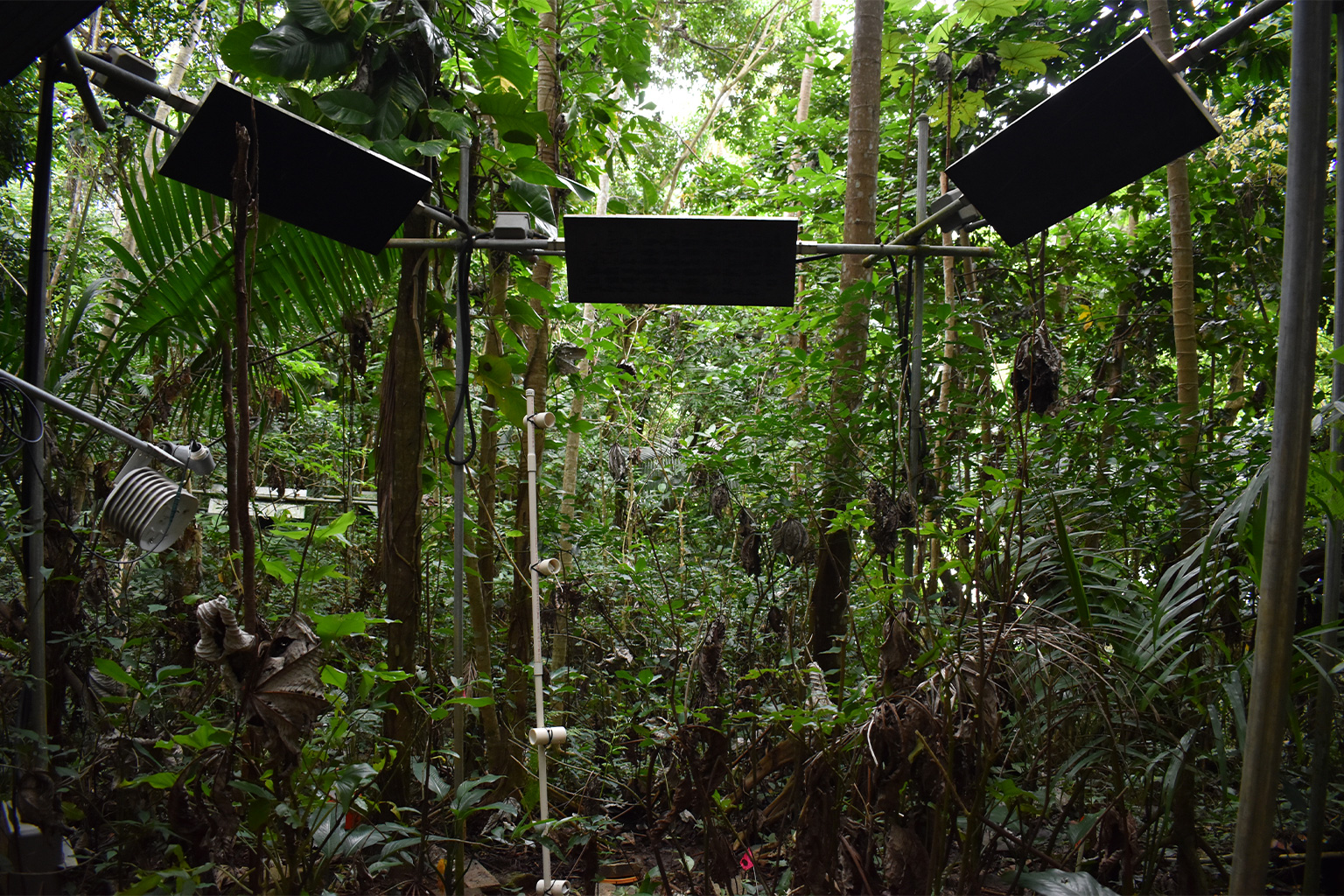
- In a field experiment in Puerto Rico, researchers used infrared heaters to warm understory plants and topsoil by 4° Celsius. Warming significantly increased soil carbon emissions, but terrain also had a major impact: A warmed plot at the top of a slope showed an unprecedented 204% increase in CO2 emissions after one year.
- Carbon emissions from plots lower on the slope increased between 42% and 59% in response to warming — in line with the results from the only other long-term tropical soil warming experiment to date. However, the upper-slope response represents the largest change in any soil warming experiment conducted globally.
- The new study results add to a growing body of evidence that tropical soils are far more sensitive to warming than previously thought. If elevated tropical soil CO2 releases persist in the long term, it could have dire consequences for Earth’s climate. But the soil biome may adjust over time, so future effects remain unclear.
Climate warming could cause much greater soil carbon losses in the tropics than previously predicted, with potentially dire consequences for the global climate, according to a new study published in Nature Communications.
Tropical forests store around a third of the world’s soil carbon and exchange more CO2 with the atmosphere than any other land biome. So even a relatively small shift in the balance of carbon uptake and release by tropical soils could have a big impact on atmospheric CO2 levels and the world’s climate. Air temperatures in the tropics are predicted to increase by as much as 6° Celsius (10.8° Fahrenheit) by the end of the century, but how this will impact soil carbon stores is largely unknown.
“Tropical forests house the majority of the world’s biodiversity, but they’re also these incredible biogeochemical engines that cycle huge amounts of carbon into and out of the atmosphere,” says Tana Wood, the study’s lead author and an ecosystem ecologist and biogeochemist at the USDA Forest Service’s International Institute of Tropical Forestry.
The prevailing scientific view was that tropical ecosystems would be less sensitive to warming than those in higher latitudes. As a result, research on soil responses to warming in the tropics has lagged behind studies in temperate and Arctic ecosystems.
To date, only two long-term field experiments have investigated how tropical soils respond to warming. One of these, which warmed soils in a Panama tropical forest, reported a 55% increase in soil CO2 emissions after two years. Now, results from another experiment in Puerto Rico corroborate this general trend, while also documenting alarmingly high soil carbon losses in some locations.
Concerning carbon loss findings
The newly published study used infrared heaters to warm understory plants and the top 50 centimeters (20 inches) of soil by 4°C (7.2°F) in three forest plots with different topography. Beginning in September 2016, the Tropical Responses to Altered Climate Experiment (TRACE) uses an automated system to measure CO2 emissions from the soil every 30 minutes for year after year.
The temperature control system “operates like a thermostat in your house,” Wood explains. “For 24 hours a day, 365 days a year, while our equipment is working, we maintain a constant difference of temperature between our warmed [experimental] and ambient [control] plots.”
After one year of artificial warming, the team found that CO2 emissions from the soil increased significantly, but terrain had a major impact on the scale of those increases: The warmed plots at the bottom and in the middle of the slope released 42% and 59% more CO2, respectively, compared with unwarmed control plots in a similar topographic position.
In contrast, the plot at the top of the slope showed an increase in CO2 emissions of 204% in response to warming. This equates to 81.7 metric tons of additional carbon released per hectare (2.5 acres) per year from soils at the top of the slope — roughly the same amount of CO2 as is released when a hectare of tropical peatland forest is converted to oil palm plantation.
“The response of soil respiration to warmer temperatures was much greater than we anticipated,” Wood says. “This could mean there’s a lot more additional carbon going into the atmosphere than [scientists] had previously accounted for.”

The Puerto Rico study reinforces a serious concern among soil ecologists: that rapidly escalating climate change may trigger large soil carbon losses, increasing atmospheric CO2 concentrations,and “setting off a self-reinforcing feedback in the climate system — with warming begetting more warming,” says Jerry Melillo, an ecologist at the Marine Biological Laboratory in Woods Hole, Massachusetts, who was not involved in the study.
The study’s findings, while concerning, also raise many more questions: What is driving the increases in tropical soil carbon losses, and why did the upper slope show such a dramatic response? Will similar losses occur across the tropics? And most importantly, will these elevated carbon emissions be maintained over the long-term as warming continues?
“Further experiments are needed to understand the mechanisms affecting tropical forest carbon balance in response to global change,” Melillo says.
Pushing soil ecosystems to their limits
“This is one of the first warming experiments to push an ecosystem into a novel temperature regime outside of its normal range,” notes Caitlin Hicks Pries, a biologist at Dartmouth College in Hanover, New Hampshire, who was not involved in the study. She emphasizes that the current study also underscores the importance of doing more soil experiments in the tropics: “There is no analog on Earth to the projected warming they will experience.”
However, Hicks Pries cautions against reading too much into the extreme increase in carbon emissions measured in the plot at the top of the slope. “Soil respiration is notoriously heterogenous, so that could just be a location with abnormally high sensitivity to warming,” she explains. Other upper slopes elsewhere in the tropics could yield dissimilar findings.
The study’s artificial warming also led to an increase in soil moisture content in the upper slope plot, which is the opposite of what scientists would expect. “Normally we see a drying effect in the soils from warming,” Hicks Pries says. “That wetter soil could explain its abnormally strong response to warming.”
Unraveling soil microbe responses to warming
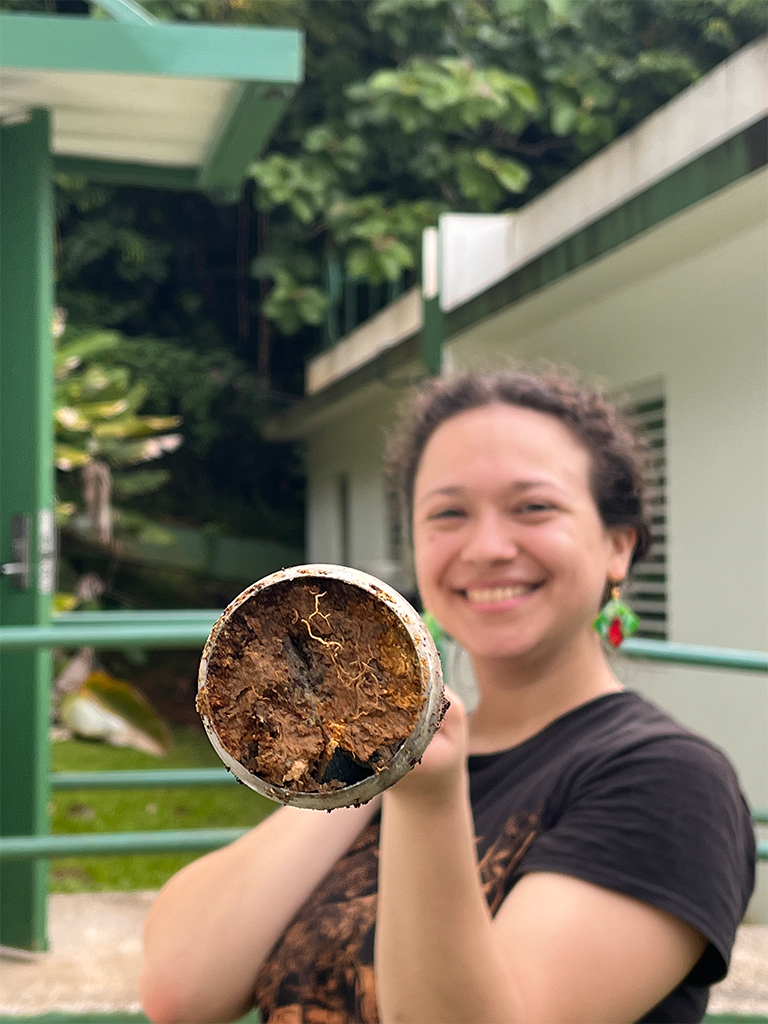
The study team not only wanted to measure the CO2 released, it also wanted to understand what was driving increased carbon emissions from warmed tropical soils. So researchers collected soil samples from both the warmed and control plots and painstakingly by hand removed and weighed the plant roots, while also measuring the total biomass of bacteria and fungi in each soil sample.
They found a 50% increase in the biomass of microbes in warmed plots, whereas the biomass of plant roots decreased by 32%. Both microbes and plant roots release carbon dioxide as a result of their metabolism, so this finding indicates that microbes were contributing a much greater proportion of the total carbon emissions from warmed plots.
Despite dramatic rises in carbon emissions from warmed soils, the researchers found that the temperature sensitivity of the soil — measured as the increase in CO2 emissions for every 10°C (18°F) increase in temperature — actually decreased by 72%. This decelerating relationship between warming and soil carbon losses may indicate a change in the way soil microbes are metabolizing carbon.

Microbes use enzymes to break down soil carbon, and those enzymes tend to work faster at higher temperatures. However, very high temperatures can damage the enzymes’ molecular structure, making them work less efficiently or stop working entirely. Microbes can adapt by producing more heat-tolerant enzymes, which have stronger molecular bonds, but that hardiness comes at the cost of carbon-binding efficiently. This type of metabolic adjustment may explain why soil carbon losses don’t increase at a constant rate as temperatures rise.
An alternative explanation is that as the soil warmed, the species composition of the microbial community changed, since some microbes metabolize carbon more efficiently than others. The research team plans to investigate the composition of soil microbial communities in warmed and control plots to better understand the mechanisms behind changes in soil carbon emissions.
Another looming question: Were the increases in CO2 emissions from the warmed soils being driven by an overall faster carbon cycle, with plants taking up more carbon and microbes rapidly consuming it, or were soil microbes burning through older carbon stores that had previously been stable? The latter could point toward a massive and potentially irreversible future disruption (at least on human timescales) to the global carbon cycle. To find out, the team intends to use carbon dating to determine the age of carbon being released from soils at the study site.
Evidence mounts for high sensitivity of tropical soils
The results from the plots at the bottom and middle of the slope in the Puerto Rico experiment are of similar magnitude to the results from soil warming experiments in temperate ecosystems. However, the increase in soil carbon emissions seen at the top of the slope represents the largest change reported by any soil warming experiment conducted globally.
“The large increase in soil respiration from the up-slope plot relative to the two down-slope plots was surprising to me,” Melillo says. He leads a soil warming experiment at the Harvard Forest in Massachusetts, U.S., which has been running since 1991. In that temperate forest, warming soil by 5°C (9°F) increased carbon emissions by 28% over the first six years.
The lower-slope results are also strikingly similar to those of the only other long-term tropical soil warming experiment conducted to date, known as SWELTR, which reported a 55% increase in CO2 emissions from warmed soils in a lowland tropical forest in Panama.
These similar results emerged despite key differences in methodology between the two studies. While TRACE in Puerto Rico uses a “top-down” approach, warming the understory and topsoil from above, SWELTR in Panama used underground cables to warm the soil from below. The top-down design allowed the TRACE team to evaluate how warming affects both above- and below-ground aspects of the carbon cycle, including plant photosynthesis and respiration as well as soil microbes and plant roots.
The similarity between the two studies’ results strengthens the hypothesis that increased carbon emissions are largely being driven by microbes — which experienced warming in both experiments — rather than by plants. “The two experiments offer useful, complementary insights because they can address different aspects of the effects of warming,” says Andrew Nottingham, a soil scientist at the University of Leeds and a research associate at the Smithsonian Tropical Research Institute (STRI), who leads the SWELTR experiment in Panama.
The two tropical research sites are also dissimilar from each other, with different tree species, climate conditions, soil types and geology. That both studies found dramatic warming-induced increases in soil carbon emissions points to a general trend that may be common across a wide range of tropical ecosystems.
“These results make clear the urgent need to entirely rethink the climate sensitivity of carbon cycling in tropical soils, as their responses are much more dynamic and sensitive than previously considered,” Nottingham says.
Collecting long-term data across different biomes is essential to understand how warming will impact the global soil carbon sink, which has so far played a critical role in CO2 storage, mitigating humanity’s excessive carbon emissions.
“We now need to build our understanding of the mechanisms behind these large responses and also understand how these mechanisms relate to existing theory … at the core of current soil process and Earth System models — [models] which [at present] fail to predict the results we see in these field experiments,” Nottingham says.

Long-term prognosis for tropical soil carbon: Unclear
The new research suggests that tropical soils are more sensitive to warming than previously thought. If such dramatically elevated soil CO2 releases persist long-term across tropical regions, that could have dire consequences for Earth’s climate and humanity’s future.
However, soil ecosystems may adjust to warming over time, so the long-term effect on the tropical soil carbon cycle remains unclear, experts say. In the Harvard Forest warming experiment, for example, carbon emissions tailed off after the first six years, then increased again in the 18th year, giving rise to a cyclical pattern of CO2 release over the long term.
“We know from temperate forest experiments that the long-term effects of warming can vary widely as biotic communities shift in their composition and physiology and potentially adapt to these temperature changes,” Nottingham explains. “This means the value of these field warming experiments increases over time, and it’s critically important that they continue to operate to offer ongoing insights into these effects.”
The TRACE study in Puerto Rico is now entering its 10th year of artificial warming research, with scientists regularly analyzing the latest data to get a better handle on how tropical soils will respond in future decades.
“It’s exciting to know what this initial response is; we learn a lot from that,” Wood says. “But it’s important that we continue [the experiment] so that we understand the longer-term implications and the capacity of these ecosystems to adjust to new conditions,”
Banner image: Air temperatures over tropical ecosystems are predicted to warm by as much as 6° Celsius (10.8° Fahrenheit) by the year 2100 — a mere 75 years from now. But how this extreme heat will impact tropical soil carbon stores is still unknown. Image by CIFOR-ICRAF via Flickr (CC BY-NC-ND 2.0).
Betting on future forest carbon storage endangers Paris Agreement targets
Citations:
Wood, T. E., Tucker, C., Alonso-Rodríguez, A. M., Loza, M. I., Berberich, M., Grullón-Penkova, I. F., Cavaleri, M. A., O’Connell, C. S., Reed, S. C. (2025). Warming induces unexpectedly high soil respiration in a wet tropical forest. Nature Communications. doi:10.1038/s41467-025-62065-6
Hicks Pries, C. E., Castanha, C., Porras, R. C., & Torn, M. S. (2017). The whole-soil carbon flux in response to warming. Science, 355(6332), 1420-1423. doi:10.1126/science.aal1319
Nottingham, A. T., Meir, P., Velasquez, E., & Turner, B. L. (2020). Soil carbon loss by experimental warming in a tropical forest. Nature, 584(7820), 234-237. doi:10.1038/s41586-020-2566-4
Melillo, J. M., Steudler, P. A., Aber, J. D., Newkirk, K., Lux, H., Bowles, F. P., … Morrisseau, S. (2002). Soil warming and carbon-cycle feedbacks to the climate system. Science, 298(5601), 2173-2176. doi:10.1126/science.1074153
Melillo, J. M., Frey, S. D., DeAngelis, K. M., Werner, W. J., Bernard, M. J., Bowles, F. P., … Grandy, A. S. (2017). Long-term pattern and magnitude of soil carbon feedback to the climate system in a warming world. Science, 358(6359), 101-105. doi:10.1126/science.aan2874
FEEDBACK: Use this form to send a message to the author of this post. If you want to post a public comment, you can do that at the bottom of the page.
Credits