- The Madagascar government has petitioned wildlife regulators under the Convention on International Trade in Endangered Species (CITES) for permission to sell its stockpiles of seized rainforest wood.
- Some campaigners warn that traffickers stand to benefit from any such sale and fear it could herald a “logging boom” in the country’s remaining rainforests.
- The CITES committee will consider the proposal at the end of this month.
SAVA REGION, Madagascar — Madagascar is applying to sell millions of dollars’ worth of illegally logged timber, prompting fears of a bonanza for traffickers.
The country has stockpiled tens of thousands of precious rosewood logs seized from illegal loggers who cut them from beautiful, ostensibly protected national parks. An export ban has been in place since 2010, but Madagascar has now applied to the wildlife regulators under the Convention on International Trade in Endangered Species (CITES) to sell thousands of tons of the wood to China, Japan, the United States and the European Union. It also wants to facilitate sales in five other countries where stocks are being held. The CITES Standing Committee will make a recommendation later this month on whether sales should go ahead.
The government’s own director of forestry in the affected Sava region in northern Madagascar admitted to Mongabay that he fears that the “rosewood mafia” still owns many stocks.
“It’s hard to tell who are the legitimate owners and who are the dangerous people, so it’s like a mafia action,” said Arsonina Bera. “That’s why I’m saying it’s better to destroy the wood because otherwise the mafia would further intervene in our lives.”
Members of parliament and other public officials own stockpiles, according to Bera. The UK-based NGO TRAFFIC estimates that 98 percent of all Madagascan rosewood (genus Dalbergia) is exported to China, where it is prized for its deep red color and often crafted into high-end furniture. Rosewood has become the world’s biggest wildlife trafficking commodity, eclipsing even elephant ivory, with hundreds of millions of dollars’ worth of the wood smuggled out of Madagascar alone.
As part of its investigation, Mongabay obtained rare access to film inside one of the government’s biggest rosewood stockpiles, in the town of Antalaha. We recorded pictures showing hundreds of thousands, if not millions, of dollars’ worth of logs. A bar code system gave the source of the wood and the location it was seized from. But the compound was not guarded and was easily visible from a nearby public beach, leaving the wood vulnerable to traffickers who try to launder logs through the government’s stockpile process.


Reigniting rainforest plunder
Many of Madagascar’s conservationists fear that a government sale of seized stockpiles would legitimize the mafia-style gangs who plundered the rainforests, and endanger even more of the island’s natural wealth.
“To save our island, to save our forest, we cannot export them,” said Louis Jaofeno, a forestry expert at the U.S.-based Lemur Conservation Foundation, referring to the rosewood logs. “If the rosewood disappears, they may turn to other trees and continue, so we have to stop the export of all of those kind of trees. We are blessed because we have this nature,” he added.
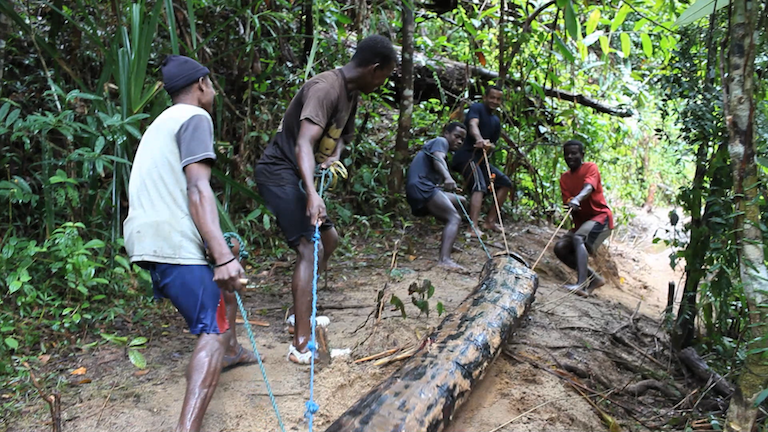
Madagascar’s rosewood crisis erupted after a coup in 2009, with gangs taking advantage of the political instability to enter national parks. The scale of the destruction was so bad that Sava’s Marojejy National Park had to close completely that year, as armed gangs swarmed trails in search of rosewood trees. Hundreds of thousands of trees were felled, putting further pressure on some of Madagascar’s iconic species, many of which are now critically endangered.
An international outcry and a government export ban eventually helped to end logging in Marojejy. But there are still occasional reports of incidents in nearby Masoala National Park, and the trafficking of previously felled rosewood continues. The government has seized more than 350 trafficked logs so far this year.

Courts without justice
The government says it will use the money from the sale of its rosewood stockpiles to better protect its remaining forests. In its submission to CITES, it says it has improved law enforcement and fought corruption.
But in a rare interview, Jean André Mboly, the director of Marojejy National Park, said that park authorities still have problems getting justice when it comes to poaching and logging within parks. “We caught 10 criminals, and we took them to the courts, but they all got released,” he said. “Sometimes even on the same day, we’ll drag them to court and then they’ll come out again.”
“The people see that there is no justice,” he added. “It is corruption, of course.”
At least two campaigners against rosewood trafficking have been jailed for speaking out, in what Amnesty International describes as “politically motivated” charges.
Clovis Razafimalala, who leads a coalition of activists that fights the rosewood trade, spent 10 months in jail with no trial, accused of destruction of property. He was denied bail while in prison, and in July received a five-year suspended sentence with stringent bail conditions and a fine.
“I do not feel safe here, but I have stayed at home and I continue my fight to the end with great caution,” Razafimalala told Mongabay from his hometown of Maroantsetra, a rosewood trafficking hotspot not far from Masoala National Park. “I’ve received so many threats because of my work.
“The rosewood mafia has always been powerful and untouchable. There has always been attempts to load ships with rosewood here,” he added.
Campaigners also question how effective the government has been at stamping out trafficking. In March 2017, a Singaporean high court found businessman Wong Wee Keong guilty of importing $50 million worth of Madagascan rosewood. Guides and residents have for years reported suspicious boats harboring near trafficking hotspots.
Madagascar admits to constraints in stopping the rosewood trade. In its report to CITES, it said it could not fund four speedboats to track down the traffickers in the most-affected area.


Lessons from ivory
The Washington, D.C.-based NGO Environmental Investigation Agency (EIA) warns that a national sale of rosewood could stimulate demand in the market, fueling further rainforest destruction.
“Look, the reality is that the Malagasy government has no control over the stockpile,” said EIA executive director Alexander von Bismarck. “What actually happens is, if you let one piece out, then the next piece is illegally cut in the national park and brought into the stockpile. It is a laundering mechanism. So it cannot be sold right now, it will lead to an absolute logging boom. The proceeds will go to the very traffickers who need to have a consequence here.”
Campaigners often point to the controversial CITES-supervised sale of 102 tons of ivory by Botswana, Namibia, South Africa and Zimbabwe in 2008, which renewed many buyers’ interest in carved ivory ornaments. A subsequent spike in demand was followed by a poaching crisis in which 60 percent of Tanzania’s elephants were slaughtered.
As with ivory, Chinese demand for rosewood remains high. In the next 10 years, hundreds of millions of Chinese people are expected to become much wealthier, leveraging an enormous purchasing power for status symbols such as rosewood furniture. If Madagascan rosewood goes on sale, demand will undoubtedly be high.
The Chinese government says it is committed to stopping the import of illegal logs and timber, and has made a number of notable seizures. But a 2017 TRAFFIC bulletin found that “law enforcement challenges” remain. It lists “a lack of capacity and technology tools … staff shortages, deficiencies in expertise, inadequacies in information and intelligence” as among “the major constraints” facing China’s law enforcement agencies.
More worryingly, it notes that “the large-scale seizures of Malagasy timber would suggest that the trade has been driven underground following the CITES listings and export bans” and that “it is quite likely that a much larger black market trade for Malagasy timber exists, with seizures only capturing a small percentage of the total illicit trade.”
Aboveboard, the figures are hardly encouraging either. In its 2014 briefing paper [pdf] for CITES, the EIA noted that “in the four years since the ban, Chinese traders have imported at least 25,364 cubic meters of officially declared rosewood and ebony (around 200,000 logs) from Madagascar in direct violation of Madagascar’s laws.”
But China is not alone. The EIA calls on those countries along the trafficking route to play their part as well. “In particular Tanzania, home to the key transit hub of Zanzibar, needs to follow the example of Kenya, Sri Lanka and Singapore, and seize all incoming shipments of illegal timber,” the NGO said in its briefing.
Selling trafficked timber to stop trafficking
In its submission to CITES, the Madagascar government says that it must sell its stockpiles to fulfill the CITES-requested “action plan” to improve its rosewood conservation. That plan includes continuing to assess live rosewood populations and working toward making an inventory of its stockpiles.
It proposes first selling its own stockpiles, then controlling the sale of the remaining private stocks in the country. Only by doing this can it protect its remaining forests, it argues.
Sales would be aimed first at local, legal woodcrafters, whose businesses and the national economy the government says would benefit. Next would come a more controversial sale: a public auction to any interested international parties, with nearly a third of the money raised going into the state’s general budget. It would use the remaining two-thirds to “finance activities related to restoration and protection of protected areas” and support “income-generating activities” in those areas.
But there is concern about the huge financial stimulus that a government-controlled sale could create. Only 10 to 15 percent of logged rosewood is controlled by the government. The rest is owned by private operators, some of whom have declared their stocks — more than 274,000 logs in total. But those figures do not account for secret stockpiles.
Madagascar also told CITES it wants China, Tanzania, Singapore, Sri Lanka, Mozambique and Hong Kong to sell their stockpiles of Madagascan rosewood as well, with part of the money being used to benefit Madagascar’s conservation.
Watch Mongabay’s video on Madagascar’s bid to sell its rosewood stockpiles
There are few people who deny that Madagascar needs the money. More than 70 percent of the population lives on less than $2 a day. There is little or no basic welfare provision; millions lack access to hospitals and good schools.
The main alternative to the government’s proposed sale is to destroy the rosewood stocks, and many conservationists support this idea. But others think it would be counterproductive, sending millions of dollars that could benefit Madagascar’s rainforests up in smoke.
Ndranto Razakamanarina, of the Alliance Voahary Gasy coalition, told the journal Madagascar Conservation & Development in 2016 that if some of the stocks were sold to local craftsmen for construction and carpentry, as the government proposes, it could help reverse the trend of commodities leaving Africa and being manufactured elsewhere.
He also supported the plan for international sales, arguing that the money could provide a system of bonuses for witnesses, whistle-blowers, custodians and law enforcement agencies — but only if the government could ensure a secure system of sale that would not benefit traffickers.
Other scientists, such as Sonja Hassold from the Zurich-based Institute of Integrative Biology, stress the need for further genetic sampling and sustainability surveys, so the world can better understand rosewood’s likelihood of extinction. The end goal should be to set up a sustainable precious woods industry that can benefit the whole country, they argue, but that can only be done with the proceeds from small, phased sales of the current stock.
The poorest pay the price
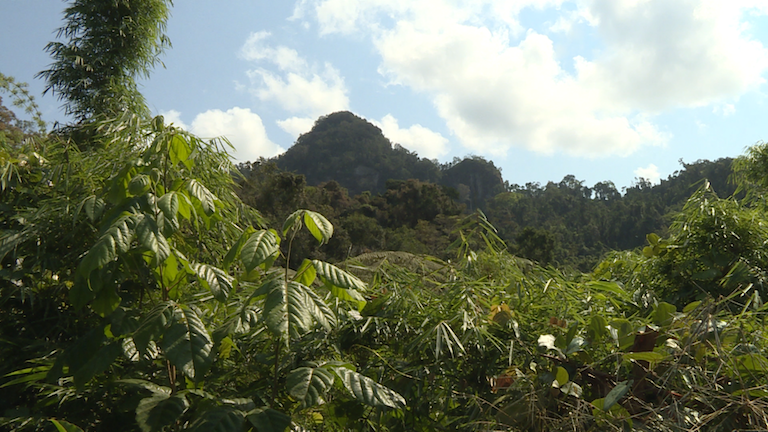
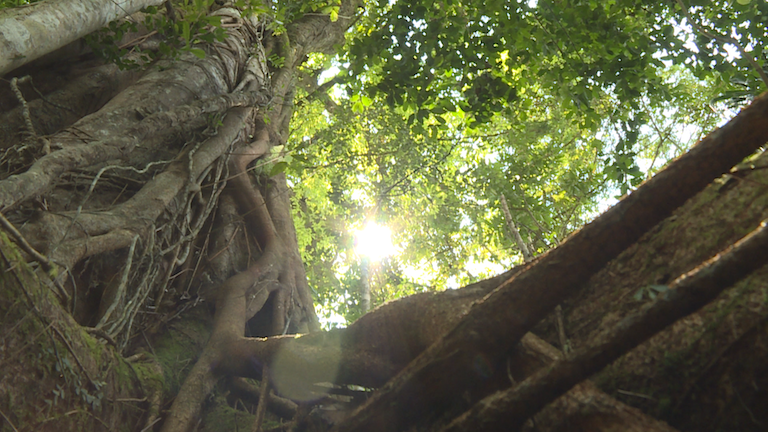
In the last 50 years, Madagascar has lost more than 40 percent of its forest cover. National parks such as Masoala and Marojejy, which bore the brunt of the rosewood crisis, are home to numerous endemic species, including the iconic silky sifaka lemur (Propithecus candidus). It and many other of the country’s animals are now critically endangered, due in part to the pace of deforestation.
All species of rosewood are threatened. The logging crisis saw century-old trees slashed and hauled through previously untouched forest, affecting thousands of square meters of protected areas. Hundreds of logging camps sprang up across the island, as gangs jockeyed to get a slice of the Chinese market. The destruction can still be seen on tourist trails today.
Tourism is the backbone of Madagascar’s economy, contributing $702 million each year, according to the Ministry of Tourism. It often benefits communities who live near the island’s most precious natural resources. Franco Rajaonarison, a local guide, said he stills feel sad at seeing the stumps of what were once “big and beautiful” trees.
“If we have no forest, no rain, and the life is more difficult to live because we need the water. And no tourist to come here and then we have no job. So that’s why I want to protect this forest,” he said.
An EIA report from 2014 found that “less than 1% of the profit from this completely illegal trade remains within Madagascar — the lion’s share flowing to Chinese manufacturers and traders, and siphoned into the offshore accounts of timber barons and corrupt officials.”

Decision time
Madagascar’s application to sell its stockpiles is being considered by experts at CITES, who will make recommendations to its standing committee at a meeting at the end of this month.
Madagascar has previously applied to sell its stockpiles, but last year CITES decided that it had not made enough progress to warrant any such sale. In 2016, it called on the country to strengthen law enforcement against illegal logging and export, including making progress in seizures, investigations, arrests, prosecutions and sanctions.
But campaigners are concerned that the Madagascar government will leverage even more pressure this year, as an election looms and the government pursues all the resources it can get.
CITES and the conservation community will once again scrutinize an island often described as a paradise on Earth, home to leaf-tailed geckos (Uroplatus phantasticus), helmet vangas (Euryceros prevostii) and an array of lemurs found nowhere else.
Jaofeno of the Lemur Conservation Foundation summed up what needs to be done: “It’s time to protect what we have left and save it for the next generation.”
Dan Ashby and Lucy Taylor are East Africa correspondents for the global news agency Feature Story News, based in Tanzania. Their investigations into wildlife trafficking, the ivory trade, poaching and blast fishing have been published by numerous international channels, and their work has previously been nominated for Royal Television Society and One World Media awards. Follow them on Twitter: @danielashby and @lucytaylor.

FEEDBACK: Use this form to send a message to the editor of this post. If you want to post a public comment, you can do that at the bottom of the page.