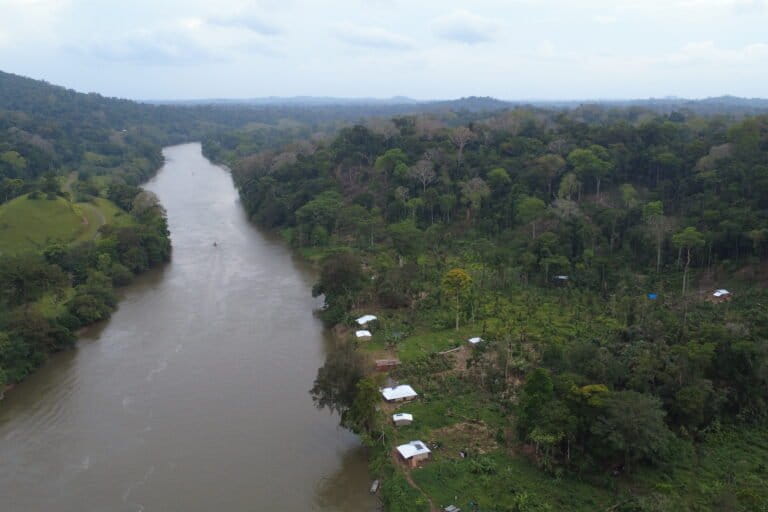
- Recent archaeological findings, bolstered by laser-based lidar mapping and by archaeologist Stéphen Rostain, reveal that the Amazon supported vast and complex ancient urban societies.
- In an interview with Mongabay, Rostain says the ancient Upano Valley culture in Ecuador collapsed due to severe drought, offering a stark warning for the Amazon’s current climate vulnerability.
- Rostain says he’s hopeful that a new archaeological understanding of the Amazon will challenge centuries of prejudice against Indigenous people and offer answers for the future.
Born in the French city of Brest in 1962, archaeologist Stéphen Rostain has worked in the Amazon for more than 40 years, primarily in French Guiana and Ecuador. He has authored or co-authored more than 450 publications on the rainforest’s past and present, including some 45 books.
In January 2024, Rostain made a big splash as the lead author of a Science paper on the Upano Valley’s “urban garden culture” in the eastern Ecuadorian Amazon. It led to an avalanche of headlines around the world, many of which overly claimed a “lost city” had been found, and sparked new interest in Amazon archaeology. “I thought perhaps 10 journalists would contact me for an interview. But I did 10 to 20 interviews a day,” Rostain told Mongabay.
As director of research at the French Institute for Scientific Research, Rostain isn’t very positive about the future of the Amazon. As deforestation continues and global temperatures continue to rise, he said the Amazon has already reached a turning point and is on its way to partially becoming a savanna.
The profound changes in Western thinking about the rainforest that have taken place over the past decades offer a glimmer of hope. This includes the shift in our perception of the Amazon’s past and an end to the centuries of prejudice toward Indigenous people.
“Our preconception has long been that the ‘Indians’ are just savages and their oral traditions just crazy legends,” Rostain told Mongabay in June. “Thankfully, that has changed. Twenty years ago, very few were interested in what the Indigenous people had to say. Now, more and more scientists take them seriously. And we know now that their myths are based on historical data. That offers hope.”
This year, Rostain aims to add another five titles to his bibliography, including an English translation of Archéologie de l’Amazonie (“Archaeology of the Amazon”), which contains contributions from many of the world’s leading experts on the history of the rainforest and its people.
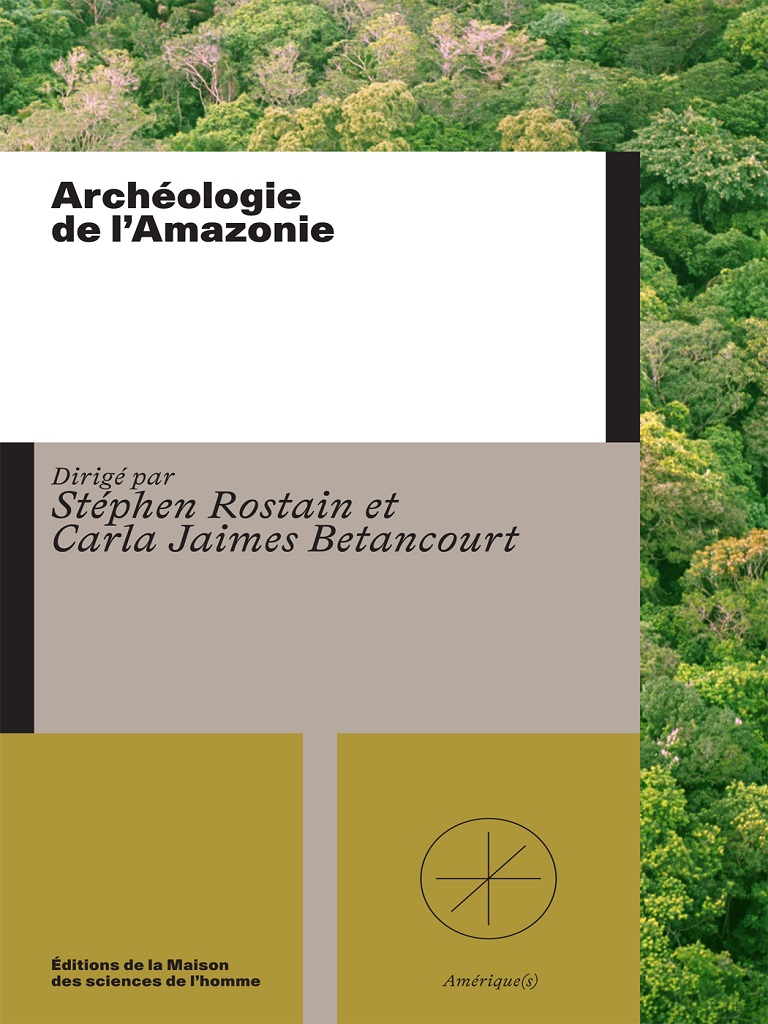
Rostain spoke with Mongabay, among other things, about women archaeologists, his early years in French Guiana, and the value of Indigenous oral tradition. The following interview has been lightly edited for length and clarity.
Mongabay: Published in 2020, your award-winning book Amazonie, l’archéologie au féminin (“Amazonia, feminine archaeology”), portrays 23 female archaeologists and their work. Why a book specifically on women?
Stéphen Rostain: In 2017, I read a Brazilian paper saying there were some 100 female and some 50 male archaeologists working in the Amazon. The paper also claimed that all of them cited male archaeologists more than female ones in their work. I thought that was interesting, a sign of our patriarchal society perhaps, and a good reason to write a book.
Of course, I asked all archaeologists portrayed in the book for permission beforehand and sent them their chapter for approval. Still, I didn’t always receive positive reactions afterwards. One colleague asked me how a man could write a book about women. “It’s easy,” I replied. “With pen and paper.” She didn’t like the joke. Another one asked me why I didn’t write the book with a woman. Frankly, I hadn’t thought about it. Maybe I should have. Thankfully, I did co-author three books with a woman before publishing this one.
Mongabay: Why do you think female archaeologists are well represented in the Amazon?
Stéphen Rostain: I’m not sure. One explanation I’ve heard is that under the Brazilian military dictatorship, it was one of the few disciplines easily accessible to women, but I am not convinced by this reason. Under Brazilian President Lula’s first term, education became more accessible for many Brazilians, including women. That may have helped. But perhaps women are just braver than men.
Mongabay: Most archaeologists dream of working among the monumental remains of, say, ancient Rome, Mesopotamia or the Mayan empire. Born in Brittany in the north of France, how did you end up in the rainforest?
Stéphen Rostain: Having entered the Sorbonne University in Paris, I started by following the normal path. Regarding Latin America, you had a choice: Mayan, Mayan or Mayan. So, in 1982, I headed to Mexico and Guatemala for my master’s. But I didn’t like the Mayas’ hierarchical society, the sacrifices, and the focus on warfare and expansion.
After graduating, I had the opportunity to work as an archaeologist for an organization in French Guiana. And I loved it there, especially the people. I decided I wanted to do my Ph.D. in French Guiana. But at first, that was not encouraged at all. “No one is interested in the archaeology of the Amazon, you’ll never get a job,” I was told. Thankfully, I am from Brittany. We are very stubborn people.
Mongabay: Could you tell us a bit more about your work in French Guiana at the time? How has that helped change our perception of the past?
Stéphen Rostain: Thanks to aerial archaeology. One of the first things I did was fly over French Guiana in an ultralight plane, even though I was again discouraged at first. “It’s useless, you will not see anything,” I was told. Which is true when standing on the ground. But from the air, I saw numerous mounds. Beautifully organized. Like a chessboard.
Later, I also found evidence of agricultural practices, especially maize [cultivation], and many Neolithic tools. Most mounds were used for raised-field agriculture in the seasonally flooded coastal savannas.
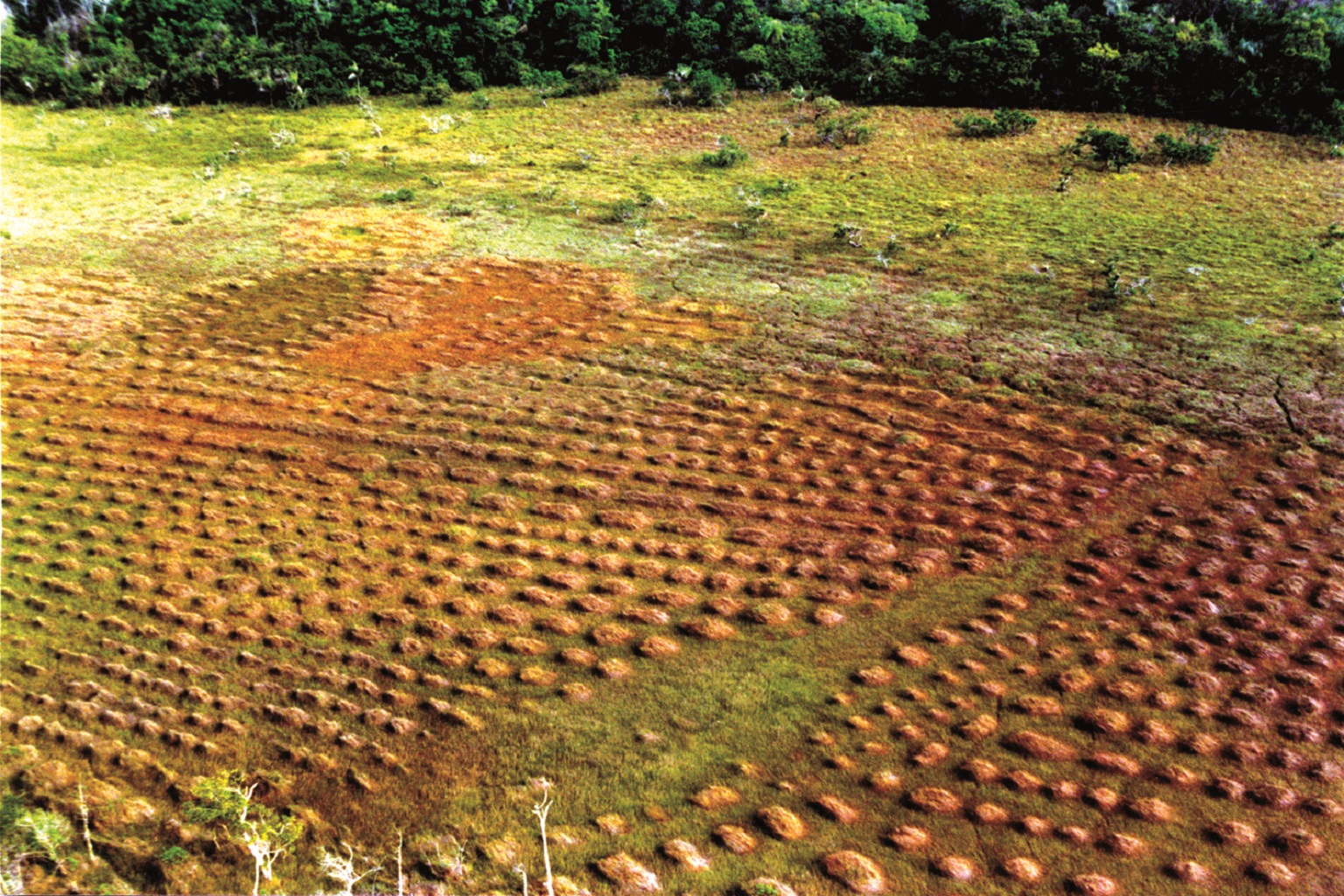
When I first suggested the mounds were man-made, I was met with disbelief. They had to be natural or built by colonial prisoners or slaves, I was told. The idea that they had been built by Indigenous people prior to the arrival of the Europeans back then was just not accepted.
The first problem the Amazon faces is prejudice. For many years, the Indigenous people were portrayed as savages. For years, we denied them their human capacity.
Up to the year 2000, the average scholarly handbook on French Guiana claimed history started in 1604 with the arrival of the French. Before that, there was only the savage, who didn’t want to be civilized. For a very long time, that was the official line.
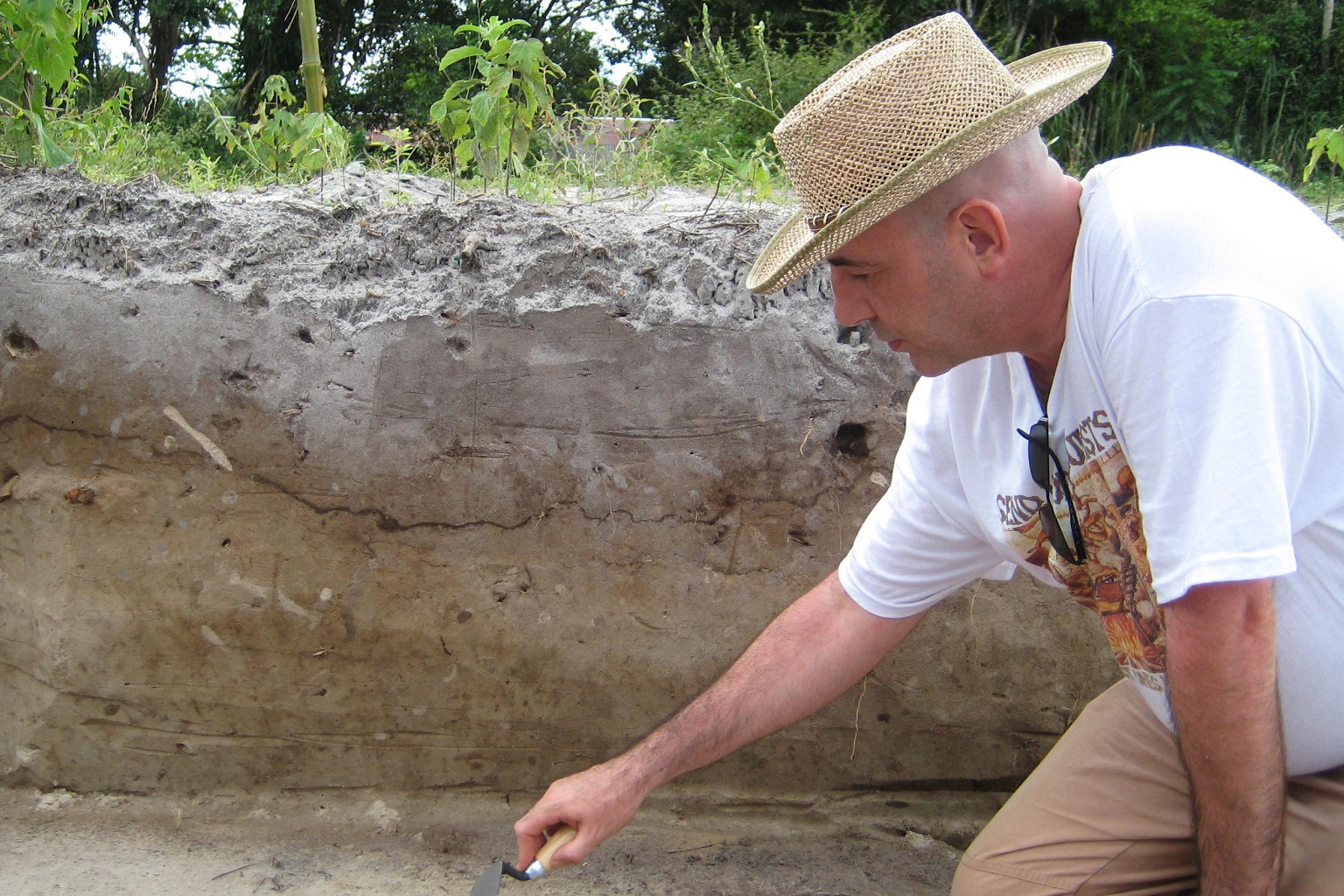
Mongabay: From 1996 onward, in two phases, you lived for years in Ecuador where you excavated in the Upano Valley in the eastern foothills of the Andes. What was the general picture of precolonial life you established at the time?
Stéphen Rostain: It was the Ecuadorian priest Pedro Porras who first excavated the main mound in the Upano Valley. He published a book on the site in the late 1970s. The book has some crazy interpretations, but it was Porras who first put the valley on the map. After that, nothing was done for years.
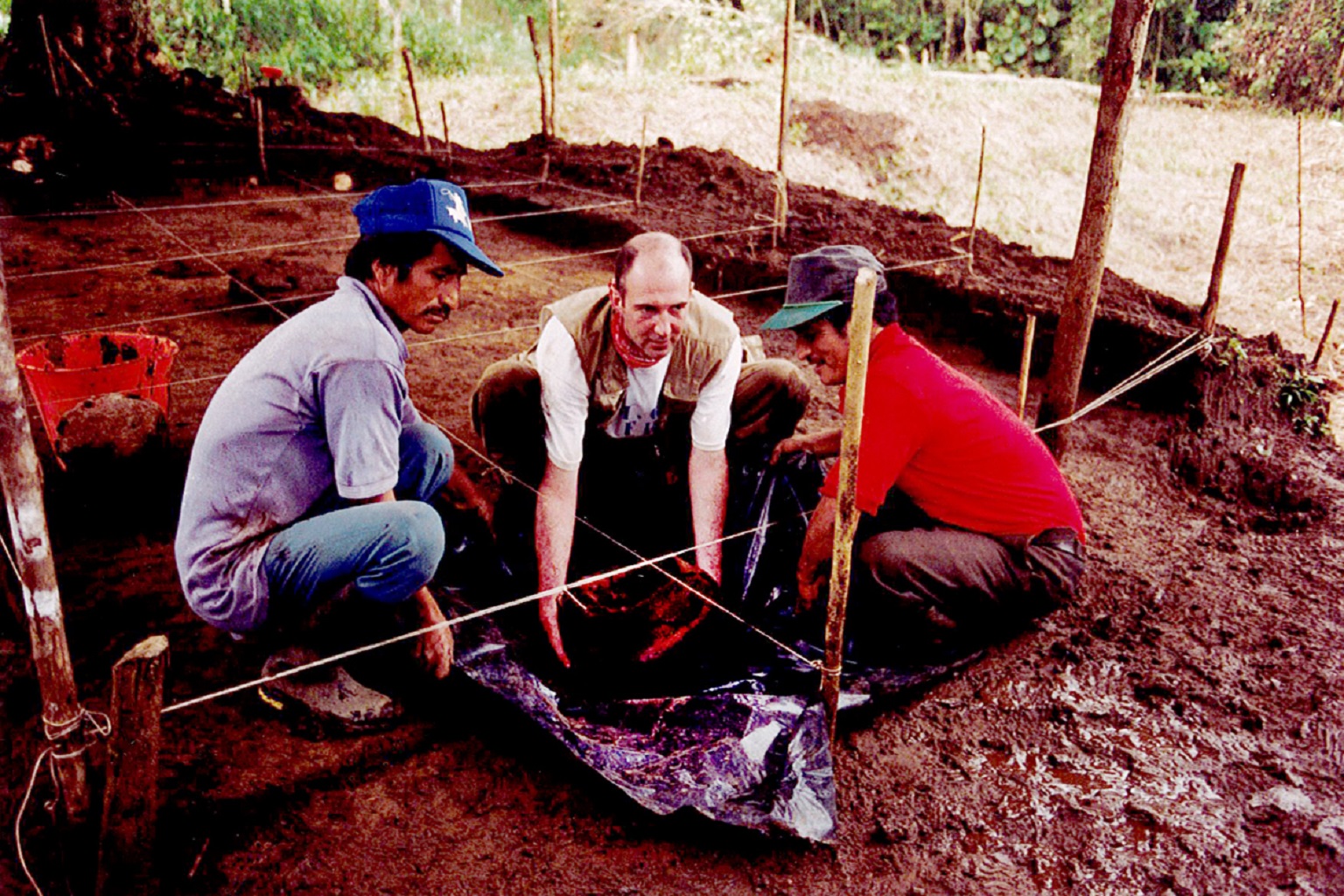
I arrived in the mid-1990s to do a project with the Ecuadorian archaeologist Ernesto Salazar for two years, and then I continued with other collaborators up to 2003. We managed to establish a good panoramic overview, as well as a good chronology and stratigraphy of the site. We did 70 radiocarbon datings, which is a lot.
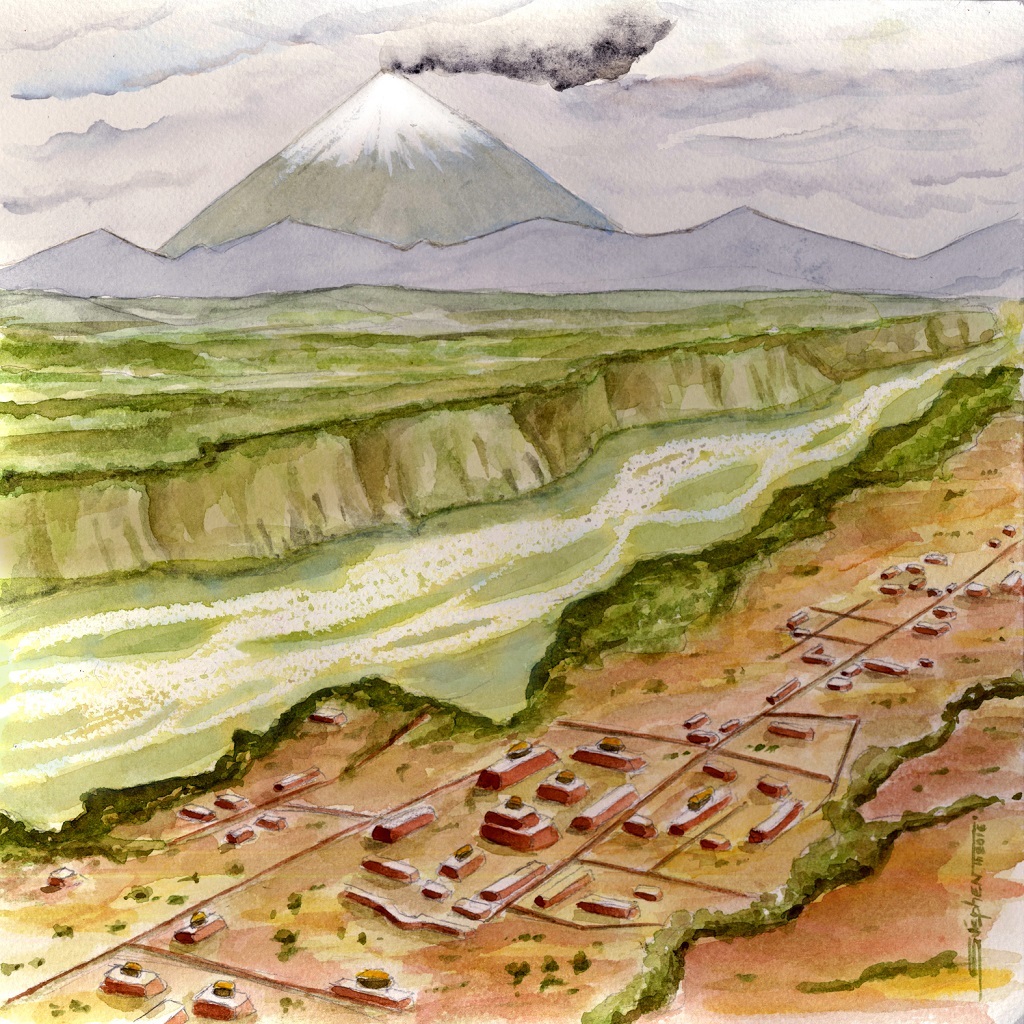
It turned out to be a huge site, consisting of many more mounds than the one that Porras had focused on, and it had an extensive road network. But at the time, we thought there were dozens of mounds. Maybe even 100. But lidar [laser-based mapping] proved me wrong.
Meet Pedro Porras, the priest who first rediscovered Amazon ancient cities
Mongabay: In January 2024, you were the lead author of the Science paper “Two thousand years of garden urbanism in the Upper Amazon,” which presented the main results of a lidar survey of the region. Who did the survey? And what new insights did it bring?
Stéphen Rostain: Ecuador’s National Institute of Cultural Heritage (INPC) in 2015 hired a Russian pilot, a former colonel of the Russian army, to do the remote sensing. The Ecuadorian army put a plane at his disposal. I had to wait for some years before I was given the data. We interpreted lidar imagery with the archaeologist Antoine Dorison, a specialist in remote sensing.
And I was shocked. I had worked seven years in the field in the Upano Valley, and after seven years we had a pretty good picture. To realize the site was so much bigger than I initially thought came as a total surprise. The lidar data showed a minimum of 6,400 mounds in an area of some 600 square kilometers [about 230 square miles]. One site alone had some 700 mounds.
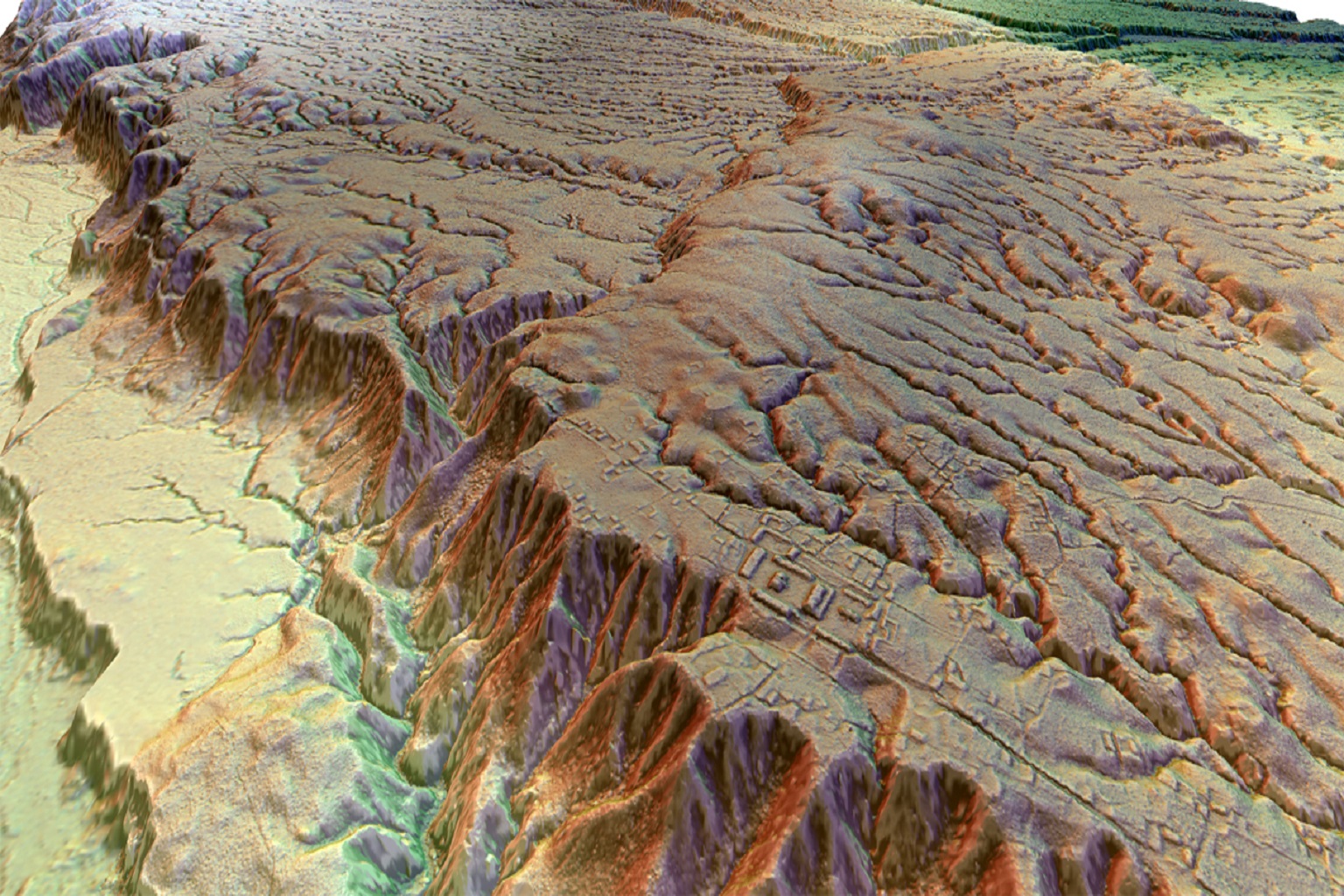
And the data showed tens of kilometers of perfectly straight roads. Of course, I’m familiar with Michael Heckenberger’s work in the Upper Xingu. He also found an extensive road network. But in the Xingu, it’s more of a radiant circular nature. In the Upano Valley, it’s a Manhattan-like grid.
We finished our paper analyzing the data in the summer of 2022. But just then, Nature published a paper on the results of a lidar survey in Bolivia. We thought that would prevent us from getting good exposure. So we decided to wait, almost one year.
Mongabay: The Upano culture came to an abrupt end around 600 C.E. What do you think happened?
Stéphen Rostain: At first, we thought a massive eruption of the Sangay volcano caused the culture to collapse, as we had found several layers of probable black volcanic soil. But we know now that wasn’t the case. There may have been some small eruptions, but not one big one.
Our main assumption today is that the rapid decline was due to what is known as a medieval anomaly in the history of the Amazon: a period of drought that occurred around 600 C.E. Complex hierarchical cultures dependent on the intense exploitation of relatively small territories, such as the one in the Upano Valley, proved very fragile facing such climatic changes. Still, we shouldn’t forget that the Upano Valley culture lasted for some 1,600 years. That’s longer than the Roman Empire.
Mongabay: The Science publication led to a media blitz with headlines screaming in dozens of languages that a lost city had been discovered. It seems many journalists didn’t do their homework?
Stéphen Rostain: It seems many didn’t even read the Science article. Headlines with terms as “lost city” were, of course, not mine. I’d never use such words. Science had told me I should expect some media attention. So I thought perhaps 10 journalists would contact me for an interview. But I did 10 to 20 interviews a day.
Mongabay: As an archaeologist, you have helped bring about a remarkable shift in the way we perceive the Amazon’s past. For years, environmental determinism was the dominant theory, which taught us that the Amazon was too hostile and infertile to support any complex culture. Today, almost the exact opposite is true. Can we speak of a revolution?
Stéphen Rostain: I’d say there have been three revolutions that have changed our view of the Amazon. By the late 1970s, there was a strong rejection of the environmental determination theory, which was first brought about by anthropologists such as William Balée, Darrell Posey and Philippe Descola, followed by archaeologists such as Anna Roosevelt, Eduardo Neves, Michael Heckenberger and myself. Today, almost everyone rejects the old paradigm, although on a popular level the notion of the Amazon as “the ultimate wilderness” is still very alive.
The second revolution took place between 2000 and 2015 and saw an explosion of research and researchers. In Brazil, for example, Lula invested in education and research, which saw many women enter the field. There was also a significant improvement in scientific techniques such as paleoclimatology and paleobotany. These subdisciplines were crucial in providing a better understanding of the rainforest’s past.
And then, since 2015 or so, there has been another technical revolution: lidar. The remote-sensing technique has greatly helped us in seeing the past with different eyes. Archaeologists are still “the poets of history,” although they’ve become more and more technicians. We shouldn’t forget, however, that lidar is only a tool that requires interpretation.
Mongabay: How does the changed paradigm, our changed perception of the Amazon’s past, help us face the future?
Stéphen Rostain: It offers hope. Personally, I believe that the Amazon has already reached a turning point. Last year, we saw a smaller number of fires but a larger amount of destruction. The humidity of the rainforest long offered some protection against the fires. But now it’s so dry that it just burns. I think the Amazon could follow the path of the rainforests in Central Africa and partially become a savanna.
The changed paradigm helps offer some hope for survival. It will not be able to save everything, but perhaps some things. It’s part of a pattern of profound changes in our thinking over the past decades. In terms of feminism, racism and other aspects of humanity, we’ve started to see the excesses of our attitude towards the world.
One such aspect concerns our attitude towards Indigenous peoples. Our preconception has long been that “Indians are savages.” “Don’t listen to them,” we were told. “Their oral traditions are just crazy legends.” But we now know that their myths are based on historical data.
If you read one of my books, you will arguably forget what was written within a year or two. Even I do. But if you hear the same stories about the sun, the trees, the jaguar, week in, week out, you will remember them for life. This oral tradition has traveled through the ages. With time, the stories become more marvelous, but at heart they are still true.
For example, many Indigenous myths speak about the rains that stopped falling. We know now, thanks to palaeoclimatology, there was a drought in the 13th, 14th century. Indigenous people also speak of a big war. And we know with archaeology that in the 13th, 14th century Indigenous groups from the interior moved towards the coast in search of water and land, which arguably led to conflict.
We have to learn how to listen to the Indigenous people more. Not treat them as an object to be studied and classified, but as a subject. And, thankfully, that is happening. Ten years ago, no one was interested in what the Indigenous people had to say. Now, more and more scientists take them seriously. That offers hope.
Also, more and more Indigenous people are entering the world of science. They want to study archaeology or anthropology. They want to write their own history. And that too is positive. They often see and do things in a different way. For example, Jaime Xamen Wai Wai, an Indigenous archaeologist with an academic diploma, says: “Why are you archaeologists always looking down to the ground? Look up. Look at the trees. Look at which trees have been domesticated or introduced.”
Mongabay: Your book Amazonie, l’archéologie au féminin starts with Betty Meggers. As she laid down the foundations of environmental determinism, she was long considered the “queen” of archaeology in the Amazon. As that theory has fallen, does that mean Meggers is no longer valid? Or are other aspects of her work still important?
Stéphen Rostain: She was the first to put forward an archaeology of the Amazon. And although many scholars don’t agree with that theory today, her contribution to science still stands. Science is not a solid thing. It’s always in motion. And thankfully so. Suppose the first archaeologist was right in everything. Then there would be nothing left to do for the generations that followed.
Apart from that, Meggers introduced certain techniques that are still in use. She was also very meticulous in presenting her primary data, which will be a great asset for future research. She also pushed archaeology as a discipline in all Amazonian countries, where she long had her loyal followers.
However, there has been talk of profound paradigm shifts in the discipline over the past 50 years or so, and of new generations of archaeologists. They have proposed, and continue to propose, alternative ways of understanding the ancient history of Amazonia.
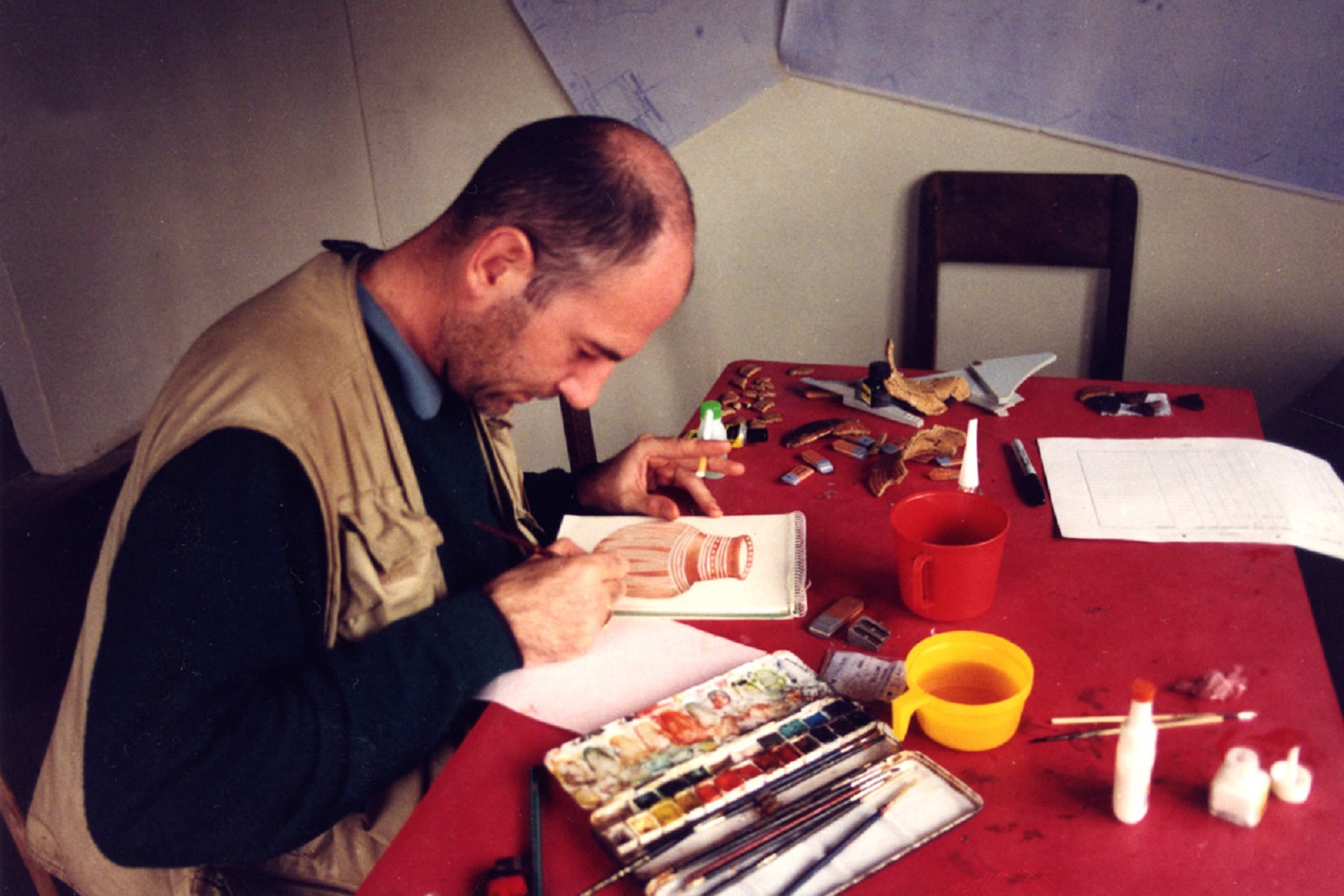
Banner image: A young Rostain takes a break along a river in French Guiana, where he started his archaeological career in the late 1980s. Image courtesy of Stéphen Rostain.
Citations:
Rostain, S., Dorison, A., De Saulieu, G., Prümers, H., Le Pennec, J., Mejía Mejía, F., … Descola, P. (2024). Two thousand years of garden urbanism in the Upper Amazon. Science, 383(6679), 183-189. doi:10.1126/science.adi6317
Prümers, H., Betancourt, C. J., Iriarte, J., Robinson, M., & Schaich, M. (2022). Lidar reveals pre-Hispanic low-density urbanism in the Bolivian Amazon. Nature, 606(7913), 325-328. doi:10.1038/s41586-022-04780-4
New conservation model calls for protecting Amazon for its archaeological riches
FEEDBACK: Use this form to send a message to the author of this post. If you want to post a public comment, you can do that at the bottom of the page.
Credits