- After repealing a measure that banned large-scale mining and hydrocarbon extraction in the Amazon, the Colombian government is sending mixed signals, organizations and experts warn.
- The measure is symbolic, but it calls into question the international leadership Colombia had built in a region approaching a tipping point in forest transformation. The Colombian Amazon alone contains 14 million hectares (34.6 million acres) of oil and gas blocks.
- Experts consulted by Mongabay warn that the extent of the Colombian Amazon’s loss of protection will also depend on the Colombian government’s recognition of Indigenous Territorial Entities — with which it has held no dialogue.
- The Colombian Ministry of Environment has defended the move, saying 75% of the Amazon remains under protection schemes and that the repealed resolution was merely an administrative act that created “economic and territorial uncertainty.”
Colombia’s government, led by far-right President Abelardo De la Espriella, has sought to distance itself from the environmental policies of his 2022-2026 predecessor, left-wing Gustavo Petro, including those affecting the Amazon. The new administration in Bogotá recently repealed Resolution 0961, which prohibited large-scale mining and hydrocarbon extraction in this region, a move that experts say weakens protections not only for the biome but also for the Indigenous peoples who sustain it.
The Ministry of Environment argues that the resolution was repealed because it was enacted without prior consultation with the region’s Afro-Colombian, Raizal and Palenquero traditional communities, and the measure does not, by itself, guarantee the Amazon biome’s protection.
However, experts consulted by Mongabay say that, beyond repealing a measure — which was not the only one protecting the Amazon — the decision is also a political gesture that casts doubt on Colombia’s hard-won leadership in environmental protection.
Organizations say that despite this leadership role, fossil fuel extraction and its infrastructure have accelerated forest loss in the Colombian Amazon, paving the way for other industries such as logging, mining and agriculture.
A 2025 report by Earth Insight, the International Institute for Sustainable Development (IISD) and the National Organization of Indigenous Peoples of the Colombian Amazon (OPIAC) warns that 14 million hectares (34.6 million acres) of oil and gas blocks cover 28% of the Colombian Amazon — with 8 million hectares (19.8 million acres) overlapping intact forests.

A symbolic measure that raises alarms for the Amazon
The resolution the government has recently repealed ordered the protection of more than 48 million hectares (118.6 million acres) of the Amazon from new large-scale mining and fossil fuel extraction.
Although incumbent authorities argue it was an “administrative act” that created “economic and territorial uncertainty,” civil society organizations say it was an important complementary measure, marking the first time a country had moved to declare the Amazon biome a zone free of extractive industries.
Raphael Hoetmer, director of Amazon Watch’s Western Amazon Program, says the repeal can be seen as an endorsement of efforts to advance oil and mining projects in the region. “The measure was probably not entirely effective as a protection, and neither is the repeal, but politically it was extremely important, and the repeal is as well,” the researcher says.

Colombian Environment Minister Fabio Arjona said in a video shared on social media in November 2026 that the Amazon protection did not begin with the resolution issued by the administration of former President Petro, arguing that a large percentage of the Amazon is covered by protection measures for lying within Indigenous territories and national parks.
He also said he had designated 25 areas of the country as Other Effective Area-Based Conservation Measures (OECMs). “We have more than 75% of the Amazon under protection, also including reserves established under the Second Law. Protection did not begin with this rushed resolution that ‘magically,’ on top of all the existing protections, imposes restrictions across the entire Amazon,” Arjona said.
The minister dismissed the possibility that the repeal would lead to the granting of mining licenses or titles in the Amazon. “It simply repeals the previous resolution, because it was handled poorly and failed to take into account consultation with the Amazon’s Afro-descendant communities. A partial repeal is not legally permitted; it has a fundamental flaw,” he insisted.
Mongabay contacted Colombia’s Ministry of Environment for further comment on the government’s position regarding its decision on mining in the Amazon, but the agency declined to discuss the issue.
Hoetmer, however, warns that the measure comes amid mounting extractive pressure in the Colombian Amazon, especially in the Putumayo region (bordering Ecuador to the south and Peru to the southeast), which contains more than 70% of production blocks and more than 250 active wells, according to the organizations’ 2025 report.
“We have to leave the oil underground; we cannot continue to damage the Amazon when it is close to the tipping point of transforming from a tropical rainforest into a dry savanna. This message from the Colombian government conveys an intention not to consider any of this,” the expert warns.

Juan David Varela, coordinator of the socio-legal laboratory for public-sector innovation at the Gaia Amazonas Foundation, says a series of measures can still safeguard the Amazon and strengthen Indigenous governance. However, he says the recent government decision eliminates a resolution that complemented existing environmental protections.
“Repealing this resolution does begin to weaken that entire protection framework, but it is important to say that what is written on paper is one thing and what happens in reality is another. Even if legal hydrocarbon and mining activities are excluded, this was not a safeguard against the illegal activities taking place in the Amazon either,” the expert says.
Varela recalls that the protections had also been insufficient to address illegal mining and emphasizes that the repeal simultaneously struck down a resolution that resulted from dialogue with Indigenous communities.
Earth Insight, an organization that develops tools to halt the expansion of fossil fuel and mining industries in key ecosystems and Indigenous communities, says repealing the resolution on the grounds that “Afro-Colombian communities were not consulted” is contradictory, even as the government pushes changes to the rules governing this process.
“It is contradictory that one week before overturning Resolution [0961] on those grounds [the lack of prior consultation], the government announced changes to the consultation regulations,” the organization told Mongabay.
The organization also said the move sends a contradictory signal to the international community about Colombia’s commitments to protect 30% of the planet by 2030 and to pursue a just transition away from fossil fuels.
“We call on the Colombian government to immediately restore effective protection against new extractive activities throughout the Amazon, complete prior consultation processes, specifically those involving Afro-Amazonian populations, and curb the expansion of oil and mining blocks that are incompatible with its conservation,” it said in a statement issued with other civil society organizations.

Risks for Amazonian communities and Indigenous Territorial Entities
The organizations and experts consulted by Mongabay emphasize that the De la Espriella government’s approach to recognizing Indigenous Territorial Entities (ETI) will be a decisive factor in whether the Amazon is protected or left more vulnerable.
This legal framework recognizes the political, administrative and fiscal autonomy of populations that had fought for this recognition for decades. At the end of 2025, Petro’s government signed decrees formally recognizing eight ETIs covering more than 7 million hectares (17.3 million acres), equivalent to 15% of the Colombian Amazon. They comprise the territories of Yaigojé Apaporis, Mirití Paraná, Río Tiquié, Bajo Río Caquetá, PANI, ARICA, Ríos Cotuhé y Putumayo and UITIBOC–ASOAINTAM, located in the country’s Amazonas and Vaupés departments.

“The aim of the Indigenous peoples of the Colombian Amazon is to establish channels for dialogue with the government so that it recognizes the need for a differentiated approach to Amazonian Indigenous peoples and the Territorial Entities in the Amazon, although the government’s position is still unclear,” Earth Insight told Mongabay.
Regardless of the repeal, the organization says Amazonian ETIs play a key conservation role by governing their territories through their own knowledge systems.
“Indigenous knowledge systems take shape in territorial management practices and strategies that have ensured territorial protection and well-being for decades, regardless of whether they are recognized,” the organization said.
Meanwhile, Varela of the Gaia Amazonas Foundation says the government has misinterpreted the ETI process by associating it with the actions of other administrations.
“With the change of government, there has been a loss of institutional memory regarding the process of the Indigenous Territorial Entities. That lack of understanding also existed under the previous government. It is a process that did not begin with any government but is instead rooted in constitutional developments dating back to 1991,” the expert told Mongabay.
Varela says distrust and discrimination toward the ETI process further complicate the state’s relationship with this form of Indigenous autonomy, resulting in institutional paralysis: “All the issues on which progress needs to be made have so far been put on hold.”

For Varela, the Colombian Constitution should not depend on any government, but he warns of the risks of failing to advance the recognition of rights already enshrined. “There are risks to the extent that the government does not understand that this process of the Indigenous Territorial Entities is not a process belonging to one government, but rather seeks to consolidate the state in border areas, progressively advance the realization of fundamental rights and, of course, provide the legal, regulatory and institutional conditions needed to make comprehensive protection of the Amazon a reality.”
So far, De la Espriella has not spoken publicly about recognizing the ETIs. During an official visit to the municipality of Leticia in Amazonas on Nov. 5, the conservative president said one of his tasks in the region would be to develop a regenerative bioeconomy through the “sustainable use of Amazonian fruits and other natural resources” for the food, pharmaceutical and cosmetics industries.
“If we have to devise a special framework to bring companies here, we will do so because our commitment to this region is absolute. An abandoned region cannot compete under the same rules as other regions, so we have to create a statute for our Amazon region,” the head of state said.
The story was originally published in Spanish on Nov. 8, 2026.
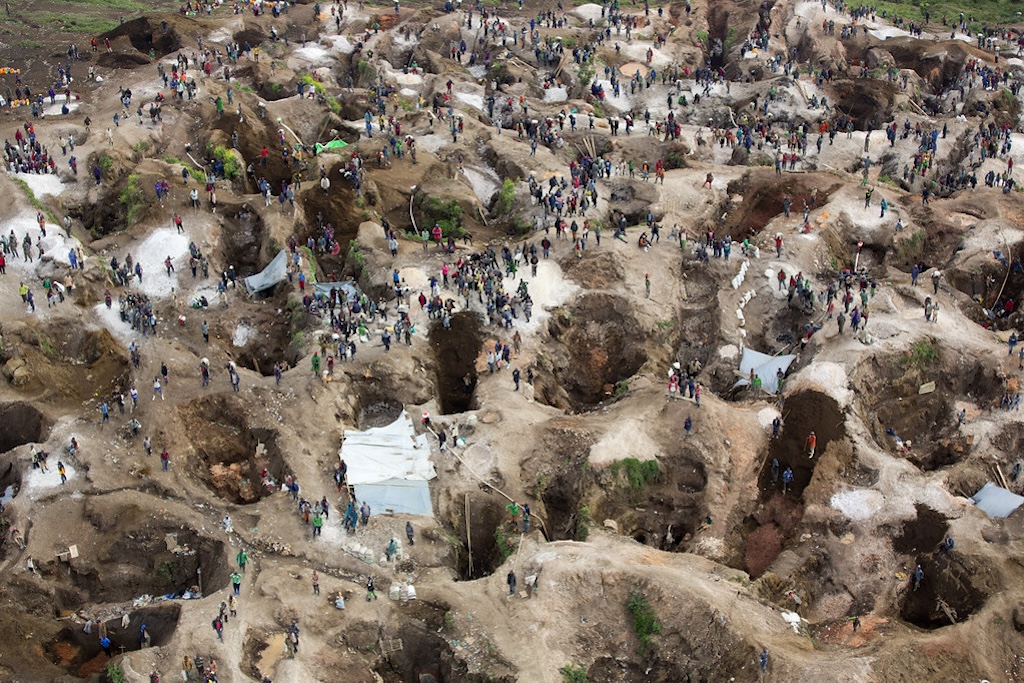
Banner image: The De la Espriella government reversed a resolution banning new hydrocarbon extraction and industrial mining activities in the Amazon. Image courtesy of the Colombian Presidency.
Amazon communities lose water as mining and deforestation reshape rivers
Indigenous peoples and local communities solidify decision-making powers at COP17
Cite this article
Gonzalo Ortuño López (2026). Colombia president’s move on mining, oil weakens country’s Amazon protections, experts warn. Mongabay Conservation news. DOI: https://doi.org/10.66709/news-336493Credits