


- Ever since Mitú was first established as a settlement in 1935, it has rapidly transformed into an expanding urban town in one of Colombia’s most isolated departments.
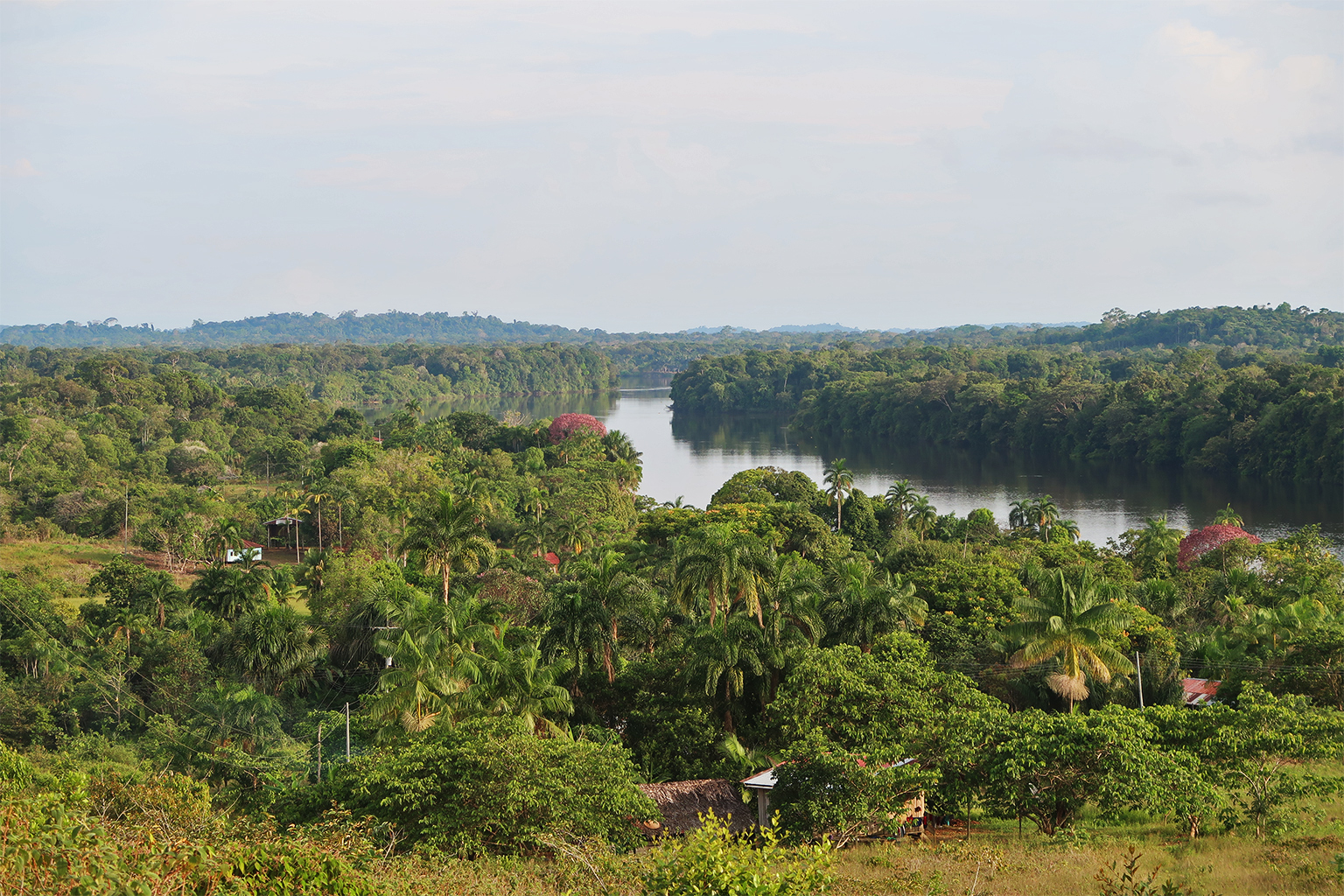
- The Amazonian forests, rivers and Indigenous communities who surround Mitú are impacted by urbanization, the overexploitation of natural resources, cattle ranching, illegal mining and timber extraction which have caused deforestation, soil degradation and water pollution.
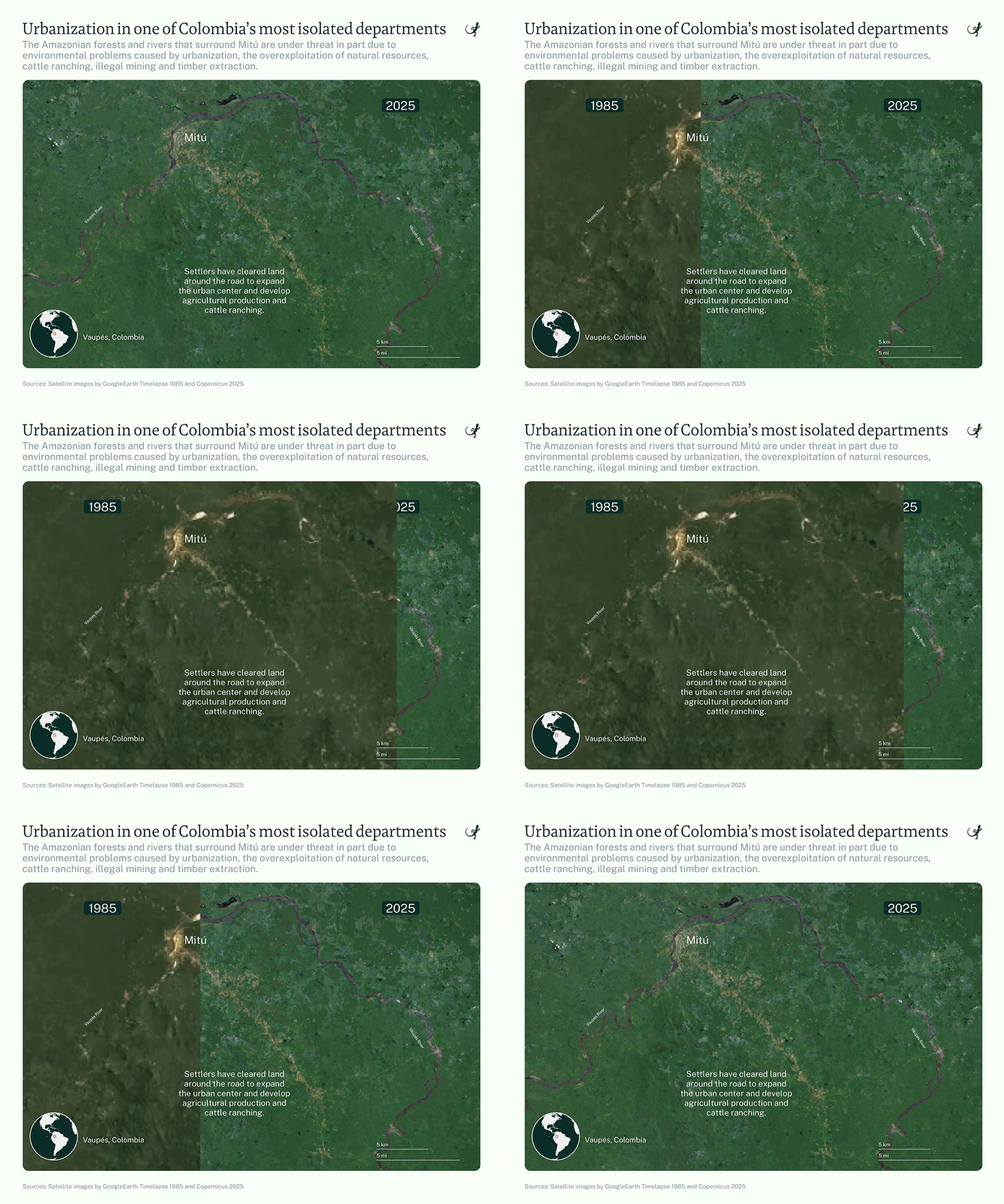
- Researchers say the construction of a highway from Mitú to Monfort has attracted settlers who cleared land around the road to expand the urban center and develop agricultural production and cattle ranching.
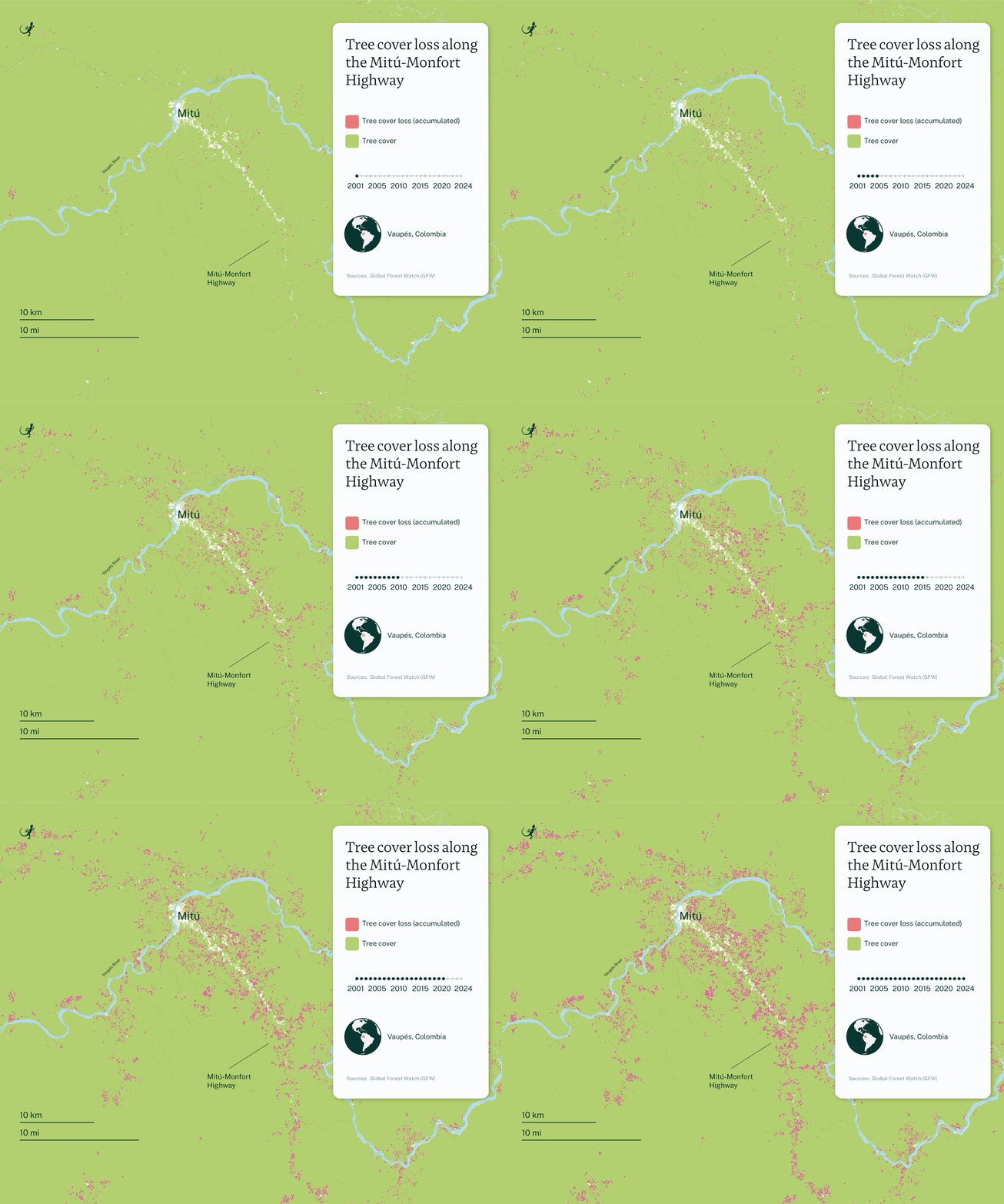
- Mongabay found 10,000 hectares (24,710 acres) of tree cover loss in Mitú since 2014.
MITÚ, Colombia — Beneath the rising sun, people from nearby Indigenous communities navigate across the Vaupés River in traditional wooden canoes toward Mitú, a rapidly expanding town in the Colombian Amazon. The canoes are packed with fish, plucked from the river’s tea-colored waters hours before, and produce, harvested from their traditional gardens. To reach the town’s market, where merchants wait above a concrete slipway, the canoes stream past huge concrete sewage pipes and a statue of the Virgin Mary.
As they navigate farther in, they’re no longer in the Great Vaupés Indigenous Reserve, an Indigenous territory whose borders surround Mitú and its connecting highway. They’re now in an urban frontier experiencing staggering changes in the middle of the Amazon Rainforest.
Today, Mitú’s population has swelled to almost 30,000, from just over 4,000 five decades ago. This is due to an influx of Indigenous people who move between their traditional communities and the urban center, and non-Indigenous settlers who have established businesses or work for research centers or NGOs.
The population boom is also due to illegal gold mining by organized crime groups and the illegal extraction of critical minerals in the wider region, including coltan, which is used in electronics and in electric vehicle batteries. Residents, NGOs and authorities have also reported an expansion in cattle farming and the illegal extraction and trafficking of timber, fish and animals.

“More and more settlers are migrants from Caquetá [department] and other regions … and you can see how this is creating pressure on the local communities,” said Ana María Zuluaga, a communications coordinator at the Center for Intercultural Medical Studies (CEMI), an NGO that works closely with Indigenous communities in the area. “Cattle ranching, deforestation for timber and mining are very clear threats, and I would also say that colonization in Colombia is heavily influenced by the violence perpetrated by other groups in different territories.”
There are few studies that have assessed the precise effects of these activities on the environment. Data from Global Forest Watch suggests there’s been 10,000 hectares (nearly 25,000 acres) of tree cover loss in Mitú since 2014.
Residents blame the growing urban center for the increase in deforestation, soil degradation and water contamination. These environmental problems, combined with the loss of traditional spiritual and cultural beliefs among local Indigenous people, threaten to destroy this well-preserved tropical rainforest in the Amazon Basin, according to members of the mostly Cubeo Indigenous Macaquiño community near Mitú.
Colombia’s Ministry of Health and Social Protection, the Mitú mayor’s office and the municipal health department didn’t respond to Mongabay’s requests for comment by the time this story was published.
A criminal front
Mitú, the largest and primary urban center in the department of Vaupés, serves as a critical logistical center and transit hub for criminals wishing to transfer illicit goods such as gold from the vast Amazonian forests to national and international markets. The area surrounding Mitú is largely composed of Indigenous reserves, including Great Vaupés Indigenous Reserve, which consists of 17 Indigenous associations close to the town, and national natural parks.
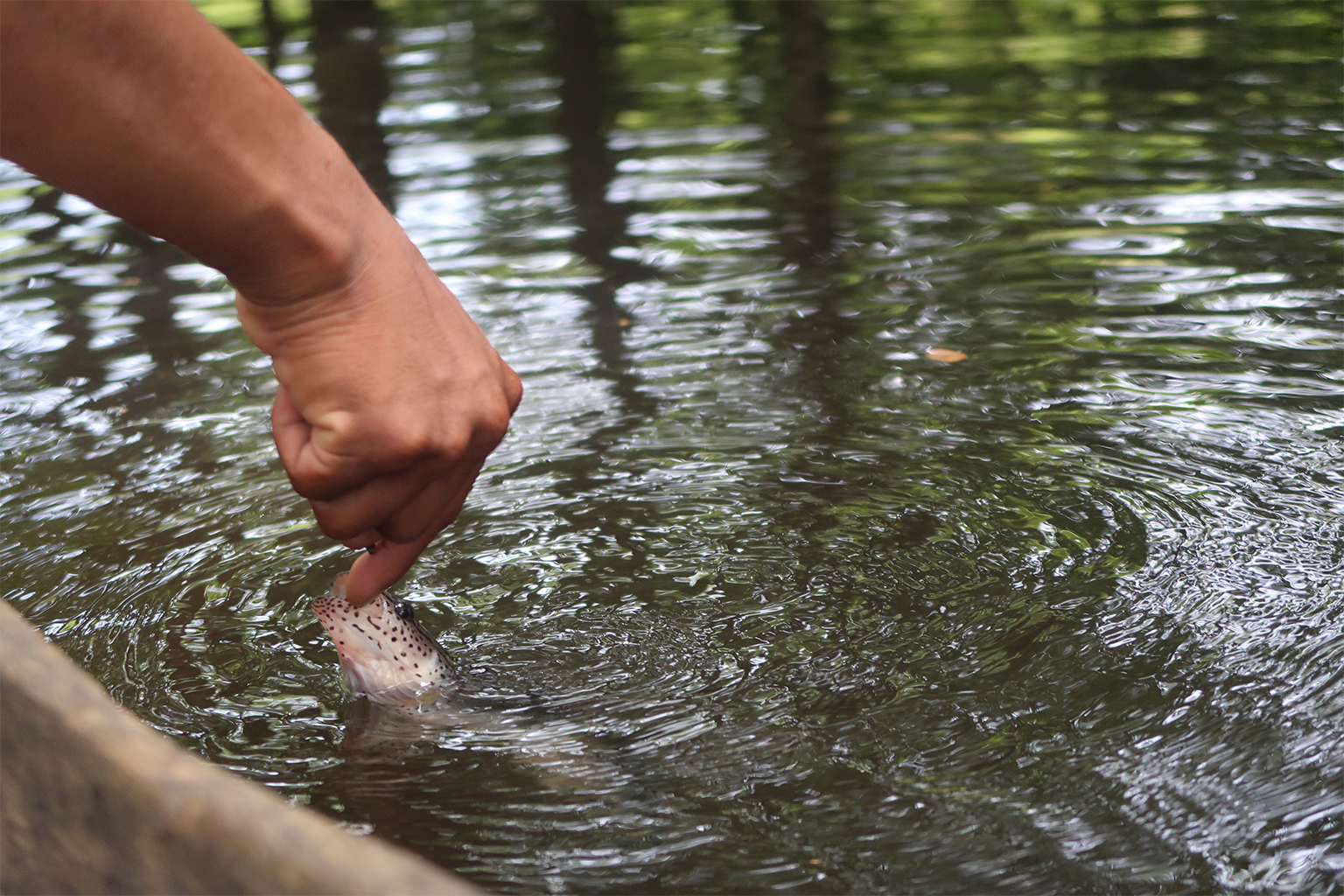
For several years, Colombia’s Ombudsman’s Office has warned about the influx of armed groups seeking to exploit gold, silver, coltan and tungsten in Mitú’s rural areas, including dissident factions of the Revolutionary Armed Forces of Colombia (FARC), attracted by the lack of state control and security. Research shows this has caused water contamination in Mitú, impacting the area’s Indigenous people who depend on local rivers for fishing, bathing and cooking.
A study carried out by the Attorney General’s Office in 2024 found high levels of mercury in residents’ hair and blood, exceeding World Health Organization safety limits, and in some carnivorous fish, exceeding national limits.
According to an Ombudsman’s Office warning from 2022, illegal miners bring in heavy machinery such as backhoes and dredges from neighboring Guaviare department, where the Vaupés River originates. The groups impose controls on the Indigenous people who live near the mining areas to secure access, traffic weapons and goods, and recruit new members.
In June 2025, Colombian authorities cracked down on an illegal mining site in San Juan de Cucura, an Indigenous community within the municipality of Mitú, run by organized armed groups. They seized a backhoe, a dump truck and 7 cubic meters (247 cubic feet) of sand, and arrested two individuals for alleged involvement in illegal mining and environmental pollution.
According to Global Forest Watch data, the town lost 1,100 hectares (about 2,720 acres) of primary forest in 2024, an increase from the 810 hectares (2,002 acres) lost annually in 2022 and 2023. Although most of these areas were legally cleared under a 2006 law that allows Indigenous communities the exclusive right to use forest resources in their territories, the GFW data show the dominant driver of forest loss in Mitú is logging.
The extraction and trafficking of natural resources in Mitú has been ongoing since before the town was officially established in 1935. In the decades before, Colombian and Brazilian caucheros, or rubber tappers, were heavily active in the area, using the Vaupés River, which forms part of the border between the countries, to collect and transport rubber. By the time Mitú was established, it had evolved into a small settlement and was a major center for the trade of rubber and animal fur and for missionary work.
Indigenous associations around Mitú have raised concerns about illegal logging in their communities by outsiders for the last several years. On March 18 this year, police arrested two people caught illegally logging without the required environmental permits in Mitú’s El Progreso neighborhood. Illegal logging in Mitú is often carried out by settlers seeking to expand the urban center and agricultural production, often in areas that belong to Indigenous communities, but without their permission.
Carlos Castañeda Hernández, an officer with the CDA, the primary environmental authority in Vaupés, told Mongabay there aren’t enough sustainable forestry concessions in Mitú to meet the growing demand, which has led to illegal logging for timber.
“Nowadays, they’re moving to more distant communities precisely because the resource has been depleted and they can no longer find it nearby,” he said. “They have to move to more distant communities to carry out these illegal activities.”
A highway and pressure on the land
As Mitú urbanized in the 1980s and ’90s, and the demand for agricultural production to feed the town’s growing population increased, officials constructed the Mitú-Monfort highway. Reports by environmental NGOs, such as the SINCHI Institute, say road access in this previously remote and inaccessible part of the Colombian Amazon attracted settlers who cleared land around the road to expand the urban center and develop agricultural production and cattle ranching.
“Along the Mitú-Monfort highway, where settlers have established themselves, deforestation is very, very evident,” Hernández said. “Years ago, [settlers] developed cattle ranching and this has led to the total destruction of forests. These Amazonian soils are not suitable for that activity.”
A 2024 report from the SINCHI Institute identified several socioenvironmental impacts caused by the highway, including deforestation, soil degradation and land conflicts. The affected area was previously a forest reserve, but was delisted by the Colombian government in 2013. After that, farmers were able to purchase land under a 1994 law. According to a 2023 report by the media outlet Routes of Conflict, this caused significant tension between settlers and the Indigenous communities who consider the area part of their traditional territory.
“The invasions are very strong,” Manuel Claudio Fernández, the head of the Macaquiño Indigenous community, one of four that make up the Association of Traditional Indigenous Authorities Surrounding Mitú (AATIAM), told Mongabay. “In a community across from us, Ceima Cachivera, there are many settlers who bought land illegally and that’s still happening. That kind of struggle is still ongoing.”
Hernández said that although there are no more than 2,000 head of cattle officially registered in Mitú, the environmental damage is significant. “One head of cattle requires 1 hectare [2.5 acres],” he said. “It’s not a very large number, it’s quite small. But these are poor soils, meaning the grass does not grow well. That means they need more areas and more space to support these animals.”
Indigenous people who live nearby say Mitú’s expansion and the lack of public infrastructure to support the population, such as sewage treatment works, have led to water pollution that travels downstream to their communities, contaminating fish and causing health problems. Julian de Jesus Madrid Correa, a member of the Macaquiño community, told Mongabay that the Vaupés River is contaminated because of the untreated sewage dumped into the river in Mitú.
Another 2024 report from the SINCHI Institute attributes the pollution to the ineffectiveness of a wastewater treatment plant built in 2012, which it says lacks the capacity to treat the wastewater for all of Mitú’s growing population. The report says the problem has intensified over the years, leading to unpleasant odors, foul-smelling water and incidences of disease in the community.
The Mitú municipal public services department didn’t respond to Mongabay’s requests for comments by the time this story was published.
“With this pollution, the fish are going to die,” said Correa from the Macaquiño community. “We always catch our food, mostly fish, from the river. It is contaminated. They put in a lot of chemicals and all sorts of things. It’s like an atomic bomb coming out of the sewer and we’re all consuming this. That’s when people start to get sick.”
Banner image: Members of the Indigenous Macaquiño community prepare a traditional canoe for a trip to Mitú, a rapidly expanding town upstream, where Indigenous people from various communities along the river meet with merchants to sell fish and food harvested from their chagras. Image by Aimee Gabay/Mongabay.
Cultural changes shift an Indigenous community’s relationship with the Amazon forest
FEEDBACK: Use this form to send a message to the author of this post. If you want to post a public comment, you can do that at the bottom of the page.
Cite this article
Aimee Gabay (2026). Urban sprawl and illegal mining reshape a fragile Amazon frontier. Mongabay Conservation news. DOI: https://doi.org/10.66709/news-312653Credits


