



- Women’s conservation collectives in the communities surrounding Nigeria’s Afi Mountain Wildlife Sanctuary are working to defend the wildlife, forests and rivers in a protected area that’s home to threatened gorillas and chimpanzees.
- Funded by membership dues, these groups carry out patrols, investigate wildlife crimes, and work collaboratively with traditional leadership structures to censure violators.
- One of the groups’ notable successes comes in ensuring that rules aimed at protecting the environment are upheld without bias or favoritism.
- The successes of the pioneering women’s collectives have inspired the formation of similar initiatives in other villages surrounding the sanctuary.
BOKI, Nigeria — The morning light fills Ulom with warmth and radiance. A dome of mountains, their green vegetation spread out like giant green walls, is visible at the edge of this serene village in Nigeria’s southeast. In the king’s palace, a women’s group kicks off its monthly meeting with prayers and choruses.
Today’s meeting centers on river pollution, a significant issue being addressed as part of a broader initiative to save Afi Mountain Wildlife Sanctuary (AMWS), a 100-square-kilometer (39-square-mile) wildlife hotspot situated near Ulom.
Gazetted in 2000, the sanctuary is inhabited by the critically endangered Cross River gorilla (Gorilla gorilla diehli), endangered Nigeria-Cameroon chimpanzees (Pan troglodytes ellioti) and drills (Mandrillus leucophaeus); porcupines; duikers; and dozens of bird, bat, and butterfly species.
Afi is the shared heritage of 16 villages, including Ulom, broadly known as the sanctuary’s landlords. Together, these communities have set up initiatives and bylaws aimed at protecting the hotspot, often in collaboration with nonprofits and other stakeholders.
The women’s collective meeting here today is one signal of a growing surge of women’s conservation leadership across the host communities.
Asu Margaret, the group secretary, reads aloud from a notebook. “In our previous meeting we discussed how to prevent wildfires in the Afi Mountains,” she says. “We rejected the felling of trees. We maintain the ban on timber dealers.”
Only about 300 Cross River gorillas are estimated to survive in the wild; roughly 100 of them live in a patchwork of interconnected protected areas that includes Afi, Mbe Mountains, and the Okwango division of Cross River National Park.
The gorilla’s presence has made Afi a home for diverse conservation initiatives, drawing global nonprofits, fascinated tourists, and world-class researchers who explore apes and primates. The women’s initiative, however, is rare, unique, and homegrown.
The meet ends with a resolution to raise the fine for river poisoning to 500,000 naira ($356). The group announces this new rule to a crowd of men, women and youths gathered in the community hall, where it’s met with cheers and a few murmurs.

Rising to fame
The spark for the initiative, says 42-year-old Ofre Mary, originated from chatter during a burial ceremony in the nearby village of Bamba. During the gathering, she and her friends talked about women-led communal action to resist overfishing in their rivers.
Back from Bamba, with vigor and vision, Mary spoke to dozens of women, among whom she found committed supporters to officially launch the Ulom Women’s Conservation Collective in 2023.
“Our men have failed to stop the threats,” Mary says. “That’s why women decided to take a stand. That’s why we decided to take the risk.”
Across the villages Mongabay visited, people point to men as the chief culprits in hunting, trapping, logging, and river pollution; therefore, residents say, men lack the moral courage to oppose the crimes.
The women’s core exists to “firmly defend the Afi Mountains and prevent people from destroying it”, Mary tells Mongabay.

At their maiden gathering at Mary’s home, members shared in their visions and their childhood memories of Afi’s lushness, which has now dwindled. They recalled the famous chimpanzees and monkeys calls and the melodies of beautiful birds. “My father told me Afi had special animals,” Mary says. “We must protect it.”
Now, the collective meets twice a month to brainstorm strategies to combat threats to Afi’s biodiversity and review existing wildlife regulations. Their patrols, targeted at uncovering early signs of hunting, logging or wildfires, are designed to be both structured and spontaneous so the team is ready to confront threats at all times, including late at night and early dawn. The women average two standard monitoring patrols a month, excluding emergency responses.
They track and investigate every swirl of smoke, every gunshot, and every rattle of a chainsaw originating from Afi. Sometimes alone, sometimes in collaboration with communal leadership, state forestry officers, and nonprofits in the region, the women’s group investigates allegations of wildlife crimes.
Depending on the result of the investigations, suspects can be exonerated, fined, or even exiled. Their guns and chainsaws are confiscated, and traditional governance structures, such as communal task forces and councils of chiefs, ensure the pronouncements are enforced.
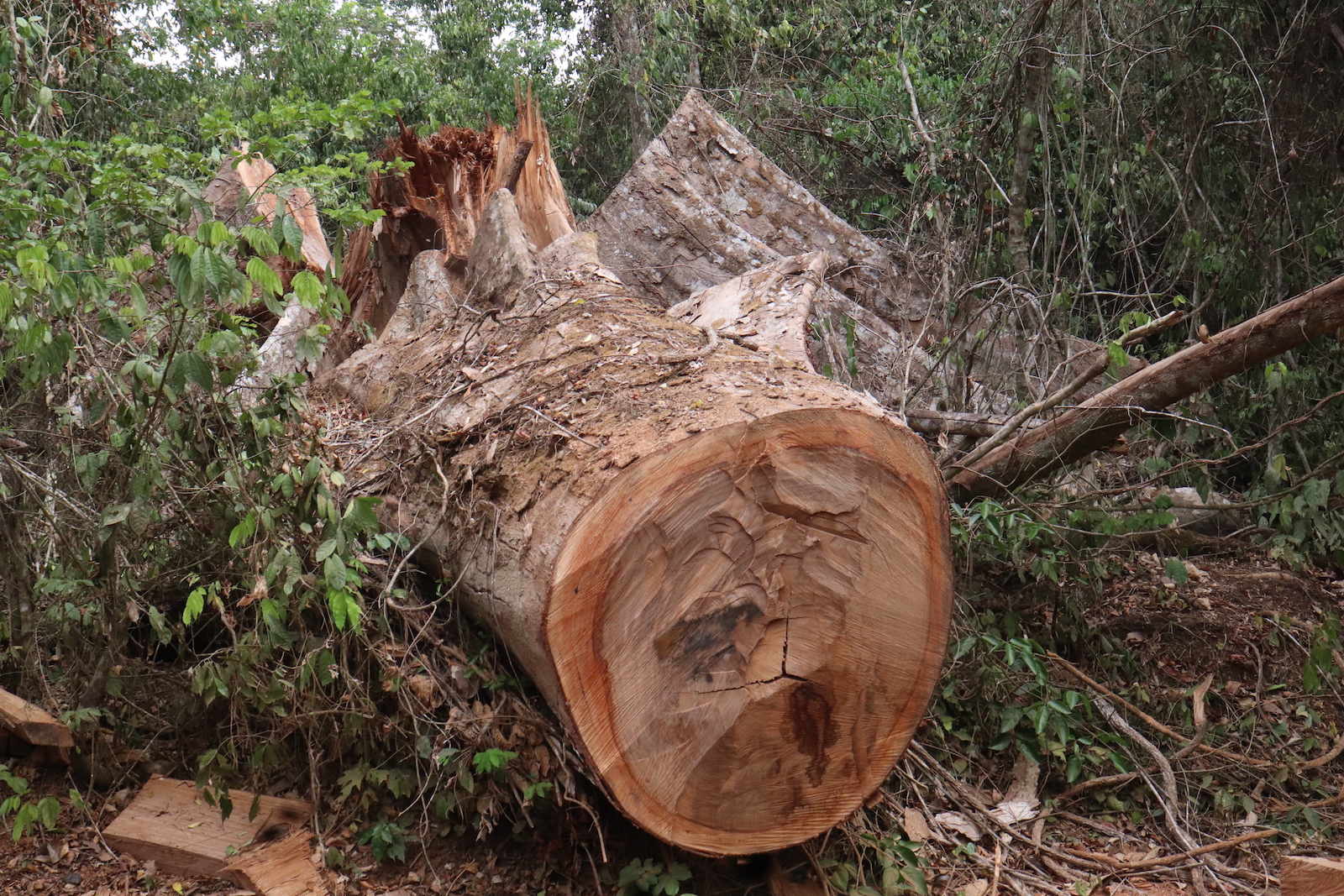
The women’s group can point to many successful interventions.
“In the past, we could barely sleep due to the sounds of chainsaws logging in our forests,” says Akan Grace, the public relations officer for the Ulom group. “Even by 12 a.m., midnight, the sounds of engines would be ringing from loggers inside the forest.”
Grace lost an entire family farm many years ago to a careless wildfire. That experience, together with her newfound conservation conviction, drew her to the collective.
Recently, the group traced a swirling column of smoke to the mountaintop, only to discover it came from cut timber that had caught fire. In 2024, Grace, Mary and the other women pressured Ulom leaders to reject a timber deal that would expose Afi to deforestation. Youths were mobilized to lay roadblocks, effectively cutting off timber dealers from Ulom and nearby communities.
The signs of women’s power have always been there, says Francis Akie, who heads the Traditional Rulers Council of Ulom. The collective only gave it form and structure. In 2021, Akie tells Mongabay, before the collective was formed, local leaders struck a secret deal with timber dealers to log margins of Afi in exchange for fees. The women threatened to embark on a nude protest unless the timber deal was instantly cancelled.
“They reminded us that a single baby chimpanzee or gorilla is more valuable than a hundred loads of timber trucks,” Akie says. “We saw merit in their ideas and stopped the timber deal completely. We refunded the timber dealers the money we already collected.”
Beyond physical actions, the women are using ideological campaigns to reshape the way locals perceive conservation. They teach that killing Afi’s apes and other iconic species will erase the objects of fascination that draw renowned wildlife researchers, global media, nonprofits, tourists and scientists to the area.
Youths, who rely on hunting and timber trade in the absence of social services and gainful jobs, have questioned the monetary value of protecting gorillas and chimpanzees. The women’s response: fresh air, clean water, and a future for their children exceed cash, according to Agbo Helen, the leader of the collective operating at Katabang, another landlord village.

Yet the greatest impact of the collective may be in making the rules work. Prior to the women’s collective, multiple sources told Mongabay that nepotism, inequity, and partiality reduced several wildlife regulations to paper formalities without actual bite.
“In the past, the laws existed, but people didn’t care much about abiding by them. There was just a lot of talking without concrete action,” Grace says. “But now, if there is an offense like a wildfire, we fight until we uncover the culprit.”
They started by creating accountable leadership, where the rules are binding on all without bias. Erring members were punished. The rules are now applied equally, says Akie. “Even if the king commits an illegal act that harms the environment.” This, he says, signals a powerful shift from the status quo riddled with bias, partiality, and nepotism.
“Even if my own sister breaks the law, we would arrest her. The warning has gone around to everyone,” says Osang Sarah, a key member of the Katabang collective. “If the community makes a law, everyone must abide by it. One person can never be greater than the community. There is nobody above the community law.”
In their homes, the women are also influencing what their families eat to eliminate threatened species from the local diet. This work helps in growing communal goodwill and the strong backing of traditional male-led authorities.
Given the success of their initiative, traditional rulers, who spoke to Mongabay at Ulom and Katabang, say they regret not entrusting the women with conservation leadership much earlier in the Afi sanctuary’s history. “If we had involved these women a long time ago, we would have eradicated most of the threats to the sanctuary,” Akie told Mongabay.

Expanding stewardship
The news of Ulom’s success continues to spread. More than half of Afi’s 16 landlord communities, who share in the ownership and conservation responsibility for the area, are at various stages of launching similar initiatives.
In many ways, the villages of Buanchor and Katabang have replicated, if not exceeded, the success of Ulom. In 2024, before their launch, a delegation of women from Buanchor, led by Agbo Regina, visited Ulom to study the collective there. “We advised them to master the way women wield power,” Grace tells Mongabay. “It is not always coercive.”
More than 100 women signed up in the early days of Buanchor’s initiative. Gradually, as expected, the membership shrank to just a dozen women, whose loyalty and shared vision are resolute. “We wanted only people who are ready to work. People who are firm in their resolve,” Regina says. “The smaller the better. Large crowds destroyed stability.”
During one of their routine patrols last year, the Buanchor women spotted large clearings for farmland on the periphery of Afi. They raised the alarm, and the chiefs mobilized youths to halt the clearing and destroy all newly planted seedlings.

One dark night in January 2026 came the rattle of a chainsaw in the mountain adjacent to her home, according to Ojong Gift, the publicity lead for the Buanchor collective. She alerted her team, and a squad was dispatched with torches, machetes, rain boots and raincoats to investigate the origin of the logging. “We seized the chainsaw machine, and [the logger] was pleading for mercy. We gave him a final warning. He paid fine,” Gift says.
The standout moment for the Buanchor women came in 2024, Gift recalls. Privy to a male-endorsed timber deal, the entire Buanchor women issued a strong ultimatum to the communal authorities to reverse the decision. “We threatened to protest naked all around the entire community if they permitted timber merchandise,” Gift says. As in Ulom, just the threat of this culturally powerful form of protest proved effective. “The men wanted to allow it because of the money involved; the women’s warning made them reverse the timber deal,” Gift says.
The Katabang group’s structure mirrors that of the Ulom and Buanchor groups, albeit with some unique features. Leaders emerge through elections and consensus. Dues are paid regularly to buy fuel and hire bikes for patrols. The initiatives have collaborated, not competed, with existing nonprofits, structures, networks, resources and authorities.
Still, each community operates with the autonomy to shape its operations in relation to local realities. This decentralized leadership structure makes it more difficult for the groups to be hijacked by compromised persons whose motives are neither pure nor conservation-driven, local authorities tell Mongabay.
Since last year, at least half a dozen communities, including Kayang, Boje, Esikwe and Kakubong, have sent women delegates to either Ulom, Buanchor or Katabang to study their models in preparation for a launch of their own women’s conservation collectives.

Leaders in these three pioneer communities are invested in expansion, offering their own time, skills and advice to advance new groups. A gap in protection in any of the communities that border Afi, they argue, could jeopardize the outcomes of systems in others.
“If we protect our axis of the forest and others ignore theirs, our work over here would be hindered,” Grace says. “Wildfires from their side of the forest can spill over to this side. Similarly, poisonous chemicals can flow into our rivers from their own axis since we share the same water source. That’s why every community should be involved.”
The guardians of the river
While timber and hunting operations take the limelight, collective members are equally proud of their efforts to protect Afi’s waterways. Several streams and rivers, including the Afi River from which the sanctuary derives its name, are patrolled by the female guards to deter and detect signs of pollution.
River patrols are scheduled on a roster. Their aims are to arrest offenders, galvanize community response, investigate crimes, and penalize pollution. While most conversations center on how river pollution deprives communities of water to wash, drink, bath, and irrigate their farms with, Sarah tells Mongabay that apes and other animals are often the silent but worst-hit sufferers.
“Animals drink from the water,” Helen says. “Birds drink from the same water. Human beings drink from the same water, and if the water is poisoned, the animals might die or migrate.”
Until three years ago, when the women began river patrols and guardianship, river poisoning was widespread. To recover a contaminated river, communities often mobilize youths and women to use logs, mud, sandbags and large rocks to dam off the affected areas.
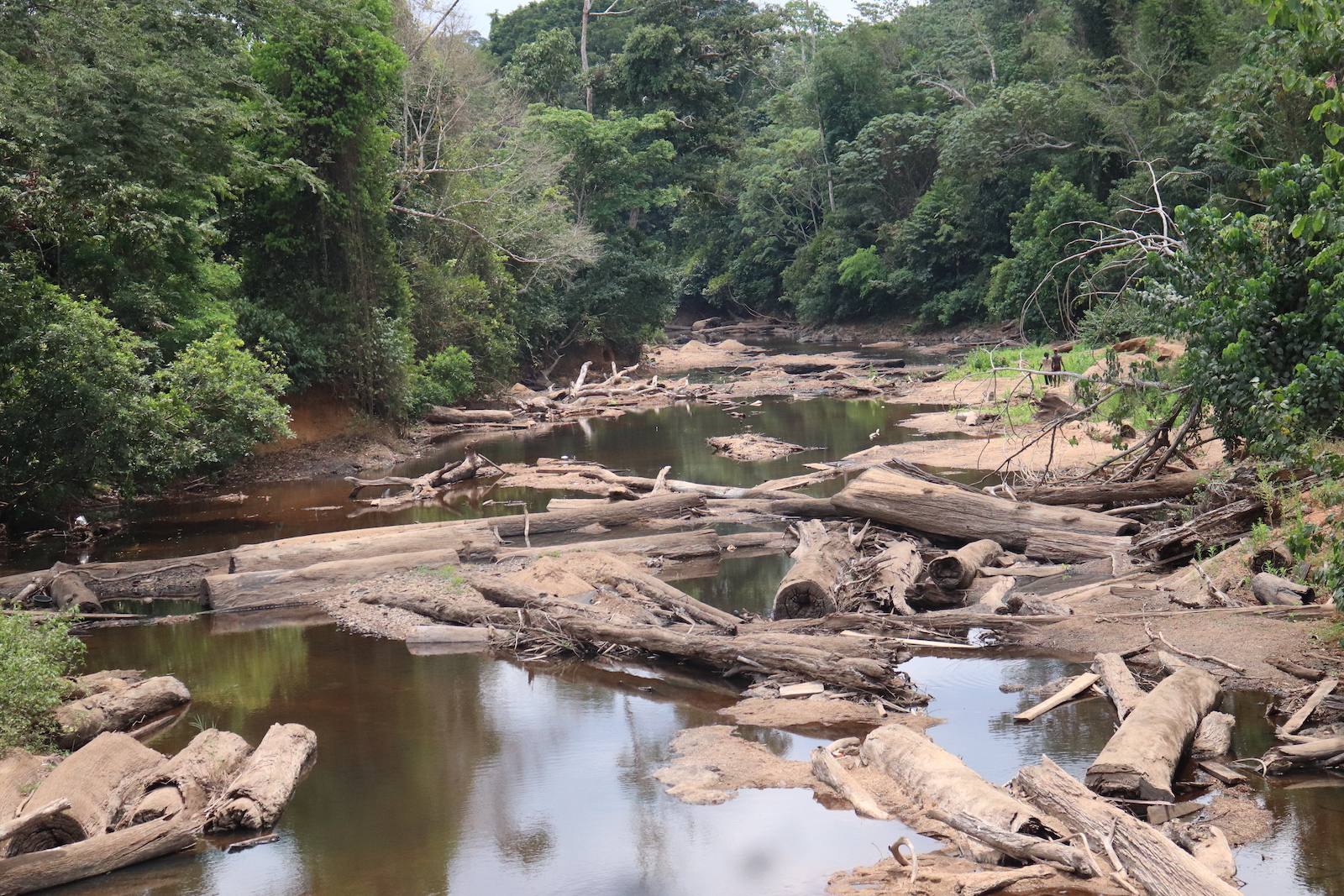
Then, the women, armed with basins and buckets, scoop the contaminated water from these isolated pools until they’re dry. Once this is done, the makeshift dams can be dismantled, and a fresh flow of water can wash away any trace contaminants left in the mud. “The women guard our rivers,” Akie says. “They arrest offenders. They are the ones who enforce the laws protecting the waters. Since it began, river poisoning has stopped.”
The impacts, now being celebrated across Afi and beyond, are a product of the sacrifices, bruises and mockery endured by the women. A day before Mongabay visited Ulom, an outspoken member of the group was forced to withdraw after her husband threatened to divorce her, despite pleas from Mary and her team. Sensing his fierce refusal and prioritizing protecting her marriage, the collective bade her farewell. “We didn’t want to remove anyone from her husband’s house. So, we had to obey the husband.”
As the focus turns fully toward expansion, the women also struggle to raise the money to rent motorcycles and buy fuel to patrol hotspots and connect with other women in nearby communities. They also lack proper equipment: rain boots, jungle fatigues, machetes to trim the tangle of jungle vegetation as they trace the crime scenes during patrols, and gear to fight wildfires. “We have discussed expanding to other communities, but there is worry about how to finance this expansion,” Mary says.
In spite of these hurdles, their work is paying off, and the signs are unmistakable. River pollution has been nearly reduced to zero in some of the visited communities. “The animals are returning. You can see their fecal droppings and play spots,” Sarah says. “The forest is gradually regenerating and thick. Recently, we started hearing the calls of chimpanzees once more.”
Banner image: The Ulom Women’s Collective announces stiffer fines for river poisoning during a village assembly. Image by Orji Sunday for Mongabay.
Women scatter seeds, restore forests in Guinea, the ‘water tower of West Africa’
FEEDBACK: Use this form to send a message to the editor responsible for this story. If you want to post a public comment, you can do that at the bottom of the page.
Cite this article
Orji Sunday (2026). The women leading a quiet conservation revolution in a Nigerian gorilla sanctuary. Mongabay Conservation news. DOI: https://doi.org/10.66709/news-322651Credits


