- Sri Lanka’s ecologically significant Central Highlands suffered severe but still largely undocumented ecological damage following the recent Cyclone Ditwah, which devasted unique yet highly vulnerable ecosystems harboring the country’s richest biodiversity and highest endemism.
- Early reports indicate major landslides in the UNESCO-listed Knuckles Mountain Range that led to canopy trees uprooted, forest layers buried and streams clogged with sediment, with inaccessibility delaying a comprehensive assessment.
- Illegal construction and poorly planned development in ecologically sensitive zones have intensified disaster’s impacts on the Indian Ocean island.
- Conservationists urge Sri Lanka to adopt a science-led post-disaster biodiversity assessment mechanism and climate-resilient land use planning, warning that invasive species, unstable slopes and damaged ecosystems pose long-term ecological and economic risks to this highly significant region.
COLOMBO — Two weeks after Cyclone Ditwah struck Sri Lanka, the actual environmental cost of the disaster remains largely unknown, as immediate priorities were human safety, relief and recovery. The worst impact of the cyclone’s downfall is borne by the country’s Central Highlands, recording at least 640 deaths — the highest number of deaths due to the cyclone — with another 221 persons still missing, according to the island’s Disaster Management Centre (DMC).
Sri Lanka’s Central Highlands are the elevated mountainous region located in the central part of the island. This region is among the country’s most ecologically, hydrologically and culturally significant landscapes and includes some of the highest peaks, rich forests and important wildlife habitats boasting of high endemism.
Early field observations by forest officers, wildlife staff and community monitors indicate the damage across these biodiversity-rich landscapes to be extensive.
According to Pradeep Samarawickrama, an independent researcher and environmentalist, the Knuckles Mountain Range, a UNESCO-listed biodiversity hotspot, experienced some of the worst ecological impacts, with several major landslips reported. “Access roads to the remote areas are still blocked, so we have yet to conduct a full assessment of the situation. But the devastation is evident,” Samarawickrama tells Mongabay.
Fragile ecosystems under threat
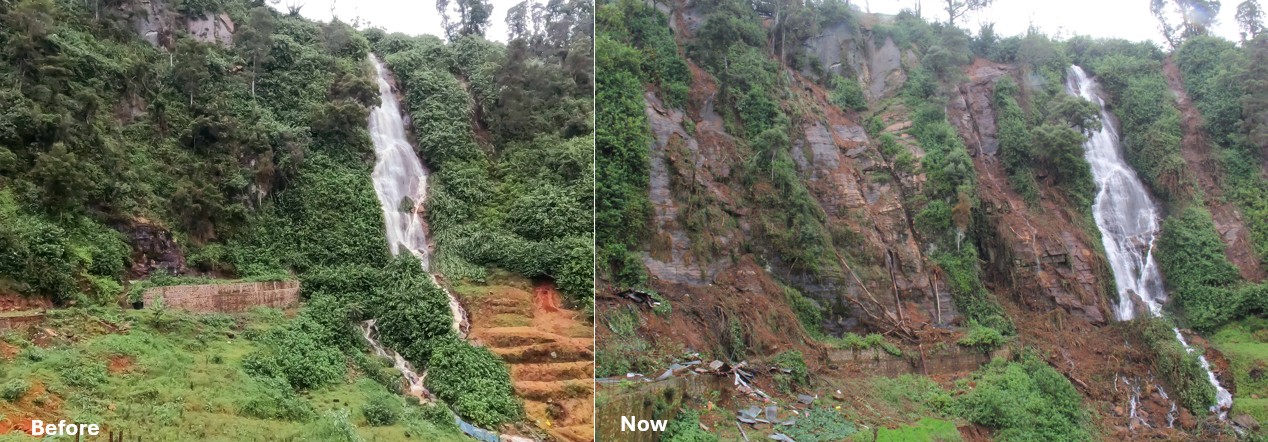
One of the most severe incidents was the earthslip in Yahangala within the Knuckles Mountain Range. “The depth of the landslide path is extremely deep, and in some places the width is nearly 500 feet,” or 152 meters, says Jayantha Wijesingha, convener of a local NGO dedicated to conserving rainforests, the Rainforest Protectors of Sri Lanka, who visited the area and carried out preliminary assessments using drones.
Initial assessments indicate uprooted canopy trees, buried understory vegetation and sediment-choked streams, disrupting habitats for endemic plants, amphibians and forest mammals, Wijesingha tells Mongabay. He notes that access roads to several remote areas remain blocked and unstable, preventing a full assessment to understand the actual impact. “It will take some time to study and assess the scale of destruction,” he says.

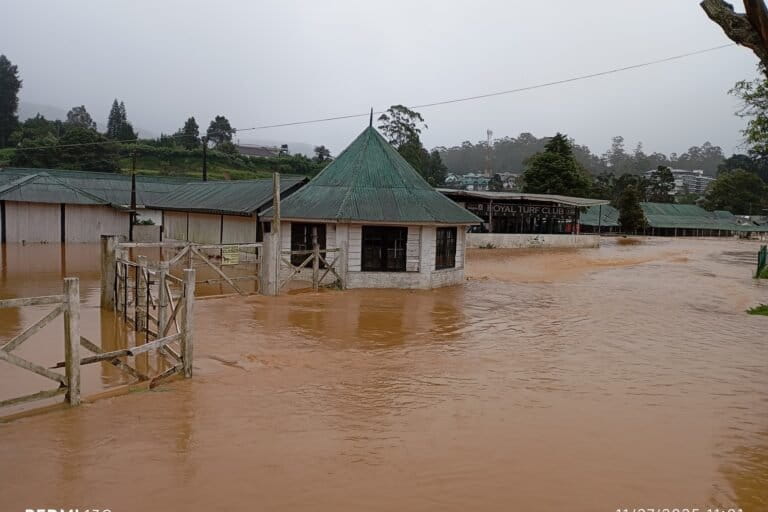
However, unplanned development and clearing forest patches in ecologically sensitive areas have exacerbated the disaster. Numerous buildings constructed on unstable slopes and within river reservations have collapsed, recording significant infrastructure damage. For decades, Samarawickrama has opposed illegal constructions in the ecologically fragile Warathenna–Hakkinda stretch of the Mahaweli River, the longest river in Sri Lanka, which carried the heaviest water volume of floods.
Although the area was declared an environmental protection area, some illegal constructions have already been put up and suffered severe damage due to recent floods. Samarawickrama tells Mongabay that unauthorized structures have intensified the cyclone impact.
Many of the buildings in these highly sensitive zones were swept away by the floods, and efforts are already underway to rebuild them, without factoring in ecological lessons of the catastrophe. Samarawickrama insists that the next phase of rebuilding should be scientific and resilient besides being carried out in an ecologically responsible manner.
Elevated landslide risk
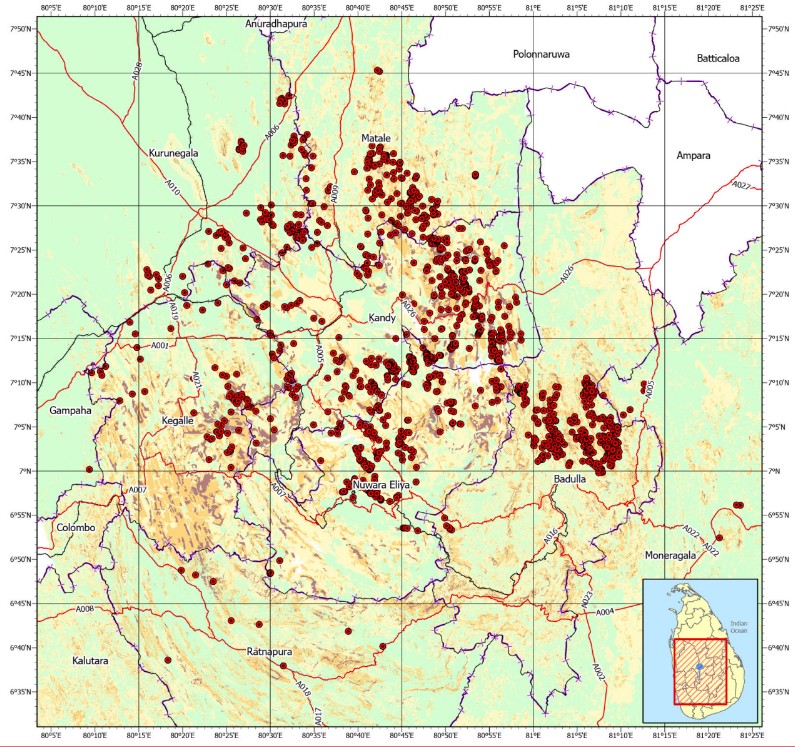
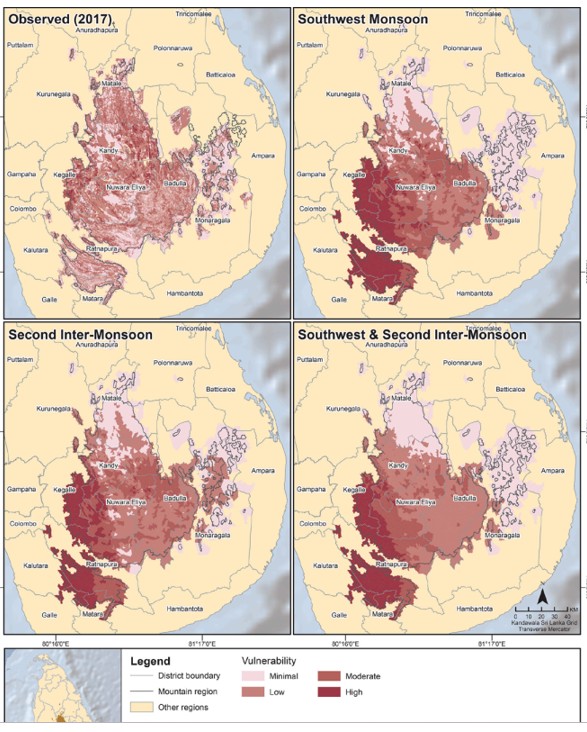
A country vulnerable to extreme weather events, Sri Lanka has already identified risks of climate change and the possible impact on the critical Central Highlands. A 2022 study by the Asian Development Bank, titled “Climate Change Risk Profile of the Mountain Region in Sri Lanka,” warned that changing rainfall patterns would place several divisions in the Central Highlands and Knuckles at elevated landslide risk, which are now materializing.
Despite the vulnerabilities, Sri Lanka still lacks a legally mandated, science-led post-disaster biodiversity damage assessment system. “Unlike infrastructure and housing, ecosystems are not built into our disaster valuation frameworks,” says Suranjan Fernando, an independent field biologist and national consultant.
“The mountain regions are highly sensitive ecosystems. They need clear zoning, ecological assessments and legally enforced land use rules,” Fernando tells Mongabay. He argues that Sri Lanka should develop a dedicated climate risk profile specifically for mountain ecosystems.
The government has signaled it may consider relocating human structures from areas above 1,524 m (5,000 ft) in the hill country. While welcoming the move, Fernando cautions that full relocation may be unrealistic. “At minimum, the most critical hotspots must be reclaimed for nature,” he adds.

Environmental researcher Rajika Gamage, based in a city located within the highlands, says many recent landslides occurred on slopes cleared for road construction. He observes that invasive species may have worsened slope instability. “In several areas where landslides occurred, dense growth of Himalayan knotweed (Persicaria wallichii) failed under the weight of rain-soaked vegetation,” he says.
Gamage warns that disturbed lands would be rapidly colonized by invasive plants. “Floodwaters will spread their seeds over large areas. The hill country could soon experience an influx of invasive species,” he cautions.

Influx of invasives
The Central Highlands are also a major ecotourism hub, home to scenic national parks, cloud forests and breathtaking mist-shrouded mountain ranges. The railroads that run through these landscapes are a vital artery for tourism but have now suffered extensive damage. “Many properties in popular destinations such as Ella and Bandarawela in central regions remain operational, but numerous tourists have canceled their bookings after the iconic train service was disrupted,” says Mithila Bandara, spokesperson for the Hill Country Tourism Bureau.
Speaking to Mongabay, Mahinda Dodampe Gamage, a former mayor of the hill town of Nuwara Eliya and president of the Nuwara Eliya Tourism and Travel Services Association, says the crisis may create an opportunity to steer tourism toward a more eco-friendly direction.
“There are many areas ideal for trekking, but the construction of motorable roads has disturbed the tranquillity of these ecosystems. With many of these roads now destroyed by landslides, we can promote more trekking and reduce vehicular traffic in some of the more sensitive habitats,” Dodampe Gamage says.
“The hill country is a unique ecosystem and its restoration, too, has to be done with extreme care,” says Siril Wijesundara, a research professor at the National Institute of Fundamental Studies. “The flora and fauna in the region show high endemism and are living gene banks, which are also a backbone of Sri Lanka’s nature-based tourism, hence the damage here has long-term ecological and economic consequences,” Wijesundara tells Mongabay.
He also notes that restoration must be science-led. “Plants can help restore damaged ecosystems, but the species must be carefully selected,” he says, adding that Sri Lanka should seek international technical support and adopt well-proven restoration methods, given the scale of the disaster. These efforts, too, should be monitored and executed in a planned manner, not to repeat the same mistakes, experts say.
Banner Image: A massive landslide in the biodiversity-rich Knuckles Mountain Rang has destroyed its forest cover, threatening the fragile microhabitats supporting endemic species. Image courtesy of Jayantha Wijesingha.
Credits