- The global battle to mitigate climate change cannot be won in the Amazon, but it can certainly be lost there, writes top ethnobotanist Mark Plotkin in a new analysis for Mongabay. Though he’s well-known for investigating traditional uses of plants in the region, he’s also a keen observer of and advocate for Indigenous communities and conservation there.
- Compared to the 1970s, he writes, the Amazon enjoys far greater formal protection, understanding and attention, while advances in technology and ethnobotany have revealed new insights into tropical biodiversity, and Indigenous communities — long the guardians and stewards of this ecosystem — are increasingly recognized as central partners in conservation, and their shamans employ hallucinogens like biological scalpels to diagnose, treat and sometimes cure ailments, a technology that is increasingly and ever more widely appreciated.
- “The challenge now is to ensure that the forces of protection outpace the forces of destruction, which, of course, is one of the ultimate goals of the COP30 meeting in Belém,” he writes.
- This article is an analysis. The views expressed are those of the author, not necessarily of Mongabay.
Having studied the healing plants and peoples of tropical South America for well over four decades, I am often asked, “What is the conservation status of the Amazon Rainforest? Is the glass half-full or half-empty?”
My reply never changes. “By definition, any glass that is half-full is half-empty!”
When I first traveled to the Amazon in the 1970s, the world was a different place. Most people thought of the rainforest, if they thought of it at all, as a green hell to be avoided at all costs.
Soon thereafter, public perception of tropical rainforests shifted dramatically, driven by the emerging modern environmental movement.
Rachel Carson’s Silent Spring in 1962 and Earth Day in 1970 were milestones in generating global awareness and concern over deforestation, pesticides, pollution and species extinction, particularly in the industrialized world. However, Western scientists like Tom Lovejoy, Richard Schultes and E.O. Wilson — as well as Brazilian scientists like Marcio Ayres, Paulo Nogueiro-Neto and Paulo Vanzolini — presented a compelling case that the biological richness and fragility of tropical forests merited at least as much attention as ecosystems in the temperate regions. These scientists reframed the global image of Amazonia from “green hell” to “treasure trove of biodiversity.”
The media also played a positive role. The vast scale of burning and clearing — turning a green wonderland into a red desert through major development projects like ill-planned dams or road building — shocked and horrified magazine readers and television viewers. At the same time, local efforts — not just by South American scientists, but also by Indigenous leaders (like Payakan of the Kayapo people) and peasant organizers (like Chico Mendes, murdered in 1988) — generated local sympathy, concern and even alarm on the part of citizens of Amazonian countries.
The high point was undoubtedly the 1992 Earth Summit in Rio de Janeiro, in which rainforest protection was recognized as a global responsibility. Perhaps the most inclusive and positive global gathering ever organized, it featured passionate speeches by global icons like Jacques Cousteau and Jane Goodall, and was attended by the leaders of almost every country on the planet, from George H.W. Bush to Fidel Castro(!).
While Amazonia has never again commanded global attention to the same degree it did during that week more than three decades ago, there have been numerous changes since then, some of which have catapulted Amazonia back into the headlines during the past few years.

One issue that has attracted global attention has been the roller-coaster rates of deforestation. Massive losses in Brazil during the final two decades of the 20th century were then followed by sharply reduced felling due to stricter enforcement of environmental laws and protected area establishment and titling of Indigenous reserves. Losses surged again starting in 2019, and better protection followed in 2023.
Of course, Amazonia is not just Brazil: this mighty rainforest reaches her leafy tendrils into eight other countries as well. The conservation-deforestation-conservation roller coaster also exists in these nations, particularly Bolivia, Colombia and Peru.
On a more positive note, protected areas and Indigenous reserves now cover enormous swaths of Amazon forest and characteristically experience lower rates of deforestation and fires. Better enforcement of environmental legislation will reduce these negative factors even further. Positive legislation and policies now either being considered or enacted (particularly in Brazil, Colombia and Suriname) bode well for the future.
On a more negative note, criminal gangs and activities have risen at an alarming pace over the past decade. Deforestation, mercury contamination, illegal logging, the drug trade, kidnapping and other violence represent threats to the rainforest, the rivers and the local inhabitants. Once again, the governments of Brazil and Colombia are taking active measures to control these threats, but these are multifaceted dangers that require time, funding and determination to diminish or defeat.
Climate stress is also taking a toll: local agriculture has suffered because of climate disruption, and this is not just the gardens of Indigenous and peasant peoples. Diminished rainfall patterns have negatively impacted industrial agriculture in São Paulo state, Brazil’s breadbasket. The Amazonian drought and fires of the past few years have ironically focused global attention on the need for better stewardship of the South American rainforest. The global battle to mitigate climate change cannot be won in the Amazon, but it can certainly be lost there.
Related to this issue is increased appreciation of the Amazon as one of the cradles of global agriculture. Ethnobotanist Gary Nabhan has pointed out that three-fifths of the major crops consumed globally today originated in tropical America. The Amazon has gifted the world staples from cassava to cacao — and just because we have taken crops out of the rainforest that will grow well elsewhere, we still need wild and semidomesticated varieties to crossbreed with domesticated crops to increase yield, increase resistance to pests and diseases, and reduce susceptibility to climate-induced stress.
Cassava represents perhaps the best example. Native to Amazonia, it feeds about 200 million people in Central and South America on a daily basis. At least as important, however, is the fact that it is estimated to feed 500 million people daily in Africa as well. And the genius of Amazonian peoples is further demonstrated (among other things) by this agriculture: the Amuesha people of Peru are documented to grow more than 200 varieties of cassava, while the Tukanos of Brazil grow more than 135.
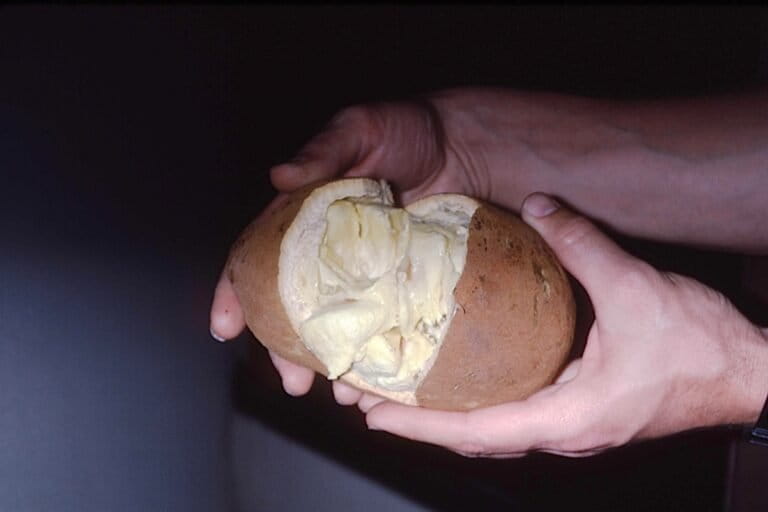
Moreover, the agricultural potential of Amazonia remains largely untapped. Biologist Nigel Smith has documented more than 100 edible species in just one corner of the Peruvian Amazon. Açai, little known to the outside world a few decades ago, is now a billion-dollar industry. And species like Inca peanut, cupuaçu and cacay are already entering international commerce.
Similarly, there is a newfound (and growing!) interest in Amazonia as a medicine chest. The pandemic taught us that we will always need new medicines for new diseases, and there is no reason to believe that Mother Nature does not harbor novel compounds that can offer novel therapeutic potential against novel bacterial and viral threats. Yet our ignorance about the healing potential of Amazonian fauna, flora and fungi remains staggering. Scientists estimate that there exist approximately 16,000 species of trees in Amazonia, several thousand of which have not even been named by biologists, much less evaluated for their medicinal potential.
We know even less about the chemistry of tropical fungi. More than 10,000 species of fungi have been identified from tropical South America, and scientists estimate that the actual number probably reaches into the millions. Though the Amazon has been repeatedly, and incorrectly, identified as the “lungs of the planet,” in truth, its fungi are more accurately described as the circulatory and digestive system of the rainforest, breaking down organic remains and redistributing the nutrients throughout the ecosystem. Considering that the fungal kingdom already supplies humanity with anticancer agents, antibiotics, antifungals, antiparasitics and immunosuppressants, there can be little doubt that Amazonia harbors even more medical treasures waiting to be discovered.
Moreover, we have only recently learned that numerous Amazonian animals also hold compounds of immense medical potential: bats, frogs, leeches, scorpions, snakes and spiders, to name the most promising sources. Naturally, these plants, animals and fungi should only be developed commercially if a fair share of the benefits flows to local people and governments, first and foremost.
Finally, as an ethnobotanist, the most heartening development since I started my work in Amazonia so long ago is the mainstreaming of hallucinogens and shamanic practices into Western medicine. Indigenous shamans employ plants like ayahuasca like biological scalpels to investigate, diagnose, treat and sometimes cure ailments that may prove unresponsive to Western drugs or technologies. Ayahuasca, once an obscure rainforest vine native to the northwest Amazon, is now consumed globally, from India to Istanbul to Israel to Iceland. The mind-altering impacts of ayahuasca and other tropical hallucinogens like ibogaine and psilocybin are producing positive effects in the treatment of addiction, depression, PTSD and many other ailments, particularly those with an emotional or traumatic component.
So, where does the Amazon stand since I entered the Emerald Door so many years ago?

Clearly, the glass is both half-full and half-empty. Compared to the 1970s, the Amazon today enjoys far greater formal protection, deeper scientific understanding, and exponentially more global attention. Dozens of national parks, biological reserves and Indigenous territories have been established throughout Amazonia, (ideally) safeguarding tens of millions of hectares of rivers and rainforests.
Advances in satellite monitoring, molecular biology and ethnobotany have revealed extraordinary new insights into tropical biodiversity, while Indigenous communities — long the guardians and stewards of this ecosystem — are increasingly recognized as central partners in conservation. Many now possess not only a stronger political voice but also the digital and technological tools to document their knowledge, defend their territories, and communicate their stories and goals to a worldwide audience.
Yet on the other side of the ledger, the threats facing the Amazon are intensifying. Climate change has altered rainfall patterns, producing longer and more frequent droughts, higher temperatures, and unprecedented numbers of fires that can devastate ecosystems unaccustomed to burning. Illegal gold mining, logging and land grabbing continue to spread, often linked to organized crime and corruption. Expanding agriculture, cattle ranching and infrastructure projects are carving deeper into once-remote regions, fragmenting habitats and endangering species and Indigenous cultures. In addition, violence against environmental defenders and Indigenous leaders has escalated in many parts of Amazonia.
Thus, while the Amazon has more allies and awareness than ever before, it also faces a growing array of pressures that threaten its future. The challenge now is to ensure that the forces of protection outpace the forces of destruction, which, of course, is one of the ultimate goals of the COP30 meeting in Belém.
So: in what form will the Amazon survive? The battle has been joined, but the outcome has yet to be decided.
Mark J. Plotkin is an ethnobotanist, co-founder and president of The Amazon Conservation Team, and host of the popular “Plants of the Gods: Hallucinogens, Healing, Culture and Conservation” podcast.
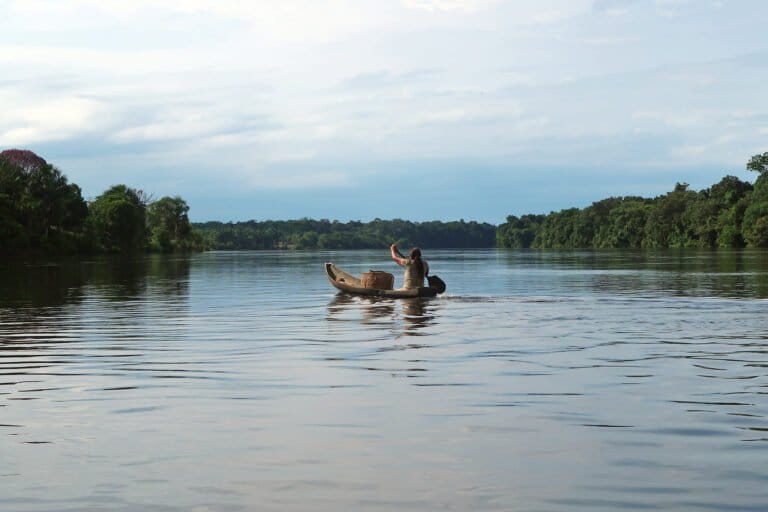
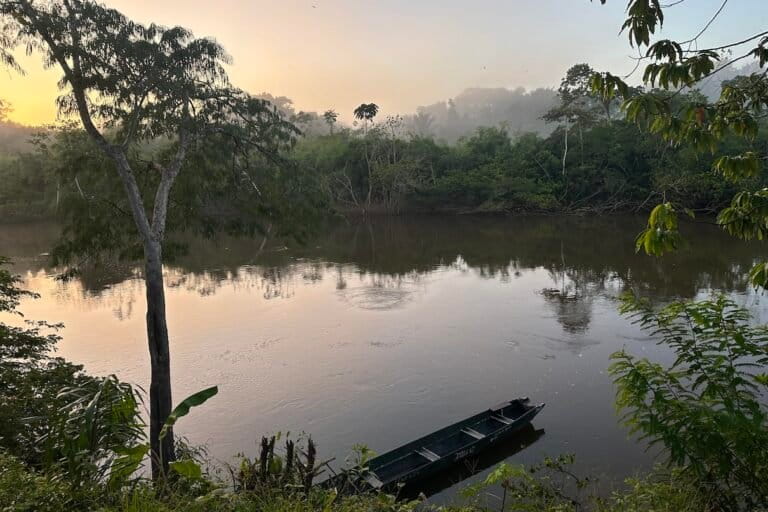
Banner image: Sunset over tropical forest and river in Suriname. Image courtesy of Mark J. Plotkin.
Podcast: Mongabay’s founder & CEO reflects on the success of the organization’s nonprofit journalism, winning the Henry Shaw Medal, and his long friendship with Jane Goodall, listen here,
See related coverage and commentary:
Peru Indigenous patrols see success & struggles in combating illegal miners
A blueprint for communicating about the Amazon rainforest (commentary)
Beyond deforestation: redesigning how we protect and value tropical forests (analysis)
Credits