


- The Amazon Region Protected Areas (ARPA) is a massive conservation program that has helped reduce deforestation across 120 conservation areas in the Brazilian Amazon and avoided 104 million metric tons of CO2 emissions between 2008 and 2020.
- A new phase of the program, called ARPA Comunidades, will now focus on supporting the communities who live in and protect the forest, by helping them increase their revenue through the bioeconomy or sale of sustainable forest products.
- Backed by a $120 million donor fund, ARPA Comunidades aims to increase protections across 60 sustainable-use reserves in the Brazilian Amazon spanning an area nearly the size of the U.K., directly impacting 130,000 people and helping raise 100,000 out of poverty.
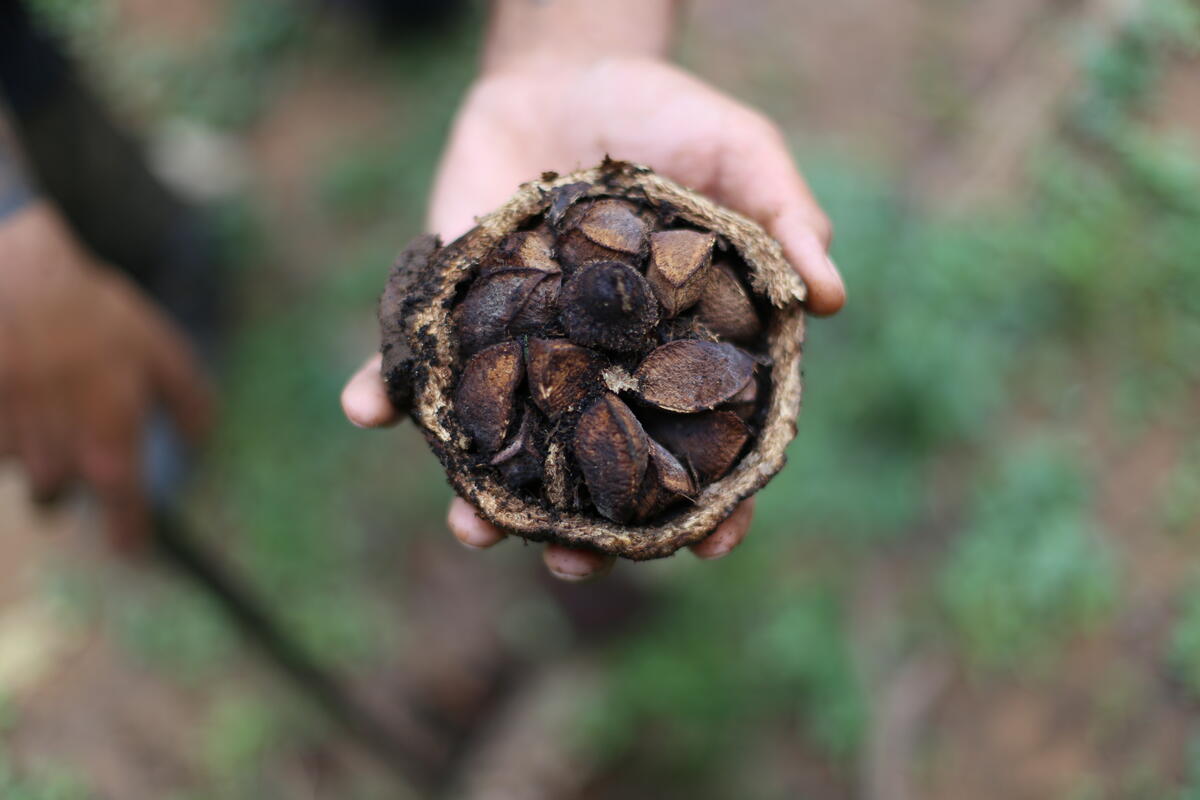
In the Chico Mendes Extractive Reserve in the Brazilian Amazon, locals tap rubber and extract Brazil nuts from the rainforest for a living. It’s a way of life dependent on the forest that goes back generations — and which rubber tapper Chico Mendes, who gave the area its name, was murdered trying to defend in 1988. The reserve has been strengthened in recent years thanks to a massive conservation program known as ARPA, the Amazon Region Protected Areas.
First established in 2002 by the Brazilian government, and later expanded with the support of WWF and private donors, ARPA helps protect 120 conservation areas spanning more than 60 million hectares (nearly 154 million acres) — about the size of Ukraine — of the Brazilian Amazon. The program initially worked on creating new protected areas and then on designing a durable financial mechanism to support their protection.
A new phase, called ARPA Comunidades (Communities), is now shifting the focus to the traditional communities who live within the forest and help protect it. Half of the conservation areas covered by ARPA are sustainable-use conservation units like the Chico Mendes Extractive Reserve, inhabited by local communities who live sustainably off the forest’s resources.
“We were missing closer attention to the communities living in these sustainable-use conservation units, who were contributing to conservation,” said Fernanda Marques, project development officer at FUNBIO, the Brazilian organization responsible for managing the $120 million fund that underpins ARPA Comunidades.
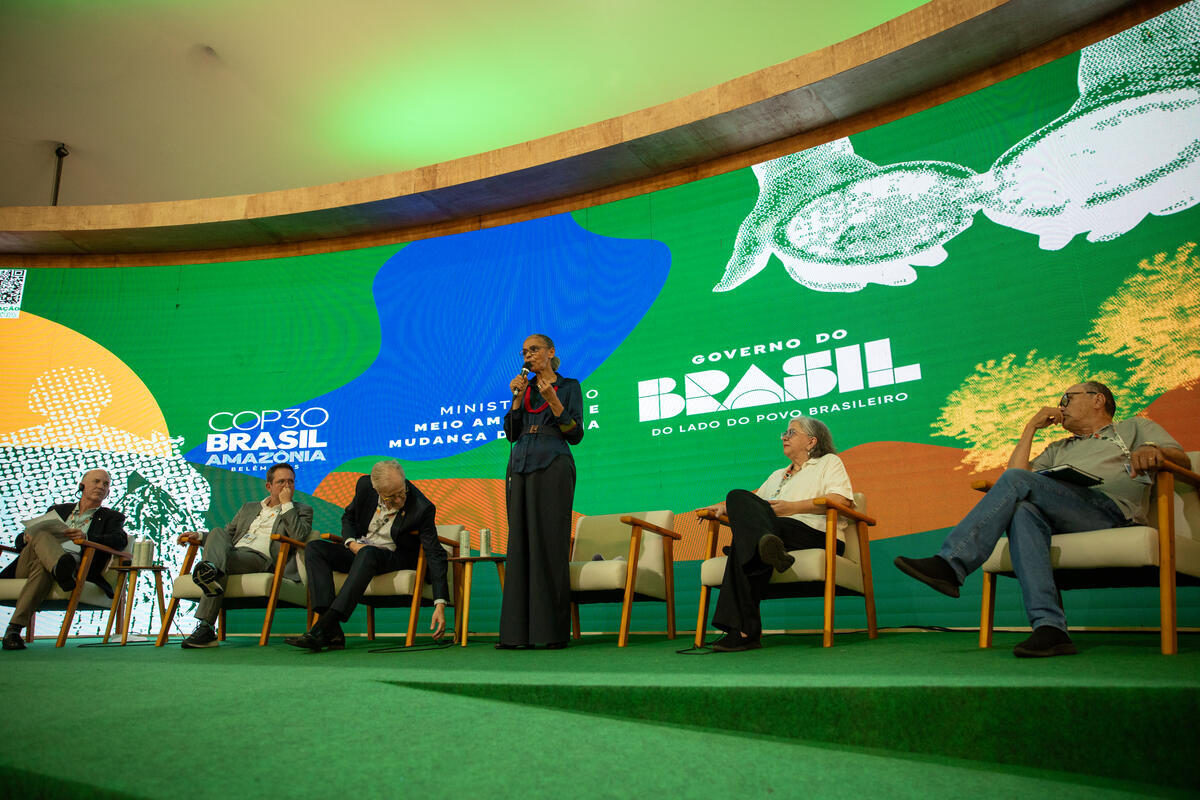
Announced during the COP30 climate summit in the Amazonian city of Belém, ARPA Comunidades will focus on these 60 sustainable-use reserves, which together cover an area of 23.7 million hectares (58.6 million acres), nearly the size of the U.K. The aim is to help reduce deforestation and improve the well-being of the local populations by supporting the development of local bioeconomies. Over 15 years, the program hopes to directly impact 130,000 people. It will also seek to add a further 3 million hectares (7.4 million acres) of protected areas.
“This phase of ARPA delivers the deepest form of durability,” WWF CEO and president Carter Roberts told Mongabay in a video interview. “You have a financial backing and policy backing, [but you will only have true durability] if you really deliver prosperity to communities on the ground who rely on and whose lives are bound up with the forest where they live.”
A 2023 paper by the Escolhas Institute, a Brazilian research organization, found that a 1% reduction in extreme poverty in the Brazilian Amazon has the potential to reduce deforestation by 27,000 hectares (nearly 67,000 acres) in the region.
Greater recognition of local communities’ needs and role in protecting the forest is not a new demand, said Carlos Durigan, a researcher at the Amazon Environmental Research Institute (IPAM), who worked on ARPA in a previous role.
“It’s an element that was missing from the program, to leverage the socio-biodiversity economy. It’s an old and necessary demand, which will strengthen these processes that involve the sustainable management of natural resources,” he said.

A successful track record
ARPA is considered the biggest conservation program of its kind, successfully leveraging cross-sector support through a financing model that has inspired similar projects around the world, and delivered tangible outcomes on forest conservation. Using a model called Project Finance for Permanence, the fund guarantees donations over the long term with a clearly defined scope, offering more stability to the implementation of the program.
“Investments indeed translated into a reduction of deforestation and reduction in CO2 emissions resulting from deforestation,” said Britaldo Soares, an associate researcher at the Center for Technology and Innovation at the Federal University of Minas Gerais, and lead author of a paper analyzing ARPA’s impact.
Soares and researchers from WWF and FUNBIO found that deforestation between 2008 and 2020 was between 9% and 39% lower in Amazonian protected areas benefiting from ARPA support, and that this helped avoid 104 million metric tons of CO2 emissions.
For Júlio Barbosa, a resident of the Chico Mendes Extractive Reserve, ARPA has been important not just in creating conservation areas and infrastructure to support them, but also in strengthening local organizations, like cooperatives and deliberative councils.
“It’s been very important for us to build pathways towards creating an ARPA that truly reflects our communities,” said Barbosa, who serves as president of the National Council of Extractivist Populations, representing forest-dwelling communities across the Brazilian Amazon.
ARPA focuses on traditional communities living within sustainable-use reserves, rather than Indigenous populations on Indigenous land, which is protected under different legislation. But the program also supports Indigenous populations who may live within the protected areas it targets and could even bring indirect benefits to other conservation areas, including Indigenous territories, as it helps maintain forest cover across the Amazon, according to Roberts.
“ARPA created the enabling conditions to strengthen the management of conservation units and now we have ARPA Comunidades to focus investments directly towards the resilience of the communities,” Marques told Mongabay.
Community first
The $120 million, 15-year fund managed by FUNBIO, and backed by partners including the World Bank, the Gordon and Betty Moore Foundation, the Walmart Foundation, and Germany’s Federal Ministry for Economic Cooperation and Development, among others, aims to improve traditional communities’ lives and livelihoods in different ways.
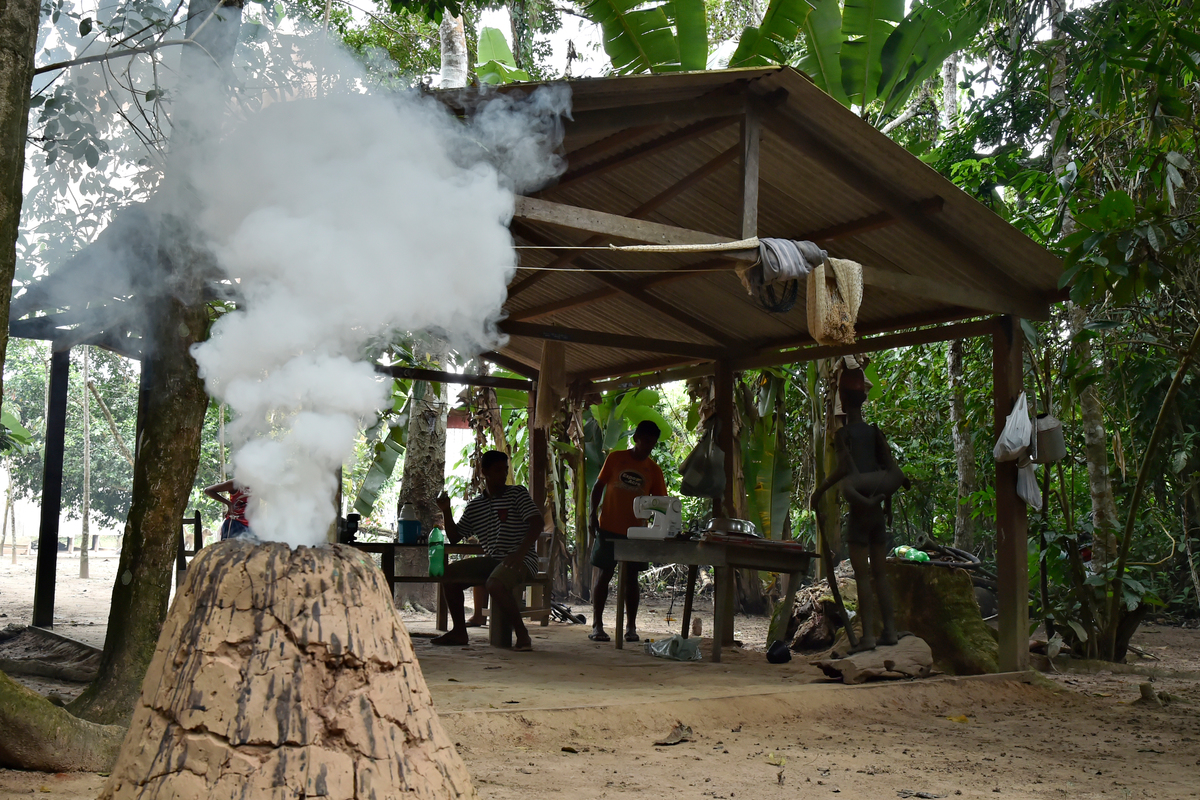
This includes implementing energy systems — either through renewable sources or grid connections — to guarantee stable energy and connectivity to communities lacking it; and the development of production chains allowing communities to increase their revenue from the sale of sustainable forest products.
These needs were identified through a bottom-up participatory process involving conversations between FUNBIO, WWF, community organizations and different sectors of the Brazilian government, as well as donors, according to Marques and Barbosa.
WWF says it hopes that after 15 years, the investment will have helped generate annual revenue of between $95 million and $132 million and lift 100,000 people out of poverty, per the World Bank definition.
How exactly the funds are spent will vary from one community to another, Marques said. While some sustainable-use reserves already have distribution systems allowing them to sell their forest products directly to consumers, others simply produce goods for trading and bartering.
Products can range from açaí berries and Brazil nut, to cacao, rubber, fish and horticultural produce, with opportunities also for lesser-known Amazonian products that are used in the cosmetics and pharmaceutical industries.
“The intention is to have a strategic approach for each organization and value chain, to direct investments according to the maturity and ambition of the organization,” Marques said.
For Barbosa, strengthening community organizations and the development of their sustainable forest management plans is also an important element of ARPA Comunidades.
“We want these organizations to have the conditions to implement a program on this scale, to open the door to fundraising efforts to invest in strengthening biodiversity products. That means increasing the quality and volume of our production, ensuring a fair market for it, and enabling these communities to take part in public policies that can strengthen the socio-biodiversity economy,” Barbosa told Mongabay.
The challenge will be to ensure that this can be done while maintaining communities’ traditions, culture and sustainable relationship with the forest.
“It’s essential to define guardrails for making sure your bioeconomy doesn’t diminish the ‘bio,’ that it doesn’t actually lead to more deforestation,” said WWF’s Roberts.
Considering ARPA’s past successes, there’s optimism that the community-focused phase will also bring tangible benefits and serve as a model for others.
“ARPA’s program could give traction to scaling up successful pilot projects that we have in protected areas in the Amazon, and give visibility to diverse products that are still relatively unknown,” Durigan said.
Barbosa said he’s also enthusiastic about the opportunities ARPA Comunidades will afford future generations in the Chico Mendes reserve and across the Amazon.
“We need to bring successful experiences involving our forest youth into the debate and into efforts to strengthen, defend and empower our territories,” he said.
He added: “I’m 71, that’s why youth involvement is a concern for me.”
Banner image: Rogério Barros, young extractive leader and son of Raimundão Barros, at the Chico Mendes extractive reserve. Image © Christian Braga / WWF-Brazil.
Citation:
Soares-Filho, B. S., Oliveira, U., Ferreira, M. N., Marques, F. F. C., de Oliveira, A. R., Silva, F. R., & Börner, J. (2023). Contribution of the Amazon protected areas program to forest conservation. Biological Conservation, 279:109928. doi:10.1016/j.biocon.2023.109928
Cite this article
Constance Malleret (2026). Massive Amazon conservation program pledges to put communities first. Mongabay Conservation news. DOI: https://doi.org/10.66709/news-312524Credits


