- Once hunted and butchered for oil and meat, whale sharks (Rhincodon typus) are now being rescued by fishers along India’s western Arabian Sea coast.
- Since 2001, the nonprofit Wildlife Trust of India has been educating fishing communities about whale sharks, training fishers in safe disentanglement techniques and offering compensation for destroyed nets.
- During that time, more than a thousand whale sharks have been released from accidental entanglement in fishing nets along India’s west coast.
- However, experts say the compensation for rescues remains insufficient and that social security, insurance, training and livelihood-linked incentives should be offered to protect the fishers who engage in whale shark rescues.
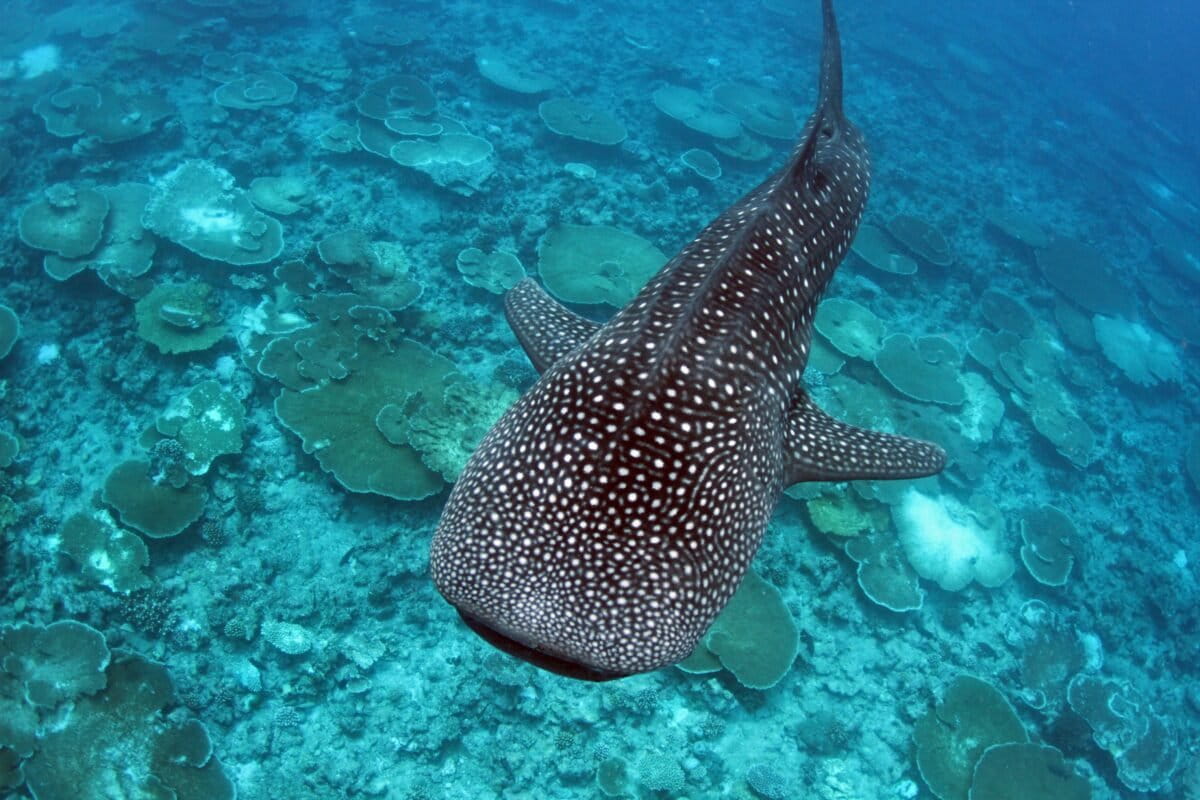
On a March morning in the suburbs of Thiruvananthapuram, Kerala state’s capital in southern India, a group of fishers were hauling their kambavala — a traditional net fixed between bamboo poles driven into the seabed. The net caught something immense. The fishers saw a dark, speckled shadow thrashing within the mesh. As they drew closer, they saw the white-dotted back and cavernous mouth of a whale shark, the world’s largest fish, trapped in the bamboo frame and nylon webbing.
They hesitated for a moment: A torn net could mean the loss of a month’s income for small-scale fishers. However, saving the net would mean killing the animal. On the shore stood Ajit Shanghumukhom, a fisher community representative and a volunteer trained by the nonprofit Wildlife Trust of India (WTI). He made the call: “We can’t let it die,” he said.
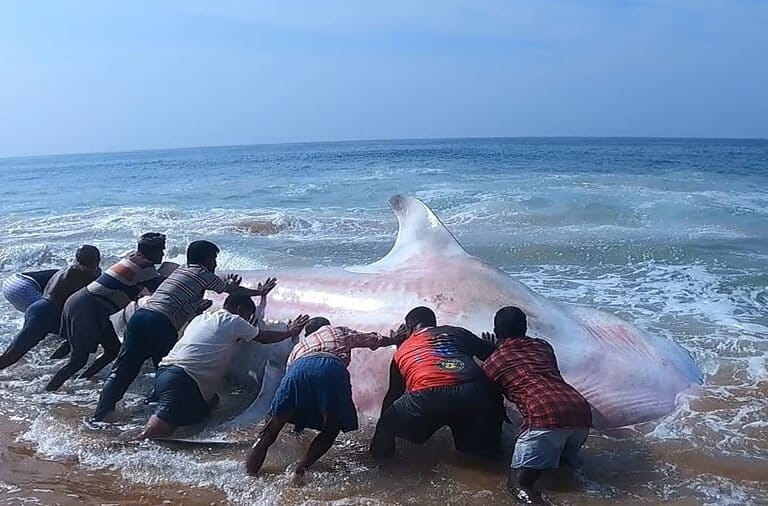
For half an hour, the fishers worked with knives and ropes, cutting the net section by section. The water frothed as the whale shark struggled. When it finally slipped free, the beach fell silent. The fishing net floated like a wound on the water, but the men smiled. They had lost their income but gained something greater — the feeling that the sea itself had been restored.
Fishers turn rescuers
Two decades ago, India’s west coast told a much darker story. In Gujarat state’s Veraval city and Diu Island, hundreds of whale sharks (Rhincodon typus) were slaughtered every year for their liver oil and meat. When the market for fresh meat dipped, the poultry-feed industry stepped in, buying carcasses in bulk. The killings continued until 2001, when WTI, supported by the U.S.-based nonprofit International Fund for Animal Welfare (IFAW), launched the Save the Whale Shark campaign.
The turning point came when a spiritual leader from Gujarat, Morari Bapu, named the species Vhali, meaning “the beloved one,” and urged people to protect it. Through street plays, public pledges and school drives, the campaign humanized an animal once seen as little more than a resource. That same year, the Government of India granted the whale shark Schedule-I protection under the Wild Life (Protection) Act, giving it the same status as the tiger.
Since then, more than a thousand whale sharks have been rescued and released along India’s west coast. Fishers now voluntarily cut their nets to free trapped sharks, with WTI compensating them for their losses.
Today, this community-driven conservation movement spans the states and islands along India’s western coast: Gujarat, Maharashtra, Goa, Karnataka, Kerala and the Lakshadweep Islands. Along the Arabian Sea, fishers no longer drag whale sharks ashore. They break their nets in the water, releasing the giants before they suffocate.
Kerala and its coastal consciousness
In Kerala, however, the challenge was unique. Whale sharks frequent the shallow coastal waters of Thiruvananthapuram and Kollam cities, drawn by plankton blooms and small prey fish. Here, the traditional kambavala nets, designed to trap fish moving with the tides, had become lethal to large marine animals.
These stake nets form funnel-shaped barriers that guide fish into a central pocket. They’re ideal for catching mullets, anchovies, sardines, pearlspot cichlids, prawns and crabs — but deadly for whale sharks, dolphins and rays. When a whale shark enters the net during high tide, it can become trapped as the water level drops.
Every time a whale shark is found entangled and released, WTI verifies the rescue through photos or videos and compensates the fisher 25,000 rupees ($276) for each damaged net. “We realized that people wanted to help, they just couldn’t afford to,” says Sajan John, the head of marine projects at WTI. “No one should lose their income for saving a life. That’s how conservation becomes real.”
In Thiruvananthapuram, where kambavalas dominate, the effect has been profound. Fishers now cut their nets at sea the moment a whale shark is spotted. Even small, mechanized crews send alerts to the rescue network. “Earlier, the whale sharks died tangled in gear,” John says. “Now, they’re released alive before they reach shore. It’s a complete reversal.”
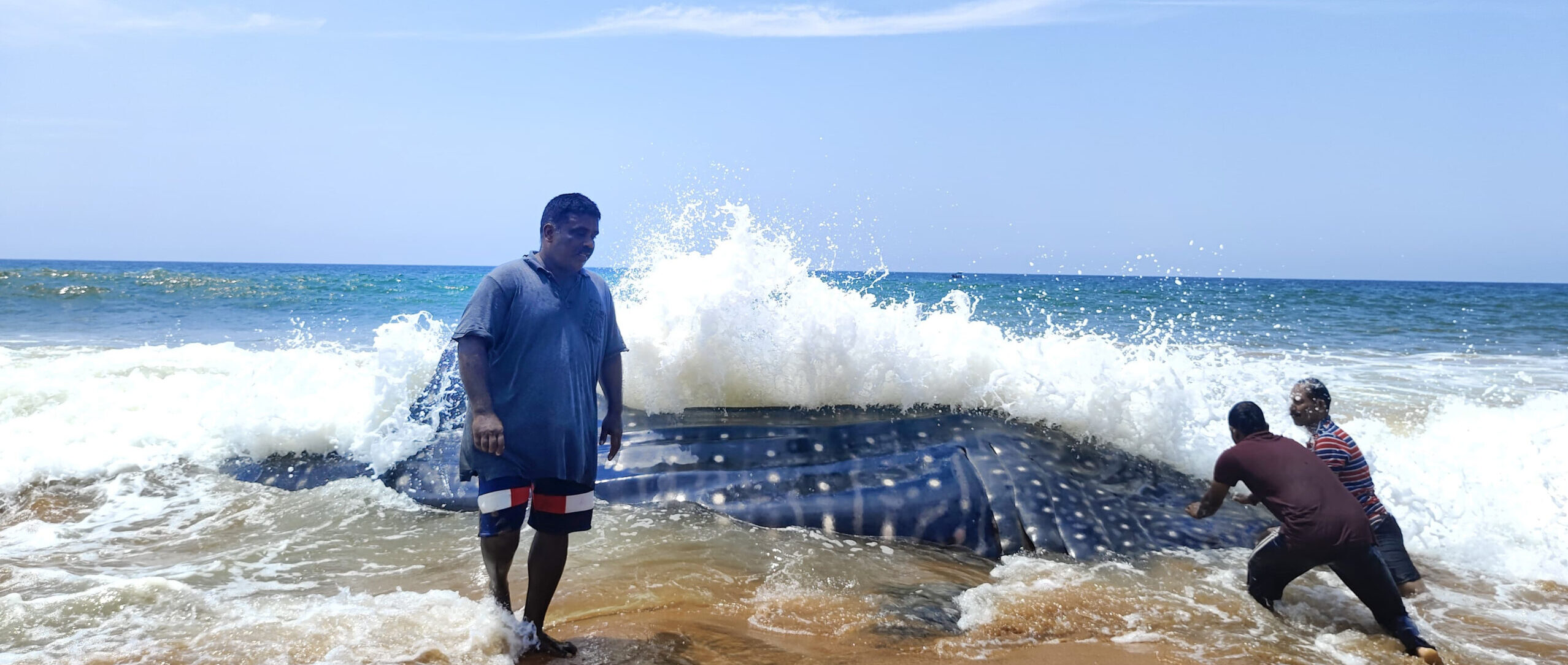
At the heart of this change in Kerala is Shanghumukhom, a man who never imagined becoming a conservationist. Born into a family of church musicians traditionally exempted from fishing, he spent two decades abroad working as a chef before returning home at 42. “I began filming the fishing life [in Kerala] for YouTube. But soon I was learning from the fishers — about tides, species and the moods of the ocean,” he says. One morning near Thiruvananthapuram’s Kannanthura Beach, Shanghumukhom witnessed his first trapped whale shark. “It was huge, almost the size of our boat,” he recalls. “We freed it, and something changed inside me.”
Since then, Shanghumukhom has helped rescue dozens of whale sharks between Shankumugham Beach near Thiruvananthapuram and Adimalathura village, more than 20 kilometers (12 miles) away. Working with WTI, he trains fishers and youths from coastal villages in safe disentanglement techniques. “When others see a net full of fish, he sees a life struggling to breathe,” says fellow rescuer Gopakumar Mathruka.
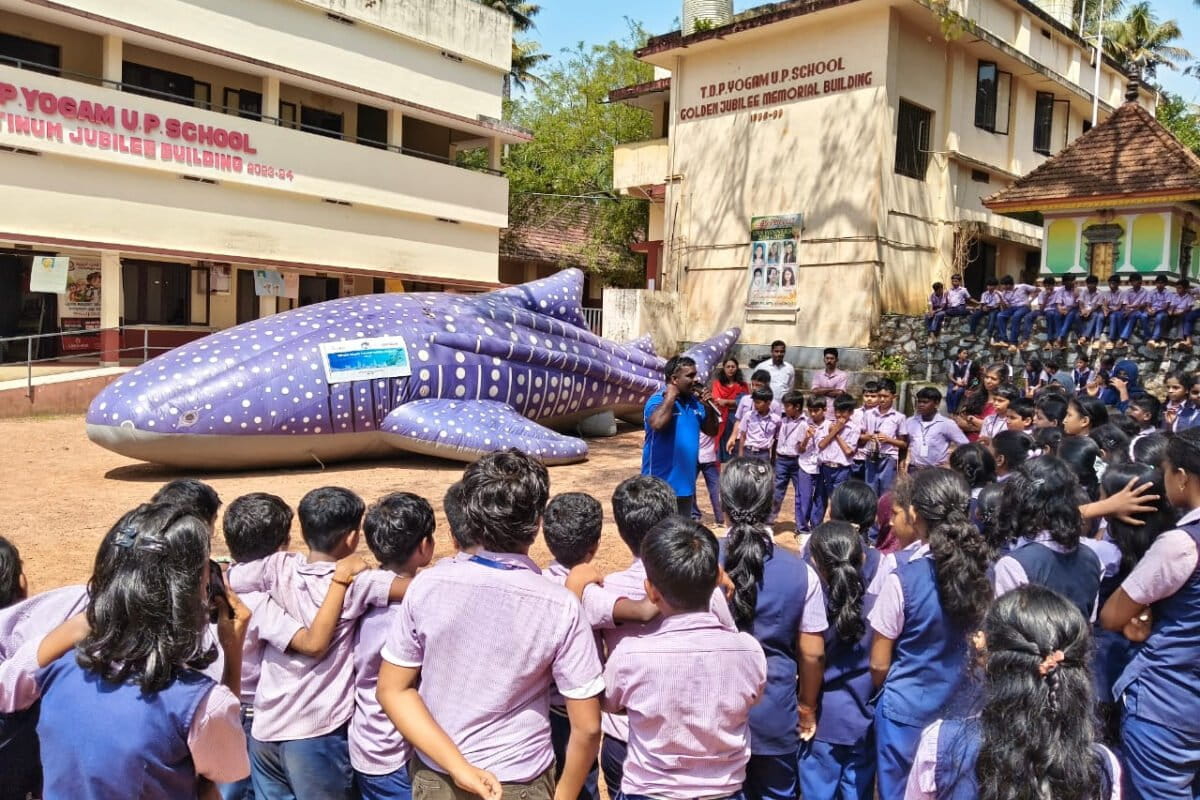
Until a decade ago, surveillance was rare, and violations were often ignored in Kerala. With on-site training, rapid response drills and school awareness programs, there is a culture of marine empathy. Posters, short films and puppet shows helped coastal families understand that whale sharks are harmless plankton-feeders, ancient migrants that have shared these seas for millennia.
Shanghumukhom’s records show that his team alone has safely rescued and released 50 whale sharks in the past seven years, 35 of them through his personal efforts.

Spreading awareness
The whale shark conservation movement has now reached the Lakshadweep Islands, where coral atolls form rich plankton nurseries. Historically, islanders never hunted whale sharks, but mechanized boats and nylon nets have increased the risk of accidental entanglement. Shanghumukhom and other WTI volunteers now travel across Lakshadweep and the coastal stretches of western India with travel support from WTI. Local schools and fishing collectives host his awareness programs, while WTI officials, volunteers, fish workers’ unions, NGOs and government departments extend active assistance throughout his journey.
“What began as a small conservation drive in Gujarat two decades ago has now become a movement stretching from the state’s coast to the lagoons of Lakshadweep,” John says. “Through coordinated rescue missions, fisher compensation and years of patient outreach, we’ve built a living corridor of care across the Arabian Sea. Today, whale sharks move freely between Gujarat, Kerala and Lakshadweep — a sign that communities, not just policies, can keep the ocean safe for its largest gentle giant.”
The awareness programs have also reached schools and colleges. In classrooms from Veraval to Valiyathura port, children paint enormous whale sharks in blue and grey, while learning about migration and empathy. “When children begin to care, killing becomes impossible,” Shanghumukhom says. “You can’t ignore a creature your child has drawn on the wall.”
Women’s self-help groups hold evening discussions on ocean ethics, while young fishers film rescues and share them online.
Whale sharks in the west versus the east
While whale sharks also occur along the eastern Bay of Bengal coast, less research is conducted here compared to the Arabian Sea coast. “The focus of whale shark conservation in India has always tilted toward the Arabian Sea because that’s where science, sightings and social participation first converged,” explains K. V. Thomas, former marine and earth scientist at the National Centre for Earth Science Studies (NCESS) in Thiruvananthapuram. “Gujarat’s fishers once hunted these giants, so when the Wildlife Trust of India stepped in with its awareness and compensation model, it became a natural laboratory for community-led conservation. Over the years, this network expanded southward through Karnataka, Kerala and Lakshadweep, building on decades of field data and trust.”
The Bay of Bengal coast, by contrast, has seen fewer documented sightings, less consistent research and limited community engagement, he says. “The habitats are different, the fishing patterns are more industrial, and the local institutions have not yet developed the same participatory framework. That’s why structured rescue operations and compensation schemes remain sparse on the eastern seaboard, even though whale sharks do appear there. If we want a truly pan-Indian conservation approach, the Bay of Bengal needs that same scientific investment, grassroots partnership and sustained policy attention that the Arabian [Sea] coast has enjoyed for more than two decades,” Thomas says.
The Arabian Sea, driven by monsoon winds, experiences seasonal upwelling that brings nutrient-rich waters to the surface. This sparks massive plankton blooms that draw sardines, anchovies and mackerel — the whale shark’s primary prey. “When fishers free a whale shark, they’re not just saving a species, they’re keeping the sea’s rhythm intact,” John says.
Challenges remain
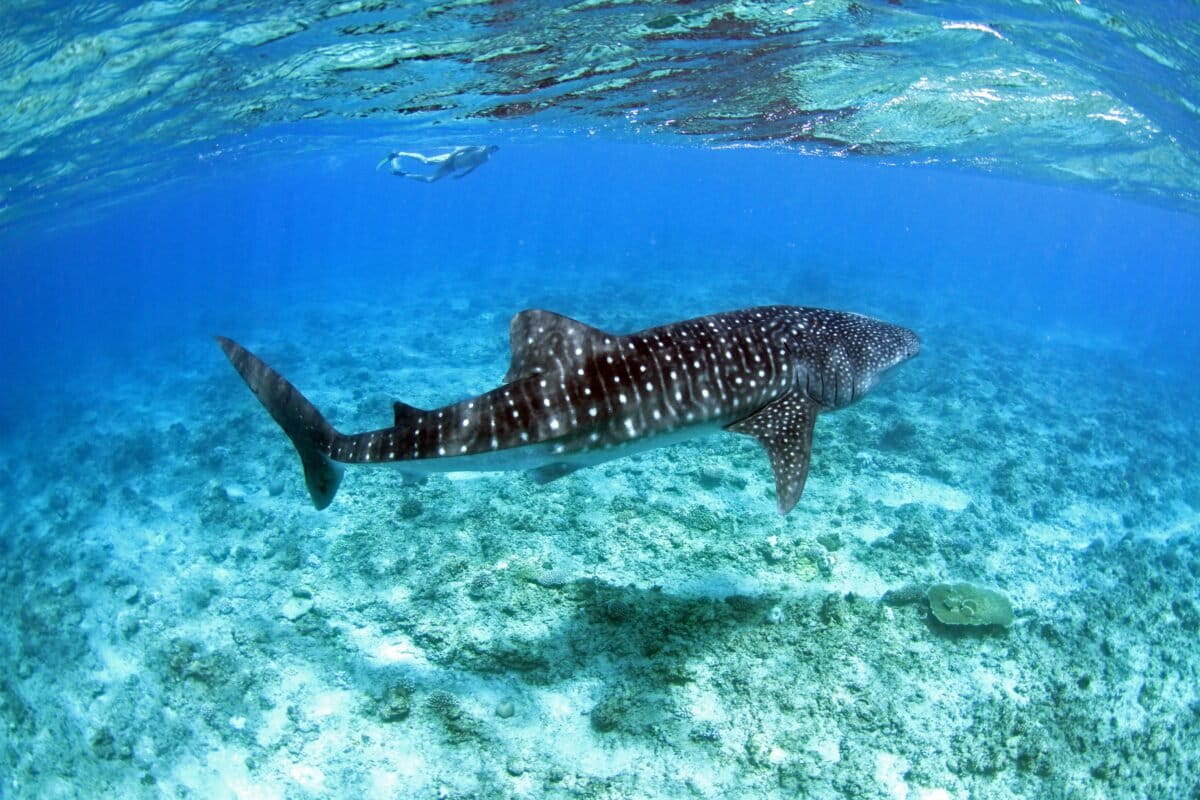
Fishers who once saw conservation as a threat to their livelihood have learned to see dignity in coexistence. Yet the whale shark remains endangered globally, threatened by climate change, ship strikes and pollution. Offshore drilling and coastal construction continue to endanger its habitat. Still, amid all this, small-scale fishers along India’s coast have become its protectors — ordinary people whose acts of mercy ripple across oceans.
Fishers also note that the compensation is not sufficient for all their efforts and expenses. “The compensation we get is barely a third of what a large fishing net costs,” says Charles George, president of the Kerala Fishermen Coordination Committee. “When we rescue a whale shark, the collective receives only a small amount — hardly 25,000 rupees — just for the damaged net. There’s no support for the time, effort and fuel we spend at sea during such rescues. Fishermen are using their precious catching time for rescue and rehabilitation, unmindful of the loss of their daily livelihood income. It’s only WTI that provides this limited compensation. Neither the government nor any corporation has stepped forward to share even a part of this financial burden.”
But compensation is only the beginning, Thomas says. “If we truly want to sustain whale shark conservation, we must ensure that the fishers who rescue them are not left out of the blue economy they help protect. Beyond paying for damaged nets, we need to recognize them as partners — through social security, insurance, training and livelihood-linked incentives. Fishermen who risk their time and income to save a whale shark should be treated as marine guardians, not just beneficiaries,” he says.
Thomas suggests the fishers be trained as citizen scientists, equipped with safety tools, and be included in community-managed marine stewardship programs. He recommends that eco-labelling, eco-tourism and even state awards can help build dignity and visibility for their work. “When rescue becomes a recognized livelihood activity and part of coastal governance, conservation gains permanence. That’s how India can move from token compensation to true co-management of its marine heritage.”
However, for some fishers, the 25,000-rupee compensation was not just about the money; it is also the recognition. It showed them that the system valued their sacrifice. “We used to take from the sea,” Shanghumukhom says. “Now we give something back.” “The sea gives us everything,” he adds quietly. “Cutting a net to save a life is the least we can do. Maybe one day, that will be enough to balance what we’ve taken.”
P.V. Johnson, a veteran fisherman in Vizhinjam says, “If the sea loses her biggest fish, we will soon lose everything smaller, too.”
This article was first published by Mongabay India here on Nov. 28, 2025.
Banner image: A whale shark (Rhincodon typus). Image by Gaby Barathieu / Ocean Image Bank.
Study maps whale shark stranding hotspots in Indonesia, highlights conservation needs
Cruise ships and intensified tourism in Mexico threaten whale shark habitat
Credits