- Division, a four-year-old North Atlantic right whale known as Catalog #5217, was found dead off the coast of North Carolina in January after weeks in failing health caused by a severe fishing-gear entanglement that responders were unable to fully remove.
- Born in 2021 to a female named Silt, Division had already survived three earlier entanglements, a reminder of how early and repeatedly right whales now encounter life-threatening human hazards.
- His death comes amid fragile signs of hope for the species, with fifteen calves recorded this winter in a population of roughly 380 whales, far short of the numbers needed for recovery.
- Division’s short life illustrates how the threats facing right whales are not abstract but cumulative and prolonged, shaping lifespans measured in decades and placing the species’ future in the balance of decisions made far from the water.

Division was four years old when he died, a young age even by the shortened standards now applied to North Atlantic right whales. His body was found in late January, adrift off the coast of North Carolina, partial and unrecoverable. The weather was too dangerous for anything more than confirmation. By then, the cause was already understood.


He was first seen entangled in early December, fishing line wrapped tightly around his head and mouth. It cut into his blowhole and lodged in his upper jaw. Some of the gear was removed. Enough remained to slow him, to feed infection, to drain energy from a body still meant to grow. Scientists who tracked him afterward saw what they had learned to recognize: weight loss, altered swimming, the steady signs of decline. They followed his movements as best they could. Distance and storms intervened. He was last sighted alive on January 21st, off Cape Hatteras. Six days later, he was dead.
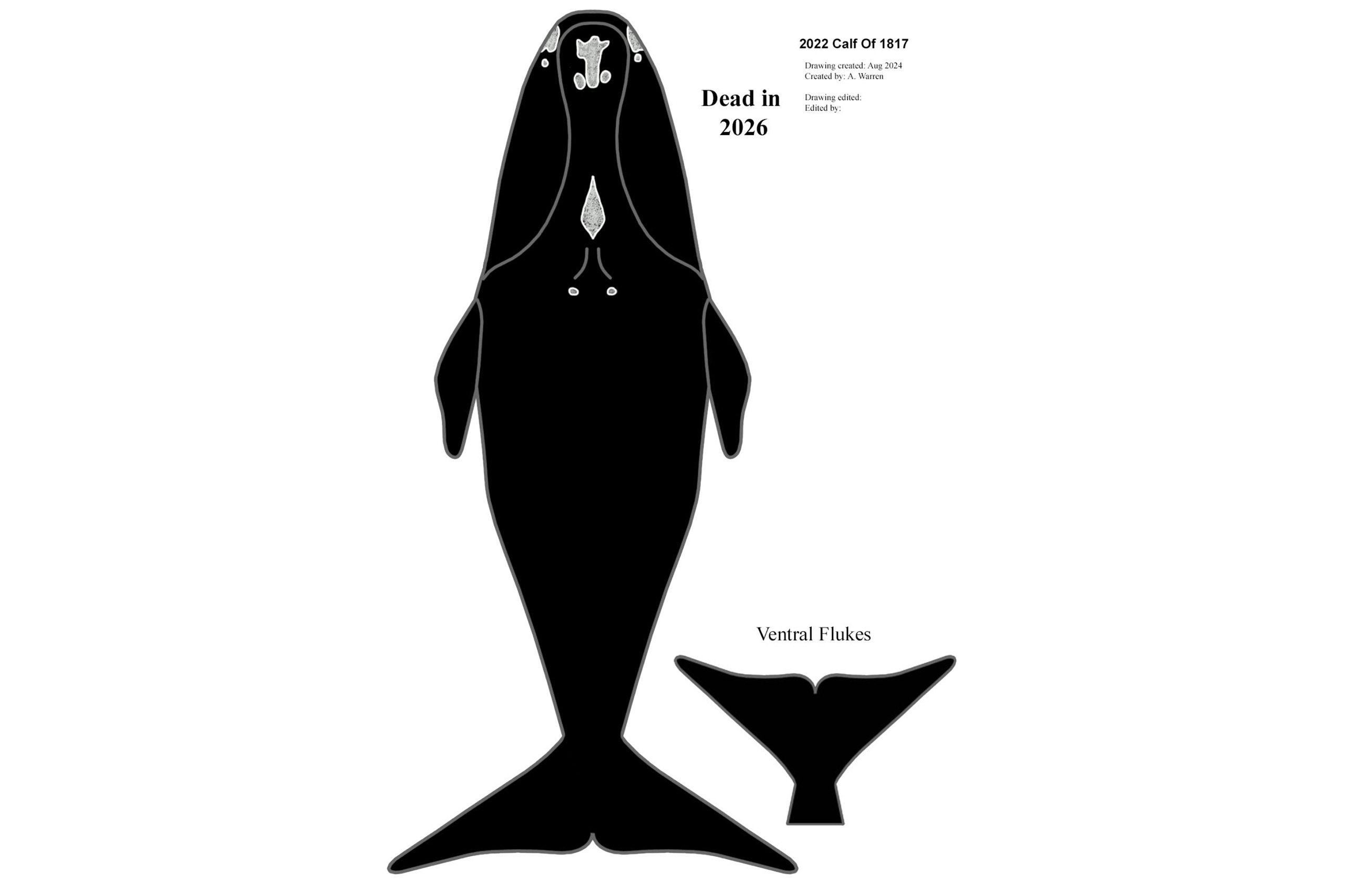
Division’s catalog number was 5217. His name came from the pale markings on his head, callosities arranged in a pattern that resembled a mathematical symbol. To those who knew him only through photographs and survey logs, he was one of many. Sixty-eight recorded sightings. Twenty-three photographs. A few notes about tooth decay in the bonnet. One image shows him leaping, much of his body briefly clear of the water.
He was born in December 2021 to a female known as Silt, herself a survivor in a diminished lineage. He was her youngest calf, the fourth. From the start, his life unfolded in waters that offered little margin for error. Despite his age, Division had already been documented in three prior entanglements. Each encounter left marks. None were fatal, until the last.
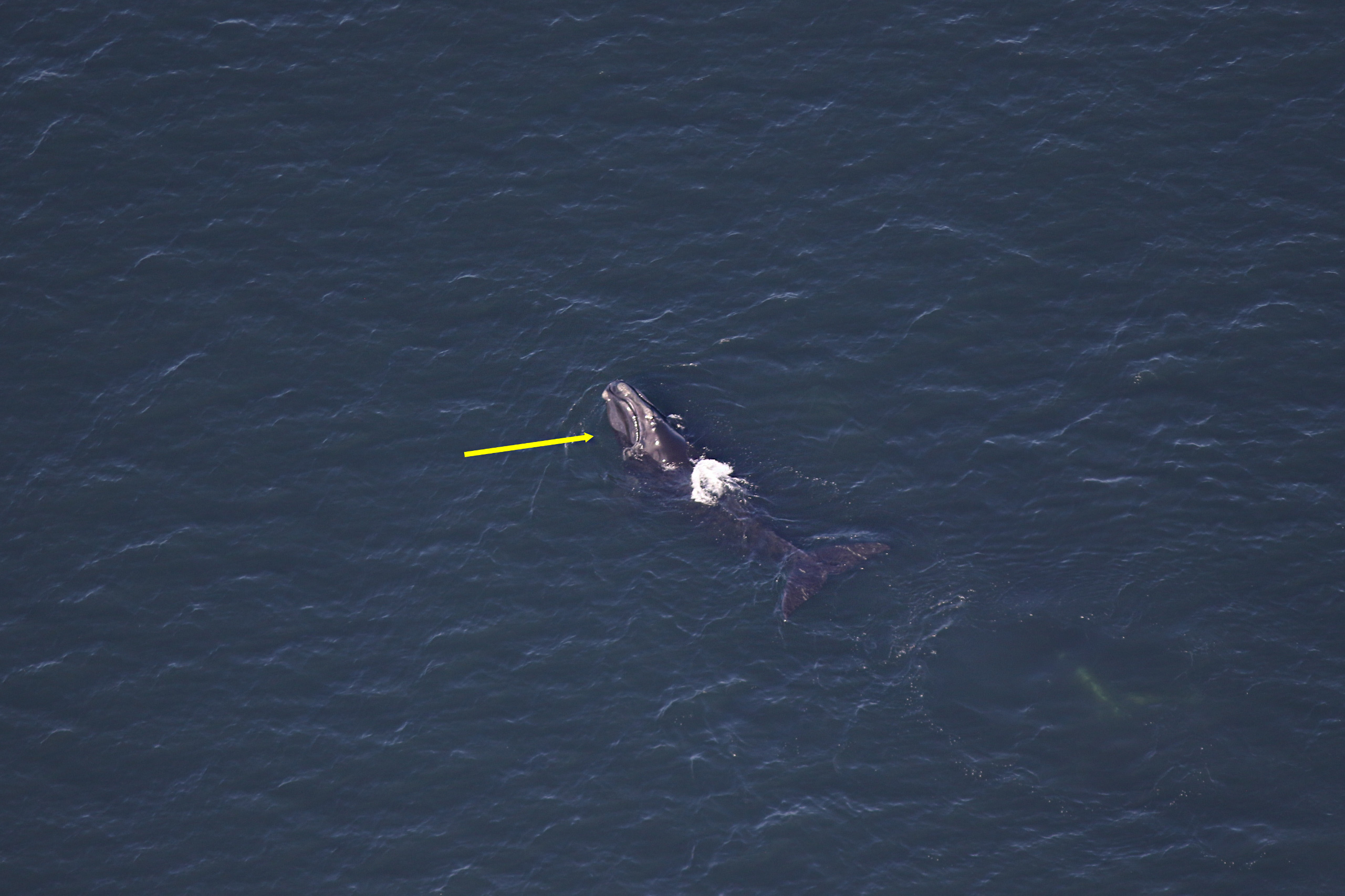


North Atlantic right whales are not built for speed. They move slowly, feed near the surface, migrate along some of the busiest shipping corridors in the world. They were once hunted because they were the “right” whales to kill: easy to catch, rich in oil, inclined to float when dead. The traits that once made right whales vulnerable to whaling now expose them to fishing gear and ships.
Roughly 380 right whales remain. Of those, only about 70 are breeding females. From 1980 onward, scientists have documented more than 1,900 entanglements, involving most of the population at least once. Many whales carry the scars for decades. Some do not survive the first encounter. Others endure repeated injuries, each one further reducing their chances of survival.
Against that arithmetic, even small good news is noticed. This winter, researchers recorded an uptick in births. Fifteen calves have been identified so far, including some born to first-time mothers. A few females are calving at shorter intervals. In a population this small, each birth matters. Every calf is counted, photographed, named.
But the numbers are unforgiving. Federal scientists estimate that something like 50 calves a year, sustained over many years, would be needed to put the species on a clear path to recovery. That is far beyond what is plausible. Right whales can live for more than a century. In the modern North Atlantic, many do not. Their median lifespan is measured in decades as a result of entanglements and vessel strikes.


Division’s death was the first confirmed right whale fatality since May 2024. It drew statements, careful language, and familiar conclusions. His entanglement, one scientist said, was a reminder that human activities remain a clear and present threat. That is true, but incomplete. The threat is physical and prolonged, leaving injuries that can persist indefinitely.
There are tools that could reduce this harm, including ropes designed to give way and ropeless fishing gear—changes that would allow whales to pass without carrying the ocean’s infrastructure on their bodies. Adoption has been slow and regulations have stalled. In policy terms, there are pauses and moratoriums. In the life of a whale, those spans can cover migrations, feeding seasons, and a full reproductive cycle.
Division never reached that stage. He did not mate. He did not father calves that might have carried his markings north in spring. He lived long enough to be named, tracked, and mourned by people who never saw his life unfold.


North Atlantic right whales are not yet at the edge occupied by species like the vaquita, reduced to a handful. There is still time. That is what makes losses like Division’s harder to absorb. He died not at the end of a story, but in the middle of one that could still be changed.
For now, the calves born this winter are moving north with their mothers, following migration routes used for centuries. The water around them remains crowded. Whether they will reach old age depends on choices made elsewhere.
Division’s life was short, and well documented. His death was expected, and no less significant. He leaves behind a catalog entry, a few photographs, and the space where he should have been.

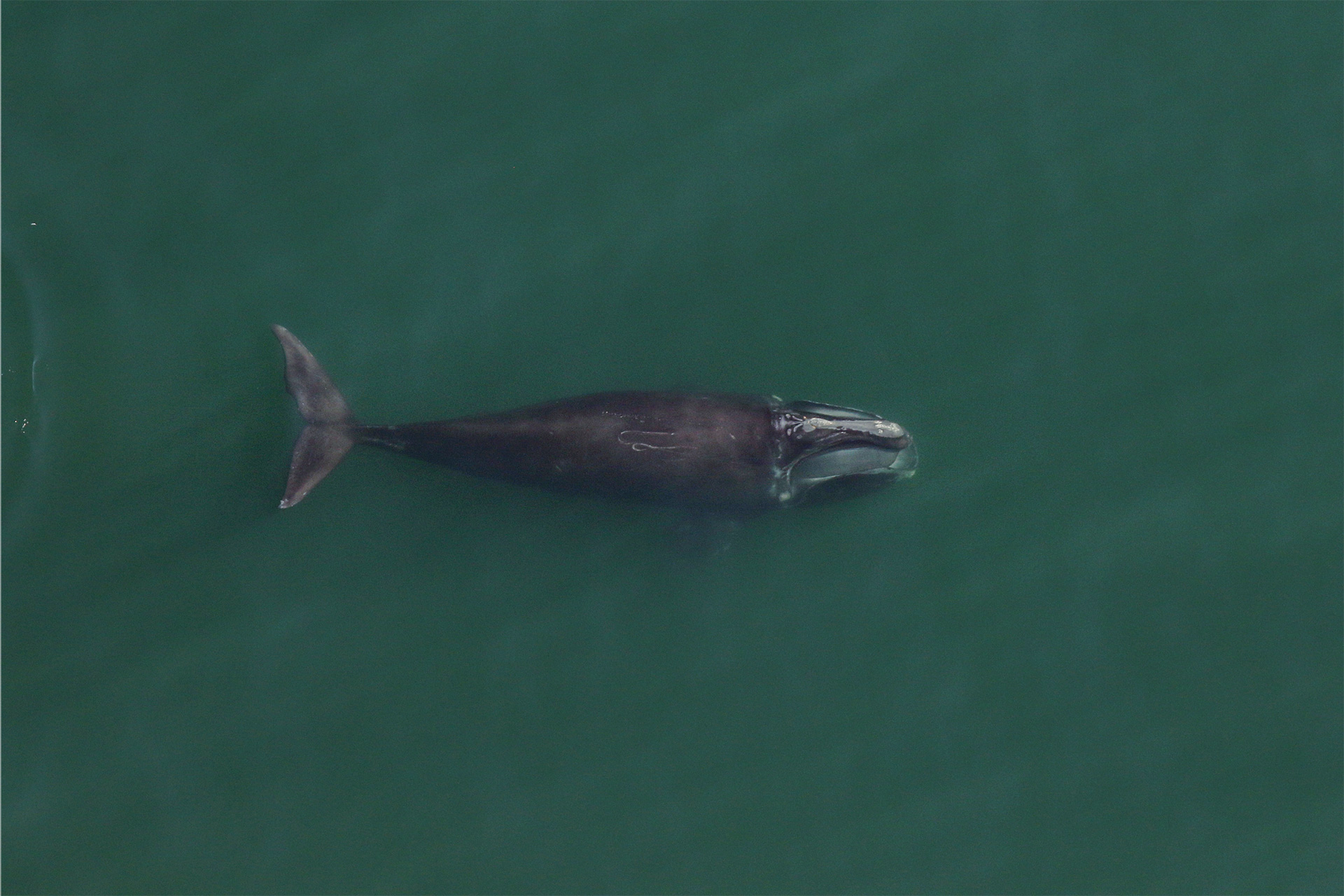
Header image: Division in April 2023/04/09. Photo credit: New England Aquarium
Cite this article
Rhett Ayers Butler (2026). Division’s final journey. Mongabay Conservation news. DOI: https://doi.org/10.66709/news-313603Credits