- The sale of carbon credits from forest restoration is taking off in Brazil, but the sector still needs to tackle mistrust, the complexity of ecosystem restoration and the long-term nature of the projects.
- Founded in 2021, Brazilian firm re.green commercially restores forests by selling carbon credits and has projects spanning 34,000 hectares (84,000 acres) in the Amazon and Atlantic Forest.
- The company aims to restore 1 million hectares (2.5 million acres) of tropical forests across Brazil. Its work so far has been recognized through an EarthShot Prize in 2025.
- As well as restoring ecosystems to sell high-integrity carbon credits, the company also works with the community and produces data and knowledge on forest restoration.
In Eunápolis, in the south of the Brazilian state of Bahia, the clearing of Atlantic Forest for agriculture started centuries ago, leaving a patchwork of cattle pastures, monocultures and degraded land. Between 11% and 25% of Brazil’s native vegetation is in a process of degradation related to deforestation, while 22% of its pasture is severely degraded. To reverse this, efforts are underway across the country to recover ecosystems and their services, a vital help in climate change mitigation.
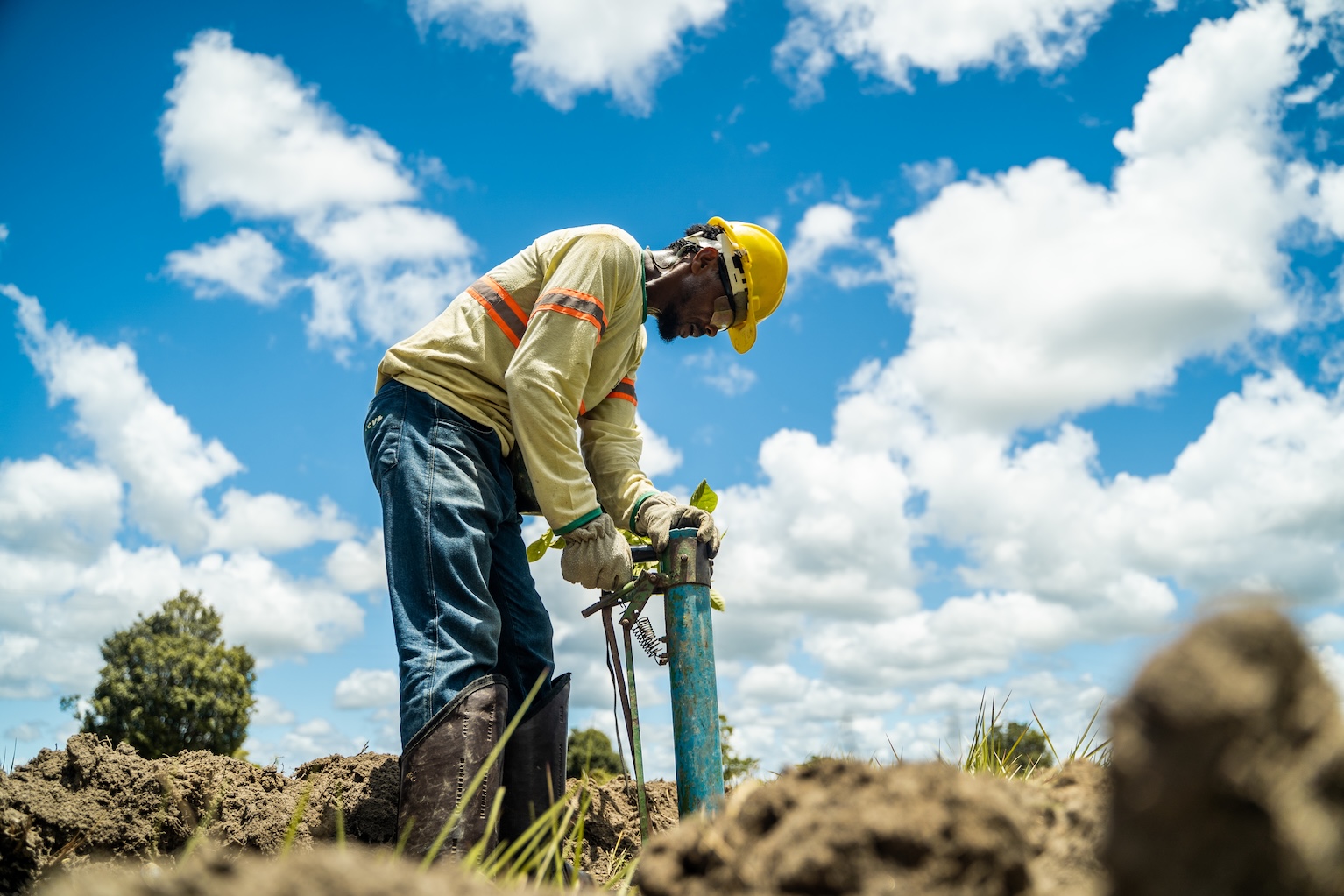
Since 2022, about 30 kilometers (19 miles) away from the city of Eunápolis, restoration efforts have been ongoing on the Ouro Verde farm to bring back Atlantic Forest species on hundreds of hectares of unproductive cattle pasture. Currently, 344 hectares (850 acres) of forest have been restored.
“In two years, you’ve gone from degraded pasture, extremely damaged, sandy soil, to a forest with more than 60 species, trees more than 4 meters [13 feet] high. It looks like a forest,” said Miguel Moraes, director of projects at re.green, the Brazilian company behind the Ouro Verde project.
Founded in 2021, re.green aims to restore 1 million hectares (2.5 million acres) of tropical forests across the Amazon and Atlantic Forest, while selling carbon credits and generating benefits beyond carbon capture. “We’d like to be a leader showing that there are different models of monetizing forests and natural ecosystems that don’t just generate benefits for the climate, but also for people and biodiversity,” Moraes told Mongabay in a video interview.

Commercial restoration — where companies restore ecosystems, then sell carbon credits to further finance their restoration work and generate a profit — is gaining traction in Brazil. Done effectively, this could complement efforts by the public sector and NGOs to recover land degraded by human activity, according to several experts talking to Mongabay.
The Brazilian government has a target to restore 12 million hectares (around 30 million acres) of forests by 2030, while the extent of degraded areas requiring restoration on private land is estimated to total 21 million hectares (52 million acres), an area slightly smaller than the U.K. But recovering a forest is slow and costly, coming with legal and logistical obstacles, especially in the Amazon, where there is uncertainty over land tenure, for example.
“The government alone is not going to reach this target, hence the need for private sector companies,” Ana Cristina Moeri, president of Instituto Ekos Brasil, a nonprofit working on environmental protection across the public and private sectors, said in a video interview.
The model of commercial restoration
Re.green’s business model relies primarily on the sale of carbon credits from private land it has bought or rented to reforest. It also plans to sell sustainable timber products from these areas. In the medium term, the company plans to restore around 250,000 hectares (617,800 acres) by 2030, Moraes said.
So far, it says it is working across a handful of projects spanning 34,000 hectares (84,000 acres) in the states of Bahia, Maranhão, Pará, Mato Grosso and Rio de Janeiro, of which 20,000 hectares (49,400 acres) are in the process of being actively restored. Its work was recognized last November, when the company won the Earthshot Prize for its restoration and nature protection efforts.
Re.green starts by identifying areas with the biggest potential for restoration via artificial intelligence, drones, satellite imagery and ecological and financial data. Using computer models and scientific data, it then calculates the project’s profitability based on projected carbon capture and designs a restoration plan. Then the restoration process begins.
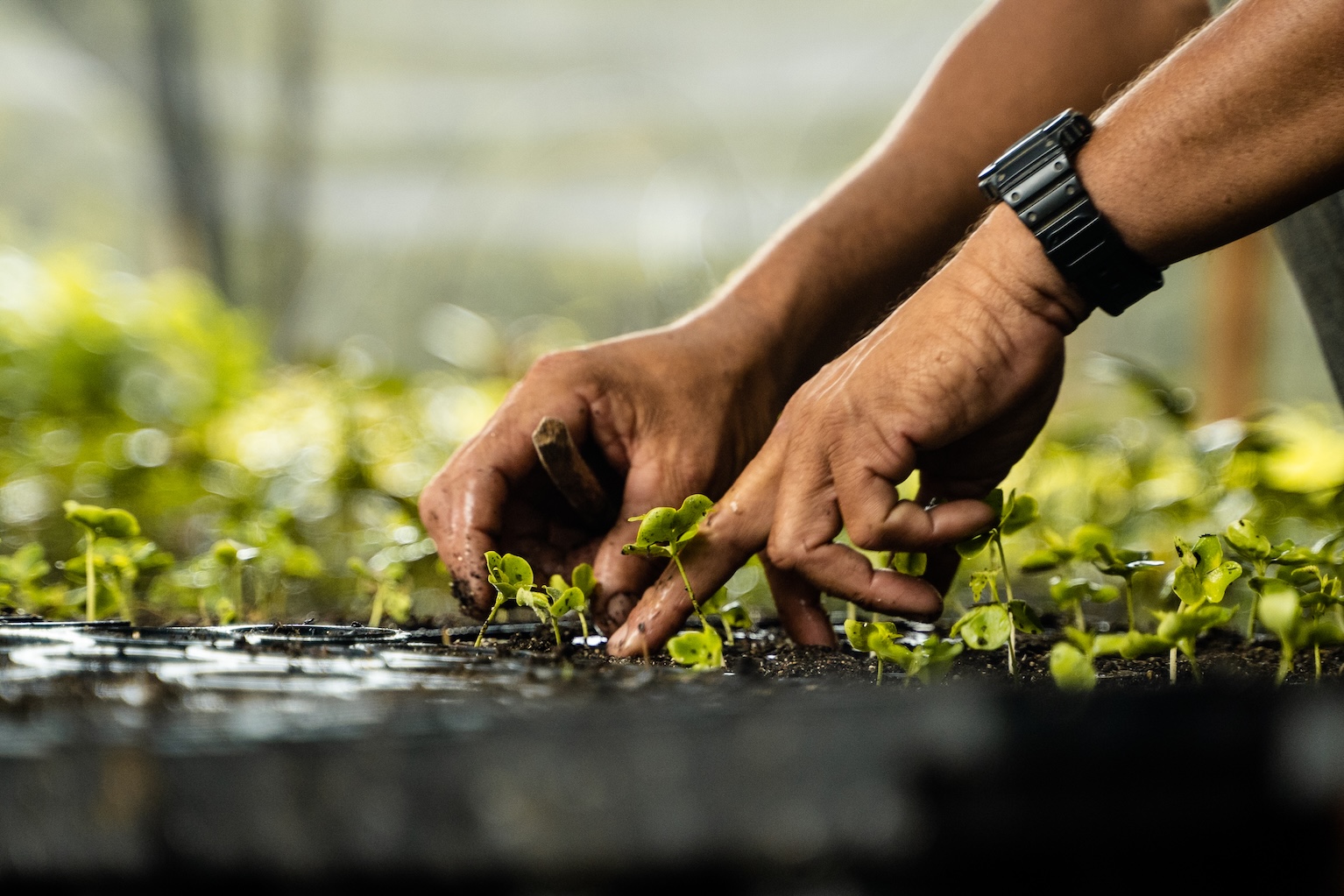
“Forest restoration [means] restoring all the ecosystem services that existed in a given area,” said Paulo Amaral, a senior researcher at conservation nonprofit Imazon. These include water production, climate regulation, carbon capture and providing ecological corridors for biodiversity.
According to Amaral, effectively restoring a thriving forest requires first analyzing and preparing the soil; selecting the species and their planting method; and then monitoring, not just the plants’ initial survival, but also their resilience to threats like climate change, fire and invasive species or pests.
To achieve that, Moraes said that re.green first engages with local communities and plans restoration based on the area’s characteristics like topography and soil. It plants native species via a variety of methods, including planting seedlings, sowing seeds, assisted natural regeneration or a combination of those, he said. And it monitors them.
The process has evolved through trial and error. The experience at Ouro Verde in Bahia led the company to cut by more than half the number of species it initially plants and to focus on fast-growing trees like canafistula (Peltophorum dubium) and cecropia trees (Cecropia), which then create the conditions for more fragile species and fauna to return. “We want to work with nature, for nature itself to bring back this diversity,” Moraes said.
Reforestation credits
Experts like Moeri say that reforesting to issue carbon credits works in Brazil, where there is an excess of degraded land that can meet growing demand for high-integrity carbon credits — credits that have real and verifiable carbon removal, as well as social and biodiversity benefits.
Credits for carbon absorbed by restoring an ecosystem have emerged as a more reliable alternative to those sold for emissions avoided by not deforesting — what is known as REDD projects, reducing emissions from deforestation and forest degradation.
“There’s increasing importance and investment in reforestation projects, with Brazil emerging as a major provider of these carbon credits,” Moeri said.
Brazil passed legislation creating a regulated carbon market in December 2024, and the government hopes to have it ready for adoption by the end of this year. But for now, credits are sold on the voluntary market, which has been rocked by a series of scandals, from companies profiting off public land without consulting or informing traditional communities, to the sale of ‘dirty’ credits linked to the mining industry.
Re.green plans to issue its first certified carbon credits in the first half of 2026. Its projects are awaiting certification from Verra, the world’s largest voluntary carbon registry, although most have already been sold upfront, Moraes said. According to re.green, this is a standard practice.
Britaldo Soares Filho, an associate researcher at the Center for Technology and Innovation at the Federal University of Minas Gerais, worries, though, about the lack of guarantees. “The problem with restoration is that they sell the credits in advance,” he told Mongabay. “The credit can be sold, resold. Who is going to be responsible for restoration [in the long-term]?”
Amid wider questions about the true effectiveness of carbon projects, re.green’s chosen certifier, Verra, has also faced credibility issues. In 2023, an investigation by The Guardian cast doubt over 90% of the certifier’s credits. In 2025, Verra suspended three projects in Brazil following a police investigation into their links to land-grabbing and illegal logging.
While skeptical of carbon credits, Soares recognizes that carbon capture from restoration projects is more measurable than REDD. Moraes pointed to that and the use of technology like remote sensors as guarantees of the company’s credibility.
In the last 18 months, re.green has signed forest restoration and carbon offtake agreements with the likes of Microsoft, Nestlé, Brazilian telecom company Vivo and Agro Penido, an agricultural company.
According to Moraes, this reflects growing interest in restoration credits among different corporate sectors, with many prepared to pay a premium for high-integrity carbon and valuing the projects’ co-benefits beyond carbon capture.
While REDD credits tend to sell for $3-$20/ton, those from restoration projects can be valued above $70/ton, Moraes said.
The high price of credits is necessary to make these projects viable, according to Luís Fernandes Guedes Pinto, executive director of the NGO SOS Mata Atlântica. “Planting forests for commercial ends, to be remunerated through carbon … it’s a viable formula, an excellent one, but it doesn’t work anywhere,” he told Mongabay.
“Land needs to be cheap, and carbon needs to be expensive. Re.green is able to offer expensive credits because they have excellence in forest production,” Pinto said, referring to the company’s restoration process grounded in science and the fact that it counts respected scientists, such as Bernardo Strassburg and Pedro Brancalion, among its founders.
Beyond carbon capture
Local communities play a key role in ensuring that land restoration is successful. “Local actors need to have access to information, access to science, access to infrastructure so that they are effectively participating in the restoration process,” said Amaral of Imazon.
In the Amazonian state of Maranhão, re.green has helped locals living near its 18,000-hectare (45,000-acre) Entre Rios project develop a seed collection business. “The company embraced our cause,” said Maria José Cruz Silva, a local from the nearby Vera Cruz community who came up with the idea of working with seeds, reconnecting with a traditional practice that had been lost. Today she is president of the Agroforestry Association of Producers and Extractivists from Vera Cruz and Surroundings (SEMEAR). Members received training and now collect and sell native seeds to local nurseries as well as to re.green.
Elsewhere, re.green employs locals for the planting stage of its activities and encourages the companies it contracts for monitoring services to do so too.
For Moraes, community involvement is an essential part of their long-term work. “If we can’t manage to re-establish this relationship between communities and forest, and the perception of value in the forest, this forest will probably not last as long as it could,” he said.
The longevity of a restored forest is a mark of its success but also presents challenges, from securing financing to the availability of key inputs, said Roberta del Giudice, director of forests and forest policies at BVRio, an NGO working on market solutions to socioenvironmental problems.
“It’s a very long-term investment, so you need to have a financial structure that supports this,” she said.
Moraes admitted this is a challenge. “We have a concentration of heavy costs at the start of the project and revenue spread out further down,” he said.
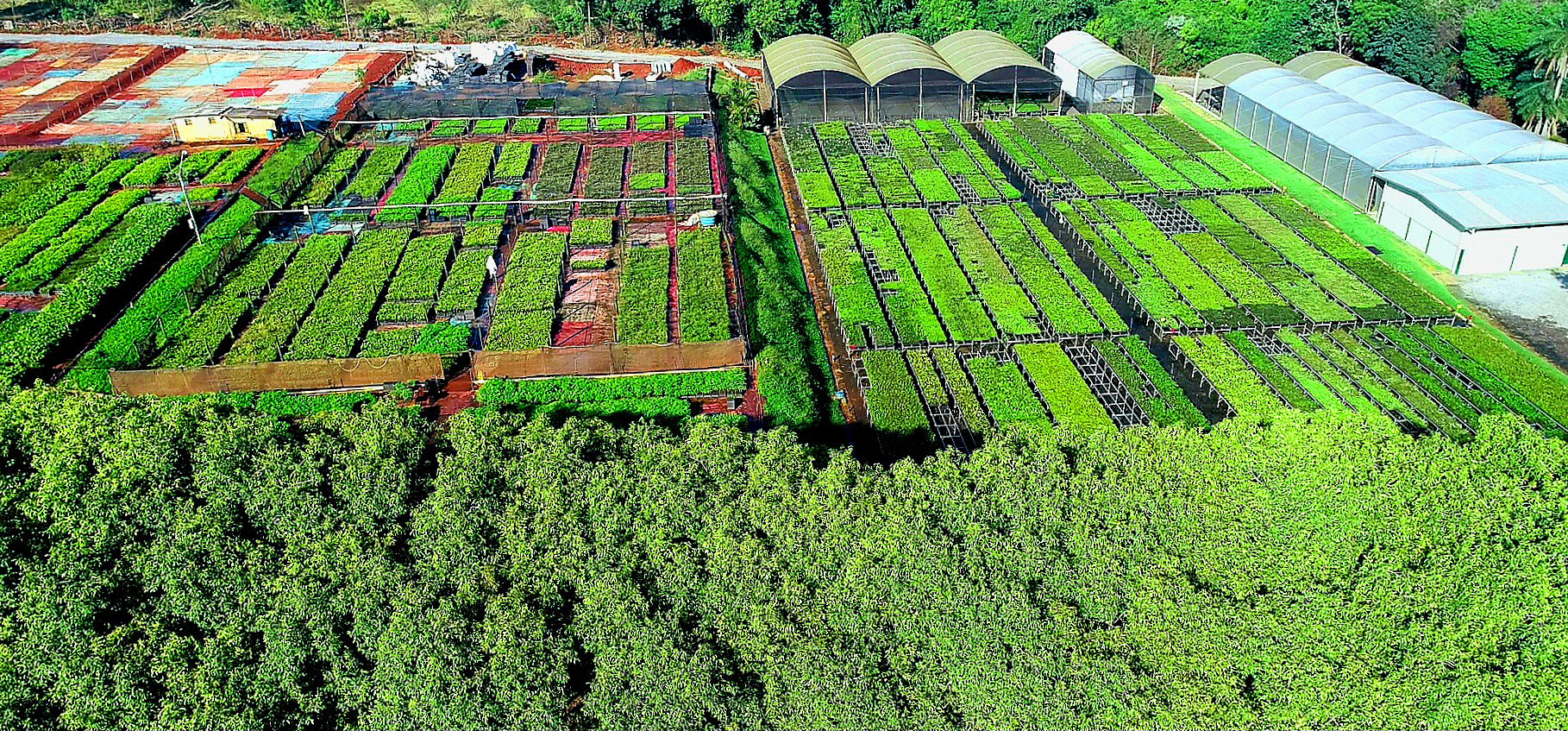
A looming bottleneck is seed supply, as reforestation projects multiply. In 2021, re.green acquired Bioflora, one of Brazil’s largest nurseries for native species first set up in 1998, through which it contributes to the development of other nurseries across the country and the production of scientific information on native species and seed production.
That’s part of its wider efforts to produce data for forest restoration, an area in which Amaral said re.green can play an important role. “We have a huge dearth of information on the topic of native forest restoration, particularly in the Amazon,” he said.
As forest restoration grows, Del Giudice would also like to see these commercial projects look beyond carbon credits.
“We need to create new markets for this type of proposal. We need to consider that these [forests] offer environmental services that are more than just carbon and timber, so we need to better explore what these forests can do standing,” she said.
Banner image: Re.green’s Entre Rios project in the Amazon in the state of Maranhão. Image courtesy of re.green.
Citation:
West, T. A., Alford Jones, K., Delacote, P., Fearnside, P. M., Filewod, B., Groom, B., … Putz, F. E. (2025). Demystifying the romanticized narratives about carbon credits from voluntary forest conservation. Global Change Biology, 31(10). doi:10.1111/gcb.70527
FEEDBACK: Use this form to send a message to the author of this post. If you want to post a public comment, you can do that at the bottom of the page.
Credits