


- A new study has found that the trunks of trees in the Amazon have become thicker in recent decades — an unexpected sign of the rainforest’s resilience in response to record-high levels of CO2 in the atmosphere.
- Nearly 100 scientists involved in the study have stated that old-growth forests in the Amazon are sequestering more carbon than they did 30 years ago, contradicting predictions of immediate collapse due to climate change.
- But the warning still stands: Despite the trees’ capacity to adapt, scientists fear that the extreme droughts and advancing deforestation could invert the rainforest’s balance and threaten its vital role in global climate regulation.
How have the trees in Amazonia reacted to the rise in CO2 emissions in recent centuries? It is common knowledge that, of all greenhouse gases, CO2 is the most responsible for global warming. The most recent report released by the World Meteorological Organization (WMO) showed that the concentration of carbon in Earth’s atmosphere rose more in 2024 than in any other year since it began measuring in 1957. Climate scientists unanimously agree that last year’s increase was provoked by human activities, especially the burning of fossil fuels like oil, coal and natural gas.
But to the surprise of researchers involved in a study recently published in Nature Plants, mature forests in Amazonia have shown much resilience in response to the climate changes resulting from the excess carbon in the atmosphere. This is important because trees are known to be natural CO2 sinks because they absorb it during photosynthesis. In addition, the trees in the Amazon Rainforest are getting “fatter” over time: The average trunk sizes are increasing 3.3% every decade.
“We wouldn’t normally expect the average size of trees in an old-growth forest to change over time, since their growth and death rates generally remain stable,” explains Rebecca Banbury Morgan, a researcher at the University of Bristol’s School of Biological Sciences in the United Kingdom and co-author of the article. “We compared our observations with the fact that we weren’t expecting any changes and found that the average size of trees was increasing. This means that the trees today are growing faster than they are dying, which is most likely due to increased carbon dioxide levels in the atmosphere.”
The study, which involved a group of nearly 100 scientists from more than 60 universities and research institutions in different countries, including Brazil, compared measurements from the last 30 years documented by the Amazon Forest Inventory Network (Rainfor), an international network of professionals who study Amazonia.
“We studied 188 sites located throughout Amazonia, in different countries. This broad distribution allowed us to see just how prevalent this phenomenon is throughout Amazonia as a whole,” states Adriane Esquivel-Muelbert, a researcher at Cambridge University, who shares authorship of the study with Morgan.

More trees, bigger trees
In each of the regions studied, researchers, technicians and volunteers measured what is called the basal area, meaning cross-section, of 500-600 trees over a period of 2-5 years. The measurement was taken at approximately 1.5 meters (5 feet) above the ground on trees with diameters more than 10 centimeters (4 inches). Most were species like kapok (Ceiba pentandra), angelin and Brazil nut (Bertholletia excelsa) trees, which are most commonly found in mature rainforests — those that are at least 300 years old — that have not been disturbed or affected by human activities.
“Looking at the size of the trees helps us to understand which forces are at work in the forest. We know that Amazonia has been operating as a carbon sink since the end of the 1990s and the beginning of the 2000s,” Esquivel-Muelbert says. “We know that more trees are dying in some parts of Amazonia, but at the same time their numbers aren’t high enough that the forest is shrinking on average. Nonetheless, we also know that CO2 in the atmosphere causes increased droughts and temperatures, which change the climate. So, there are these two contrasting forces at work on the rainforest.”
The study showed that the trees are not only getting bigger, but they are also growing in number. “These changes mean that the total amount of biomass and carbon stored by the forest also increased,” Esquivel-Muelbert says.
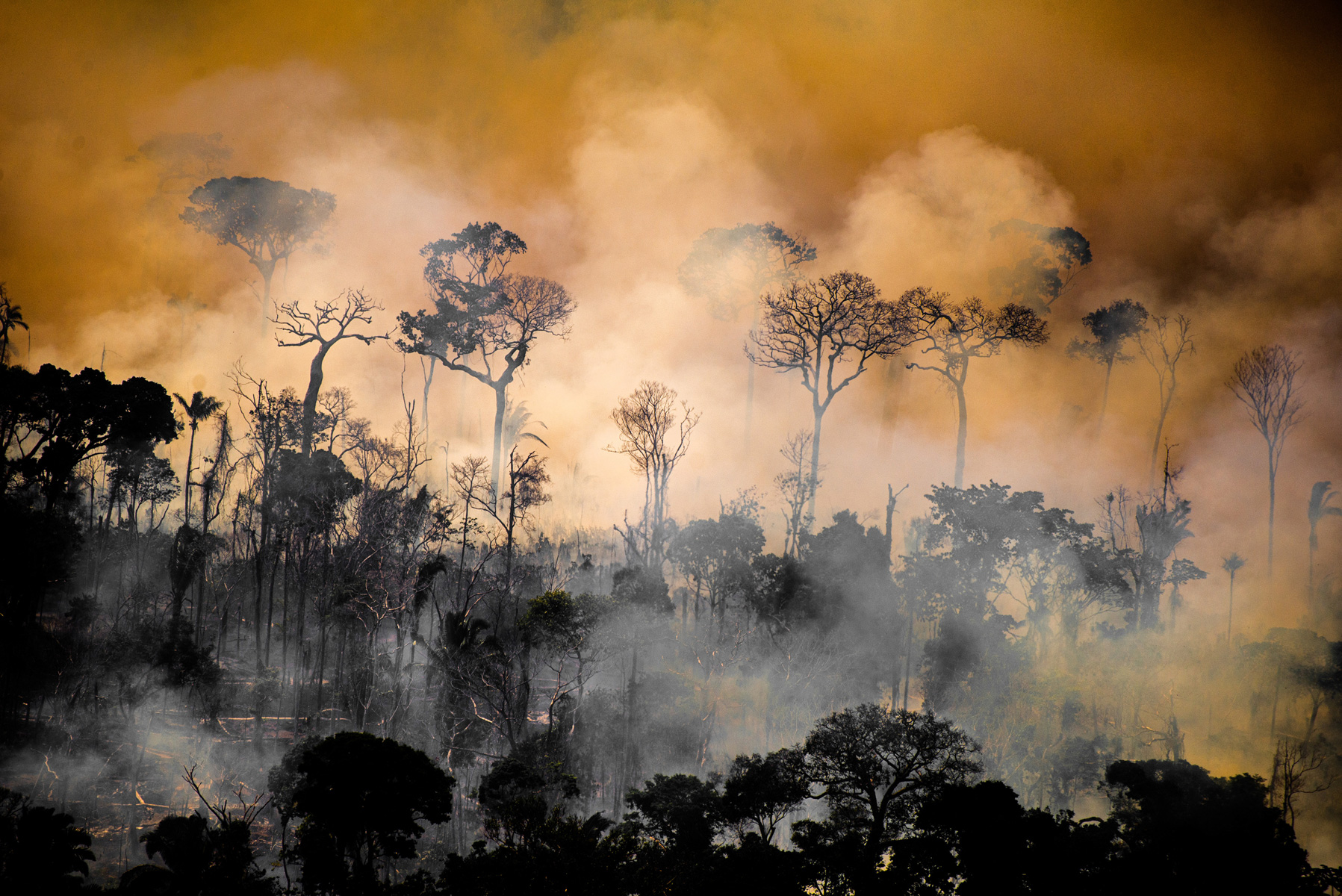
But the old-growth rainforests are not protected from human activities or the impacts of the climate crisis. The May 2025 Global Forest Watch report released by the World Resources Institute (WRI) revealed record amounts of primary tropical forests that had been lost the world over in the previous year, which was the worst result in two decades. Brazil, which is home to a greater volume of these forests than any other country, represented 42% of all these losses.
Climate scientist Luciana Gatti, who runs the Greenhouse Gas Laboratory at Brazil’s National Institute for Space Research and was not involved in the study, points out that Amazonia, where most of the sites included in the study are, is better preserved and has been subject to less reduction in temperature and precipitation.
According to her, analyses conducted in southeastern Amazonia show that the forest already accounts for an increasingly higher percentage of CO2 emissions. “Emissions were around 30% in 2018. Now they’re reaching 48% because climate stress there is increasing.”
Good news — but who knows for how long
The discovery that Amazonian trees are becoming more “robust” was only possible thanks to continuous work. Brazilian-born Adriane Esquivel-Muelbert points out that subtle changes in the rainforest can only be detected through constant monitoring. Remote monitoring via satellite imagery is not adequate.
“Hundreds of researchers have been collecting this data for many years, oftentimes in remote areas that are hard to access. It’s especially important to stress the importance of this continual scientific practice on the long-term and of the researchers themselves, who are largely unrecognized but are so fundamental in our managing to gain this knowledge on Amazonia.”
Even though this information on the rainforest’s resilience is good news, there is no way of knowing how long it will last.
“This balance could flip at some point, like when the droughts become more severe. But for now, the rainforest is staying resilient and managing to respond to the higher CO2 levels by increasing in size,” Esquivel-Muelbert says.
“Our results don’t mean that Amazonia isn’t at risk because of climate changes. We don’t know how it will respond to more changes in the future, nor do we know if it will keep growing like this as the climate continues to heat up and droughts and extreme climate events become more common. It will be very important to keep monitoring these forests in the future,” Morgan adds.
The study’s two main authors also comment that it is critical to protect these mature trees by fighting deforestation and forest fragmentation, so they can remain standing and keep doing their valuable work in regulating Earth’s climate.
“We can’t simply plant new trees and expect that they will offer the same carbon or biodiversity benefits that natural old-growth forest does,” Morgan says.
Banner image: A Brazil nut tree (Bertholletia excelsa) stands out over the canopy of the Peruvian Amazon Rainforest. Image by My Favorite Pet Sitter via Wikimedia Commons (CC-BY-2.0).
Citation:
Esquivel-Muelbert, A., Banbury Morgan, R., Brienen, R.et al.Increasing tree size across Amazonia.Nat. Plants11, 2016–2025 (2025). https://doi.org/10.1038/s41477-025-02097-4.
This article was first published here in Portuguese on 22 Oct., 2025.
Cite this article
Suzana Camargo (2025). Why are Amazonian trees getting ‘fatter’?. Mongabay Conservation news. DOI: https://doi.org/10.66709/news-310071Credits


