- Three environmental moves in Brazil are drawing criticism as the country hosts COP30: a green light for exploratory oil drilling on the Amazon coast, an end to the Soy Moratorium and a push for looser environmental licensing.
- Experts fear the plans could risk a lack of global accountability, watering down COP30’s outcome to vague promises and softer language.
- Following COPs held by petrostates, the summit in Belém comes with recent decisions from Norway, Australia and China to support new fossil fuel projects, illustrating a global trend that jeopardizes bolder deals at COP30.
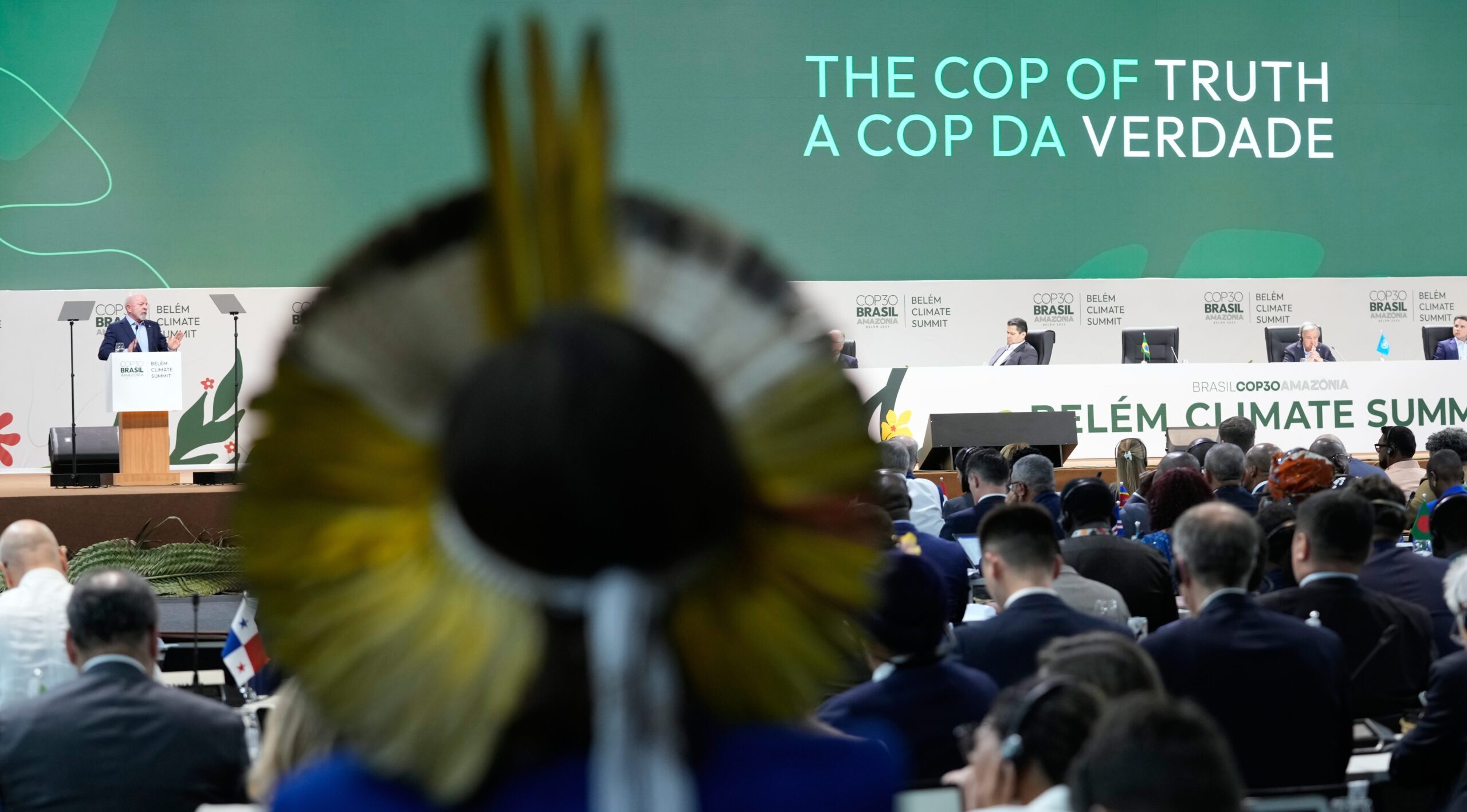
BELÉM, Brazil — The U.N. Climate Change Conference (COP30) launched in the Amazonian city of Belém this Monday, Nov. 10, with high expectations that Brazil would help drive bold climate commitments from participating nations.
“We need roadmaps so that humanity, in a just and planned way, can overcome its dependence on fossil fuels, halt and reverse deforestation, and mobilize resources for these purposes,” Brazilian President Luiz Inácio Lula da Silva said in the summit’s opening ceremony. “Moving forward requires more robust global governance, capable of ensuring that words translate into actions.”
Yet, the host country is facing myriad environmental controversies — from new oil projects to fast-tracking environmental licensing — that threaten its credibility as host. Experts interviewed by Mongabay noted that many delegations find themselves in similar situations at home, making it harder for countries to hold one another accountable.
Less than a month before the summit opened, Brazil’s environmental agency, IBAMA, granted the country’s first oil exploration license close to the Amazon coast. The drilling site, 500 kilometers (310 miles) from the mouth of the Amazon River, holds one of the most biodiverse marine regions in the world. The project had been in discussion for more than a decade and faced strong opposition from local communities and environmentalists over the risks of oil spills.
In August, Brazil had already raised eyebrows when the national antitrust regulator ordered the end of the Soy Moratorium. The pact committed agribusiness traders to avoid buying soy grown on Amazon land that had been deforested after 2008. The regulator’s decision, based on competition concerns, dismantled one of the few effective brakes on soy’s advance into the Amazon. For now, the Supreme Court has frozen the decision, but pressure from agribusiness to end the deal remains.
Meanwhile, the Brazilian Congress has been pushing for a new environmental licensing legislation dubbed the “devastation bill.” The law would speed permits for development projects and weaken environmental protections. President Lula has already issued partial vetoes, but many lawmakers have signaled they will overturn them as the bill returns to Congress for a final review.

Jasper Inventor, deputy international program director at Greenpeace International, said Brazil needs consistency between what happens at home and abroad to be a good COP leader. “We are coming into this COP with low-ambition NDCs [nationally determined contributions], weak finance commitments, and global warming already nearing 1.5° Celsius [2.7° Fahrenheit],” he told Mongabay in Belém. “Brazil’s domestic action will determine whether its leadership holds.”
Brazil’s tenure at the COP presidency has begun on the heels of good news.
The country has reported declining deforestation numbers and received praise over the climate summit that took place in Belém last week. At the event, Lula gave a powerful speech, saying “it’s time to face the reality” of climate change and “take the scientific warnings seriously.” The Brazilian president also secured $5 billion in sponsor capital for the Tropical Forest Forever Facility (TFFF), a new financial mechanism that promises to reward forest protection.
However, the director said a stronger outcome is needed in the coming weeks for COP30 to be successful. “Strong words need strong action,” he said. “We need to accelerate Indigenous land demarcations and draw a clear line against opening new oil frontiers.”
Lack of accountability
Brazil is not the only participating country making controversial decisions at home that directly contrast the COP30 push to reduce emissions.
In the past year alone, Norway’s Parliament restarted oil and gas licensing in the Arctic and Barents Sea, paving the way to the biggest licensing auction in years. The Australian government launched the Future Gas Strategy, which encourages long-term gas extraction and production. And China has approved 25 GW of new coal power projects, the highest rate in nearly a decade.
“Everyone is in the same boat — everybody’s doubling down on fossil fuels,” said Kathryn Hochstetler, professor of international development at the London School of Economics and Political Science. She fears countries may shy away from calling each other out because they’re all in a similar bind. “Brazil doesn’t look good, but no one has made good decisions for the climate over the past five years.”
The risk, she warned, is a lack of accountability that could water down COP30’s outcome, resulting in vague promises, softer language and loose timelines for transitioning to clean energy. “My big fear is that countries are not going to step up their ambition,” she told Mongabay. “I worry this could be a COP that doesn’t inspire people to do more, but a meeting that gives people permission to do less.”
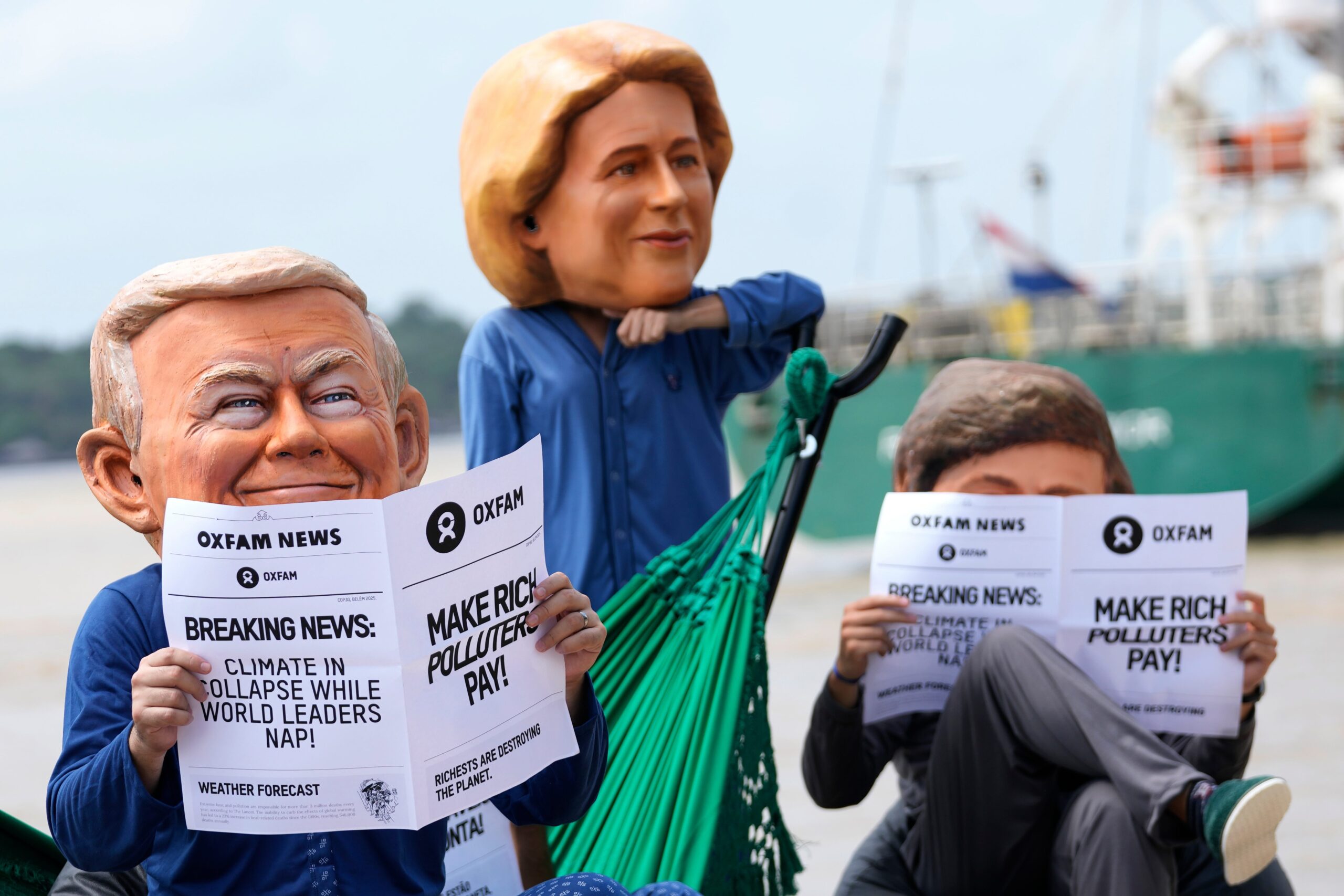
Part of the challenge is timing. COP30 arrives as U.S. tariff pressure on national economies and the ongoing war in Ukraine push countries to prioritize energy security. At the same time, technological advances in the petrochemical industry have made deep-sea drilling more accessible, unlocking new opportunities for profit from fossil fuels.
“There are vast potentials of petroleum that hadn’t been on the table only a decade ago,” said Susanna B. Hecht, director of the Brazil Center at the University of California, Los Angeles. For her, countries with this kind of prospect don’t want to be left behind and quickly become dependent on this source of revenue. “They’ll argue this is needed for development and a necessary step in the clean energy transition. But the truth is that oil is a curse; it often gives you very bad oligarchic structures, and it’s difficult to monitor environmental impacts.”
In this scenario, the researcher said pressure from civil society is the only way to encourage countries to raise climate ambitions. “I’m hopeful because this COP is very different from the last three, which were essentially run by petrostate authoritarian regimes,” she said. “Civil society was kept at arm’s length, and that’s not the case here.”
Oil cards on the table
The timing of the recent announcement approving oil exploration along the Amazon coast came as an inconvenience to Brazil’s goals during its presidency at COP30. The project had been under discussion for years, with tensions running high between President Lula, who backed exploration, and Environment Minister Marina Silva, who urged caution. IBAMA initially rejected Petrobras’ request for a prospecting license, but there was no deadline for a final decision.
In an interview with the Brazilian newspaper Folha de S.Paulo, the agency’s president, Rodrigo Agostinho, stated that it would have been “hypocritical” to wait until after COP30 to announce the decision. He explained the agency did not want to repeat the practice of former far-right President Jair Bolsonaro (2019-22) of “holding back deforestation numbers until after COP.”
Carlos Milani, professor of international relations at Rio de Janeiro State University (UERJ) and director of the Interdisciplinary Observatory on Climate Change, stated the move was likely strategic. “Geopolitics and geoeconomics are weighing heavily at this COP,” he said. “There was no point in hiding it. It was better to lay the cards on the table and say that Brazil will proceed with prospecting.”
The professor added that the announcement also helped limit public backlash during the summit. “It gave time for the government to build support around the event with Marina Silva as a key figure, who wasn’t about to walk away after all the work she put in,” he said. “Frankly, it gave more opportunities for the government to recover than leaving it for later.”
He also sees IBAMA’s role largely as positive over the last couple of years, as the project was under review. “They were able to draw attention to Petrobrás’ responsibility. Petrobrás is now terrified that something might go wrong, and if it does, the company will be held accountable,” he said. “They also made this a public debate, one that reached many levels.”

Lula’s mixed environmental record
This is not the first time President Lula has made controversial environmental decisions.
Researcher Hochstetler recalls that the president has backed many projects throughout his three terms that have raised criticism. “In my mind, all along, Lula has been a very complicated climate leader,” she said. “He’s not a Bolsonaro, he’s not a climate denier. But some decisions have been very problematic.”
During Lula’s first two terms, from 2003 to 2010, the federal government backed major infrastructure projects. Most notably, the licensing of the Belo Monte hydroelectric dam on the Xingu River, which drove Silva to resign in protest as environment minister in 2008. Around the same time, the federal government launched PAC (Growth Acceleration Program), designed to fast-track roads, ports and energy projects despite ecological impacts.
In his second term, following the discovery of the pre-salt offshore oil reserves on the Atlantic coast, Lula showed full support for the large-scale fossil fuel development. Today, pre-salt fossil fuel supplies 80% of Brazil’s oil and gas, with an output of around 4 million barrels of oil equivalent (BOE) per day —roughly 4% of the world’s supply.
“There was not a moment when Lula questioned whether that would be developed. And now it’s happening again,” she said.
Now, in his third term, Lula is also backing a new wave of infrastructure projects linking the Amazon to the Pacific coast.
Banner image: An Indigenous man takes part in a demonstration in defense of the Amazon during the COP30 U.N. Climate Summit, in Belém, Brazil, Thursday, Nov. 6, 2025. Image by AP Photo/Eraldo Peres.
UPDATE (11-10-2025): The story was updated to add quotes from Lula’s speech at the opening ceremony.
These banks fund oil & gas in the Amazon amid climate crisis: Report
FEEDBACK: Use this form to send a message to the author of this post. If you want to post a public comment, you can do that at the bottom of the page.
Credits