- Whale sharks (Rhincodon typus) are the largest fish in the world and are endangered but are hard to study because they’re largely solitary creatures that roam great distances.
- There are only about 30 sites worldwide where they’re known to aggregate — and scientists have finally identified one of them along the Great Barrier Reef, a new study reveals.
- It’s the first known aggregation found in eastern Australia and in the entire southwest Pacific Ocean.
- The finding is significant for whale shark research and conservation efforts, experts said.
The whale shark — a shark, not a whale — is the largest fish in the world, roughly the length of a city bus. Whale sharks (Rhincodon typus), which live in warm seas, are known as majestic creatures. They’re covered in a mosaic of dots and stripes — groups of whale sharks are unofficially known as constellations because of these “stars” on their back — and they glide through the water, seemingly unrushed, collecting food in their huge mouths.
Part of their allure is their rareness: Finding and studying them is hard. They’re largely solitary creatures that roam great distances. Yet they do occasionally aggregate. There are about 30 known aggregation sites worldwide, mostly seasonal, and scientists have finally identified one along Australia’s Great Barrier Reef, a new study reveals.
The study, published June 24 in the journal Ecology and Evolution, unveils a consistent seasonal gathering point for whale sharks, mostly juvenile males, in Wreck Bay, along the northern portion of the Great Barrier Reef. It’s the first known aggregation found in eastern Australia and in the entire southwest Pacific Ocean.
Whale sharks in the region have been inadequately studied, so Wreck Bay could become a crucial research location, the study’s authors write. Globally, whale sharks are endangered and populations are declining.
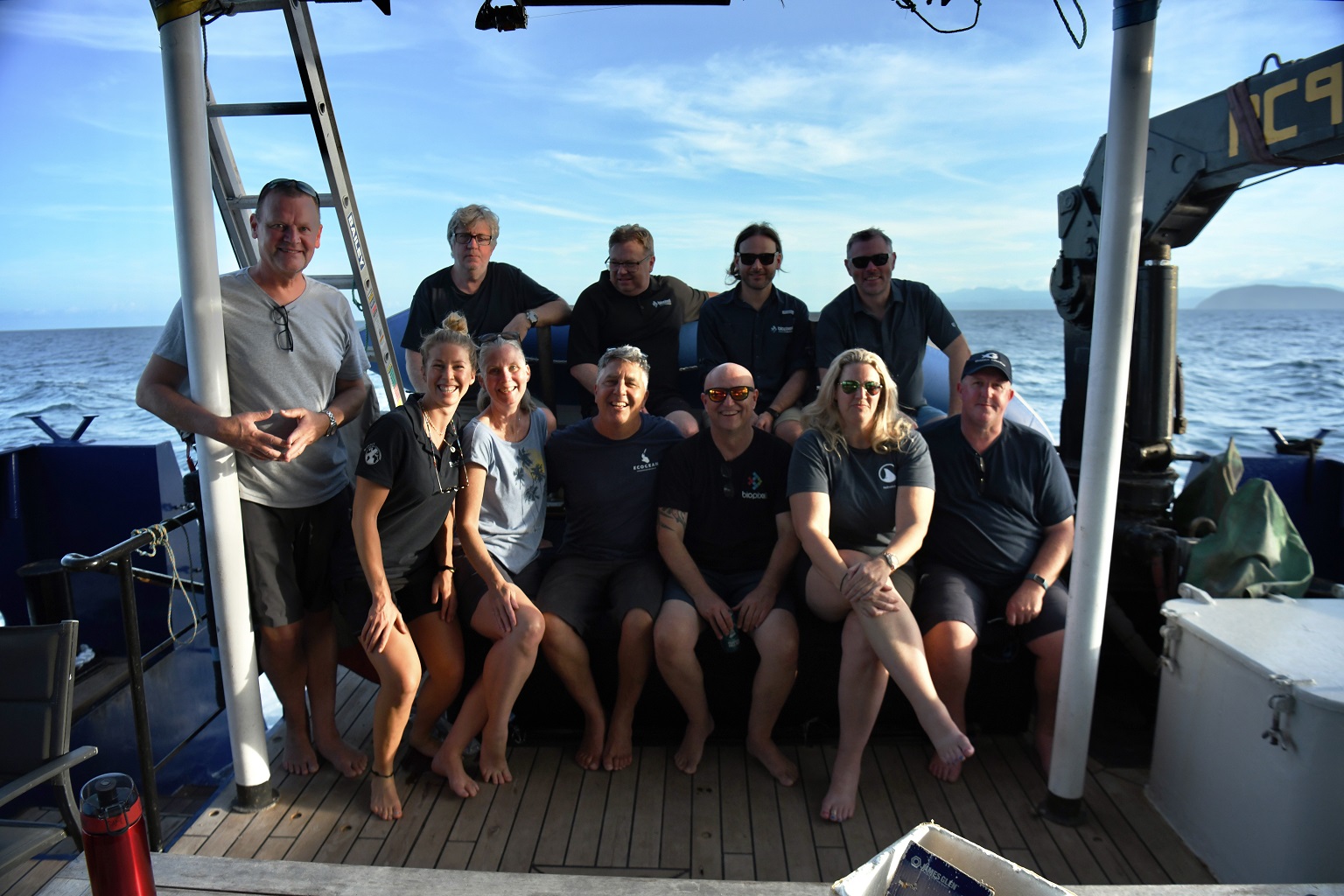
“It’s going to be quite significant for regional and global population assessments and conservation management,” Ingo Miller, a researcher at Australia-based Biopixel Oceans Foundation and first author of the study, told Mongabay.
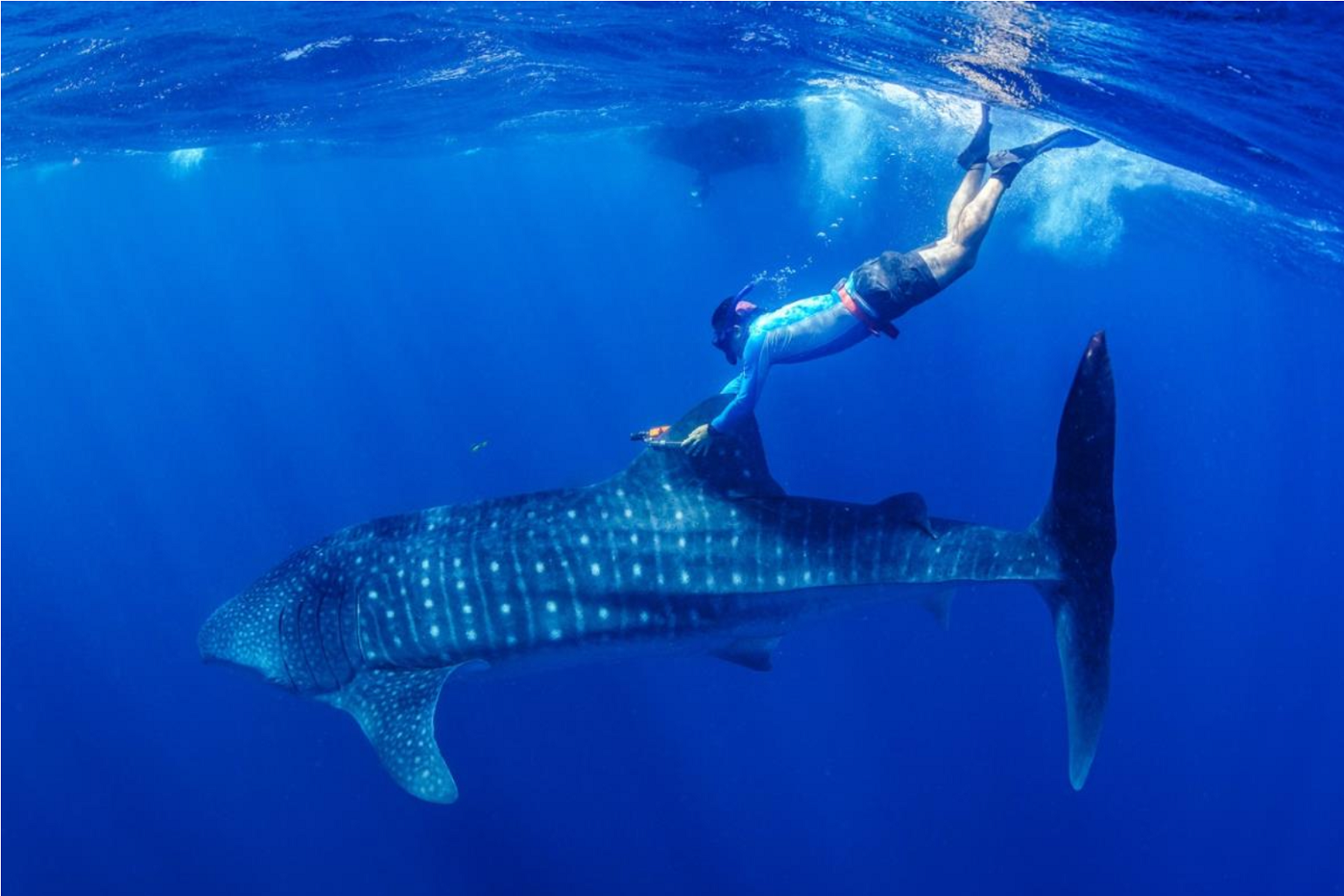
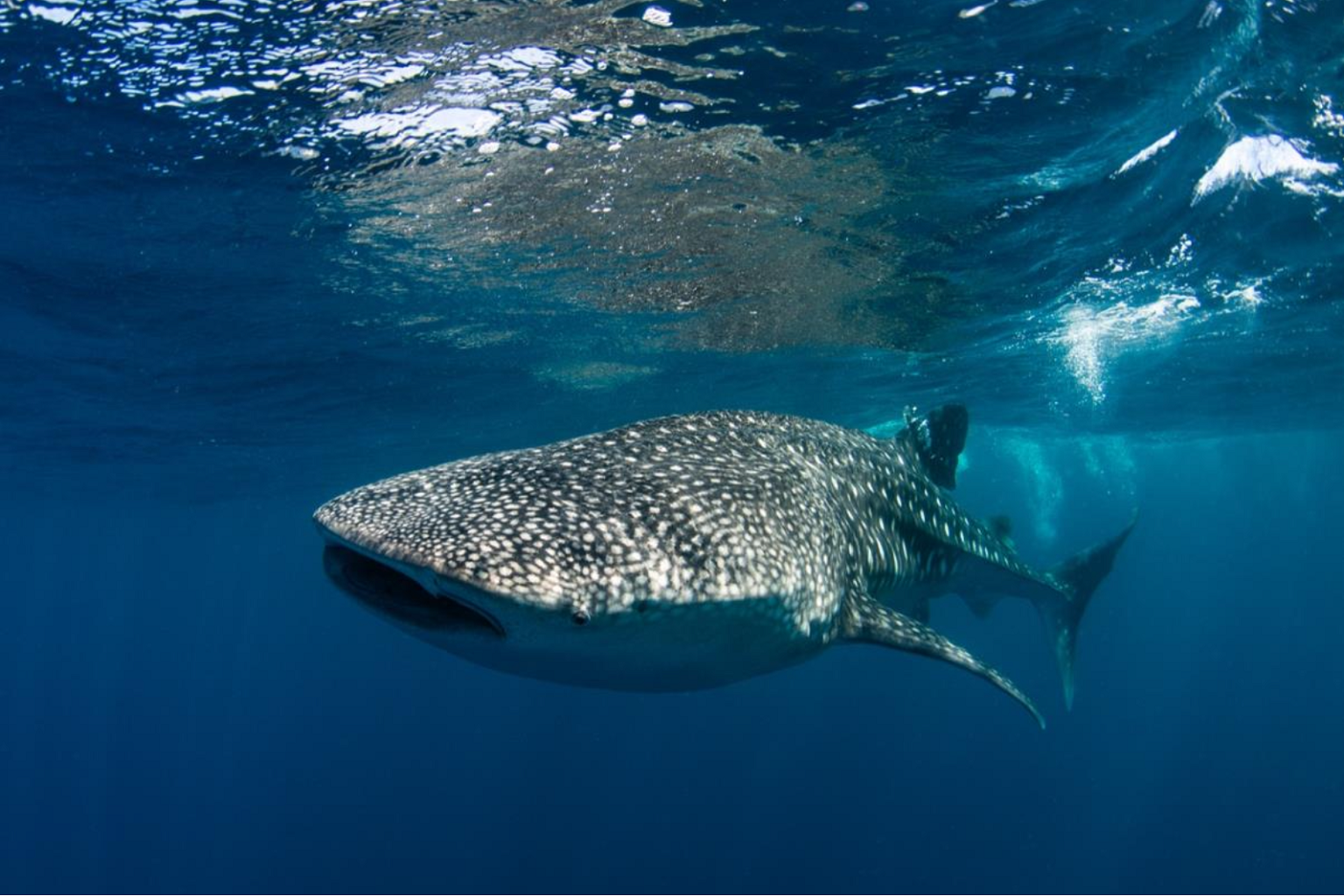
Other well-known whale shark aggregations can be found off the Yucatán Peninsula in Mexico, in the Maldives, and at Ningaloo Reef in western Australia. The locations serve as key research sites.
Researchers have long suspected whale sharks must have a gathering site somewhere in the southwest Pacific. But the research necessary to confirm this often requires spotter planes, drones and tagging devices, making it expensive, even when the sharks have congregated. And Wreck Bay is in the far northern section of the Great Barrier Reef, off a very remote area of Australia, making the logistics of a mission there especially complicated.
Before conducting an expensive expedition, Miller’s colleagues — he joined the team later — analyzed a great deal of data to determine the most likely aggregation spot on Australia’s east coast. They looked at the locations of historical sightings of whale sharks and at oceanographic characteristics that whale sharks were drawn to elsewhere.
“Everything pointed to this site in the far north,” Miller said, referring to Wreck Bay.
Still, they needed to be more confident before investing in an expedition. In 2018, members of the team went out with a marlin fisher who had seen whale sharks in the course of his work; they were lucky enough to find and tag a whale shark off Cooktown, a small northeastern town. This was the first time a whale shark had been tagged in eastern Australia. Sure enough, it traveled right up to Wreck Bay.
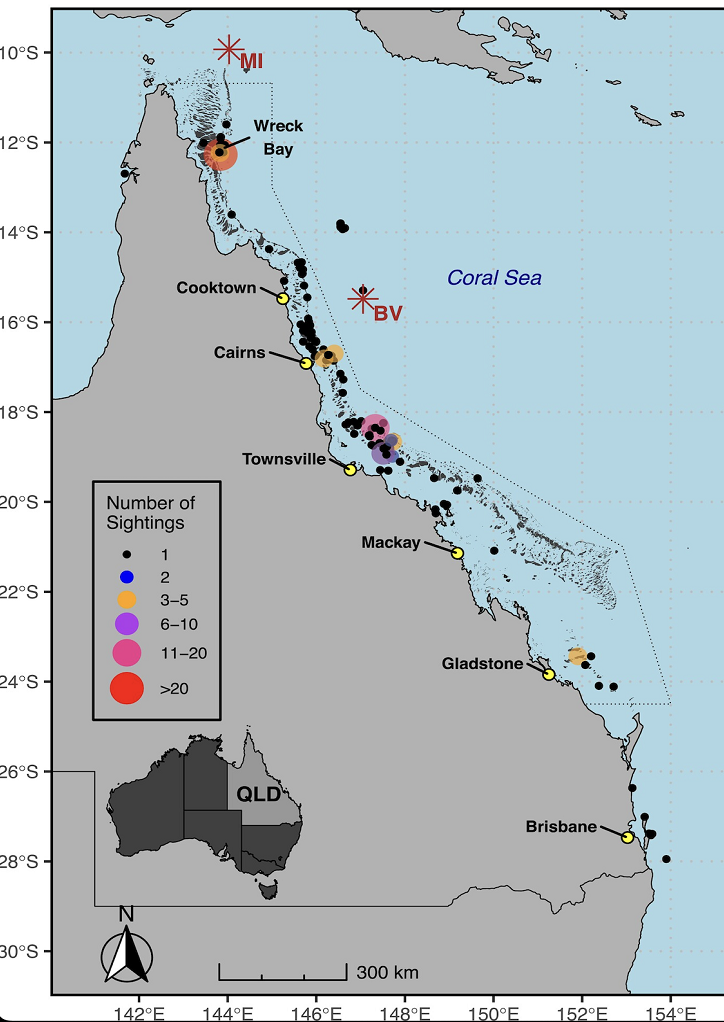
In 2019, the team undertook their expedition to Wreck Bay, finding evidence of a whale shark aggregation, which they then confirmed in the course of three more expeditions from 2021 to 2024. The new study is the first time the work has entered the scientific literature. The findings need to be “repetitive and predictable” to be sure of an aggregation, so the team couldn’t just declare an aggregation in 2019, Miller said.
Across the four trips, the team identified 59 individual whale sharks, all of which were juveniles and most of which were males, in keeping with trends at other aggregation sites. The sharks were 3.5-8 meters (12-26 feet) long, whereas most adults measure 9-12 m (30-39 ft). (The longest can even reach 18 m, or 59 ft.)
The reasons for the sex and age bias at aggregation sites, most of which are near coastlines, aren’t well understood. Adults may gather and mate far out into the ocean, as they seem to do around oceanic islands such as St. Helena, a remote seamount in the South Atlantic Ocean, according to a 2020 study in Frontiers in Marine Science, which documented how different that site is from known coastal sites.
Whale sharks are filter feeders that eat massive amounts of zooplankton such as krill, but unlike many whales that do the same, they stick to tropical and subtropical waters, where zooplankton aren’t as abundant as in temperate and polar waters. This means whale sharks often need to travel great distances to get enough food.
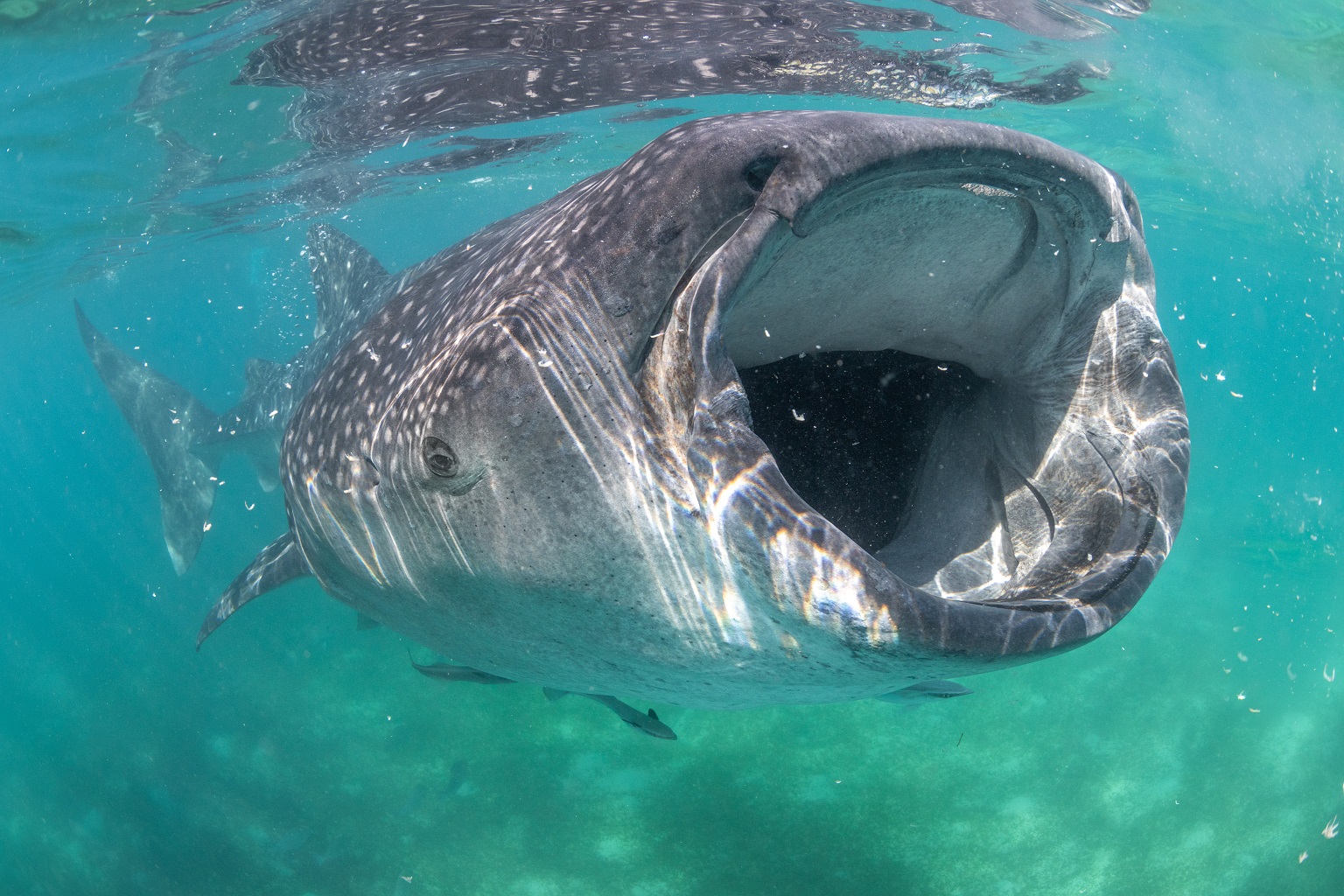
The drive for food seems to be the main draw to Wreck Bay, where they congregate mainly in late November and December, with most individuals staying for a few weeks, the study says. That’s monsoon season in the region, when upwellings of nutrient-rich cool water push up to the surface from down below, leaving dense patches of zooplankton for whale sharks to munch on. In Wreck Bay, they seem to mostly feed at dusk and at night, for unclear reasons.
The work on the Wreck Bay aggregation drew praise from Gonzalo Araujo, a whale shark expert who wasn’t involved with the study.
“This study highlights the importance of using local ecological knowledge and citizen science to advance our understanding of enigmatic species, such as the whale shark,” Araujo, founder of the U.K-based Marine Research and Conservation Foundation, told Mongabay in an email.
“The study takes a great approach and combines multiple methodologies to help our understanding of whale sharks in this previously unknown area,” he added.
Globally, the main threats to whale shark populations are climate change, ship strikes, irresponsible tourism, plastic pollution, and bycatch in industrial tuna fishing — the sharks get caught in massive purse seiner nets that are cinched up around schools of tuna.
It’s not yet clear which of these threats is most severe along the Great Barrier Reef. All of the newly discovered aggregation area, which is about 40 nautical miles (74 kilometers) offshore and includes Wreck Bay and some surrounding waters, falls within Great Barrier Reef Marine Park. Most of it is in a highly protected no-take zone of the park, in which all fishing activity is banned. However, some of the area falls under zoning that offers fewer protections.
There is a ship route near the aggregation site, but it’s not yet clear how much it will endanger whale sharks, if at all. Miller is currently studying this and other potential threats.
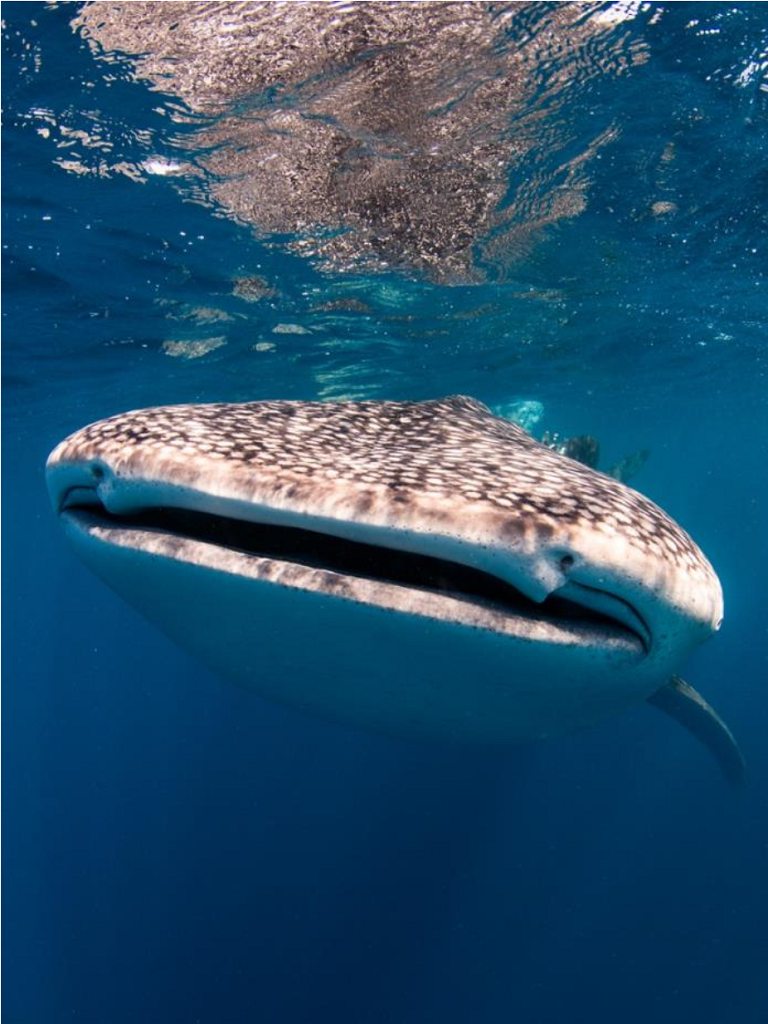
Banner image: A whale shark near Ningaloo Reef off western Australia. Image courtesy of Lewis Burnett/Ocean Image Bank.
Citations:
Miller, I. B., Fitzpatrick, R., Abrantes, K. G., Norman, B., Pierce, S., Erdmann, M. V., … Barnett, A. (2025). The needle in the haystack: Uncovering the first whale shark (Rhincodon typus) aggregation in the Coral Sea. Ecology and Evolution, 15(6). doi:10.1002/ece3.71552
Perry, C. T., Clingham, E., Webb, D. H., De la Parra, R., Pierce, S. J., Beard, A., … Dove, A. D. (2020). St. Helena: An important reproductive habitat for whale sharks (Rhincodon typus) in the Central South Atlantic. Frontiers in Marine Science, 7. doi:10.3389/fmars.2020.576343
Feedback: Use this form to send a message to the author of this post. If you want to post a public comment, you can do that at the bottom of the page.
Credits