- Scientists from the California Academy of Sciences retrieved 13 underwater monitoring structures from the deep reefs off the Pacific island of Guam, which have been gathering data there at depths up to 100 meters (330 feet).
- The devices, called ARMS (Autonomous Reef Monitoring Structures), yielded 2,000 specimens, including 100 species never before recorded in the region and at least 20 species new to science.
- Temperature sensors on the ARMS revealed that ocean warming is occurring even in the twilight zone.
- The Guam expedition marks the start of a two-year effort to retrieve 76 ARMS from deep Pacific reefs to help protect these ecosystems from fishing, pollution and climate change.
A transparent goby fish drifted through the darkness, its skeleton visible through paper-thin skin. Nearby, a sea slug wore yellow polka dots like a party dress, while an orange fish with bulging eyes hid among the coral. No human had ever seen these creatures — until now.
They live in the ocean’s “twilight zone,” a dim underwater world between 55 and 100 meters (180 and 330 feet) deep, where light fades and strange life thrives. Hidden in the depths off the coast of the Pacific island of Guam, these animals make their homes on unusual structures that scientists had quietly placed on the seafloor years earlier.
In November, Luiz Rocha and his team at the California Academy of Sciences finally returned to collect what those structures had been gathering for eight years: a treasure trove of life never before seen by humans.

“I’ve wanted to be an explorer ever since I was a kid,” Rocha told National Geographic, “and there’s nothing better for an explorer than going to a place that nobody has ever been, finding a species that nobody has ever seen before.”
The monitoring devices, called ARMS (Autonomous Reef Monitoring Structures), are stacks of square PVC plates that act as artificial reefs, like mini-condos for critters. Sea creatures settle on them and grow over time. While human divers can only spend a few minutes working at crushing depths, these structures have been gathering information nonstop since they were installed in 2018.
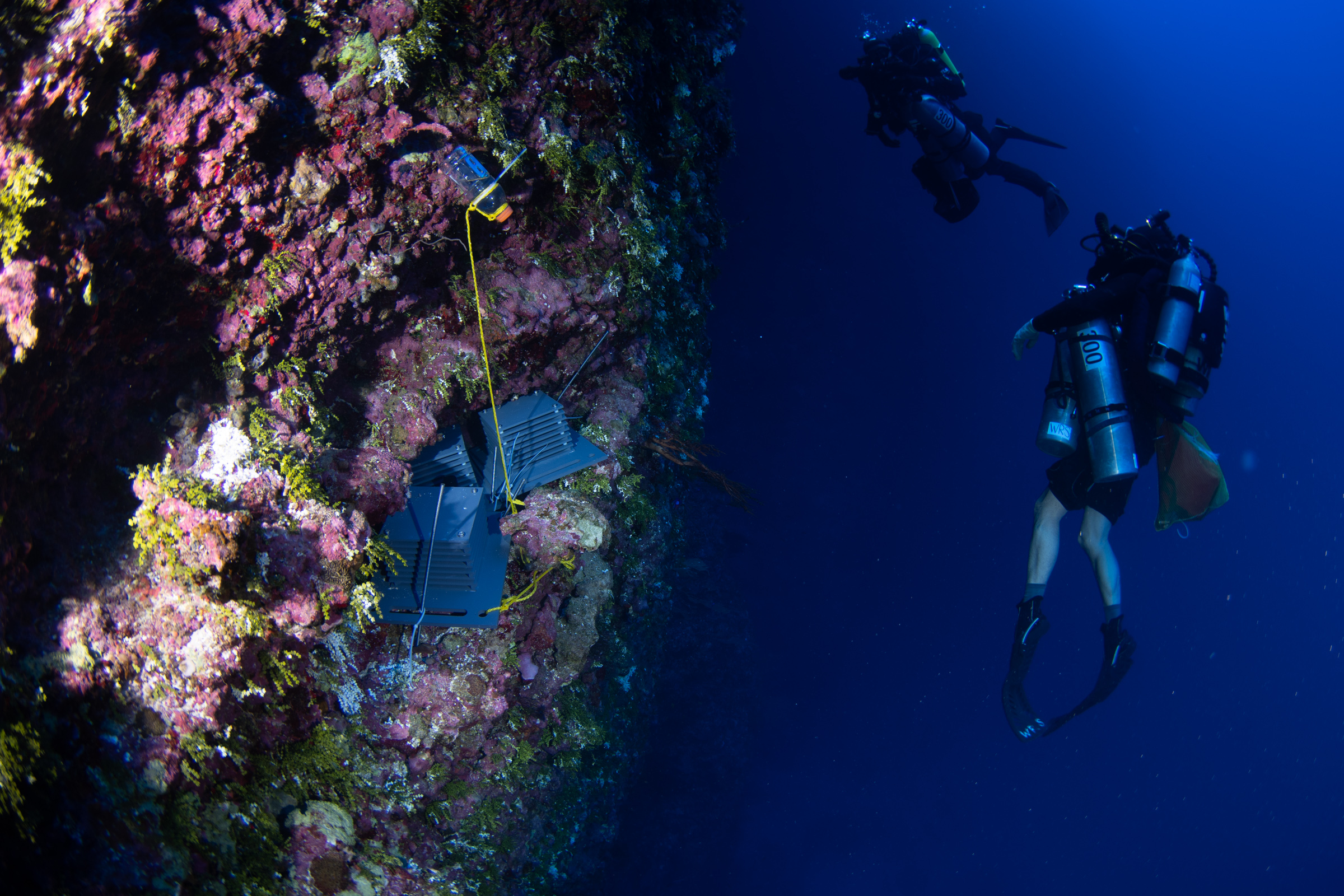
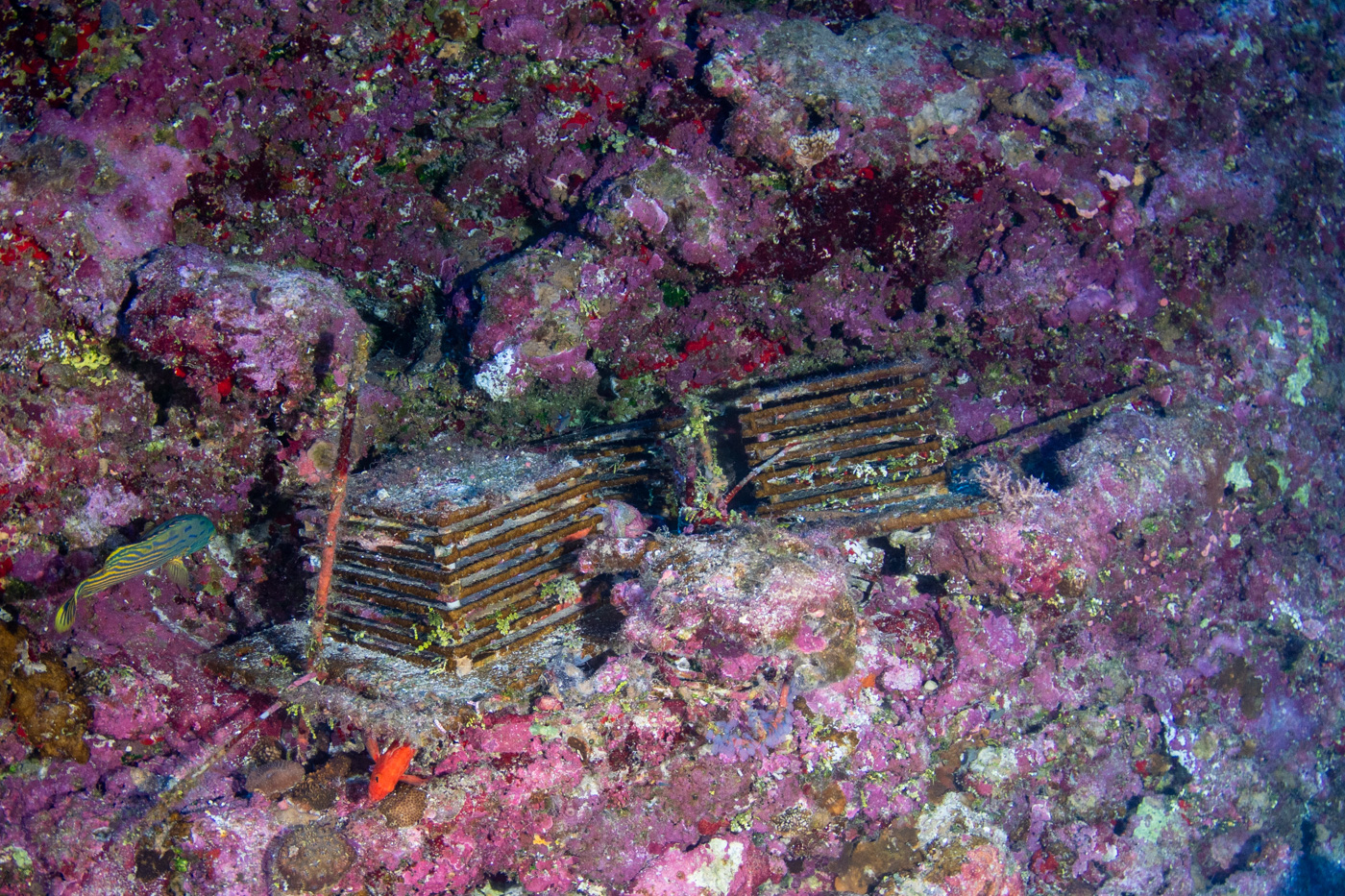
“The [ARMS] that we recently retrieved in Guam are essentially small underwater hotels that coral reef organisms colonize over time,” Rocha said.
When his team brought the 13 ARMS up to their vessel, the plates were blanketed with life: bright orange sponges, twisted tube worms and crimson-colored marine animals. Miniature pink fish, smaller than thumb tacks, swam frantically, seeing sunlight for the first time in their lives.
The findings amazed everyone. Scientists gathered 2,000 specimens and identified 100 species never before recorded in the region. At least 20 appear to be completely new to science.


One possible new find is an orange cardinalfish that researchers believe might belong to the genus Apogonichthyoides, though DNA testing will be needed to confirm its identity. They also collected a sea slug from the genus Marionia that sports yellow spots and branch-like growths extending from its back.
The haul also included a baby octopus marked with polka dots and many other invertebrates never before recorded at these depths near Guam. Scientists say they expect to identify many more new species once genetic analysis is finished.
“Once we get the DNA, that number will increase tenfold,” Rocha told National Geographic.
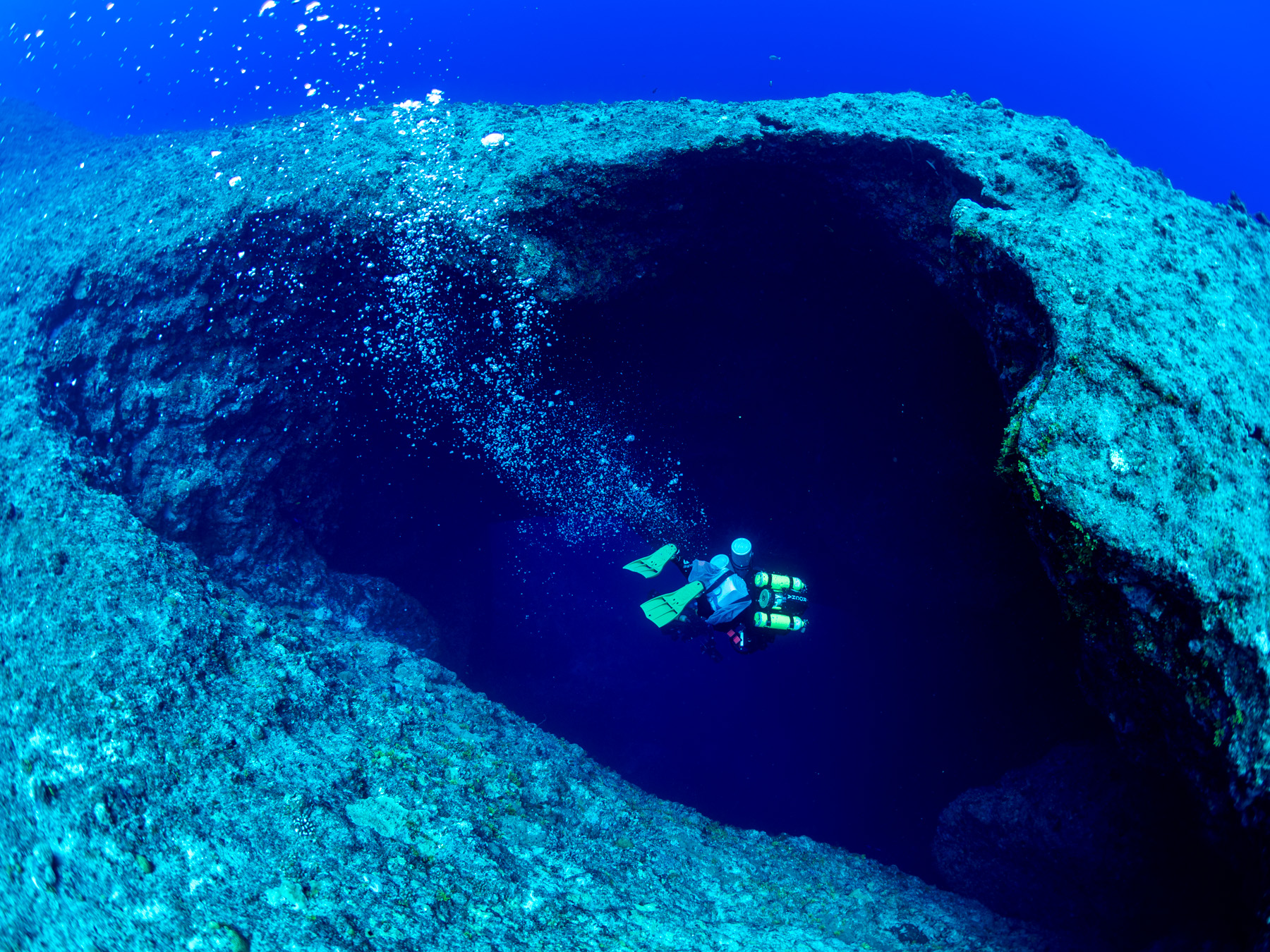
Getting the ARMS back required a risky dive. Rocha and fellow diver Mauritius Bell dropped more than 100 m below the surface, much deeper than typical scuba diving allows. At such depths, regular air becomes unsafe to breathe. The scientists relied on specialized gear called rebreathers that reuse exhaled air and deliver a custom blend of gases, mainly helium.
Rebreather diving carries much higher risks than standard scuba diving. Descending took less than 10 minutes, but the divers could only work for about 15 minutes before starting a careful return to the surface lasting four to five hours. Coming up too fast could trigger decompression sickness, a dangerous and sometimes fatal condition.
Back at the University of Guam, they photographed each plate systematically and preserved every creature they discovered. The haul included the see-through goby, the spotted sea slug, and a dottyback fish that looks like it has googly eyes.
“This approach captures a remarkable diversity of marine life that cannot be obtained any other way,” said Robert Lasley Jr., curator of crustacea at the University of Guam. “Two weeks of processing the ARMS plates yielded more data and species records than we’ve ever seen before in Guam at these depths.
“Our findings highlight the complexity and richness of mesophotic ecosystems and underscore their need for protection,” he added.

The team also made a concerning discovery. Temperature monitors attached to the ARMS showed that ocean warming is occurring even in the twilight zone, an area where temperature information is rarely collected.
Researchers previously thought deep reefs might escape human damage. The evidence shows they were wrong. These distant ecosystems suffer from fishing pressure, plastic waste and rising temperatures.
“More than half of the species that live in deep reefs are unknown, yet these reefs are already being affected by fishing, pollution, and climate change,” Rocha said. “Most marine protected areas only cover shallow reefs, pushing human-driven pressures towards deeper waters.”
The November expedition starts a two-year project to collect 76 ARMS from deep reefs throughout the Pacific Ocean, including sites in Palau, French Polynesia and the Marshall Islands.
“Our goal is to show just how beautiful, unique, and valuable these ecosystems are,” Rocha said, “so we can safeguard them before it’s too late.”
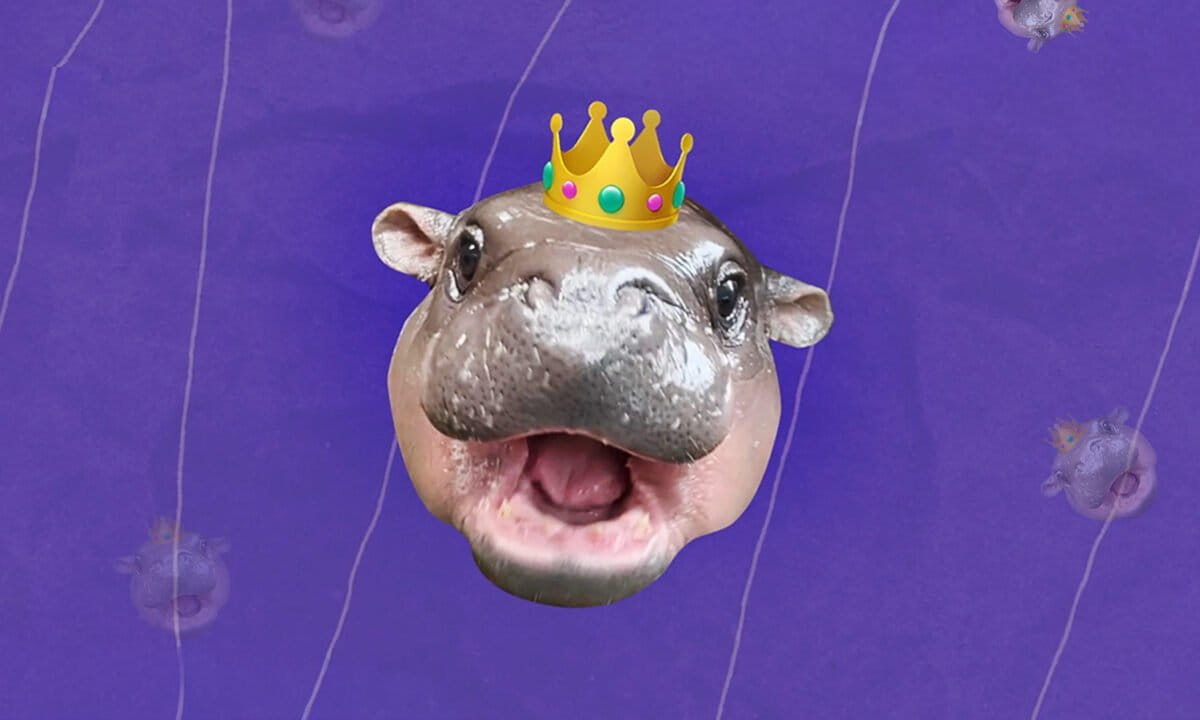
Banner image: A few of the species found living on the ARMS plates retrieved from the ocean depths near Guam (not to scale). Photos courtesy of California Academy of Science.
FEEDBACK: Use this form to send a message to the author of this post. If you want to post a public comment, you can do that at the bottom of the page.
Credits