- Southern sea otters living along California’s coast are struggling in warmer seas, with new threats and changing food sources. They, like the other two sea otter subspecies, are classified as endangered.
- Human disturbance, especially in Monterey Bay, is limiting the otters’ ability to forage, impacting mother and pup survival. Meanwhile, sharks are expanding their range as waters warm, with increasing attacks on otters.
- Following a mass die-off of the purple sea urchin’s predators — sunflower and ochre sea stars — the urchins decimated kelp forests, which are important sea otter habitat. Mussels then proliferated, replacing urchins in the otter’s diet, and invasive green crabs are now also on the menu.
- Otter numbers seem to be dropping, but a definitive census has not been conducted since 2019. A new population estimate based on data and statistical modeling is due to be released soon.
The sea otter pup was tiny, probably less than 2 weeks old, alone in Morro Bay on an October morning earlier this year. A kayaker scooped it out of the water after listening to it endlessly crying for its mother. It was in growing danger, starting to float out toward the mouth of the bay. Back onshore, the rescuer wrapped the pup in a cloth, nestled it in a box and called the Marine Mammal Center to report it.
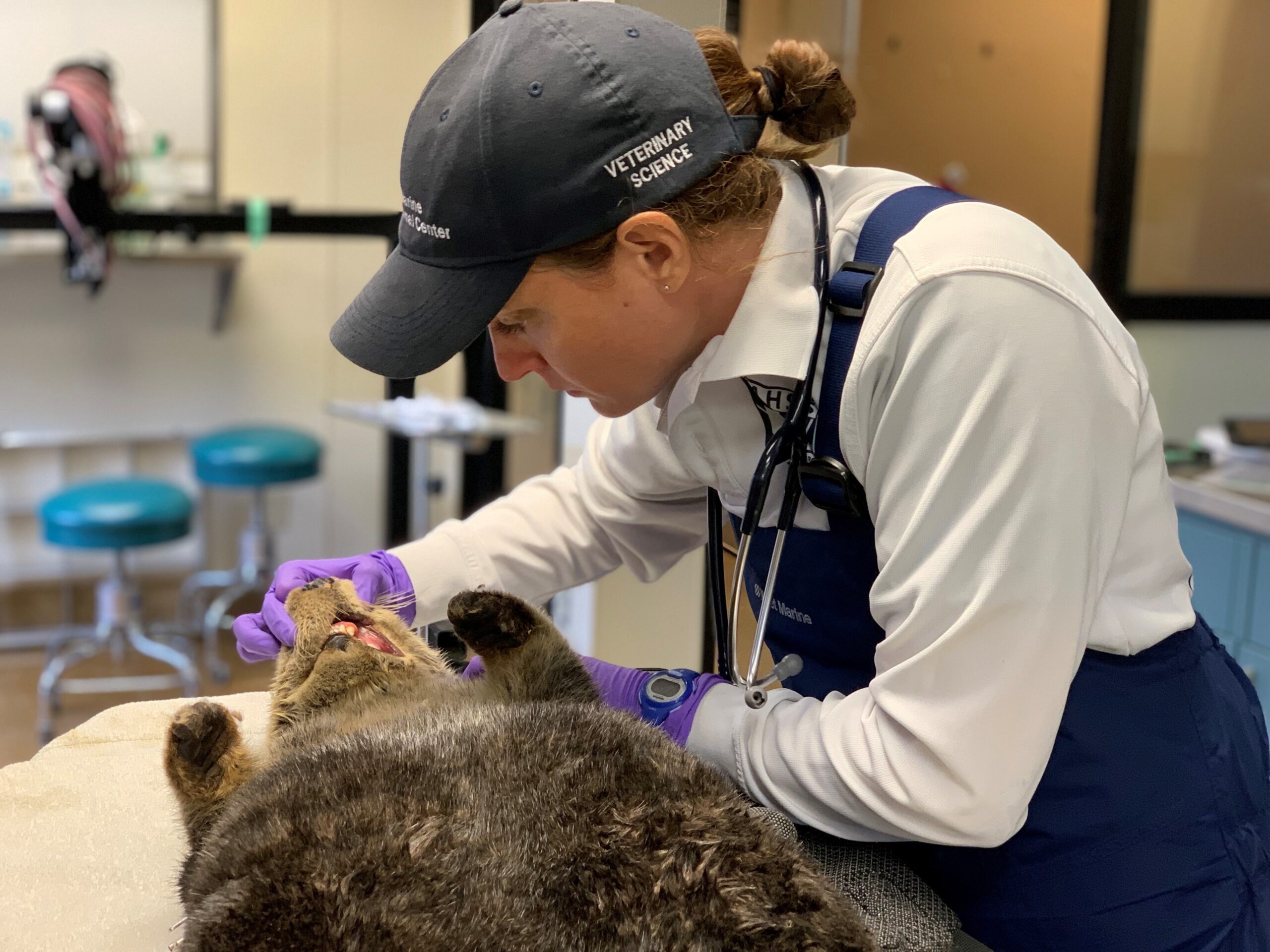
A 10-person rescue team arrived, led by Shayla Zink, the center’s operations coordinator. They hoped to reunite this young pup with its mother: Raising a southern sea otter (Enhydra lutris nereis) pup is a long, difficult process.
The team quickly unwrapped the pup, as otter pups are at risk of over-heating. Morro Bay is cold, generally 15-18°C (59-64°F), so the team brought ice along in case they needed to cool the animal down.
“We kept a close eye on its temperature,” Zink said. “Pups may not have good thermoregulation. We could have dunked it to cool it down.”
They put the pup in an animal carrier and boarded a Harbor Patrol boat to begin their search. Along the way, Zink recorded the pup’s cries and then played the audio through a Bluetooth speaker. If its mother was nearby, she’d come looking for her baby. “The vocalization between each mother and pup is unique,” Zink said.
But the tape was also a way to let the baby rest. Orphaned or abandoned pups are super delicate, and crying uses up valuable energy, Zink said. “In these situations we don’t want to stress the pup.”
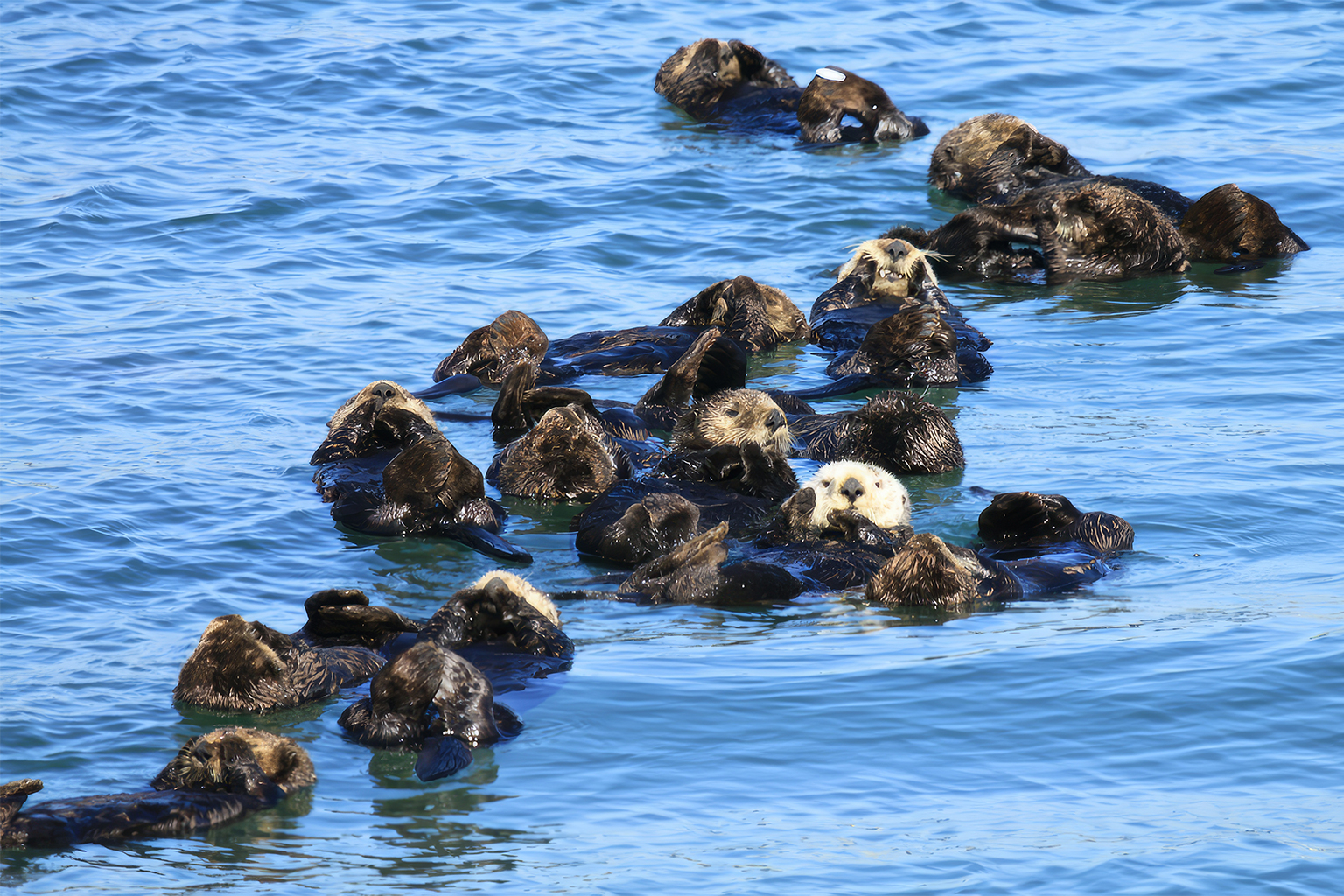
They worked their way around the bay. Occasionally an otter looked interested, but none was serious. “We were looking for typical signs; an otter frantic, vocalizing, approaching the boat,” Zink said.
After about two hours, they’d offered the pup’s cries to just about every otter in the bay. As the boat rounded a corner into the marina, an otter looked up and followed the vessel.
She approached the boat repeatedly, looking upset, but didn’t vocalize. She then followed them as they motored back into the cove. Zink took the pup out of the carrier, held it out to the prospective mother and placed the pup in the water. The female dove. Within seconds, she reemerged beside the pup, rolled over, placed it on her belly and began grooming it. She swam away with her baby clutched to her.
The team followed them for about an hour. The mother settled toward the mouth of the bay, where a raft of otters typically hangs out in the kelp, and then they left her to it. They named the pup Caterpillar.
This was a rare successful reunification for sea otters. “It was a huge win for the otters, for the population as well as the individuals,” Zink said. “They are a threatened species. Anything we can do to help the individual helps.”
All three otter subspecies are classified as endangered on the IUCN Red List. Perhaps 3,000 southern sea otters remain, and only 60% of otter pups survive until they’re weaned at six months. The otters are at risk from shark attacks, ecosystem changes that shift prey species, oil spills — and human disturbance.
A threatened species
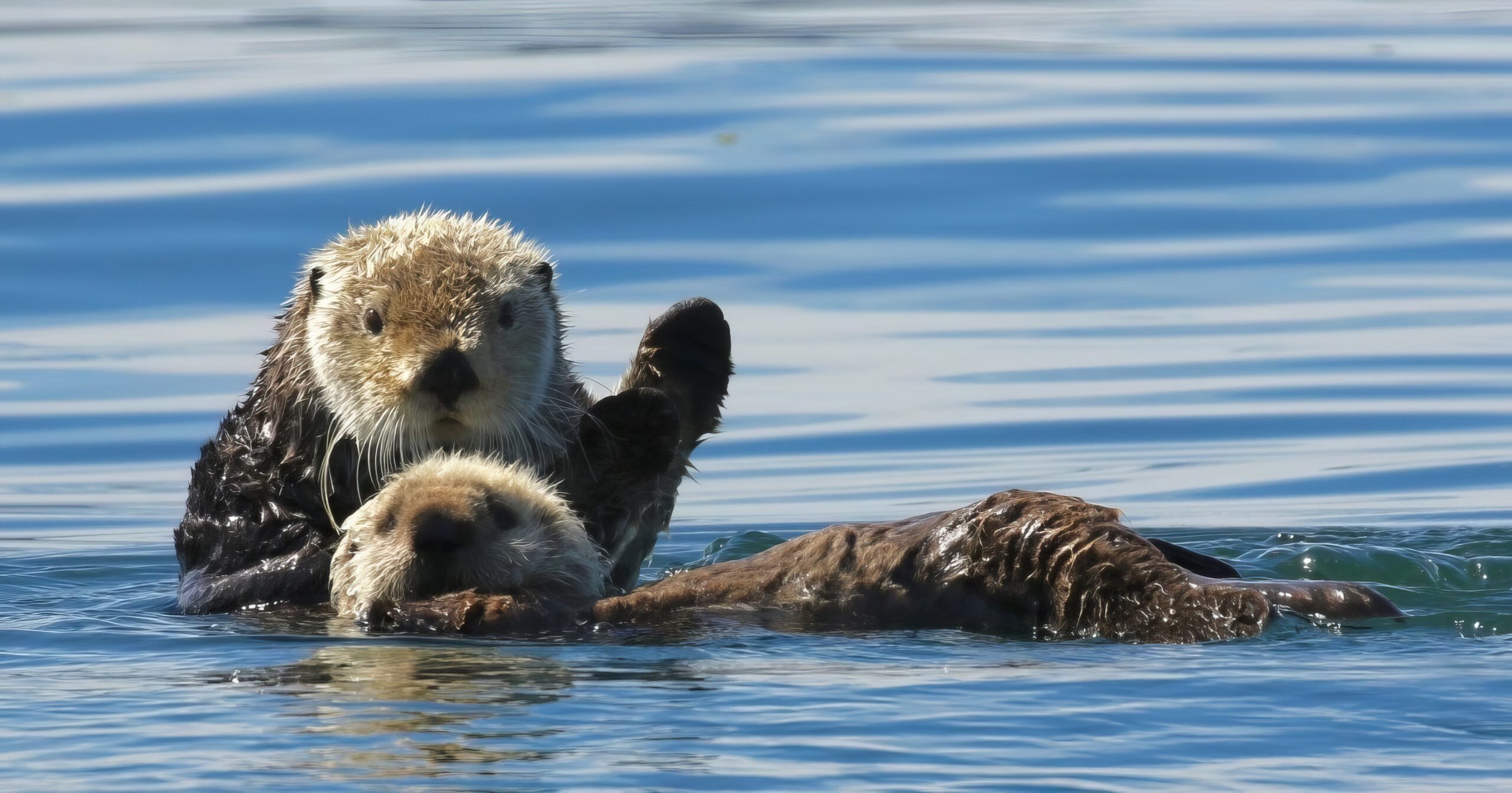
Southern sea otters — also known as California sea otters — are among the smallest marine mammals and no one knows exactly how many remain.
Sea otters once flourished along the entire Pacific coast. When European hunters arrived in the 17th century, they found abundant populations — between 150,000 and 300,000 — from Oregon to Baja California. They hunted the otters for their lush fur, which has as many as a million hairs per square inch.
Populations were decimated. Only a few thousand otters remained, surviving in small pockets by the time hunting was outlawed in 1911.
The small population struggled along, and southern sea otters were listed as threatened in 1977 under the Marine Mammal Protection Act of 1972 and then protected under the U.S. Endangered Species Act the next year. They remain vulnerable to environmental pollution and disruption.
The U.S. Fish and Wildlife Service adopted an otter recovery plan in 1982, which it updated in 2003. The population has hovered around 3,000 for the last decade, but reliable numbers are difficult to pin down. An updated census is due soon. Southern sea otters could be delisted if the average population exceeds 3,090 otters.
But some aspects of recovery are difficult, particularly rehabilitating injured sea otters, which requires specialized housing and care. The Monterey Bay Aquarium’s otter program began in 1981, three years before the aquarium opened, with the only veterinarian with any knowledge of otter care on staff. Raising orphaned pups is a delicate process, involving so many issues that the aquarium began using surrogate otter mothers to nurture abandoned pups.
Initially, rehabilitated pups couldn’t be safely released back into the sea. Instead, they served to educate the staff and the public on exhibit. With the success of the surrogacy program, otter pups now are returned to the wild population. Rehabilitated pups now account for 55% of the otters in Elkhorn Slough, a coastal wetland area in Monterey Bay where the pups are released.
Otter range and population
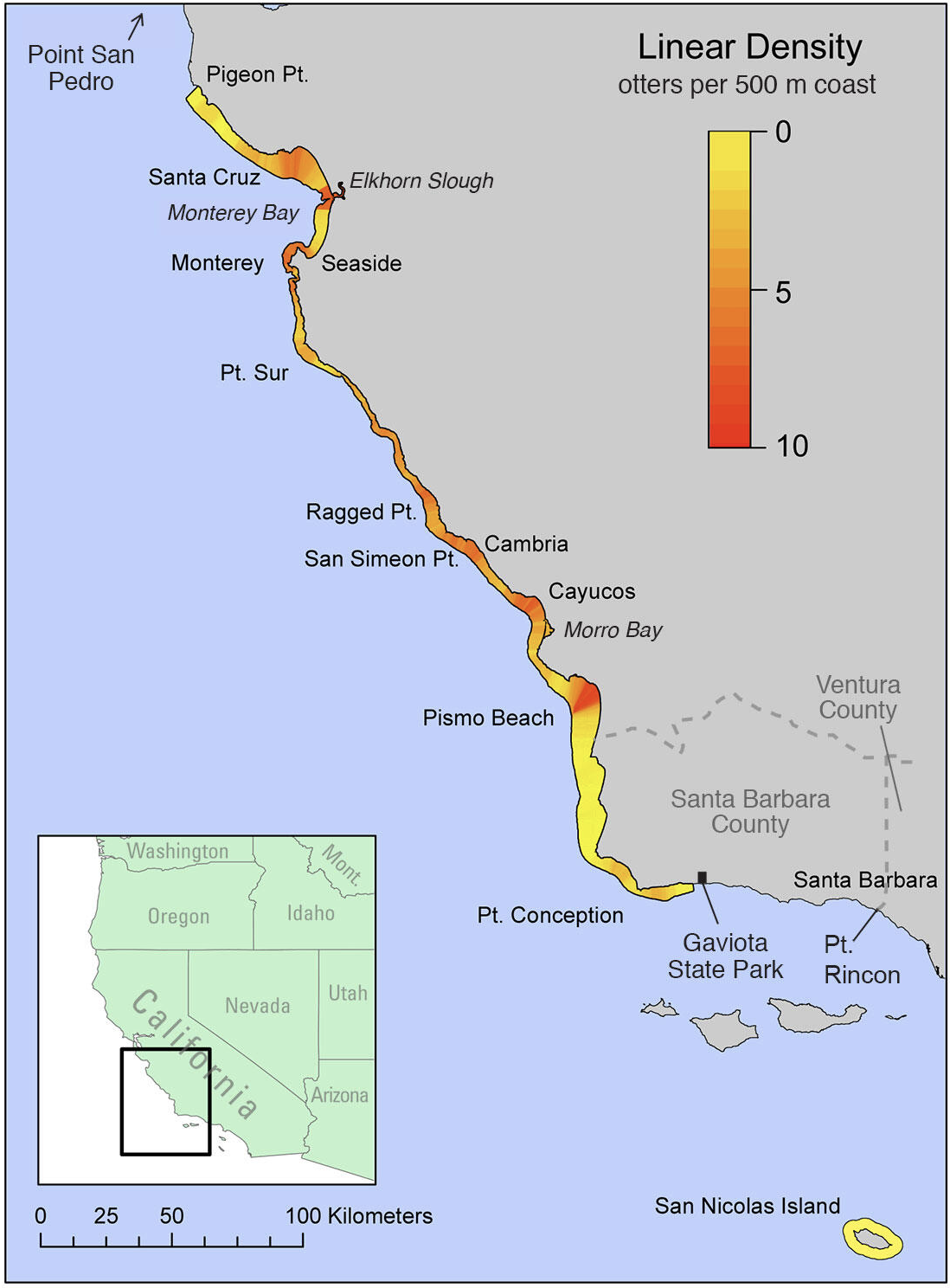
Otters now inhabit about 13% of their original territory, living along the central California coastline from San Mateo county to Santa Barbara county and in the waters surrounding San Nicolas Island in Ventura county. Expanding their range could be the next step toward increasing the population.
However, southern sea otters have steadily declined from 2016’s high of 3,272 to 2,962 in 2019.
The most recent estimates relied on a three-year average, but that produced a minimum count — not a true estimate. Yearly surveys require consistent methods from year to year to produce reliable numbers, U.S. Geological Survey (USGS) biologist Joe Tomoleoni wrote in an email.
Due to a series of unfortunate events, the USGS hasn’t produced a new assessment in six years. During the COVID-19 pandemic, staff couldn’t share an enclosed cockpit for aerial surveys; then the plane was no longer available and mudslides in Big Sur made the beach inaccessible. As of publication, 2024 numbers haven’t been released.
USGS is now building a statistical model that can be used going forward, developed with ecologists using numbers from recent partial surveys and data from as far back as the 1980s.
Mike Harris, a sea otter biologist with the California Department of Fish and Wildlife (CDFW), said that despite the dearth of data, “We aren’t flying blind here. We are still keeping a pretty good watch on what’s going on.” He noted that they are “recovering every stranded otter and monitoring sources of mortality.”
A changing ecosystem
Now, climate change is altering sea otters’ marine habitat. In 2013, Pacific Ocean waters warmed dramatically, beginning a three-year marine heat wave dubbed “the Blob” that decimated much of Northern California’s kelp forests. That same year, sea star wasting disease began killing off the large, many-armed sunflower sea stars (Pycnopodia helianthoides) — the pathogen aided by tepid temperatures in what is normally a chilly ocean.
Sea stars died en masse. Their collapse allowed purple sea urchins to take over, and they subsequently consumed the northern coast’s kelp forests.
The southern sea otter is a keystone species that keeps habitat healthy by eating purple sea urchins, but there was no way they could control this onslaught. Researchers estimated that the urchin population grew by 10,000% in Northern California since 2014. The otters did, however, protect patches along the Central Coast by consuming urchins at the edges of kelp forests — which are critical habitat for more than 1,000 species of fish, mammals and invertebrates.
As the ecosystem changed, southern sea otters have adapted their diet. A study led by Monterey Bay Aquarium biologists showed a ripple effect in coastal ecosystems: The collapse of one marine predator has often benefitted another. Their findings were published in the journal Science Advances.
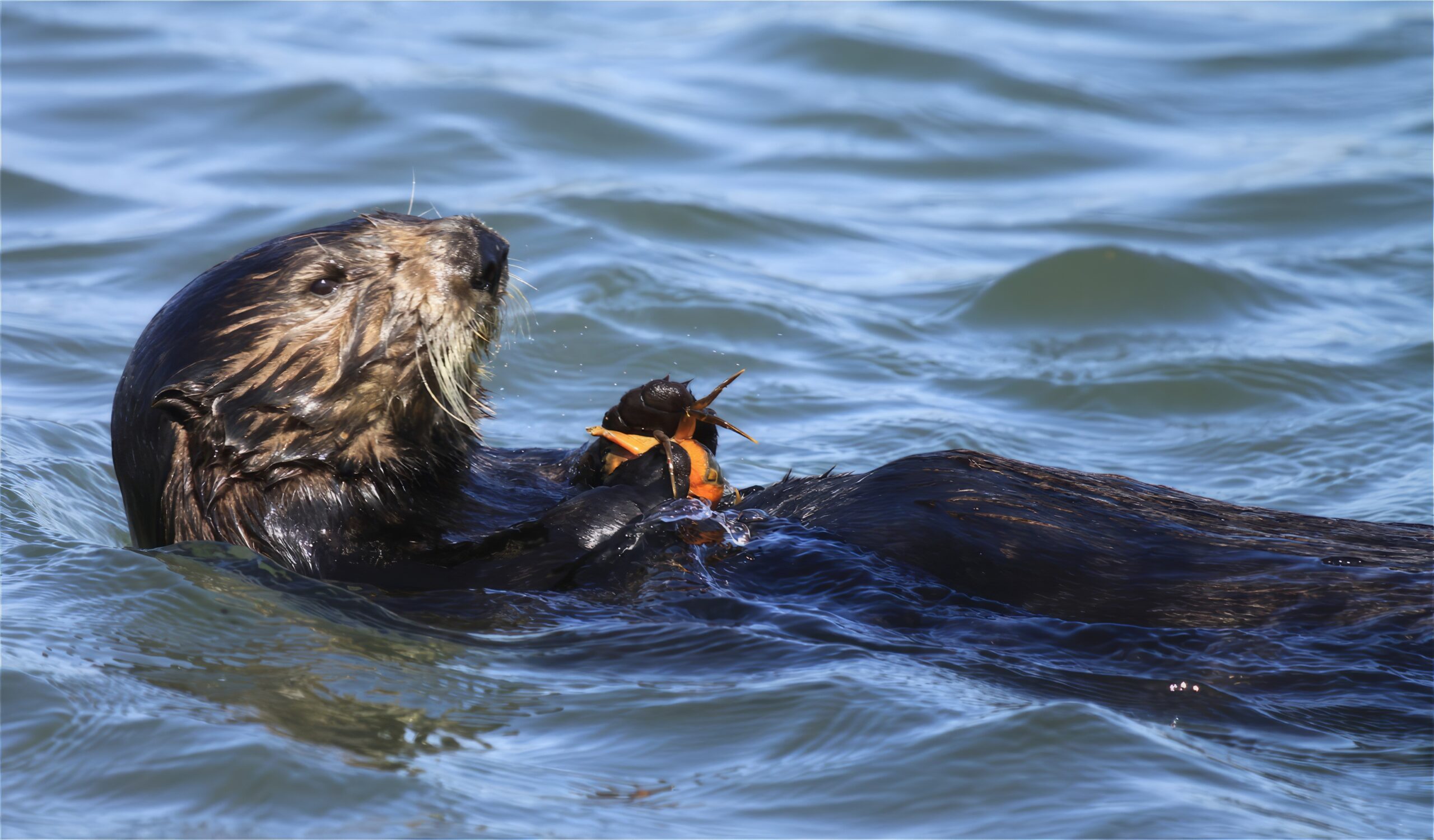
“We were really interested in understanding the role of sea otters in this whole landscape of ecosystem change,” said Joshua Smith, the study’s lead author and an assistant professor at University of California Santa Cruz. “Otters are really important in protecting remnant kelp patches, by choosing [to eat] these healthy urchins, but in ‘urchin barrens’ they tend to forage on mussels, snails and crabs.”
Smith views the kelp forest ecosystem as “still very much in transition.” He and his team are pursuing research on the role sea otters play in kelp forest recovery. Some small patches of kelp have reappeared in Monterey Bay and Carmel Bay. The researchers wonder: As kelp grows, will the urchins devour it? Or will the otters keep the urchins in balance, helping the ecosystem to recover?
“For these incipient forests — that are showing signs of recovery — to persist, sea otter foraging is a big deal,” Smith said. “As those remaining urchins in the kelp forest become healthier … those patches become more attractive to foraging sea otters, because now they are worth their time. They continue to reduce the number of urchins so that you get not only recovery, but persistence.”
Smith and his team are currently analyzing two years of data for a paper that will be submitted for publication soon.
Otters gained another food source with the massive sea star die-off, which opened an ecological niche for California mussels. They became a sea otter banquet, helping otter populations to increase along the Monterey Peninsula for a time.
Meanwhile, the European green crab (Carcinus maenas), considered one of the most invasive marine species, is destroying seagrass beds along the eastern Pacific coast and devouring small prey that are important to migratory shorebirds. Otters are eating these crabs.
“We’re grateful for this native predator to be controlling a non-native prey item,” Kerstin Wasson wrote in an email. She serves as research coordinator at Elkhorn Slough National Estuarine Research Reserve, an area hard-hit by green crabs.
However, some experts, including Keith Rootsaert, who founded the Giant Kelp Restoration Project, fear that otter populations in Monterey Bay and Carmel are collapsing in tandem with kelp forests that have now shrunk to just 4% and 6.3%, respectively, of baseline.
His observations from regular dives in Monterey Bay indicate that most of what remain are sponges and mussel shells that litter the sandy bottom, detritus from sea otter foraging. Though it hasn’t been confirmed by the long-overdue survey, he suspects that “the otter population there may have dropped from 250 to as low as 28,” numbers he shared with USGS biologist Tomoleoni.
“We are very concerned that the sea otter population is dying off and the continued narrative that there are 3,000 individuals is no longer valid,” he wrote.

A unique physiology
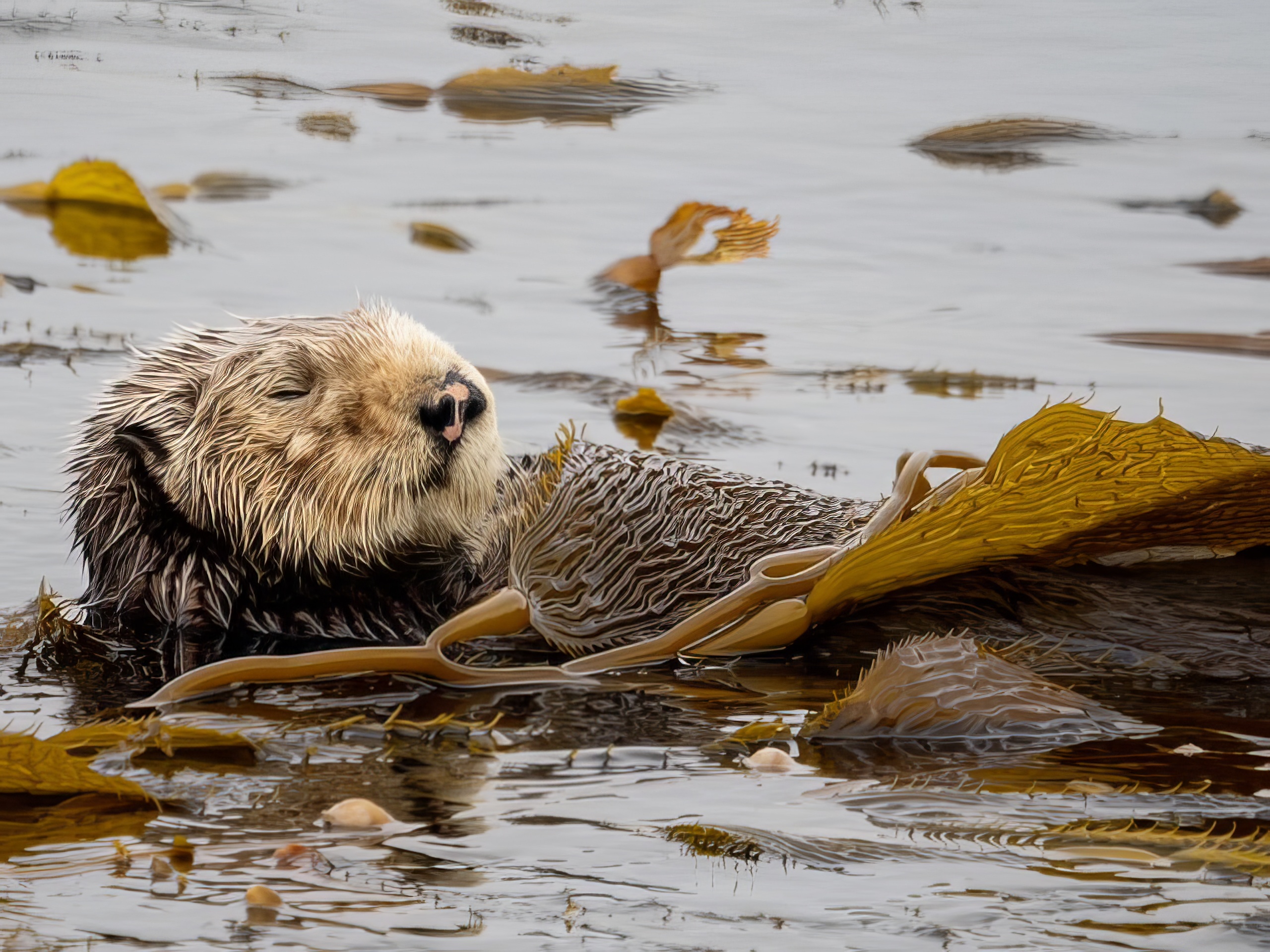
Even in the best of circumstances, sea otters’ biology makes survival challenging. Instead of blubber to keep them warm like other marine mammals, they have dense fur and an extremely high-burning metabolism. To stoke that furnace, they must consume the equivalent of 20-30% of their body weight each day. And in order to conserve energy, uninterrupted rest is crucial.
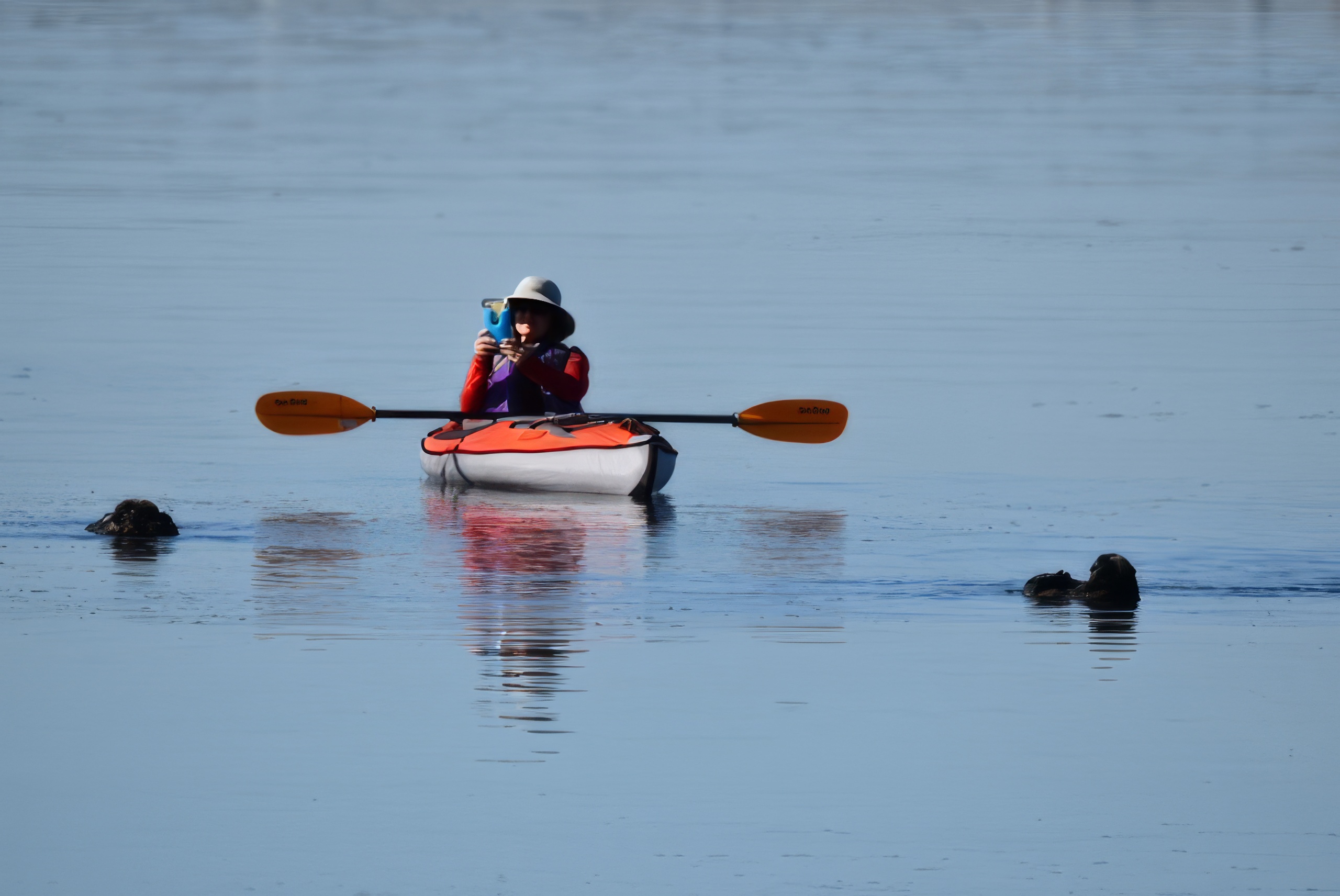
That makes human disturbance a serious threat. But sea otters, iconically cute animals, are a major tourist attraction in Morro Bay, Monterey Bay, Elkhorn Slough and other locations along California’s coast. The allure of seeing, photographing or kayaking up to an otter is strong, the experience almost magical. But these interactions disrupt the otters’ already precarious lives.
While disturbance isn’t good for male otters, it’s tougher on females, which are pregnant or nursing most of their adult lives. When otters are nursing, their resting metabolic rate soars by more than 50%.
Some sea otter mothers literally starve to death caring for their pups. So-called end lactation syndrome occurs over the five-to-six months that pups are nursing. It’s characterized by severe, sometimes fatal, weight loss. As a mother gets progressively thinner, her immunity wanes and she’s more prone to disease. Some mothers abandon their pups for their own survival; others die, their bodies washed up on the shore, thin and wasted.
“When a sea otter is forced to interrupt resting or foraging due to an eager human wanting to observe too close, it must expend additional energy to relocate,” said Heather Barrett, who heads communications at the nonprofit Sea Otter Savvy (SOS).
An animal that is disturbed from its routine loses valuable foraging time. For mother otters, any disturbance cuts into her thin margin of survival. No single disturbance kills an otter mother, but the cumulative effect of frequent interruptions, every day, takes a toll.
SOS was created in 2015 by experts from Monterey Bay Aquarium, CDFW, Friends of the Sea Otter and the U.S. Fish and Wildlife Service (USFWS). Its goal is to minimize disturbance — anything that makes the otter alter its activity and swim off, dive or hide. They’ve created guidelines for healthy viewing distances: 30 meters (100 feet) is generally safe, 18 m (60 ft) is probably okay, and 15 m (50 ft) is too close. SOS also certifies local businesses, such as kayak rentals.

Shark attacks
The worst threat state biologist Harris has observed is a sharp increase in shark attacks. “Shark bites remain the most significant impact on otter population recovery,” he said. “Otters are taken out of the population. No mitigation is possible.”
During a recent otter necropsy, he noted that its fur generally appeared unruffled, but torn skin showed evidence of a shark bite and the animal was riddled with infection. This otter was doomed as soon as the shark’s teeth bit into her.
In a peer-reviewed study published in Marine Mammal Science, Harris and his colleagues examined 1,870 dead otters from 1985 to 2015. They reported that more than half were killed by shark bites — and incidents have increased sharply since the Blob. Today, waters are generally warmer in what has become a new normal. These tepid waters have expanded shark season beyond summer and fall when most shark bites occurred.
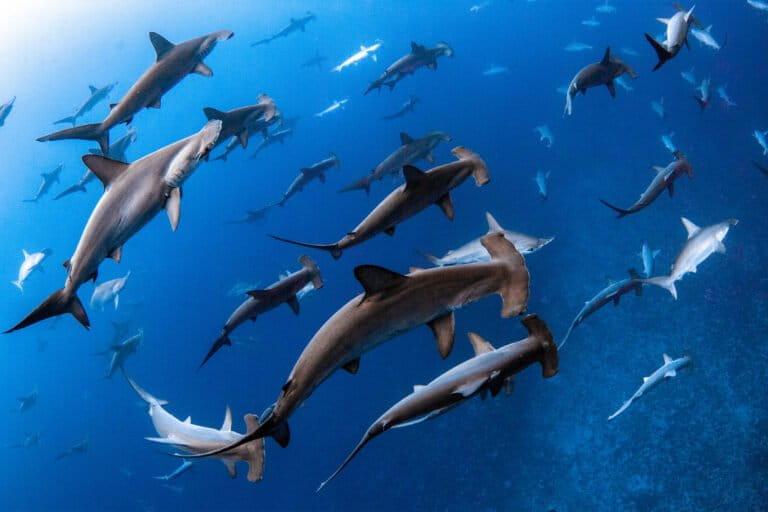
Juvenile white sharks, less than 2.5 m (8 ft) long, need waters between 15.1°C and 22°C (59°F and 71°F): Great white sharks are endothermic, maintaining their own internal body temperature, but juveniles may struggle to thermoregulate in chilly water. They stay where it’s warmer.
When ocean temperatures soared to record highs, 6.2°C (7°F) above historic temperatures in 2014, the cold water edge that kept sharks south of Point Conception moved north. This land mass marks a marine biogeographic boundary, separating the warmer waters of the Southern California bight from the cooler California Current Ecosystem.
Juvenile sharks now live in Monterey Bay, and with that change, otters began washing up dead on the shoreline.
“The emergence of juvenile white sharks in Monterey Bay was unexpected, sudden and outpaced established scientific monitoring programs,” Harris and colleagues reported in a study published in the journal Marine Mammal Science.
However, Harris noted that “In the Monterey Bay area, as the presence of juvenile white sharks suddenly increased after the heat wave, the number of otters in the same area dropped significantly.”
Since it’s impossible to change shark behavior, biologists are trying to mitigate other threats. “It often falls to factors surrounding pathogens, pollution and human-caused disturbance, areas where we can make some changes to help sea otters,” Harris said.
Otters power forward
Sea otters have a strong human community working to support them. The 2024 census will quantify the effects on their population from the Blob’s disastrous ecosystem impacts, continuing marine heat waves, sharks moving in and the disturbance of visitors who over-love them.
Sea otters remain a coastline icon, fighting to survive within the slim margins of their demanding physiology in an ecosystem under pressure. Meanwhile, they continue to adapt to the changes in their habitat.
Saving the habitat is the make-or-break for the species.
“There are some aspects of a bright future,” Harris said. “There are strong collaborations and innovative ideas on how to expand populations and how to pay for it. A lot of players are coming to the table, finding creative ways to address sea otter conservation goals in the not-too-distant future.”
Scientists are determined to better understand otter physiology and range, collecting data to inform conservation decisions. Nonprofits are leading public education at the interface between humans and otters. This human team is trying to conserve otters for the public that loves them and ecosystems that need them, working against the backdrop of environmental change and ecological challenge.
The otters soldier on.
Chritine Heinrichs has written about California coastal issues for more than a decade. She is currently at work on a book about northern elephant seals.
Banner image: A southern sea otter. Image by Lilian Carswell/USFWS (Public domain).
Citations:
Smith, J. et al. (2025) Keystone interdependence: Sea otter responses to a prey surplus following the collapse of a rocky intertidal predator. Science Advances 11, Issue 18. doi:10.1126/sciadv.adu1028
Thometz, N. M., Tinker, M. T., Staedler, M. M., Mayer, K. A., & Williams, T. M. (2014). Energetic demands of immature sea otters from birth to weaning: Implications for maternal costs, reproductive behavior and population-level trends. Journal of Experimental Biology, 217(12), 2053-2061. doi:10.1242/jeb.099739
Tinker, M. T., Hatfield, B. B., Harris, M. D. and Ames, J. A., (2016), Dramatic increase in sea otter mortality from white sharks in California. Marine Mammal Science, 32, 1, 309-326, doi:10.1111/mms.12261
Chinn, S. M., Miller, M.A., et al. 2016, The high cost of motherhood: end-lactation syndrome in southern sea otters (Enhydta luttris nereis) on the California coast, USA. Journal of Wildlife Diseases, 52 (2): 307–318. doi:10.7589/2015-06-158
FEEDBACK: Use this form to send a message to the author of this post. If you want to post a public comment, you can do that at the bottom of the page.
Credits