- Glaciers function as critical infrastructure, supplying water, food, and energy for nearly half the world’s population, even though they cover only a small share of the Earth’s surface. That support system is now contracting rapidly.
- Global measurements show sustained and accelerating glacier loss since the 1970s, driven primarily by human-caused warming. In many regions, what was once seasonal melt has become irreversible decline.
- The impacts extend well beyond the mountains, affecting agriculture, hydropower, ecosystems, and disaster risk in downstream communities across Asia, South America, and beyond.
- While scientists and policymakers are testing ways to manage shrinking ice and rising hazards, adaptation has limits. Without deep cuts in greenhouse-gas emissions, many glacier-fed regions will soon face long-term water decline.

Glaciers are often treated as scenic features or scientific curiosities. In fact, they are critical infrastructure. Though they cover roughly a tenth of the Earth’s land surface, meltwater from glaciers and seasonal snowpacks supports drinking water, agriculture, industry, and energy production for close to half the global population. That support system is now shrinking, fast.
Measurements collected over decades show that glacier loss is not a future risk but a present condition. According to the World Glacier Monitoring Service, glaciers worldwide have lost more than 30 meters of average thickness since 1970. The pace has accelerated since the early 2000s. Each of the last several years has set new records for ice loss. What was once gradual retreat has become sustained decline.


The cause is not mysterious. Rising global temperatures have increased surface melt while shortening accumulation seasons. In many mountain regions, precipitation that once fell as snow now arrives as rain, depriving glaciers of replenishment. The Intergovernmental Panel on Climate Change has concluded with high confidence that human-driven warming is the dominant driver of glacier loss since the mid-20th century. Even under optimistic emissions scenarios, many smaller glaciers are unlikely to survive this century.
The consequences extend far beyond the ice itself. In the short term, accelerated melting can increase river flows, creating a misleading sense of abundance. Over time, however, that surplus disappears. Once glaciers pass a tipping point, runoff declines sharply. Communities downstream face water shortages precisely when demand is rising. This pattern is already visible in parts of the Andes, Central Asia, and the Himalayas.

Food systems are tightly linked to these changes. Meltwater sustains irrigation during dry seasons, buffering crops against rainfall variability. As that buffer weakens, yields become more volatile. In regions where agriculture employs a large share of the population, reduced water reliability can translate into economic instability and migration pressure.
Energy systems are also exposed. Hydropower accounts for a significant portion of electricity generation in many mountainous countries. Initially, glacier retreat can increase power output. Eventually, declining flows undermine generation capacity and strain grids designed around historical hydrology. Adapting infrastructure to new flow regimes is costly and slow.
Ecosystems face their own disruptions. Cold, sediment-rich meltwater shapes river habitats and supports species adapted to narrow temperature ranges. As glaciers retreat, rivers warm, chemistry changes, and invasive species gain a foothold. High-altitude wetlands fed by glacial melt, important carbon stores and biodiversity refuges, are drying in some regions.
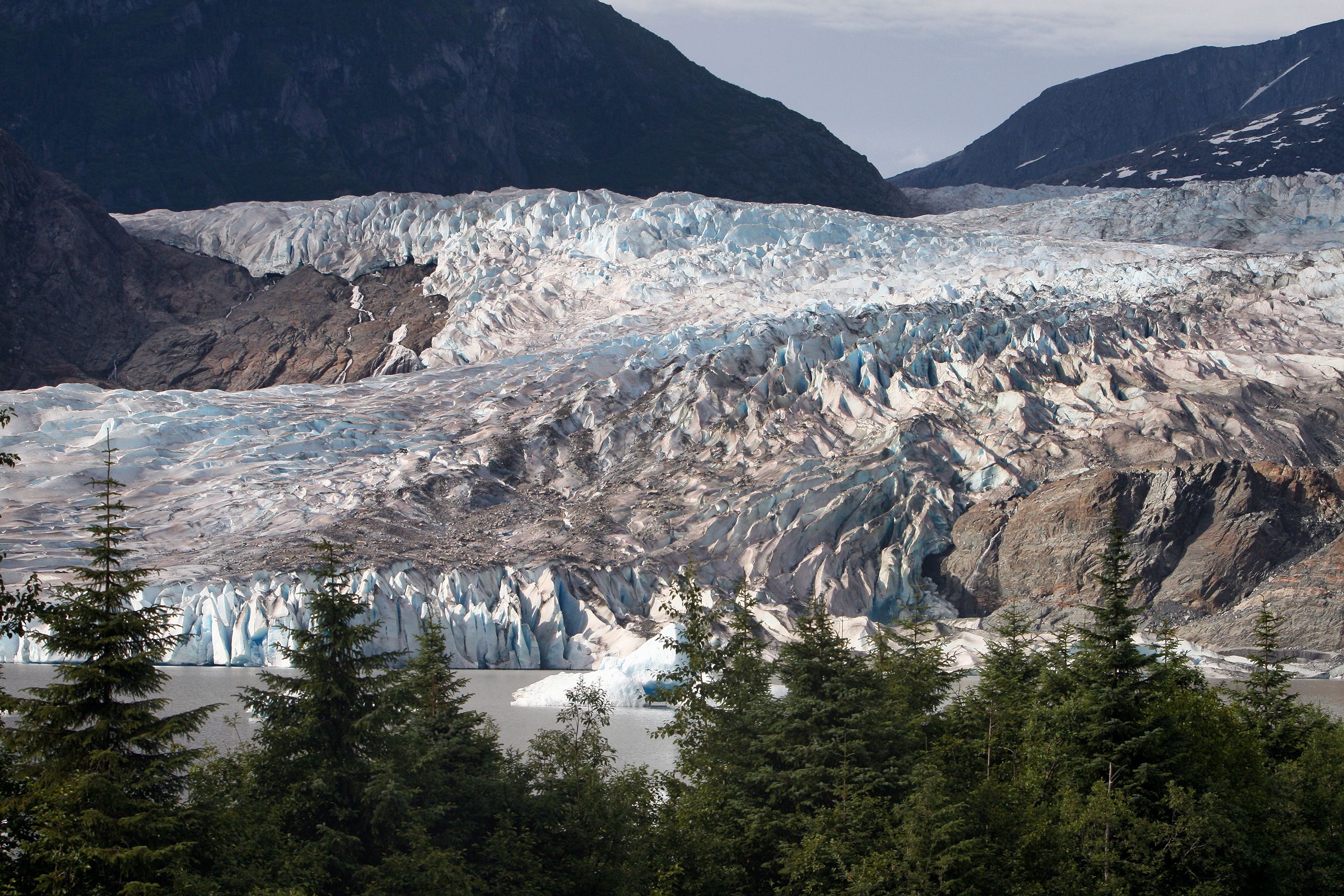
The risks are not only gradual. Glacier retreat increases the likelihood of sudden hazards, including glacial lake outburst floods. As ice thins and retreats, meltwater can accumulate behind unstable moraines. When these natural dams fail, floods can devastate downstream valleys within hours. Monitoring and early-warning systems have improved, but coverage remains uneven.
Mountain regions have become laboratories for response. Scientists now combine satellite data, drones, and ground sensors to track ice loss in near real time. Policymakers are experimenting with new water-allocation rules that reflect declining supply rather than historical averages. In some places, engineers are reinforcing moraine dams or draining unstable lakes to reduce flood risk.
More speculative efforts aim to slow ice loss itself. Projects in parts of the Alps have tested reflective coverings to reduce summer melt on small glacier sections. These measures work locally and temporarily, often to protect tourism assets. They are not scalable solutions for the world’s ice. The physics is unforgiving.
What can scale is adaptation planning that treats glacier loss as a permanent shift, not a temporary anomaly. That requires better integration of glacier science into water management, energy planning, and disaster risk reduction. It also requires acknowledging trade-offs. As supplies shrink, competing demands cannot all be met.
The limits of adaptation are clear. Without significant reductions in greenhouse-gas emissions, glacier decline will continue, regardless of local interventions. The World Meteorological Organization has warned that many glacier-fed basins will experience peak water within decades, followed by long-term decline. Planning for that future is unavoidable.
Glaciers once seemed permanent, part of the background of the planet. They are not. Their disappearance is reshaping water systems, landscapes, and economies in ways that are still poorly understood outside the regions most directly affected. What happens in the mountains does not stay there.
Mongabay reporting on glaciers
With climate change, cryosphere melt scales up as a threat to planetary health
Photo series on Himalayan water-saving ice stupas wins global award
Andes glacier melt threatens Amazon’s rivers & intensifies droughts
Margerie Glacier in Alaska in 2007. Photo by Rhett Ayers Butler.
Credits