Brazil is the world’s most biodiverse country, and the title is not closely contested in absolute numbers: between 10% and 15% of all known species live within its borders. The country contains nearly two-thirds of the Amazon rainforest and supplies about a tenth of the world’s food. That combination of ecological wealth and economic weight gives Brazil an outsize role in the global effort to slow nature loss.
Yet Brazil was also among the roughly 85% of countries that missed the 2024 deadline to submit a new National Biodiversity Strategy and Action Plan to the United Nations under the Convention on Biological Diversity. When delegates gathered for the COP16 summit in Cali, Colombia, in October 2024, Brazil’s plan was still unfinished.

On December 29th 2025, it finally arrived. The new NBSAP covers the period from 2025 to 2030 and is the product of a long consultation involving hundreds of scientists, Indigenous representatives, civil-society groups and government officials. It is ambitious, detailed and aligned with the Kunming–Montreal Global Biodiversity Framework. Whether it is durable is another matter.
Conserving 80% of the Amazon
One of the plan’s headline commitments is to “conserve” 80% of the Brazilian Amazon by 2030. The wording matters. Conservation here includes protected areas, Indigenous territories and other forms of managed land where large-scale conversion is prohibited.
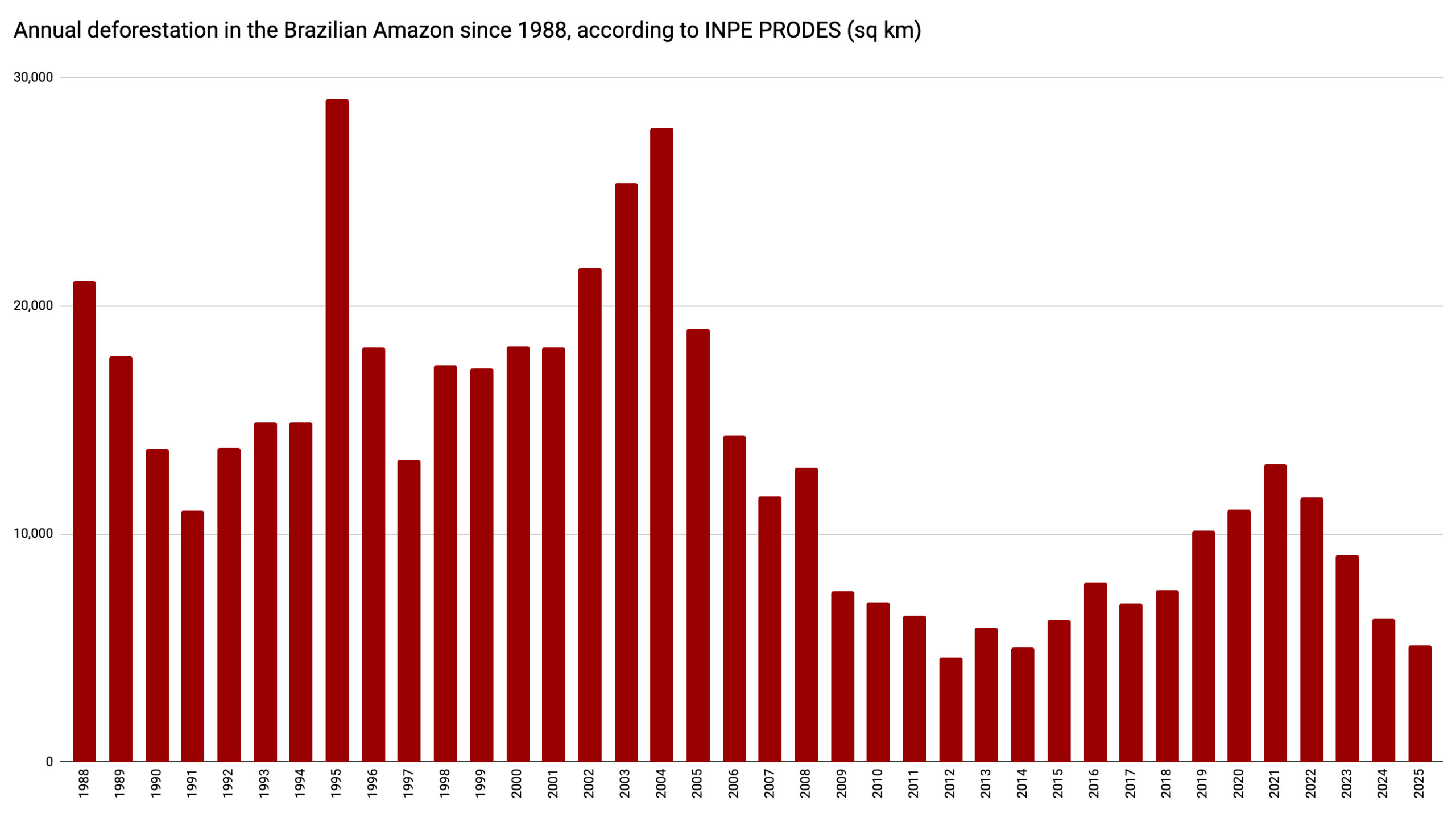
There is some recent momentum to build on. Annual deforestation in the Amazon has fallen for five consecutive years and, in 2025, reached its lowest level in more than a decade. Enforcement has improved, data systems are better integrated and federal agencies have regained authority after years of erosion.
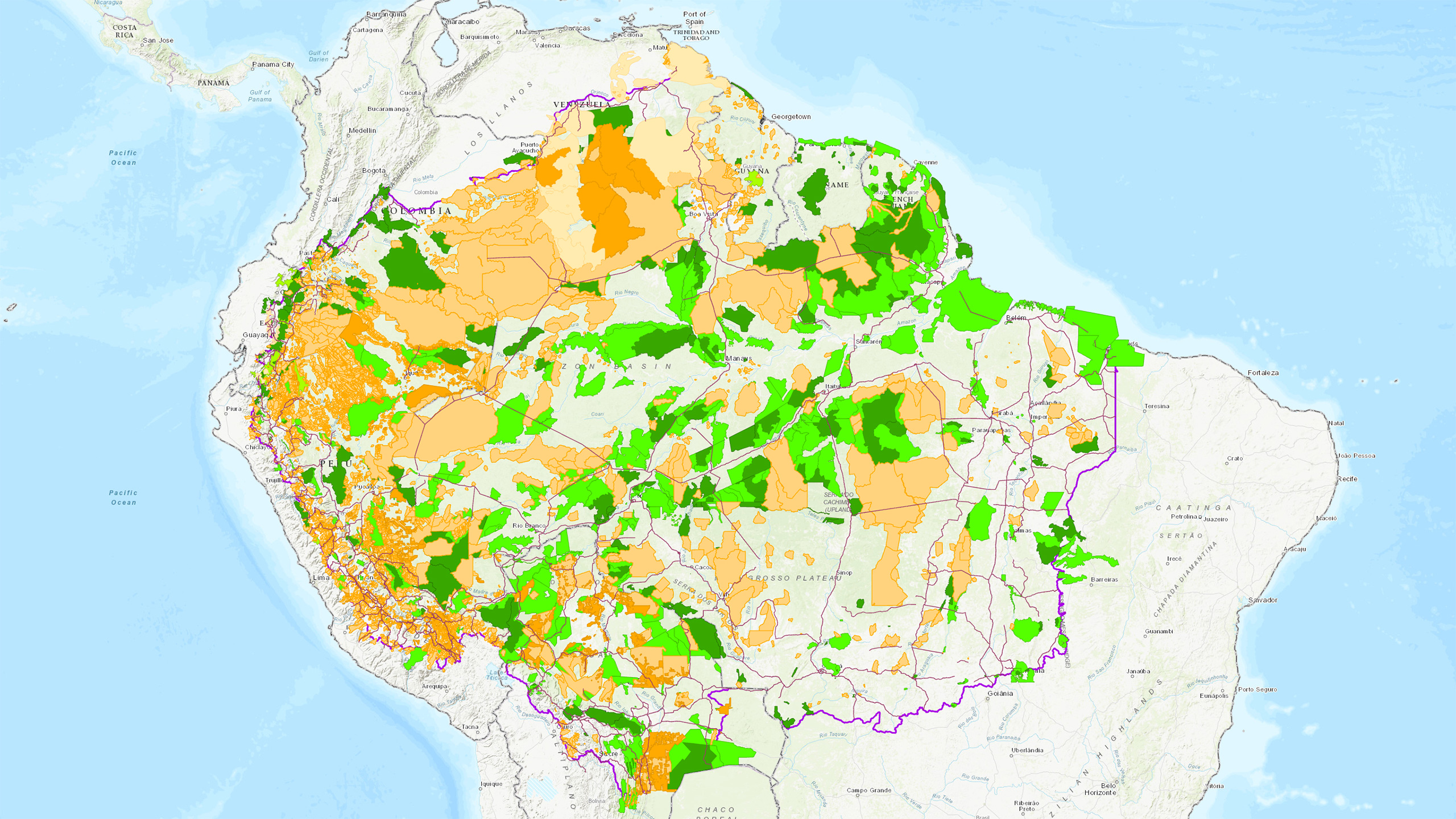
Still, the forest is under growing stress. Rising temperatures and increasingly severe droughts have made large areas more vulnerable to fire. Degradation and fragmentation, even where clear-cutting is reduced, increase the risk of die-off. Preserving the Amazon as a functioning ecosystem will depend not only on stopping chainsaws but on maintaining rainfall cycles, connectivity and resilience.
Eliminating deforestation across all ecosystems
Beyond the Amazon, the plan commits Brazil to eliminating deforestation across all its ecosystems by 2030. The emphasis is on illegal deforestation, though the document also addresses legal clearing through compensation mechanisms and restoration requirements.
The strategy links deforestation control to wildfire prevention, land-degradation neutrality and efforts to combat desertification. This reflects a broader shift in how Brazilian policymakers describe land-use change. Forest loss is treated less as a single crime and more as a systemic failure involving land tenure, rural credit, enforcement capacity and local governance.
Whether elimination is realistic remains uncertain. Past experience shows that deforestation often migrates between biomes as pressure increases. Gains in the Amazon can be offset by losses in the Cerrado or other regions unless enforcement and incentives move in step.
Aligning biodiversity and climate policy
Brazil’s new NBSAP is explicitly aligned with its climate commitments. The document treats biodiversity protection as a pillar of climate mitigation and adaptation, not as a parallel agenda.
Intact ecosystems are framed as infrastructure. Forests regulate rainfall, reduce disaster risk and store carbon. Mangroves and reefs buffer coastlines. Grasslands and wetlands stabilize water systems. The logic is straightforward: climate goals are harder to meet if ecosystems continue to unravel.

This alignment also reflects institutional changes. Biodiversity and climate now sit within the same ministry, and the action plan assigns responsibilities across 20 federal ministries and dozens of agencies. Coordination, on paper, is stronger than in earlier iterations.
Paying for nature
The plan acknowledges that ambition without finance is rhetorical. Brazil aims to “substantially increase” nature finance from domestic and international sources. The accompanying action plan lists several mechanisms, including biodiversity credits, a regulated carbon market and the proposed Tropical Forest Forever Facility.
Some of these ideas remain speculative. Biodiversity credits, in particular, raise unresolved questions about measurement, permanence and social safeguards. Others, such as carbon markets, are further along but still politically sensitive.
More concrete is target 18 of the NBSAP, which commits Brazil to identifying subsidies and fiscal incentives that are directly harmful to biodiversity by the end of this year. Those subsidies are to be reduced or eliminated by 2030. If implemented, this would mark a significant shift. Environmentally harmful incentives often outweigh conservation spending, and reforming them tends to provoke resistance from powerful constituencies.
Agriculture and “sustainable intensification”
Agriculture occupies a central place in the plan. Brazil is one of the world’s largest producers of soy, beef and other commodities, and the NBSAP promotes “sustainable intensification” as a way to meet demand while reducing pressure on native vegetation.
The idea is familiar: produce more on existing land through better management, technology and restoration of degraded areas. The risk is also familiar. Intensification can make expansion more profitable, not less, unless paired with firm land-use controls. Higher yields may raise land values and attract new investment to frontier regions.
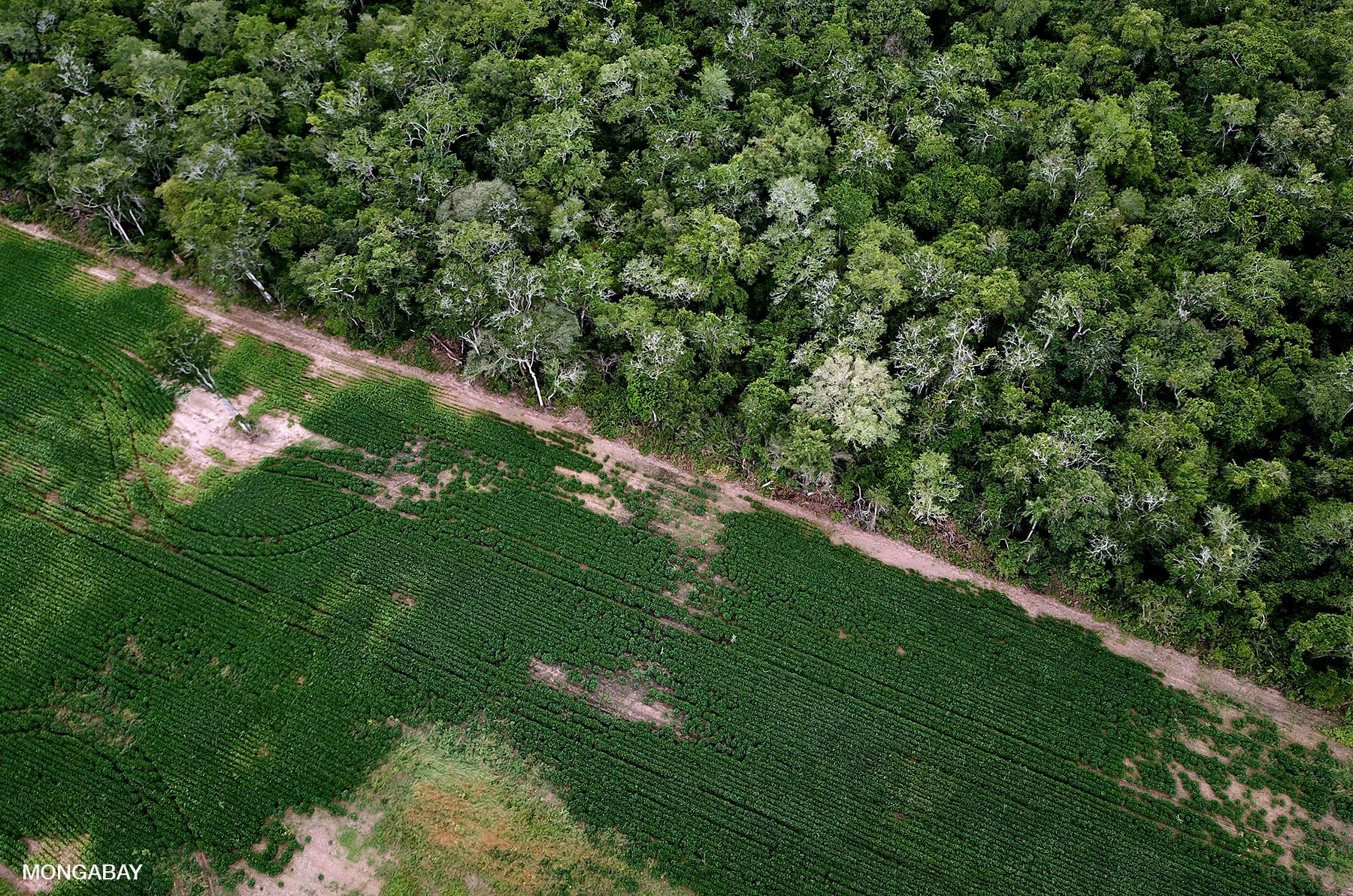
The plan gestures toward this tension but does not fully resolve it. Its success will depend on whether agricultural credit, infrastructure policy and enforcement are aligned with conservation goals.
A plan shaped by consultation
Brazil’s government describes the NBSAP process as the largest biodiversity consultation the country has ever undertaken. Workshops, public consultations and sector-specific dialogues ran over more than two years.
This breadth shows in the document’s tone. Indigenous peoples and traditional communities are presented not as stakeholders to be consulted after the fact but as central actors in implementation. The plan emphasizes participation, access to information and shared governance.
Consultation, however, does not guarantee continuity.
Politics as the binding constraint
The most important caveat sits outside the text. Brazil faces a major national election this year. The NBSAP is a federal planning instrument, not a constitutional mandate. Its implementation depends heavily on political will.
If there is continuity in the federal administration, the plan is likely to move forward, unevenly but meaningfully. If there is a sharp shift in leadership, it could be shelved, diluted or ignored, as similar strategies have been in the past.
Brazil’s biodiversity strategy is detailed, credible and aligned with global frameworks. It reflects a renewed belief that nature protection is compatible with development. Whether it becomes a turning point or another well-documented intention will be decided less by ecology than by politics.
Header image: Tapir in Brazil. Photo by Rhett Ayers Butler.
Cite this article
Rhett Ayers Butler (2026). Brazil sets out its strategy for nature. Mongabay Conservation news. DOI: https://doi.org/10.66709/news-313471Credits