- Close to a year after the suspension of USAID funding in Africa, the future of many environmental programs remains uncertain.
- Alternative funding is sought from the EU, World Bank and private sector initiatives, yet experts say a significant climate finance gap remains, especially as some of these sources curtail their funding as well.
- Africa receives just 3-4% of global climate finance, according to the African Development Bank Group; while the continent contributes just 4% of global greenhouse gas emissions, it remains especially vulnerable to climate disasters.
Nearly a year after U.S. President Donald Trump’s decision to freeze U.S. development aid, USAID has permanently closed its offices in several African countries. Behind this move lies a huge collapse in climate financing, threatening dozens of ongoing environmental initiatives. Experts and observers are increasingly concerned about a funding vacuum that neither Europe nor billionaire philanthropists seem ready to fill.
Originally announced as a temporary 90-day suspension, the shutdown of USAID (United States Agency for International Development) programs now appears to be a permanent rupture in U.S.-Africa cooperation. Since April 20, the expiration date of Trump’s moratorium, have been notified of a total halt in funding. focused on energy transition and climate resilience have even been reassigned to the U.S. Department of State, which has stated it will only continue them if they are deemed essential to saving human lives, a former USAID employee, who asked to remain anonymous for political reasons, told Mongabay during an interview in Cameroon.
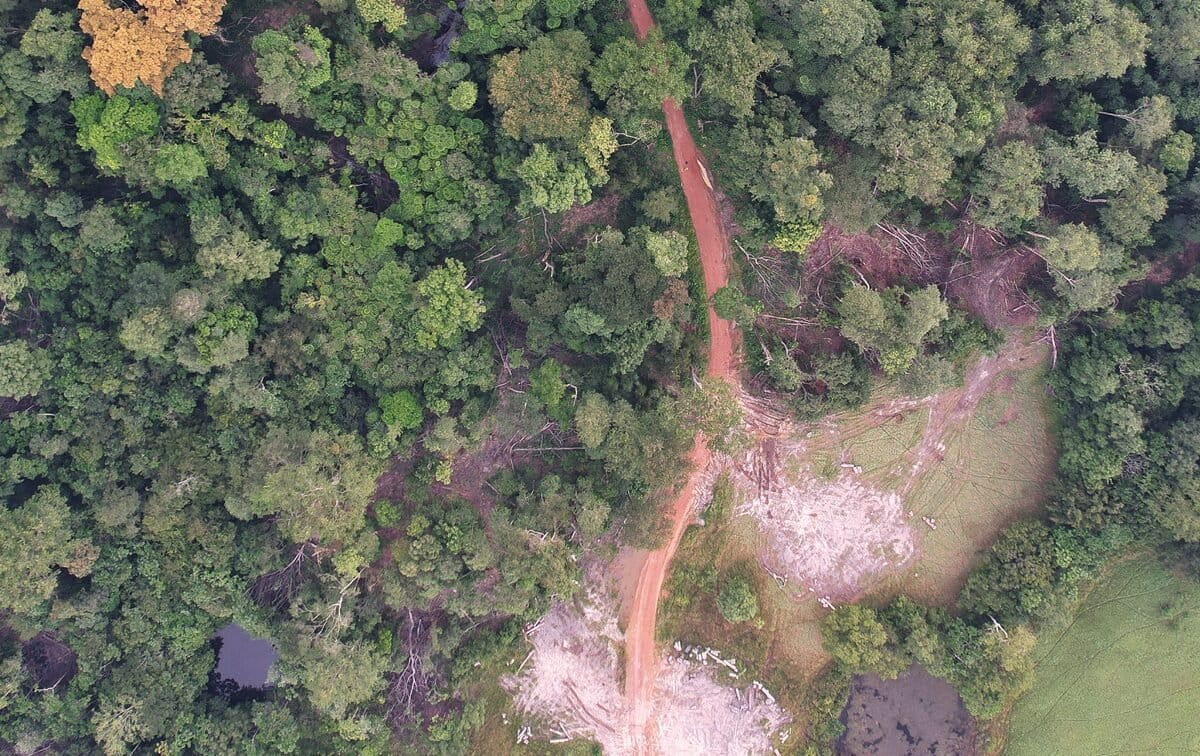
In this context, USAID offices have shut down, and funding for projects related to biodiversity, conservation and anti-desertification efforts and have stopped in many African countries. This sudden disengagement comes at a time when the continent is already struggling with a major green finance deficit.

A continent neglected amid climate emergency
Africa receives just 3-4% of global climate finance, according to the African Development Bank Group. Yet it remains the most vulnerable region to climate disasters — despite contributing only 4% of global greenhouse gas emissions.
For Amhed Moustapha Mfokeu, a Cameroonian expert in climate finance at the University of Yaoundé, the situation is deeply alarming. “The closure of USAID has created a significant gap in funding for climate-related projects in Cameroon, especially those focused on forest protection, agroforestry, water management and climate change adaptation,” he said. “Key programs like Central Africa Regional Program for the Environment (CARPE) and Forest & Biodiversity Support Activity (FABS), which supported sustainable forest management and empowered local communities, have been disrupted. As a result, many field activities have slowed down — fewer trainings, less distribution of seedlings and reduced environmental monitoring. This has led to job losses among local project workers and a decline in income for affected communities, many of whom now feel .”
He noted that he did not have comprehensive figures on how much funding Cameroonian projects have lost; his comments are based on his observations and experience.
He also added that Cameroon is actively seeking alternative funding sources. The European Union, World Bank and multilateral funds like the Green Climate Fund have launched new initiatives, and private sector efforts, including carbon credit projects, have emerged in recent years.
However, African experts say these alternatives are still fragmented and slower to implement and have yet to fully replace the broad impact of USAID. Going forward, local projects will need to be more organized, transparent and aligned with global climate priorities — such as reforestation, food security and youth and women’s inclusion — in order to attract new support and avoid over-reliance on a single donor.
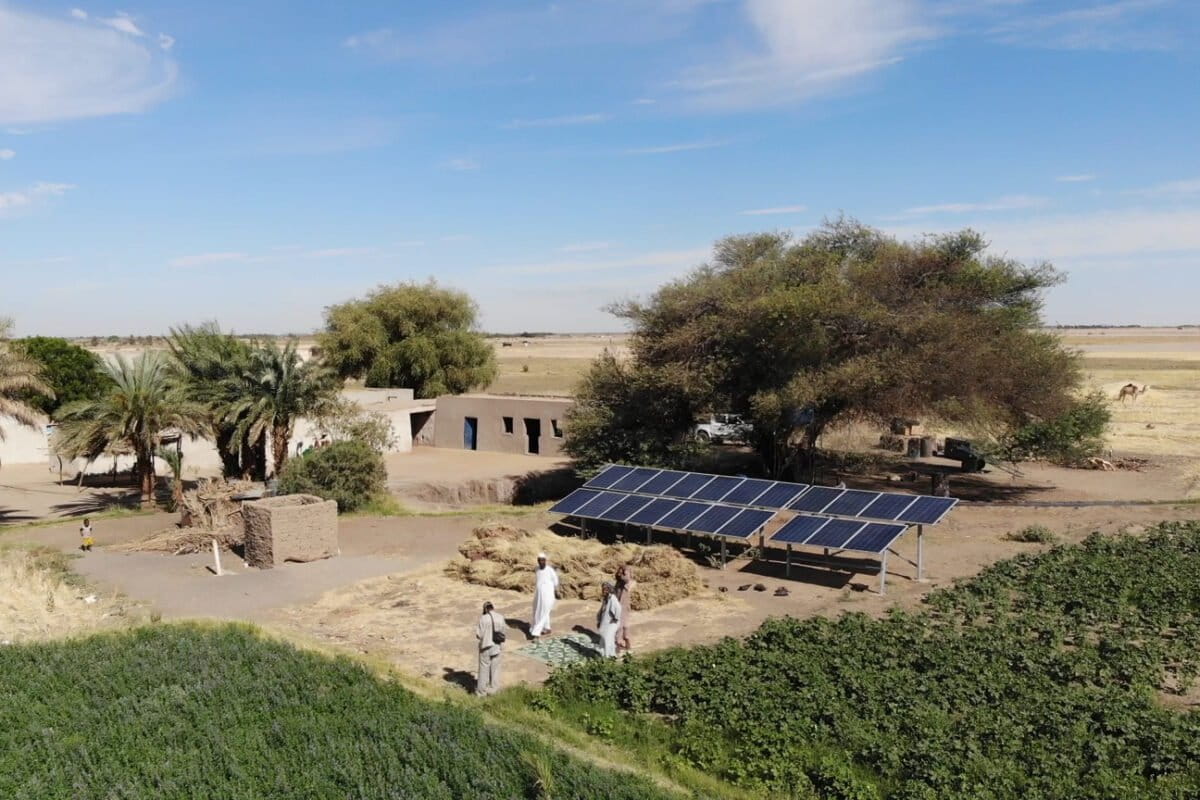
The past year’s impact is already visible in several sub-Saharan African countries, where USAID-funded community programs in reforestation, rural solar power and wildlife protection have been suspended or diminished, leaving rural communities without technical support or financial resources.


Alternatives exist, but they fall short
While American philanthropy groups like the Bezos Earth Fund and the Gates Foundation have been seen as potential alternatives in the past, their support remains uncertain, as they operate within the broader U.S. political climate — now heavily influenced by Trump’s climate-skeptic administration. Both groups made major cuts to climate funding in the past year.
Meanwhile, Europe is increasingly diverting development aid budgets toward military rearmament, driven by geopolitical tensions such as the war in Ukraine.
In these times, Mfokeu said, African nations must turn inward. “Strengthening intra-African financing mechanisms is essential. The African Development Bank, with tools like SEFA [the Sustainable Energy Fund for Africa], can play a key role. But we also need to explore innovative finance, such as green bonds and carbon taxes.”
Some initiatives are already underway: The African Development Bank (AfDB) allocated $5.5 billion to climate finance in 2024. However, this amount is just a tiny fraction of the $2.8 trillion Africa will need between 2020 and 2030 overall to meet its climate goals, according to estimates from the United Nations Environment Programme. As of November, according to the AfDB, the continent receives just $30 billion of the roughly $300 billion needed in climate finance each year.
And, as Justin Kamga, coordinator of the Cameroonian organization Forests and Sustainable Development (FODER), pointed out, the figures announced by donors rarely translate into concrete action. “Very often, donors announce billions for Africa. Generally, during U.N. climate meetings, some actors position themselves to say they will mobilize a certain amount to support Africa’s resilience or its ability to adapt to the conditions of climate change. But on the ground, nothing really happens,” he told Mongabay in an interview. “African countries actually need concrete action.”


Before the world gathered in Brazil for COP30 in November, Kamga referred to the expected announcement of the Tropical Forest Forever Facility (TFFF), “in favor of the three major forest basins of the planet. But what is really needed is for donors, foundations and even the private sector to commit funds to actually constitute this T3F, so that Africa can benefit from it.” (As of publication, TFFF Watch notes $6.7 billion in pledges; the fund needs $25 billion in sponsor capital to be fully operational.)
He concluded by saying that in the absence of USAID funding, what remain are the European Union and private foundations to carry on the fight against climate change.
The abrupt closure this year of USAID marks more than the end of a funding stream; it exposes the fragility of Africa’s current climate finance model, which experts say is overly dependent on a narrow circle of donors vulnerable to political shifts — which contribute to the continent’s own vulnerability.
Some civil society actors maintain that to avoid future shocks, African countries must now rebuild their own sustainable and autonomous financing systems, engaging regional banks, local businesses and civil society. In a world already suffering from the effects of climate change, inaction will cost far more than investment.
Banner image: In this 2016 image, then-U.S. Ambassador to the U.N. Samantha Power (left), and then- Cameroonian Minister of Forestry and Wildlife Philip Ngole Ngwese (right), attend the destruction of some 2,000 illegally trafficked elephant tusks and ivory products. For years, USAID supported efforts in Cameroon to stop wildlife trafficking. In 2025, the Trump administration effectively defunded USAID. Image by AP Photo/Andrew Harnik.
Citation:
Tamasiga, P., Molala, M., Bakwena, M., Nkoutchou, H., & Onyeaka, H. (2023). Is Africa left behind in the global climate finance architecture: Redefining climate vulnerability and revamping the climate finance landscape—A comprehensive review. Sustainability, 15(17), 13036. doi:10.3390/su151713036
Credits