- Sri Lanka’s highlands burst into violet, pink and white carpets as endemic Strobilanthes shrubs, locally known as nelu, begin to bloom in a synchronized manner, set seed and die, creating a breathtaking but fleeting display.
- The mass flowering overwhelms seed predators and attracts pollinators, boosting survival and reproduction — a rare evolutionary adaptation in the island’s montane ecosystem.
- Thousands of visitors flock to Horton Plains in the Central Highlands during the flowering season, raising risks of trampling, soil compaction, litter and disturbance to wildlife.
- Invasive plants such as mistflower (Ageratina riparia) and blue stars (Aristea ecklonii) could colonize areas left vacant after the bloom, potentially affecting future nelu cycles.
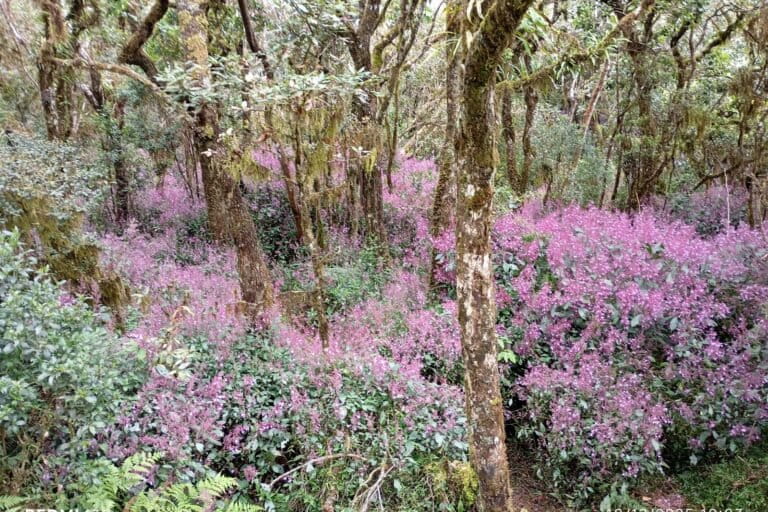
COLOMBO — Every dozen years or so, Sri Lanka’s mist-shrouded highlands burst into color. Violet, pink and white carpets of tiny blooms spread across the grasslands of the Horton Plains and other hill country trails, drawing thousands of visitors eager to witness one of nature’s rarest spectacles: the mass flowering of nelu, a group of native shrubs belonging to the genus Strobilanthes, known for synchronized mass flowering occurring every 4-12 years.
Strobilanthes shrubs bloom together, set seed and then die, transforming the landscape in a breathtaking but fleeting display of sheer floral beauty. Yet, behind this beauty lies a scientific mystery. These plants flower so rarely and in a perfectly synchronized manner. It only adds to the allure of this natural wonder, even as crowds flock to see the floral carpets, exerting new pressure on the fragile montane ecosystem.
What is nelu?
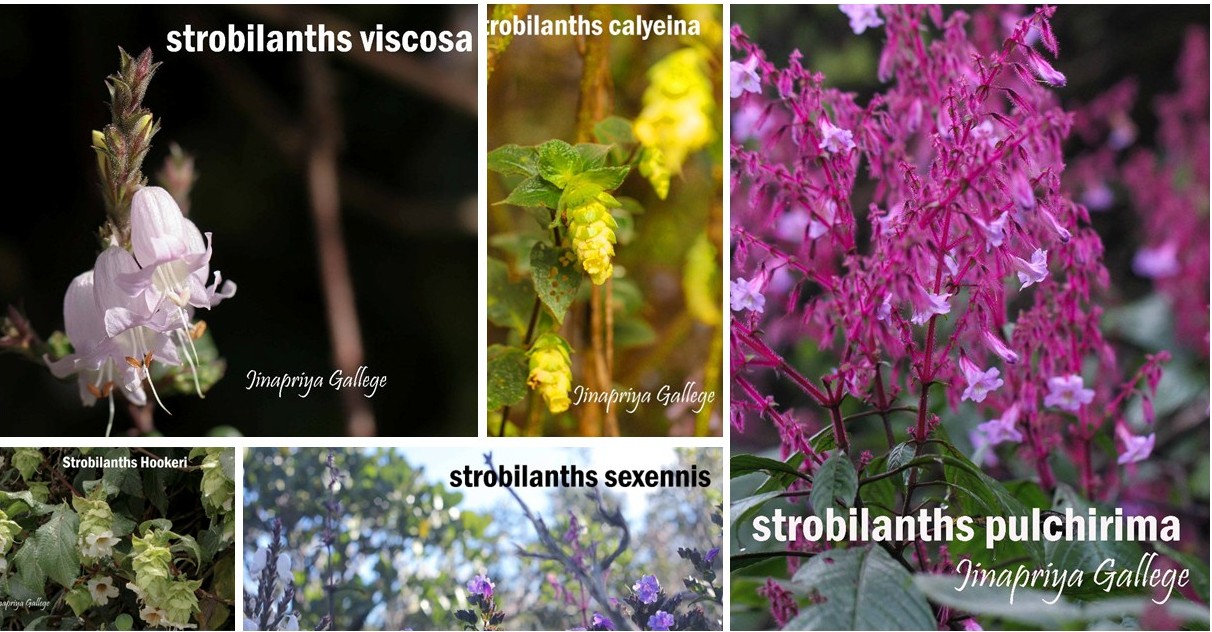
“Nelu” is not a single species but a group of shrubs belonging to the genus Strobilanthes in the Acanthaceae family, which includes hundreds of species across tropical Asia. Sri Lanka is home to 35 Strobilanthes species, of which 30 are endemic, with a majority of them found only in the island’s Central Highlands, says Nilanthi Rajapakse of the Department of Wildlife Conservation (DWC), whose studies led to discovery of three nelu species new to science.
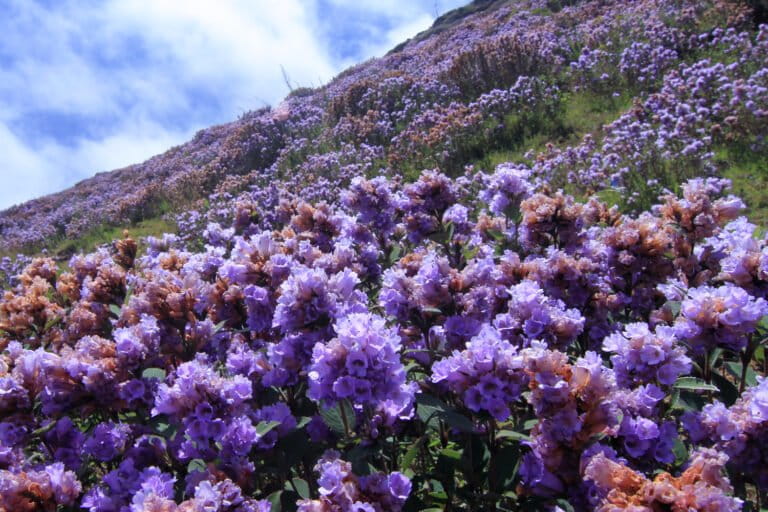
Different hill country patches host different blooms. Species such as S. pulcherrima, S. viscosa and S. anceps dominate the floral mosaic — some showing delicate lilac petals, others soft pink or white hues. “These plants are adapted to the cool, misty conditions of Sri Lanka’s montane forests and grasslands, making the plateau a vital stronghold of their diversity,” Rajapakse says.
Once-in-a-dozen-years mystery
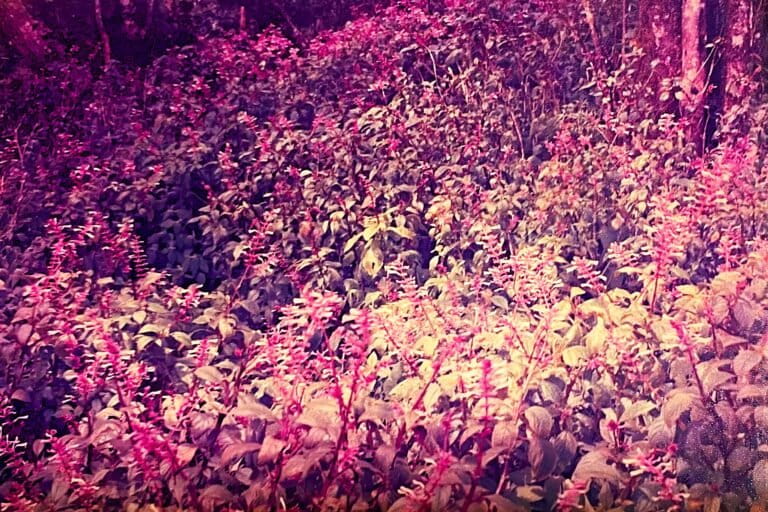
Sri Lanka’s nelu plants are monocarpic; they flower once, produce seeds and die. What makes them remarkable is their synchrony: Entire populations gather energy over years before bursting into bloom together in a grand, landscape-wide event, Rajapakse told Mongabay.
Scientists say they believe this mass flowering evolved for ecological advantage. “By producing vast quantities of seeds all at once, the plants overwhelm seed predators like rodents and insects, improving the odds that some seeds survive eventually,” explains Siril Wijesundara, research professor of flora at the National Institute of Fundamental Studies (IFS).
The exact trigger for this timing, however, remains uncertain, but researchers suspect a combination of genetic “clocks” and environmental cues synchronize the plants to such perfection. “These cues may be vulnerable to climate change,” Wijesundara notes.
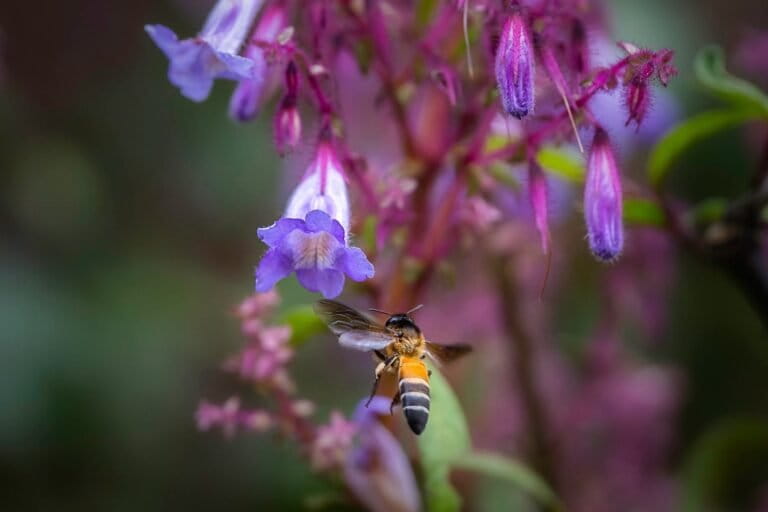
“The synchronized bloom also attracts pollinators, and the timing of giant honeybees (Apis dorsata) that show an annual internal migration to arrive in the hill country coincide with the nelu bloom is an incredible phenomenon,” says Wasantha Punchihewa, a pollination ecologist specializing in apiculture.
Punchihewa explains that these bees undertake a regular annual migration from coastal Sri Lanka to the hill country: In February, their colonies are spread across the coastal plains, and by June and July, they move to the central hills.
While some Strobilanthes species bloom only once every 12 years, others flower annually, providing nectar for the bees. The mass nelu bloom, Punchihewa notes, is a bonanza for these bees, which typically leave the hill country again around October-November, after the end of nelu bloom.
A pattern rooted in history
British planter and naturalist Thomas Farr first documented nelu blooms in the hill country, recording the phenomenon in 1881, 1893 and 1905 — and correctly predicting the next in 1917. From his residence, now known as Farr Inn at Horton Plains, he meticulously noted that Strobilanthes species flower in an extraordinary 12-year cycle before dying.
Records show major nelu blooms at Horton Plains in the early 2000s and again around 2012-13. Botanists tracking these cycles predicted the next bloom for 2024-25 — and their forecasts have proven accurate.
Not all populations bloom simultaneously, though. Some species or patches flower earlier or later, depending on microclimate or genetics. “In 2018, there was a nelu blooming cycle, and some of those populations haven’t flowered this year — so we expect them to bloom in 2030,” Rajapakse says.
A rodent named after the flower
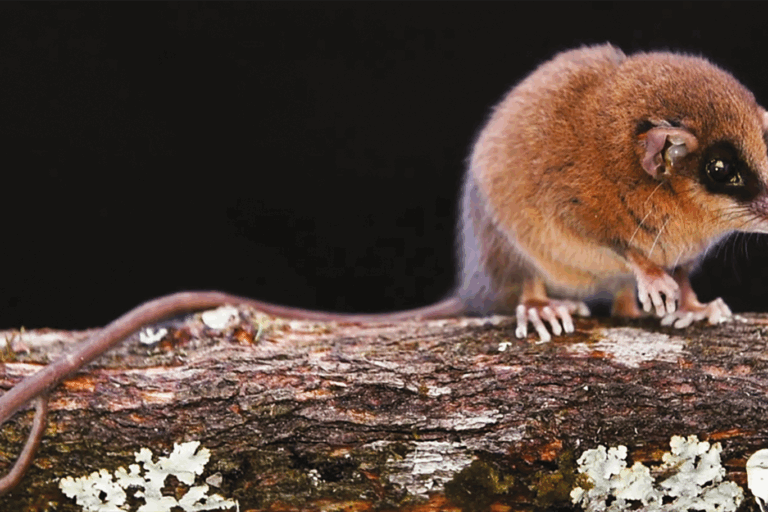
Horton Plains is also home to a small, elusive mammal that shares the plant’s name — the nelu rat or Sri Lankan mountain rat (Rattus montanus). Endemic to the island’s highlands, it was first discovered by naturalist W.W.A. Phillips during the 1923 nelu bloom, when he observed the rats feeding on the plants’ seeds.
In his Manual of the Mammals of Ceylon, Phillips wrote that ripening nelu seeds attract flocks of birds and small mammals, followed by predators, both mammalian and avian, creating a remarkable congregation of wildlife across the plains. He also observed that the seeds seemed to have a narcotic effect: late in the season, it was sometimes possible to catch junglefowl by hand, and numerous rats were discovered near water in a dying condition. Numerous individuals were discovered dead or dying along the lakeshores during that bloom, leading to the species’ identification and its enduring link to the nelu plant.
When hills turn violet — and crowded
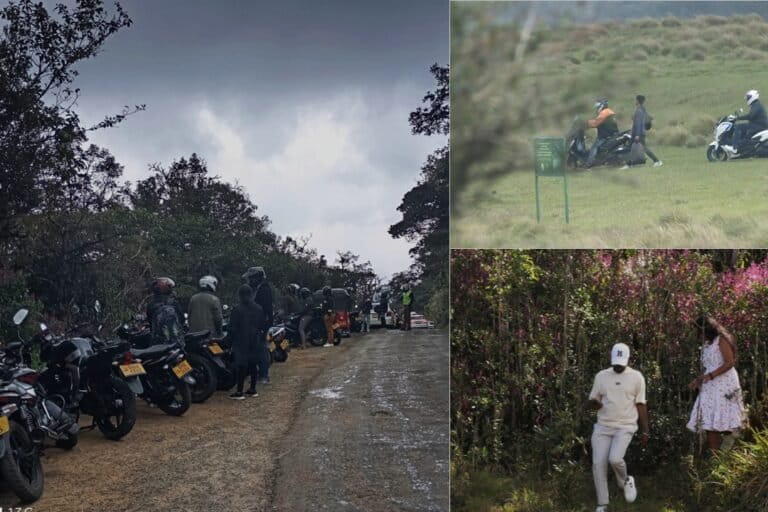
A nelu bloom doesn’t just attract pollinators — it attracts people. During bloom years, visitor numbers to Horton Plains soar as hikers and photographers flood the trails to capture the violet vistas. This surge brings risks: trampling fragile shrubs, compacting soil, disturbing ground-nesting birds and littering. Some visitors even pluck flowers to take home.
“Horton Plains is one of the few national parks where visitors can walk, but they must stay on designated trails,” says park warden Sisira Rathnayake. “During the nelu season, many break this rule to take photographs or to pick flowers.”
Visitor numbers, usually between 500 and 800 per day, swell to around 2,000 during the bloom. On one long weekend, the park saw a record 20,000 visitors. “Trails like Thotupola, which have heavy blooms, are already becoming muddy due to over-visitation,” Rathnayake tells Mongabay.
Conservationists suggest timed entries, restricting access to sensitive trails and improving visitor education through signage and guided tours. The goal, according to the DWC, is not to keep people away — but to ensure the nelu can bloom again, 12 years from now.
Jeevan Dananjaya of the Friends of Horton Plains collective notes that the bloom also occurs outside the park, where visitors can enjoy it more leisurely without harming sensitive habitats.
Threat of invasive species
As the nelu flowers fade and die, conservationists fear what might take their place. Several invasive plants have already gained ground in Horton Plains, including Ageratina riparia (mistflower), which spreads rapidly along roadsides and disturbed areas, and Aristea ecklonii (blue stars), an ornamental species from Southern Africa that competes with endemic flora.
Naturalist and photographer Jinapriya Gallege, a frequent visitor to Horton Plains, worries that invasive plants could colonize areas left vacant after the nelu die-off. “If that happens, future nelu blooms may not be this rich,” he tells Mongabay.
Wijesundara notes that dense Strobilanthes growth may help suppress invasives by shading the ground, but monitoring will be crucial in the coming months.
A global rhythm of flowering marvels
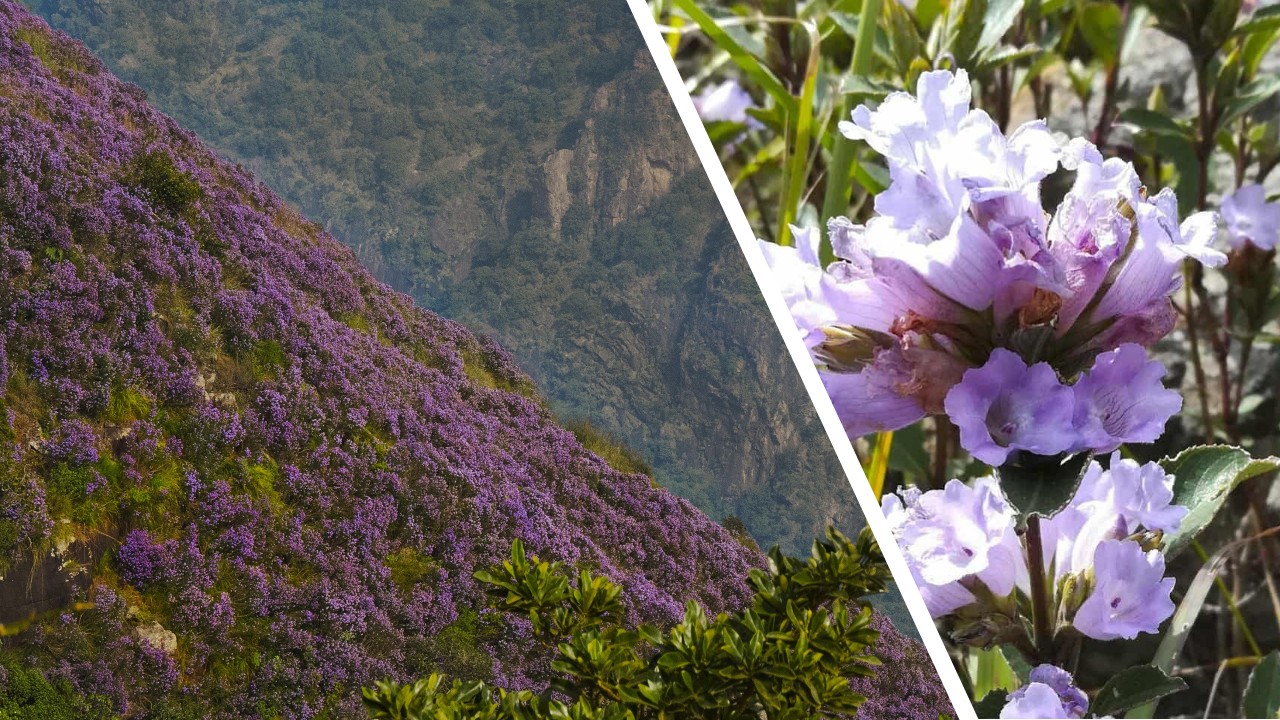
Sri Lanka’s nelu bloom is part of a broader ecological pattern known as masting — synchronized, episodic flowering and fruiting found in many plants worldwide. In India, S. kunthiana (known locally as neelakurinji) carpets the Western Ghats every 12 years. Across Asia, bamboo species flower in decades-long cycles, sometimes followed by mass die-offs that reshape entire ecosystems.
Though separated by species and geography, these events share a logic: By flowering together, plants maximize pollination success, evade seed predators and renew entire landscapes, Wijesundara says.
To safeguard this natural wonder, researchers stress the need for long-term monitoring of Strobilanthes species, better visitor management at Horton Plains and public education that turns fascination into conservation.
Citation:
Koeniger, N., & Koeniger, G. (1980). Observations and experiments on migration and dance communication ofApsis Dorsatain Sri Lanka. Journal of Apicultural Research, 19(1), 21-34. doi:10.1080/00218839.1980.11099994
Banner image:
A violet curtain of nelu (Strobilanthes pulcherrima) in bloom in Sri Lanka’s Central Highlands creates a breathtaking natural spectacle. Image courtesy of Jinapriya Gallage.
Credits