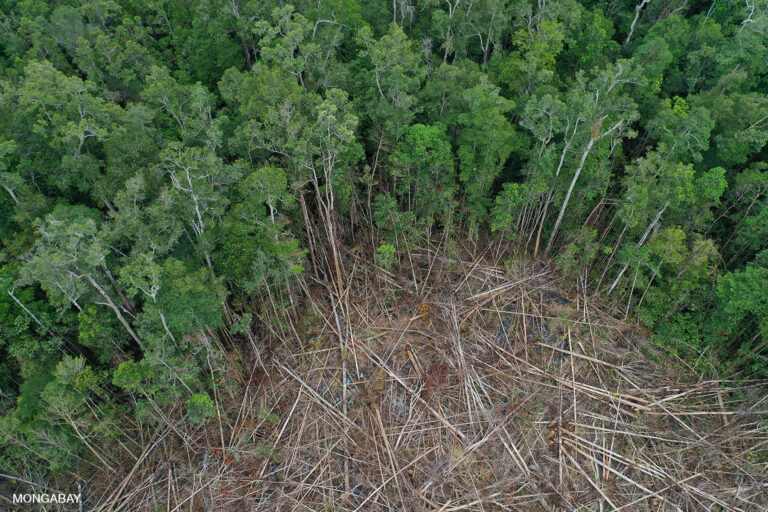
- The EU Deforestation Regulation requires companies importing coffee from Honduras into the European market to track their supply chains all the way back to the small-scale farmers who grow the crop.
- For many farmers, the urgency of complying has led to the modernization of farming practices, providing a competitiveness boost to a supply chain historically based on informality.
- Digitalization could help to halt Honduras’s rural exodus and make coffee farming attractive to younger generations, but challenges remain around accessibility, managing digital tools, and data ownership.
CONCEPCIÓN DE SOLUTECA, Honduras — In the 1970s, the Honduran government granted a piece of land in the mountains of Concepción de Soluteca to Roberto González’s parents. They duly grabbed a chainsaw and a machete to clear the forest. On the 12 hectares (30 acres) they received as part of a land reform, they planted corn, beans and bananas, the basic staple foods.
It was a hard life up in the mountains, allowing the farmers and their families to just survive. There wasn’t much public infrastructure, and most children had to help with farmwork early on. This included González, who only attended elementary school for three years.
When González inherited the land 20 years later, coffee cultivation was just taking off. Middlemen promised the farmers good money for the export crop, and the banks provided loans for cultivation. At first, this worked well, González, now 39, remembers. Coffee helped the farmers to generate income and improve living conditions.
But it didn’t last long. They grew coffee much the same way they did other crops, without adequate soil or shade management. When harvests dwindled, they expanded their area, cutting the last standing forests and damaging water sources. Around 2012, they faced an outbreak of coffee rust, a fungal disease. It was a complete disaster: many farmers were thrown into poverty and forced to migrate. “We destroyed the foundations of our livelihoods, but it was out of ignorance; we just didn’t know better,” González tells Mongabay.
Under the EUDR, coffee farmers step up their game
The looming implementation of the European Union’s antideforestation regulation, or EUDR, has since become an inflection point for small farmers like González. He says he doesn’t know all the regulation’s details, but he understands he has to improve his agricultural practices if he wants to be allowed to continue exporting his coffee into the European market starting next year.

Gonzalez is part of the Union and Strength Agricultural Cooperative, counting 19 members and selling a large portion of its harvest to Becamo S.A., one of Honduras’s top coffee exporters.
“We sell 69% of our coffee to Europe,” says Jose Manuel Calero Moraga, director of sustainable producer services at Becamo, which buys beans from nearly 10,000 small farmers. “That is why it was clear to us from the very beginning that we had to comply with the EUDR requirements.”
Even before the European Commission proposed the regulation in November 2021, Becamo‘s biggest client in Germany, Neumann Kaffee Gruppe (NKG), started working on a traceability app that is now used by all its suppliers.
The real challenge has been implementing the tech solutions with small farmers, who mostly live in remote regions and are used to very informal business practices. They are the main growers of the high-quality arabica coffee used in blends destined for the EU market. In Honduras, working with farmers requires going into the field.
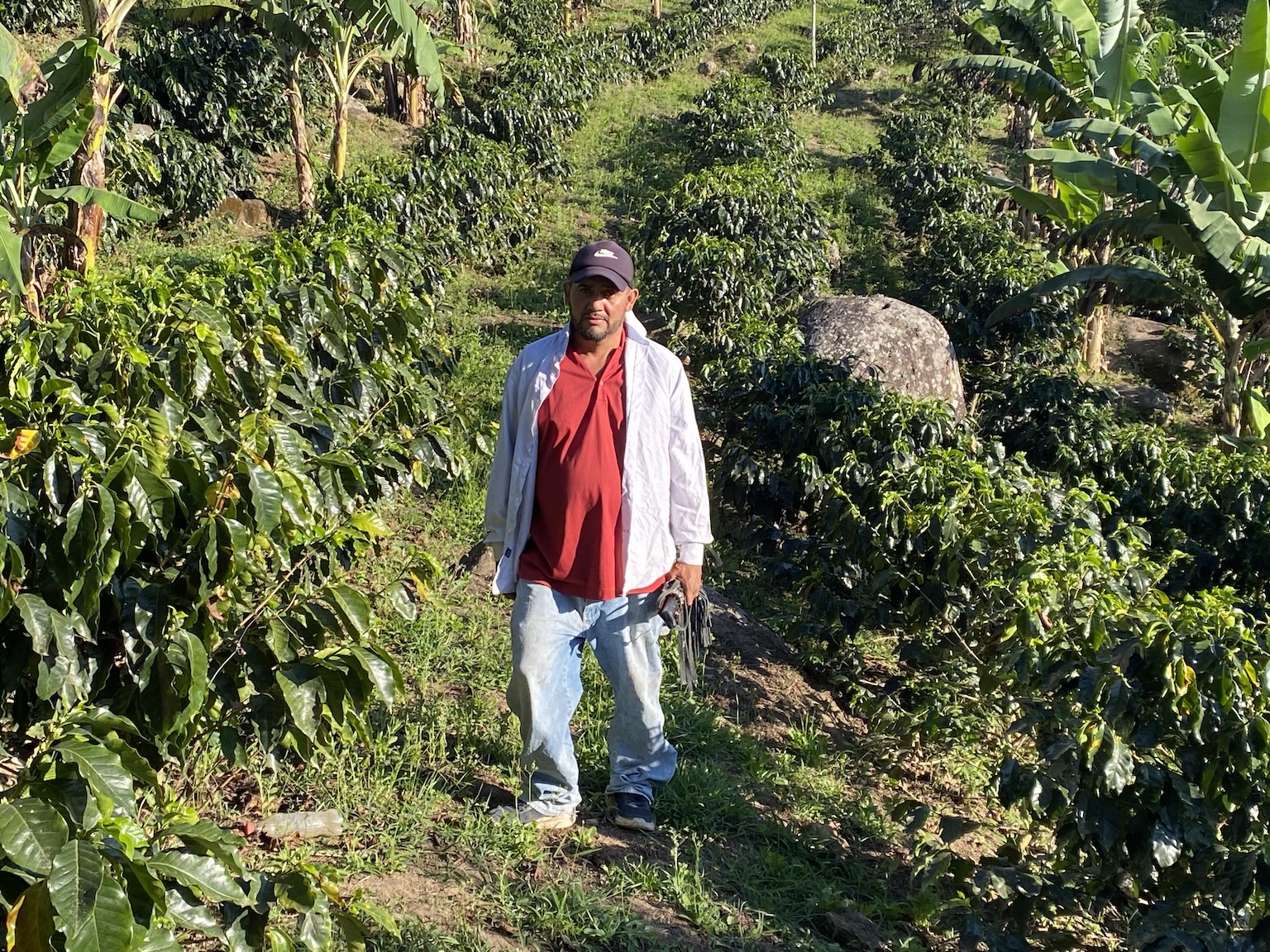
“The whole process has forced us to pay even more attention to production conditions on the farms,” Calero Moraga says, adding that Becamo has been providing farmers with free agricultural consulting long before the EUDR appeared on the horizon.
As the EUDR sets higher standards to ensure coffee and other commodities entering the EU are not linked to recent deforestation, everything must be documented in a verifiable manner. This inevitably required an initial investment. Since 2021, the number of agronomic consultants who serve as Becamo’s regional representatives has increased from 16 to 40, and the company’s sustainability department has grown from 26 to 51 employees.
The agronomists help the farmers survey their farms, verify land titles, and advise on how to build latrines and shelters for harvest workers, as part of compliance with labor laws. The farmers have to fill out lengthy questionnaires on certifications, fertilizers used, number of employees and salaries.
“It was a challenge,” says Gonzalo López, a neighbor of González and fellow farmer. “But we’ve noticed for ourselves that we had to improve, as our harvests were declining, the climate is getting hotter, the soil is getting poorer and water is becoming scarcer. We knew that we needed to do something. We just weren’t quite sure what and how,” he says, adding that the need to meet EUDR requirements helped speed up changes in farming methods.
Child labor remains a cultural challenge
Becamo’s consultants tell Mongabay that gathering the information has been a tedious task, but the real challenge is identifying and overcoming cultural traditions that fall afoul of EUDR requirements, such as children accompanying their parents at the harvest (which coincides with the Christmas holidays) and often starting to help from a very young age.
“During our conversations, we learned that the main problem was that the parents simply did not know where to leave their young children, because many of them are migrant workers who travel from region to region during the coffee harvest,” Calero Moraga says. So Becamo teamed up with several major coffee retailers in Germany to finance mobile child-care centers in Honduras’s main coffee-growing regions during harvest season.

During farm visits, the agronomists also encounter problems related to coffee cultivation itself: plagues, poor soil management, erosion, degraded agroforestry systems, an aging rural population, and difficulties finding seasonal workers for the harvest. “There was a great need for support,” says agronomist Carlos Bonilla. So Becamo started expanding its program of technical support for farmers.
Boosting sustainable farm management
With that kind of help, Jaime Calix has turned his 13-hectare (32-acre) Finca La Chachi into a model farm. “I haven’t sprayed any pesticides in six years,” he says proudly. “Instead, I’ve planted trees whose leaves cover the ground, retain moisture, and build up humus.” He pushes aside the layer of leaves to reveal the darker, nutrient-rich soil beneath.
Every three years, he heavily prunes the coffee bushes to rejuvenate them. “I think the EU has done us a favor by forcing us to treat nature more carefully. And ultimately, everyone benefits from this: us, the exporters, the consumers, and future generations in Honduras, to whom we are leaving behind fertile land and an intact natural environment,” Calix tells Mongabay.
One huge environmental problem, he admits, is disposing of the coffee cherries, the pulpy part of the fruit that encases the coffee beans and is removed immediately after harvest. “Traditionally, we threw them into the forest or into the rivers,” Calix says. This acidified the soil, contaminated the groundwater, and deprived the rivers of oxygen. “In workshops organized by IHCAFE [Honduran Coffee Institute], we learned to accelerate the decomposition of the coffee cherries using lime and microorganisms to create compost, which improves the soil of our coffee plantations,” Calix says.
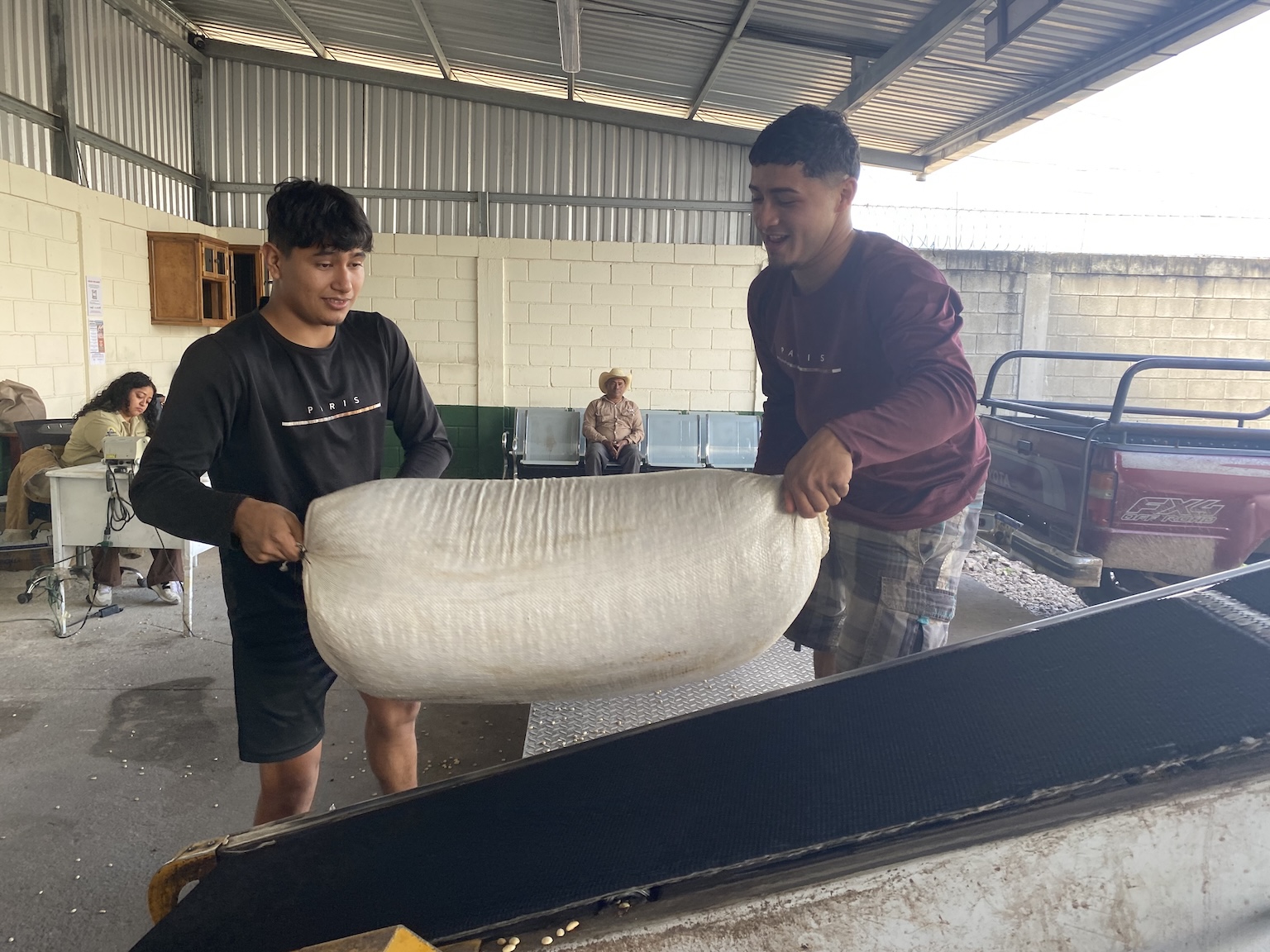
He says he’s now thinking about taking out a loan to build his own processing machine. He regularly tests his soil and checks online for updates on sudden weather changes or pest alerts.
For many farmers, the EUDR has helped them modernize their production methods and brought them a step closer toward digital inclusion, which ultimately is key to increasing productivity and mitigating rural poverty, according to a World Bank study. Digitalization can also be a tool to get younger generations interested in agriculture, stopping the rural exodus, which is a problem in Honduras, according to a recent study by the Inter-American Institute for Cooperation on Agriculture (IICA).
EU requirements have also boosted sustainable production, with many farmers switching to higher-paying organic coffee. “Just a few years ago, 70% of our exports were conventional coffee and 30% were sustainable coffee with some sort of certificate,” Calero Moraga says. “Now we’re at 50-50.” This is important, he says, and a direct benefit for coffee farmers, as organic coffee sells for a premium over conventional coffee.
Calero Moraga says contrary to what opponents of the EUDR argue, the additional costs for complying with EUDR requirements are ultimately manageable. In Honduras, that works out to $1 per 100-kilo sack of coffee beans, he says. However, it remains unclear how these costs will be passed along the supply chain and who will ultimately end up paying more. For Becamo, the process has been an investment in a more sustainable future.
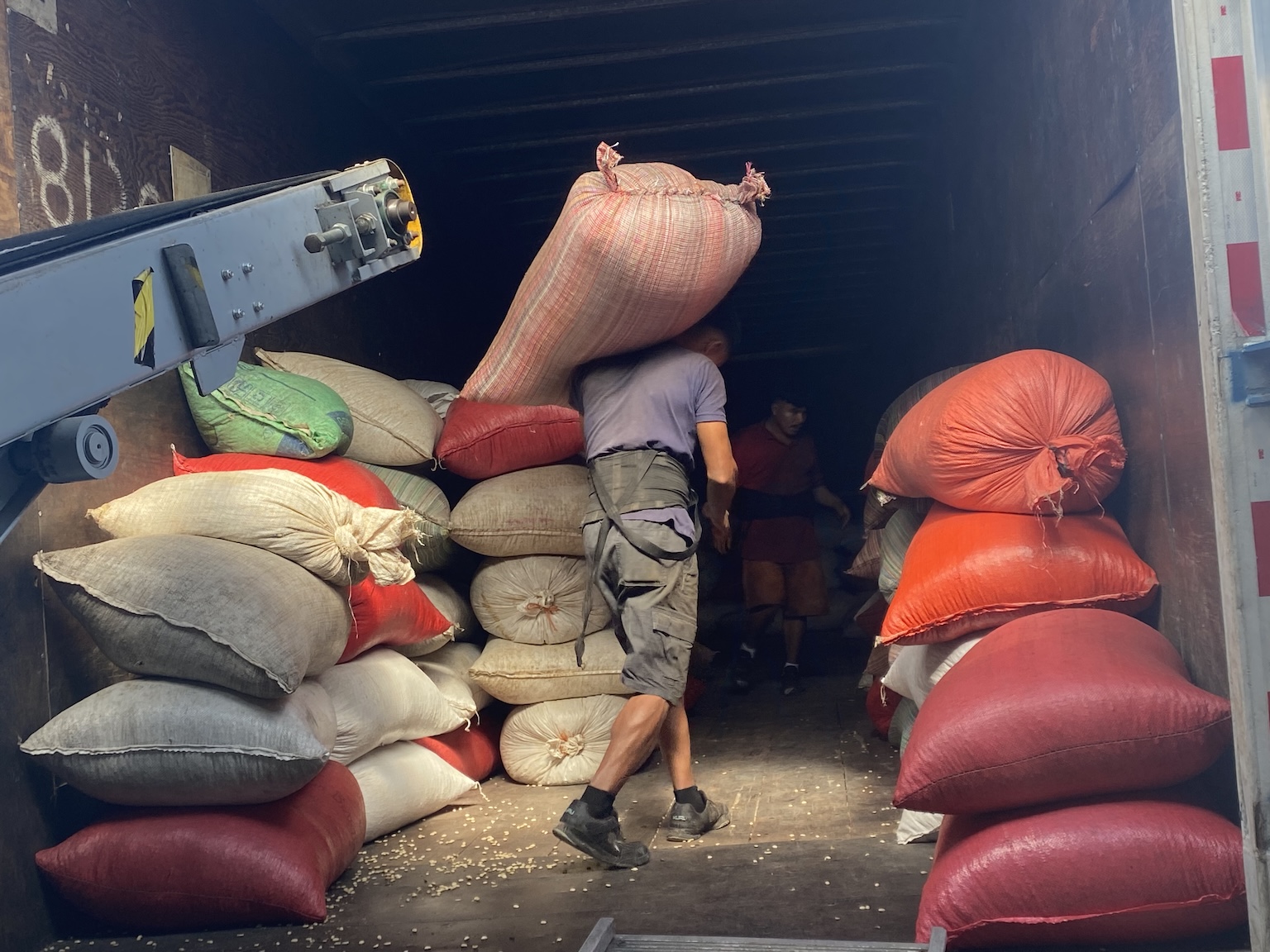
“We know that usually, when Europe implements such changes, Canada will follow, and maybe also the U.S.” Calero Moraga says.
Federico Bert, coordinator for agricultural digitalization at the IICA, agrees: “The world will inevitably require more and more standards, regulations, and certifications every day, and the EU is at the forefront of this trend.”
Overcoming poor connectivity and data ownership
Bert says he sees the EUDR as a powerful driver of digitalization, with ample opportunities for smaller farmers. But he also warns of risks and challenges.
One of them is internet connectivity, or the lack thereof, in rural areas. There are also educational barriers. Only 10% of small farmers use agricultural apps, even if they’re free, Berta Ortiz, from agricultural research network the Alliance of Bioversity International and CIAT, shows in her study, “Error 404 farmers not found.” Many tried and then gave it up due to habits such as phone sharing, frequent changes of SIM cards, and information that’s difficult to understand or lost because it’s only sent once, her findings show.
Ultimately, this means that farmers aren’t truly included in the digital process and don’t own their data, Bert says. Instead, the information remains with the exporters who have invested money in collecting it. That’s the case with Becamo’s app: Farmers only have access to some basic functions, and are unable to share all the information collected on them. That has real consequences: if they want to sell their harvest to another exporter, they’ll have to undergo another process of EUDR documentation.
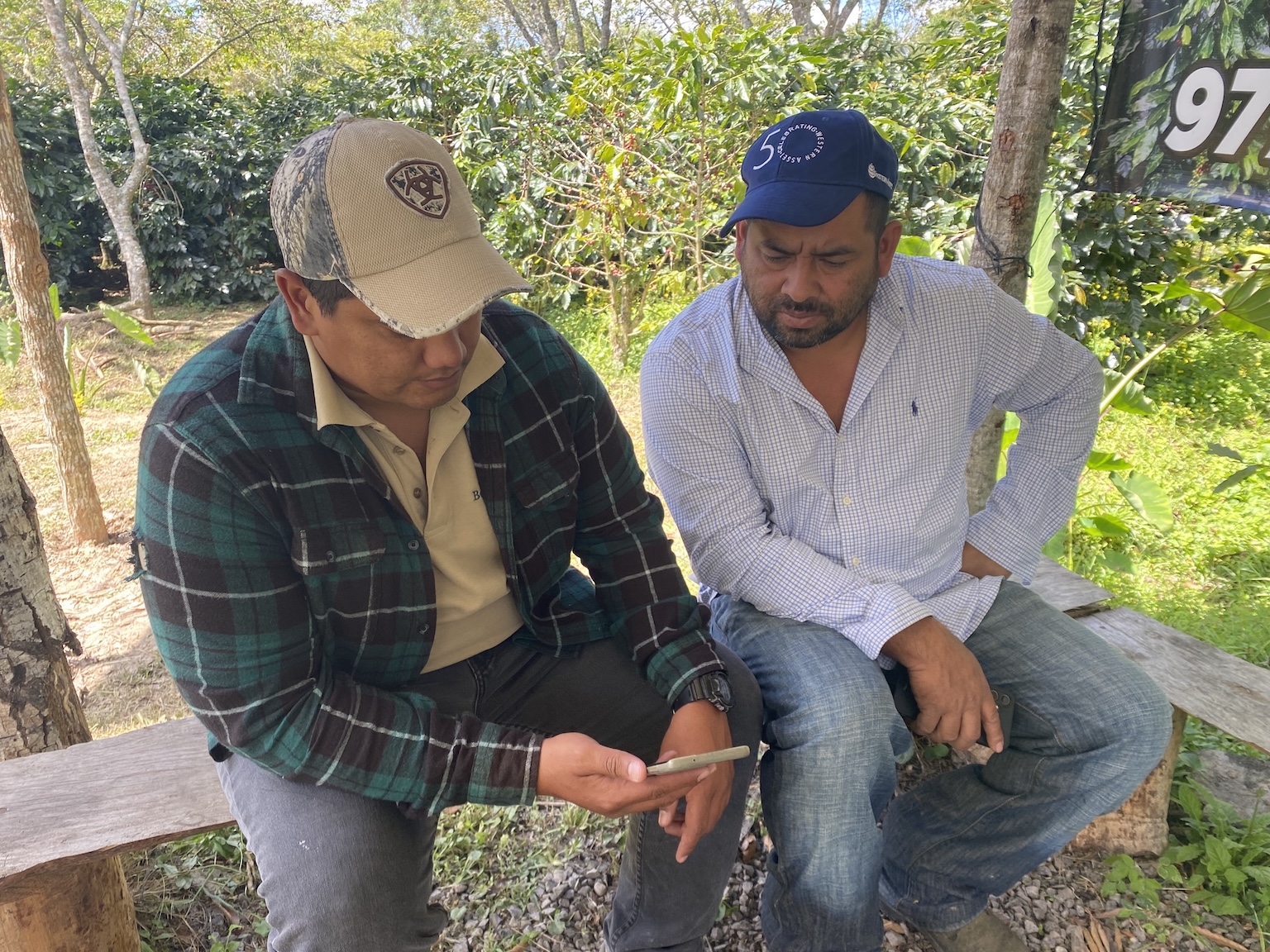
However, they have alternatives, albeit imperfect ones, several sources tell Mongabay. Private companies also offer paid traceability apps, but these are usually too expensive for independent farmers, at up to $300 per month (although some cooperatives in Honduras are working with them). These platforms enable farmers to share information with third parties, including institutions that certify deforestation-free or organic coffee, which helps save time and reduce red tape.
For those who can’t afford a subscription to the private apps and want to maintain their independence, Germany’s Federal Ministry for Economic Cooperation and Development (BMZ) has funded Inatrace, an open-source digital solution to comply with EUDR requirements. The app is completely free, and some farmers use it, but their experiences have been mixed. Some express satisfaction; others contacted by Mongabay complain about technical issues such as crashes, inability to upload data when offline, and inaccuracies in documenting the coordinates, or geolocating, their farms.
“There is still room for improvement before the EUDR enters into force next year,” says Marco Pérez, technical adviser for the German development agency GIZ in Central America. But if farmers want to catch up quickly, they still need financial and technical support from either a private company with its own commercial interests, a government that is notoriously underfunded, or NGOs and international aid that’s also being cut back.
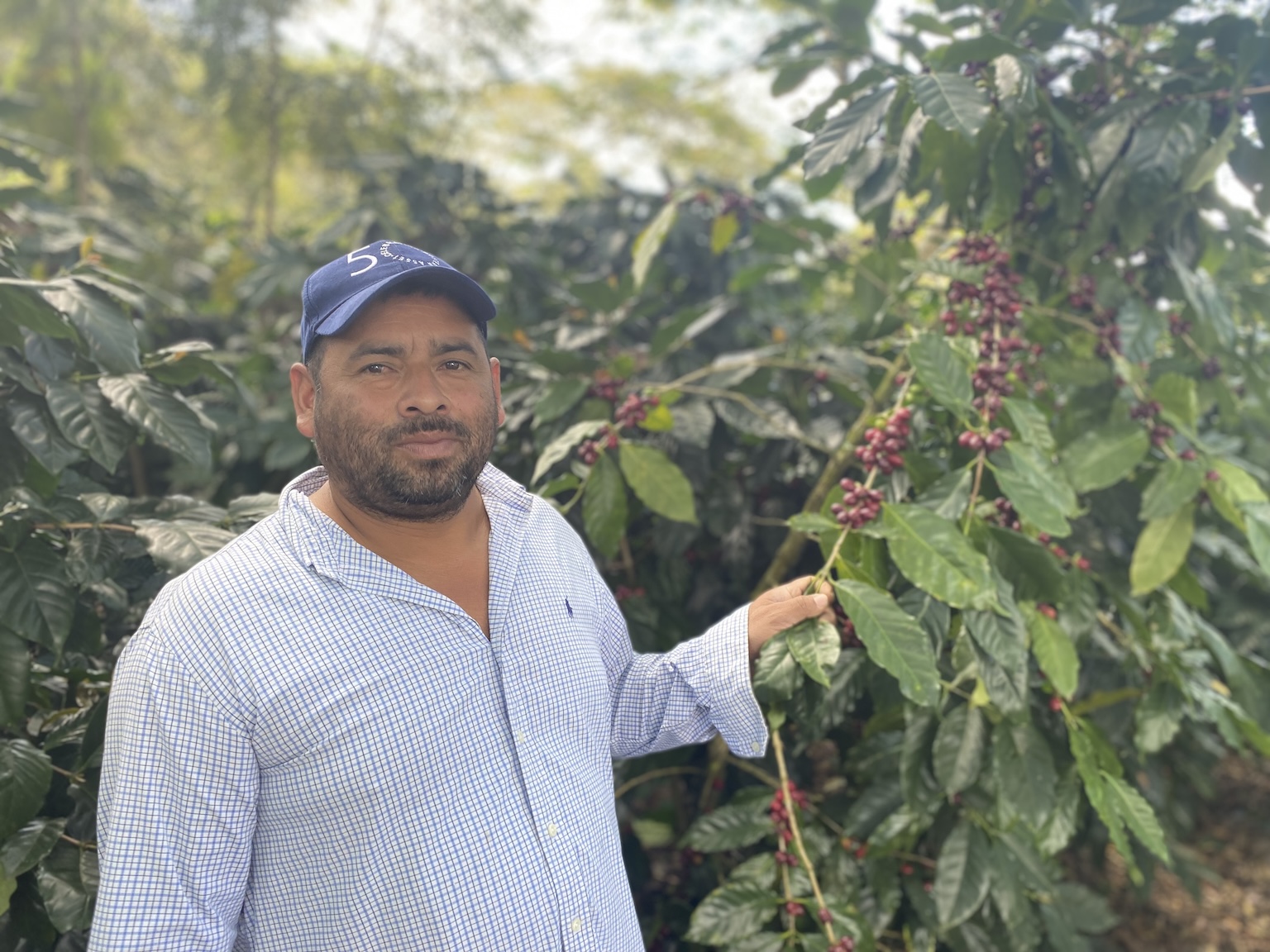
“The EUDR is a powerful driver of compulsive digitalization,” says Bert from the IICA. “On the one hand, this has a positive side, driving digitalization, but on the other hand, the fact that it is compulsive can harm those who struggle to adapt to these changes.”
So instead of being a powerful tool of inclusion, it can turn into one of exclusion. To counter that, the IICA is trying to raise awareness among Latin American governments about the need to improve rural infrastructure and education and regulate key questions such as data ownership to minimize negative consequences.
Banner image: Coffee harvest at Jaime Calix’s farm in Siguatepeque. Image by Sandra Weiss.
FEEDBACK: Use this form to send a message to the author of this post. If you want to post a public comment, you can do that at the bottom of the page.
Credits