- A 61-year-old Sydney man was sentenced to eight years in prison for attempting to smuggle native Australian reptiles to Europe and Asia.
- Australia is home to 10% of the world’s reptile species, and 90% can be found nowhere else in the world.
- The Australian government is cracking down on wildlife trafficking, with arrests tripling from mid-2023 to early 2025. During that period, authorities seized more than 200 parcels at the border containing 780 native species.
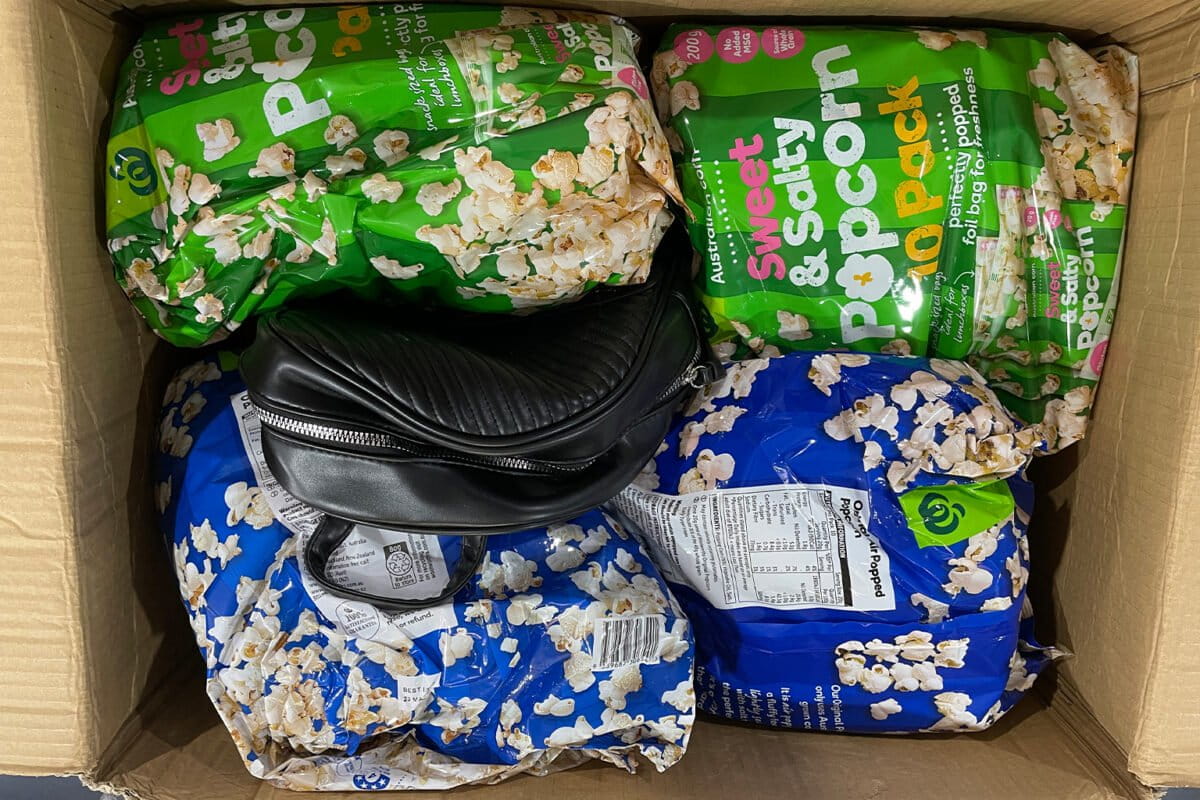
The seizure of dozens of live Western blue-tongued lizards, bearded dragons and spiny-tailed skinks covertly packed into popcorn bags, biscuit tins and women’s handbags have led to the longest prison sentence ever doled out to a wildlife smuggler in Australia.
On February 13, a New South Wales District Court sentenced 61-year-old Neil Simpson to eight years in jail for attempting to export 101 Australian reptiles to Hong Kong, Romania, South Korea and Sri Lanka. They were intercepted soon after being mailed, and investigators recovered several hundred more during subsequent searches of Simpson’s home.
“This record sentence sends a strong message that profiting from illegally exporting our native wildlife will not be tolerated,” a spokesperson with Australia’s Department of Climate Change, Energy, the Environment and Water (DCCEEW) said.
In addition to Western blue-tongued lizards (Tiliqua occipitalis) and multiple bearded dragon and spiny-tailed skink species, Simpson trafficked shingleback lizards (Tiliqua rugosa), Centralian blue-tongued skinks (Tiliqua multifasciata), desert skinks and narrow-banded sand swimmers (Eremiascincus fasciolatus). They were concealed in post packages shipped to international buyers. Each of the confiscated species is classified as a “regulated native specimen.”

Simpson, the department said, had also engaged others to mail the 15 reptile parcels that were seized by authorities between 2018 and 2023. Three other members of the enterprise were convicted for their roles in the smuggling operation.
Australia’s federal agencies have ramped up efforts targeted at curbing wildlife trafficking in recent years. Enforcement officials have boosted interceptions at airports and postal hubs with advanced scanning technology to detect smuggled wildlife; in combination with coordinated stings, arrests and seizures are up sharply. Under Australian law, the illegal export of native wildlife carries a maximum penalty of up to 10 years’ imprisonment per offense.
“Our native reptiles are not commodities to be trafficked for profit. They belong in the wild, not in overseas black markets,” a department spokesperson said.
He added a warning: “The heartless criminals who attempt to exploit the popularity of our native wildlife in overseas markets for quick profits should take note. If you attempt to illegally export our native wildlife, your parcel will be intercepted, and our investigators will track you down.”
Reptile trafficking is part of a global, multibillion-dollar black market wildlife trade that threatens unnumerable plants and animals. Live reptiles, often illegally caught in the wild, are sold as exotic pets; rare species are often sought by private collectors.
Reptiles are also used as ingredients in traditional medicine and in luxury fashion items. Australia, Southeast Asia and sub-Saharan Africa have long been major source countries.
While many of the species in Simpson’s case are not classified as endangered on global conservation lists like the IUCN Red List, they remain legally protected in Australia and cannot be traded internationally without proper permits: Australia has restricted export of native species for the last 30 years.
Moreover, wildlife smuggling raises significant concerns about animal welfare for live species crammed into boxes without food or water, struggling to breathe.
“We welcome the record penalty being handed down,” a spokesperson with Australia’s government-run Taronga Zoo told Mongabay, “especially as we are so often on the front line caring for the animals that survive these attempts. … Many of the reptiles seized by authorities arrive at Taronga in very poor welfare states, taped, confined or forced into various packaging.”



Australia alone boasts about 10% of the world’s reptile species, with 90% of its reptiles found nowhere else in the world, according to the country’s 2021 State of the Environment report. Many of the country’s reptile populations are in decline, and the past decade registered its first reptile extinction in the wild, that report said. The Christmas Island forest skink (Emoia nativitatis) was declared extinct in March 2021.
The uniqueness of Australian reptiles has made the region a global hotspot for wildlife trafficking. In November, Chinese national Shiyao Wang was sentenced to two years and seven months in prison from an Australian court for attempting to ship native reptiles to Hong Kong in what Australian authorities called “cruel and inhumane” packing: The animals were found wriggling inside work boots, socks and household goods. Many more reptiles were seized from her home, bringing the total to 94.
From June 2023 to early 2025, Australian authorities intercepted more than 200 parcels at the border containing 780 native species. Arrests in the country for wildlife smuggling have more than tripled, with parcel interceptions up 545%, according to the environment department.
The DCCEEW has established the Biodiversity and Heritage Regulator, which a spokesperson described as “a new, modern regulator that will continue working closely with law enforcement partners to detect, disrupt and prosecute anyone involved in wildlife smuggling.”
The Taronga Zoo spokesperson noted, “These harsher penalties are essential in disrupting a cruel, illegal practice that puts native animals through horrific conditions and threatens the survival of Australia’s unique species.”
Banner image: Eastern shingleback lizards in New South Wales, Australia. Image by JJ Harrison via Wikimedia Commons (CC BY-SA 3.0).
Tradable by default: Reptile trafficking flourishes amid lack of protection
Credits