- Emma Johnston, who died at 52 in December 2025, moved between marine science and university leadership, arguing that evidence matters only if it can be understood and acted upon beyond the laboratory.
- Trained as a marine ecologist, she built influential research programs on human impacts in coastal ecosystems and became a prominent public advocate for science in an era of misinformation and political noise.
- Her career expanded into national leadership roles, including president of Science & Technology Australia and senior research posts at UNSW and the University of Sydney, before she became vice-chancellor of the University of Melbourne in 2025.
- Though her tenure as vice-chancellor was brief, she pressed a strategy centered on resilience and education, leaving Australian science without a leader who could connect data, institutions, and public life with unusual clarity.
Universities like to present themselves as durable institutions. They outlast governments, ride out recessions, and take pride in the slow accumulation of knowledge. In Australia, that confidence has been tested by familiar pressures: tight public funding, culture-war skirmishes over expertise, and the awkward fact that a continent built on extractive wealth is also among the places most exposed to climate disruption.
In that setting, science leadership is rarely confined to laboratories or lecture theaters. It spills into budgets, regulation, and public argument. It also demands translation: taking complex, often alarming evidence and turning it into something citizens and policymakers can use, without reducing it to slogans.
Emma Johnston, who died in Melbourne on December 26, 2025, from complications associated with cancer, at 52, made that translation her trade. She was a marine ecologist by training and instinct, and a university leader by temperament. She became vice-chancellor of the University of Melbourne in February 2025, returning to the institution where she had trained as a scientist.
Johnston was born in 1973 and grew up near the water in Melbourne. School came with early signs of restlessness and initiative: she ran a student newspaper, started an environment group, and pushed a recycling program. Those were modest acts, but they pointed to a habit that stayed with her, a refusal to accept that problems should wait for permission to be solved.
After completing a PhD in marine ecology at the University of Melbourne, she joined the University of New South Wales in 2001. There she built a research group focused on how human activity reshapes marine and coastal ecosystems, from urban harbors to the Great Barrier Reef and Antarctica. In 2005 she established the Sydney Harbour Research Program, an attempt to treat a famous waterway as both a laboratory and a civic responsibility.
Her science, as summarized by colleagues and official profiles, sat at the intersection of ecology and what humans leave behind: contaminants, disturbance, and the movement of species across the globe. She was not an ivory-tower purist. She worked with the idea that ecosystems are managed whether people admit it or not, and that the question is how consciously, and for whom.
Johnston also resisted the careerism that academic systems often reward. She described research as teamwork, not a procession of personal triumphs. The number of students she supervised, more than 30 doctoral candidates, is less telling than the consistent reports that she was generous with time, attentive to younger colleagues, and direct about the structural barriers that keep talented people out.
Her ease in public did not come from simplification. It came from a willingness to speak plainly about uncertainty and consequence. In 2017, writing about the global “marches for science”, she argued that scientists had to stop pretending that evidence can defend itself in a “post-truth” culture, and that they needed to become “sifters and sorters” in a media environment full of noise. The piece carried a scientist’s faith in method, and a politician’s understanding that method has to be explained, again and again, to matter.
That combination took her into leadership roles that broadened her influence beyond marine science. She became president of Science & Technology Australia, helping launch the Superstars of STEM program and pushing the visibility of women and non-binary scientists. She later moved into senior university administration, including as deputy vice-chancellor of research at the University of Sydney, where she was responsible for a vast research budget and the negotiations and trade-offs that accompany it.
In interviews, she could be disarmingly concrete. Discussing Sydney Harbor’s legacy of pollutants, she offered practical advice about what not to eat, then widened the frame. “We just haven’t got our act together on collective thought,” she said, lamenting society’s talent for regulating individual actors while failing at system-wide problems. She spoke about ecosystems as complex, contingent, and increasingly pushed into states where intervention starts to feel inevitable.
Her final public job, running the University of Melbourne, lasted only 11 months. Yet even in that short span she pressed a new institutional strategy, pointedly titled “Resilience,” and leaned into student concerns that other leaders might have treated as peripheral. She worked, by accounts from the university and peers, almost until the end.
In a voice memo to a friend, she described her motivations without ornament: “What has driven me in my life is a deep love of the science, a love of working with people and helping them to flourish and achieve, and a desire to work with others to protect this world I was immersed in as a scientist. And in that, I feel I have gone well beyond what I ever set out to achieve.”
For someone who studied acceleration in nature, the speed of her own career was striking. The abruptness of her death made it harder to turn that speed into a settled arc. Universities will continue to talk about resilience, and oceans will continue to warm, regardless of who holds a title. Still, Australian science will be missing a figure who could move easily between data and people, without flattening either.
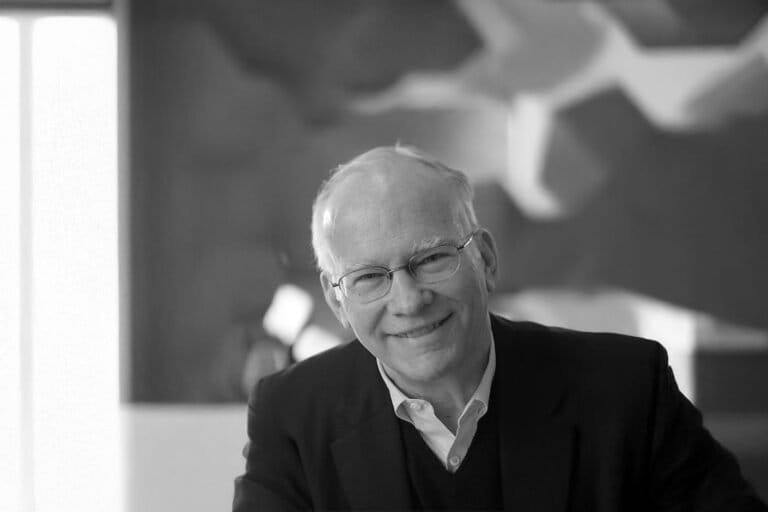
Emma Johnston. Photo by The University of New South Wales
Credits