- Nyungwe National Park in Rwanda is policed by 93 armed rangers and around 100 community eco-rangers.
- Both are employed by African Parks, a South Africa-based NGO that commands 2,119 rangers in total across the 24 protected areas in 13 countries it manages — the largest standing ranger force in Africa.
- In some of these protected areas, African Parks rangers have been accused of human rights abuses or been caught in the crossfire of violent conflicts.
- This year, the group announced it would convene a panel of African legal experts to review its human rights record and design a grievance process for victims of abuse.
BWEYEYE, Rwanda — Josephine Irandwanahafi sits in a small, musty provisions shop off the main road in Bweyeye, a border town that marks the entrance from southern Rwanda into Burundi. Plantains and onions are stacked high in boxes next to her. She’s just gotten off work but is still wearing the olive-green uniform of her employer, the South Africa-based NGO African Parks. Irandwanahafi is an eco-guard, one of about 100 hired from the towns and villages around Nyungwe National Park, a 1,019-square-kilometer (393-square-mile) protected forest that’s been managed by African Parks since 2020.
Irandwanahafi and her colleagues are ambassadors to the communities that surround the park, and serve as African Parks’ first line of defense. Their job is to patrol the outer ring of eucalyptus plantations that serve as a buffer zone around Nyungwe, warn their neighbors to stay out of the park, and when needed, to pass on intelligence about rule-breakers.

At 50,000 Rwandan francs per month, about $35, it doesn’t pay as well as her old job — cooking food for poachers at bush camps inside the forest and selling what they caught in local markets. But it’s safer. She isn’t risking jail time anymore.
“I used to earn a lot better previously in trading wild meat compared to now,” she says, “but the risks of being caught and jailed are high. I’d much rather earn little than take the risk of being arrested.”
As part of a 20-year management contract with the Rwandan government, African Parks has agreed to take over conservation law enforcement at Nyungwe. It’s a role the NGO knows well, its “top priority” in the 24 protected areas under its watch across the continent.
The Rwandan government is the ultimate power at Nyungwe, and it has its own security forces inside the park. Rwandan Defence Force troops are peppered throughout the forest, on guard for rebels who might slip in from Burundi. But African Parks is the primary authority responsible for policing Nyungwe and keeping intruders out. This is the job it takes on in almost every park it manages.
Sometimes that pits Irandwanahafi against the hunters she used to work with, or others who don’t like Nyungwe’s tough rules.
“They believe the whites are the ones brainwashing fellow Rwandans to arrest them,” she says. “Initially it was not easy for me to be also sensitized on the importance of preserving the ecosystem and park, because we always believed that we were being denied our rights. However, it takes time for one to become a changed person.”
Changing people’s behavior is one of African Parks’ goals here at Nyungwe. Rwanda has given it the job of establishing order at the park, but to do so it needs to build relationships with the people who live around it, some of whom have been setting fires to smoke out beehives, mining gold, or laying snares for forest rats and duikers for generations. There’s a kind of “hearts and minds” strategy at work here. Encouraging locals to buy in to conservation through “community development” is one of the organization’s three management pillars.

As part of this push, some people in towns like Bweyeye receive support for small-scale farming or livestock purchases. Others are hired as casual laborers. A lucky few like Irandwanahafi find full-time work in the park.
African Parks also has experience dealing with those who resist change or don’t accept the system it’s put in place at Nyungwe — with decades spent directly policing protected areas across the continent, it’s become one of the world’s top conservation law enforcement specialists.
People here say that when the organization arrived in 2020, the rules got much stricter.
“So many locals left the habit of poaching,” Irandwanahafi says. “Enforcement got tighter with so many arrests being carried out.”
The sharp end of African Parks in the 24 protected areas it runs in 13 different countries is its 2,119-strong force of wildlife rangers. This thin green line has the task of guarding these spaces from the world surrounding them. It’s often not an easy one.
‘The cornerstone of all activities’
Irandwanahafi and her fellow eco-guards aren’t armed, nor do they generally carry out arrests. That’s the job of the 93 rangers under the command of Ruyumbu Musango, Nyungwe’s head of law enforcement. Despite his gentle demeanor, the square-jawed and imposing Musango — a former soldier and U.N. peacekeeper — seems like a man you wouldn’t like to get on the wrong side of.
“We consider ourselves the foundation, the cornerstone of all activities,” he says, from Nyungwe’s mist-cloaked former headquarters high in the hills.

Nyungwe’s borders are patrolled by Musango’s unit, but they long predate the arrival of African Parks. When Belgian and German colonists arrived here in the late 19th century, they quickly saw the economic value of the forest’s timber stocks. Worried that the high rate of clearing for smallholder farms could jeopardize their plans to extract it, they made Nyungwe and its surroundings a forest reserve, primarily for the benefit of European logging and gold mining companies. Restrictions on local resource use continued after Rwandan independence, as commercial interests were gradually overtaken by conservation initiatives, but enforcement was generally lax. By the 1990s, there were thousands of local artisanal miners inside the forest.
After Rwanda’s genocide and civil war, President Paul Kagame’s administration expelled the miners, and in 2005 Nyungwe was officially designated a national park. For the next fifteen years it was managed by the Rwandan Development Board, with technical support coming from the U.S.-based Wild Conservation Society. But African Parks’ success at one of Rwanda’s other national parks, Agakera, impressed Kagame. When the Rwandan government opened up bids for the contract to manage Nyungwe in 2019, African Parks won.
Since then, the organization has been responsible for ensuring that Nyungwe and its wildlife are guarded from outsiders. Stationed at posts throughout the forest, Musango’s 93 rangers prowl its dense trails, removing snares and tracking the people who put them there. When one is caught, they’re arrested and passed on to the Rwandan authorities for prosecution. It is generally not a dangerous affair.
“Seventy-five percent of the time they run and you run after them,” Musango says. “The other scenario is some of them comply. You say stop, put up your hands, and they stop. Attacking is not common.”
If a poacher in Nyungwe is armed, it’s typically with a spear, not a gun. Most use homemade snares to catch Gambian rats or duikers (a type of small antelope) for their home cookpots, or like Irandwanahafi’s former band, as part of local commercial bushmeat operations. In its submission to UNESCO for World Heritage status, Rwanda called hunting in the park “inconspicuous,” and not a core livelihood for the vast majority of the people who live around it.
“Poaching isn’t the main issue, and some of that is related to the culture in Rwanda, unlike in, say, Congo, where they really do eat a lot of bushmeat,” says Beth Kaplin, a conservation scientist with experience working at Nyungwe.
Inconspicuous or not, rangers still make about 100 arrests a year in the park, although African Parks says that number is declining. For those who are subsequently convicted of a wildlife offense, the penalties can be stiff.
In Banda, a town at Nyungwe’s northern edge, Margarite Kwitegeste says that after her husband was caught with a dead duiker in April 2021, he was sentenced to five years in prison.

“When my husband was around, we would have meals to eat, but as of now we sometimes sleep without food,” she says outside her home. “My child does not have a uniform to go to school.”
Along with poachers, the rangers are on the lookout for illegal miners and people who set fires, usually to smoke bees out of their hives for honey-gathering. These fires can be catastrophic: between 1996 and 2003, more than 10% of the forest burned down. To catch and deter intruders, Musango has a network of informants in towns like Banda and Bweyeye who feed intelligence to African Parks.
“Our role is not just to arrest people and bring them to jail, our main responsibility is prevention,” he says. “And prevention is successful based on the information we have, which comes from the surrounding neighboring people.”
The intelligence gathering and law enforcement work that Musango and his unit carries out is a specialty of African Parks. Each of the 13 countries it works in has its own political dynamics, and the arrangements its rangers have with local authorities and communities aren’t exactly the same everywhere. In some countries, rangers are directly hired by African Parks, while in others they’re technically government employees despite being under the group’s day-to-day command. But ranger operations like the ones supervised by Musango are a core feature of the model the group brings into every park it manages.
Some of those parks are in remote, insecure parts of the continent, where African Parks essentially acts as a frontline security provider. These can be tough conditions, with a job that boils down to enforcing rules that people want to break. It’s a serious responsibility that the group has taken on here at Nyungwe and in the other parks, with a chain of command that runs up to its headquarters in Johannesburg.
It’s also one where a lot can go wrong.
A ‘challenging’ year
Wildlife rangers in East and Central Africa have faced a difficult decade. Along with violence they’ve had to contend with at parks like Virunga, a series of human rights scandals and allegations of excessive force have put them under an uncomfortable spotlight — a position they’re not used to being in after decades of positive coverage. Aggressive tactics that might have once been excused as necessary to protect biodiversity are getting harder to justify amid deeper scrutiny by journalists and activists.
Nyungwe’s rangers have kept a clean record. While the Rwandan government’s human rights history is less than stellar, the use of force against civilians is a sensitive matter here, and park administrators say the rules they follow are strict.
“Our [standard operating procedures] give room to adopt and bring together the instructions of African Parks and the government as well,” Musango says. “They go hand in hand and can never conflict. Everything is all about human rights and bringing justice, not killing.”

Elsewhere, though, African Parks has had a tougher time. In his introduction to the 2024 annual report, CEO Peter Fearnhead wrote that the year was “one of our most challenging to date.”
A scan of the group’s headlines and press releases make it easy to understand why.
In January 2024, the U.K.-based Daily Mail published an investigation into Odzala-Kokoua National Park, a dense rainforest with a large gorilla population in the Republic of Congo. Unlike at Nyungwe, the Indigenous Baka people who live around that park largely rely on its resources to survive, and African Parks allows them some leeway to harvest them in a buffer zone. But according to the report, rangers working for African Parks had beaten, tortured and sexually assaulted some who’d strayed into more restricted areas.
A few months later, the outlet followed up with a separate report on abuses alleged to have taken place in Zambia’s Bangweulu Wetlands, where African Parks has operated since 2008. A source from the region who spoke to Mongabay confirmed the allegations, saying that community members in the area have long complained of violent mistreatment by the group’s rangers.
The reported abuses were serious, and African Parks was forced to respond.
A month after the initial report from the Republic of Congo, the group announced that it had hired Omnia, a London-based law firm, to investigate the allegations at Odzala-Kokoua. And in a vague statement about the Bangweulu report, it acknowledged that there had been “incidents that we condemn,” admitting that its vehicles and staff were present during the botched arrest of a bushmeat vendor at a local market in 2021 where 26 people were injured by shotgun pellets.
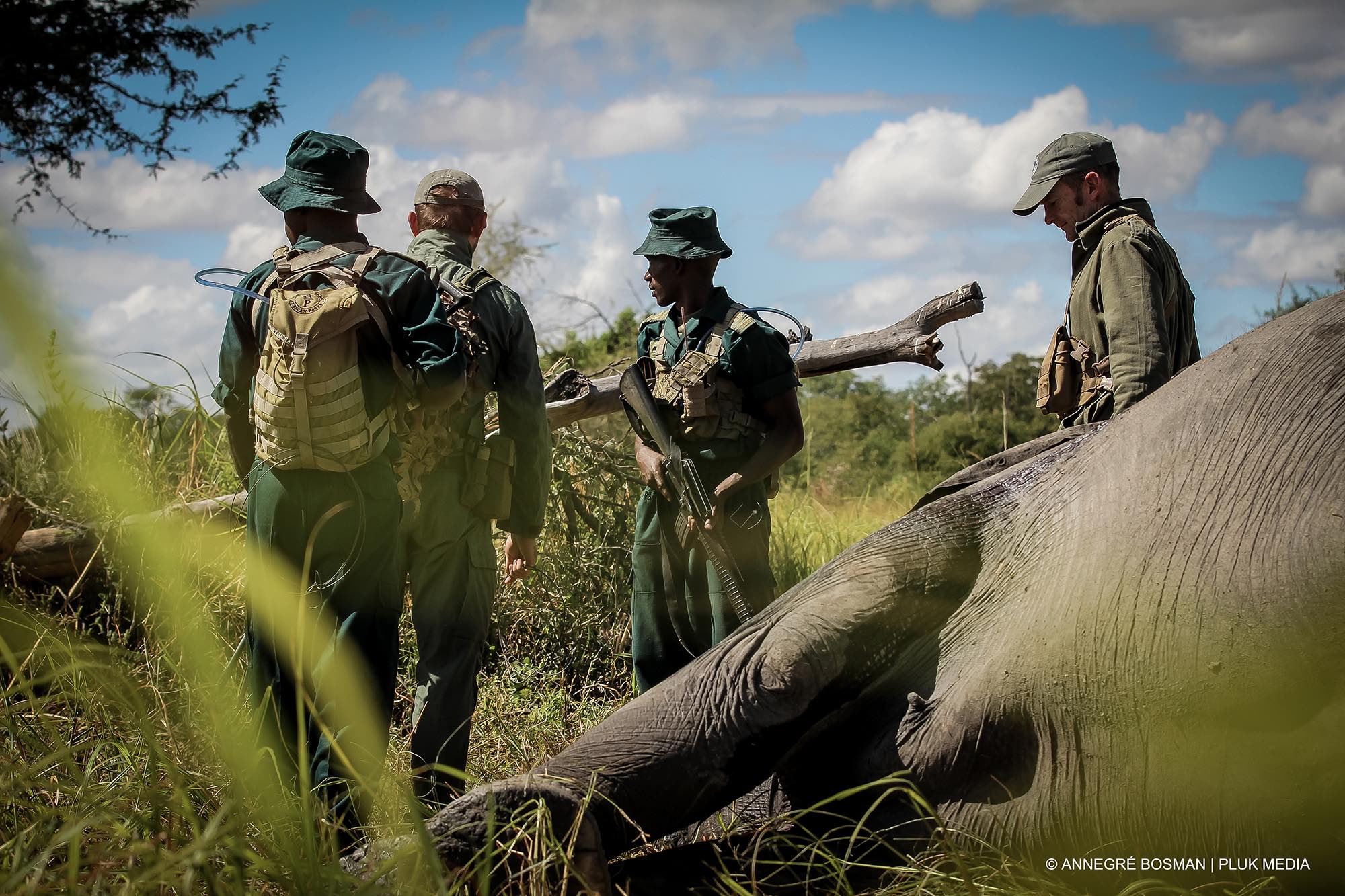
The group’s bad press continued with the publication of a book by Dutch investigative journalist Oscar van Beeman, which delved into the history of African Parks and its operations on the continent. Van Beeman gathered testimony from people at several protected areas it manages, alleging that its rangers used excessive force in Garamba National Park in the Democratic Republic of Congo, and Liuwa Plain in Zambia. In the latter, a former African Parks ranger told the journalist that he had beaten and tortured multiple poaching suspects in order to extract confessions.
“In all the parks I went to, I heard similar stories,” Van Beeman says. “So it’s difficult to just call them incidents.”
African Parks reacted to Van Beeman’s book with a statement in which it accused him of biased reporting and called the allegations against its rangers “deeply flawed.” The group reiterated its complaints after the book won a prestigious Dutch journalism prize — a decision it said reflected the “imposition of a Western gaze” onto conservation in Africa.
The group has since taken actions to address the accusations that its rangers have abused people. This year, it announced it was convening a six-person panel of “eminent African legal and human rights experts” to investigate allegations of misconduct and design a grievance process for communities to report ranger abuse. In March 2025 it posted a “human rights statement of principles,” and recently it added a notice about “Project Bomoko,” a management plan to implement a “human-rights based approach into all [African Parks] activities.”

In May 2025, it announced that Omnia’s investigation into the Odzala-Kokoua allegations published by the Daily Mail had come to an end. In a press release, the group admitted that human rights abuses had indeed occurred due to “several failures of our systems and processes.”
But it declined to make Omnia’s full report public.
“According to Omnia’s risk assessment, disclosing the report could increase the risk of reprisals or harm to members of the community, victims, witnesses, and/or eco-guards,” an African Parks spokesperson told Mongabay via email.
This tendency to guard information is not out of the ordinary for African Parks. Its staff were open and gracious to Mongabay, offering access to Nyungwe and responding to questions promptly. But reporting movements around the park were monitored, and when they strayed into sensitive territory it provoked a swift response. During an impromptu interview with former poachers in Banda, a Rwandan reporter working with Mongabay received a phone call from a senior park official demanding to know why he hadn’t been informed of the visit ahead of time. It was unclear how he’d found out the meeting was taking place.
In some parks where it works, the group’s tight security measures have placed its operations behind a curtain. At Pendjari and W national parks in Benin, for example, it remains unclear what role its rangers are playing in the government’s fight against a jihadist insurgency that’s been raging for years now.
Soldiers and secrets
In July 2024, African Parks released a somber announcement about its operations at W National Park (named for the shape of the Niger River as it passes through this region). Five of the group’s rangers had been killed by jihadist militants. The incident was part of a wider breakdown in security in northern Benin, which has been targeted by armed groups spilling south from the restive Sahelian countries of Burkina Faso and Niger.
W and Pendjari national parks, both managed by African Parks, are in the frontline of this conflict. Thousands of Beninese troops have been deployed into the two parks, but despite their presence the region remains insecure. Earlier this year, more than 50 soldiers were killed in a single assault on an outpost in Pendjari. The al-Qaeda affiliate JNIM, which has become the dominant jihadi group in the Sahel, took credit for the attack.
The contribution that African Parks is making to the Beninese military’s operations combating JNIM inside the two parks is murky, and the organization does not seem eager to shed light on the situation. The 2024 incident was not the first time its rangers were killed in northern Benin. In 2022, four died in a series of roadside bombings in Pendjari, along with two drivers and the group’s chief law enforcement instructor.
Some reporting at the time suggested that African Parks had been coordinating surveillance of jihadist movements with the Beninese army, acting as a “counter-terrorism unit.”
African Parks denied the allegations, and after the 2022 bombings it said it planned to pull its rangers back into the core of the two parks. But sources who spoke to Mongabay said last year’s casualties occurred during an assault on a Beninese military outpost. Why African Parks rangers were at the outpost, or what they were doing there, remains unclear.
The group declined to answer Mongabay’s questions about the incident, saying they should instead be directed to the Beninese military. “We are sticking within our mandate,” says Jean Labuschagne, conservation director at African Parks. “Of course, we are cooperating and communicating, because that is part of safe and responsible operations in such a context.”
The attack came just a month after African Parks posted a notice on its website saying that it had decided not to withdraw from Pendjari or W.
“I want to stress it’s not an easy decision, but it’s one that we’re looking at as holistically as we possibly can,” Labuschagne says. “An exit is going to have implications, and we need to think about those as well as the implications of staying from all those different perspectives.”
The entanglement of African Parks in a deadly counterinsurgency fight with broad regional implications — a mission far removed from its core conservation mandate — points to the risks associated with its management model. The organization has been accused of being neocolonialist, but in practice, it needs to maintain good relationships with its host governments to operate and continue expanding. Those relationships have been the fuel powering its growth across the continent. For an organization with wide ambitions, it might be difficult to say no to a sensitive request from one of the governments it works with — for instance, to lend some of its resources to a military campaign with national security importance.
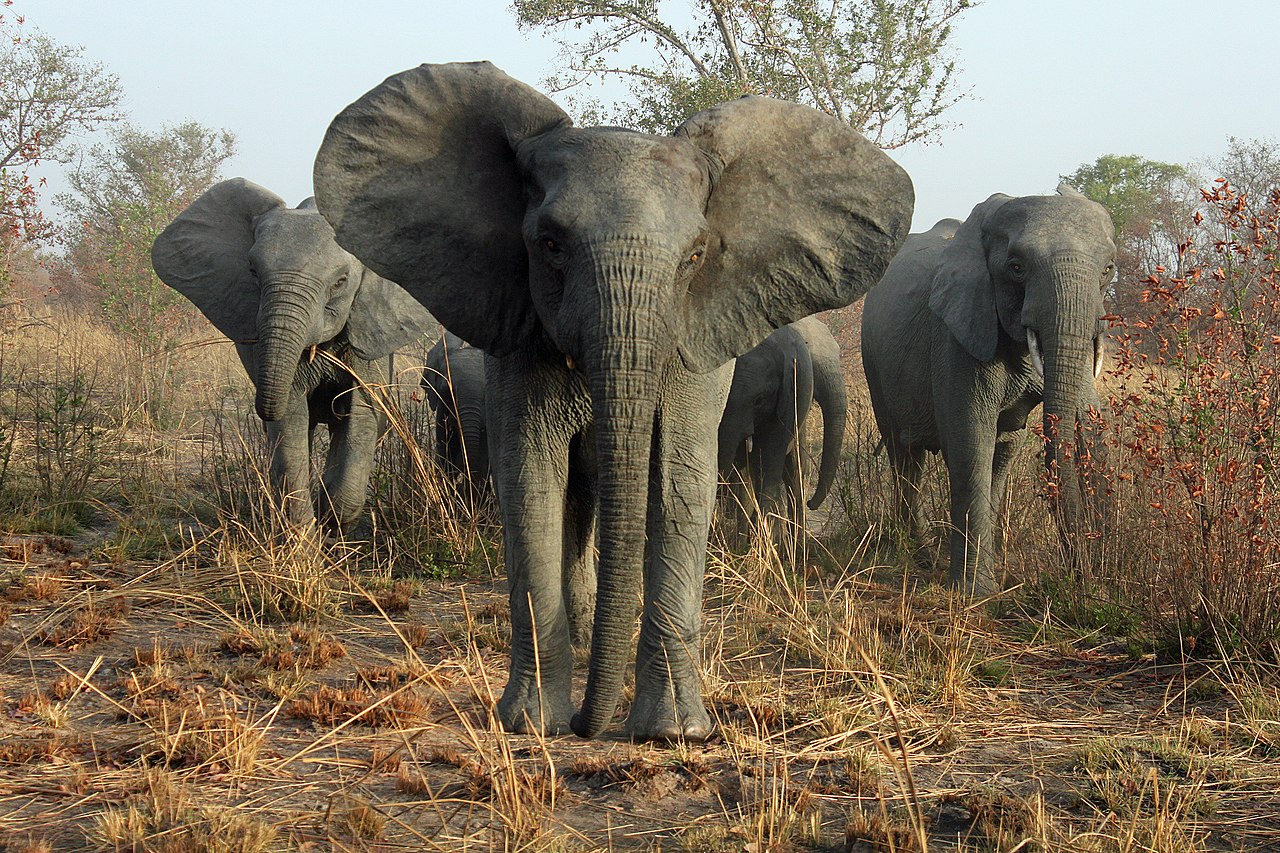
Benin isn’t the only country where it’s had to play a role more akin to a peacekeeper or combatant than a conservationist. In the Central African Republic’s Chinko National Park, it’s been involved in delicate negotiations over grazing access for armed herders. And in the DRC’s Garamba National Park, it’s engaged in deadly shootouts with elephant poachers. Whatever African Parks is, it can’t be accused of being dull.

Here in Rwanda, the relationship between Nyungwe’s rangers and the Rwandan Defence Force is also vague. The park is crawling with troops, who maintain a network of outposts inside the forest and are frequently visible patrolling along roadsides in full combat gear. Their presence isn’t surprising — Nyungwe is on the border with Burundi, whose relations with Rwanda have been rocky for decades, and the dense forest cover is a clear draw for armed groups. The war zones of the eastern DRC are also not far away.
If there is coordination between the RDF and African Parks, though, Nyungwe’s administrators aren’t interested in talking about it.
“For law enforcement, the chain of operations and things, there are some things we keep confidential,” Musango says when asked about the RDF’s presence at Nyungwe.
This kind of secrecy, coupled with the group’s security responsibilities, can complicate efforts to gain a clear picture of its operations in some cases. Despite the violence inside and around it, Pendjari National Park has recently begun to generate carbon credits that the organization has sold to an unnamed buyer. Those credits are partially earned by keeping herders and farmers out of the park.

Kars de Bruinje, a researcher with the Dutch Clingendael Institute who has been monitoring the conflict in northern Benin since it began, tells Mongabay his sources have told him that one way African Parks rangers keep livestock out of the park is by shooting them. Since last year, the Clingendael Institute has received numerous reports of such incidents.
“We have multiple incidents since May [2024] of African Parks shooting cattle and killing them,” De Bruinje says. “Usually, the way it goes is there will be an announcement to the village close by or people who live there that the cattle need to be removed or they will be killed.”
According to De Bruinje’s sources, the Beninese Armed Forces have also killed livestock inside the park, an action that he says may be tied to counterinsurgency efforts.
“We do see that JNIM is rustling [livestock] a lot more, and there is this fear that they are using this cattle to move, sometimes staying within the big herds or using them to move [equipment],” he says.
More troublingly, De Bruinje says he’s also received reports that African Parks rangers have shot and killed herders inside W National Park over the past year. The allegation was backed up by data shared with Mongabay via email by the Armed Conflict Location & Event Data Project, a nonprofit conflict-monitoring group, which confirmed to Mongabay that it had registered reports of two Nigerian pastoralists and “over a hundred sheep and cattle” being killed by rangers on Dec. 12, 2024, not far from where the July attack occurred.
In emails to Mongabay, African Parks said it did not have any information about the alleged killing, and denied reports that its rangers have shot cattle. Sorting out the truth wouldn’t be an easy job. The Beninese military keeps a strict eye on who comes in and out of the country’s north — when Oliver Van Beeman, the group’s Dutch critic, attempted to visit the region around the two parks in 2022, he was promptly arrested and deported.
No more ‘business as usual’
On a wet, muddy road in Nyungwe’s hilltops, Musango and four of his rangers line up for a photograph. They cut a severe profile, decked out in fatigues and brandishing their assault rifles for the camera. Most are in their 20s, with the mix of uncertainty and eagerness shared by young men who carry arms anywhere. It’s hard not to admire their stern professionalism.
Anyone running into them under the forest’s dark canopy would likely have cooler feelings. Musango’s job is to convince poachers to leave their old way of life behind. Through the interdiction efforts of his rangers — along with African Parks’ community development projects — he’s sure it’s going to work.
“It will take time, but definitely we will have zero percent poaching,” he says. “We have a strategy, and we will succeed.”

For many people who live in and around the 200,000 km2 (77,200 mi2) of forest, savanna, desert, wetlands and coral reefs that African Parks is in charge of, rangers like the ones Musango commands are the face of conservation. The scale of their deployment is relatively new for Africa, where protected area policing has typically been the job of government agencies, or in a bygone era, colonial game departments. For a private entity to have a security role this broad in so many landscapes at once is quietly revolutionary.
It’s a high-stakes experiment, suited only for an organization with the risk tolerance of African Parks. As CEO Fearnhead summed it up in the 2024 annual report, “frankly, we do not have the luxury of ‘business as usual.’”
That sentiment underlies the African Parks ethos. The threats to nature in Africa are urgent and growing, with distracted, cash-pressed governments unable to respond effectively on their own. A fresh formula is needed, and the group says it has it.
But how does African Parks, or its government counterparties, measure the formula’s success? Park revenue, tourist visits, arrests and community perception surveys offer some data, but at the heart of what it’s set out to do is nature itself. What, for example, is happening with wildlife populations inside the ecosystems it’s been entrusted with?
As is often the case with African Parks, it’s a question without a straightforward answer.
Banner image: Ruyumbu Musango, center, the head of law enforcement at Nyungwe National Park, flanked by members of the park’s ranger detachment. Image by Ashoka Mukpo/Mongabay.
An Empire of Nature: African Parks and Rwanda’s Nyungwe Forest
For Ugandan farmers, good fences make good neighbors — of elephants
Credits