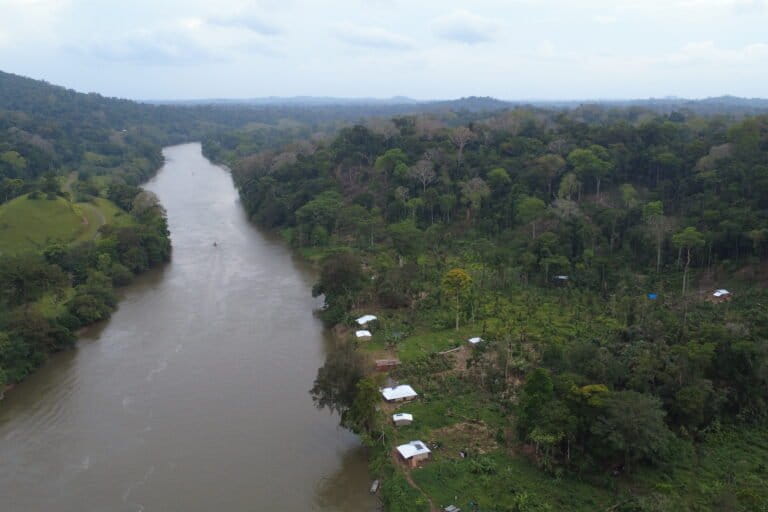
- Rising sea levels and sinking lands are leaving communities in the Philippines with the challenge of adapting to a combination of hazards that are reshaping coastal and island life.
- Globally, around 40% of the population lives in coastal areas, with more than 850 million people in low elevated coastal zones less than 10 meters above sea level, including more than 150 million living less than 5 above sea level.
- Between 2000 and 2019, an estimated 1.6 billion people were affected by different types of flooding, threatening infrastructure and disrupting basic services.
- On July 28, Philippine President Ferdinand Marcos Jr. in his State of the Nation Address ordered an investigation into possible corruption in flood control projects; since then, the scandal has ignited a broader anti-corruption movement among Filipinos.
LOS BAÑOS, Philippines — Flooded homes and submerged roads are now reshaping life in coastal and island communities in the Philippines, showing how a combination of hazards are influencing the way communities adapt and struggle to cope with climate change.
In the central Philippines, island barangays — administrative units akin to villages — in Tubigon town might soon be submerged due to land subsidence, brought by a major earthquake in 2013. Meanwhile, Hagonoy town, about 50 kilometers (31 miles) north of Manila, has been suffering from persistent floodwaters due to land subsidence from excessive groundwater extraction, among other factors.
Globally, around 40% of the population lives in coastal areas, according to the U.N. More than 850 million people live in low elevated coastal zones (LECZs) less than 10 meters (33 feet) above sea level, including more than 150 million living less than 5 m (16 ft) above sea level — mostly located in East and Southeast Asia, the U.N. Human Settlements Programme (UN-Habitat) reported.
As sea levels continue to rise while some lands sink, coastal and island communities alike are left to adapt and live with the floodwaters. Between 2000 and 2019, an estimated 1.6 billion people were affected by different types of flooding, threatening infrastructure and disrupting basic services, according to the U.N. Office for Disaster Risk Reduction (UNDRR).
In the Philippines, revelations of corruption linked to public-funded flood control infrastructure projects since July have sparked public outrage, prompting an anti-corruption movement and leading thousands to protest in the streets and demand accountability from the government.
Rising seas and sinking land
Rising sea levels are driven by increasing rates of ice sheet and glacier loss, as well as ocean thermal expansion or the increase in water volume as the water gets warm, the IPCC reports.
“Sea level rise is seen to be happening globally. … But the rate of rise is variable. There are regions in the world [where sea level rise is said to be more pronounced] and that is seen to be high in the Southeast Asia region,” Decibel Faustino-Eslava, a geologist and environmental scientist from the University of the Philippines Los Baños, told Mongabay.
The impacts of sea level rise are compounded by other factors such as land subsidence or the sinking of the Earth’s surface caused by tectonic movements.
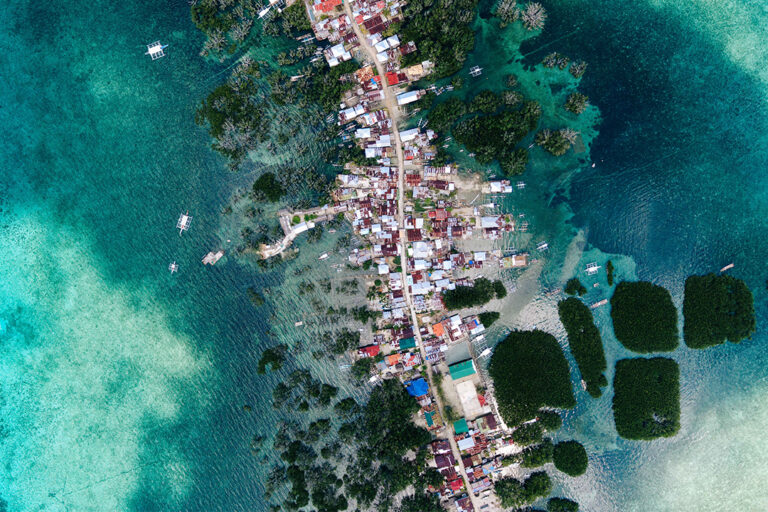
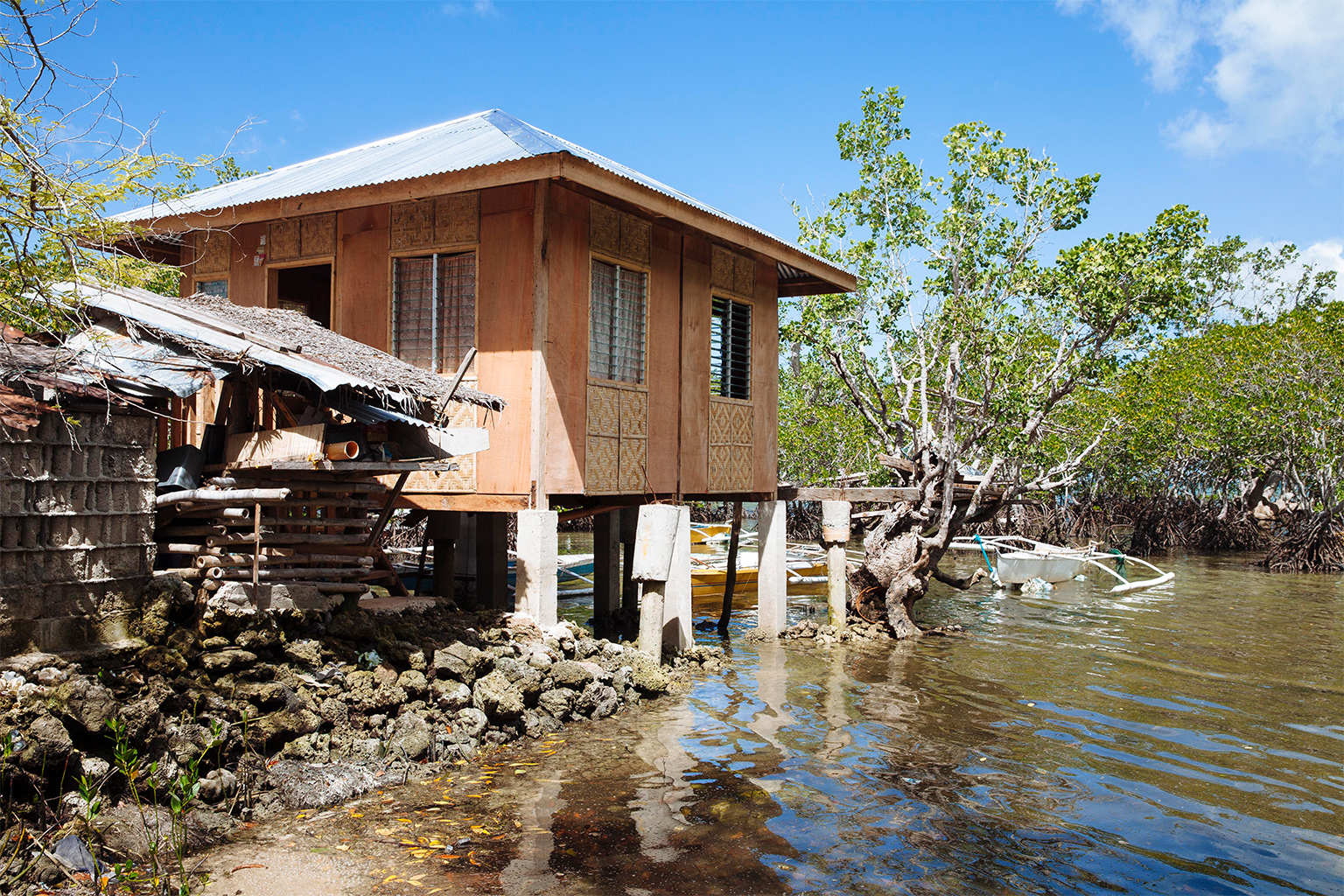
On Batasan Island, sinking land is a result of a 7.2-magnitude earthquake that hit Bohol province in 2013. Recorded land subsidence since then is 0.2-0.7 m (0.6-2.3 ft) in total, inundating the island during spring tides, a study notes. Around 800 residents have been living in knee-deep waters that hamper day-to-day activities. Other island barangays near Batasan, such as Ubay, Pangapasan and Bilang-bilangan, are also experiencing the same.
The local government encouraged relocation to the mainland, but livelihood concerns deterred the residents from leaving their island home. According to UN-Habitat, preemptive managed retreat is a controversial approach to preventing coastal disaster, as it involves “relocation of communities, uprooting them from the places they call home.”
“It’s also important to look at [who these people are]. If they have been there for generations,” Faustino-Eslava said, how do you make them leave? “People are rooted to their place. People have a sense of land and identity. You cannot easily take that away.”
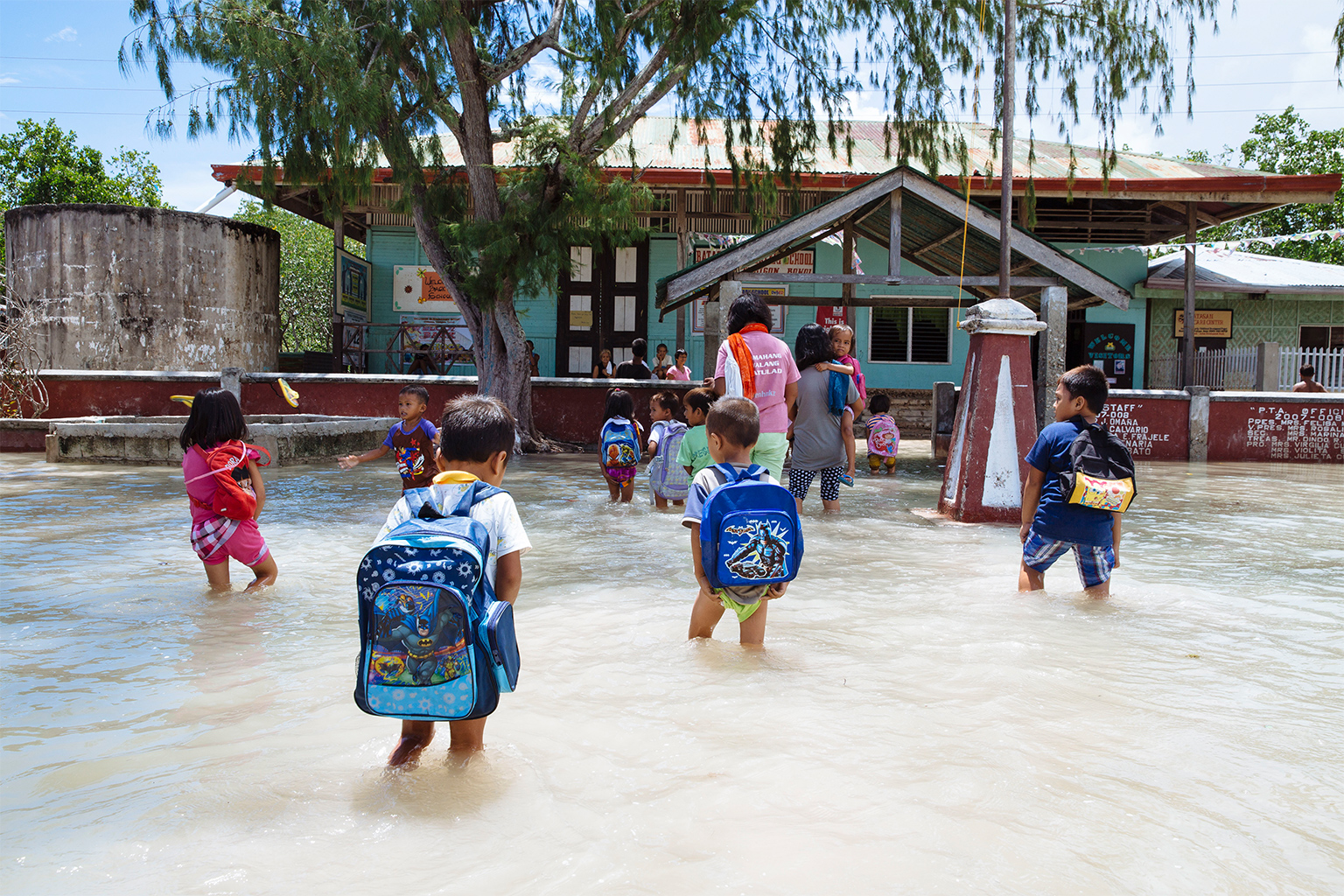
Similarly, the coastal town of Hagonoy in Bulacan province has been grappling with the problem of persistent flooding that disrupts livelihoods and education, destroys household items, increases risk of sickness, threatens safety and hampers mobility.
Keanu Reyes, 29, a high school teacher from Hagonoy, told Mongabay that life in their town depends on the water. Locals regularly consult the tide calendar, as the timing of the tides shapes their daily routines. In recent years, frequent flooding has not only disrupted lives but also driven up transportation costs, making everyday travel more difficult and expensive.
“In just a little more time, the people of Hagonoy will grow gills,” Reyes said in Filipino. “Life there really runs depending on how high the water is. … If you don’t plan [your commute] ahead, sorry, but either you won’t be able to go or you’ll end up spending a lot on transportation.”
The town is built on a low-lying river delta. Faustino-Eslava explained that water and sediments are deposited there, so it’s naturally a flood-prone area to begin with. It gets inundated by seawater, and during the rainy season, it gets flooded by rainwater.
But the problem is compounded by sinking land due to groundwater over-abstraction or the process of extracting water faster than it can replenish naturally. Another study notes a maximum subsidence rate of 109 millimeters (around 4.3 inches) per year in Bulacan province.
Groundwater, as Faustino-Eslava explained, comes from rainwater that permeates the soil and rocks and becomes part of the total bulk of the rocks underground that support the overlying materials. Due to high water demand in the area, a large amount of water is being extracted, so the pressure that props up the rest of the materials decreases and the ground sinks.
Local adaptation strategies
According to the IPCC, coastal communities face challenges in choosing a comprehensive strategy to address sea level rise, weighing the costs, benefits and trade-offs of several options. Adaptation strategies in the Southeast Asian cities of Manila, Bangkok, Jakarta and Ho Chi Minh City include constructing sea walls and flood barriers, upgrading drainages, regulating urban expansion to flood-prone areas, engaging local communities to enhance local awareness, implementing early warning systems and relocating residents, a study shows.
In Hagonoy, some residents have already abandoned their homes to move to safer ground, said 57-year-old former teacher Renato Dela Cruz from Hagonoy. But for many residents, especially those who depend on the informal economy, leaving is not an option.
“It’s more expensive to purchase land and build a house in areas that are not flood-prone. People cannot afford that. It’s also difficult to leave the community we have here,” Reyes said in Filipino when asked why people still choose to live in the area despite the risks.
Local communities in Hagonoy have now also developed their own adaptation strategies such as using boats as an alternative mode of transportation and creating an elevated version of a tricycle that can navigate through floodwaters.
In Batasan Island, structures are either built on stilts or are elevated from the ground. Mangroves were also planted to protect the island from hazards such as storm surges and tsunamis.
Corruption linked to flood control projects
A 2021 study notes that corruption is a substantial factor influencing vulnerability, risk and resilience. Lead author David Sanderson said corruption worsens disasters in a very dramatic way.
“When you cut corners, you make things risky, and that leads to greater vulnerability,” Sanderson said in an interview with Mongabay.
He noted that the construction and infrastructure industries have been labeled as the most corrupt sectors in the world. This creates opportunities for corrupt practices such as making concrete not strong enough, not using enough steel and bribing decision-makers.
Flood control projects that are supposed to help address the problem in a climate-vulnerable country like the Philippines have now sparked public outrage after probes on “ghost” projects — funded and supposedly completed but either do not actually exist or are incomplete — and corruption linked with publicly funded flood control projects across the country.
“Corruption, in the sense of what is happening right now, is murder,” Faustino-Eslava said. “You know that the design for the funds is to prevent floods that have killed people and you have knowingly usurped power to gain access to the funds. The blood of the people is in the hands of those involved.”
The controversy began during Philippine President Ferdinand Marcos Jr.’s State of the Nation Address on July 28, ordering an investigation into possible corruption in flood control projects. Since then, the scandal has ignited a broader anti-corruption movement among Filipinos.
Two of the largest protests were held Sept. 21 in Manila. Crowd estimates indicate at least 49,000 individuals attended the Baha sa Luneta (Flood in Luneta) demonstration at Luneta Park, while the Trillion Peso March at the historic EDSA Shrine drew around 15,000 participants.
More recently, a protest led by Iglesia ni Cristo, a religious organization known for its bloc voting system, gathered an estimated 600,000 attendees.
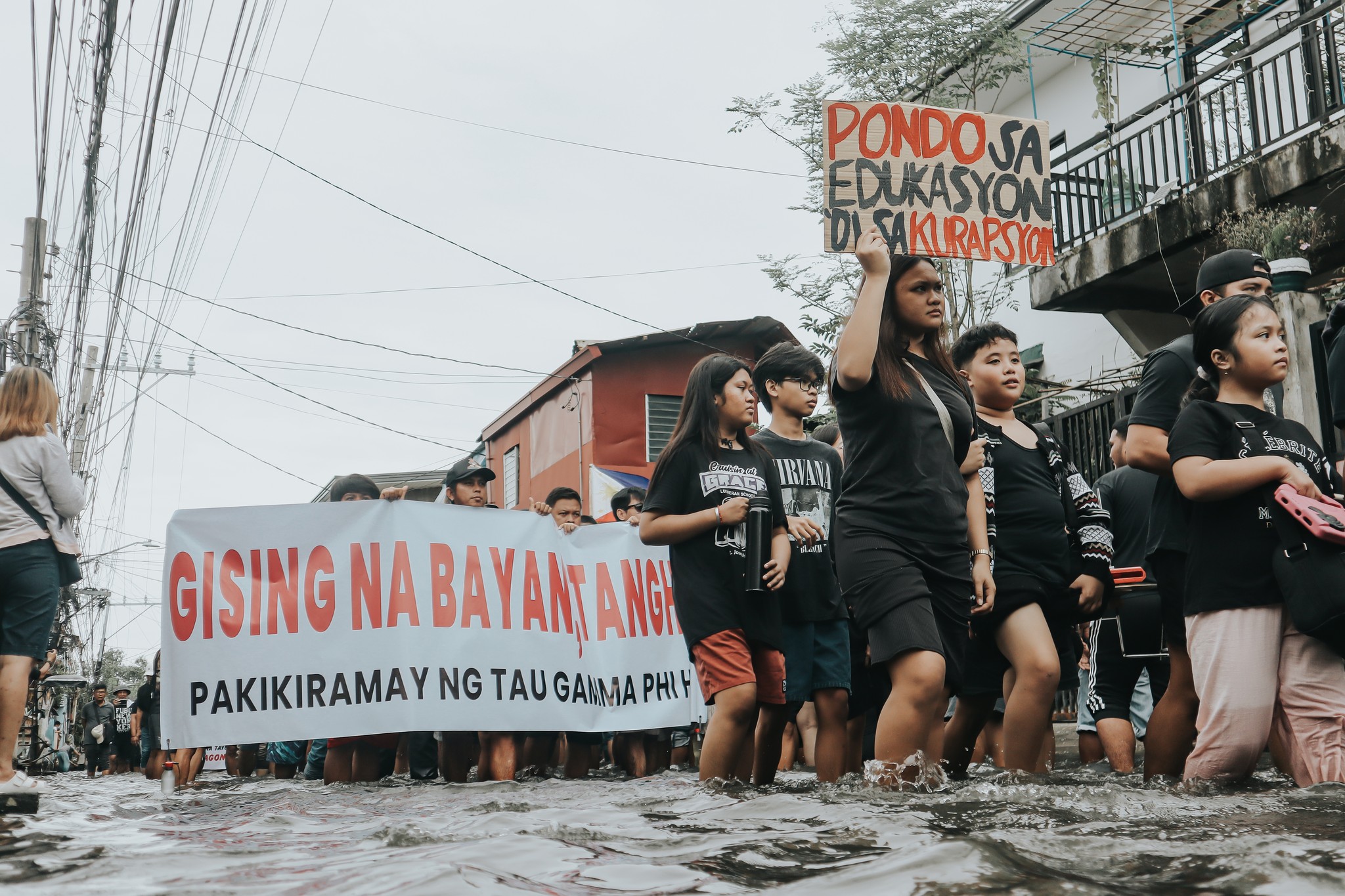
Local protests across the country have also been organized as part of a nationwide call for accountability and transparency. In Hagonoy, Dela Cruz organized the Tindig Hagonoy protest walk Sept. 20, when hundreds of residents marched through floodwaters in their community.
“People have the right to demand change and social transformation,” Dela Cruz said in Filipino. “The government should be responsive to the needs of the people. We are following the law. It is not just for us to live underwater.”
Similarly, Sanderson noted that transparency and accountability are the rules of good governance that should be adhered to in order to address problems related to corruption in disasters.
“Get serious about it. We let too much slide. Get people angry,” he said. “Disasters are not natural — the U.N. has a global campaign on that — so let’s change the wording and say that disasters are failures of society when it comes to planning, management and corruption. Get angry [to the] small number of people who prioritize their own personal gain over the lives of other people.”
Faustino-Eslava also emphasized the “need for more science in all of these.” While engineering interventions have very quick benefits that address immediate concerns regarding safety, it is important to use ecosystems-based planning that looks at the problem from a landscape perspective.
UN-Habitat also highlights shifting from reactive coping strategies that rely on flood control to a more adaptation-focused flood resilience approach.
Banner image: Batasan Island in Danajon Bank, the only double barrier reef in the Philippines and one of only three in the Indo-Pacific region, is sinking as a result of a 7.2 magnitude earthquake that hit Bohol province in 2013. Image courtesy of Hartmut Schwarzbach via Flickr.
Citations:
Jamero, M. L., Esteban, M., & Onuki, M. (2016). Potential in-situ adaptation strategies for climate-related sea-level rise: Insights from a small island in the Philippines experiencing EarthquakeInduced land subsidence. International Journal of Sustainable Future for Human Security, 4(2), 44-53. doi:10.24910/jsustain/4.2/4453
Laurice Jamero, M., Onuki, M., Esteban, M., Billones-Sensano, X. K., Tan, N., Nellas, A., … Valenzuela, V. P. (2017). Small-island communities in the Philippines prefer local measures to relocation in response to sea-level rise. Nature Climate Change, 7(8), 581-586. doi:10.1038/nclimate3344
Sulapas, J. J., Ybañez, A. A., Marasigan, K. M., Grageda, J. M., & Lagmay, A. M. (2024). Ground subsidence in major Philippine metropolitan cities from 2014 to 2020. doi:10.2139/ssrn.4779261
Gellu, A., Sharma, D., Rani, S., Singh, B. P., Rao, A. J., Baruah, S., & Yadav, S. K. (2025). “Impact of climate change on coastal cities: A case study of vulnerability assessment and adaptation strategies in Southeast Asia”. Journal of Applied Bioanalysis, 11(2). doi:10.53555/jab.v11i2.211
Sanderson, D., Patel, S. S., Loosemore, M., Sharma, A., Gleason, K., & Patel, R. (2022). Corruption and disasters in the built environment: A literature review. Disasters, 46(4), 928-945. doi:10.1111/disa.12500
Credits