
- A new report by the Financial Accountability and Corporate Transparency (FACT) Coalition says at least 86% of Venezuela’s gold is produced illegally and is often controlled by military elites, guerrilla groups and transnational gangs.
- Approximately 70% of what is produced, valued at more than $4.4 billion in 2021, is smuggled and laundered internationally through shell companies and opaque supply chains, including to the U.S.
- Illegal gold mining has led to several socioenvironmental impacts in Indigenous communities, such as mercury poisoning, sexual exploitation, forced labor and deforestation.
- The authors of the report propose several policy solutions the U.S. can implement to address the issue, including tightening oversight, closing legal loopholes and restoring enforcement capacity.
According to a new report, most of Venezuela’s gold is smuggled and laundered internationally through shell companies and opaque supply chains, including to the U.S. The operations are often controlled by military elites, guerrilla groups and transnational gangs, which exploit several loopholes and gaps in the U.S. financial and trade systems, the report by the Financial Accountability and Corporate Transparency (FACT) Coalition says.
The impact on Amazon forests, water and Indigenous communities is “devastating,” the authors write.
They suggest several policy changes in the U.S. to prevent the transfer of illegal gold into the country, such as tightening oversight, closing legal loopholes and restoring domestic enforcement capacity, which has been dramatically reduced over the years due to the prioritization of resources to curb narcotics trafficking. The current U.S. government’s approach to drugs and gangs from Venezuela, which included strikes on alleged drug boats, is one they say shouldn’t be replicated for illegal gold as it “isn’t working” and the costs “are considerable.”
“A militaristic, hardline U.S. response to illegal gold mining in the region would be both unwise and ineffective,” Julia Yansura, the FACT Coalition’s program director for environmental crime and illicit finance and co-author of the report, told Mongabay via email. “First off, many of our allies in the region have already tried this, sending in troops for rapid, military style ‘strikes’ against illegal mining sites.
“What we are urging the U.S. to do is to employ new tools from the anti-money laundering and counter-terrorism financing toolbox. By cutting off profits to these criminal and terrorist groups, and denying them financial safehaven in the U.S. financial system, we can significantly weaken them.”
Following the collapse of Venezuela’s oil economy in 2014 and the financial strain caused by U.S. sanctions, the country’s president, Nicolás Maduro, established the Orinoco Mining Arc in 2016, which encompasses approximately 12% of Venezuela’s territory in the south, aimed at generating revenue for the country. However, this move, according to independent experts and the authors, has enabled rampant illegal mining by criminal groups.
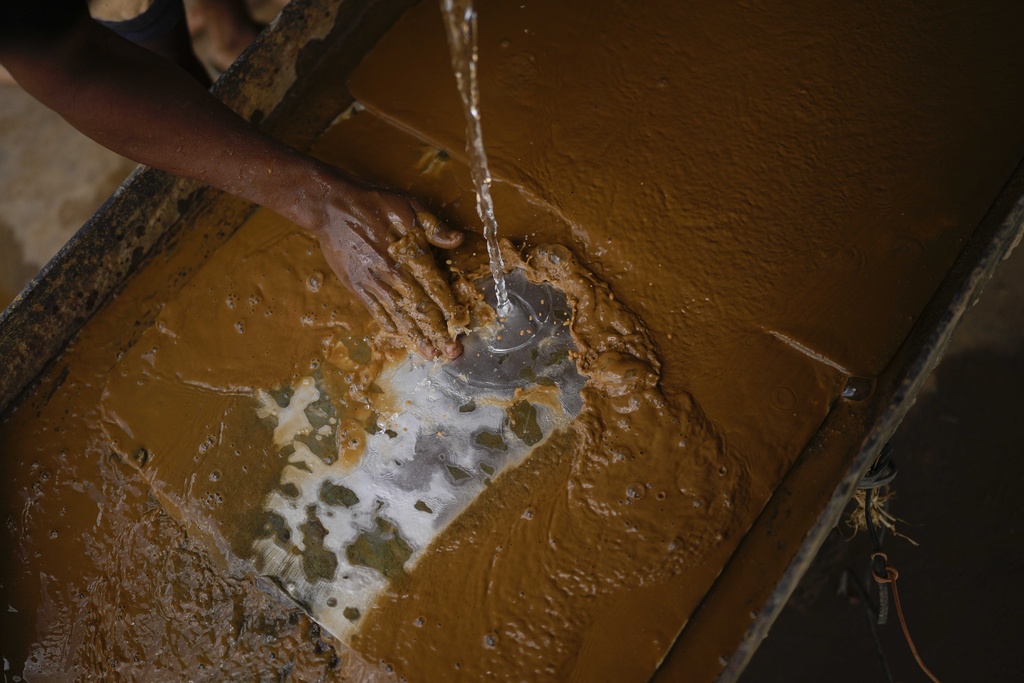
At least 86% of Venezuela’s gold is produced illegally, with 70% smuggled and laundered abroad, valued at $4.4 billion in 2021, the report notes. The exact percentage of Venezuela’s gold that enters the U.S. is uncertain. Of the 4,472 illegal mining locations registered in the Amazon, 32% (1,423 locations) are concentrated in Venezuela, even though the country represents only 5.6% of the Amazon territory, according to the Amazon Network of Georeferenced Socio Environmental Information.
“Venezuela’s illegal gold economy stands out from others in South America because of the extent of state involvement,” Isidoro Hazbun, a policy fellow for environmental crime and illicit finance at the FACT Coalition and report co-author, told Mongabay via email. “While illicit mining across the region depends on some level of territorial control by non-state armed actors, in Venezuela, the operations are often incentivized, coordinated, or openly tolerated by state authorities.”
According to a 2024 report presented to the U.S. Congress, the creation of the Orinoco Mining Arc failed to attract investment from outside investors as Maduro had hoped. Instead, state authorities, including individuals from the National Bolivarian Armed Forces of Venezuela, have created a lucrative financial scheme by charging criminal organizations for access to the arc. The illegal gold is also purchased by Venezuelan elites from cities considered government-monitored trading hubs, such as El Callao, stated a report by the Organisation for Economic Co-operation and Development (OECD).
Mongabay contacted Venezuelan government officials and the U.S. State Department but did not receive a response by the time of publication.
Tren de Aragua, a transnational mega gang that exercises de facto authority in or around the Orinoco Mining Arc, has become a fixation of U.S. President Donald Trump, who has designated the group a foreign terrorist organization and declared it an invading force.
Besides Tren de Aragua, the First Capital Command (Primeiro Comando da Capital — PCC), Brazil’s largest criminal network, is also involved in illegal gold mining within Indigenous territories on the Brazil-Venezuela border, such as in the Yanomami territory. In the country’s south, the National Liberation Army (Ejército de Liberación Nacional —ELN) and the Second Marquetalia (Segunda Marquetalia) have the most influence, operating in protected areas such as the Yapacana and Canaima national parks. Both the ELN and the Second Marquetalia are Colombian guerrilla groups that operate in Venezuela.
An investigation published by Mongabay in April revealed some of the strategies used by criminal groups to smuggle Brazilian gold into Venezuela, which involves using aircraft and informal border crossings.
Socioenvironmental impacts
Between 2001 and 2020, Venezuela lost approximately 23,000 hectares (56,834 acres) of forest cover due to mining activities. It was the second-worst-hit country in the Amazon, after Suriname. More than 80%, or 19,000 hectares (46,950 acres), of forest loss was in Indigenous and community forests.
Illegal gold mining has impacted many of Venezuela’s Indigenous peoples, as their lands often overlap with gold deposits. Lisa Lynn Henrito Percy, former chief of the Maurak Indigenous community and current adviser to the new chief, told Mongabay via WhatsApp messages that while illegal or legal mining affects all inhabitants of a country equally, “what sets [Indigenous] people apart in this regard is the irreversible sociocultural impact of the destruction of nature (habitat and lands) for Indigenous peoples, causing an imbalance in every sense that not only destroys nature but also an entire ancestral and ancient way of life.”
Bram Ebus, a conflict and environment consultant for the International Crisis Group, told Mongabay that mercury, which is used by gold miners to extract gold from ore and is toxic to humans and animals, is discharged into rivers, severely affecting both human and ecosystem health. “Indigenous communities depend on fish as a dietary staple, but these fish are heavily contaminated, causing serious health problems throughout these populations,” he said.
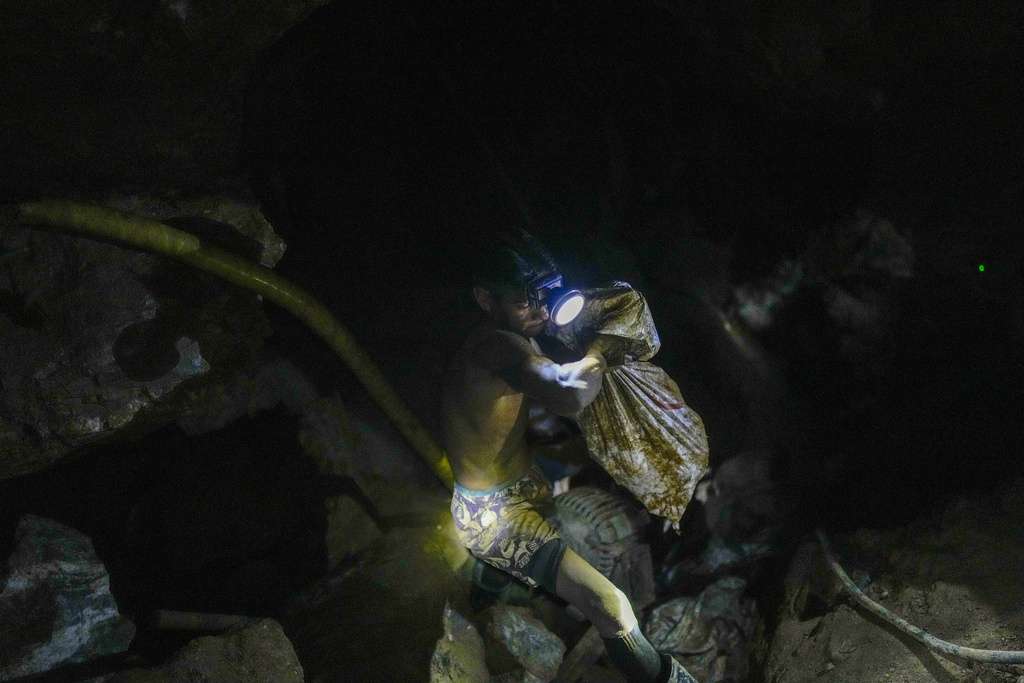
Ebus explained that the spread of illegal mining is fueled by economic collapse, “making efforts to combat illegal mining futile without providing alternative livelihoods to those most in need.”
With few alternative options for education or work, Lynn said Indigenous people and locals are put in a tough spot. Youth have no choice but to work at the mines and become enslaved by the owners, falling into a form of modern slavery where they must work to pay off never-ending debts to the owners. Family members are forced to leave their smallholdings and gardens to go to the mines to provide for their families but return with no money and problems such as drug and alcohol use and venereal diseases, she added.
Solutions
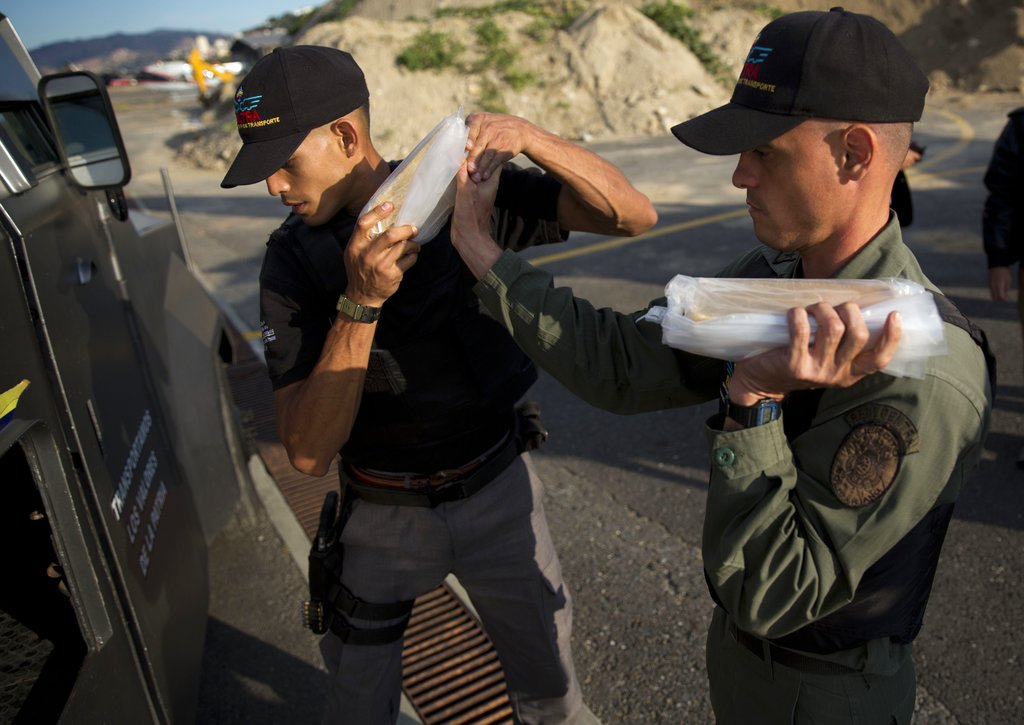
Criminal groups often use human couriers to smuggle gold, according to the FACT Coalition report. They travel by air across international borders and take advantage of financial blind spots, such as shell and front companies, to move the mineral and launder the proceeds. In the U.S., transnational illegal gold mining is not considered an underlying or predicate offense for money laundering, which makes it more difficult for U.S. prosecutors to secure convictions and impose sentences.
To address the issue, the report recommends that the U.S. and other governments tighten verification in gold supply chains and sanction evaders more aggressively.
“What we are urging the U.S. to do is employ new tools from the anti-money laundering and counter-terrorism financing toolbox,” Yansura told Mongabay via email.
“By cutting off profits to these criminal and terrorist groups, and denying them financial safe haven in the U.S. financial system, we can significantly weaken them – thereby reducing their ability to do harm.”
Banner image: Miners pan for gold at a gold mine in El Callao, Bolivar state, Venezuela, Friday, April 28, 2023. Miners pan for hours in ponds where standing water fosters mosquitos that transmit diseases, such as malaria and dengue fever. Image by AP Photo/Matias Delacroix.
Venezuela tries an environmental rebrand, but critics aren’t buying it
Feedback: Use this form to send a message to the author of this post. If you want to post a public comment, you can do that at the bottom of the page.
Credits