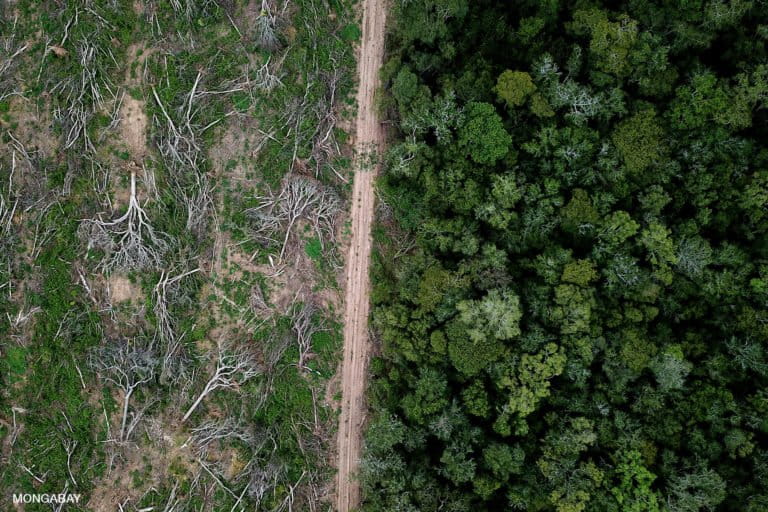
- The Panama Canal Authority (ACP) plans to create a reservoir in the Rio Indio Basin, a 98-kilometer river in central Panama where 231 farming communities live. The project would cover about 11,370 acres and displace 38 farming communities, totaling about 2,000 residents.
- Opposition to the Rio Indio Project among farmer communities is growing strong through street protests, legal action and the enlistment of experts to analyze its social and legal impacts.
- Communities support the expansion of an existing reservoir fed by the Bayano River that would not require relocating people, but ACP tells Mongabay that the Bayano option has been long studied and that Río Indio provides more technical and energy advantages.
- The Rio Indio Project would not only relocate residents but would disrupt ecosystems and endemic species and could increase the spread of vector-transmitted diseases, experts warn.
LIMÓN DE CHAGRES, Panama — In Panama’s Rio Indio Basin, a $1.5 billion reservoir project aims to meet water demand for the next 50 years. But the project would displace dozens of farming communities, sparking widespread opposition to the reservoir’s construction.
“We will give our lives to save Rio Indio! I came from Limón de Chagres, the first community that could be flooded to make space for the dam,” shouts Maricel Sanchéz at the microphone from a stage during a May 1 march in Panama City. “Today, I’m so proud to see how united we are in our resistance.”
Sanchéz, 25, is the spokesperson for the Rio Indio farmers’ assembly, which is part of Coordinadora Campesina por la Vida (Peasant Coordinator for Life), a grassroots social and community organization of farmers, Indigenous communities and civic groups in Panama. During the march, she spoke out about their mobilization against the Río Indio reservoir: a $1.5 billion project by the Panama Canal Authority (ACP), Panama’s government agency responsible for managing the canal.
Rio Indio is a 98-kilometer (about 61-mile) river in central Panama, flowing through the Costa Abajo area (home to 231 farming communities) to the Caribbean Sea.
Here, the ACP plans to create a reservoir to provide water to nearby Gatun Lake (the northern entrance of the Panama Canal in the Atlantic Ocean) to meet water demand for the next 50 years for human consumption and for canal operations, especially during droughts. The construction is expected to begin in 2027 and last four years, with a main dam made of roller-compacted concrete and three auxiliary dams.
The reservoir would cover 4,600 hectares (about 11,370 acres), about 8% of the entire Rio Indio Basin and would displace 38 farming communities or about 2,000 residents, according to the ACP. But the farmers’ opposition is growing strong.

“The struggle of our communities is for every citizen and natural resources: If [the ACP] took Rio Indio, then they would also take Caño Sucio and Coclé del Norte rivers. Our life is worth more than money,” Sanchéz continues from the microphone. “Rio Indio is not for sale, Rio Indio needs to be defended,” she chants while the crowd echoes her words.
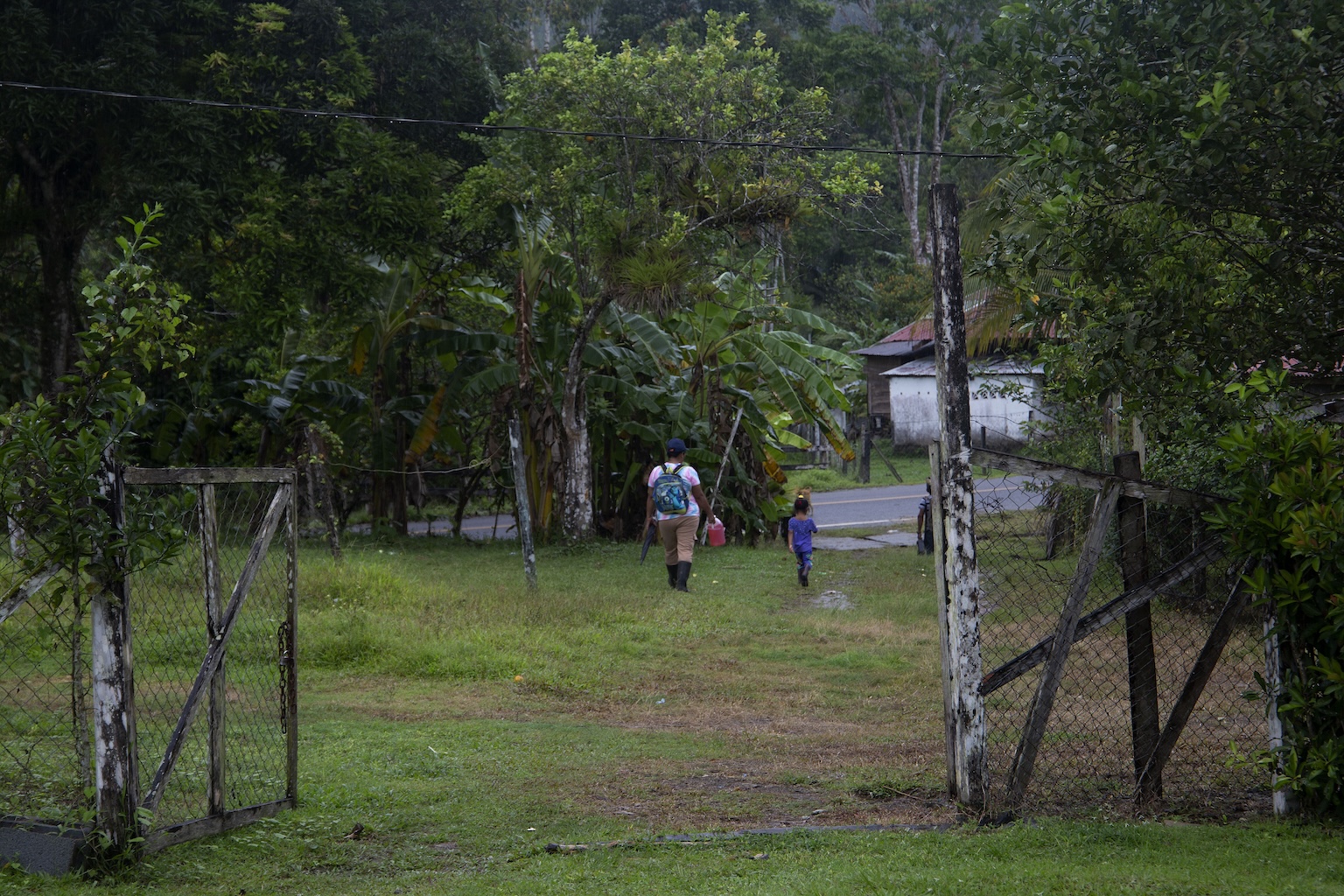
On May 1, Sanchéz traveled to the capital with a delegation of dozens of farmers, among them Olegario Cedeño from Limón de Chagres, Teodoro Rivas from Los Uveros and Digna Benitez from El Nancito. All of them come from rural, impoverished Rio Indio communities that lack facilities such as health centers, public illumination or road connections. “There are too many inequalities: The Panama Canal generates a lot of money, but we live in poor conditions,” Sanchéz tells Mongabay. She lives with her partner, Iturbide Alonso, a Rio Indio boat driver, and their two little daughters, 10 minutes’ walking distance from the river.
“We live in the most unequal country of the region: We don’t have proper roads or health centers. If an emergency happens to you, like a snakebite, you have to solve it alone,” Sanchéz says. Five years ago, she gave birth to her second daughter in the car with her partner, trying to reach the closest health center two hours away driving on bumpy roads.
Mongabay traveled back with the delegation of farmers from Panama City to Limón de Chagres for more than five hours on a tiny bus through villages and luxuriant tropical forests. During the trip, the group planned the next mobilizations.
On May 16, the SocioEconomic and Legal Forum in Defense of the Water of the Land took place in San Josè Parish, near the city of Colón, supported by local Bishop Manuel Ochogavía. The defenders also took to the streets on June 6 in the city of Colón.
“This is a protest to protect our common house and seek a dialogue,” explains Olegario Cedeño, 38, father of three plus another baby on the way. “This project is full of social and environmental injustices.” The tropical winter rains have just started, and Cedeño is walking in Limón de Chagres. Across the village, banners bear slogans against the Rio Indio Project.

“I have always participated in protests, such as the last big one in Limón de Chagres [on April 25] with hundreds of people from all Rio Indio communities and their dogs and horses,” explains Alexandrina Muñoz, 48, walking to her farm where she grows corn and vegetables for subsistence, as almost all residents do. “This is a great injustice,” Muñoz tells Mongabay. “We don’t have any opportunity; we only have our lands. Where shall we go?”
Impacts on people and ecosystems
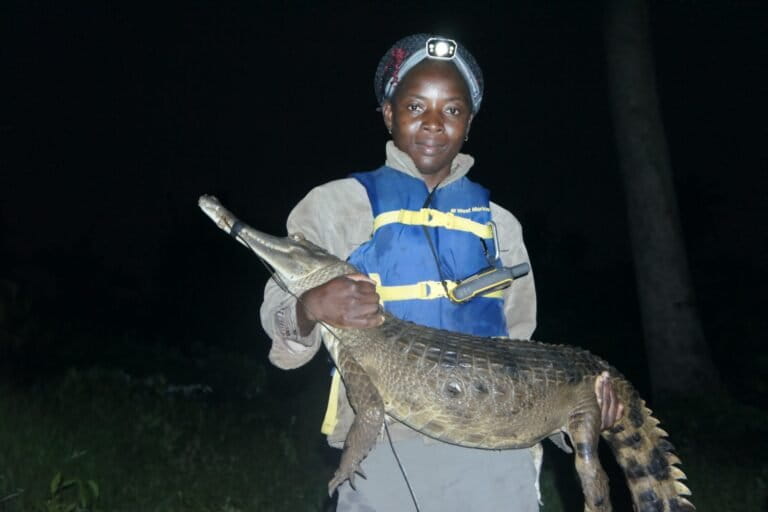
Environmental impact is a major concern for communities and experts. “We conducted studies in Río Indio commissioned by the ACP, and since we are within the Mesoamerican Biological Corridor, we found a high diversity of endemic species, such as cedar and mango trees, as well as fauna, including the spectacled caiman (Caiman crocodilus) and the northern tamandua (Tamandua mexicana),” says Evidelio Adames, specialist in medical entomology and biology professor at the University of Panama. Since researchers also identified 59 blood-sucking species, Adames explains that any disturbance to the ecosystem or population relocation could influence the spread of endemic diseases such as malaria or Chagas disease.
In an email to Mongabay, the ACP writes, “Resettlement areas are being identified based on technical, environmental, social, and cultural criteria. The goal is to keep families as close as possible to their current surroundings, which is why sites located approximately 7 kilometers [4.3 mi] from some of the current communities are being evaluated, with the aim of preserving family networks, productive activities, and community ties.” ACP added that it aims to provide replacement lands with title deeds as well as other assistance including compensation for crops, livestock, vegetable gardens and lost incomes.
ACP writes that in second half of 2026, it will finalize and present the Category III environmental impact assessment of the project, the most stringent level of EIA that includes formal public participation, interviews, publications, outreach and a public forum.
Communities seek alternatives
But the communities want to remain on their lands and support an alternative project for their water supply. “Rio Indio No, Bayano Sì” is one of their most common slogans. Their proposal refers to the expansion of an existing reservoir fed by the Bayano River that flows into the Pacific Gulf, with no relocation of residents. According to an independent evaluation of the Society of Engineers and Architects of Panama, Bayano is a viable alternative offering greater water capacity, a potential solution to the salinity problem and shorter construction times and lower construction risks.
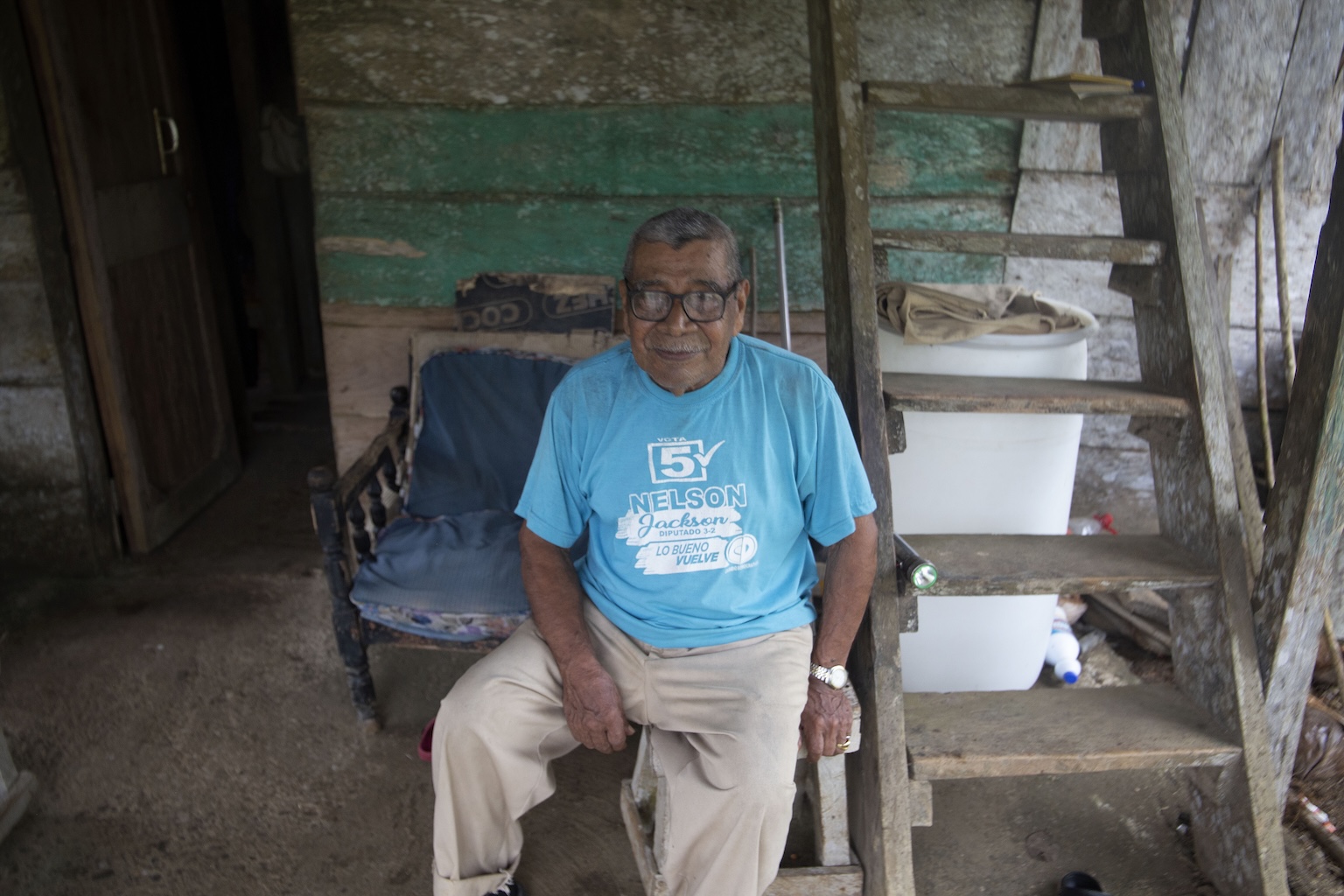
The oldest resident in Limón de Chagres also supports the Bayano alternative. Olegario Hernandez, 88, known as el abuelo (the grandfather), tells Mongabay that Rio Indio has suffered a steady decline in water levels that would prevent long-term water supply in the reservoir.
According to the ACP, Río Indio offers a significant technical advantage: It allows water to be conveyed by gravity to Gatún through an 8.7-km (5.4-mile) tunnel, reducing the need for continuous pumping, energy consumption and long-term operating costs. “As a water source, Lake Bayano has been thoroughly studied by the Panama Canal Authority, including 12 possible alternatives. However, due to its distance from the Canal lakes [more than 100 km or 62 mi], the type of infrastructure required, and the need for continuous water pumping present considerably greater technical, energy, and economic challenges,” ACP writes.
“We believe the ACP didn’t follow the rules and didn’t respect the … Escazú Agreement,” said Santander Tristán, a lawyer who has been defending the communities since 1985. The lawyer filed a lawsuit in the Supreme Court in the name of “Coordinadora Campesina por la Vida” against Resolution 25-1542 (adopted in 2025), an ACP-issued regulation that designates the Río Indio water project as a priority within its investment program. The lawsuit was dismissed on procedural grounds, but it was resubmitted with the required changes and is currently awaiting admission by the court. “Also, we made a request to the Inter-American Commission on Human Rights for precautionary measures to suspend the project and conduct a regional public consultation. Unfortunately, this request for precautionary measures was deactivated; however, we will present the request again,” Tristán tells Mongabay. “We continue the legal battle, but it’s crucial to consolidate social pressure. Eventually, this struggle is about defending our Common Home,” Tristán says.

“It’s not only about lack of information about relocations and environmental impacts,” Hernandez says, “we are worried about the flooding risk for the communities that will remain close to the future dam, in case of accidents.”
Osvaldo Jordán, a biologist and researcher at the Alliance for Conservation and Development, has been studying the dams in Panama for decades. “The problem of the Rio Indio Project also concerns the post-reservoir phase,” he tells Mongabay. “What they are proposing is no better than other reservoirs built in the past with ongoing significant impacts. One of the most important consequences is the river’s communications disruption among the marginalized communities. There are no reservoirs in Panama that have been managed properly from a socioenvironmental perspective.”
The communities are determined to continue their peaceful resistance. Throughout the last six months, each evening, they have gone to pray. While a generator illuminates the church of Limón de Chagres, Olegario Cedeño reads a prayer, asking for strength and faith for the upcoming protests. “We hope that Panamanian democracy can respond to the will of the majority, as happened with the banning of open-pit mining nationwide after massive protests in 2023,” Jordán says. “It will be all unpredictable during the next two years. But we hope social justice and accountability prevail over environmental destruction and private profit.”
Banner image: A delegation of dozens of farmers from Indio River communities marching in Panama City during the 1 May protest. Among them are Olegario Cedeño, from Limón de Chagres; Teodoro Rivas, from Los Uveros; Digna Benitez, 61, from El Nancito. Image by Monica Pelliccia, Panama City, May 2026.
FEEDBACK: Use this form to send a message to the author of this post. If you want to post a public comment, you can do that at the bottom of the page.
Credits