



- Residents in Nepal’s buffer zones — defined spaces surrounding protected areas — face restrictions on resource collection, infrastructure development and daily activities, leading to frustration and political protests, including election abstentions.
- Communities suffer from wildlife attacks, crop destruction and livestock losses, with relief programs often failing marginalized residents, particularly those without land ownership certificates.
- Local buffer zone councils are perceived as ineffective or serving the park wardens’ interests, as the wardens hold extensive authority, sometimes overriding elected representatives.
- Locals and activists demand clearer guidelines, insurance systems, better infrastructure, equitable revenue sharing and legal amendments to balance conservation with community welfare.
BARDIYA, Nepal — Mewa Lal Pulami, along with other residents from his village on the fringes of Banke National Park in western Nepal, abstained from voting in the recent parliamentary elections held on March 5, 2026.
“How can we vote when no one is paying attention to our suffering from wild animals such as tigers?” Pulami said to Mongabay over the phone as the mass abstention made headlines across the country.
Nepalis such as Pulami live in the ‘buffer zone’ — a designated ‘protective layer’ for national parks where local people’s collection and use of natural resources are governed by separate laws and regulations.
The villagers are demanding an urgent overhaul of the program to address human-wildlife conflict, access to resources, excessive bureaucratic power of park wardens, chronic infrastructure deprivation, and growing economic injustice.
When it was rolled out in 1996, the buffer zone program aimed to increase community participation and ownership in conservation of iconic species such as tigers (Panthera tigris) and rhinos (Rhinoceros unicornis) in the plains and snow leopards (Panther uncia) in the mountains. However, 30 years on, the buffer zones, covering 5,602 square kilometers (2,163 square miles) and 1.2 million people, aren’t as popular among some residents in the plains who say it’s time to revisit or even scrap the whole program.
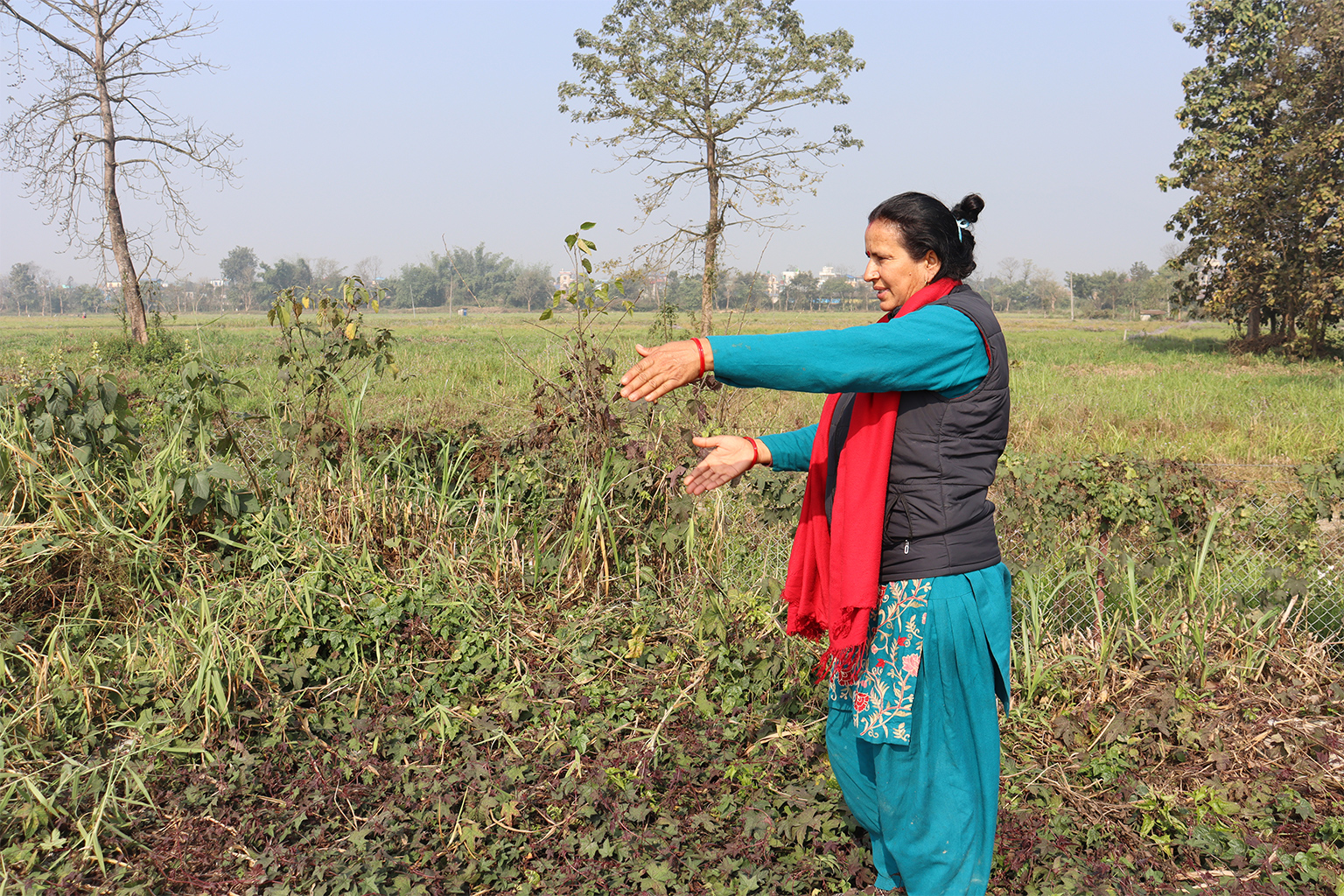
Around 380 kilometers (236 miles) east of Bardiya, for 52-year-old Laxmi Dhakal from one of the communities living around Nepal’s oldest national park, Chitwan, the iconic one-horned rhinoceros has become a symbol of suffering. “Every day, rhinos trample our crops,” she told Mongabay. “During the recent elections, I told the candidates that we will vote for anyone who addresses this issue.”
The concept of the zones
Nepal has 13 national parks and seven conservation areas, including the Koshi Tappu Wildlife Reserve. Under the Buffer Zone Management Regulations of 1996, the government can designate areas surrounding protected parks and reserves as buffer zones.
Conceptually, buffer zone forests are co-managed by local people and the protected area authority. This means that forest user groups, unlike their counterparts outside of buffer zone areas, don’t have full freedom to use or sell forest resources. They must do so under their operational plan, which needs to be approved by the authority.
In return, they get benefits such as better protection of forests and wildlife and support from authorities. So, the tradeoff is that people give up some control and decision-making power but gain a healthier environment and long-term advantages for their community.
Shanta Raj Jnawali, a senior conservationist in Nepal who was involved in implementing the buffer zone concept, said it was introduced after extensive research. “The concept is that conservation cannot survive without public participation,” he said.
But critics of the program argue that the tradeoffs are heavily stacked against the community members with resident communities paying a heavy price for conservation while a limited group of people reap benefits from it. Dhan Bahadur Gurung, who lives in Chitwan buffer zone’s Gaidakot Municipality-10, said he initially welcomed the buffer zone program, expecting improvements in infrastructure such as roads and temples. “In the beginning, there were some developments,” he said. “But now it feels restrictive. We face obstacles in many aspects of daily life.

The all-powerful warden
Communities are discontented with the powers given to the chief conservation officer (or the chief warden) of the protected area, who wields unflinching power, at times even over the elected party representatives. Until 2015, the warden’s office was allowed to investigate as well as hand down jail sentences in cases related to wildlife crime.
The warden, who usually isn’t a member of the local community, can also override the decisions taken by the buffer zone council, which has members elected by the people. “There is a saying in the buffer zone communities that even the leaves can’t rustle without the permission of the warden,” a resident of Bardiya told Mongabay under anonymity for fear of reprisals.
“The role of the buffer zone council itself has been questioned. The marginalized people’s participation is very weak. The committees have held those who are not directly involved with the natural resource,” they said.
Ram Chandra Lamsal, a resident of Madi municipality in Chitwan, said that the buffer zone committee functions like a spy. “The buffer zone committee was supposed to support conservation of humans and wildlife,” he said. “Unfortunately, they act as spies for the warden.”
Human-wildlife conflict
Human-wildlife conflict is a pressing issue for communities living in Nepal’s buffer zones, as evidenced by the Department of National Parks and Wildlife Conservation (DNPWC) data, wildlife attacks resulted in 19 deaths, 53 serious injuries and 50 minor injuries across Nepal in the fiscal year 2025-26. A total of 4,767 livestock were lost, 191 houses and sheds were damaged, and 4,899 cases of crop destruction were recorded.
The government addresses these losses based on the guidelines on distribution of relief and compensation in human-wildlife cases, which came into effect in 2023. The protected area offices provided compensation worth 136,301,727 Nepalese rupees (approximately $927,000) to affected people in FY 2025/2026, with Chitwan and Bardia National Parks recording some of the highest relief amounts.
But the relief and compensation program has its flaws with the marginalized communities not getting access to funds. According to the study report on policy issues related to the national parks submitted to the National Assembly two years ago, the guidelines lack clarity and practicality. There is no proper arrangement for distributing relief to people who do not possess land ownership certificates despite having tenure.
‘Development freeze’
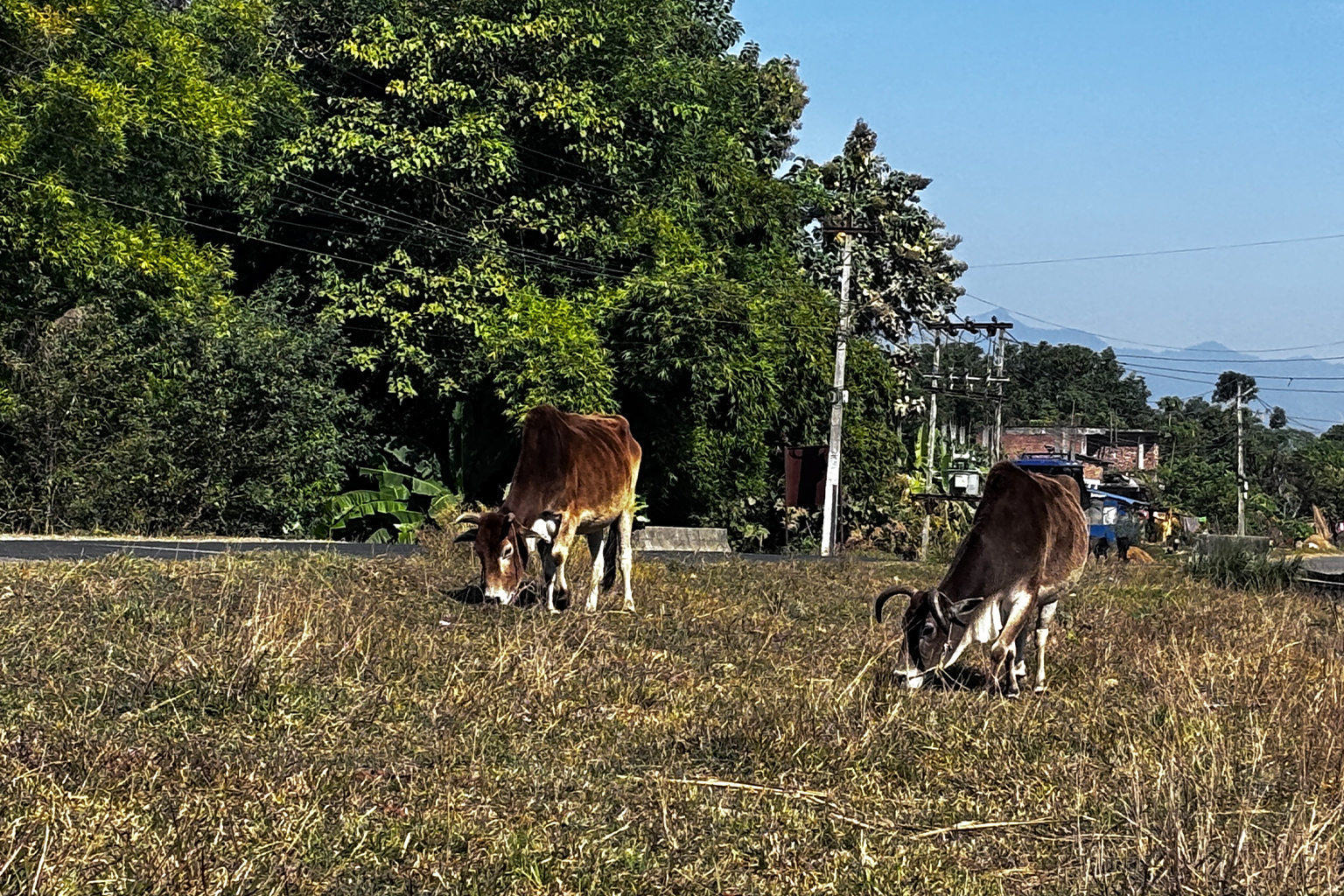
The other issue that has contributed to the buffer zone program’s unpopularity is its restrictions on infrastructure. Strict conservation regulations significantly limit the development of essential public services, leaving residents without reliable roads, electricity or safe transport routes. For instance, the construction of tarmacked roads and underground power lines is often prohibited to minimize impacts on wildlife, forcing villagers to rely on seasonal dirt tracks and exposed electrical systems that are vulnerable to damage.
In many areas, even small-scale improvements such as building bridges or managing river corridors require extended approvals that are rarely granted. As a result, access to healthcare, education and markets is severely constrained, reinforcing isolation and slowing local development. Residents frequently express frustration, noting that “development feels frozen” as policies intended to protect wildlife continue to limit basic human needs. Even routine activities such as repairing homes, collecting firewood and expanding farmland often require official permits, which are time-consuming and difficult to secure.
The issues are more pronounced in Madi. Residents say that they have been deprived of basic infrastructure due to their location. To reach Madi, people must travel about 9 km (5.6 mi) through the national park. Youth activists want the road tarmacked, underground electricity lines installed, and stronger programs to reduce human-wildlife conflict.
Decline in revenue share
Over the years the share of revenue to the buffer zone committees has declined. Buddhi Sagar Paudel, director general at the DNPWC, said that earlier 30-50% of the revenue generated from natural resources in national parks would go to the buffer zone committees. The committees used the funds for community development activities such as roads, education and other local needs. However, after Nepal became a federal country in 2015, the share got reduced to 20%.
Tourism benefit distribution
Challenges aside, tourism activities in buffer zone areas have helped many people improve their livelihoods through homestays, hotels and restaurants. However, affected residents say these benefits are minimal compared to the losses and damage caused by wildlife. Tourism benefits are not unevenly distributed only within a particular buffer zone, but also across several buffer zones. For example, only a fraction of tourists who visit Chitwan visit Bardiya further west due to transportation constraints. “Also, as people from large cities buy cheap land in the buffer zone to start hotels, local people are locked out of economic benefits,” a resident of Sauraha who works in the hotel industry told Mongabay, under anonymity for fear of reprisals.
Sudarsan Subedi, coordinator of a Madi youth network, said, “Tourists hesitate to visit Madi because they must enter through the national park, and the park entry fee is very high for foreigners. Our demand is to reduce the entry fee for foreign tourists visiting Madi.”

Call for reforms
Residents of buffer zones have been visiting Kathmandu to advocate for reforms. “We met former prime ministers many times about our concerns, but the problems remain,” said Subedi. “The main issue lies in the existing law. It needs to be amended.”
Their demands have made it to the parliament, but amendments to the law remain elusive. On March 19, 2025, the House of Representatives’ law, justice and human rights committee directed the Ministry of Forests and Environment to make arrangements for re-surveying and demarcating the buffer zones of national parks, wildlife reserves and hunting reserves. But the process was interrupted following the dissolution of the House of Representatives in September 2025.
Conservation without strict rules
Hemanta Acharya, chairman of the Bardiya National Park Buffer Zone Management Committee, said frustration is growing because restrictions in buffer zones are becoming as strict as those inside national parks. This growing disconnect between policy and present-day needs has fueled widespread frustration, with many residents arguing that laws intended for conservation now disproportionately burden local communities.
“People are not against conservation,” Acharya said. “They want a better and more practical way to live. But the current legal framework makes daily life difficult. That’s why some residents are calling for changes, including removal from the buffer zone.”
Laxmi Dhakal, the Chitwan resident, said that as local communities are now capable and aware, conservation can continue without strict buffer zone rules. “We can continue conservation work while managing local resources responsibly.”
Buddi Sagar Poudel, director general of the DNPWC, said the department agrees that local governments should have the right to use natural resources, such as gravel and sand from rivers near settlements in buffer zones, through amendments to existing laws and regulations. He said he hopes the upcoming parliament and government will take the initiative to amend the relevant acts and regulations.
Pulami and his community living around Banke also share similar hopes. As local government and provincial elections are scheduled in 2027, he said he hopes their demands are met and they can vote again.
Banner image: Residents of a buffer zone collecting firewood. Image by Abhaya Raj Joshi/Mongabay.
Nepal’s rural women at increasing risk of human-wildlife conflict
Credits


