- Twenty years after Wangari Maathai won the Nobel Peace Prize, her daughter Wanjira Mathai says the world has grown more fragmented even as environmental crises deepen — but insists there are bright spots Africa must seize on.
- Wanjira warns that her mother would be troubled by the pace of climate action and the growing dangers faced by environmental defenders, but she believes Africa’s youth, green industrialization, and renewable energy potential offer unprecedented hope.
- Speaking after a Nairobi event honoring her mother’s legacy, Wanjira reflects on the “power of one,” Africa’s leadership gaps and opportunities, and what it means to “bask in her mother’s light” while carving her own path.
Twenty years after Wangari Maathai received the Nobel Peace Prize for her courageous defense of forests, democracy and women’s rights, the United Nations Environment Programme honored her legacy this week at a commemorative event held in Nairobi. The moment unfolded as more than 6,000 delegates gathered in the Kenyan capital for the seventh session of the United Nations Environment Assembly.
In a world increasingly fragmented by geopolitics, misinformation and inward-looking national agendas, Maathai’s insistence that societies should defend nature, protect the vulnerable and stand up for justice continues to resonate, as indicators of climate change worsen across every major metric and environmental defenders face rising threats.
“We have what it takes: we have far better technology than we did 20 years ago, and we have the resources. Let nobody tell us they don’t exist,” she told Mongabay.
For Wanjira Mathai, now the managing director for Africa and global partnerships at the World Resources Institute (WRI), her mother’s beliefs remain a compass: the world must see itself as interconnected; communities and defenders must be protected; and Africa has the potential not just to catch up, but to lead.
In this interview with Mongabay’s David Akana, conducted just after the commemoration of her mother, Wanjira Mathai reflects on her mother’s worldview, Africa’s opportunities and challenges, and the changing politics of environmental action.
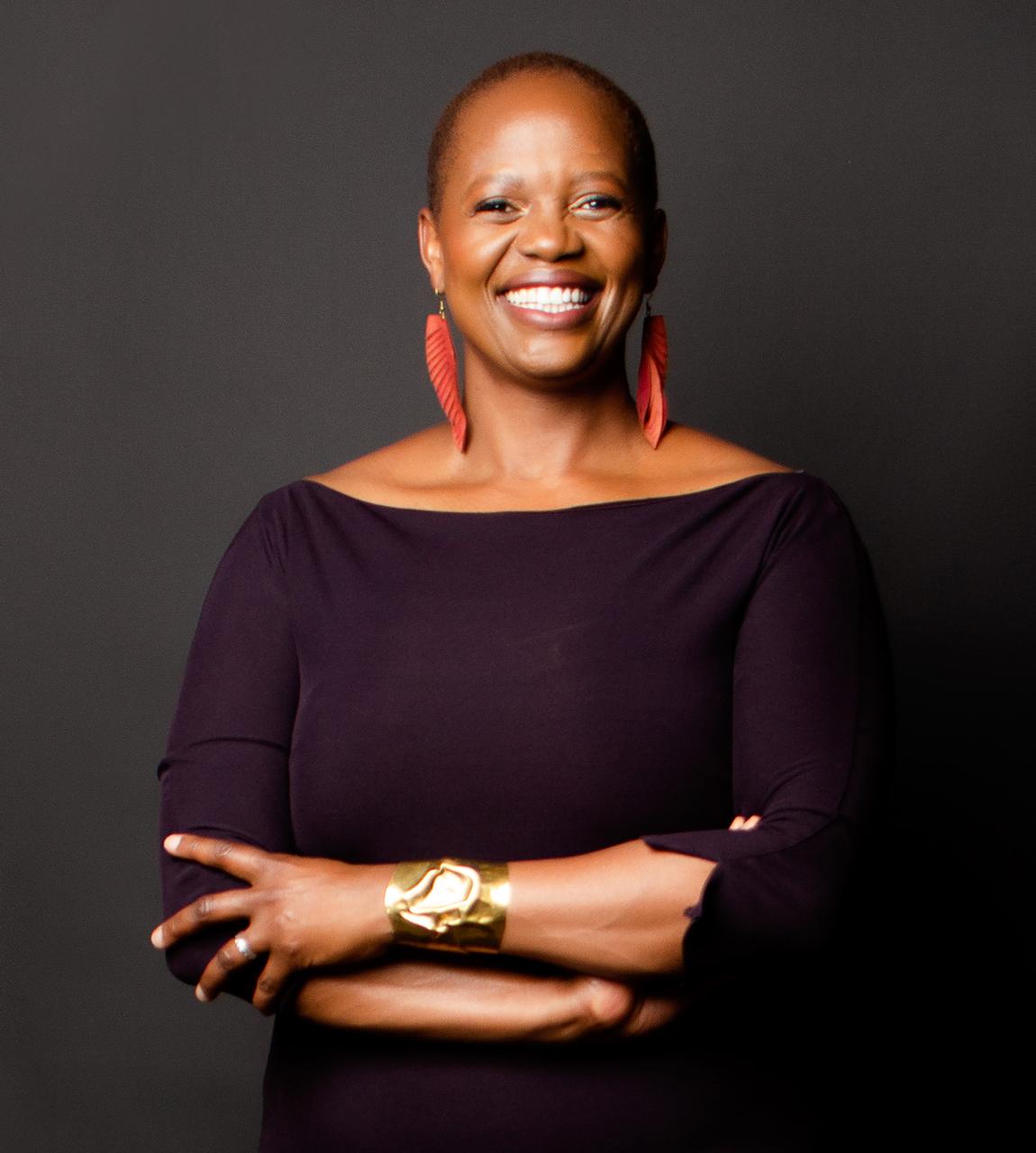 Wanjari Mathai: “I believe that with the right information and the right political will, our leaders can make the right choices for Africa.” Image courtesy Wanjari Mathai. |
Mongabay: This commemoration comes at a time when the world feels very different from when your mother was awarded the Nobel Peace Prize — more fragmented, with many countries turning inward. How does it feel to mark this 20-year milestone in such a context?
Wanjira Mathai: Well, listen: a lot has actually changed for the better in terms of solidarity around the environment. If you look at the delegations that used to attend environmental conferences then and compare them to now, the difference is striking. Today you see a far greater diversity of sectors present because people understand much more profoundly how integrated the environment is with everything else — and that it is, in fact, our life support system.
So no matter what else we do, we have to secure that. I believe that message is resonating. The real tension now is about balance — how we set priorities. Everyone wants to do this and that, but how do we find the right balance? To what extent do we prioritize the environment? Because we know that the countries that do so are the ones that are winning.
When you see China leading in green technology and moving up the timeline on its long-term climate strategy, when you see that 99-point-something percent of vehicles sold in Norway today are electric [Editor’s note: 88.9% in 2024, according to the Norwegian EV association], you realize this is not the same world we were living in 20 years ago.
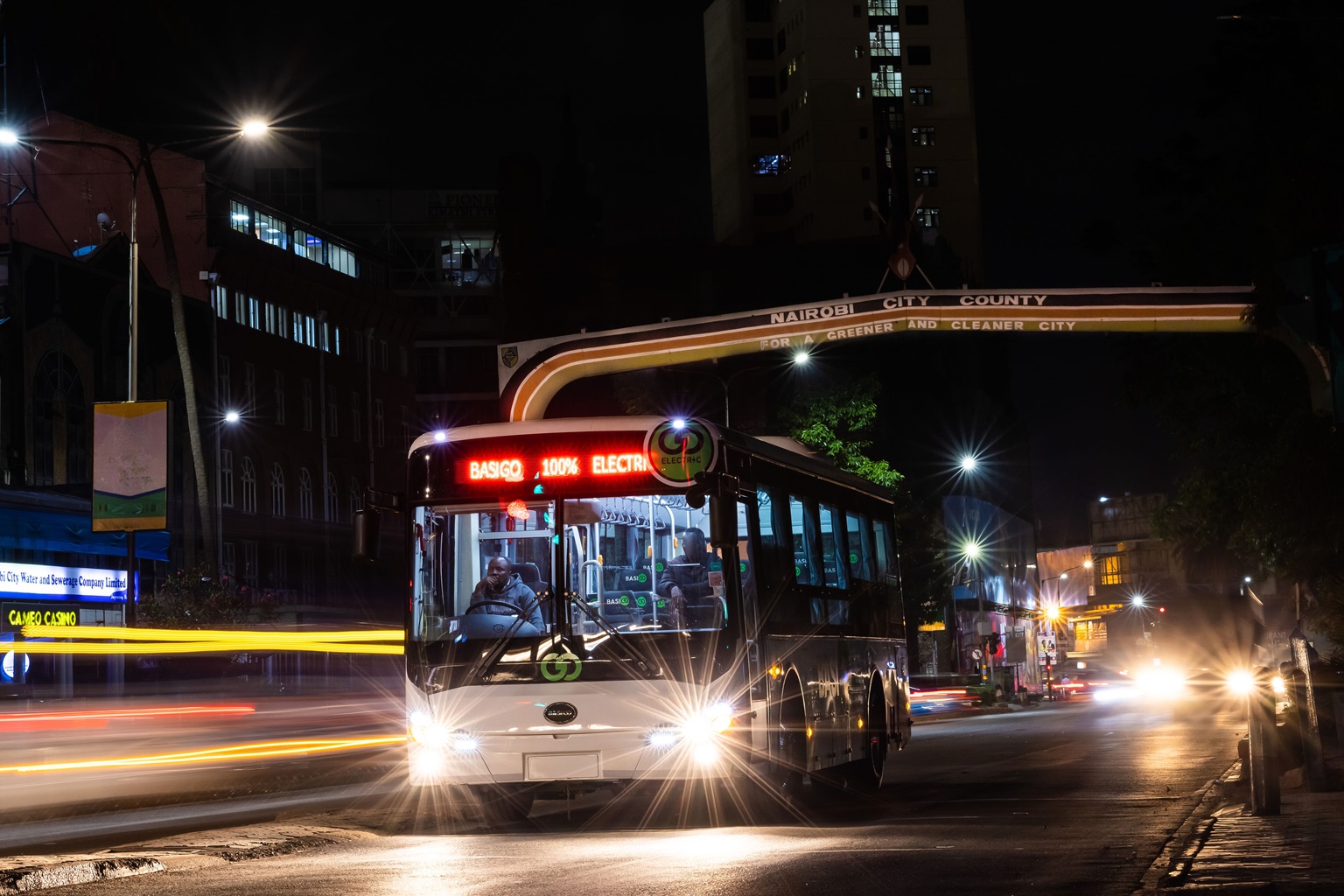
We know what we need to do. And especially for Africa, we have a real opportunity for a head start. We haven’t yet built all the infrastructure we need, which means we can choose a different path. We can decide to design walking cities, invest in electric buses, rethink mobility altogether. We have this beautiful equatorial climate where things grow, incredible vegetation and biodiversity. Let’s lean into that.
That’s a gift we have as Africans — and we should build our future around it.
Mongabay: I’m glad you mentioned all those bright spots. But the world has also changed in painful ways: the climate is warming, biodiversity is degrading, plastic pollution is far from solved, and many other problems are mounting. What do you think your mom would feel if she saw the state of the planet today?
Wanjira Mathai: Well, she would obviously not be happy, because when you look at the state of climate action, we are not doing well on any of the 45 metrics we are tracking. We have to move much faster. But we still have time, right? She would say, “Come on, get on with it.” We are not yet at the point of saying, “There’s nothing we can do, let’s just see what happens.”
We still have time. We can still act. We have what it takes: we have far better technology than we did 20 years ago, and we have the resources. Let nobody tell us they don’t exist.
And as countries, we also have to invest in our own priorities. I don’t think we’re going to see the same kind of global solidarity as before — people are looking inwards. But so must we.
We are a continent of more than a billion people. How do we work together? What is the African story? Take the African Continental Free Trade Agreement: we should be trading among ourselves. Right now, intra-African trade is about 15%. In Europe, it’s 80%. In Asia, about 60% of trade is between Asian countries. We have a lot of room to grow before we even look for partners outside.
And then there’s the free movement of people. I would love to see my daughter grow up in Kenya, do her Ph.D. in Nigeria, work in Morocco, and go on holiday in South Africa — without anyone telling her she needs 10,000 visas.
Mongabay: That’s an excellent point. Let’s unpack one aspect of that: governance and leadership — something your mom embodied in really powerful ways. How do you see Africa’s leadership on climate, biodiversity, plastic pollution and related issues today?
Wanjira Mathai: It’s very diverse. We really can’t talk about Africa with a single narrative. You have countries like Rwanda that are extremely progressive on the environment. I was there recently — they’re working seriously on air quality, and they banned plastics nearly two decades ago. They’re doing the best they can with what they have.
I believe that with the right information and the right political will, our leaders can make the right choices for us. We actually have a huge advantage: a climate that allows us to regenerate, incredibly diverse and delicious foods, and ecosystems that are still rich. We are also rediscovering some of our traditional foods and practices that were eroded through colonization. It’s time to reclaim that.
Now, it’s true that political will is uneven. In some places it feels absent; in others it’s very much alive. So we have to keep pushing.
And here’s the bright spot: what’s the average age in Africa today? Nineteen. There is a new generation in town that is not willing to accept mediocrity. If we don’t change for the better, they will change us.
Mongabay: When you look at governance around critical minerals, there’s a risk that benefits flow mostly to big corporations rather than local people in places like the DRC, for example. How can Africa ensure that those who own these resources actually benefit from them?
Wanjira Mathai: Our leaders have to make those choices. There’s a reason Botswana controls most of its diamond trade — and that model is evolving. With the Africa Green Industrialization Initiative, which emerged from the Africa Climate Summit, African leaders are starting to speak with one voice.
We have to stop being exporters of raw materials — not just minerals and critical minerals, but also food. We need to process more on the continent, add value, and create real demand for energy so we can lower costs and achieve universal access. We know what we need to do; now it’s about having the courage to do it.
Mongabay: Your mother believed deeply in grassroots organizing. For Africa’s young majority today, what message from her would resonate most?
Wanjira Mathai: One of my favorite things she used to say was, “It’s the little things people do that will make the difference.” Everyone has a “little thing.” For many young people, that might be fighting for justice, pushing for equity, or choosing to enter politics.
When I was growing up, I assumed politicians were all old. Today, that’s no longer true: many African ministers are younger than I am. This is really the time for African youth. The youth dividend is ripe, and what I love is that they’re not waiting to be invited in — they’re stepping in on their own.
Mongabay: The Global Environment Outlook was released yesterday. It points to the world in peril, whether climate, biodiversity or plastic pollution. Are there any areas of hope that you see that can galvanize this continent to move forward?
Wanjira Mathai: Absolutely. You know, I’m an optimist. For Africa to be the hub of renewable energy — 60% of the best solar potential in the world — we can make decisions that work for us. The solar revolution is real. I was in Ethiopia; they’ve made a policy decision to end, with immediate effect, the importation of fossil fuel vehicles. They’ve gone EV immediately like that.
We know we can do it. There are a lot of bright spots. We must be inspired by the bright spots and reject a narrative that sees us as defeatist. We cannot be. Look at this beautiful weather. Many people are coming from a place where there is no sun.
Mongabay: She also was an environmental defender and faced a lot of persecution, as we know in this country. What do you think about the state of environmental defenders today?
Wanjira Mathai: We need to up the protection of environmental defenders. As we are seeing urbanization grow, we are seeing the growth of our economies, nature is at risk — and our environmental defenders are the frontliners in that defense. We have to increase our defense of them.
We have to ensure that there are policies and protections for environmental defenders until our policy catches up to the fact that there is no dichotomy between “you can develop” and “protect the environment.” In fact, there is no country that has developed by destroying the environment.
Mongabay: What do you think about the state of climate justice today: people on the frontline, communities and Indigenous people?
Wanjira Mathai: A lot of pressure on people, but she would be very proud of the gains. Out of COP we saw, for the first time, $1.8 billion assigned directly to land tenure and increasing land tenure for Indigenous people. The TFFF that has a 20% allocation for Indigenous people. We have to lean into that and make sure that it actually happens.
There are real gains being made — not all is lost.
Mongabay: What would you like negotiators from the U.N. Environment Assembly to take from your mother’s story and inspire them to take action?
Wanjira Mathai: I think one of the most important things is to put people first. That whatever decisions, whatever negotiations, whatever issues surface as the most important, they center on the lives, livelihoods, identities and cultures of people. Their people. That’s the most important.

Mongabay: What lessons do you take from your mother to do the work that you do today, whether at WRI or any other board you serve on, to move this green agenda forward?
Wanjira Mathai: As I said, the idea that you have to identify a thing that you care about and really be patient, persistent and committed to the cause — that was for me the biggest lesson. Stay on the race, fight the good fight, stay the course, and finish the race.
Mongabay: How does it feel to be in your mother’s shoes and in your mother’s image, acting on her behalf?
Wanjira Mathai: I see myself basking in her light.
Mongabay: Is it something that’s challenging?
Wanjira Mathai: No. Basking in the light should be joyful. It’s very joyful for me.
Mongabay: Do You think your mother would be happy with where you are right now?
Wanjira Mathai: Tonight we celebrate with 240 people the 20th anniversary [of her Nobel win]. They paid to come and celebrate with us. I think she would be happy. The legacy grows. We have the Wangari Maathai Institute, we have the Wangari Maathai Foundation, we have the Green Belt Movement still growing. The legacy continues. She would be proud.
Mongabay: Do you think the government of Kenya has moved along with that legacy?
Wanjira Mathai: They have no choice, as I said.
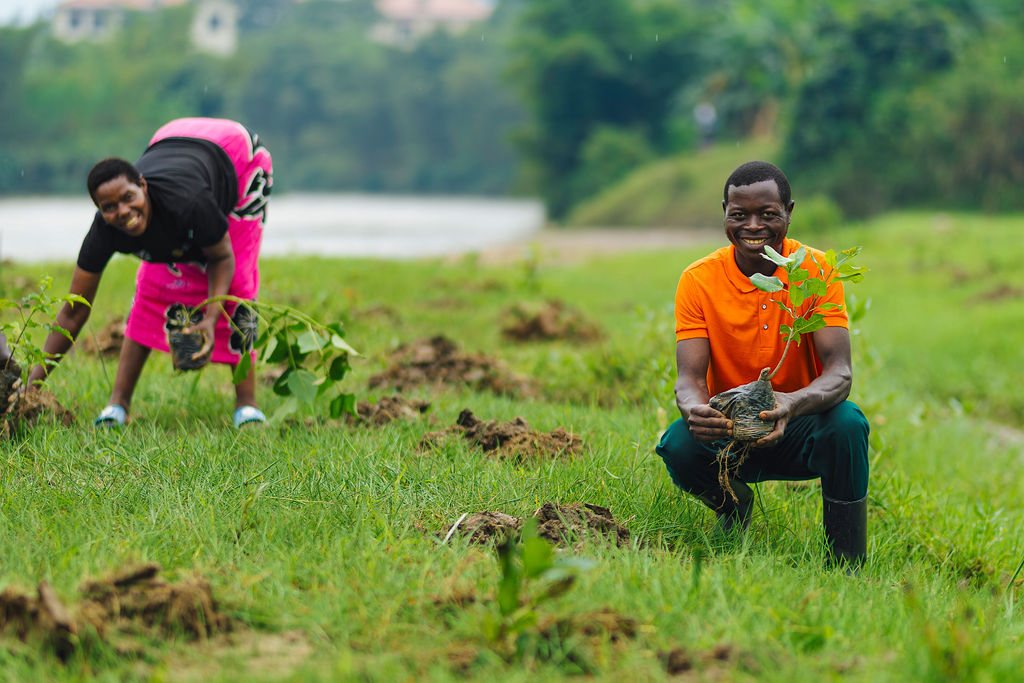
Banner image: Planting trees in Rwanda’s Nyabihu district. Image courtesy Serrah Galos.
Land use change impacting seven planetary boundaries, solutions urgent, say scientists
Uganda’s eco-feminists are taking on mining and plantation industries
Warming triggers unprecedented carbon loss from tropical soils, study finds
In Burundi, one-time combatants who razed forests now raise seedlings
FEEDBACK: Use this form to send a message to the author of this post. If you want to post a public comment, you can do that at the bottom of the page.
Credits