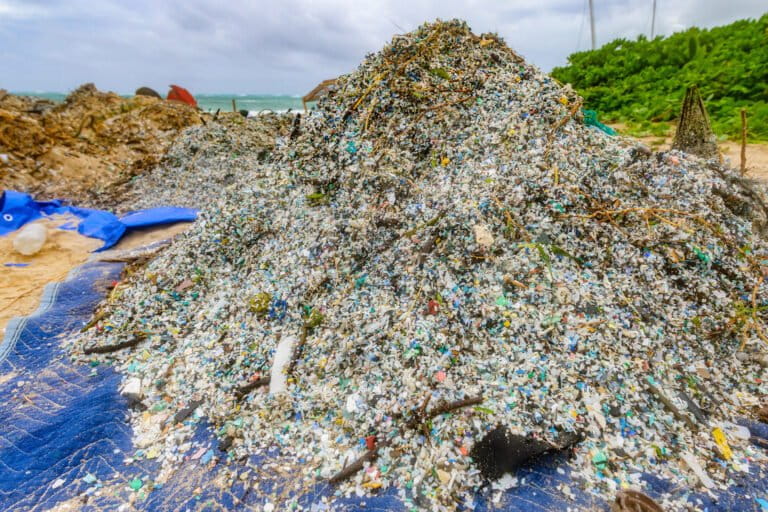
- Plastic pollution is a growing problem in many reef ecosystems, and its effects are not well understood.
- Most previous research has focused exclusively on adult corals and their interactions with plastic particles, rather than larval stages of coral or the chemicals from plastic that leach into water.
- In a new study, researchers exposed coral larvae from two different species to four different plastic chemicals and found that they negatively impacted coral larvae settlement.
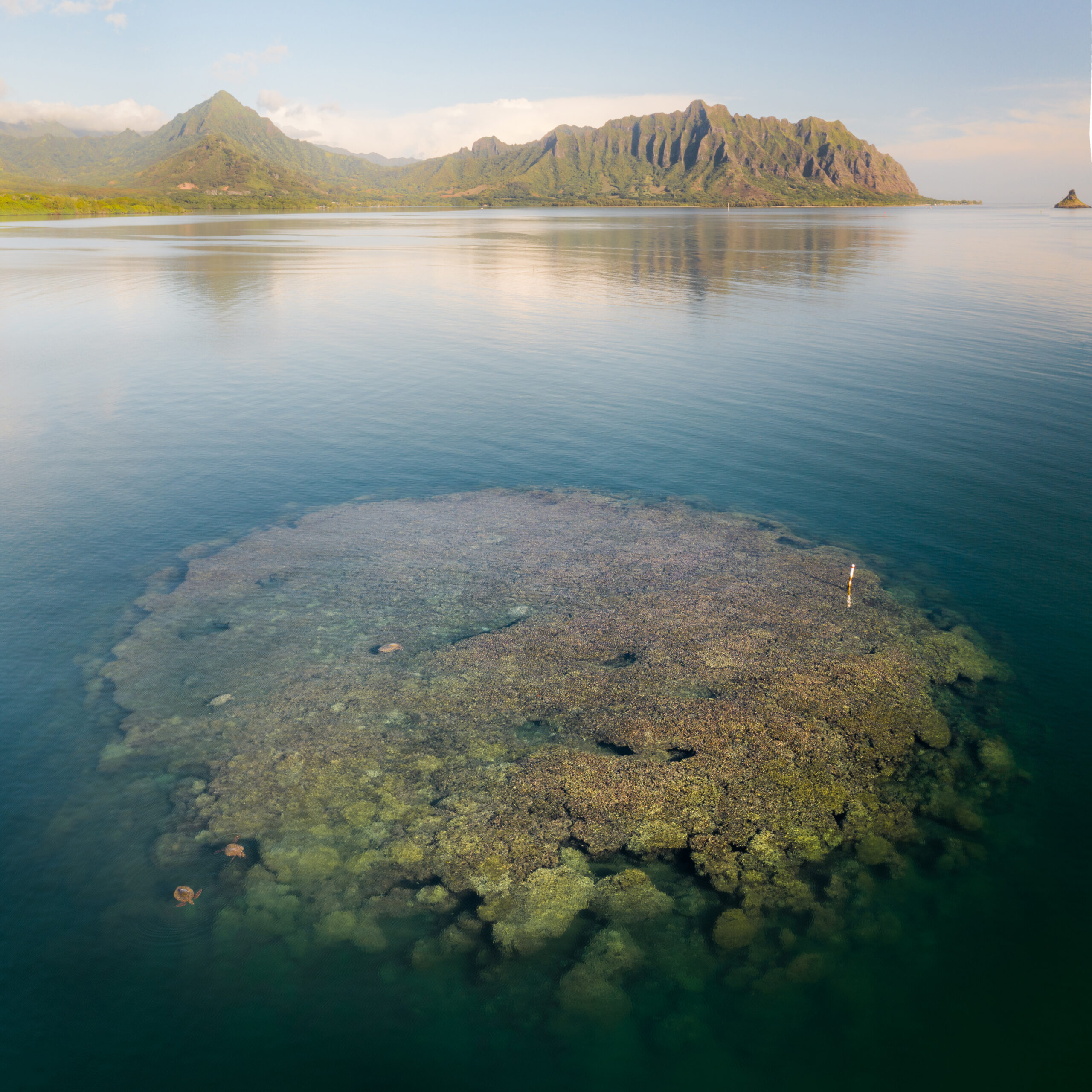
As the sliver of a new moon shines over Kāneʻohe Bay, Oʻahu, millions of tiny orbs ascend from a reef and swirl in the water column. These spheres are bundles of coral eggs and sperm responding to lunar cycles and chemical cues in the water that tell them when to fertilize and where to settle down for their next phase of development.
The Hawaiian archipelago’s position near the Pacific Garbage Patch means these bundles often share the water column with microplastics, nefarious little particles that may interfere with these natural chemical cues. Most previous research on corals and microplastics has focused on the effects on adult corals of ingesting or absorbing plastic particles. Few studies have addressed larval stages of coral development or the impact of water contaminated with plastic residue, known as leachate.
The effects of leachate on coral reproduction are complex, according to coral biologist Keiko Wilkins, a researcher at the University of Hawaiʻi at Mānoa. Her most recent study, published in Frontiers in Marine Science, details how leachate affects two different phases of coral reproduction. “The effects that we’re seeing on the fertilization and the effects that we’re seeing on the larvae settling are very different,” Wilkins said.
Corals reproduce sexually through one of two methods: spawning or brooding. Spawning coral species release eggs and sperm into the water for external fertilization, while brooding species release larvae that have already fertilized internally. Plastic leachate negatively impacts fertilization rates of both methods, according to Wilkins’ previous research. For the new study, she assessed the effects of leachate on a secondary phase of coral reproduction when the larvae settle onto a safe surface and begin growing. This is an especially vulnerable stage for coral reefs because if the larvae cannot successfully settle, they cannot establish and maintain reef structure.

Wilkins exposed both spawning and brooding coral species to leachate solutions from plastics commonly found in debris in Hawaiʻi. Overall, leachate exposure reduced larvae settlement rates of both spawning and brooding corals, but the impact was more severe on spawning coral larvae. Polyethylene leachate was more noxious to both species than nylon and polypropylene leachates. The extent of these effects differed across species, leachate chemicals, and point in time in the study, which Wilkins said are factors to explore in future studies. Interestingly, some brooding coral larvae had increases in settlement rates when exposed to leachate from high-density polyethylene.
“One of the things we find in plastics are what we call endocrine disrupting chemicals, which means it confuses the heck out of the coral, and it confuses the heck out of the egg and sperm,” said marine biologist Bob Richmond, research professor and director of the Kewalo Marine Laboratory at the University of Hawaiʻi at Mānoa.


The chemical cues from leachate could be misleading in multiple directions, Wilkins said. Some may prompt a stress response that triggers premature settlement. Others may provide cues that the larvae erroneously interpret as indicators of good conditions for settlement. Further research is necessary to uncover specific ingredients of those chemical cues, she said.
Understanding how plastic impacts the earliest stages of coral life is critical to ensuring reefs have the ability to not just endure stress, but also to replenish themselves through sexual reproduction, Richmond said. “The whole idea of sexual reproduction is to really try to keep genetic innovation there because you never know what the next stressor is going to be,” he said, reflecting on his 51 years of coral research experience. “Whenever I see a reef that’s dominated by big old corals and no coral recruits, no young ones, that’s what really worries me the most.”
This research could inspire similar studies on coral populations outside of Hawaiʻi, said coral biologist Allyson DeMerlis, a postdoctoral researcher at the University of Miami in Florida who studies coral responses to environmental stressors, and was not involved in the new study.


“I think we know that microplastics are obviously a problem for the environment, but this is kind of one of those pivotal studies showing that they have chemical influence as well, that just being in the water can cause problems for corals in the long term,” DeMerlis said. “So it was really exciting research, but really kind of concerning as well.”
The scientists acknowledge that rising ocean temperature is the single biggest threat to coral reefs across the globe. But they argue that plastic pollution is a growing worldwide problem that presents additional challenges for coral and warrants further research.
Citation: Wilkins, K. W., & Richmond, R. H. (2025). Unseen threats: negative effects of microplastic leachate on coral planulae settlement. Frontiers in Marine Science, 12, 1596594. https://doi.org/10.3389/fmars.2025.1596594
Kari Goodbar is a graduate student in the Science Communication M.S. Program at the University of California, Santa Cruz. Other Mongabay stories produced by UCSC students can be found here.
Credits