- Indigenous women leaders play a key role as defenders of their territories, biodiversity and ancestral knowledge.
- From their communities, they lead environmental restoration, collective health care, political participation and economic autonomy.
- Three women leaders from Peru, Mexico and Colombia share their stories of resilience and leadership in territories beset by violence as well as social, economic and environmental challenges.
- They do it by caring for bees, water, and the lives of Amazonian peoples, not only for the present but for future generations.
Indigenous women leaders don’t only sustain life in their territories; they are also active defenders of water, seeds, ancestral knowledge and biodiversity. Together, they lead environmental restoration processes and care for the health of their communities. They also pave the way for political participation, claiming spaces where decision-making affects their communities.
“Our fight is collective and our resistance is ancestral. Let’s continue sowing resistance, sowing identity,” says Ketty Marcelo, president of the National Organization of Indigenous Andean and Amazonian Women of Peru (ONAMIAP).
Marcelo says the legacy of their female ancestors is an inspiration and also a guide for Indigenous women to face down historical challenges, resist structural racism and violence, promote economic justice, and strengthen identity in the next generation.
In this article first published by Mongabay Latam for the International Day of Indigenous Women on Sept. 5, we share the initiatives of three women leaders from Peru, Mexico and Colombia, whose actions are paving the way toward a better future for Indigenous people.
Peru: Naming water to protect it
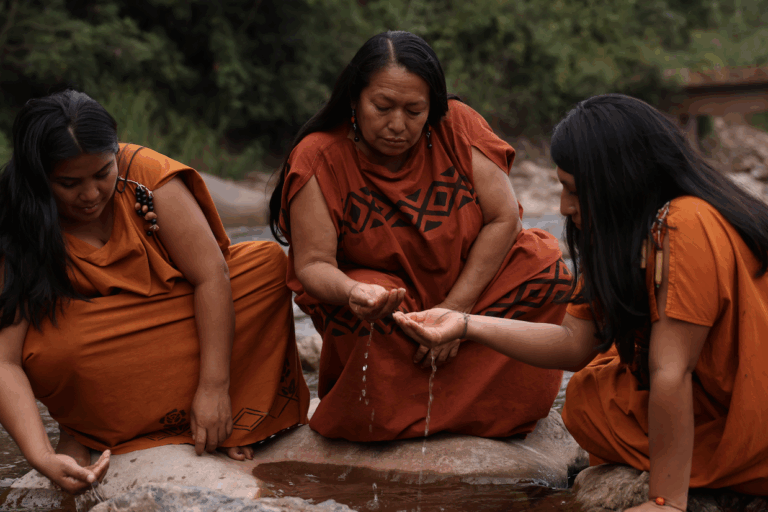
In Indigenous territories in Peru, each water spring has a name, and each of them is a symbol of resistance. Women are the guardians of the water, and each source is enshrined with a ceremony. In a healing ritual, the elders speak to the water, while the rest of the community observes the surroundings and registers the name in the communal records, marking the place as a sacred location.
“With the ceremony, each of our springs is registered with its own name so that the state can’t take them away from us,” says Marcelo, a leader of the Yanesha-Asháninka people. “There is a law of water resources where the state registers them and says they are national wealth. Within our autonomy as native and campesino communities, we not only register the springs in our records but also the ancestral paths, the territory and all the biodiversity within it.”
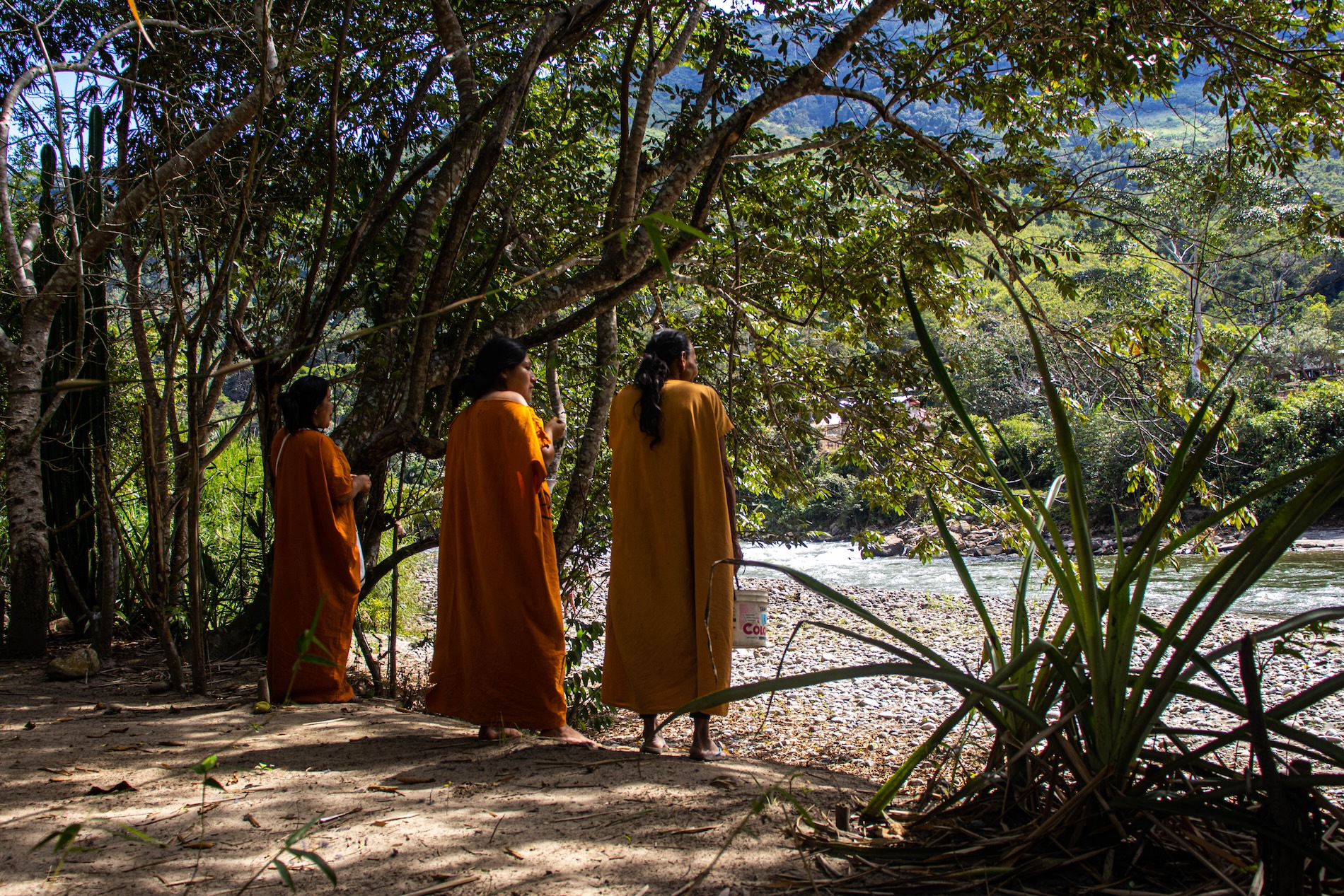
When the Yanesha-Asháninka started this process in 2021, the women asked the communities how many springs were in their territory. The answer was usually a small number, “between two and five,” Marcelo says. But as they moved forward, the reality beat their expectations. “We would find between 20 and 25,” Marcelo says. “That’s recorded with each community, and when the local government or the state come to register, take and sell the water, the community gets their records to enforce them.”
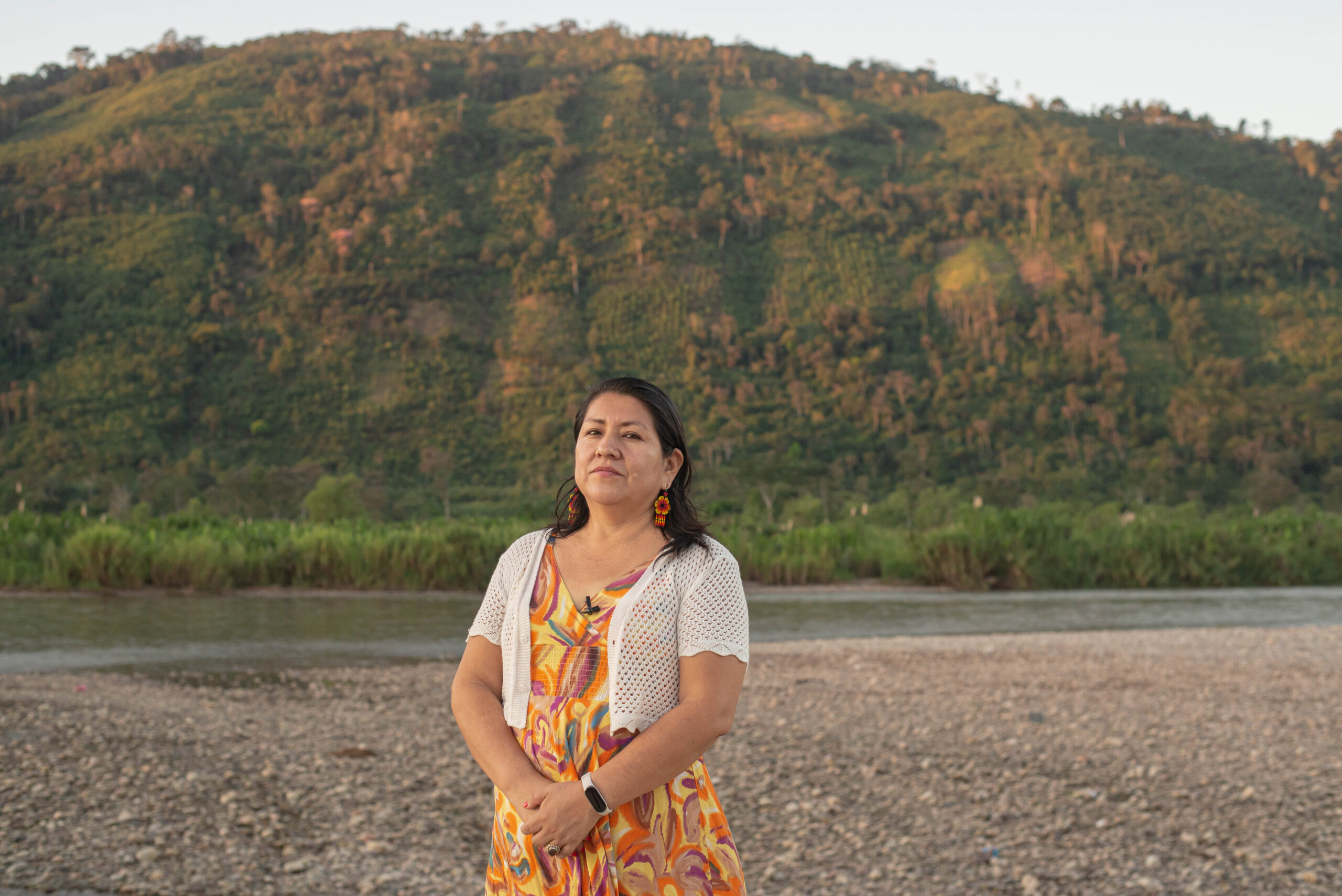
Over the past three decades, many of these sources have suffered from intensive agriculture. In parts of the Peruvian rainforest, cultivation of ginger and turmeric have damaged the soil, impacting local ecosystems. Indigenous women are looking for ways to tackle these threats, which are exacerbated by the climate crisis.
That’s why each spring has a water protector. “The person who has the adjacent plot … takes that responsibility. One of the rules is not to log within a 50-meter [164-foot] radius, and although crops are allowed, each protector must take care of [the area],” Marcelo says.
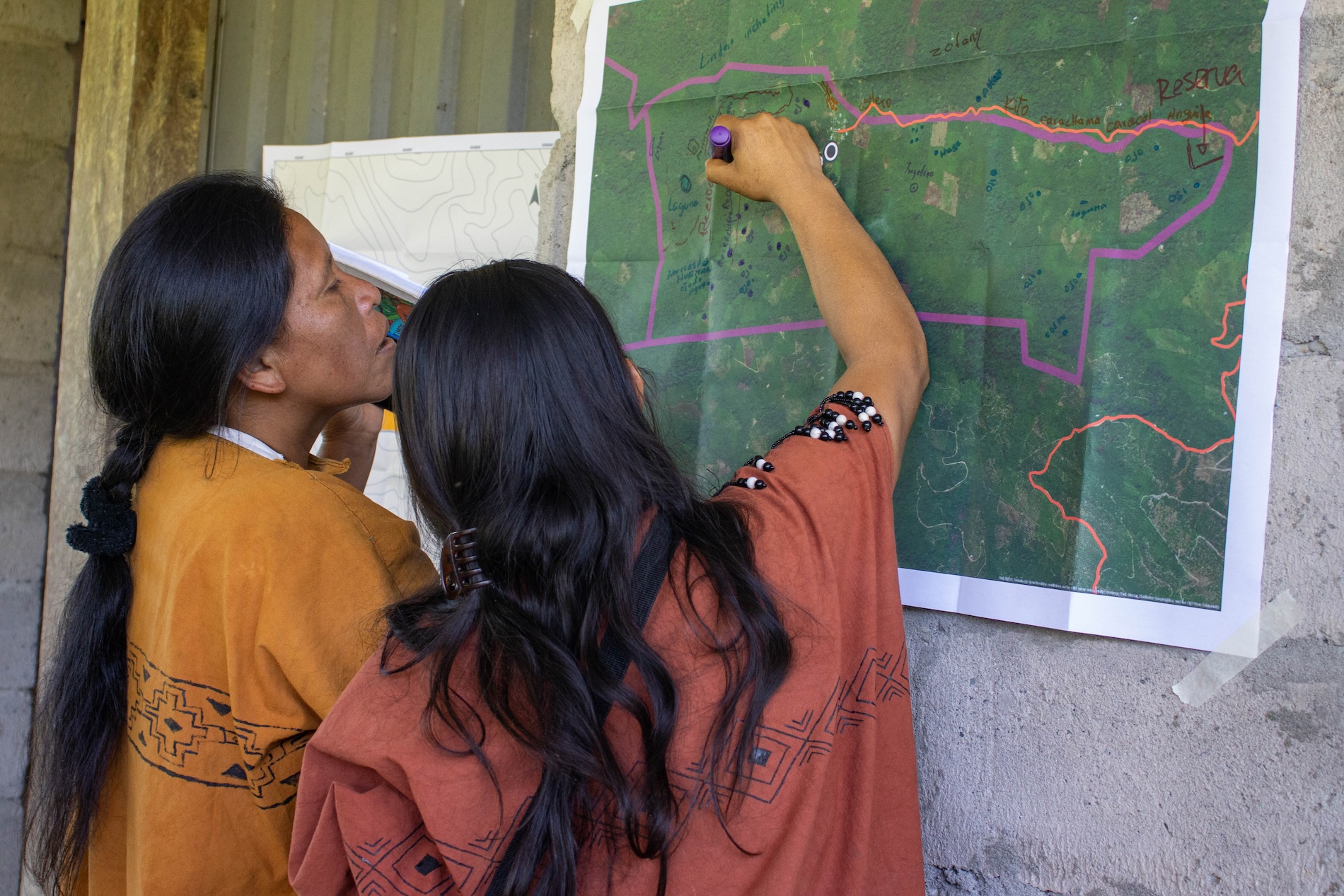
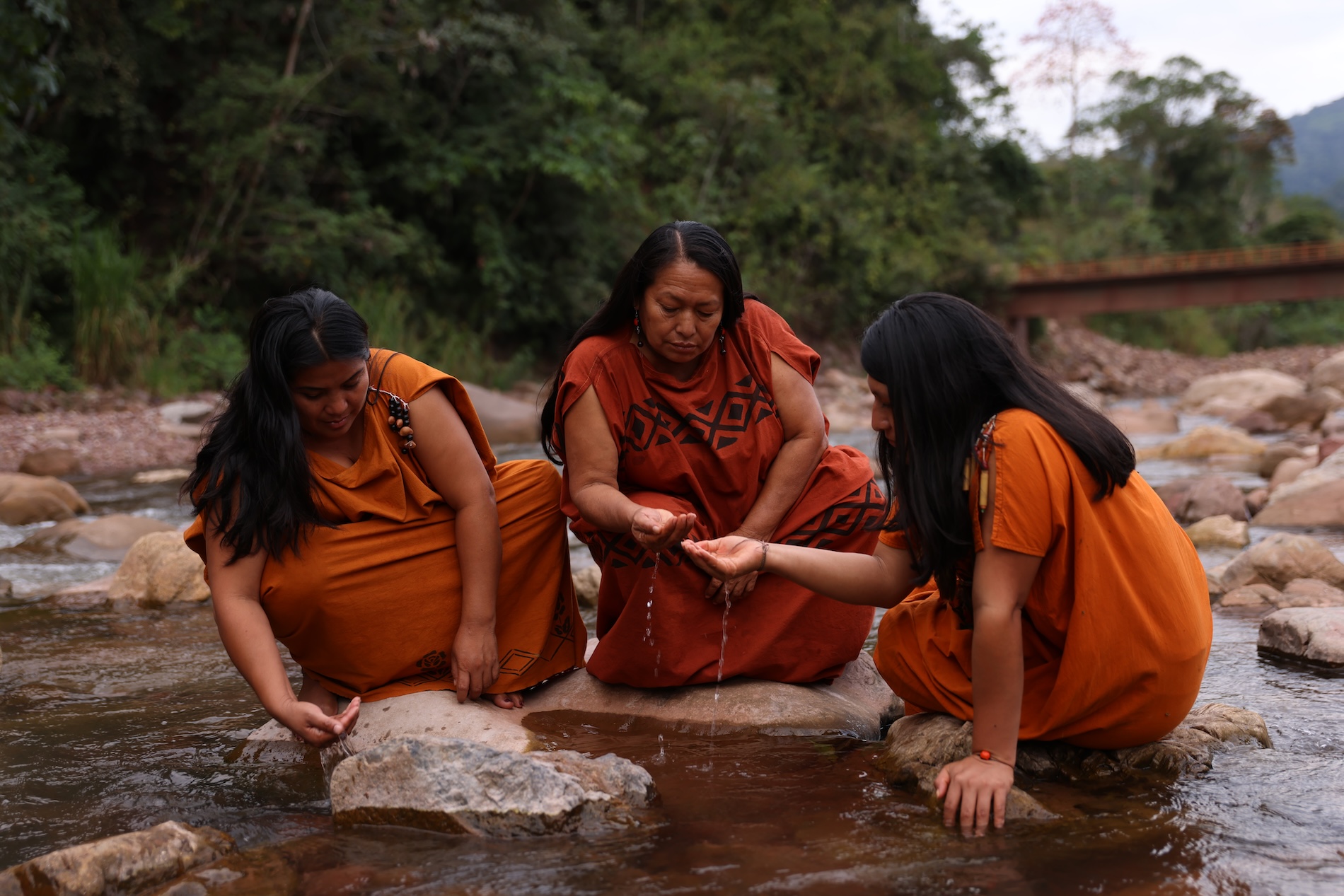
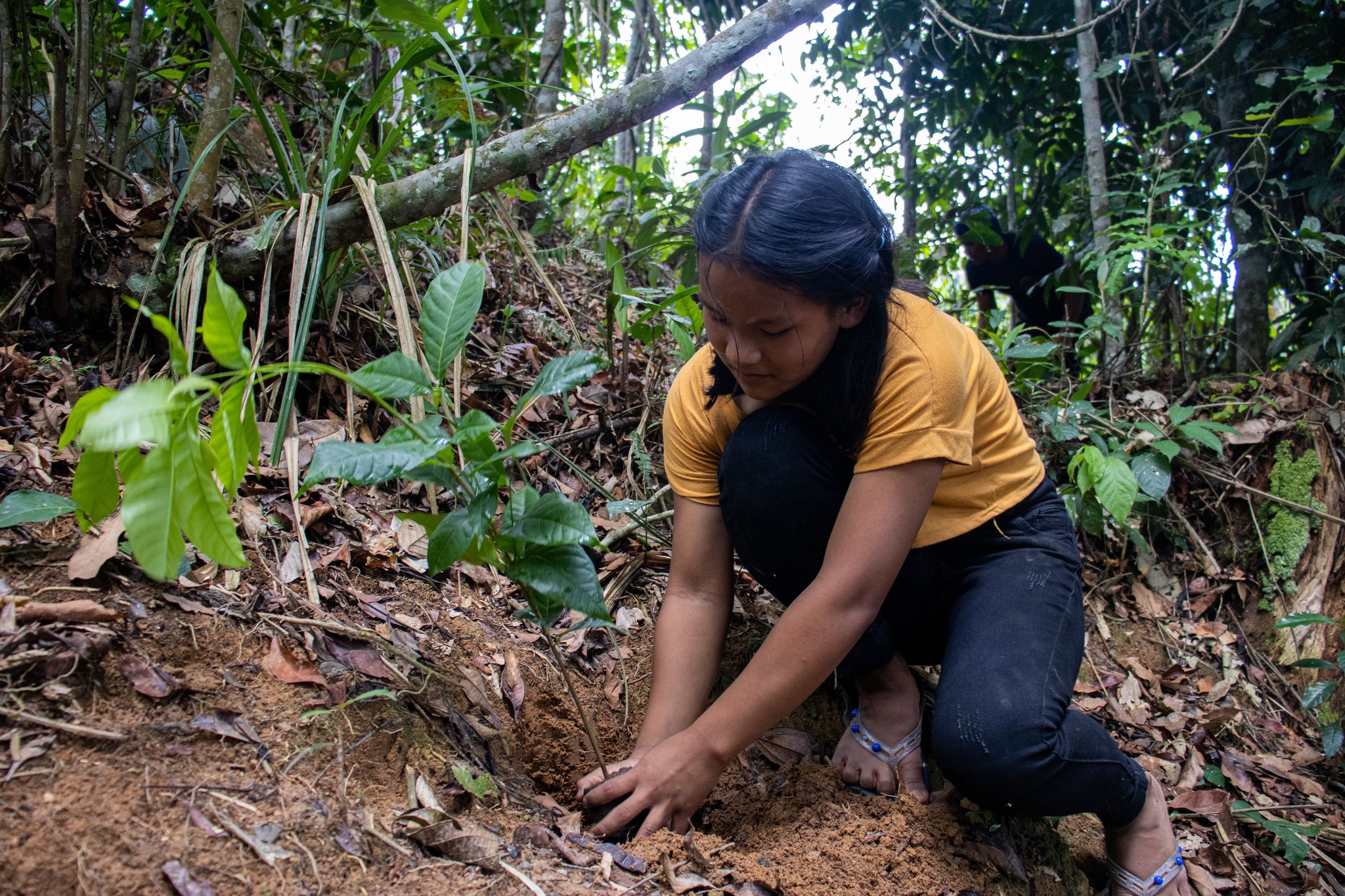
Locals undertake complementary activities around each water source, such as plots dedicated to medicinal plants and ancestral crops — like sweet potato, maona, native beans, taro and squash — as well as nurseries for reforesting native trees, like mahogany, palo lagarto and huayruro.
“And this is criticism of the government, because the municipalities say, ‘Let’s do a big reforestation campaign,’ but what they do is the easiest thing: they plant [nonnative] eucalyptus and pine,” Marcelo says. “Although this may work for property lines, it dries up the springs. That’s not good. For our community nurseries, we consider what each community needs. For example, we are starting to build a moriche palm nursery. It’s a species that generates quite a lot of water.”
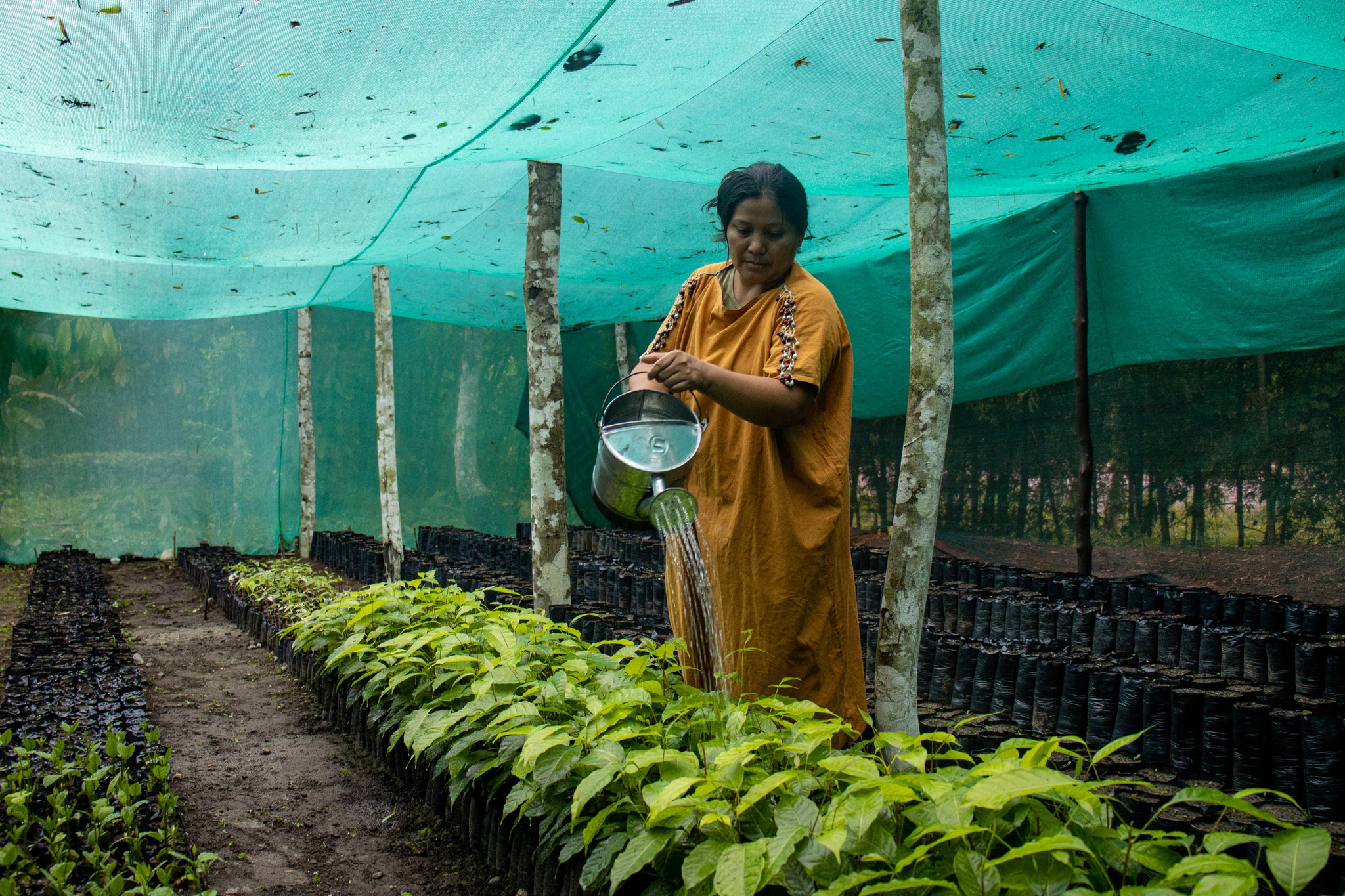
Each community works not only with women but also with the guidance of elders and the energy of youth, Marcelo says.
“Recovering our sources of water, our seeds, our soils and our biodiversity also means recovering our wisdom and strengthening our identity,” she says. “For us it’s very important to secure our territories, because a well-managed territory secures our historic continuity as Indigenous peoples.”
Mexico: Beekeeping to defend the territory
Beekeeping, says Ana Lilia Prado, an Indigenous Purépecha beekeeper, is like playing chess.
“You discover that each hive is its own world,” she says, because each has its own dynamics. Some produce more honey and others more pollen. Some are particularly clean, while others are very well-organized. Some hives have a well-established queen, and others are just beginning to raise theirs.
“You need to know which one you can move from here and which one goes there, so that not only the hive but the entire apiary improves,” Prado says.
For Indigenous women in the Purépecha Meseta in Mexico, beekeeping is more than just a source of livelihood: it’s a way to defend the territory and biodiversity in the face of expanding monocultures of avocado and potato here in Nahuatzen municipality, Michoacán state. In a community threatened by violence, organized crime and the destruction of forests, beekeeping has become an act of resistance.
“[People] need a territory for these crops and they take ours with threats or by buying them for a low sum,” Prado says. “Between April and May, a time of drought, they light forest fires and with that justify [planting crops because] there are no trees left. Then they keep logging, preparing the land for monocultures.”
Beekeeping arrived in Nahuatzen in the middle of political turmoil. In 2015, after a conflict between the community and the local government, the community decided to establish self-governance, Prado says. It wasn’t an easy process; there were deaths, political imprisonments, and a lot of fear.
“The people got organized and created a citizen council. The political parties left and we achieved representation based on our own rules as a community,” Prado says. “There are many open wounds and it looks like justice is increasingly hard. But projects started emerging thanks to the work in the council. One of them was beekeeping, which back then was one of the smallest [projects].”
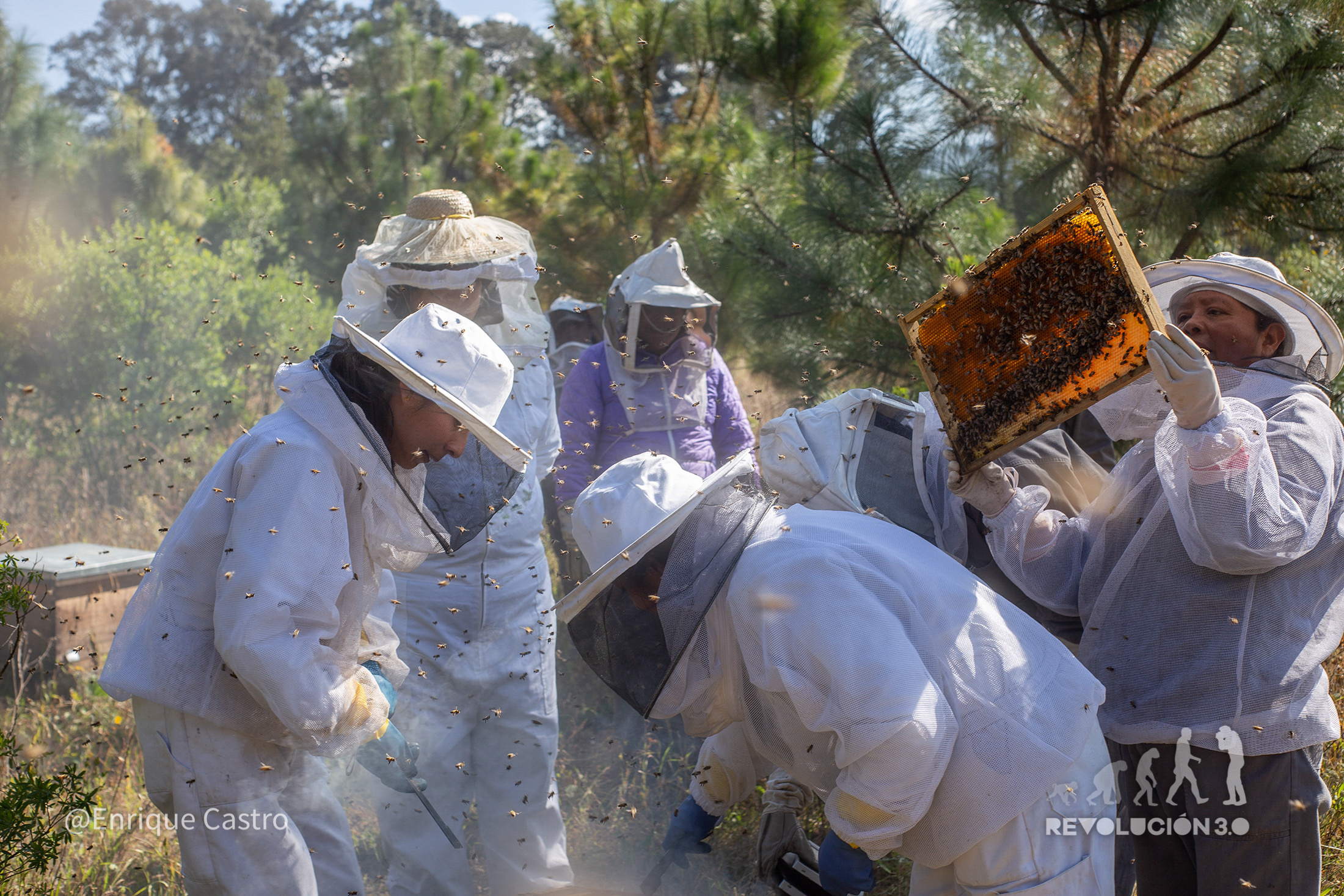
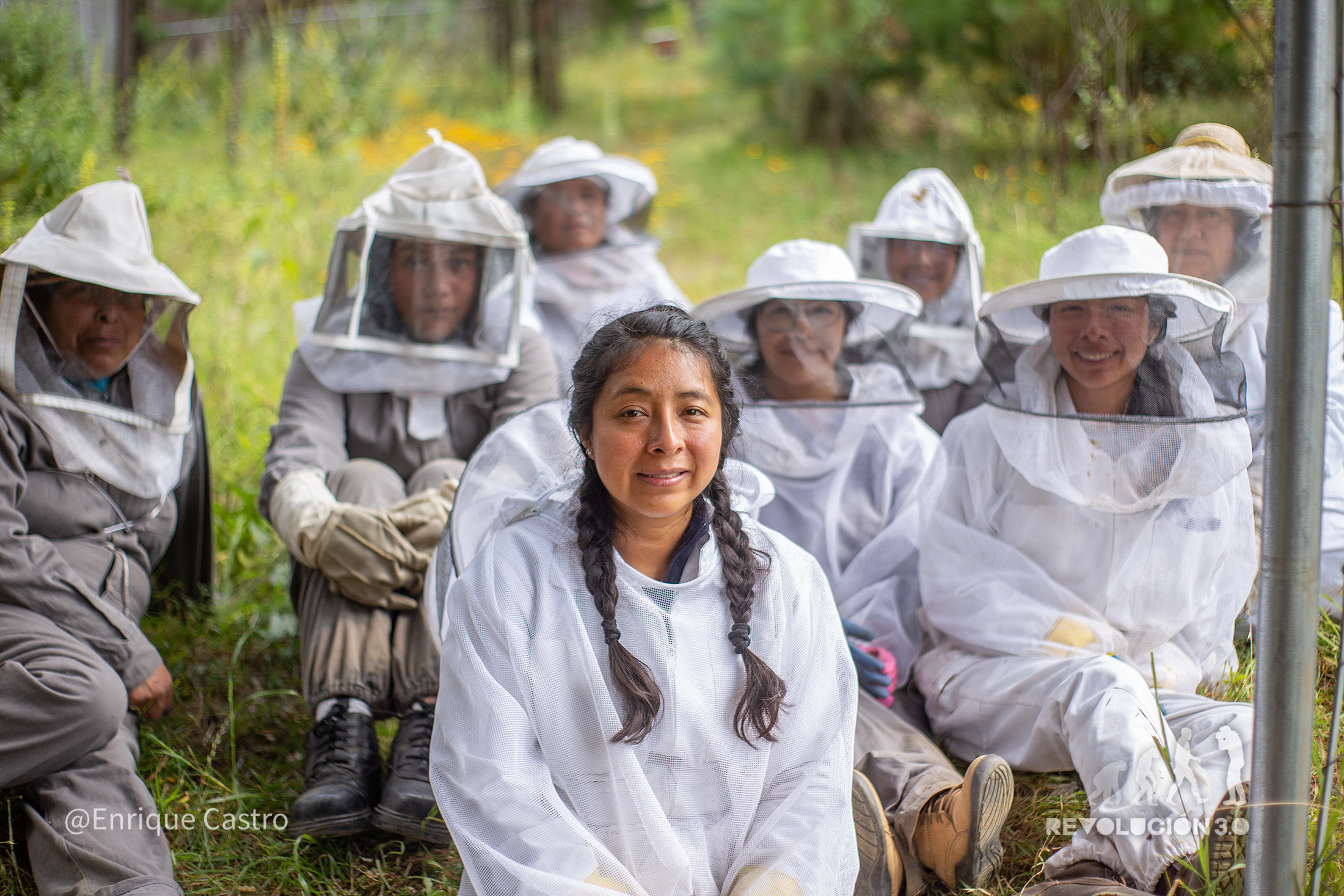
The community’s women became beekeepers without knowing much about it. Although they’d been told that working with bees was relatively easy, they soon discovered the opposite, having to lug heavy boxes through long forest paths, risking running into loggers.
There was also another problem: the most basic things, like protective suits and gloves, were designed for men. Their challenge wasn’t only redesigning the equipment to fit them, but also getting the resources and finding training. They also faced sexism within their own community.
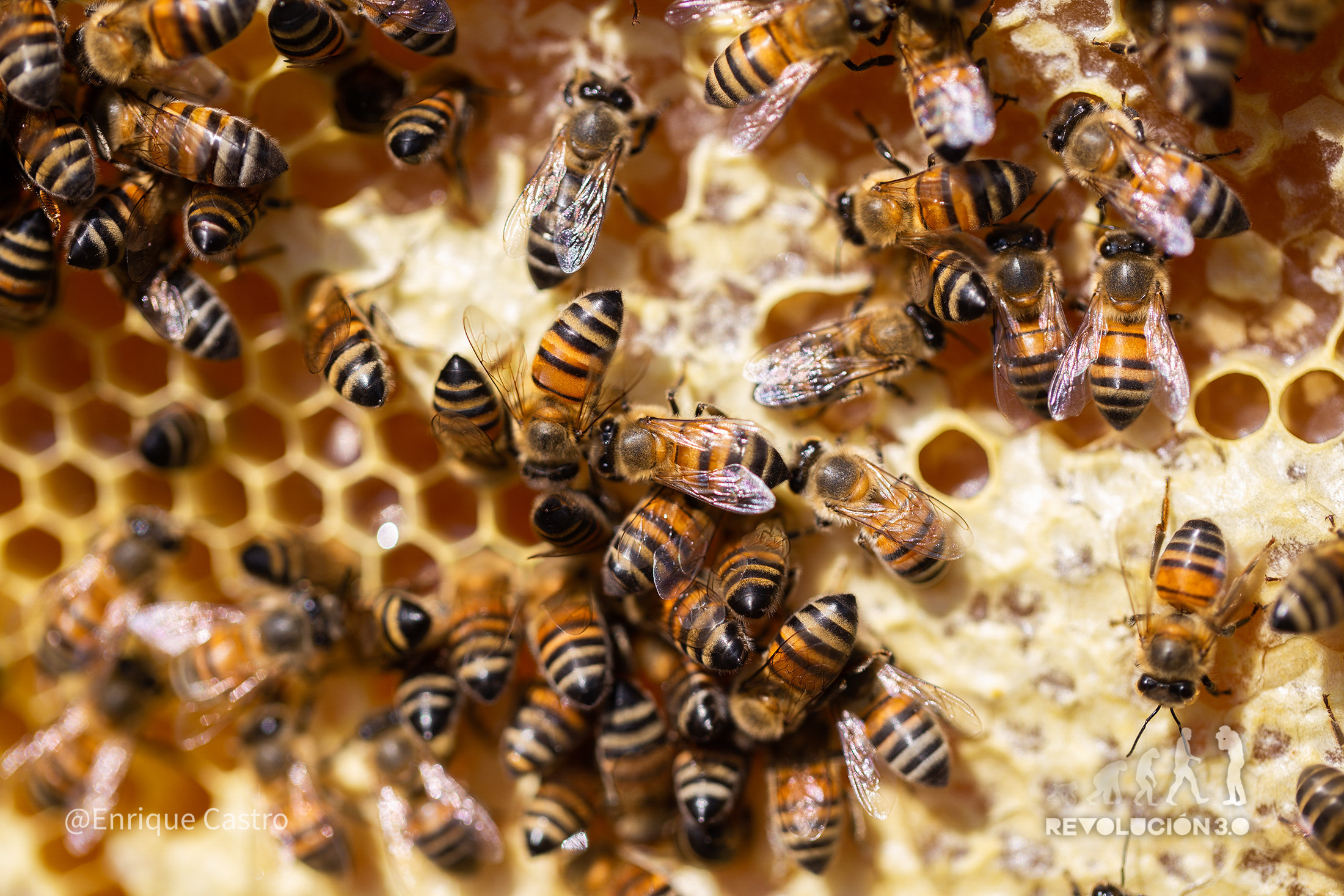
“They would tell us, ‘What do you know? Do this,’ but we did it and that didn’t work,” Prado says. “The bees were dying and we went through a lot to save them. But we had a background of political fighting in 2015. Back then, we organized ourselves because we knew we were able to build our own knowledge.”
The benefits of beekeeping weren’t immediate, but over time, the women noticed that the apiaries had succeeded in stopping the advance of logging. “But we still faced risks. One of them was attacking us by starting fires,” Prado says.
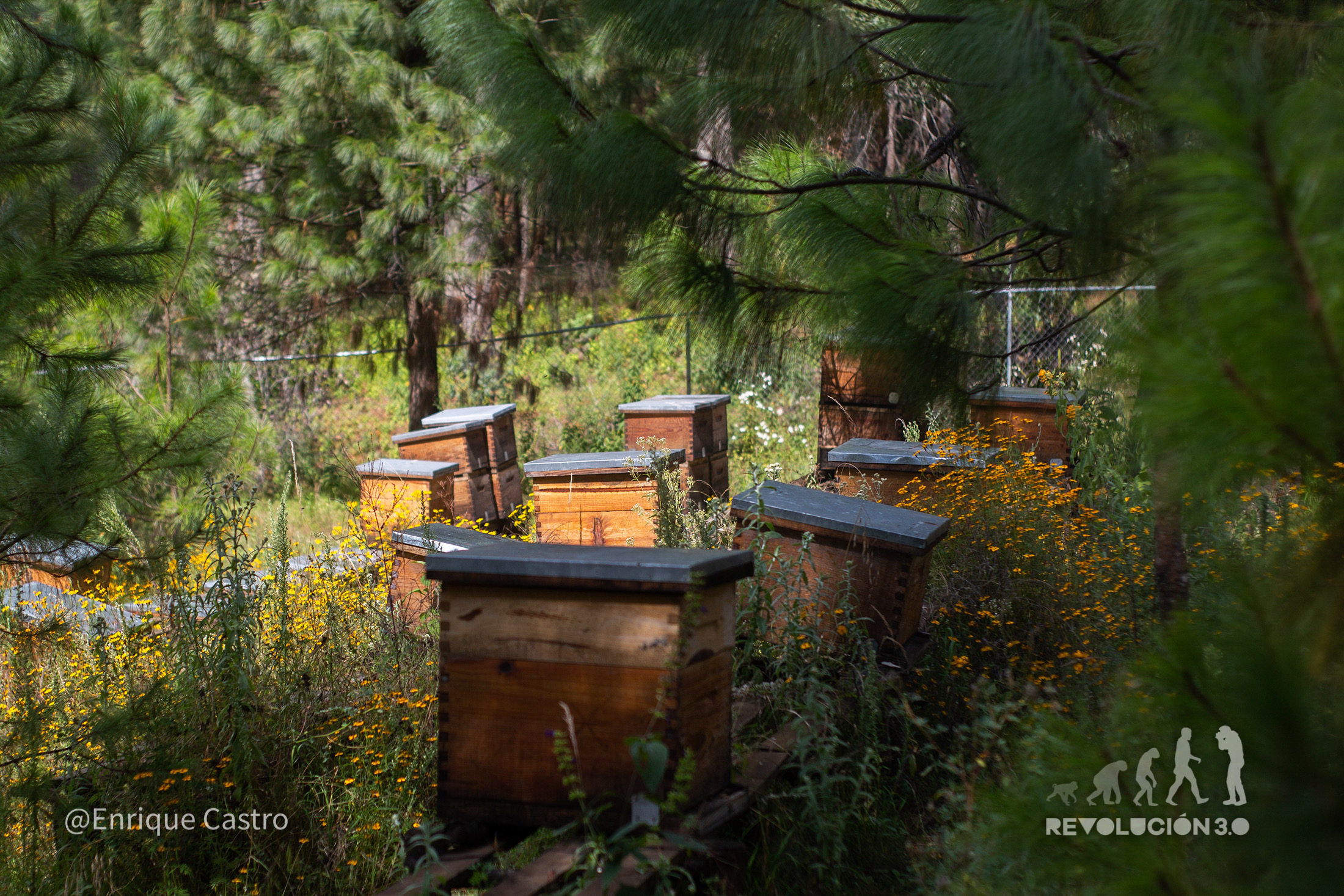
In 2022, Prado survived the worst attempt yet to destroy the hives. “I got to the fire and went through it, without thinking of the consequences,” she says. She disregarded the risk of burns; she just wanted to save the bees. “I remember not knowing what to do … the only thing there was dirt. I started throwing it with my hands, feeling I didn’t have the energy. I didn’t notice the smoke, the fire getting stronger.” She only stopped when she ran out of breath, while the flames, coming from at least three spots in the apiary, consumed everything.
“Shortly before, we had filed lawsuits regarding water and some cases of avocado crops. Coincidentally, the fire came after that, started from several points to achieve their objective,” she says.
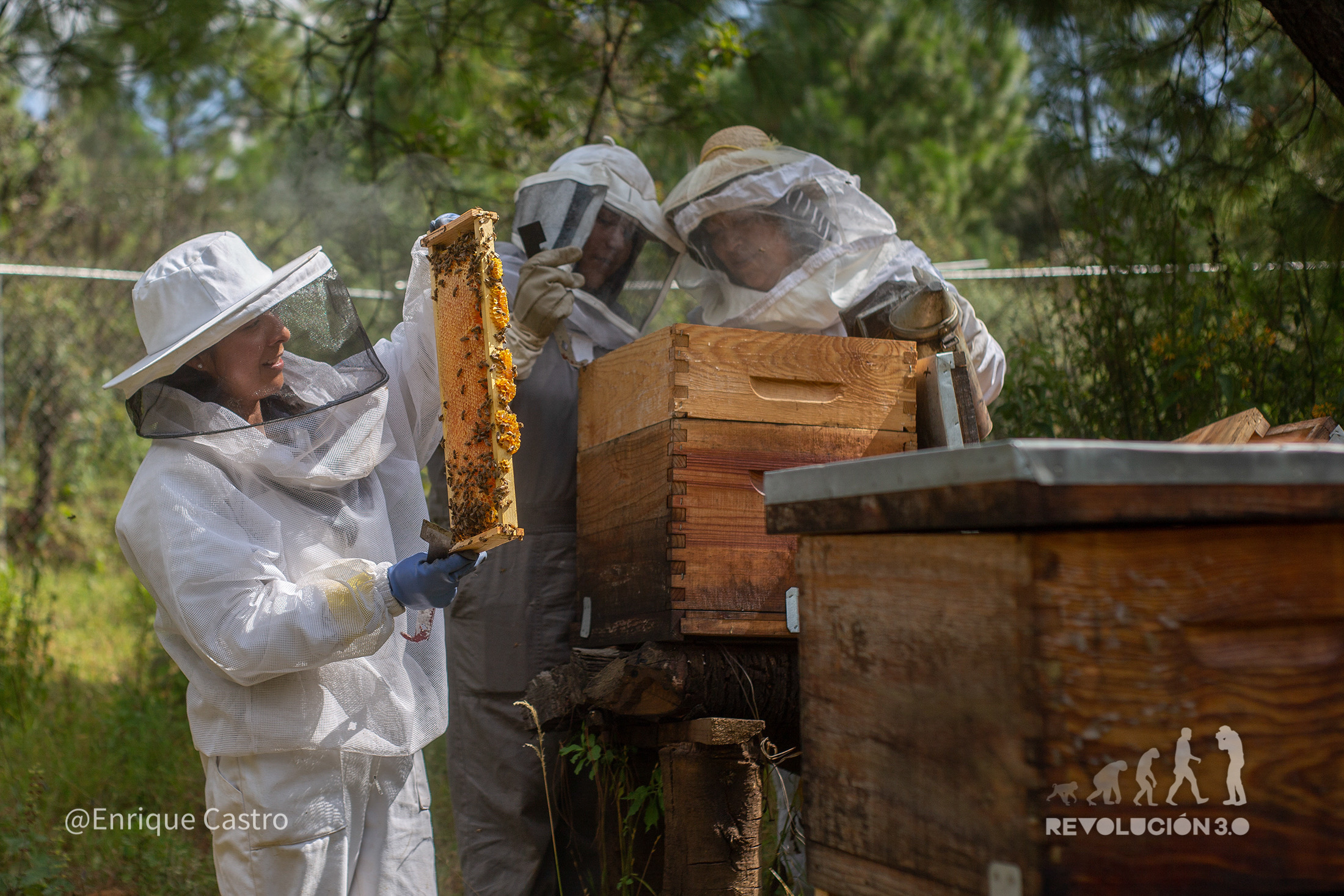
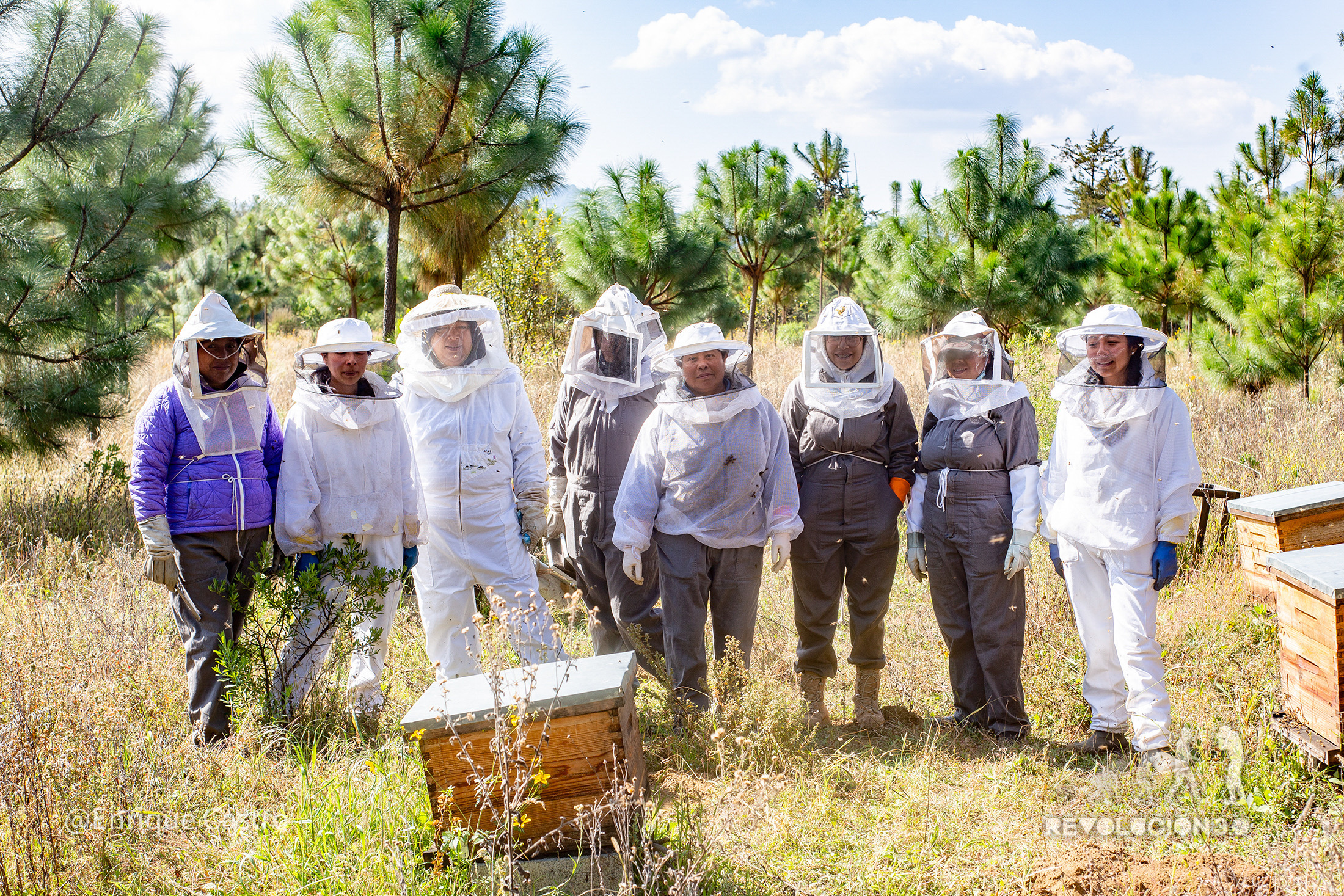
Yet the women didn’t give up. They rebuilt, and today, eight women and their families participate in a collective they’ve dubbed Api-Nahu, combining the name of their work and their community. The recovery has been slow, but over time even the forest has started to transform.
“Now I can guarantee that where there are bees there is a different kind of life. There are so many flowers and the spaces are completely green,” Prado says.
“What made us strong was the desire to learn. In our case it was bees and the craft of beekeeping, something that was not part of our knowledge, but we listened and learned from other struggles. Because even if it might seem we are the only community suffering from this, that’s not the case. There are many communities experiencing challenges, but we all have a lot in common. And our wish to do something unites us.”
Colombia: A bridge between two worlds
One night, Patricia Suárez had a dream that she perceived as a calling. She felt something that, as she describes it, took her out of her body to an unknown place. She didn’t know how she had arrived there, she says, but she was in the middle of the rainforest, surrounded by huge Indigenous figures. She couldn’t see their faces but she could see bodies dancing before her. It was a beautiful dance, full of a meaning she couldn’t quite grasp, but one that moved her deeply. When she woke up at home, she says, she knew something had changed in her.
“It was a very beautiful experience that isn’t easy to talk about because it’s more complex than can be expressed,” says Suárez, an Indigenous defender from the Murui-Muina community in the Colombian Amazon. “For me, this was a call to work with them.”
“Them” are the Indigenous people living in voluntary isolation or who have only just initiated contact with the outside world. These communities live deep in the rainforest and have chosen to remain isolated from the outside world, preserving their autonomy, their territories and their ancestral lifestyles. However, they face serious threats from illegal logging, mining and drug trafficking.
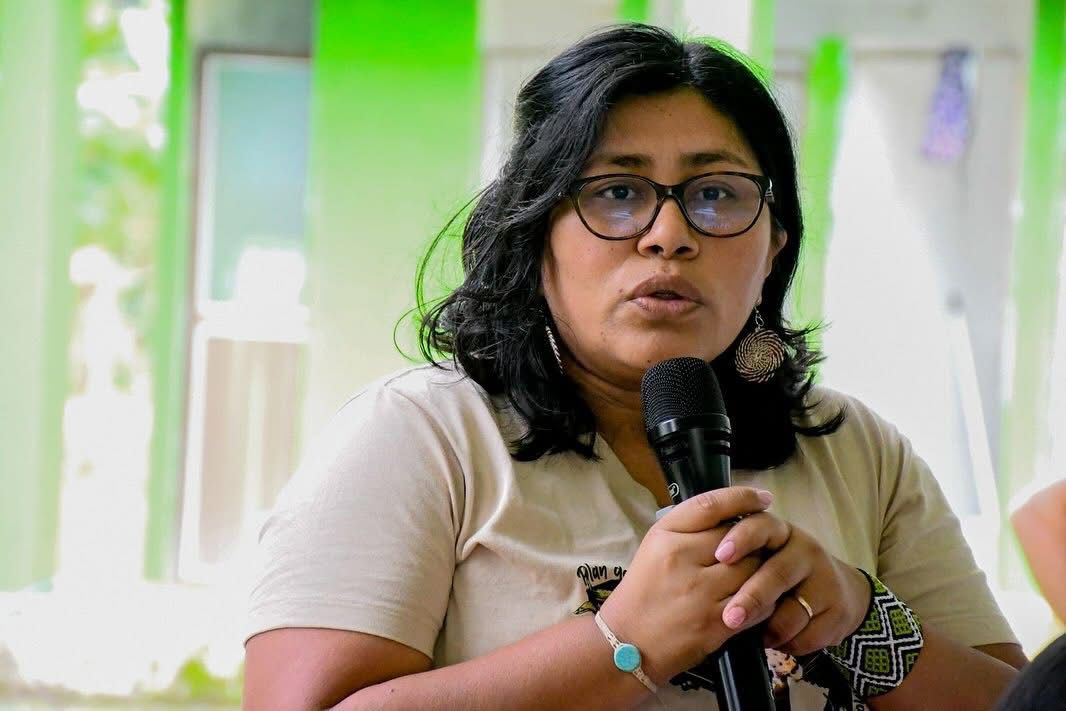
“This dream happened in 2018 and it made me passionate about the topic,” Suárez says. “A few days later, I met a friend. His name was Robinson López. He was working with the OPIAC [National Organization of Indigenous Peoples in the Colombian Amazon] and we shared the same passion. After that, we started working on a proposed decree in the government that hadn’t advanced due to a lack of political will.”
After Robinson’s death in 2020, Suárez took over the task of advocating for the protection of Indigenous peoples living in isolation.
“I didn’t want this issue to stagnate, especially since I have been working for a long time as an adviser for territorial governance in the Amazon in the adjacent territories of these peoples, the Yuri-Passé, in Colombia,” Suárez says.
Today, she serves as secretary of Colombia’s National Commission for the Prevention and Protection of Indigenous Peoples in Isolation (CNPIA) and an OPIAC adviser.
“The Yuri-Passé are the only two Indigenous peoples who are registered and have a defined territory,” Suárez says. “But they face huge threats due to drug trafficking, because their territories are located in a strategic drug corridor. They also face threats from logging and illegal mining on one of the water sources, the Puré River. There’s also a religious congregation that is very close to where they are. They also face the impact of climate change in the Amazon.”
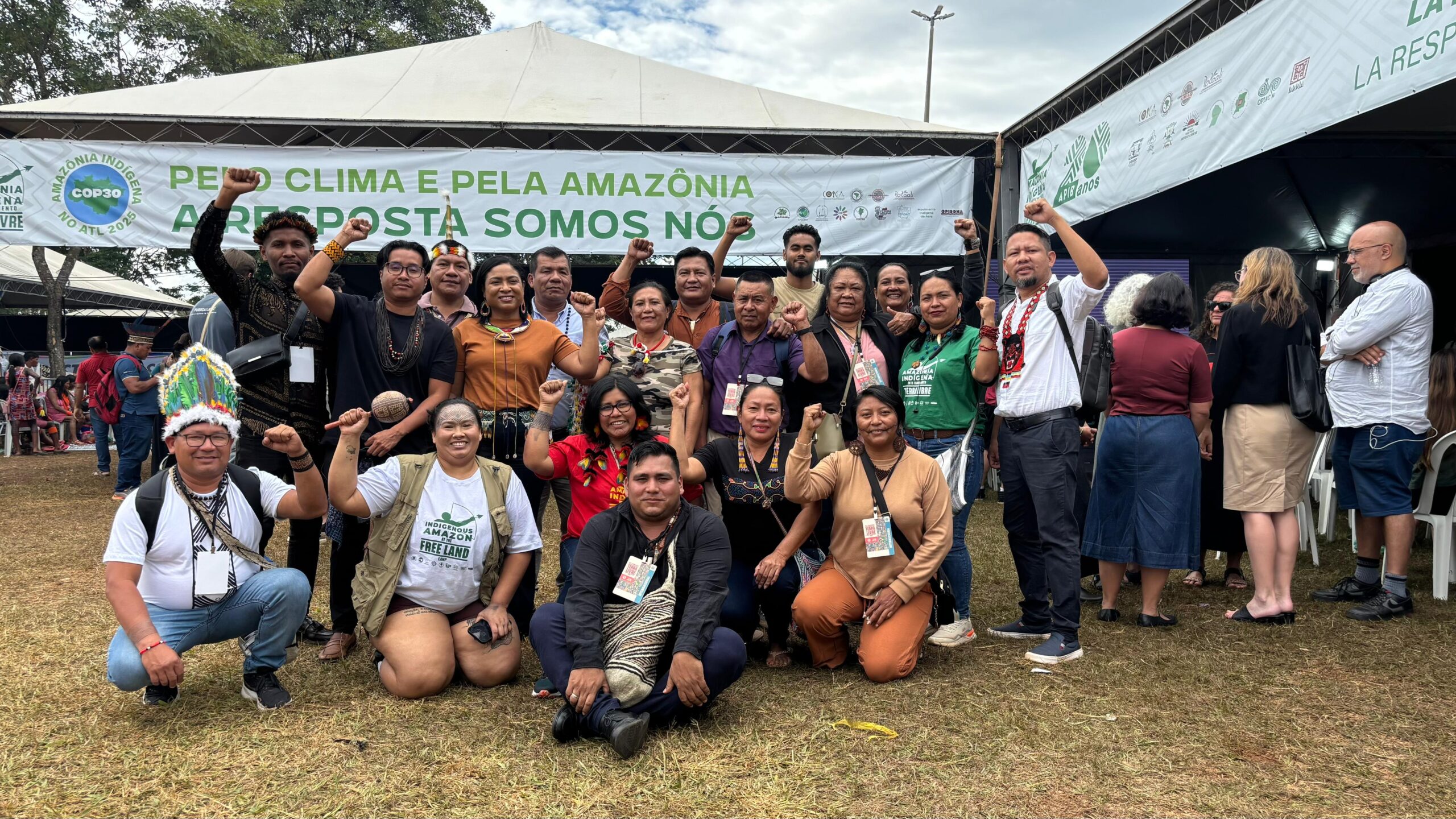
Suárez participated as a delegate in the technical and political process that gave birth to Decree 1232, issued in July 2018, which establishes special measures and an institutional system for the protection of Indigenous peoples in isolation in Colombia. However, she says, there’s been limited progress on that front since then, with authorities failing to address the urgency of the situation.
“The government, through the Ministry of the Interior … has made agreements with us so that the national commission can be in session … and approve its regulation as well as the protocol for registration and investigation. Sadly, we didn’t get an answer,” Suárez says. “We believe in this process and we have high hopes in international advocacy, so that the government of Colombia feels pressured to move on with the implementation of the decree.”
In the meantime, Suárez’s leadership, with the support of the Amazon Conservation Team, which supports OPIAC on technical, logistical and administrative matters, has allowed the development of key processes in the territory. Among them, monitoring and surveillance efforts led by Indigenous peoples living in areas adjacent to the isolated peoples, as well as participation at national and international events to bring visibility to the risks and threats that isolated Indigenous peoples face. The most significant action from these territories, Suárez says, has been cultural protection led by the communities’ traditional leaders.
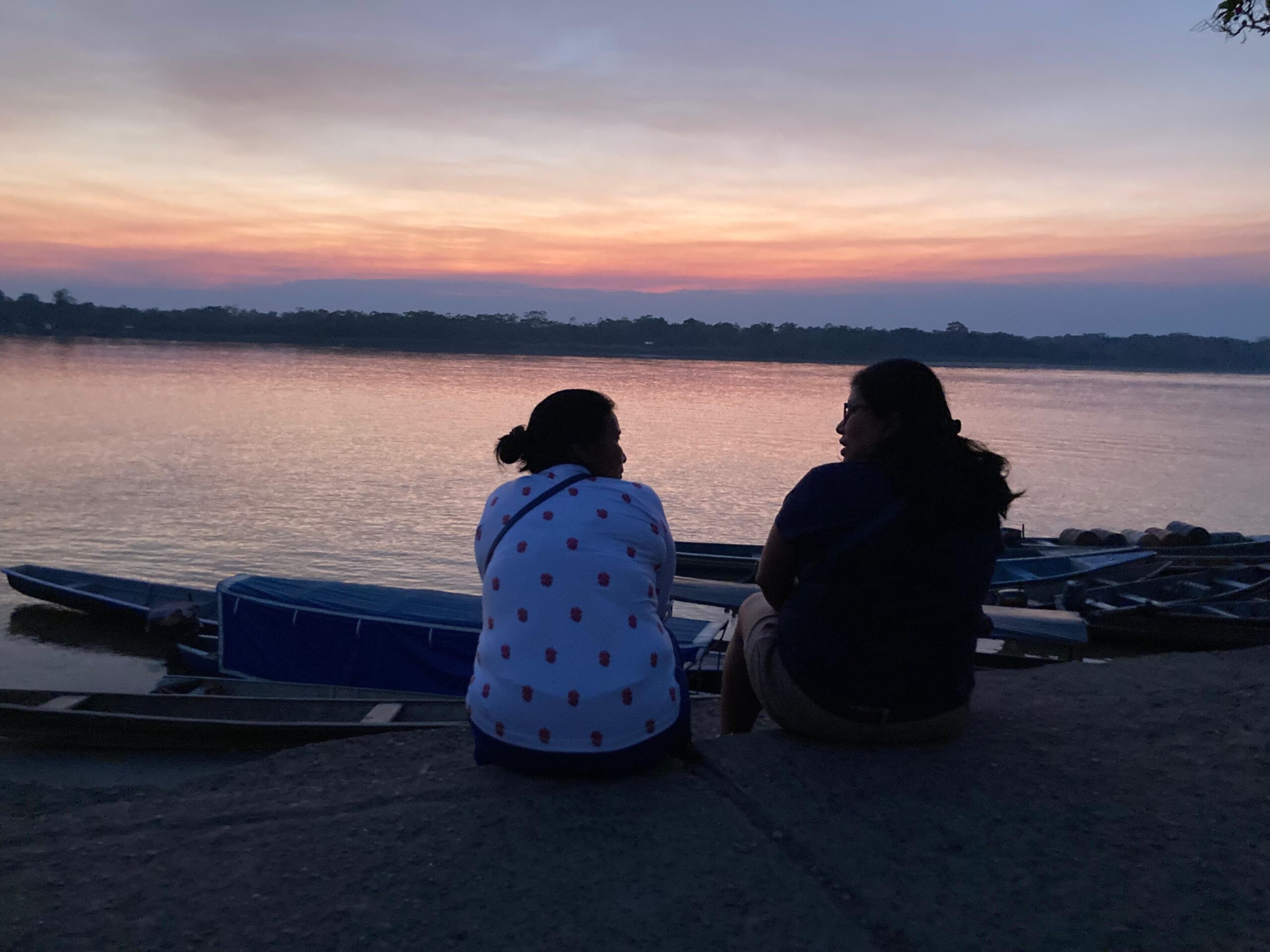
“I think that being an Indigenous woman in contexts as complex as the Colombian one is a sad situation, because few of us make it out of the Amazon and into other spaces,” she says. “And when we leave our territories … it’s very hard to get people to listen, to respect us and to consider our ambitions and contributions. Maybe because we are physically small or because we don’t speak as people expect us to.”
Despite the persistent exclusion and discrimination, Suárez says she remains convinced that each Indigenous woman has a fundamental role to play in the defense of her people and territory. She has embraced her own role in the struggle with firmness and gratitude toward the traditional authorities, who she says have entrusted her with a clear mission.
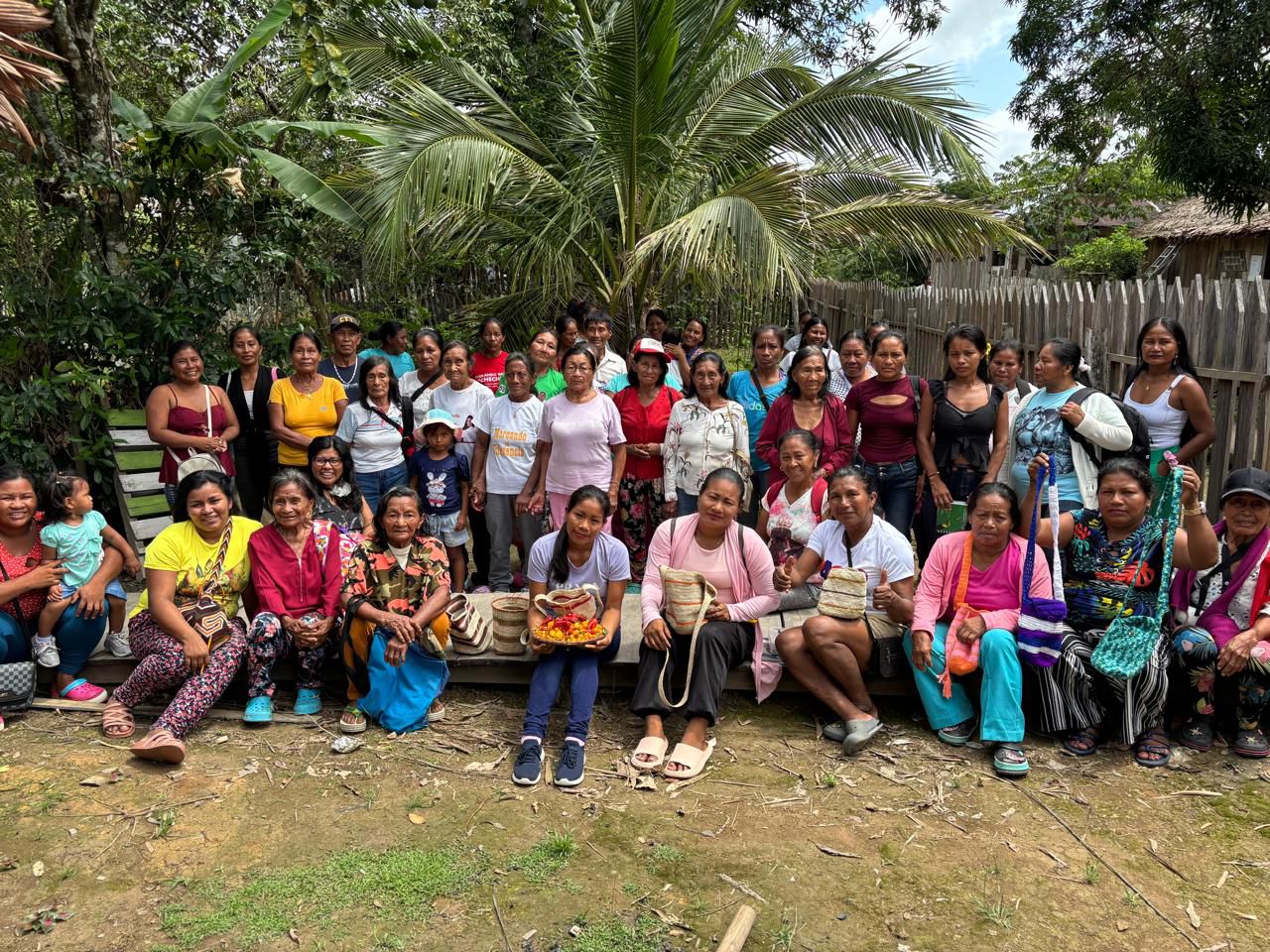
“I’m thankful to the leaders, who allowed me to play this role that they say I was born for: being a bridge between the Indigenous world and the non-Indigenous world, and helping to translate these ambitions that sometimes are so hard to understand from the outside,” she says.
Although the path hasn’t been easy, she says she doesn’t lose hope. “We need to keep talking and shouting to the world so that people know that the territories and the people who live in the Amazon are living through heavy impacts they did not seek.”
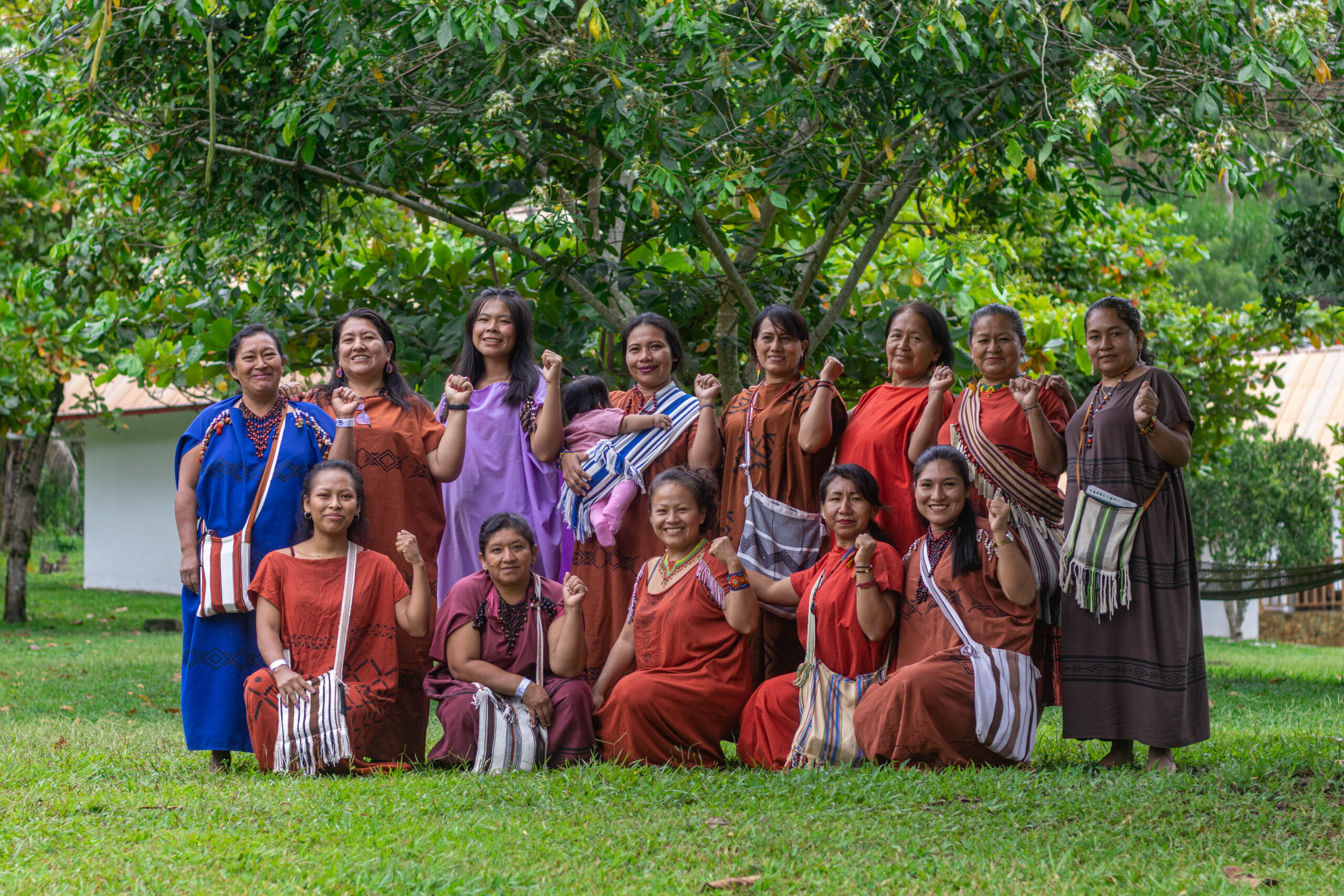
Banner image: Indigenous women in the Peruvian Amazon name the springs of water in their territory to protect them. Image courtesy of ONAMIAP.
This story was first published here in Spanish on Sept. 5, 2025, to mark the International Day of Indigenous Women.
Credits