- The current growth trajectory of Nepal’s cities appears to be unsustainable and unready for the increasing stresses of climate change, an environmental engineer writes.
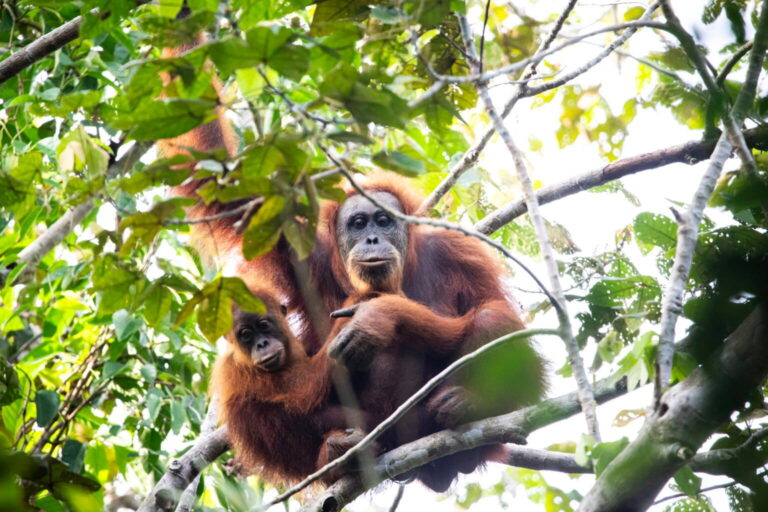
- Unplanned expansion and the breakdown of the natural/urban interface are diminishing wildlife in this nation, and women suffer disproportionately from the impacts, with an increase in the time spent on water collection of up to 30%, for example.
- But, as this new op-ed argues, “If cities learn from each other, they will see transformed public open spaces, demonstrating how we can turn a climate liability into a community asset.”
- This article is a commentary. The views expressed are those of the author, not necessarily of Mongabay.
The transformation of Nepal’s urban landscape has brought us to a pivotal moment. Having observed this evolution as an environmental engineer, I believe its current growth trajectory is unsustainable, despite its potential.
Although Nepal contributes a negligible 0.1% to global greenhouse gas emissions, the country still disproportionately suffers the increasing impact of climate change and is one of the most climate-vulnerable countries worldwide. It is evident in the average annual maximum temperature in Nepal, which has been increasing at a rate of 0.056° Celsius (0.1008° Fahrenheit) per year between 1971 and 2014. Unpredictable weather, extreme events, and threats to agricultural productivity define our daily reality as one of the most climate-vulnerable nations.
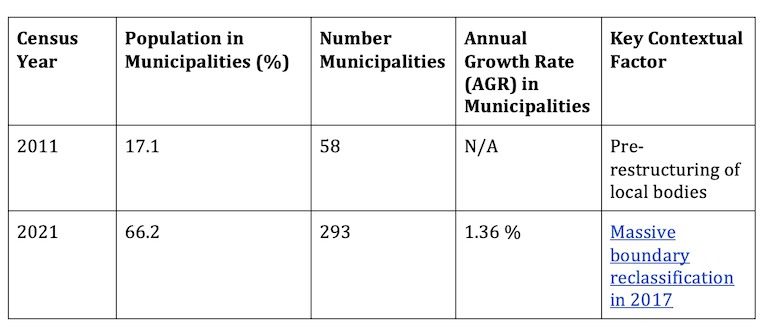
Moreover, our domestic actions are dangerously exacerbating this vulnerability. A rapid, largely unplanned urban population increase from 17% to more than 27% between 2011 and 2021 has fueled this issue. This is not just due to organic migration, but was instigated by the 2017 restructuring and reclassification of local administrative boundaries under the federal system. This restructuring converted 58 existing municipalities and numerous village development committees (VDCs) into a total of 293 municipalities.
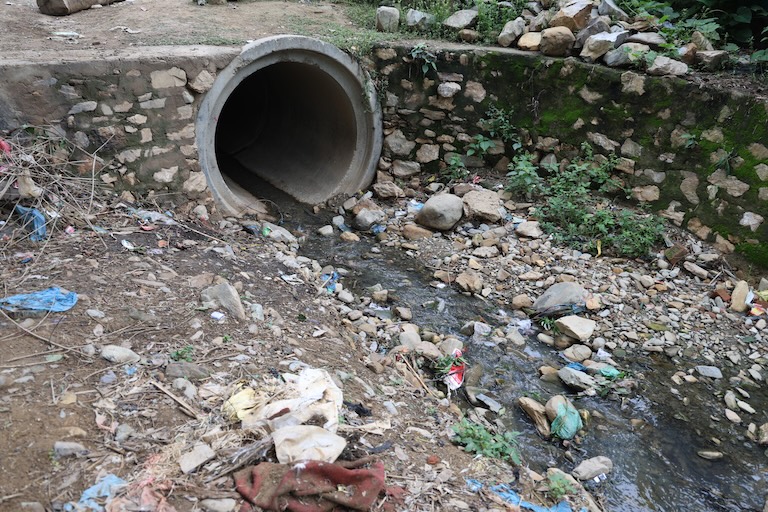
This chaotic growth places immense, unbearable pressure on existing urban infrastructure and compromises our environmental quality. Water and sanitation shortages threaten public health and social stability in densely populated areas.
The most severe consequence of this unplanned expansion is the breakdown of the natural/urban interface. Haphazard development encroaches on agricultural lands, which are vital for national food security. From the period of 2016 to 2026, about 99% of the increased land is sourced directly from cultivated land, leading to a loss of 205 square kilometers (just over 79 square miles) of agricultural area to urban cover. This unsustainable conversion is projected to continue from 2026 to 2036; urban areas are expected to expand further by 165.16 km² (63.77 mi²), with 95% of this expansion still drawn from cultivated land.
Simultaneously, it diminishes the vital open spaces that serve multiple critical functions: they act as ecological corridors, essential safe havens during disasters like earthquakes and floods, and necessary recreational areas.

This chaotic development directly threatens our natural environment, causes significant biodiversity loss, and fundamentally reduces the innate resilience of our urban areas to climate shocks. Unplanned urban sprawl leads to the fragmentation and subsequent loss of critical green spaces, causing a measurable decline in native species richness and putting existing native species at risk. In densely developed areas, studies indicate that the species richness and diversity of birds decline significantly along the urban-rural gradient. The loss of wetlands — which are crucial stopover and breeding habitats for migratory birds such as cranes, ducks and geese, as well as species like herons and egrets — accelerates this decline.
Paving streams and directly discharging untreated sewage and solid waste severely pollutes urban waterways, destroying aquatic habitats. Water quality deterioration from urbanization and pollution is impacting fish diversity in rivers like the Bagmati, affecting species such as snow trout (Schizothorax labiatus), ring loach (Schistura beavani) and torrent catfish (Glyptosternon maculatum). This lack of planning and environmental degradation threatens human health and the natural infrastructure sustaining the region’s unique ecosystem.
Integrated planning is imperative
Our cities must tackle a twofold, interconnected task: we must simultaneously manage dwindling resources and create safe, equitable environments for all. The solution demands an active, integrated approach that links climate resilience and gender equality at its core.
Climate change is not a neutral force; it impacts a community unequally and genders differently. Climate-induced scarcity, particularly concerning water resources, imposes a heavy, disproportionate burden on women’s unpaid labor. Studies indicate that climate change can increase the time women spend on water collection by up to 30%. This significant increase in time poverty represents a massive drain on their productive capacity. Therefore, empowering women through equitable access and vulnerability reduction in urban planning and decision-making is not merely a social goal, it is essential for effective climate adaptation.
Cities cannot build the necessary adaptive capacity to confront multiplying climate impacts without consciously considering all citizens’ diverse needs and knowledge, especially for women. A city that fails to prioritize and empower its women will ultimately fail in the face of climate change.
This is where the principles of environmental engineering and urban planning become critical. These disciplines must bridge the growing gap between accelerating urban growth and the delicate balance of nature. We must ensure that development does not come at the irreversible expense of our shared environment. Our infrastructure must do more than just be resilient; it must actively reduce its overall environmental impact, moving toward a net-positive approach.

From crisis management to foresight
Nepal’s ongoing urban crisis requires us to abandon the outdated approach of addressing issues only after they arise. We must shift now to a forward-oriented strategy that embraces the integrated path. We must think ahead carefully to address the root causes of our vulnerabilities rather than just applying temporary fixes. Foresight, intense collaboration, and a profound sense of complex environmental interdependencies will drive the paradigm shift our nation needs.
The “Cities 4 Women: Inclusive and Climate Resilient Urbanisation in Nepal” project, led by the Ministry of Urban Development and funded by the European Union and the government of Finland, currently collaborates with seven municipalities to deliver practical, integrated solutions. My organization, the United Nations Office for Project Services (UNOPS), works with U.N.-Habitat and the Cities Alliance to implement the project, which addresses critical urban challenges through a gender-transformative lens. We create public open spaces that integrate women’s perspectives, addressing safety, accessibility and economic opportunity, while simultaneously making them robust enough to withstand the escalating pressures of climate change.
Participation in planning and governance
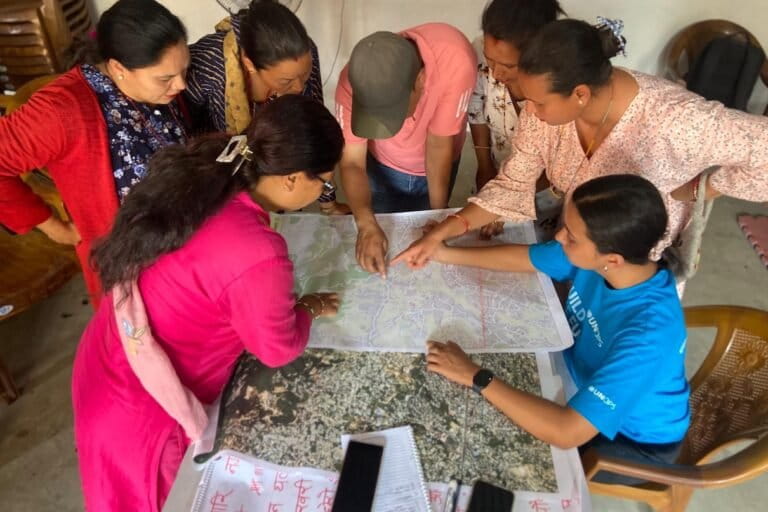
Sustainable projects prioritize development processes, partnerships, and empowering local people rather than solely focusing on building construction. We achieve this by strategically building local capacity through comprehensive training for municipal officers and engaging community members in co-design workshops and extensive consultations to foster ownership and shared responsibility.
This participatory planning model calls on principles of sustainable design woven into the very fabric of local government, ensuring long-lasting, sustainable change. Furthermore, the development of a national framework and municipal guidelines, like the Gender and Climate Responsive Municipal Urban Planning Guideline, will foster climate-resilient cities across Nepal. These practical tools equip urban planners and policymakers to effectively integrate gender equity and climate resilience into all aspects of urban development.
The project fosters learning between cities and actively collaborates with students and universities. This creates a powerful ecosystem of innovation, fostering a new generation of urban planners and advocates who can contribute to building a just, resilient, and sustainable future for all Nepalis. This crucial intergenerational and interinstitutional collaboration secures the constant sharing and upgrading of knowledge and best practices.
If cities learn from each other, they will see transformed public open spaces, demonstrating how we can turn a climate liability into a community asset. By fundamentally integrating environmental care and social equity into municipal planning, we can shift from a reactive crisis state to actively building a thriving, resilient future for all.
Hitesh Raj Pant is an environmental engineer who serves as a technical officer–environment at United Nations Office for Project Services (UNOPS), where he works on building inclusive, climate-resilient cities through the Cities 4 Women initiative.
Banner image: Kathmandu sprawls across its valley. Image courtesy of Locus Chand via Wikimedia Commons, CC BY-SA 4.0.
Related audio from Mongabay’s podcast: Singapore has become an example for cities everywhere of how to plan urban development that embraces nature, listen here:
See related reading:
Changing weather patterns threaten time-tested houses in Nepal village
Nepal’s Supreme Court halts industrial development in Buddha’s birthplace
Bird diversity drops in human-dominated habitats, Nepal study suggests
Citations:
Rai, A., Ayadi, D. P., Shrestha, B., & Mishra, A. (2021). On the realities of gender inclusion in climate change policies in Nepal. Policy Design and Practice, 4(4), 501-516. doi:10.1080/25741292.2021.1935643
Bhattarai, K., Adhikari, A. P., & Gautam, S. P. (2023). State of urbanization in Nepal: The official definition and reality. Environmental Challenges, 13, 100776. doi:10.1016/j.envc.2023.100776
Rimal, B., Sloan, S., Keshtkar, H., Sharma, R., Rijal, S., & Shrestha, U. B. (2020). Patterns of historical and future urban expansion in Nepal. Remote Sensing, 12(4), 628. doi:10.3390/rs12040628
Rimal, B., Zhang, L., Stork, N., Sloan, S., & Rijal, S. (2018). Urban expansion occurred at the expense of agricultural lands in the Tarai region of Nepal from 1989 to 2016. Sustainability, 10(5), 1341. doi:10.3390/su10051341
Katuwal, H. B., Pradhan, N. M., Thakuri, J. J., Bhusal, K. P., Aryal, P. C., & Thapa, I. (2018). Effect of urbanization and seasonality in bird communities of Kathmandu Valley, Nepal. Proceedings of the Zoological Society, 71(2), 103-113. doi:10.1007/s12595-018-0265-z
Rijal, B., Adhikari, T. R., Adhikari, S., Lamichhane, S., & Baral, S. (2025). Water quality and fish diversity of Bagmati River in Kathmandu Valley. Journal of Institute of Science and Technology, 30(1), 189-196. doi:10.3126/jist.v30i1.47551
Credits