- After the death of her daughter Karen in 1991 and her dying wish to “do something good for sea turtles,” Jean Beasley committed herself to sea turtle conservation on Topsail Island, North Carolina.
- She founded the state’s first sea turtle rehabilitation center, beginning in a cramped 900-square-foot space and growing it into a respected 13,000-square-foot hospital and public education facility in Surf City.
- Beasley valued both direct action and education, believing that saving one turtle mattered but inspiring others—especially children—to care about the ocean could save many more.
- Her decades of work helped protect more than 3,000 nests and rehabilitate at least 1,600 turtles, while also motivating future conservationists and proving that a daughter’s dying wish could become a movement of hope.
On the beaches of Topsail Island in North Carolina, the sight of a sea turtle crawling ashore has long signaled both urgency and hope. For many years, a woman with a clipboard and a watchful eye was often there to note every track and nest.
What brought her there was grief. In 1991 her daughter, Karen, died of leukemia at the age of 29. She had made a final request of her mother that was simple and precise: “Do something good for sea turtles.” It was a young woman’s hope that the creatures she had come to love would somehow be cared for. The family had shared many late nights walking those beaches together, looking after nests and guiding hatchlings toward the water. After Karen’s death, Jean Beasley returned to that work not as a hobby but as a promise.
She never framed it as sacrifice. “I loved every minute of what I did,” she said late in life. “Whether it was sea turtles or what it might be, I loved every minute of the teaching. I loved every minute of that old rotten building that we were in and trying to look after animals in.” There were challenges, she added, but “who hasn’t liked a good challenge?” Saving a single turtle mattered. But inspiring a child to love the ocean, and act accordingly, could mean saving thousands.
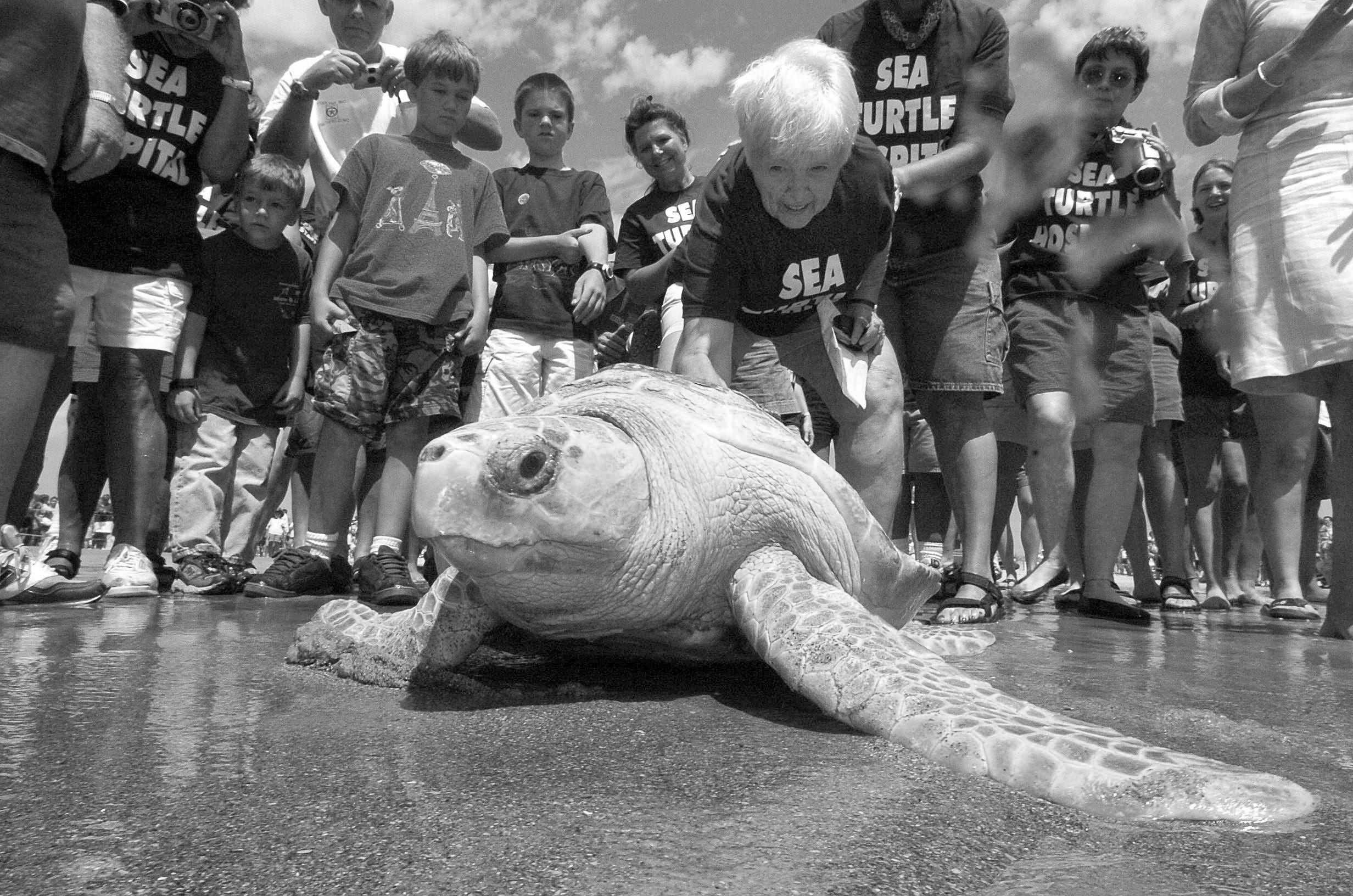
In the mid-1990s, she and fellow volunteers found themselves caring for an injured turtle with nowhere suitable for treatment. A solution had to be built. From a cramped 900-square-foot building on Banks Channel, she launched the first sea turtle rehabilitation center in the state, naming it for Karen. Visitors arrived expecting healthy, smooth-shelled creatures and instead saw turtles torn by propellers, tangled in fishing line, or sickened by cold water and pollution. Some offered a couple of dollars at the door. Each contribution counted, but she still caught fish herself when money ran short.
“If you share your dreams with somebody, you just never know who will step up and share them with you,” she liked to tell volunteers. It proved true. Over the decades that followed, the center on Topsail Island grew into a respected hospital in Surf City, more than 13,000 square feet, with room for medical care, public tours, and a classroom. Children listened to her explain why turtles strand on beaches. Students from around the world learned wildlife medicine in her hallways. She liked to say she loved every minute of it: the teaching, the old rotten building, the challenges. It embarrassed her when people called her a hero. Sea turtles, she would note, were ancient and mysterious and had survived ages before humans arrived. They deserved, at the very least, a fighting chance to survive us.
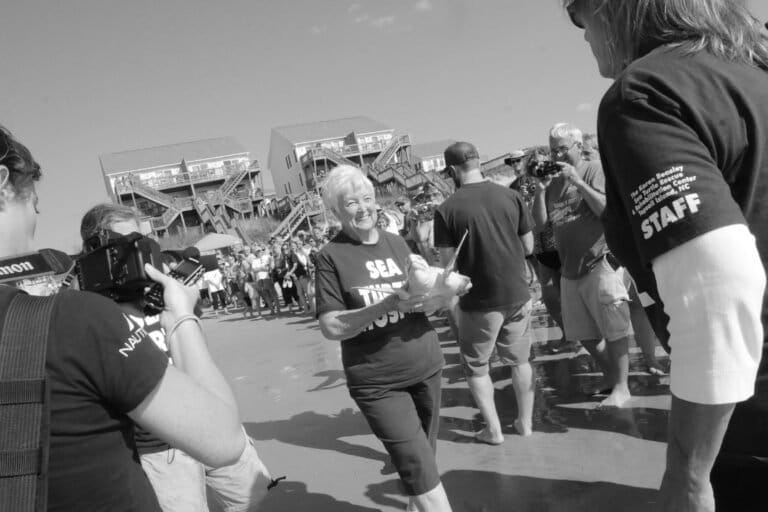
Her work was measured not only in ideas but in numbers. Since 1995, more than 3,000 nests have been safeguarded through the programs she led, resulting in over 245,000 hatchlings heading into the surf. The hospital she founded has treated at least 1,600 sick and injured sea turtles. Many were returned to the sea during release events that drew crowds of beachgoers in all kinds of weather.
She saw the turtles’ injuries as symptoms of something larger: careless fishing gear, boat strikes, and plastic debris. In her public talks she widened the lens from turtles to the planet itself. She spoke as a former teacher would, convinced that knowledge could redirect a life. “Anytime that you are given an opportunity to make a change that will be beneficial for lots of people, that’s the time to do it.”
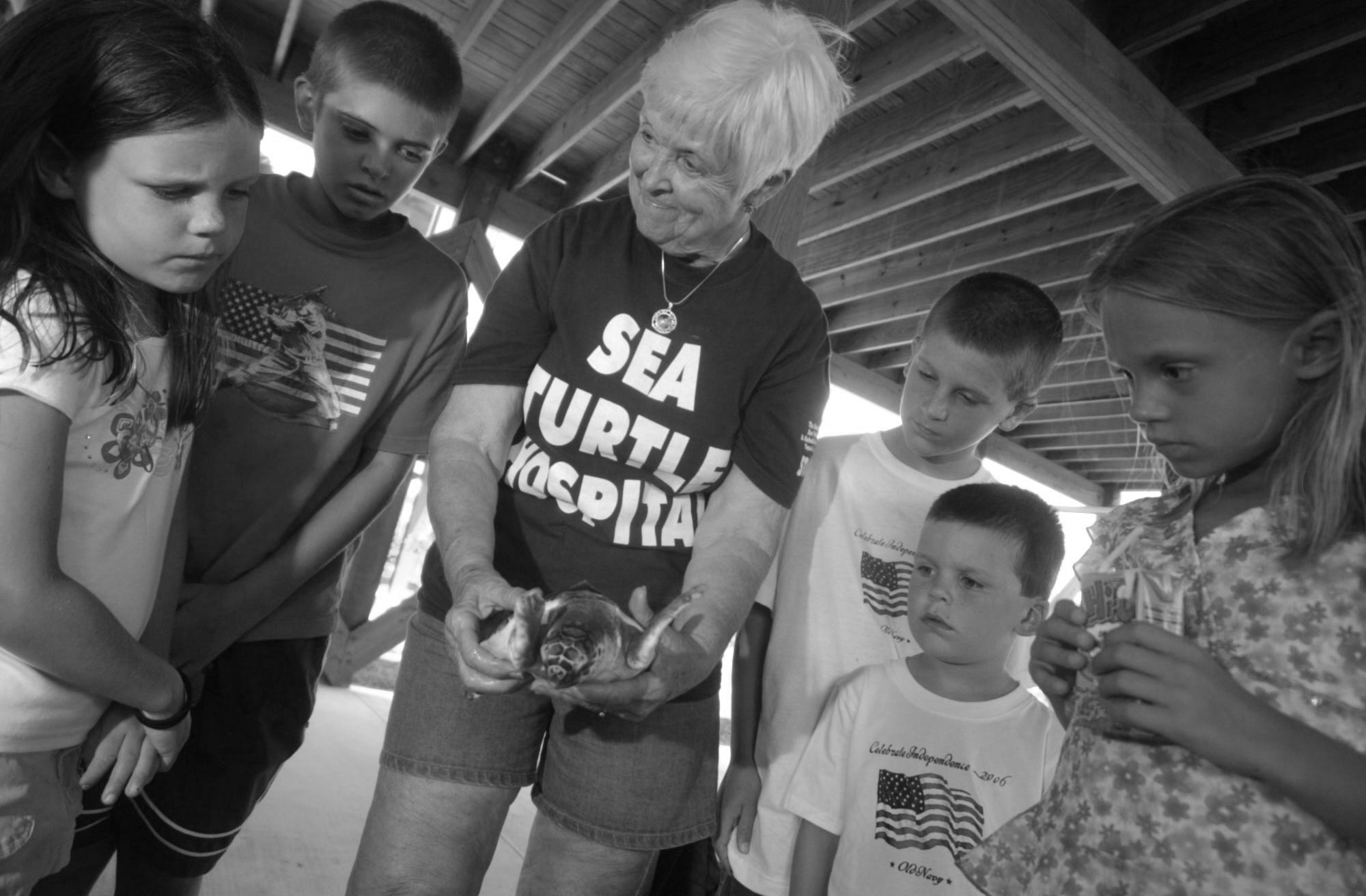
Her influence continues in those she taught, in the scientists who trained at the hospital, and in the countless visitors who left understanding that ancient animals need help to survive the modern world. Most of all, it continues in the turtles she and her volunteers sent back to the ocean. The future of that shoreline looks different because she kept a promise made to a daughter. It shows in the generations of children she convinced that caring for the world is practical work, done one creature at a time. She proved that a dying wish can become a movement. And that a broken heart can remake a coastline into a place of rescue, recovery, and hope.
She believed that if people were given a chance to care, they would. And on those North Carolina beaches, many thousands of times, that belief proved to be true.
Jean Beasley died on December 2nd, 2025, aged 90.
Header image: Jean Beasley with the Karen Beasley Sea Turtle Rescue and Rehabilitation Center with a juvenile Kemp’s Ridley sea turtle on Sept. 17, 2013 in Surf City, N.C. Photo courtesy of KEN BLEVINS/STARNEWS.
Credits