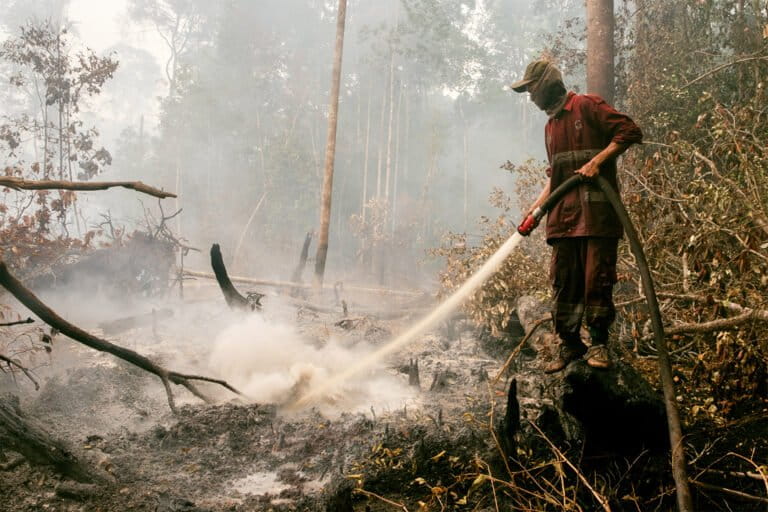
- Large numbers of early-career conservationists and fledgling organizations are poised to implement solutions to the biodiversity crisis, but the prevailing funding logic isn’t adapting fast enough to support them.
- Small grants can make a huge difference in this moment, as they are fast, flexible and comprehensible to people on the ground doing local conservation work, especially when unhinged from onerous restrictions and reporting requirements.
- “We must support the next generation of conservation leaders to ensure they have viable career paths that do not come at the expense of burnout,” a new op-ed argues. “Small grants must step forward, not as charity, but as infrastructure for resilience.”
- This post is a commentary. The views expressed are those of the author, not necessarily of Mongabay.
In a meeting room in a head office in London, a handful of early-career conservationists from around the world sat in a circle on the floor to share their challenges of working in conservation. The conversation was sobering. From affording everyday bills, juggling multiple unsecured jobs and dealing with burnout to harassment in the field, threats by extractive industries and abduction by narcotic gangs, the breadth of burdens on these young emerging leaders was astonishing.
After three more similar workshops hosted by the project I lead — the Zoological Society of London’s (ZSL) EDGE of Existence program — and fast-forward a year, my inbox holds 1,700 applications for our annual fellowship call, a bewildering demand for perhaps 10 places and all for roles that encounter the burdens described in the workshops. This kind of demand is not unusual; I’ve heard similar ratios for other fellowships and small grant schemes. In the same month, numerous blows to funding pipelines for organizations, both large and small, worldwide, have surfaced.
Now, like many others, we find ourselves facing a sharp juxtaposition: an overwhelming demand from talented, dedicated teams working on urgent conservation projects that are ready for implementation, contrasted with decreasing, fragile and unpredictable upstream funding.

Conservation is hitting an opportunity bottleneck
Yes, conservation is facing a convergence of accelerating ecological decline, weakened institutions, disinformation-fueled information breakdowns and mounting threats to frontline defenders. Yet perhaps worse — because it undermines many solutions to these issues — is that conservation is facing an opportunity bottleneck.
Our experience is that there are unprecedented numbers of early-career conservationists and fledgling organizations in operation, or on the cusp of formation, all poised to implement locally appropriate, grounded solutions to the biodiversity crisis. But our funding logic, support models and workplace practices can’t adapt fast enough to absorb them.
That gap is a huge missed opportunity. What we are missing is not ideas, enthusiasm or commitment; it’s opportunities to act. For those who do win the conservation grant lottery, the cost is often human: Burnout and precarity rise, and without a budgeted duty of care — including essentials such as security, legal and mental health support — committed conservationists stall or are forced to step away from the sector altogether.
If we want this crisis to become an opportunity, we need to radically reset how we resource, support and protect the people who will do the work now, and in the years to come.
Old becomes new again
Since January 2025, pauses and legal wrangling around major U.S. foreign assistance (among other governments) have stalled salaries and long-standing programs across multiple regions. Besides being a hard lesson in how fragile large funding pipelines can be, the message emerging is familiar: Diversity of funding is resilience, and small grants are the capillaries of biodiversity finance. When they flow, local systems stay alive and diverse solutions and coalitions can fill the vacuum left by reduced government or NGO pipelines, and often in more grounded ways.
Small grants are not new, but their value shines in this moment. They are fast, flexible and comprehensible to people on the ground doing the work, who know how to make things happen. They offer entry points to people, organizations and local coalitions for whom large grants are cumbersome, impractical or unattainable.
The evidence is compelling. A 21-year review in the journal Biological Conservation of the Marine Conservation Action Fund finds that small grants catalyze practical conservation actions and advance management equity by backing local leaders. The Global Environment Facility (GEF) Small Grants Programme has supported nearly 30,000 community-led projects in 136 countries, with recent cycles reporting tens of millions of hectares under improved management. An assessment by ecologist Thomas Lovejoy credited Critical Ecosystem Partnership Fund (CEPF)-supported civil society organizations with 7% of global terrestrial protected-area expansion between 2001 and 2010, and CEPF now cites more than 17 million hectares (42 million acres) of protected areas created to date. Similarly, the Fondation Segré Conservation Action Fund demonstrated how small grants can deliver tangible species recovery impacts, supporting 84 projects for 152 threatened species, many of them historically overlooked by mainstream conservation.

These examples underscore what practitioners already know: Small amounts that are well-targeted pack a punch far above their weight. They equip emerging leaders to act in the cultural and political contexts they understand best, strengthen community legitimacy and seed larger transformations by demonstrating what’s possible for people who have a genuine and long-term stake in their local biodiversity.
Refine and expand to release the bottleneck
The small grants model is effective, and there are numerous donors doing excellent work, but the model requires scaling and refinement. Our workshops highlight recurring pain points, including the lack of core cost coverage, short project timelines, excessive reporting demands, slow disbursements, weak duty of care and persistent mistrust between donors and practitioners. But funders and other organizations are pointing toward better design — one that is trust-based, locally led and multiyear — that we now need to turn these principles into mainstream practice.
So, what would that look like?
- Radical expansion. Increase the volume of opportunities tenfold (at least). Current demand is orders of magnitude higher than available supply.
- Pooling for scale and diversity of support. Where larger sums are needed or irregular asks arise, create better mechanisms to pool funds across donors and signpost to other suitable opportunities with reduced application requirements. Platforms like Conservation Connect can aggregate resources, reduce fragmentation and enhance visibility and cooperation among small-grant donors.
- Fund people and organizations, not just projects. Cover items like salaries, caregiving, insurance and communications, because burnout and precarity are not side issues: They directly contribute to project failure, missed opportunities for biodiversity conservation and talent drain from our sector.
- Go multiyear by default. Two- to three-year horizons should be the minimum for projects where an individual or organization is already embedded within the local context, and double that for those who are new to an area. Longer grant periods align with ecological and political cycles, avoiding the pressure that drives theatrical win-wins and inflated impact claims.
- Strengthen regranting hubs. Regional, thematic or other hubs can absorb risk for large donors, standardize due diligence, reduce friction and, for initiatives like fellowships, provide tailored leadership and organizational support, networking and platforms to scale. This is where larger NGOs can add value by redistributing resources and capacity. In time, grantees should become hubs for regranting locally.
- Make reporting light and useful. Adopt standardized, outcome-oriented templates with consistent terminology accepted across donors. Track verifiable changes rather than long lists of activities.
- Maintain a rapid-response stream. Maintain standing funds of approximately $15,000 with decisions made within two weeks for urgent needs, such as free, prior and informed consent (FPIC) steps, legal costs, data gaps or equipment breakdowns. Some opportunities like these are appearing, but they need to be established across more donors, sitting alongside conventional grant schemes.
- Duty of care budgets. Legal support, harassment protocols, evacuation and emergency response, safeguarding and mental health support should be seen as core infrastructure, not optional extras.
- Lower access barriers. Accept applications and reports in local languages (increasingly feasible with reliable AI-assisted translation and local regranting hubs); remove academic qualification prerequisites and assess suitability via track record, commitment and references or referrals. Budget for open, reusable data so information circulates, and ensure equipment remains with local actors who will use it.
- Hedge against volatility. Offer foreign exchange (FX) buffers, staged installments and flexible currencies to reduce the destabilizing effect of macroeconomic shocks.
- Publish wins and failures. Fund short, open case notes and mini evidence-based evaluations so that lessons, positive and negative, spread quickly. Optimism in conservation should be built on a checklist of concrete, verifiable wins, not on vague cheerleading.
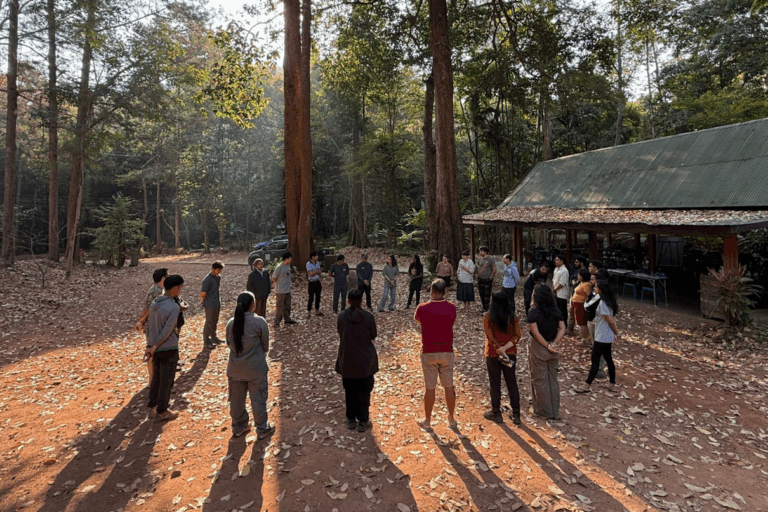
With the right refinements, the next $10,000 can achieve what the previous $10,000 could not. We must support the next generation of conservation leaders to ensure they have viable career paths that do not come at the expense of burnout (or worse). As major pipelines waver, small grants must step forward, not as charity, but as infrastructure for resilience.
The task now is straightforward: Scale them up, fill the void and see solutions to the biodiversity crisis flourish.
Paul Barnes manages EDGE of Existence, a program of the Zoological Society of London (ZSL).
Related audio from Mongabay’s podcast: ‘Venture capital’ for conservation: A discussion of how the Wildlife Conservation Network funds community conservation efforts, listen here:
See related coverage and commentaries:
A rich person’s profession? Young conservationists struggle to make it
Citation:
Stephenson, E. H., Edwards, B., Duwan, E., Berger, B., De Vos, A., Forsberg, K., … Redfern, J. V. (2024). Small grants advance global ocean conservation and management equity. Biological Conservation, 300, 110845. doi:10.1016/j.biocon.2024.110845
Credits