- The Golden Toad of Costa Rica’s Monteverde cloud forest, once abundant and brilliantly colored, declined rapidly after the late 1980s.
- A drying climate linked to El Niño, along with the spread of chytrid fungus, destroyed its breeding pools and decimated the remaining population, with the last confirmed sighting in 1989.
- Declared extinct in 2004, the species now stands as a stark symbol of how fast and quietly vulnerable wildlife can disappear in a changing world.
In the mist-shrouded highlands north of Monteverde, Costa Rica, a small amphibian once glowed like a living gem. The Golden Toad, with its brilliant male orange skin and the more muted, patterned colors of the female, inhabited scarcely more than a few square kilometers of cloud forest at roughly 1,500 meters elevation.
From its discovery in 1966 by herpetologist Jay Savage, the toad captured imaginations. For years the breeding pools brimmed: in 1987 more than 1,500 adult toads were counted during their extraordinary mating season.Yet its fate turned swift and unyielding. By 1988 only around ten individuals remained; the last verified sighting came on May 15th, 1989—a solitary male in one of its ephemeral breeding pools.
The causes of its vanishing are complex, but this much stands clear: the Golden Toad’s realm was fragile and constrained. Its entire known world was measured in square kilometers of cloud-forest and seasonal rain-filled pools. A dramatic drought tied to the El Niño-Southern Oscillation desiccated those pools. At the same time, the emerging fungal disease chytridiomycosis and shifting cloud-forest microclimates conspired against survival. When the rains returned, the toads did not. Last year the species was formally declared extinct.
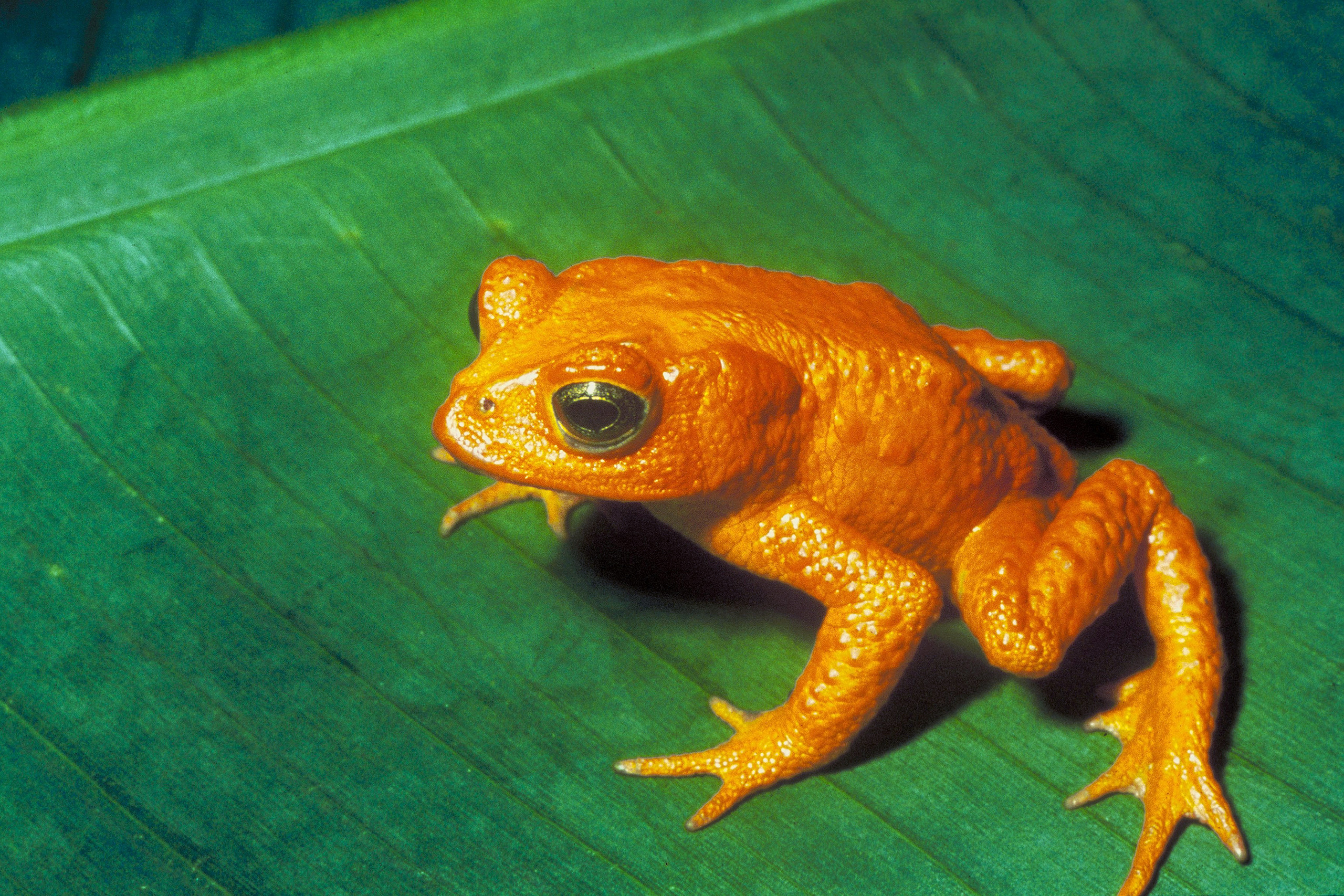
What was lost is more than one species. It was a living symbol of a biological miracle—an amphibian so brilliantly colored that its appearance seemed otherworldly; so restricted in range that its demise foretold the fate of many others; so suddenly absent that its disappearance echo-chambered across ecology and conservation. Herpetologist Marty Crump wrote in her 2000 book that the brief spring breeding spectacle looked like “statues, dazzling jewels on the forest floor.”
There is a homily here. The Golden Toad persisted in silence as its climate shifted and disease crept into the forest; it held on for as long as it could. Its final act was not one of grand farewell but of absence. No fanfare. Simply the toad that once was. Under the same mist that once supported it, the forest remains—minus one brilliant being.
Let us remember it. Let its disappearance speak. For the conditions that ended the Golden Toad’s story, we still largely control. Drought, fungal spores, warmer skies—they arrived, and the toad could not adapt. If we ignore its warning, others will vanish under quieter skies, without spectacle, without headlines.
Editor’s note: The images in this story were updated on November 18, 2025 to address display issues.
Credits