
Aimee Roberson, executive director of Cultural Survival, joins Mongabay’s podcast to discuss how her organization helps Indigenous communities maintain their traditions, languages and knowledge while living among increasingly Westernized societies.
As a biologist and geologist with Indigenous heritage, Aimee Roberson is uniquely suited to lead the organization in bridging these worlds, including via “two-eyed seeing,” which blends traditional ecological knowledge and Western science to increase humanity’s ways of knowing, toward a view of people as active participants in shaping the natural world.
“If we look at quantum physics, they’ve shown that a particle observed is impacted by the observer. And so just by existing, by observing nature, we’re actually a part of it and we cannot separate ourselves,” she says.
Roberson is also a founding member of the Indigenous Kinship Circle, which, she says, looks at “how we can work adjacent to Western conservation and conservation groups and initiatives.” She explains how traditional has a role to play in conservation, and ways the organization educates conservation practitioners about Indigenous ways of knowing.
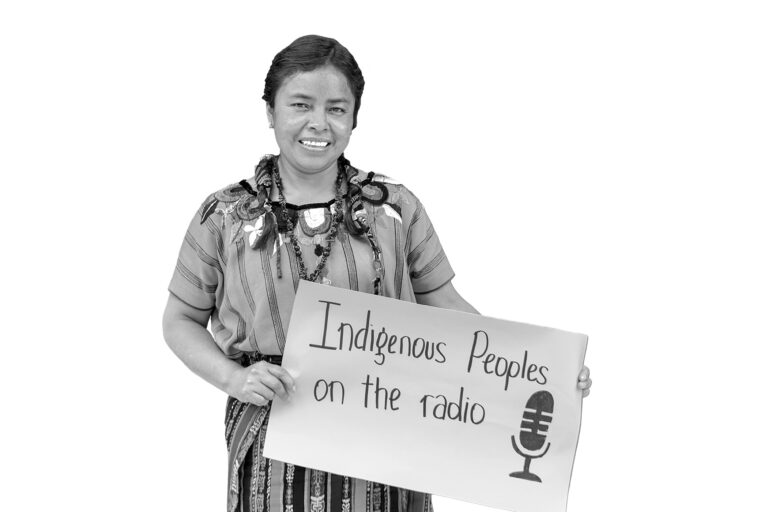
One of the most impactful ways Indigenous knowledge and traditions are preserved is through oral storytelling, which is why Cultural Survival sees radio as a critical tool for keeping communities together and fostering a relationship with the land. Roberson shares how their robust radio project is specifically designed to train and empower Indigenous media creators to share local news and cultural information of critical importance, in multiple languages across the world.
“It’s something that’s [a] core part of what we do. Some people are like, ‘Ah, radio, you know, this is 2025. Who cares about radio?’ But Indigenous people really care about radio because it keeps our communities together. It’s a primary form of communication.”
Find the Mongabay Newscast wherever you listen to podcasts, from Apple to Spotify. All past episodes are also listed here at the Mongabay website.
Mike DiGirolamo is a host & associate producer for Mongabay based in Sydney. He co-hosts and edits the Mongabay Newscast. Find him on LinkedIn and Bluesky.
Rachel Donald is a climate corruption reporter and the creator of Planet: Critical, the podcast and newsletter for a world in crisis. Her latest thoughts can be found at 𝕏 via @CrisisReports and at Bluesky via @racheldonald.bsky.social.
Banner image:
Lolita Cabrera (Maya K’iche’), an Indigenous rights activist from Guatemala. Photo by Jamie Malcom-Brown/ Cultural Survival.
Related listening:
Listen to National Geographic photographer Kiliii Yuyan discuss Traditional Ecological Knowledge:
See related coverage:
In Canada, Indigenous communities and scientists collaborate on marine research
Transcript
Notice: Transcripts are machine and human generated and lightly edited for accuracy. They may contain errors.Aimee Roberson: we all have Indigenous roots somewhere. Some of us are just further removed from them, and I really believe that like it, the Industrial Revolution is only a few hundred years old, like we’re not very far removed. Any of us on this planet are not very far removed from our ancestors, our grandparents, or our great grandparents Having a more land-based way of life and living in more ballots with Mother Earth and with the world around us. It seems like we’re so far removed from that, but if we actually look at the trajectory of human history, we’re not that far. We’re not really that far away from it.
Mike DiGirolamo: Welcome to the Mongabay Newscast. I’m your co-host, Mike DiGirolamo,
Rachel Donald: and I’m your co-host Rachel Donald,
Mike: bringing you weekly conversations with experts, authors, scientists, and activists working on the front lines of conservation, shining a light on some of the most pressing issues facing our planet, and holding people in power to account. This podcast is edited on Gadigal Land today. On the newscast we speak with Aimee Roberson, the executive Director of Cultural Survival, who is herself a citizen of the Choctaw Nation in Oklahoma. In this conversation, Roberson discusses her work in liaising between Indigenous and Western science. Concept often referred to as two Eyed Seeing, which was previously covered with newscast guest and National Geographic photographer Kiliii Yuyan. In this interview with co-host Rachel Donald Roberson explains how a group she helped found the Indigenous Kinship Circle works to partner western science practitioners with Indigenous groups to share knowledge and push back on the idea of people as separate from nature. A notion Roberson says, is damaging for conservation as well as just not true. Additionally, Roberson is involved in a radio program initiative that helps steward and protect Indigenous languages while providing media opportunities for Indigenous voices. She explains how this initiative works on building Indigenous community radio. Which she says is a vital part in helping communities cultivate reciprocal relationships with the land and keeping these communities together. This conversation with Aimee Roberson, as well as the discussion between myself and Rachel in the post show examines this theme, which Roberson introduced to us, which is that we all have Indigenous roots somewhere.
Rachel: Aimee, welcome to Mongabay’s podcast. It is a pleasure to have you on the show.
Aimee: Thank you so much. Thanks for having me.
Rachel: I am so excited to see what we’re going to get into today. You have such a particular background, which I think acts as a bridge between the two worlds that are coexisting, and I think for many people seemingly conflicting at the moment, which is the Indigenous way of being and then an industrialized or post-industrialized way of being. and so it’s always very interesting to sit with someone who has sat between and woven between. And so I think it would be a good place to begin with your background. You are a scientist and you are also an Indigenous scientist. Can you explain to the audience what this means?
Aimee: Yeah, absolutely. So I’m a citizen of the Choctaw Nation of Oklahoma and also of Chickasaw descent, also mixed European descent. So that’s a huge part of who I am and always has been as a young person participating in ceremony and learning from Indigenous elders as well as my parents. I really came to love everything in the world around me. We lived close to a pond that had all kinds of wildlife, seasonal water changes, and all kinds of things that captured my interest and imagination. And so from a very young age, I was wanting to always immerse myself in nature. In fact, I was also a bookworm, which might be part of what led me to science, to western science as well. And I used to climb this weeping willow tree over the pond next to our house and read outside in the tree.
Rachel: Beautiful.
Aimee: So yeah, I, so the way my mom used to talk about this when I was a child was this idea of walking in two worlds. Sometimes you’ll hear “two-eyed seeing” as another way of saying that perhaps, but as Indigenous people grounded in our cultures and histories and traditional life ways, we’re often also living in this western and what you call the postindustrial world. And so we are experiencing what sometimes feels like two very different worlds at the same time. As I said early on, I really had this deep care for the natural world, for all the life forms, flows and entities that are a part of the ecosystems in which we all live. And I started to notice that not everyone cared about that, that not everyone wanted to understand nature or are part of it, our role within nature. And so I started to wonder about that and why did some people care and some people didn’t. So when I was in high school, I started our first birthday celebration to try to connect with people who also cared and wanted to be part of the solutions to the environmental degradation issues that we were seeing, as a cause of, or because of the industrial revolution. And things like unchecked capitalism and extractivism that are so common in our world today and tend to dominate. And so I really started getting into wanting to understand more about humanity’s role in nature and what was our responsibility to the natural world and to the ecosystems we live in. And this led me to want to study as an undergraduate, I study geology. Then I went on later to get a master’s degree in conservation biology and have worked in biodiversity conservation and ecosystem restoration for most of my career. There was a point I remember, during grad school that I think really highlights kind of some of the differences between an Indigenous perspective on ecological knowledge versus a Western scientific perspective. I remember a teacher’s aide in an ecology course that I was taking was saying that you really, you cannot be an environmentalist and also be a scientist. That those things were just contradictory to each other. And I think where she was coming from was this idea embedded in Western science of objectivity and needing toing to…[Rachel laughs] Yeah, I know. Yeah. And it’s funny to think about it now, but at the time I was really aghast. I was like, why? It just made no sense to me ’cause I was like, why would I spend so much time studying ecology, and natural systems, if I didn’t care–If I didn’t care about them, if I didn’t want to conserve them and to address some of the issues were seeing that’s ultimately leading to ecocide. And so that was a really an interesting sort of turning point for me, that I still think about. And that, there’s these two ways of seeing, two ways of understanding the world and really far more than two ways, right? We say walking in two worlds is like a more Indigenous worldview versus a more western or post-industrial worldview. But really, I think the most important point is that there’s this plurality in ways of knowing and that is super important to humanity and to where we find ourselves in this moment.
Rachel: To me, a huge conflict between the two eyes of this two-eyed seeing maybe is what I perceive as the Western tradition coming from this history of enlightenment and post-enlightenment believes, first of all in the capacity for objectivity, within subjective creatures. And that the way to get to that is to move as far back as possible, essentially to disentangle oneself. Then to look as if from afar, and it is the very possibility of being disentangled that can allow one to comment objectively on what is passing, whereas Indigenous ways of thinking from what I’ve learned in Indigenous science as well speaks to the pact of the matter that we are all entangled all the time. That reality is fundamentally relational and you do not get to know a thing by moving away from it. You get to know a thing by being with it, moving with it, by living with it. And I feel that this is the tension that we are in. As well in, in the world at the moment. The, if we even take sort of conservation science and some of the biggest calls that have come out of major institutions like 30 by 30, which is to protect 30% of the world’s landmass and oceans by 2030, but doing so that cordons them off and separates them and deems them different and even in many cases removes the keystone species that has been stewarding them for thousands of years, which is us, the human beings who have been living on it. It’s an incredibly different way of approaching it, and I feel like that’s why it’s quite difficult to reconcile these two approaches.
Aimee: So yes, I think you’re absolutely right. I think this is one of the most important differences, and potentially one of the most dangerous aspects of Western science. Now, I do want to caveat at this right away by saying, I do think Western science has a role in our understanding of the world, and so I’m not trying to discredit it, but I do like to talk about, what is the role and how do these things fit together? The idea that we can separate ourselves from nature is actually a fallacy. And what’s funny is that it, not only do Indigenous people know this and embrace this as part of our worldview and our cosmo visions, but even science tells us this. So if we look at quantum physics, they’ve shown that a particle observe observed is impacted by the observer. And so just by existing, by observing nature, we’re, actually a part of it and we cannot separate ourselves. So I think it’s really important to recognize that because it’s this desire to separate ourselves from nature to try to be objective that actually I think, makes us think that somehow we’re not interconnected with all that is. That we’re not a part of nature, that we’re not dependent on the ecosystem that we live in. And this sort of underlying belief that we can actually be somehow truly objective, really feeds the separation between humans and all life forms. And the reason that’s so dangerous, I think, is because we do depend on each other. We are all interconnected as human, as all other than human life forms. The water, the air, the soil, all of this is essential to our own wellbeing and to our own ability to thrive as humanity. And so Indigenous cultures truly embrace this, in the sense that we recognize that we are related and that there are consequences when we act. There are consequences in the world around us. And so to me that’s where Indigenous ways of knowing actually have quite a lot to bring to our current situation as humanity on Mother Earth is the ability to fully embrace that interconnectivity and recognize that this idea of separating ourselves out of being hyper individualists, is just really a fallacy. It’s just not based on reality.
Rachel: I was having a conversation recently with Tyson Yunkaporta, who’s an Aboriginal author and just great, he’s really great. And he was talking about how we have this contrast between our ontologies and our epistemologies. So between our ways of being and our ways of knowing and how in the Indigenous worldview these things are fundamentally intertwined, braided, it’s the DNA of human expression is to know what one knows and to know how one is, and then to also work in accordance with both of those things. Whereas in the western world, we appear to be in a slight, pickle, which is that even the new things that we learn aren’t really impacting how we’re choosing to live. Yeah. And it’s such an interesting, it’s sat with me for weeks, which is why I’m bringing it up. Please.
Aimee: Absolutely. Yes. So I love, Tyson’s work as well. I follow his podcast, the other others and have read his books and, have learned a lot myself from the conversations he’s had with his guests. But I think, yeah, this is the crux of the issue, right? Is that, essentially I would say that like Indigenous ways of knowing are embedded within communities, within culture, within governance systems, or closely tied to values, that are collectively held to keep the community thriving. To keep the elements of nature that we depend on also thriving. So it’s actually the ability to collectively gather and integrate knowledge into a system of values-based deci–into a system of decision making that traditionally kept communities on track that kept them reinvesting in their own wellbeing and the wellbeing of all the life forms around them, and acknowledging all of that interconnectivity. So when we start to, western science is very reductionist, right? It really silos information and expertise. And so when we start to separate that out, and separate it from values, it’s very difficult to then integrate it into good decision making. That will be good for our collective wellbeing.
Rachel: Very well said. Very well said. Can you speak a bit about that with regards to what you have seen in Western conservation models? Because I know that this is something that, that is going unremarked, let’s say by the general public, but is causing a lot, again, of tension within communities who are concerned and aware.
Aimee: Yeah, so when we look at the history of conservation, we see that it was often like the very spearpoint of colonialism and of genocide, even of removing people from the land. There was this idea that, and still is this idea of a preservationist kind of conservation and like a fortress conservation. People have to be kept out of the natural world in order for it to be quote unquote pristine. In reality, as Indigenous people, what we know from our long history of knowledge as communities is that humans integral roles and caring for the land in caring for our other than human relatives that share the land and waters with us, that we have to be responsible to them as well as to ourselves and to our communities. So I’ve, I worked most of my career, within sort of western conservation and science institutions, and then increasingly, over the last several years really….really look to find that intersection between Western science and conservation and Indigenous people. And I’m a founding member of a group called the Indigenous Kinship Circle. And this is a group where we’re looking at exactly these things of how can we work adjacent to western conservation and conservation groups and initiatives. so there’s one called the Central Grasslands Roadmap that’s looking to conserve the grasslands of North America Central Grasslands in North America. And, the people who started that and who were organizing that really wanted to include Indigenous people. So I was one of, a few that participated in the first gathering, and after that we decided to form a group. And originally we were just a Indigenous slash first nations working group, but later, decided to rename ourselves as the Indigenous kinship circle. And so what we have been doing is looking at how to be a bridge between western science, western conservation and Indigenous peoples, how to help raise awareness within western science and conservation circles about why they should partner with Indigenous peoples, how Indigenous peoples and communities are just inherently tied to good stewardship of the land and waters, and why they should be better partners, how they can be better partners. So really working to help educate people, about these things because western science, western conservation, by having this sort of notion that we have to separate people from the land for it to be cons, to be conserved, I think as humanity, like we really need to get over that and we need to get over that idea because it’s really fueling, again, more siloing of okay, that’s nature over there, and then humanity will live over here and that’s just not really how it works. Like we really depend on nature and we also have roles and responsibilities towards nature. If this is gonna work out well for humanity, like we need to recognize that.
Mike: Hello listeners and thank you for tuning in. I hope you’re enjoying this conversation with Aimee Roberson. But I would strongly encourage you to listen to our award-winning episode with National Geographic photographer Kiliii Yuyan, whose words touch upon the topics discussed in this episode, as well as the importance of the art of photography. So if you haven’t listened to it yet, you can find a link in the show notes. Go check it out. As always, please subscribe to the Mongabay newscast wherever you get your podcast from, and leave us a review. Now, back to the conversation with Aimee Roberson.
Rachel: I think what’s so difficult about this inflection point in human history though is having to hold that space of betweenness as you’re saying, because there’s certainly. No way that we can continue doing exactly as we are in the Western world. Things are going to change, whether it’s that a just transition is achieved, which would be remarkable at this stage, or whether it’s that quite frankly, we begin to run out of high density fuels with which to continue exploiting the rest of the world. Something’s gonna give, but equally, we cannot ask a population of 8 billion people to return to how their ancestors lived, especially people that, that do not have that cultural knowledge in them anymore. And I do often think about my own people as Scots and Brits and Welsh and Irish, who were all also colonized by Europeans, essentially by the elites, who illegalized our languages and our traditions and our religions. And it’s gone now. It’s gone. And I can’t really see a way forward apart from exactly as you say, being this bridge towards other possibilities. But I think it’s incredibly difficult to grasp what that means in the uncertainty. And so perhaps you could, have you seen good examples of this? Do you think that, changes are being made in the role in the worlds of either science or in particular conservation science that gives you hope that this bridging is feasible and could be a model that could be expanded elsewhere?
Aimee: Yeah, I’m not sure I would look to conservation necessarily in this regard. I do see it. I do see, when I came to cultural survival a little over a year ago, I had, I had been working with a group of people, Indigenous people as well as non-Indigenous allies on these things, on how to bring awareness to these issues and to bring them to the forefront of discussions in the conservation world. And so I know that those really important conversations are happening. I do think that’s critical. I also think that beyond the world of conservation, we have to look to communities, whether Indigenous or not, who really are committed to looking at how to live more sustainably. I don’t think it’s impossible. I really don’t because I live in a rural community. We grow a lot of our own food. I see,there’s a big back to the land movement within Indigenous communities, there’s, renewed emphasis on regenerative agriculture, Indigenous agriculture, food sovereignty. And I think, it’s, we have to think on the local scale on what’s happening. How do we build community? How do we help each other out? Whether it’s through growing food or providing other services. How do we become more localized in meeting our needs? I do think it’s possible. And I also, one of the things that Tyson, said, I think it was in Sand Talk that he wrote, is that something along the lines of, we all have Indigenous roots somewhere. Some of us are just further removed from them. And I really believe that like it, the Industrial Revolution is only a few hundred years old, like we’re not very far removed. Any of us on this planet are not very far removed from our ancestors, our grandparents, or our great-grandparents having a more land-based way of life and living in more balance with Mother Earth and with the world around us. It seems like we’re so far removed from that, but if we actually look at the trajectory of human history, we’re not that far. We’re not really that far away from it. But it does take that desire, right? It takes the ability to see where we are and that the path that this, the industrial revolution and the artificial intelligence revolution that’s now upon us, you know? That these, the path that these things are taking us on are pretty treacherous for the future of humanity. And so if people can wake up to that knowledge and start to say, okay, what can we do differently? I think there can be hope for a better future. Because, that trajectory that we’re on, that the dominant cultures of on Mother Earth are currently on, are on a path of destruction. And so to me, that’s one of the other dangers of science and sort of the Western worldview, is being able to compartmentalize that and pretend like it’s not happening. Or look the other way because, oh, I’m not an expert on that, I’m gonna focus on something else. But for those of us who are trained to think in systems, whether it’s ecological systems, social ecological systems, we see this path that we’re on and we know that, we need to make some changes and soon.
Rachel: Now Aimee, I know you’re doing a radio project at the moment as well with cultural survival, that is about making Indigenous media makers and helping to steward languages as well, which are also critical to stewarding, earth, mother Earth, and our relationships to the land because it’s within our languages that really restore all of our knowledge about how to be as human beings. Can you please speak to why you decided to go down that direction with that project and the impact that it’s having?
Aimee: Yeah, it wasn’t me that made the decision. So certainly working to protect and support the stewardship of Indigenous people’s languages is something that’s been a part of cultural survival since our founding in 1972, and it’s reflected across all of our programs. As you said, Indigenous people’s right to keep and strengthen our languages is vital to ensure the sustainability of our cultures and lifeways because it’s through our languages and our ceremonies conducted in our languages that we continuously cultivate reciprocal relationships with the land, our ancestors and all the living beings flows and entities. And so there’s various ways that we support sustaining Indigenous languages, revitalizing Indigenous languages, whether it’s through our communications and radio programs, and I can talk a little bit more in detail about that, but also through grant making, through youth fellowships, through advocacy. I would say Indigenous languages are woven throughout everything we do at cultural survival and have been since the beginning for 53 years. But in terms of radio, we have a couple of different programs that are specifically focused on community radio, Indigenous community radio. So we have our Indigenous community media fund. Over time that has included, it’s a grant making fund, and so it’s included like over 400, I think 422 projects in 40 countries and on four continents. So just to give you an example. This year we supported the Puerto Carreño Indigenous Community radio station in Colombia, and they are working on a framework that is social community and Indigenous led. Their editorial approach is based on freedom of expression, and the articulation of diverse voices that coexist in the territory, where they are in Colombia through programs, interviews, and other audio content. So we also have our Indigenous rights radio programs. So this, we’ve produced over 2000 radio programs about Indigenous people’s rights and often amazing in Indigenous languages. Yeah. And these are currently distributed to approximately 1200 radio stations in 55 countries.
Rachel: Wow.
Aimee: And yeah, just recently, this is pretty cool. Just recently in August, the Millions podcast org platform or organization recognized our Indigenous rights radio as the fourth best podcast on human rights out of 100 ranked podcast. Yeah. So that’s pretty cool. So that’s an important platform for us, in whether we’re supporting Indigenous community radio or putting out content of our own through Indigenous rights radio. It’s a really important way for Indigenous communities, especially those that are more rural, that may not have cellular service, may not have internet. Radio is a super important way to keep people connected, to continue the language in a very public way, bringing in youth and elders and multiple cultural aspects. It’s something that’s, core part of what we do. Some people are like, ah, radio, this is 2025. Who cares about radio? But Indigenous people really care about radio. Because it keeps our communities together. It’s a primary form of communication.
Rachel: I think it’s amazing. I was producer of Radio Free Sarawak for over a year, which is the only sort of Indigenous run radio news program in Sarawak and it was produced just so that people could get information about why their homes were being taken from them and destroyed and fed to the logging industry. And it has been running for about 15 years and it was amazing producing it because essentially I’d be producing it in all, of these languages. There would be interviews in Malay and there’d be interviews in multiple Indigenous languages essentially. All of the communities on Sarawak were amazing and could speak all of these languages. And so it was just what is the one that, first of all, we can get, the interviewee speak in, and then that is going to be able to speak to the most amount of people. And to me, it’s such a beautiful medium because it so speaks to the tradition that these people grow up in already, which is you share your news, you talk to one another, you find out about the world through this like oral storytelling tradition. And so plugging that into a radio is complete logic essentially, and broadcasting it as far and wide. And it had a huge success. The former Malaysian government was jamming the short waves so that people couldn’t get access to it at 6:00 PM every day because it was essentially the only place that they could get decent news about what was going on and news as well that was pointing fingers at the corruption happening. So I’m completely with you on the importance of radio and it’s something I think about all the time, that just, that people need more. Not only do we need more local news, but we also need more local radio. Not everybody wants to read, not everybody should have to read reading. Also, the minute that you log on the internet nowadays, you’re just bombarded with so many things. Whereas a radio program that goes out on the short wave every week at the same time, it’s a very different sort of experience, I would say.
Aimee: Absolutely. Absolutely. Yeah. Really well said and I’m glad that you understand that.
Rachel: Oh, I understand.
Aimee: Yeah. one of the other we support Indigenous Community Radio is we will host trainings for around radio production.
Rachel: Great.
Aimee: We support. Yeah, strengthening and developing capacities and skills. We tend to focus on Indigenous women radio broadcasters and independent communicators who are working with community radio stations. And so these workshops will focus on research and script writing, recording and editing. And they’ve really helped to empower and make visible and position Indigenous women radio broadcasters at a professional level.
Rachel: Good for you. It’s, it goes back to what we were saying at the beginning, isn’t it? That it’s not the further that you get from a thing that the better, best placed you are to comment on it, being in the thick of it and in among the weeds, is it. And providing people–you don’t need to provide people with a voice. Everybody has a voice, but sometimes you need to provide them with a megaphone so that they can be heard above the noise. And so I just think it’s a really wonderful thing to be diversifying our news sources as well. And not just for Indigenous people on the ground, but also for the rest of us to get that plurality that you were speaking to at the beginning of, what is actually going on in the world, what reality really looks like. It’s wonderful.
Aimee: Yeah, absolutely. And it really makes me think about how this exposure to different ways of knowing, to different ways of seeing, to different ways of being is really what humanity needs right now. Because we get so locked into this very industrial, technological way of seeing things. And really it’s like putting blinders on. Like we think that the internet gives us access to all these things, but we step outside, like literally step outside. Take a moment to listen to the wind and the birds and the water flowing and that’s when people really find peace. That’s when we really find our wisdom. Which is something I think we all really need to be tapping into right now because of the direction that we’re humanity is headed as a whole is, is pretty scary. Like we need to take a pause, we need to step back and reconnect with each other, reconnect with nature and our communities. And then I think what we can find that hope you were talking about.
Rachel: Aimee, I think that’s exactly where we should leave it today. Thank you so much for your time. This has been a beautiful conversation.
Aimee: Thank you so much. I really enjoyed speaking to you Rachel.
Rachel: You too.
AI cannot subsitute the human experience
Mike: So I really appreciate this conversation because it’s a bit of a follow up on one that we did a couple years ago with Kiliii Yuyan, Indigenous National geographic photographer, and he talked about two eyed seeing, and so I, I didn’t know when we would get to breach this topic again, and so I’m glad that you and Aimee got to discuss it because I think it’s really important and I don’t think it gets talked about enough. I was unfamiliar with Aimee’s work before you did this show with her, so I’m really glad to see that, that she’s working on this. And I was equally encouraged by both of your analysis of the importance of radio, which is something I think that we should dedicate some time to discussing here about why radio is important, like what is distinct about it from the written word that. I think it’s enduring. I know we live like in an age of AI and things are being like fabricated all the time, but for some reason I just don’t think there is a replacement AI or otherwise for an organic conversation with another person. I don’t think you can. I don’t think you can fully replicate that.
Rachel: Not yet. At least.
Mike: Hopefully not ever.
Rachel: Hopefully not ever. It’s so important. Radio as a medium and it’s very worrying to see it slowly being replaced. How many people no longer even have the technology to receive radio shows in their homes anymore unless it’s a digital broadcast, but especially in remote areas that may not have access, obviously to wifi and except all that, but also with the people that have a tradition of oral storytelling. For whom the way that somebody speaks is just as important as what they say and their voice is important. And they may even be a person who has been trained to speak on behalf of the community that’s been their role in the community. This is why it’s so important so that they can have the conversations that would be have, they would be having in their longhouse anyway, but publicly or listen to conversations that would be happening in a longhouse technically thousands of miles away. And thus create a web of knowledge that goes a little bit further than they ordinarily would, which is so important when, especially when they’re dealing with things like extractive industries moving into their ancestral territories. So yeah, I’m a big backer of radio.
Mike: It’s incredibly important in the African continent, a lot of people get their news from radio, and I think that’s only gonna continue to be the case. That’s something that we take seriously at our Africa bureau for sure. But I do also want to like point to for our, for our global North audience, like you may have noticed if you’ve been around for the past 40 years, that a lot of like local radio stations, a lot of local outlets have closed up shop. Yeah. And I do think you lose something from that , you lose because you think about this, if you get up in the morning in rural Minnesota and you turn on the radio and you hear, someone who doesn’t sound like they’re from where you’re from, talking about things about where you are, how likely are you to remain on that channel and listen to them speak? How likely are you to trust it? It means something when something is produced by your community, about your community. There–I don’t think you can replace that. I obviously appreciate that we have a global audience here and we produce this for a very wide audience that spans multiple continents. But there isn’t any replacement for local radio in my mind. And I don’t think AI is gonna do it.
Rachel: I think that there is an element of what we are doing with this podcast and what I’m doing with Planet Critical that is like local radio. It’s just local radio for planet Earth in the sense like, what are the stories that are happening that you need to know that are gonna touch your life or are already touching your life? It’s not, nothing that we’re discussing here is about something that’s happening far off in the distance that, somebody, one of our listeners can be a sort of objective observer to and use it as fodder at dinner conversation. That’s just not what we’re doing. So I think that, this is in keeping with the tradition and I think exactly what you said, the reason why local radio is so important. It’s because local knowledge is so important. Yeah. And because people do know best what they need above somebody from the outside coming in. We see this time and time again when top down policies and budgets are written from people that have absolutely no lived experience somewhere and then go in and may spend a lot of money to make a mess, essentially because they didn’t consult. People know what they need, and I think that local radio continues to just very slightly decentralize power and decentralize knowledge systems and create a cohesive sense of competence amongst even the most rural communities. And, that’s why it’s so valuable.
Mike: Yeah. I also very much appreciated when Aimee mentioned on the show that, I’m, paraphrasing her words here. I’ll go back and, actually insert the, full quote, but she said something to the effect that. We’re all Indigenous to somewhere.
Rachel: Yeah.
Aimee: One of the things that Tyson, said, I think it was in Sand Talk that he wrote, is that something along the lines of, we all have Indigenous roots somewhere. Some of us are just further removed from them.
Mike: And that I just keep thinking about that. I just keep thinking about that and what that means. When you live in a place for many years and you have an intimate knowledge of it, and you develop like a relationship with all the people around, I think there’s something there that you possess that even some of the greatest journalists can’t touch. Kiliii Yuyan said to me, he said, the most important thing you have as a journalist is time. And if you don’t have time, you can’t really give that story its due. But who has more time with a place than the people who are from it? From it live it, feel it. if you were to go back to where I’m from, people have like detailed viewpoints of what the Cuyahoga River used to look like in the seventies when it was just a pile of sludge that kept getting set on fire to what it is today. And so the, the scars of those memories linger in their brain. And that informs their actions day to day. If you have outside the outside observers coming in and looking at that, how could they possibly understand the progression? How could they possibly understand the before and after the consequences of that degradation? I don’t think they can fully.
Rachel: Intellectually, but as you say, living through something, having that bodily experience, which is what generates your emergent relationship with the world. Yeah. And with which you become a part of the world and an agent in the world. Yeah. I do think that is different.
Mike: Yeah, and so that’s why I think that local radio is irreplaceable. I don’t even with the most advanced language learning models out there, you can’t replicate the human experience. It is impossible to put that into a machine because a machine is not cognizant. It’s not conscious. It does not have a lived experience.
Rachel: See, I’m less worried about AI in radio than I am about the, just the continuing trend of the, a lack of funding and media continuing to be centralized. In capital cities with educated but relatively homogenous teams who cannot know what is going on all over the country that they represent. That’s that. I think it’s still the bigger threat than AI.
Mike: I’m scared of both of them, to be honest with you, Rachel. I’m scared like the lack of funding and the co and the centralization of media into these very large, very large conglomerates that don’t actually look at a place in, a way that it needs to be looked at.
That scares me for sure, has scared me for years. But I’m also scared about like the uncritical acceptance of machine generated content. Like seemingly with zero question, it just blows my mind how people are so readily embracing it. Without any, without questioning what is being made or where it’s coming from or the cost of it. Environmental and social. Yeah.
Rachel: I see a lot of people pushing back, I have to say, and maybe that’s because of the field that we are in, the word smiths and the creatives who are in danger of losing their sort of perceived value in society. But I do–I think, I do think that people are worried, and I think that a huge number of people that aren’t worried is because they don’t know. I think it’s very hard to distinguish machine generated content now, if you will, compared to non, it just writes, it’s a perfect mimic. And I actually wrote about this on Planet Critical a couple weeks ago about how the tradi–the western tradition of writing, which sort of takes up this objective distant third party observer, is the easiest thing for a machine to mimic because we don’t typically talk about how we feel or our memories, our experiences, our way of being in the world because the tradition of journalism says, don’t insert yourself. And so of course it’s now really difficult for us to distinguish between humans and machines. Because we’ve been writing like machines for a good couple hundred years. And that’s certainly what you get trained as a journalist as well to remove oneself rather than to lean into the entanglement. So I’m seeing this sort of glimmer of hope that this could also be a crunch point for a very honest and brutal critique of our creative traditions and trying to see how do we represent the body more? How do we represent our relationships more? How do we speak more to our experiences? As a way to distinguish ourselves from machines which don’t have experiences, and that might create a better tradition of writing going forward in which we are speaking with one another rather than just to one another.
Mike: Of course, the highly cynical outside observer may be listening to you and me, Rachel, and especially what I’m saying here, and they might think, oh, you’re just interested in your own preservation, your own job security, right? And it’s okay, I’ll take your, I’ll take, let’s take that argument, but this isn’t just about my own selfish self preservation. It’s about the continuance of art itself, because it, if you didn’t have art, your life would be so incredibly miserable and boring, and it would be devoid of a lot of joy that you currently derive from it. if you think about the times that you’ve gotten on a, like a long haul flight, how many times have you picked up a book. Like a good book, not a machine generated book. A book that was written by someone who labored over it for months and years and you just devoured the whole thing in one sitting and it left your brain buzzing with so many thoughts, emotions, perhaps life changing ones. Do you want to say goodbye to that? Is that something you’re comfortable with like just leaving off the table for your children? And if you think about the fact that and I’m gonna give a shout out to a colleague of mine named Rich Haridy who wrote a very good piece on this, backed by science, you literally become less intelligent the more you use these language learning models. It takes away your brain’s practice of thinking and putting a thought down on a page that is an actual thing your brain like gets like a workout from. So the piece by my colleague is AI is rotting your brain and making you stupid. Again, my colleague’s name is Rich Haridy. You can find that piece in New Atlas. Again, it’s AI is rotting your brain and making you stupid. And the less you do that, the kind of less intelligent you are with that practice. So is that something you’re comfortable with continuing on for the rest of your life and for your children’s lives and for everybody’s lives? I’m not.
Rachel: Yeah, but I don’t think it’s an exceptional moment either. We have been involved in a process of cultural dumbing down for quite some time. If you look at the way even pieces of journalism are written now compared to 40-50 years ago. If you look at the sort of mass production of like franchise movies, like how many bloody Marvel movies do they have to make in a year to keep churning out money? And they keep churning out money because people keep going to see them. Like, there is an element of, how do I put this, I really truly believe that part of being in a system and therefore a society and a culture is having forces acting upon you all the time. And there’s, there aren’t very many genuine choices that, that we do have, but even within the choices that we do have, I do think that we have all participated in some sense in this cultural dumbing down. So I don’t, think the age of machines is particularly surprising.
Mike: For sure. I’m not suggesting it is surprising. I just think the scale and the scope of it is particularly pronounced, like almost like an exponential curve in a way that. In a way that is, that we haven’t grappled with. The only thing I can truly compare it to is like the advent of the internet, which changed communication forever. The genie is out of the bottle. And adapt to it, we have, quite imperfectly, I would say. I don’t think that the world is ending tomorrow. I just don’t think that we’re setting sail with our eyes open. And I think we should be looking at this with a clear, with clear eyes and it feels like we’re not.
Rachel: Maybe, but it, I think what you’re saying would demand that we look at recent history with clear eyes as well, which is very difficult because I think there’s a very good argument to be made that like the internet, artificial intelligence is a redistribution of resources to everyone, right? And that’s a very anthropocentric perspective because of the amount of Earth’s body that they demand, the amount of land that has been stolen from our kinfolk in order to produce these machines or water bodies. But if we just consider it amongst humans, because in the past, people with more resources could hire the painters and hire the writers and stick their names on things, and get further ahead in life through, through their wealth. Like essentially the, ability to buy creativity or hire other people’s creativity. And now that’s been equitably, shared around in the same way that the internet kind of gave everyone a voice. I hear you. But it’s a continuation, isn’t it, of everything that’s come before.
Mike: I’m not so sure. I’m not sure it’s equitable because it’s based on stealing other people’s content. I don’t see that as equitable.
Rachel: Equitable in the sense of like the ability to produce now, not equitable in the sense of like where that inspiration or imagination is coming. Yes.
Mike: Yeah, for sure. It allows like massive production to many different parties. I just think that at the end of the day, the people that are truly benefiting from this in a monetary sense are these massive tech scions who are uncritically shoving it in front of everyone’s faces and trying their very hardest at every turn to absolve themselves of any consequences whatsoever. And that is depraved, in my opinion, that’s maligned. That should not be allowed.
Rachel: But that is, but that is how our world works. And so, I think maybe this, because I agree with everything that you’re saying. I think maybe the, only part where we’re slightly talking across purpose is that I don’t like AI being portrayed as something different, as something other, as something exceptional when, to me it is very in keeping with our history of industry, exploitation, abuse, and extractivism that has come before it is yet another product that is not actually, in the grand scheme of things, like it’s not intelligent, it’s not all that helpful. Yeah. It just, it speeds up work, but it uses more resources to do that. And it is being deployed exactly as you say, uncritically because there’s a group of men that haven’t been able to come up with a decent idea in about 15 years and desperately need more growth in the market in order to continue siphoning off more wealth for themselves. And that’s not just out of, pure greed and the in, in the image of Smaug the dragon, but also because they have ballooning debts that they need to pay off. Because that’s how, when you get to being that rich, that is how money works. That is how things have always, been. look at the sort of creation of the value of the diamond and de beers. It was the exact same thing.
Mike: I’m not saying it’s different, Rachel. I’m definitely not saying it’s different. I agree with you. It’s very much consistent with the system that has been…Luke Kemp has pointed out for the past 12,000 years in the advent of grain, like he was saying with Goliaths that are able to dominate society. But I also agree with Luke and see the evidence that is not how things have always been through human history.
Rachel: Yeah.
Mike: Just particularly in the past 12,000 years where we have been dominated by, as he likes to call them, Goliaths. And I think that is the thing that is the case. I just think that the AI example is a particularly, and I use this word–in the sense of good, as in it’s a very poster child example of it. It’s a poster child example of the system of exploitation. I don’t think it’s any different per se.
Rachel: Okay. I’d have to think about it, about whether it’s the most illustrative example, because I do think that the, something about the sort of redistribution of the ability to create on some level or produce on some level is actually odd. Like the internet. I’m not, I, think I would say that an industry like mining is probably more illustrative of these systems of Goliaths that, that Luke was talking about that are purely about extracting as much wealth as possible and nevermind the destruction and the corruption that comes in its wake.
Mike: I didn’t say it was the best one.
Rachel: Actually yeah, but no, you’re, no. I’ve changed my mind. I’ve changed my mind. I’ve convinced myself whilst talking. No, they’re all the same. Because they’re, because this is the thing we do all buy into these systems in some sort of way because they do also benefit us. I like my laptop that has mined materials in it because I like to write and I like to broadcast, and I like to speak to my audience. Yeah, No, it’s the same with ai. Yeah. It’s mining, redistributes some form of energy. It just skims off most of the vast majority of the benefits of it and puts it to the top. Same with AI.
Mike: And they’re able to remain in power and continue doing this because they always point to: “Well look at all the progress. Look at all the innovation, look at what this has brought you. You love your laptop, you love your car, you love your ability to edit audio really quickly. Right? See how good we are for society?” –is the argument. And I hear the same argument made towards like the healthcare system in the US. When I say: “The healthcare system in the US is draconian and abhorrent,” and everyone goes, “yes, but the US pioneers drug research, yada, yada.” And my response is the same. It’s not that system that incentivizes the innovation. Innovation comes from having to overcome challenges. We problem solve. We don’t–if you sit down and go, how can I make as much money as possible? You are not incentivized to solve the most intractable problems. You’re incentivized to make as much money as possible. You might get some innovation from that, but I argue that’s not the reason we get innovation.
Rachel: I think the, let’s not forget, the United States is pretty good at causing problems in order to also solve them with innovation. Yeah, military, department needs something to do. Let’s start a war, shall we? That has been very recent history of the United States. That has been, its sort of go-to starting things in order to solve them.
Mike: We went a little off the rails on this one…
Rachel: Haha. You can cut it down.
Mike: We went just a little off the rails, but I’m glad we did. I enjoyed speaking with you about this topic, Rachel.
Rachel: Yeah, you too. Very much enjoyed it. Thank you, Mike.
Mike: If you’d like to read more about Aimee Roberson’s work, or you want to listen to the episode with Kiliii Yuyan, you can find links in the show notes. As always, if you’re enjoying the Mongabay newscast or any of our podcast content and you want to help us out, we really do encourage you to spread the word about the work we’re doing. Tell a friend. Leave a review and share this episode on social media. Word of mouth is the best way to help expand our reach. You can also support us by becoming a monthly sponsor via our Patreon page at patreon.com/mongabay. We here at Mongabay are a non-profit news outlet, so that means that even if you pledge a dollar per month, it makes a big difference and helps us offset production costs. So if you’re a fan of the work that we do here, go to patreon.com/mongabay to learn more and support the Mongabay newscast. You can read our news and inspiration from Nature’s Frontline at Mongabay.com, and you can also follow us on social media, on LinkedIn at Mongabay News, or on Instagram, Threads, Bluesky, Mastodon, Facebook and TikTok, where our handle is @Mongabay or on YouTube @MongabayTV.
Thank you as always for listening.
Credits