- A new Global Justice Now report has found that nearly one-fifth of minerals labeled “critical” by the U.K. aren’t actually essential for the green energy transition, but are instead needed for the aerospace and weapons industries.
- Mongabay interviewed Cleodie Rickard, the policy and campaigns manager at Global Justice Now, who says the group’s findings also show the U.K. can pursue its energy transition without increasing mineral mining — if it does so in a certain way.
- Rickard says states and multinational mining companies often use the green energy transition as a pretext to ramp up critical mineral projects even though many of the minerals listed as “critical” aren’t necessary for the energy transition.
- In this interview, she says the need to transition from fossil fuels to renewable energy is undeniable, but exactly what materials should be prioritized, how much of them and what specific industries they serve have not been given enough attention.
For Cleodie Rickard, the policy and campaigns manager at Global Justice Now, the term “critical” minerals, commonly used to describe the metals vital for the green energy transition, can be misleading.
A new Global Justice Now report, authored by Rickard, reveals that nearly one in five minerals labeled “critical” by the U.K. aren’t essential for the green energy transition. In fact, more than half of the 33 minerals have little to no role in the transition, with five prioritized for aerospace and weapons instead.
What makes a mineral “critical,” Rickard says, depends largely on each country’s strategic and geopolitical objectives, not just its role in clean energy. She says multinational mining companies and governments can often use the green energy transition as a pretext to ramp up mining projects, even though a lot of the minerals are intended for other purposes, such as the military sector and AI infrastructure. Countries also have differing definitions of which minerals are considered “critical” or “strategic.”
“The term ‘critical minerals’ is often used to secure political and economic support for resource exploration,” Filipe Gabriel Mura, a Mura Indigenous leader from Brazil, tells Mongabay via WhatsApp. “But the problem is that [the term] groups together different minerals with very different purposes. Not all of them are essential to the energy transition, and many serve the defense or agribusiness industries.”
Gabriel says this is the case in the Mura Lago dos Soares community in the Amazonas state, where a potassium project, a mineral classified as essential or “strategic” in Brazil’s Pro-Strategic Minerals Policy. The project was approved while it faced significant backlash by residents concerned about the impact on the environment and their livelihoods exists.
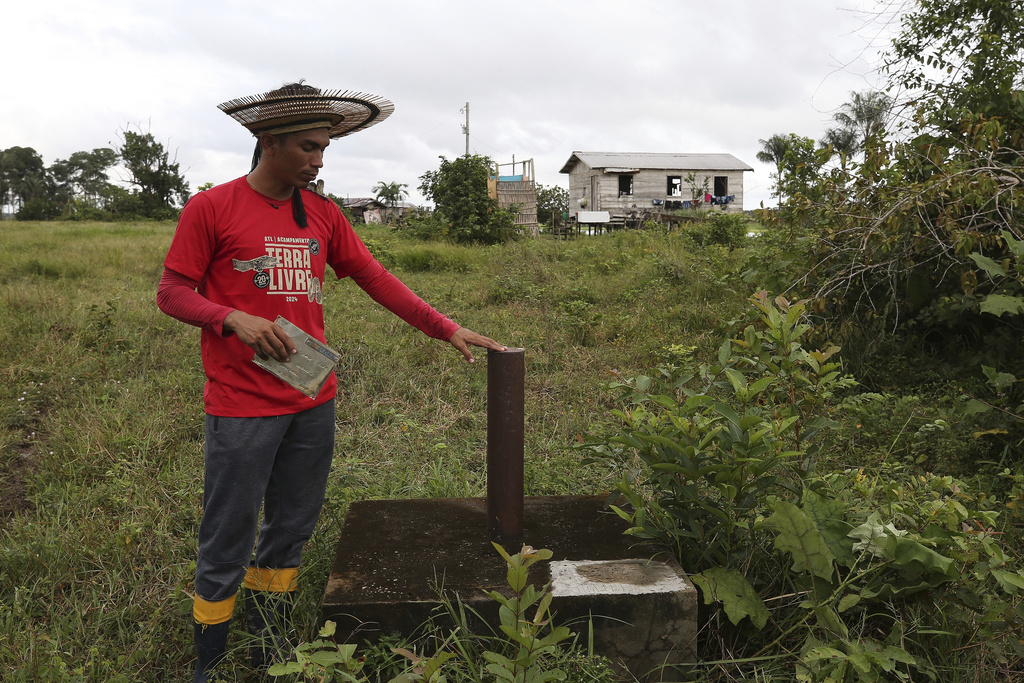
Potassium, which is a main component of fertilizer, is critical for Brazil because there is no substantial domestic production. The country therefore has to depend on foreign suppliers to maintain its status as one of the world’s largest exporters of soy, sugarcane and other food commodities. In Brazil, “critical” and “strategic” minerals are subject to less stringent environmental regulations due to a law put forth by former President Jair Bolsonaro in 2021, known as the Investment Partnership Program (PPI).
“The labeling of a mineral as critical can pave the way for mining in vulnerable territories under the guise of national interest,” Gabriel says. “It’s happening to our people in Soares and Otazes, without considering the mineral’s actual uses or the rights of local communities.”
Certain mining projects for critical minerals have been tied to wildlife habitat destruction, water contamination and depletion, and human rights abuses, such as child labor and forced evictions. Indigenous peoples and other local communities are often the most impacted, as mining projects for these minerals are often situated on their lands.
While there’s widespread agreement about the need to switch from fossil fuels to renewable energy, exactly what minerals should be targeted, in what volumes, and for which industries, are questions that haven’t been given enough attention, Rickard says.
Based on the report’s findings, she says it’s possible for the U.K. to meet its renewable energy demands without increasing mining of critical minerals.
Cleodie Rickard recently spoke with Mongabay’s Aimee Gabay about why she believes the term “critical minerals” can be misleading, which ones (and in what quantities) are actually necessary for the energy transition, how geopolitical pressure might transform mineral supply chains, and the social and environmental implications of all this. The following interview has been lightly edited for length and clarity.

Mongabay: The green energy transition is often framed by governments as a reason to ramp up mineral production; however, the exact level of mineral requirements needed for this transition is rarely discussed. To what extent does the world need to increase mineral production?
Cleodie Rickard: That’s the difficult question that we are trying to answer. It’s definitely something that’s very hard to granulate on the country level. We campaign on global issues, but directed at the U.K. government, so we were trying to look at this from a U.K. perspective, but with global data. And you’re right. We had the feeling that this term “critical minerals” is a proper buzzword in discussions around the green transition.
When you’re reading industry reports or the media, and even in lots of NGO communications, the same phrase is trotted out like, “Oh, achieving net zero inevitably means more mining.” That’s actually a BBC headline: “[The move to net zero] ‘inevitably means more mining.’” Whether these pieces are calling for or lamenting that fact, they were all saying the same thing.
We found that there were very few voices that were laying out exactly what the requirements of the transition are: “These are the exact minerals we’re talking about. This is the kind of industry they’re going into.” We thought this was sort of a very dangerous situation, because then people who call into question the damage done in mineral mining can be misconstrued as opposing climate action. At the same time, mining companies can claim they have a social license to do lots more mineral mining, because it’s seen as needed across the board.
The way we looked into it was we limited ourselves to the set of minerals that are defined as critical by the U.K. government in their 2024 Criticality Assessment. Lots of different countries have their own criticality assessment. We compared it with International Energy Agency [IEA] data on the mineral requirements of reaching net zero at the global level. The particular scenario the IEA had was a 2040 scenario, and then we looked at data on the current global production of each mineral. We took that from various sources, which is detailed in the [Global Justice Now] report. We ended up with these data tables showing what percentage of each of the U.K.’s critical minerals current [supply] is being used for green technologies and what percentage of current production levels would need to be used for these technologies by 2040 if we’re on a secure pathway to net zero at that time, as defined by the IEA.
We construed from this that we can manage by making small diversions and allocations and sharing up differently the existing mineral pie.
Where these so-called critical minerals appear to play a small role in what the IEA defines as needed for the green transition, we can assume that they’re being defined as critical for their roles in other industries. In terms of our findings from the U.K.’s list, about one in five are not considered essential for the green transition. They don’t play any role at all in the IEA green transition pathway.

A further 15 minerals play no major role, so only a small amount is required. Only a small proportion of global production is needed for this 2040 scenario [in the U.K.]. We are presuming from that their criticality is being driven by other reasons than sustainability goals.
Then you can look at the ones that do need some uplift. Of the 33, there are seven that require significant increases above current production levels. Those are the ones that we hear a lot about: lithium, graphite, cobalt and nickel. Four of those seven are mostly needed for electric vehicles, rather than energy generation, according to this IEA scenario.
Then, there are some details about the other minerals of those seven, like gallium and tellurium, and they have these specific uses, which I think would require more detailed research than we’re doing into the kind of ways you can reduce demand for those. But there are people who are looking into that, that’s really exciting.
According to the IEA, renewable energy production and the electricity grid use about 0.9% of currently produced tonnage of critical minerals, so that needs to increase to 3.2% by 2040. For most of the minerals on the U.K.’s list, barring some of these exceptions, we feel that, based on making small diversions of minerals from other usage, you could facilitate this IEA green transition scenario without the need for increased production of minerals overall. We think that’s a fairly bold contention, and it’s obviously based on this data set, and we don’t have the granulated detail of the U.K.’s net zero scenario, and what that means, like domestic demand. But it leads us to this kind of provocation, that broadly renewable energy generation can be accommodated within existing levels of mineral production.
So, we do have some evidence to counter the claim that for specific kinds of green transition, we need to do loads more mining.
Mongabay: It’s understandable that the U.K., and perhaps other nations, don’t actually need many of these minerals in large quantities for their renewable energy goals. But why is calling these minerals “critical” misleading?
Cleodie Rickard: It’s a really tricky one, because I think when you’re talking about minerals, it also leads you down the path of thinking you’re talking about something scientific or you’re talking about geology. It would be a fair presumption to think it’s a scientific term. But the term “critical minerals” is defined by their relative level of economic importance versus the potential risk to their supply. They’re defined as such by a country due to these changing factors.
A country’s strategic and geopolitical objectives can change the definition of what is considered critical. But the way the term is bandied about and is laid out there unquestioningly reifies it. It’s talked about as if it’s a scientific term. But what’s critical to the U.K. may be completely not critical to another country based on the particular trading relationships it has and how easily it can access minerals. The kind of industries it’s trying to develop domestically would need very different types of minerals. That’s a major thing we’re trying to contest. Critical for what? And what kind of sins are being masked by the fact that they’re being called critical?
Different people would think that minerals for certain industries are more important than others. And for us, there are certain aspects of how you’d pursue a green transition, what kinds of industries you’d prioritize that are beneficial ecologically and for people generally, that’s a really important question.
Mongabay: How many minerals listed as “critical” are actually necessary for the green transition? What are they being used for instead?
Cleodie Rickard: If we start from the minerals that are in the U.K., of the 33 that have no role in the IEA’s transition scenario, five of those are listed as top priorities from the aerospace and defense sector. We have that from a kind of industry report commissioned by the U.K. Department for Business and Trade, that this is what those industries are saying are top priorities for them. So, we can kind of construe that they are in the U.K.’s critical minerals list because they’re important for the aerospace and defense sector.
But also, the military industry has a high demand for minerals that are a subset of minerals that are also needed for the green transition. So, they’re not only putting minerals on the list, but they’re also competing with the green transition for the minerals that they’re interested in. Cobalt, copper, gallium, lithium, nickel, platinum, silicon and vanadium are also in demand by the military industry.
This kind of implies to us that critical mineral mining is at risk of being driven by militarization. Not only “as well as,” but as a priority over the green transition. Based on those kinds of quantitative findings, we also, in the report, do a bit of discourse analysis. It’s very hard to get the granulated data about U.K. demand, but we can see what the U.K. industries are saying and what the U.K. government is saying in terms of what they’re considering important, what they’re considering critical.
It’s true that minerals are wanted by U.K. industries across lots of different areas, from electronics to chemicals and medical technology. Much of the U.K.’s critical mineral imports, as I’m sure is the case with many other states, arrive embedded in goods and components, so it’s quite hard to delineate the exact mineral use and demand. But from government discourse, we can get a sense of their priorities.
In its first budget, the Labour government announced that it was going to do state-backed financing with this facility called U.K. Export Finance, for financing overseas projects that supply critical minerals to the U.K. Quite tellingly, in all the media reports around it, they said that this would particularly benefit manufacturers in defense, aerospace and EV battery makers.

From what I understand, the U.K.’s approach does seem predominantly driven by ensuring it can compete in capturing economic growth from emerging supply chains. There are big geopolitical moves around that to do with competing with China. But increasingly, to support the military industry. There’s a lot of particular geopolitical pressure at the moment coming from the White House.
It’s not as newsworthy at the moment, but it was a big thing in the U.K. over the summer. The U.K.’s military budget is really high. It’s the sixth highest of any country. But the prime minister has, in what we kind of see as slightly cowing to President Donald Trump, said that we need to prioritize war-fighting readiness. They’ve announced a total of 6 billion pounds [about $8 billion] in defense spending [over the parliamentary term].
When we set out writing the report, we were really concerned with the greenwashing of mineral mining, and that governments were using the guise of the green transition to hide that there’s lots of mineral mining going on for other purposes, largely military purposes. I think now they’re bothering less to hide that. I think it’s more legitimized and it’s more naked.
[Governments] are pursuing this growth strategy by rearmament and militarization and they perceive that to make them popular, for better or worse. I think there’s a more naked drive for mineral dominance that is aiming to bolster military industries, but also, in this weird meta way, it’s being pursued by more militaristic means. It’s a self-reinforcing cycle where resource wars are growing. You’ve got Trump saying mad stuff like he’s going to annex Greenland for its minerals and to build the military sector and that military sector is then being used to get more minerals. There’s this kind of vicious cycle.
Mongabay: Leaders like U.S. President Donald Trump have been pushing for a new agenda of rearmament and a boost in defense industries. Can you tell me a little bit more about how you think geopolitical pressure might transform mineral supply chains and what the implications might be?
Cleodie Rickard: What we’re seeing is a kind of new scramble. Historically, we’ve seen the way that the Global North conducts its trading relationships with countries in the Global South, for example. The way those trade agreements are negotiated have long created this unequal exchange, and that’s kind of been over all sorts of commodities for hundreds of years. Now there’s this kind of new arena of these hot commodities of critical minerals.
We’re seeing these new kinds of trade agreements being agreed that are seeking to continue to lock Global South countries into the bottom of the value chain, to get access to their raw materials and get access to them at source. They’re signing [certain] trade deals which basically have provisions in them that stop Global South countries from literally having the ability to say, “Well, we’re going to keep a certain amount of these minerals in the country so we can develop an industry around them, a processing industry, we can employ more people, and we can make them into more end products that we can sell at a higher value.”
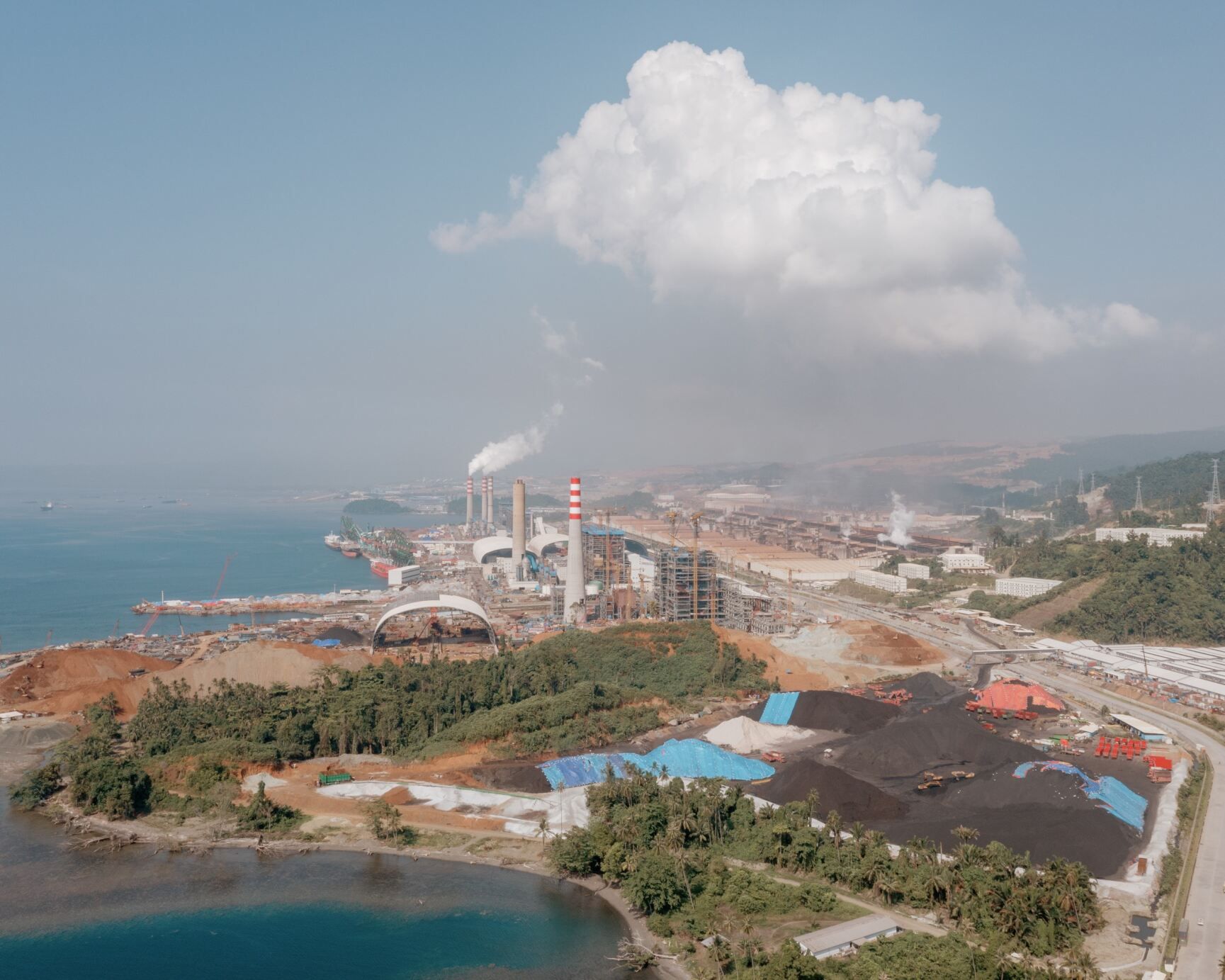
Indonesia is actually trying, by various sorts of export restrictions, to keep some of its nickel in the country, so it can develop a battery industry and it can sell batteries, instead of just selling the raw product. It’s about moving up the value chain so they can more sustainably economically develop. This is a kind of tale as old as time in terms of trade justice campaigning, but it seems to be becoming more pertinent as countries are finally recognizing that they’re going to need to tackle the climate crisis. It risks continuing to drive the same kind of resource grab, the same kind of neocolonialism that the fossil fuel era has been so known for. Trade justice campaigners and climate justice campaigners need to come together and realize how these factors are reinforcing each other.
On the military side of this, besides signing more trade deals, some countries are also trying to onshore their mineral industries [domestic production and processing]. These are certain ways that countries like the U.S. or the U.K. are looking to secure their mineral supply chains. Another side of that is having a more aggressive foreign policy, and you’re seeing that with Trump forcing Ukraine into a mineral deal, with these weird threats around Greenland.
The Rwanda example is slightly less obverted. It’s had less media coverage than some of the stuff that Trump said. But recently, the European Union signed a deal with Rwanda, and there’s lots of evidence — for example, Amnesty International has been tracking — that Rwanda is supporting this [M23] rebel offensive in the Democratic Republic of Congo, and it’s displaced hundreds of thousands of people and killed thousands of people.
A key factor in this is Rwanda trying to be involved in the illicit extraction of minerals in the eastern DRC, and that mineral demand is very much fueled by the Global North, and it’s becoming a major driver of armed conflict in the region. I think that’s a really dangerous road we’re going down, where countries aren’t really reckoning with designing their future economies in a way that has a realistic and pragmatic but also justice-oriented approach.
What we’re trying to contest here is that having a justice orientation is at odds with being realistic. That is often what social justice campaigners are rebutted with — that wanting a just society is just not realistic. Our contention here is that it’s also not realistic, materially — with what’s in the ground, with what we can access to pursue this kind of growth — to pursue having a really beefed-up military at the same time that you’re trying to do the transition. And actually, it’s also not beneficial for people. So, we’re trying to stop this false opposition between being pragmatic about the resources we have and the kind of governance of those resources, and the fact that this is also not going to create an equal society that addresses the root causes of why climate change is an issue in the first place.
It’s like this vicious cycle that I was referring to earlier. The fact that the military industries are obviously seen as a main arena of growth in countries like the U.K., the fact that industrial policy is looking to BAE Systems — that’s the big arms company in the U.K. — the fact that that’s being seen as where we’re going to get jobs, where we’re going to get local economic growth — it just feels like the wrong direction to go down.
And it just makes everyone less safe around the world, and it just means more and more minerals being diverted into not socially useful sectors at the same time that we desperately all need to be transitioning our economies.

Mongabay: In terms of social and environmental impacts, what is the danger here? How does an increase in mineral demand affect the environment and local communities that live near mining sites?
Cleodie Rickard: Some of the big, main stats that you hear a lot are some of the most instructive. A third of transition mineral projects — and they are specifically trying to use the term transition minerals to refer to ones that may be used for the transition — are on or near Indigenous or peasant land that faces water risk, conflict and food insecurity. More than half of nickel, copper and zinc projects are found on Indigenous peoples’ territories. Already we have this scenario, which leads to the creation of a two-tier world system where sacrifice zones are continuing to be made in places that historically have been subjugated in the world economy.
I think probably the example that resonates most with people, because it’s a bit more in the news, to do with kind of conflict minerals, is the DRC, and that’s something that we’re really worrying about because the U.K., in some of its reports, has identified the DRC as a top producer country in terms of the U.K.’s critical mineral strategy. It also has some of the most documented human rights abuses relating to copper and cobalt extraction.
We work with a lot of movements in Latin America and it’s becoming a huge issue there. A U.S. lithium mining company has basically dried out the Trapiche River floodplain in Argentina, and there’s been massive repression of Indigenous protesters against those land grabs for the water and the water shortages.
That’s the kind of irony of a lot of this. It’s so easy to greenwash the idea that we’re using these minerals for green technology, without looking into the actual ecological and climate repercussions. The amount of coal infrastructure that is used in nickel production, for example, and the amount of water that’s used in lithium production, is not really seen in its fuller picture.
We’ve been looking at the kind of trade relationships that, from a more economic level, are locking in these relations of unequal exchange and new forms of neocolonialism with Global South countries. For example, recently, our Labour government’s development minister went on a visit to Indonesia and they signed a critical minerals agreement that claims to be collaborating on Indonesia’s development objectives. It’s kind of positioned as, well, the U.K. is going to help Indonesia develop economically, because it’s going to be helping with the supply of critical minerals, and that’s going to bring loads of jobs. But at the same time, the U.K. is one of the third parties in a WTO [World Trade Organization] dispute that the EU initially raised against Indonesia, challenging the fact that Indonesia, as I said earlier, is trying to restrict its nickel exports.

A lot of governments, probably not in the U.S. case, in the U.K. case, are slightly wiser to the fact that they can’t be perceived to be pursuing the same kind of colonial resource grabs that people are a bit more aware of these days. These trade deals are often seen as very boring, technical things, but they really are a tool in the global economy that creates this kind of global structuring of power.
Mongabay: In the report, it says that most of the “critical minerals” that require a boost in production to meet net zero are for electric vehicles rather than energy generation. Can you explain how?
Cleodie Rickard: I didn’t believe we’d be able to make this case, and I think more research would be needed to make that case confidently at different country levels. The most important finding from the report is that out of the [minerals] that do need a big uplift, almost all of those are for electric vehicles.
We’re going to need electric vehicles, obviously. We are going to need to switch from the internal combustion engine. But I think it really calls into question the way that governments are designing their future green economies, and the importance they are giving to electric cars. I think it really calls into question the shape of a future economy. Do we want to shape this around mass, privatized car ownership? Is that actually feasible, or are there other things we can explore?
I think the answer to the question “Can we get the green transition and not massively increase mining,” is yes — if you design the transition in a certain way.
But it’s not the kind of way the governments are currently pursuing it. The contention of our research is that it’s not just about changing the energy base of the economy. It’s about changing the entire logic of the economy.
To just go a little bit into the electric vehicle example, the U.K. government said that to maintain existing levels of car production and to make those entirely electric, the U.K. would need 200 gigawatt-hours of battery manufacturing capacity by 2040. The London Mining Network has done some great research into this. They basically worked out that that would mean that the U.K. would require nearly a fifth of the world’s mined lithium every year.
Obviously the U.K. can’t get a fifth of the entire lithium in the world. It’s a grossly unfair share. It’s not only completely anathema to the idea of a global energy transition that every economy is going to need to do this, but it just clearly indicates that having a net zero pathway predicated on maintaining the same levels of car ownership doesn’t make any sense.
Also, car ownership is a very kind of classed and stratified thing anyway that’s not affordable to everyone. It’s not characterized by equality at the moment. So loads of organizations have advocated for the kind of alternatives you can have to mass car ownership … public transport, car shares, street hire schemes. There’s a lot of really great research going into alternatives to these things.

That’s the main thing that we’re calling for. We need a detailed, active industrial strategy. We need governance to pursue that kind of industrial strategy for a transition that not only reduces carbon emissions but also redresses inequalities. Doing those two things is also a very pragmatic way to keep more minerals in the ground and to stop the need for creating more of these sacrifice zones overseas.
Based on the research, it’s a really optimistic thing that there’s no argument based on mineral supply that we shouldn’t pursue a green transition. There’s no argument of, “Well, there’s just not enough minerals, we’re not going to be able to tackle climate change in this way.” We can. But there are very different versions of transition that have very different resource needs, and conveniently, people who care about social justice, the routes that lead to more socially just scenarios where we have more shared public resources, like public transport, are actually the pathways that use far less minerals.
Ultimately, it’s a term that scares a lot of people, and we choose to deploy it in certain scenarios and not with others, but basically, what we’re calling for is forms of degrowth. But it’s a very planned, managed form of degrowth of certain industries: cutting consumption of weapons and other kinds of socially and ecologically harmful sectors. As I was saying earlier, it’s a way of having a pragmatic approach around having these insecure mineral supply chains, but it also meets demands for a kind of social justice and designing the economy for people and the planet. That’s the main conclusion from the report.
And it’s a provocation for people to undertake more detailed research in this area, and for governments to take this on as part of a kind of Marshall Plan-scale project that needs to be done to tackle climate change and to really have that detailed industrial strategy.
Banner image: Ofelia Samboni, an Indigenous Yanacona member and landowner in Monclart, holds a stone containing copper. The stone was found in the river close to the mining area. Image by Antonio Cascio for Mongabay.
Researchers fear Chile copper project may threaten rare Andean cat population
Feedback: Use this form to send a message to the author of this post. If you want to post a public comment, you can do that at the bottom of the page.
Cite this article
Aimee Gabay (2025). ‘Clean energy is just one driver of mining’: Cleodie Rickard on critical minerals. Mongabay Conservation news. DOI: https://doi.org/10.66709/news-309308Credits