- Each species represents a unique library of evolutionary wisdom, encoded in DNA and refined over millions of years.
- In a new commentary prior to the International Union for Conservation of Nature (IUCN) quadrennial conference this month, IUCN President Razan Al Mubarak argues that biodiversity represents the most ancient and sophisticated information network our planet has ever known.
- “As the world gathers in Abu Dhabi for the IUCN World Conservation Congress, let us safeguard this living network with vigilance, investment and care — ensuring that nature’s silent information exchange endures as our shared inheritance for generations to come,” she writes.
- This post is a commentary. The views expressed are those of the author, not necessarily of Mongabay.
As a conservationist, I often find myself reflecting on the deeper meaning of biodiversity. Beyond its beauty and its value to human well-being, biodiversity represents the most ancient and sophisticated information network our planet has ever known. This October, when the world gathers in Abu Dhabi for the IUCN World Conservation Congress, we will be reminded of the urgency of protecting this living network before it is irreparably damaged.
Long before humans developed language or writing, nature had perfected the art of storing and transmitting information. Each species represents a unique library of evolutionary wisdom, encoded in DNA refined over millions of years. When we lose a species, we don’t just lose a physical entity; we lose an irreplaceable repository of information that took eons to develop.

Consider the Arabian oryx (Oryx leucoryx), once extinct in the wild. Within its genetic code lies the blueprint for surviving extreme desert conditions — information that took countless generations to perfect. Or the ghaf tree (Prosopis cineraria), whose roots have mastered the science of finding water in seemingly impossible places. Each organism carries solutions to survival challenges that human innovation has yet to fully comprehend.
This information network operates across scales and borders. The pollination patterns of sunbirds in your garden connect to broader ecological rhythms that maintain our food systems. The migration routes of the sooty falcon (Falco concolor) trace ancient atmospheric knowledge. When greater flamingos (Phoenicopterus roseus) gather in Abu Dhabi or in Dubai’s wetlands, they integrate information about water quality and marine health across continents.
Yet this sophisticated network faces unprecedented interference. Each extinction represents a catastrophic loss of data — imagine losing an entire language without documenting a single word. When populations decline rapidly, it signals system-wide corruption in nature’s information exchange.

Here in the UAE, we understand the value of information. Our nation has transformed itself through knowledge economies and data-driven development. This understanding naturally extends to the sophisticated information network that sustains all life — a recognition that drives our nation’s comprehensive conservation efforts.
When you kayak through a mangrove forest or observe an Egyptian vulture (Neophron percnopterus) soaring above Jebel Hafeet in Al Ain or the Hajar Mountains, you’re witnessing billions of years of research and development. Nature’s R&D has produced solutions to challenges we’re only beginning to face — from resilient adaptations to water scarcity, to efficient resource cycling systems that waste nothing.
The biodiversity crisis is not just about losing beautiful creatures. It’s about compromising Earth’s most extensive information network — one that holds answers to questions we haven’t yet learned to ask.

How do we preserve this network? First, we must acknowledge its value beyond sentiment. The UAE has demonstrated this through its Red List of threatened species assessments, protected area designations, and international conservation leadership through the Mohamed bin Zayed Species Conservation Fund, which has supported more than 3,000 projects across 170 countries.
Our commitment extends beyond borders. The reintroduction of the scimitar-horned oryx (Oryx dammah) to Chad exemplifies how we can restore vital nodes in this network. Our hosting of IUCN Species Survival Commission meetings and the upcoming IUCN World Conservation Congress in Abu Dhabi this October further demonstrates our dedication to maintaining global ecological connectivity.
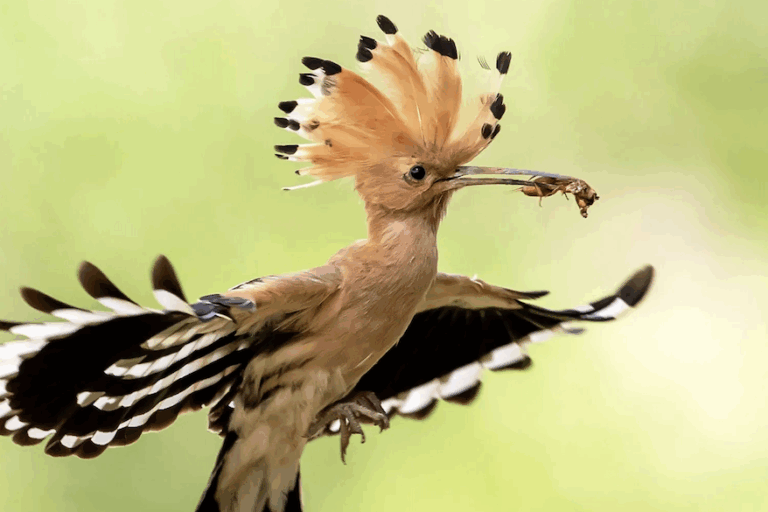
Yet institutional action alone is insufficient. Each of us must become active participants in this network. Start by engaging with the biodiversity around you. Whether in wild spaces, urban parks or your garden, pause to listen to the call of the hoopoe bird (Upupa epops) or consider the intricate patterns of a sidr tree (Ziziphus spina-christi). These connections aren’t merely recreational — they’re opportunities to tap into the world’s most sophisticated information exchange.
Consider becoming a citizen scientist, contributing observations to global biodiversity databases. Support conservation initiatives that protect key nodes in nature’s network. Engage with businesses and work alongside initiatives such as those of Emirates Nature-WWF that recognize ecological information as vital infrastructure.
Most importantly, biodiversity offers us the ultimate backup system — a distributed storage of survival information no technology can match. In an era of climate uncertainty, preserving this biological knowledge isn’t just ethical — it’s existential.
Aligning our own frameworks with the Global Biodiversity Framework and climate goals, valuing biodiversity as nature’s knowledge system becomes essential strategy.
As the world gathers in Abu Dhabi for the IUCN World Conservation Congress, let us safeguard this living network with vigilance, investment and care — ensuring that nature’s silent information exchange endures as our shared inheritance for generations to come.
Razan Al Mubarak is the founding managing director of the Mohamed bin Zayed Species Conservation Fund and president of the International Union for Conservation of Nature (IUCN).
Related audio from Mongabay’s podcast: Jane Goodall was a tireless advocate for biodiversity and humanity, and discussed these topics with Mongabay’s CEO in 2024, listen here:
See related commentary and coverage of biodiversity:
Funding is needed to save Samoa’s ‘little dodo’ from extinction (commentary)
Study spotlights West Papua habitat as whale sharks face increased pressures
In Panama, an Indigenous-led project rewrites the rules of reforestation
Credits