• Features
  • Videos
  • Podcasts
  • Specials
  • Articles
  • Shorts
Donate
  • English
  • Español (Spanish)
  • Français (French)
  • Bahasa Indonesia (Indonesian)
  • Brasil (Portuguese)
  • India (English)
  • हिंदी (Hindi)
  • বাংলা (Bengali)
  • Swahili
  • Videos
  • Podcasts
  • Articles
  • Short News
  • Feature Stories
  • The Latest
  • Explore All
  • About
  • Team
  • Contact
  • Donate
  • Subscribe page
  • Submissions
  • Privacy Policy
  • Terms of Use
  • Advertising
  • Wild Madagascar
  • For Kids
  • Mongabay.org
  • Reforestation App
  • Planetary Health Check
  • Conservation Effectiveness
  • Mongabay Data Studio

Latest

Mushrooms in San Mateo County, California. Photo by Rhett Ayers Butler.

An inventory of life in California

Rhett Ayers Butler 6 Jan 2026

An endangered menu (cartoon)

Rohan Chakravarty 6 Jan 2026

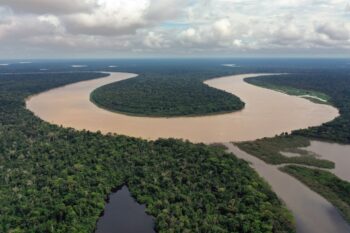
Urban sprawl and illegal mining reshape a fragile Amazon frontier

Aimee Gabay 6 Jan 2026

EUDR antideforestation law officially delayed for second year in a row

Shanna Hanbury 6 Jan 2026

After Cyclone Senyar, Indonesia probes whether development amplified scale of disaster

Hans Nicholas Jong 6 Jan 2026

7 hopeful wildlife sightings that researchers celebrated in 2025

Shreya Dasgupta 6 Jan 2026
All news

Top stories

Purisima Creek, California in December 2025. Photo by Rhett Ayers Butler

The conservation ledger: What we lost and what we gained in 2025

Most Watched Video Stories of 2025

Lucia Torres 30 Dec 2025

Southeast Asia’s 2025 marked by fatal floods, fossil fuel expansion and renewed mining boom

Carolyn Cowan, Gerald Flynn 29 Dec 2025

Photos: Top new species from 2025

Liz Kimbrough 29 Dec 2025
Rainforest in Brunei in 2025. Photo by Rhett Ayers Butler

The year in rainforests 2025: Deforestation fell; the risks did not

Rhett Ayers Butler 26 Dec 2025

Subscribe

Stay informed with news and inspiration from nature’s frontline.
Newsletter

We’re a nonprofit

Help us tell impactful stories of biodiversity loss, climate change, and more
Donate

News and Inspiration from Nature's Frontline.

Izzy Sasada and orangutan
Videos
Mushrooms in San Mateo County, California. Photo by Rhett Ayers Butler.
Articles
Judith Enck, author of The Problem with Plastic, holding a copy of the book. Image by Jerrick Mitra.
Podcasts

Special issues connect the dots between stories

Carving up the Cardamoms

Young activists risk all to defend Cambodia’s environment

Young activists risk all to defend Cambodia’s environment

Andy Ball, Marta Kasztelan 2 Jul 2025
Across the Southern Cardamom REDD+ project in southwest Cambodia, communities have alleged abuse at the hands of the project developer. Image by Gerald Flynn / Mongabay.

Indigenous community calls out Cambodian REDD+ project as tensions simmer in the Cardamoms

Gerald Flynn 10 Mar 2025
A Ministry of Environment ranger on patrol in the Cardamom Mountains. Image by Andyb3947 via Wikimedia Commons (CC BY-SA 4.0).

Cambodian carbon credit project hit by rights abuse claims is reinstated

Gerald Flynn 11 Sep 2024
The sprawling Stung Meteuk hydropower dam being developed in the Cardamom Mountains appears to be illegally logging within Phnom Samkos Wildlife Sanctuary. Image by Gerald Flynn / Mongabay.

History repeats as logging linked to Cambodian hydropower dam in Cardamoms

Gerald Flynn, Vutha Srey 27 Jun 2024

The Cardamom Mountains sprawl across southwestern Cambodia and are among the best-preserved rainforests in the country. Protected by rugged terrain, heavy rains and a low population density, the Cardamoms remain a biodiversity hotspot, providing habitat for threatened elephants, pangolins and the region’s last viable fishing cat population. This Special Issues documents the myriad threats facing […]

Carving up the Cardamoms series

More specials

9 stories

Can anyone save the Sumatran rhino?

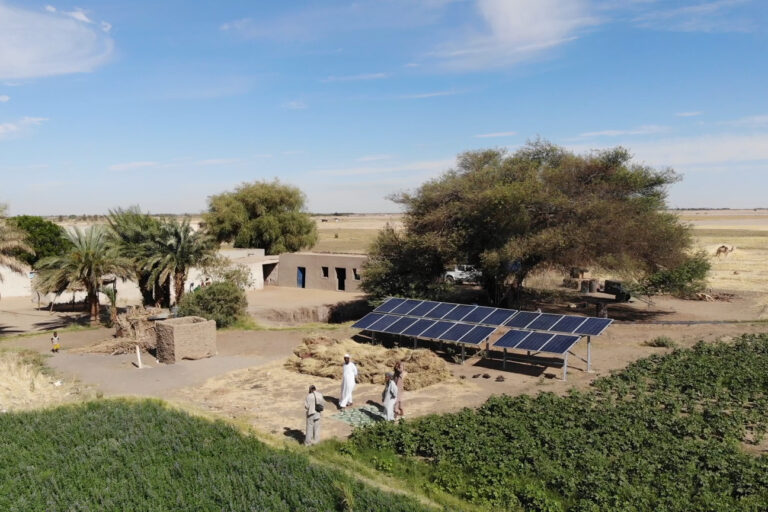
Solar panels in an arid part of Sudan.
9 stories

Negotiating Africa’s Energy Future

6 stories

Letters to the Future

Free and open access to credible information

Learn more

Listen to Nature with thought-provoking podcasts

Judith Enck, author of The Problem with Plastic, holding a copy of the book. Image by Jerrick Mitra.

Plastic pollution requires urgent action, says author Judith Enck

Mike DiGirolamo 6 Jan 2026

Watch unique videos that cut through the noise

Izzy Sasada and orangutan

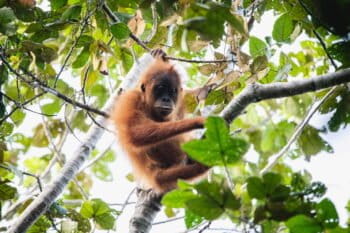
Orangutans rescued undergo re-training to return to the wild

South Greenlanders speak out on rare earths interests

Arina Kleist, Julia Rignot, Sandy Watt 11 Dec 2025
Collage: Elise Paietta, postdoctoral research scholar during fieldwork, with tropical forest

How do we stop the next pandemic?

Abhishyant Kidangoor 26 Nov 2025
Collage: A group of security guards preventing people from crossing a checkpoint and Fernanda Wenzel Mongabay reporter

On the frontline of the Amazon land war

Julia Lima, Fernanda Wenzel, Fernando Martinho 13 Nov 2025
Soldiers from the PROLANSATE Foundation on patrol

Why is protecting this Honduran lagoon so dangerous? 

Fritz Pinnow, Sam Lee 22 Oct 2025

We’re a nonprofit

Help us tell impactful stories of biodiversity loss, climate change, and more
Donate

In-depth feature stories reveal context and insight

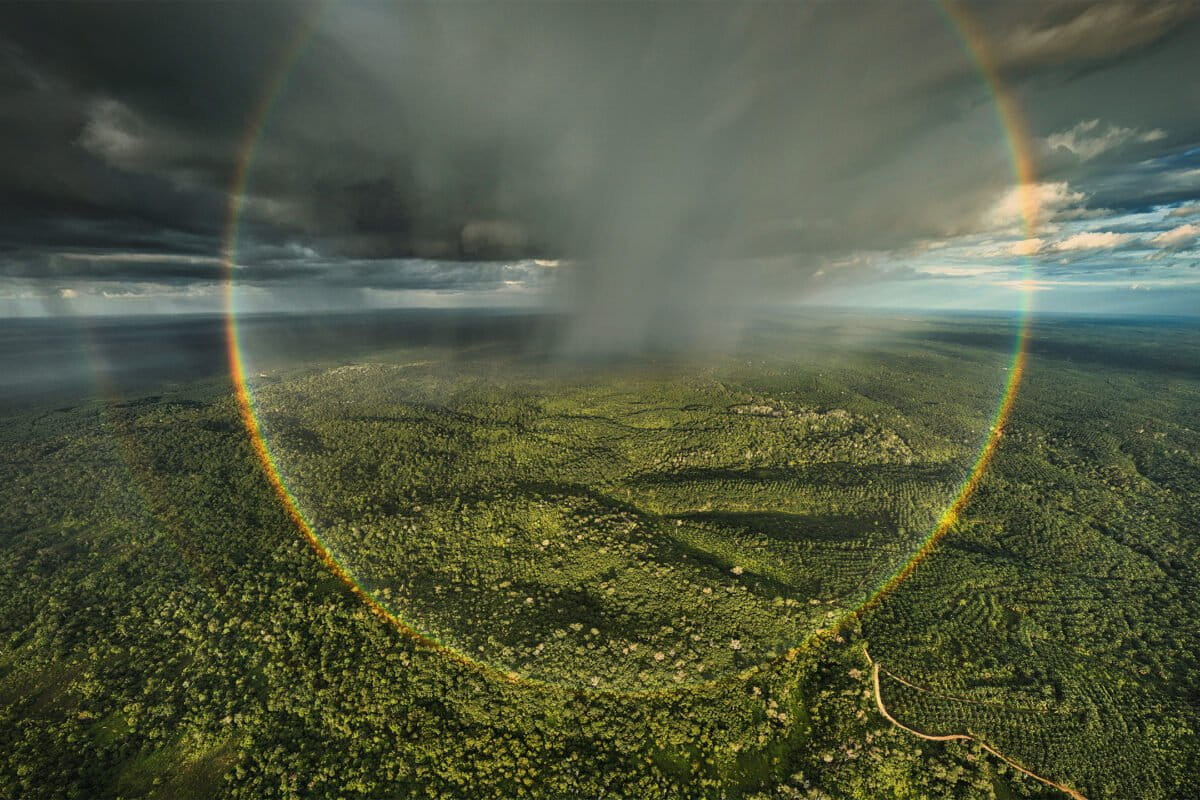
Weather over Jambi. Photo by Rhett Ayers Butler.
Feature story

2025: A year of consequence for Mongabay’s journalism

Rhett Ayers Butler 24 Dec 2025
Feature story

The rise of CC35 and the business behind its climate deals

Gloria Pallares 22 Dec 2025
Conservationists, environmental defenders, and scientists who died in 2025.
Feature story

Environmental defenders & conservationists who died in 2025

Rhett Ayers Butler 22 Dec 2025
Misty morning in Borneo. Photo by Rhett Ayers Butler
Feature story

Rethinking how we talk about conservation—and why it matters

Rhett Ayers Butler 19 Dec 2025

Quickly stay updated with our news shorts

EUDR antideforestation law officially delayed for second year in a row

Shanna Hanbury 6 Jan 2026

The European Union’s antideforestation law, known as EUDR, has officially been delayed for a second year. The amendment was published in the Official Journal of the European Union on Dec. 23, 2025.

The EUDR bans the import of commodities, including cocoa, coffee, soy, beef, timber, palm oil and rubber, that come from areas deforested after December 2020. Producers need to provide geolocalized data to prove that their commodities aren’t from land with recent deforestation.

The law was first approved in 2023 and originally set to apply from the beginning of 2024. But following pressure from producers, lobbyists and governments, the law was delayed for a year. Now, it has been pushed back another year.

The latest amendment approved by the EU notes that large operators will need to comply with the law from Dec. 31, 2026, and smaller operators from mid-2027. But European politicians also included a revision period in April 2026, opening space for further delays and rollbacks.

The following timeline details how the latest delay came about:

September 2025

The European Commission, the EU’s executive body, says its IT system is not yet ready to handle the demands of the EUDR and proposes postponing it for another year.

October 2025

The European Council, comprised of EU leaders who set general political direction, proposes a soft delay of the law, rather than a postponement, proposing a six-month grace period. The proposal includes amendments that water down the law, such as an exemption for micro and small operators from low-risk countries.

November 2025

A few weeks later, the Council goes back on its grace period proposal and agrees to a hard delay of the regulation.

The European Parliament votes 402 to 250 in favor of the change. Lawmakers also add a last-minute amendment that excludes printed products from the scope of the law. A clause creating a review window for the law is also introduced.

The text is forwarded for informal negotiations between the EU’s three branches of government. 

December 2025

The final text for the delay and weakening of the EUDR is passed by the European Parliament on Dec. 17. It is published as law on Dec. 23.

Banner image: European Parliament plenary session on Dec. 17. Image courtesy of the European Union.

European Parliament plenary session on Dec. 17. Image courtesy of the European Union.

7 hopeful wildlife sightings that researchers celebrated in 2025

Shreya Dasgupta 6 Jan 2026

Once in a while, an animal shows up where it’s least expected, including places from where it was thought to have gone extinct. These rare sightings bring hope — but also fresh concerns.

These are some of the wildlife sightings Mongabay reported on in 2025.

Colossal squid recorded for the first time in its deep-sea home

Researchers made the first confirmed recordings of a colossal squid (Mesonychoteuthis hamiltoni), the world’s heaviest invertebrate, while exploring the deep sea near Antarctica. Until then, everything scientists knew about the species came from the bits of them that turned up in the bellies of other animals. (Read story)

Eurasian otter reappears in Malaysia after a decade

In Malaysia, camera traps in Tangkulap Forest Reserve photographed a Eurasian otter near a waterbody. This is the first confirmed sighting of the species in Malaysia in more than a decade and makes Tangkulap Forest Reserve the only place in the country where all four East Asian otter species coexist. (Read story)

First elephant sighting in a Senegal park since 2019

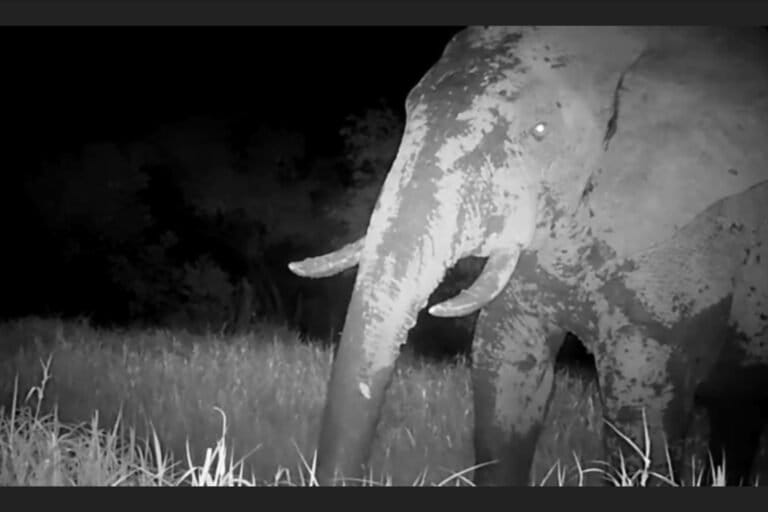
Camera traps in Senegal’s Niokolo-Koba National Park captured video of a large bull elephant named Ousmane, thought to be a hybrid of the critically endangered African forest elephant (Loxodonta cyclotis) and savanna elephant (Loxodonta africana). Researchers say this is the first elephant to be seen in the park in six years. (Read story)

Screenshot of an elephant captured by a camera trap in Senegal, courtesy of Panthera & Senegal’s National Parks Directorate.

Rare Javan leopard sighting

Camera traps in Indonesia’s Mount Lawu forest area snapped rare images of a Javan leopard, following reports of the animal by a hiker. The endangered Javan leopard (Panthera pardus melas) is Java’s last surviving top predator, following the extinction last century of the Javan tiger (Panthera tigris sondaica). (Read story)

First-ever sighting of critically endangered right whales spotted in the Bahamas

In April, divers captured videos of two North Atlantic right whales (Eubalaena glacialis) in the Bahamas, making it the first time the species has been seen in the nation’s waters. During that time of the year, the critically endangered whale is usually found thousands of kilometers north off the northeastern U.S. coast. There are fewer than 400 estimated individuals remaining. (Read story)

New population of rare douc langurs in Vietnam

Researchers confirmed a new subpopulation of critically endangered gray-shanked douc langurs (Pygathrix cinerea) in Khe Lim Forest in south-central Vietnam. The sighting is hopeful, but the researchers warn the forest lies outside Vietnam’s formally protected areas, leaving the population exposed to numerous threats. (Read story)

Flat-headed cats ‘reappear’ in Thailand

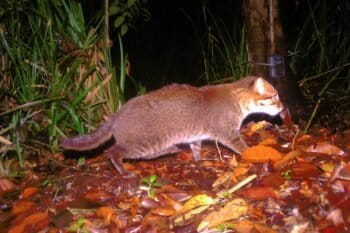
NGOs and authorities captured footage of numerous flat-headed cats (Prionailurus planiceps) in the peat swamp forests of Princess Sirindhorn Wildlife Sanctuary in south Thailand from 2024-2025. The endangered, understudied species was last spotted in Thailand by researchers in 1995, leading to the assessment that they were “possibly extinct” in the country. (Read story)

Banner image: Camera-trap image of a flat-headed cat photographed in Thailand. Image courtesy of DNP/Panthera.

A camera-trap image of a flat-headed cat in Thailand’s Princess Sirindhorn Wildlife Sanctuary. Image courtesy of DNP/Panthera.

The climate fight may not be won in the Amazon, but it can be lost there

Rhett Ayers Butler 5 Jan 2026

Founder’s Briefs: An occasional series where Mongabay founder Rhett Ayers Butler shares analysis, perspectives and story summaries.

After five decades studying the plants and peoples of the Amazon, Mark Plotkin, an ethnobotanist and co-founder of the Amazon Conservation Team, is still asked whether the rainforest’s glass is half-full or half-empty. His answer is unchanged. “By definition, any glass that is half-full is half-empty.” The point, he argues in a commentary for Mongabay, is not optimism or pessimism, but accuracy about a region where progress and peril now coexist.

When Plotkin first arrived in the 1970s, the Amazon barely registered in the global imagination. Scientists such as Richard Schultes, Tom Lovejoy and E.O. Wilson helped shift that view, reframing the forest from “green hell” to a storehouse of biodiversity. Indigenous leaders and activists like Payakan and Chico Mendes added political force. The 1992 Earth Summit in Rio de Janeiro marked the high-water line of global attention.

Since then, trends have swung sharply. Brazil’s deforestation soared in the late 20th century, plummeted in the early 2000s, rose again after 2019 and fell once more in 2023. Similar cycles now shape Bolivia, Colombia and Peru. Yet millions of hectares are today under some form of protection, and Indigenous territories generally show lower rates of loss.

Plotkin is quick to note the other side of the ledger. Criminal networks have expanded into mining, logging and land grabbing. Mercury contamination, violence and corruption undermine local governance. Climate disruption has pushed rainfall patterns off balance, drying out ecosystems that rarely burned in the past. Fires in recent years have given governments a stark reminder: the global climate fight may not be won in the Amazon, but it can be lost there.

He argues the forest’s future also depends on recognizing its agricultural and medical potential, from cassava diversity to fungi- and animal-derived compounds with possible therapeutic uses. And he points to the growing role of Indigenous communities, whose political and technological capacities have strengthened.

His conclusion: the Amazon has more supporters than ever, and more threats than ever. Whether the glass fills or drains will depend on which forces move faster.

Read the full commentary by Mark J. Plotkin here.

Banner image of the Amazon Rainforest by Rhett A. Butler/Mongabay.

The Amazon rainforest. Photo by Rhett Ayers Butler.

Snowy owl, striped hyena, sharks among migratory species proposed for greater protections

Shreya Dasgupta 5 Jan 2026

Countries under the international treaty to protect migratory animals have proposed increasing protections for 42 species. These include numerous seabirds, the snowy owl, several sharks, the striped hyena, and some cheetah populations.

The Convention on the Conservation of Migratory Species of Wild Animals (CMS) aims to protect species ranging from butterflies and fish to birds and mammals that cross national borders for food and reproduction. Species listed in the convention’s Appendix I are considered to be in need of strict protection across their range countries, while those in Appendix II are thought to benefit from international cooperation.

The CMS published its first ever report on the state of the world’s migratory species in 2024, noting that 399 species are globally threatened or near threatened but not yet listed under the CMS.

Parties to the CMS recently proposed listing 42 such species and one subspecies in Appendix I or II.

Zimbabwe proposed including populations of cheetah (Acinonyx jubatus) in Zimbabwe, Botswana and Namibia — considered part of the Southern African transboundary cheetah population — in Appendices I and II. Other cheetah populations are already included in Appendix I.

Tajikistan and Uzbekistan proposed including the striped hyena (Hyaena hyaena), which undertakes wide-ranging movements across arid and semiarid environments, in Appendices I and II.

Thirty-one species and one subspecies of birds have also been proposed for listing. These include Norway’s proposal to include the snowy owl (Bubo scandiacus) in Appendix II, noting that the owl has lost a third of its population in the last three decades.

Other proposals cover several migratory seabird and shorebird species, including 26 species of petrel, from the genera Pterodroma and Pseudobulweria, and the flesh-footed shearwater (Ardenna carneipes).

Three shorebirds — the Hudsonian whimbrel (Numenius phaeopus hudsonicus), Hudsonian godwit (Limosa haemastica) and lesser yellowlegs (Tringa flavipes) — have been proposed for inclusion in Appendix I, while the Iberá seedeater (Sporophila iberaensis), a wetland bird, is a candidate for Appendix II inclusion.

Among other aquatic animals, France has proposed the giant otter (Pteronura brasiliensis), the world’s largest river otter species, endemic to South America, in Appendices I and II. (France, in Europe, is technically a range country for the species through its “overseas department” of French Guiana, which hosts about 200 individuals, according to the proposal.)

Several migratory shark species are proposed for listing too. Panama proposed including the pelagic thresher shark (Alopias pelagicus), bigeye thresher shark (Alopias superciliosus) and common thresher shark (Alopias vulpinus) in Appendix I.

Brazil proposed including two sharks, the Patagonian narrownose smoothhound (Mustelus schmitti) and angular angelshark (Squatina guggenheim), and a catfish, the spotted sorubim (Pseudoplatystoma corruscans), in Appendix II.

Meanwhile, Ecuador proposed the inclusion of the scalloped hammerhead shark (Sphyrna lewini) and the great hammerhead shark (Sphyrna mokarran) in Appendix I.

Decisions on the proposals will be taken at the 15th meeting of the Conference of the Parties to the CMS, to be held in Campo Grande, Brazil, in March.

Banner image: A snowy owl in flight. Image courtesy of Bert de Tilly.

A snowy owl in flight. Image courtesy of Bert de Tilly.

Biologist kidnapped in Mexico

Rhett Ayers Butler 4 Jan 2026

In the mountains of central Veracruz, scientific work is rarely abstract. It means walking narrow paths through cloud forest, speaking patiently with communities, and learning to read landscapes that yield information slowly. It also means accepting risk as a condition of knowledge. Field research unfolds in places where the state is often distant and authority is uneven.

That context matters for understanding the disappearance of Miguel Ángel de la Torre Loranca, a Mexican biologist who was kidnapped on November 21, 2025, after leaving his home in the Sierra de Zongolica. He had gone out in response to what was described as a request for dialogue. Hours later, his family received a ransom demand. After an initial payment, communication stopped. Since then, there has been no verified information about his whereabouts.

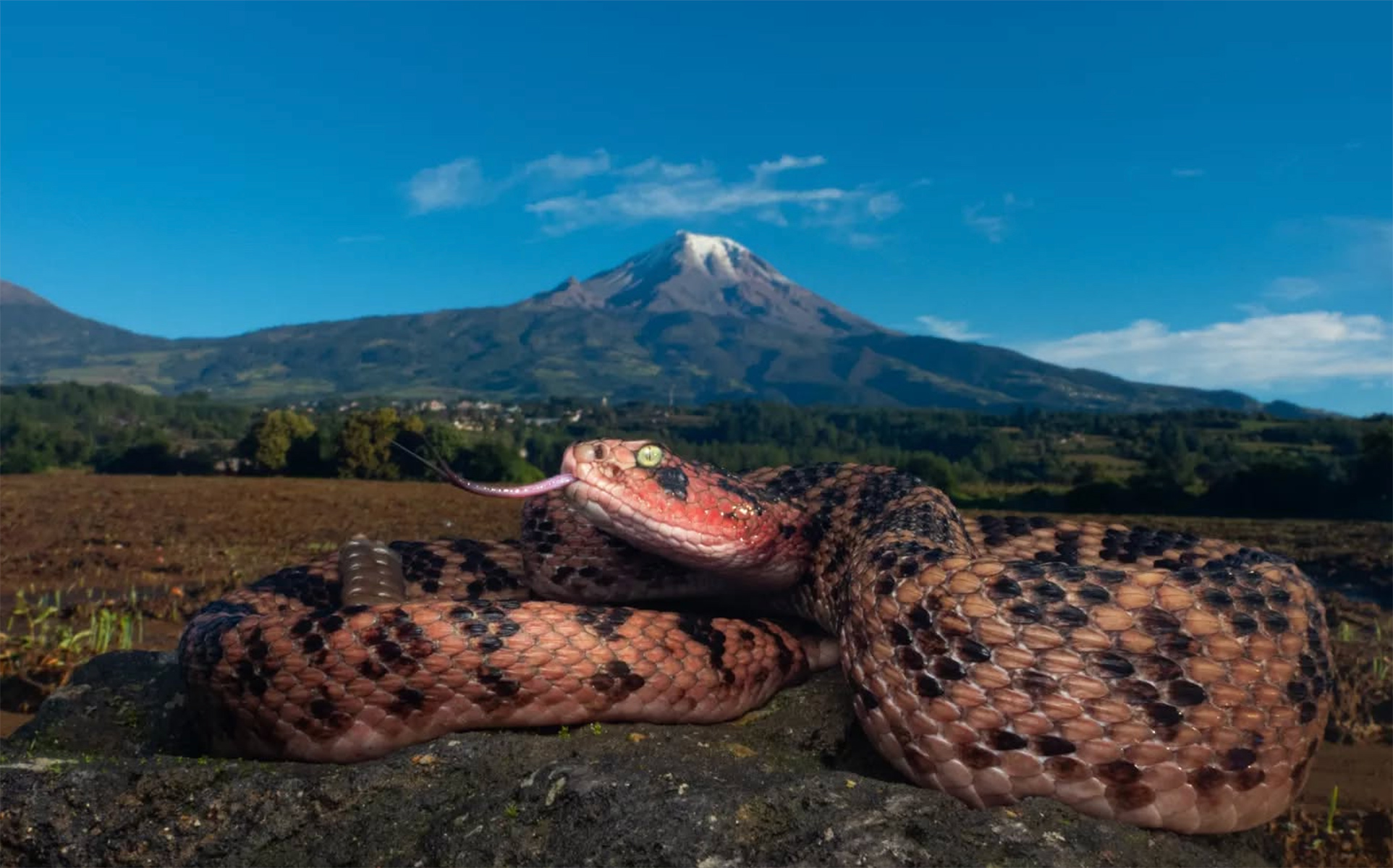
De la Torre Loranca was not a public figure in the conventional sense. He was known locally for his work rather than his profile: a herpetologist who documented reptiles most people avoided, an educator who helped build institutions in regions rarely centered in national debates, and a guide who believed that conservation depended on familiarity rather than fear. Over decades of fieldwork, he contributed to the description of multiple species and trained students who learned to treat data collection as work with real consequences. One snake from Oaxaca, Geophis lorancai, bears his name, an honor usually conferred after a career has run its course.

Photo by Loranca.
Photo by Loranca.

There was also administrative work, less visible but equally durable. As the first director of the Instituto Tecnológico Superior de Zongolica, he helped create access to higher education for Indigenous and rural youth in the sierra. Environmental education was framed as practical knowledge, relevant to livelihoods as much as to policy. Wildlife photography became another language through which he shared the biological richness of Veracruz with audiences beyond the academy.

His disappearance places him within a wider pattern that is now difficult to ignore. Mexico is experiencing a prolonged crisis of forced disappearances, with more than 115,000 people officially listed as missing. Scientists operate within that same national landscape. Fieldwork often takes place in forested or rural areas where organized crime controls territory and where conflicts over land, logging, mining, or conservation blur into one another. Environmental defenders are routinely threatened or killed, sometimes for their advocacy, sometimes simply because they are present.

Recent history offers grim parallels. In 2023, Gabriel Trujillo, a doctoral student conducting botanical research in Sonora, was shot and killed while in the field. In Michoacán, defenders of monarch butterfly reserves disappeared and were later found dead amid disputes linked to illegal logging. These cases are rarely resolved. Impunity has become part of the background noise.

What distinguishes de la Torre Loranca’s case is that it is not yet settled. His family insists he was taken alive and expects his return alive. Colleagues have made the case public not to eulogize him, but to keep pressure on authorities whose response has so far been slow and opaque. International attention is being sought because, in Mexico, visibility can sometimes alter outcomes.

Camera traps in China capture first-ever footage of Amur tigress with five cubs

Spoorthy Raman 2 Jan 2026

Camera traps installed in the world’s largest tiger reserve, in China, have captured footage of an Amur tigress and her five cubs for the first time.

Recorded in November 2025, the footage from Northeast China Tiger and Leopard National Park shows an adult tigress ambling along a dirt road, and four young cubs tootling behind her. After a few seconds, as two of the cubs pause to sniff what looks like a stone, a fifth tries to catch up with the rest of the family.

Scientists say they believe the tigress is about 9 years old (tigers typically live for about 10-15 years in the wild), and the cubs are about 6-8 months old.


The 14,100-square-kilometer (5,400-square-mile) national park has China’s largest populations of Amur, or Siberian, tigers (Panthera tigris altaica) and leopards (Panthera pardus orientalis). It’s seen an increase in tiger numbers in recent years: in 2024, 35 cubs were born there.

Amur tigers, which roam the dense forests and snowy mountains of northeast China, Russia’s far east and parts of the Korean peninsula, are endangered due to poaching, forest logging, habitat fragmentation and prey scarcity. By the 1930s, scientists estimated there were fewer than 30 Amur tigers left in the wild. Latest estimates from the IUCN, the global wildlife conservation authority, suggest there might be 265-486 tigers in Russia and roughly 70 in China, mostly in Northeast China Tiger and Leopard National Park.

“Amur tigers were all but written off in China only twenty-five years ago when, after a century of declining numbers, surveys suggested fewer than a dozen left,” Jon Slaght, regional director of the temperate Asia program at the Wildlife Conservation Society (WCS), told Mongabay by email. “Since then, habitat protections and anti-poaching efforts have allowed tigers to triumphantly return, and today there are 70-80 of them,”

Tigers typically have one to four cubs, so sighting a female with five cubs — the first such sighting recorded in China — is extremely rare. “This is fantastic news, and a clear indication that tiger conservation in China is working,” Slaght said.

As apex predators, tigers require large, connected habitats and healthy prey numbers to thrive. In recent years, China has worked with many NGOs to ban hunting and logging, establish protected areas, improve monitoring and antipoaching efforts, and mitigate human-tiger conflict by working with local communities. “The first footage of ‘six wild tigers in one frame’ recorded in China reflects that China’s conservation actions have been effective,” Zhou Fei, chief program officer of WWF-China, said in an emailed press release.

However, the population in China is “still not demographically or genetically secure,” and requires “expanding suitable habitats, restoring prey populations, strengthening ecological corridors, reducing poaching, and enabling tigers to disperse into broader potential habitats beyond the current core areas,” Wang Jing of WWF-China told Mongabay by email.

Banner image: Screenshot of Amur tiger cubs, courtesy of Northeast China Tiger and Leopard National Park.

Screenshot of Amur tigress and her five cubs, courtesy of Northeast China Tiger and Leopard National Park.

Share Short Read Full Article

Share this short

If you liked this story, share it with other people.

Facebook Linkedin Threads Whatsapp Reddit Email

Subscribe

Stay informed with news and inspiration from nature’s frontline.
Newsletter

News formats

  • Videos
  • Podcasts
  • Articles
  • Specials
  • Shorts
  • Features
  • The Latest

About

  • About
  • Contact
  • Donate
  • Impacts
  • Newsletters
  • Submissions
  • Terms of Use

External links

  • Wild Madagascar
  • For Kids
  • Mongabay.org
  • Reforestation App
  • Planetary Health Check
  • Conservation Effectiveness
  • Mongabay Data Studio

Social media

  • LinkedIn
  • Instagram
  • Youtube
  • X
  • Facebook
  • Tiktok
  • Reddit
  • BlueSky
  • Mastodon
  • Android App
  • Apple News
  • RSS / XML

© 2026 Copyright Conservation news. Mongabay is a U.S.-based non-profit conservation and environmental science news platform. Our EIN or tax ID is 45-3714703.

you're currently offline