• Features
  • Videos
  • Podcasts
  • Specials
  • Articles
  • Shorts
Donate
  • English
  • Español (Spanish)
  • Français (French)
  • Bahasa Indonesia (Indonesian)
  • Brasil (Portuguese)
  • India (English)
  • हिंदी (Hindi)
  • বাংলা (Bengali)
  • Swahili
  • Videos
  • Podcasts
  • Articles
  • Short News
  • Feature Stories
  • The Latest
  • Explore All
  • About
  • Team
  • Contact
  • Donate
  • Subscribe page
  • Submissions
  • Privacy Policy
  • Terms of Use
  • Advertising
  • Wild Madagascar
  • For Kids
  • Mongabay.org
  • Reforestation App
  • Planetary Health Check
  • Conservation Effectiveness
  • Mongabay Data Studio

Latest

Mass pilot whale stranding in Indonesia raises questions about ocean health

Mongabay.com 14 Mar 2026

Indigenous knowledge confirms what scientists observe: Large birds are disappearing

Bobby Bascomb 13 Mar 2026

A fish a day: More than 300 freshwater species described in 2025

Spoorthy Raman 13 Mar 2026

Costa Rica’s head start may mask tougher EUDR road ahead

Claudia Geib 13 Mar 2026

Photos show the dramatic dawn flight of migrating snow geese

Associated Press 13 Mar 2026

Disastrous floods in Colombia reignite debate over hydroelectric dam

Euan Wallace 13 Mar 2026
All news

Top stories

Collage of a red-bellied toad and a bridge broken by flood

In search of the tiny toad that stopped a dam

Wood pellets for biomass energy. Image courtesy of Dogwood Alliance.

Forest advocates accuse EU energy firm of Dutch biomass certification fraud

Justin Catanoso 13 Mar 2026
Sea turtles, another migratory species, need safe ocean passageways to move between feeding grounds and nesting beaches.

Outlook for migratory species worsens amid habitat loss & avian flu, report finds

Gloria Dickie 12 Mar 2026
The construction site of Bridge Data Centre's 0.2 GW QHI01 data center in Khlong Tamru subdistrict, Chonburi province, Thailand. Photo by Andy Ball/Mongabay.

Thai data center boom sparks fears of water shortage, air pollution

Gerald Flynn 11 Mar 2026
With striking orange and black streaks on their wings, painted woolly bats are one of the most colorful bats in the world.

U.S.’ hunger for Halloween trinkets is killing Vietnam’s painted woolly bats

Spoorthy Raman 9 Mar 2026

Subscribe

Stay informed with news and inspiration from nature’s frontline.
Newsletter

We’re a nonprofit

Help us tell impactful stories of biodiversity loss, climate change, and more
Donate

News and Inspiration from Nature's Frontline.

Collage of a red-bellied toad and a bridge broken by flood
Videos
Examining coffee plants in the fields of a CoopeTarrazú grower.
Articles
Podcasts

Special issues connect the dots between stories

Mongabay Explains

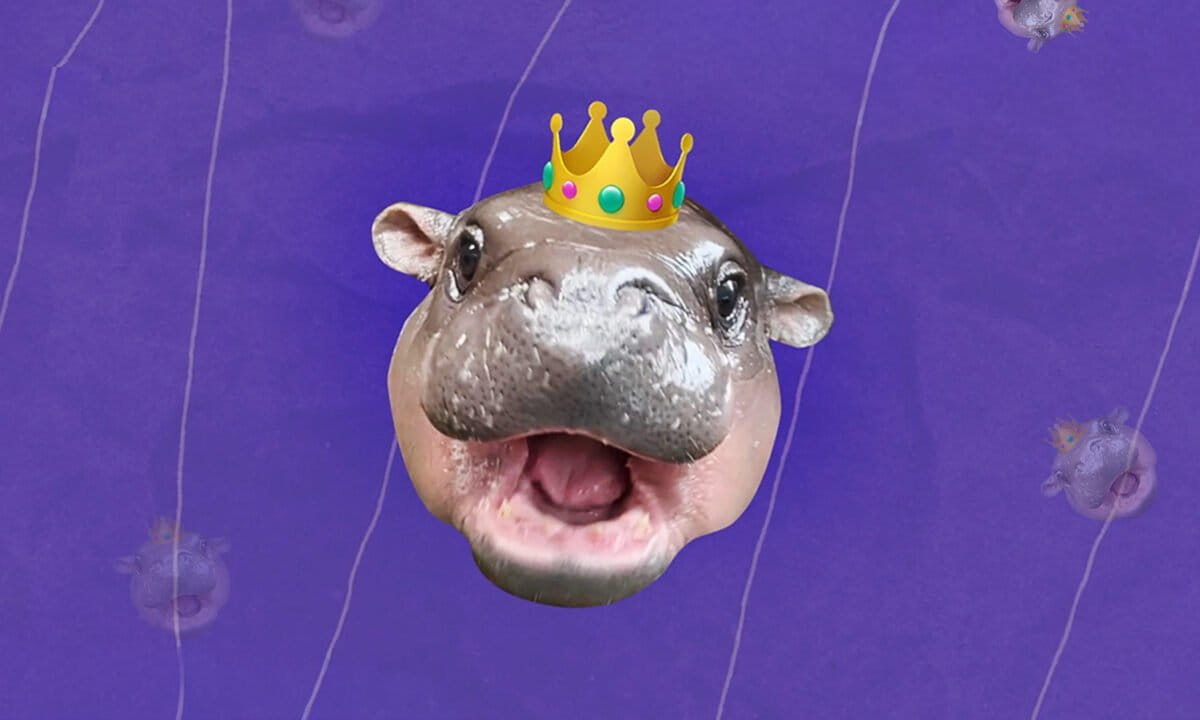
Moo Deng meme collage

Small hippo, big dreams: Can Moo Deng, the viral pygmy hippo, save her species? 

Sam Lee 14 Jan 2026
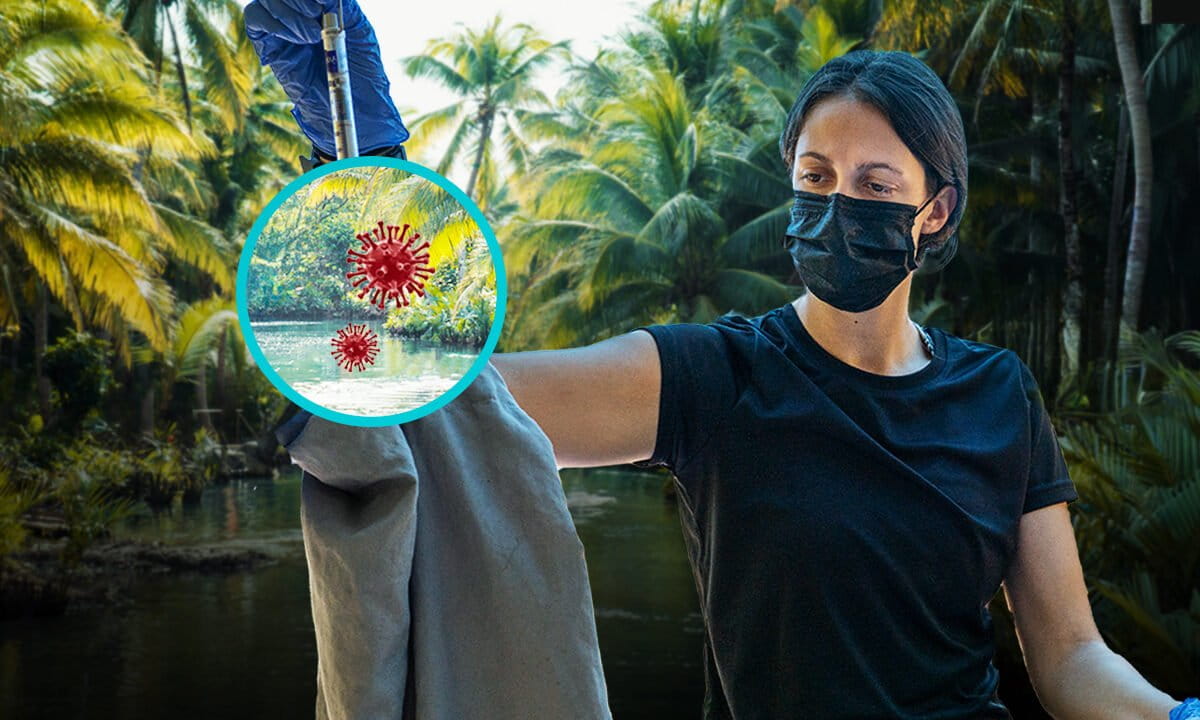
Collage: Elise Paietta, postdoctoral research scholar during fieldwork, with tropical forest

How do we stop the next pandemic?

Abhishyant Kidangoor 26 Nov 2025
What singing lemurs can tell us about the origin of music

What singing lemurs can tell us about the origin of music

Sam Lee 8 Jan 2025

What are the High Seas (and why should we care?)

Abhishyant Kidangoor 23 Oct 2024

Join Mongabay’s reporters as we unpack some of the most urgent and intriguing issues in climate, the environment and biodiversity today. In this multimedia Special Issue, we go beyond the headlines to examine how science, policy and human activity intersect with Nature. We try to answer questions you might not have known to ask, with […]

Mongabay Explains series

More specials

Trekking through the Cardamom Tented Camp concession in Botum Sakor National Park Photo by Gerald Flynn
0 stories

Carving up the Cardamoms

9 stories

Can anyone save the Sumatran rhino?

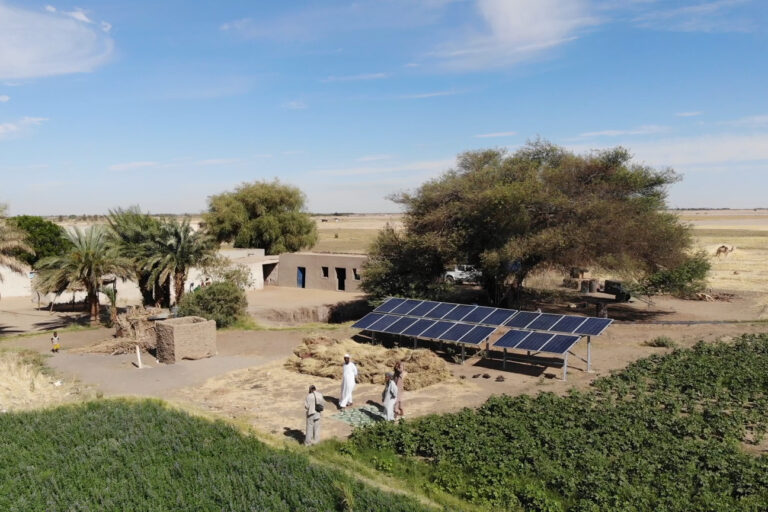
Solar panels in an arid part of Sudan.
9 stories

Negotiating Africa’s Energy Future

Free and open access to credible information

Learn more

Listen to Nature with thought-provoking podcasts

How elephants experience time, and what this tells us about protecting them

Mike DiGirolamo 10 Mar 2026

Watch unique videos that cut through the noise

Collage of a red-bellied toad and a bridge broken by flood

In search of the tiny toad that stopped a dam

Collage featuring cockfighting and a largetooth sawfish

Why is cockfighting a risk to Peru’s rarest fish?

Romi Castagnino 25 Feb 2026
Collage featuring a white-rumped shama (Copsychus malabaricus) and a poacher

The most desirable songbird in Indonesia is disappearing from the wild

Rizky Maulana Yanuar, Sandy Watt 18 Feb 2026
Collage featuring Jeffrey Lendrum

The man who risked everything to steal bird eggs

Sandy Watt 11 Feb 2026
Collage featuring a puma and Ida Isabel Auris Arango, shepherd and Quechua woman

Women secure a future with pumas in the Andes

Romi Castagnino 28 Jan 2026

We’re a nonprofit

Help us tell impactful stories of biodiversity loss, climate change, and more
Donate

In-depth feature stories reveal context and insight

Feature story

Across South America, canopy bridges evolve as a lifeline for tree-dwelling wildlife

Luís Patriani 4 Mar 2026
Feature story

Cameroon’s decade of conflict leaves apes and conservationists in peril

Orji Sunday 3 Mar 2026
A fisherman is silhouetted as he casts his net into the Tapajos River in Santarem, Para state, 2020.
Feature story

Concern among Indigenous leaders, relief for a few, as Amazon Soy Moratorium falters

Rubens Valente 3 Mar 2026
Turnbull NWR - Waterfowl Surveys.
Feature story

‘An epidemic of suffering’: Why are conservationists breaking down?

Jeremy Hance 2 Mar 2026

Quickly stay updated with our news shorts

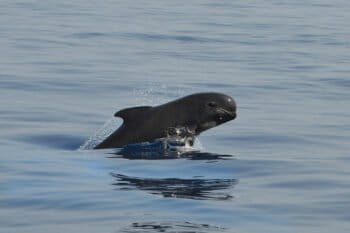
Mass pilot whale stranding in Indonesia raises questions about ocean health

Mongabay.com 14 Mar 2026

Villagers in central Indonesia rescued 34 short-finned pilot whales following a mass stranding on March 9, but despite their overnight efforts were unable to save 21 others.

Mongabay Indonesia’s Ebed De Rosary reports that residents first discovered the pod in the shallow waters off Deranitan village, in East Nusa Tenggara province, at approximately 3:30 p.m. local time. Local police coordinated with the local naval garrison and representatives from the fisheries ministry to launch a joint rescue operation.

Working past midnight, teams of officials, security personnel and residents using boats managed to guide 34 of the whales back out into deeper waters. Of the 21 whales that perished, authorities identified The largest was a male measuring 5.1 meters (16.7 feet). The species, Globicephala macrorhynchus, is not considered threatened on the IUCN Red List.

Imam Fauzi, head of the marine conservation area agency in Kupang, the provincial capital, said necropsies were conducted immediately to determine the cause of death. While the fisheries ministry is investigating the incident, local environmental NGOs like Walhi NTT are urging the government to expand the scope into a “thorough scientific investigation” to identify the root ecological triggers.

Christofel Oktavianus Nobel Pale, head of the aquatic resources management program at Nusa Nipa University, said the region’s unique topography, characterized by shallow waters, narrow bays and steep gradients, can disrupt the sensitive echolocation systems pilot whales use to navigate.

“Pilot whales have high social cohesion; when one individual, perhaps sick or disoriented, enters shallow water, the rest follow even into danger,” Pale told Mongabay Indonesia.

Yuvensius Stefanus Nonga, executive director of Walhi NTT, said the stranding is a “signal that must not be ignored,” suggesting it may indicate broader ecological disruption linked to climate change, shifting prey distributions, or human-caused ocean noise.

Indonesia’s waters serve as a critical migratory route for dozens of whale and dolphin species, yet, as Mongabay previously reported, the country’s Ocean Health Index, a framework that measures the health and sustainability of regional oceans, remains relatively low at 65 out of 100.

Experts emphasize that understanding the root causes of these frequent whale strandings is essential for improving national marine conservation policies.

Banner image: long-finned pilot whale Alexandre Roux’s photo, licensed as CC BY-NC-SA 2.0

Indigenous knowledge confirms what scientists observe: Large birds are disappearing

Bobby Bascomb 13 Mar 2026

Many Indigenous peoples and local communities live in close contact with nature and learn to identify the wildlife around them from an early age. New research published in the International Journal of Conservation draws on that knowledge to better understand a scientifically documented trend: large bird populations are shrinking.

Álvaro Fernández-Llamazares, an ethnobotanist with the Autonomous University of Barcelona, Spain, and lead author of the study, first noticed that trend as a graduate student doing field work in the Tsimane’ Indigenous community in the Bolivian Amazon.

“Many elders told me that the large birds they had grown up seeing in the forest had become much rarer. Species that were once common in their childhood were now difficult to encounter,” Fernández-Llamazares told Mongabay in an email.

He cited similar accounts from Indigenous peoples and local communities in other parts of the world and from very different ecosystems. Large birds from their youth were disappearing, while smaller species seemed to be on the rise — a pattern scientists were also finding. “What had not been explored before was whether these global patterns were also reflected in the long-term ecological memories of people who interact with birds on a daily basis,” he said.

So, researchers surveyed 1,434 people across three continents and 10 sites as part of a broader Local Indicators of Climate Change Impacts (LICCI) project, an international research initiative to understand how Indigenous and local communities observe the changing climate in their territories.

Respondents were asked to name three birds that were most common when they were 10 years old, and the three most common species today. They collected nearly 7,000 individual bird reports belonging to 283 species, spanning roughly 80 years.

While memories can fade or birds can be misidentified, Fernández-Llamazares said the study was measuring an overall trend — and the trend was stark. The average body mass of birds in the surveyed areas is roughly 70% smaller today than it was 80 years ago. The pattern held across all study sites, from the tropical forests of Bolivia to the grasslands of Senegal and the arid deserts of Mongolia.

The report quoted a Daasanach elder in Kenya who summed it up well: “All the big birds are now gone.”

Fernández-Llamazares said there are several explanations for the trend. Larger birds tend to reproduce slowly, making them more vulnerable to population collapse. Also, they’re prime hunting targets since they can provide more meat per bird, and they often require larger tracts of intact habitat, which makes them sensitive to land-use change.

“This study is a great example of how Indigenous science and knowledge and Western science can be woven together to provide clearer answers to questions,” Pam McElwee, with Rutgers University, U.S., who wasn’t involved with the study, told Mongabay. “Each knowledge system stands on its own, but together they give us a more complex picture.”

Banner image of a toco toucan (Ramphastos toco) courtesy of Basa Roland via Wikimedia Commons (CC BY-SA 3.0).

A fish a day: More than 300 freshwater species described in 2025

Spoorthy Raman 13 Mar 2026

Taxonomists described 309 new species of freshwater fish in 2025, according to a report released by SHOAL, the IUCN Freshwater Fish Specialist Group (FFSG) and the California Academy of Sciences (CAS). With nearly one new description each day of the year, the tally is the highest since 2017, and the third-highest since 1758, when scientists began keeping records.

The new fish species come from five continents and a diversity of habitats, including limestone caves, peat swamps, wetlands and rivers. Most are endemic and some are already at risk of extinction. Asia topped the list with 165 newly described fish species, followed by South America with 91, Africa with 30, North America with 20, and Europe with three.

“If there’s one thing this report shows, it’s that our planet’s rivers and wetlands are still full of surprises,” Michael Edmondstone from SHOAL told Mongabay in an email. “We hope this report sparks curiosity about freshwater life.”

Some of the intriguing new species include two cave-dwelling fish in China — Yang’s plateau loach (Triplophysa yangi) and the Sichuan mountain cave loach (Claea scet) — both of which are adapted to permanent darkness.

Museum specimens stored in Germany revealed two new species from East Africa. From the Democratic Republic of Congo, scientists described four new killifish (Nothobranchius spp.) species. They live in wetlands where the fish hatch, grow and reproduce in rain puddles all within a few weeks. When the water dries up, drought-resistant embryos stay buried in mud, waiting for the next rains before the cycle begins again. Their short lives in ephemeral pools mean they are vulnerable to disruptions in rain patterns. Of the 100 Nothobranchius species listed on the IUCN Red List, nearly three-quarters are already threatened with extinction.

A 60-centimeter (24-inch) sicklefin redhorse (Moxostoma ugidatli), from the Appalachian Mountains in the U.S., is possibly the largest fish described in the last century from North America. It derives its name from the Cherokee expression for “wearing a feather,” referring to its feather-like, sickle-shaped dorsal fin.

Freshwater fish are one of the most threatened groups of vertebrates. Their habitats are disappearing due to pollution, overextraction of water, invasive species, changing weather patterns due to climate change, and overharvesting. One of the newly described species from Kenya, Nothobranchius sylvaticus, is already critically endangered.

“There is a risk that many freshwater fish species will disappear without us knowing about them,” Richard van der Laan from CAS told Mongabay by email.

A formal scientific description is necessary to assess extinction risk, regulate trade under wildlife trade agreements such as CITES, and develop management plans. “Until species are formally identified and named, they remain largely invisible from a conservation perspective,” Edmondstone said. “Recognising them scientifically is the essential first step toward protecting them.”

Banner image: The rainbow killi (Nothobranchius iridescens), although identified in 2013, was only described in 2025 from the DRC, as there was no road access to collect specimens until recently. Image courtesy of Béla Nagy.

Photos show the dramatic dawn flight of migrating snow geese

Associated Press 13 Mar 2026

KLEINFELTERSVILLE, Pa. (AP) — Birdwatchers gather before dawn at Middle Creek in Pennsylvania to witness thousands of migrating snow geese lifting off from the reservoir in a swirling mass. The display lasts only minutes before the birds fan out to nearby farm fields to feed as they continue their annual spring migration north toward New York and Quebec. For a few short weeks each year, the migration draws crowds of nature lovers to the refuge, which was created decades ago to attract waterfowl and now welcomes about 150,000 visitors annually.


Tundra swans and other waterfowl gather on a manmade reservoir at the Middle Creek Wildlife Management Area for a stopover, Monday, March 9, 2026, in Kleinfeltersville, Pa. (AP Photo/Robert F. Bukaty)
Snow geese take off from a reservoir at the Middle Creek Wildlife Management Area, Friday, March 6, 2026, in Kleinfeltersville, Pa. (AP Photo/Robert F. Bukaty)
Snow geese take to the sky at sunrise after a stopover at the Middle Creek Wildlife Management Area, Monday, March 9, 2026, in Kleinfeltersville, Pa. (AP Photo/Robert F. Bukaty)


By Roberty F. Bukaty, Associated Press

Banner image: Snow geese take off to resume their northern migration after a stopover at the Middle Creek Wildlife Management Area, Friday, March 6, 2026, in Kleinfeltersville, Pa. (AP Photo/Robert F. Bukaty)

South Africa endorses treaty to triple global nuclear energy capacity by 2050

Victoria Schneider 13 Mar 2026

South Africa has endorsed the Declaration to Triple Nuclear Energy Capacity by 2050, joining 33 other countries that signed the nonbinding pledge during the United Nations climate summit in Dubai in 2023.

Tsakane Khambane, spokesperson for South Africa’s Ministry of Electricity and Energy, told Mongabay via email that the move marks a “significant moment” beyond South Africa’s borders. It reflects a commitment to “energy security, expanding energy access, and achieving climate goals,” Khambane said.

The decision was announced during the Africa Energy Indaba held March 5 in Cape Town. There, Kgosientsho Ramokgopa, minister of electricity and energy, said nuclear power is of “structural necessity” for South Africa’s future energy mix.

But Ramokgopa said the biggest challenge for African countries to expand nuclear power is fairer financing from international lenders, multilateral institutions and supplier countries. “If the world is serious about tripling nuclear capacity by 2050, Africa must be central to that ambition. That requires financing structures aligned with developmental realities,” he said.

Currently, more than 80% of South Africa’s electricity supply is derived from coal, a primary driver of climate change. Renewables such as wind, solar and hydro contribute around 10%, while nuclear power, primarily from the Koeberg plant, accounts for about 4% of the country’s electricity generation.

South Africa is pursuing a diversified energy mix that includes coal, nuclear, renewables and hydropower. However, the government says it expects the composition to change significantly in the coming decades as renewable and nuclear energy expand.

Growing demand coupled with an unreliable electricity supply has caused years of rolling blackouts. As the government pushes for economic development while gradually phasing out coal, experts warn of a supply-demand imbalance in the coming years.

Officials say alternatives are underway. At a press briefing on the Integrated Resource Plan 2025 last year, Ramokgopa said the country plans to build an additional 5,200 megawatts of nuclear capacity on top of the 1,800 megawatts currently produced.

Adding that much nuclear capacity will require massive investments. Chris Yelland, an energy expert with EE Business Intelligence based in South Africa, said he doubts the South African government can secure the financing. And he questioned the utility of investing in nuclear to begin with.

“What we need is flexible power generation that can ramp up and down quickly [to] align with the variability of renewable energy, and nuclear is anything but flexible,” Yelland told Mongabay.

 South African civil society organizations are also not convinced. Three groups have filed a High Court challenge against a proposed nuclear site at Duynefontein, in Western Cape province. The claimants argue the environmental impact assessment was based on outdated data and failed to consider alternatives like wind and solar.

This legal challenge could cause delays in the government’s ambitious plans for new nuclear capacity by 2039.

Banner image: Warning sign on a beach near the Koeberg nuclear power plant in Cape Town. Image by Louis Oelofse via Wikimedia Commons (CC0 1.0).

Conservationists are burning out — and some are breaking

Rhett Ayers Butler 12 Mar 2026

Founders briefs box

Conservation has long been framed as a moral calling. For many who enter the field, it is precisely that sense of purpose that sustains difficult work in remote places, under uncertain funding, and against problems that rarely yield quick victories. Yet the same intensity of commitment now appears to be exacting a psychological toll, Mongabay’s Jeremy Hance reports. Reports of burnout, depression and suicide among conservation professionals have prompted some leaders to describe a crisis within the sector itself.

Part of the strain reflects the condition of the natural world. Wildlife populations have fallen sharply in recent decades, ecosystems are being degraded, and climate risks continue to mount. Those tasked with slowing these losses confront them daily, often with limited tools and little assurance that their efforts will succeed. The result is a form of grief that is both chronic and socially unrecognized. Unlike bereavement for a person, sorrow for species or landscapes rarely elicits public sympathy, yet it can be just as consuming.

Structural features of the profession compound the problem. Conservation relies heavily on short-term grants, modest salaries, and a workforce motivated by passion rather than financial reward. Early-career scientists and field staff may endure unstable employment, long separations from family, and exposure to danger, particularly in regions affected by conflict or illegal resource extraction. Women face additional pressures related to pay, caregiving and career progression. Men, meanwhile, may be less likely to acknowledge distress in cultures where stoicism is expected.

The paradox is that a field devoted to protecting life has not always protected its own practitioners. Funding often prioritizes projects over people, leaving little room for mental health support or professional development. Because many workers view their role as a vocation rather than a job, they may also feel compelled to push beyond sustainable limits.

Addressing the problem will require more than individual resilience. Organizations, donors and governments will need to treat workforce well-being as essential to conservation outcomes, not incidental to them. Without that shift, the effort to safeguard nature risks eroding the very people on whom it depends.

Read the full article here.

Banner image: Biologists from the Idaho Fish and Wildlife Office hike at sunrise to survey for greater sage-grouse in Owyhee county, Idaho. Image by Lena Chang/USFWS Pacific via Wikimedia Commons (Public domain).


Share Short Read Full Article

Share this short

If you liked this story, share it with other people.

Facebook Linkedin Threads Whatsapp Reddit Email

Subscribe

Stay informed with news and inspiration from nature’s frontline.
Newsletter

News formats

  • Videos
  • Podcasts
  • Articles
  • Specials
  • Shorts
  • Features
  • The Latest

About

  • About
  • Contact
  • Donate
  • Impacts
  • Newsletters
  • Submissions
  • Terms of Use

External links

  • Wild Madagascar
  • For Kids
  • Mongabay.org
  • Reforestation App
  • Planetary Health Check
  • Conservation Effectiveness
  • Mongabay Data Studio

Social media

  • LinkedIn
  • Instagram
  • Youtube
  • X
  • Facebook
  • Tiktok
  • Reddit
  • BlueSky
  • Mastodon
  • Android App
  • Apple News
  • RSS / XML

© 2026 Copyright Conservation news. Mongabay is a U.S.-based non-profit conservation and environmental science news platform. Our EIN or tax ID is 45-3714703.

you're currently offline