The Turtle Survival Center, run by the Turtle Survival Alliance, exists to buy time for species that no longer have much of it.
Founded in 2013 in South Carolina, the center functions as a high-security refuge and breeding facility for some of the world’s rarest freshwater turtles and tortoises. It houses hundreds of animals representing species pushed to the edge by habitat loss, wildlife trafficking, and slow reproductive biology that leaves little margin for error. In a recent story, Liz Kimbrough describes not a museum of extinction, but a working institution focused on continuity.
That focus reflects the broader predicament turtles face. More than half of all turtle and tortoise species are now threatened with extinction, according to recent global assessments. The crisis is most acute in Asia, where demand for turtles as food, pets, and ingredients in traditional medicine has collided with deforestation and infrastructure expansion. Many species are harvested faster than they can reproduce. A female turtle removed from the wild represents not just a single loss, but decades of future offspring that will never exist.
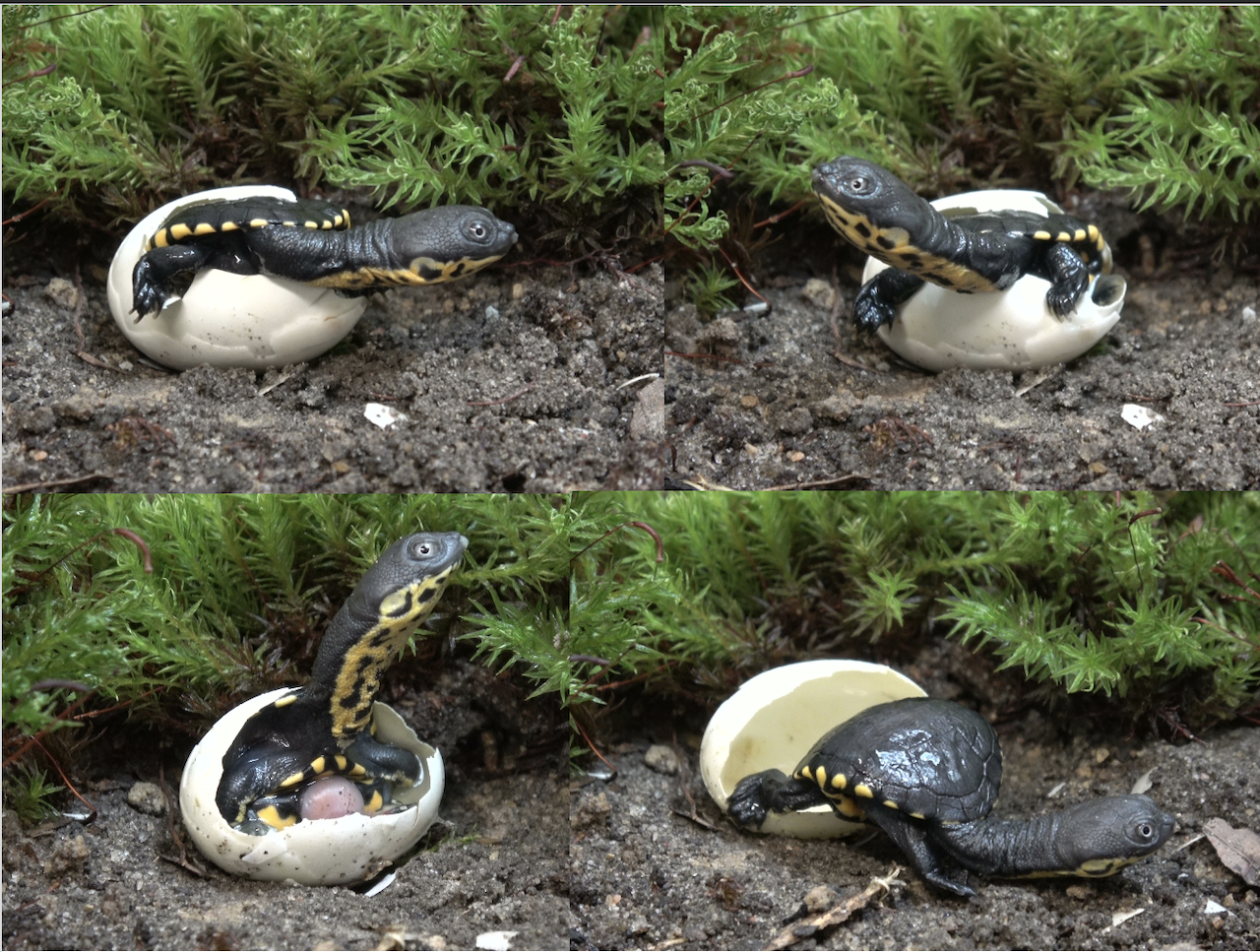
The Turtle Survival Center operates as a response to that arithmetic. It maintains genetically valuable “founder” animals, breeds species that have disappeared from their native landscapes, and trains specialists who may be called on when authorities seize trafficked turtles in large numbers. In those moments, survival depends on practical knowledge: water chemistry, temperature control, disease management, and quarantine protocols refined through experience.
The center also hosts an intensive training program known as Turtle School, which draws participants from zoos, veterinary clinics, and volunteer rescue networks. When turtles are confiscated in Madagascar, Mexico, California, or Cambodia, there must be people ready to keep them alive. The informal global network that has emerged around turtle conservation is one of the field’s strengths.
None of this is a substitute for protecting turtles in the wild. Captive assurance colonies exist because natural systems have failed to shield species from human pressure. Reintroductions remain the goal, but they depend on intact habitat and local enforcement that is often missing.
Turtles are poorly equipped for rapid change. Most take decades to reach sexual maturity and produce relatively few young each year. That strategy worked when threats were slow and episodic. It falters in an era of fast roads, global markets, and climate extremes.
The work underway at the Turtle Survival Center offers a narrower kind of optimism. It does not promise that turtles will be saved everywhere. It works to ensure that they are not lost everywhere either.
For species that have survived ice ages and continental drift, the present moment is an unusually difficult test. Whether turtles endure it will depend less on their resilience than on the systems humans build around them. In South Carolina, one such system is already in place, holding the future steady while the rest of the world catches up.
Header image: Dave Collins holds a Yellow-bellied Slider. Photo by Liz Kimbrough.[/caption]
Credits