


- Sitesh Ranjan Deb gave up hunting after a bear attack left him badly injured and cost him an eye.
- He turned the grounds of his home in Sreemangal into a wildlife treatment center that cared for injured, confiscated, and displaced animals.
- His knowledge of animal behavior, learned during years in the forest, helped him capture, treat, and release wildlife ranging from slow lorises and pythons to bears and monkeys.
- He also campaigned against wildlife killing and trafficking and warned that shrinking forests were driving more animals into conflict with people.
The bear came out of the forest with enough force to kill him. It mauled the hunter badly and cost him an eye. He spent three months in a hospital recovering. There, he began asking himself questions that had not troubled him much before. Why was he hunting? Why was he killing?
Hunting had come to him through his family. His father and grandfather were known around Sreemangal, in northeastern Bangladesh, for killing leopards, wild boars, and other animals that threatened people or crops. As a boy, he accompanied his father into the forest. After his father died, he continued hunting. He became a gunsmith and a guide, familiar with animal tracks, forest paths, and the habits of creatures that most people encountered only by accident.
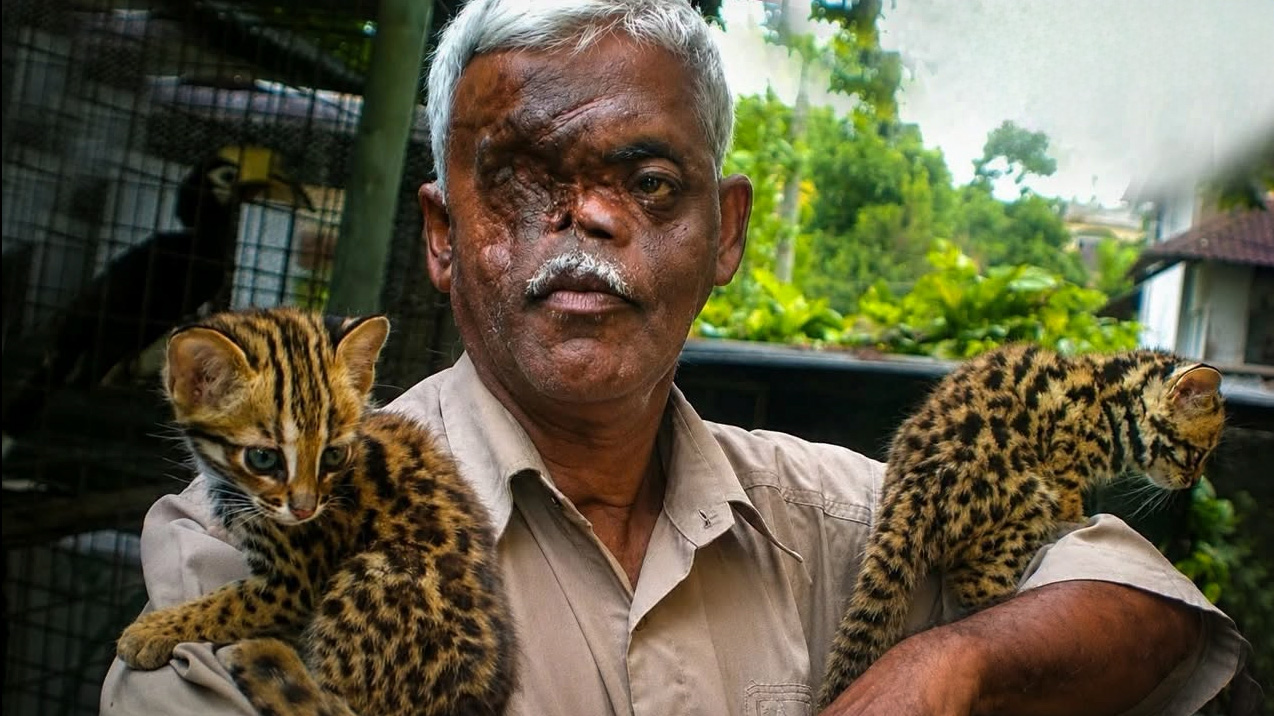
After the bear attack, Sitesh Ranjan Deb, who died on July 14th, gave up hunting. He began capturing injured animals, removing snakes from houses, treating wildlife recovered from traffickers, and returning animals to the forest. The grounds of his home became a treatment center. It eventually developed into the Bangladesh Wildlife Service Foundation, one of the country’s best-known privately established wildlife-rescue institutions.
The center remained closely tied to his household. Its patients occupied bedrooms, courtyards, cages, and improvised treatment spaces. Jungle-cat cubs, pythons, slow lorises, monkeys, birds, and other animals passed through. Those requiring constant attention stayed close to the family. Deb kept photographs of animals he had treated and called them former patients.
Two bears he had raised, Rambo and Jumbo, ate pumpkins. A half-dead infant Phayre’s leaf monkey, recovered from floodwater, was wrapped in warm cloth and fed lukewarm milk a few drops at a time. Some rescued animals needed insects, rodents, snakes, or live fish. Deb found or bought what they required. Fish farming helped cover the center’s expenses.
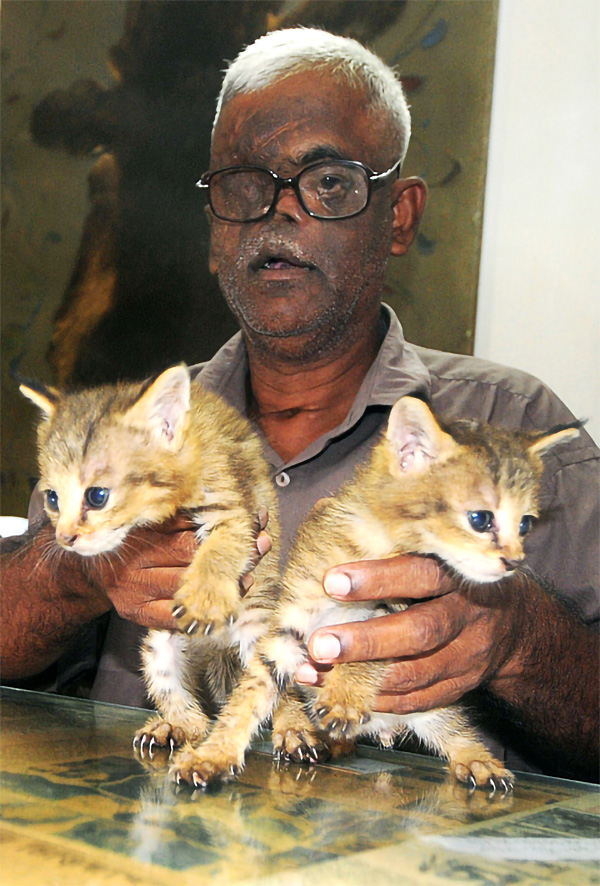
Forest officers, police, local residents, and wildlife groups learned to call him. Animals arrived after being struck, trapped, confiscated, or attacked in villages. Deb treated them, monitored their recovery, and tried to release them through the relevant authorities. A journalist who visited him in 2010 remembered him moving rapidly around the center, tending to one animal and then another.
His years as a hunter had taught him how frightened animals moved, where they hid, and how they reacted when cornered. He could judge how an animal might be caught without causing further injury. The same knowledge that had once helped him pursue wildlife now helped him handle it.
He made many releases public. Officials, politicians, reporters, and villagers were invited to watch a cage being opened. Deb used these occasions to talk about trafficking, forest loss, and the reasons animals increasingly entered settlements. He wanted people to see the animal return to the wild and to understand how it had come into human hands.
Over several decades, he watched the landscape around Sreemangal change. Forests were cut back. Wetlands and scrub disappeared. Tourism and settlement brought more people into areas used by wildlife. Animals entered villages as their habitats contracted. They were then beaten, trapped, or killed for appearing near houses and farms.
Deb had grown up when hunting was licensed and widely accepted. By his later years, wildlife populations had fallen and pressure on their habitat had increased. He came to believe that the skills used to locate and capture animals were now more valuable in rescue work.
He described surviving the bear attack as receiving a second life. Yet he usually discussed conservation through the practical demands of the center: food, cages, transportation, veterinary treatment, release permissions, and money. Rescue required long hours of physical work. Animals arrived bleeding, frightened, and difficult to handle. Some recovered slowly. Others died.
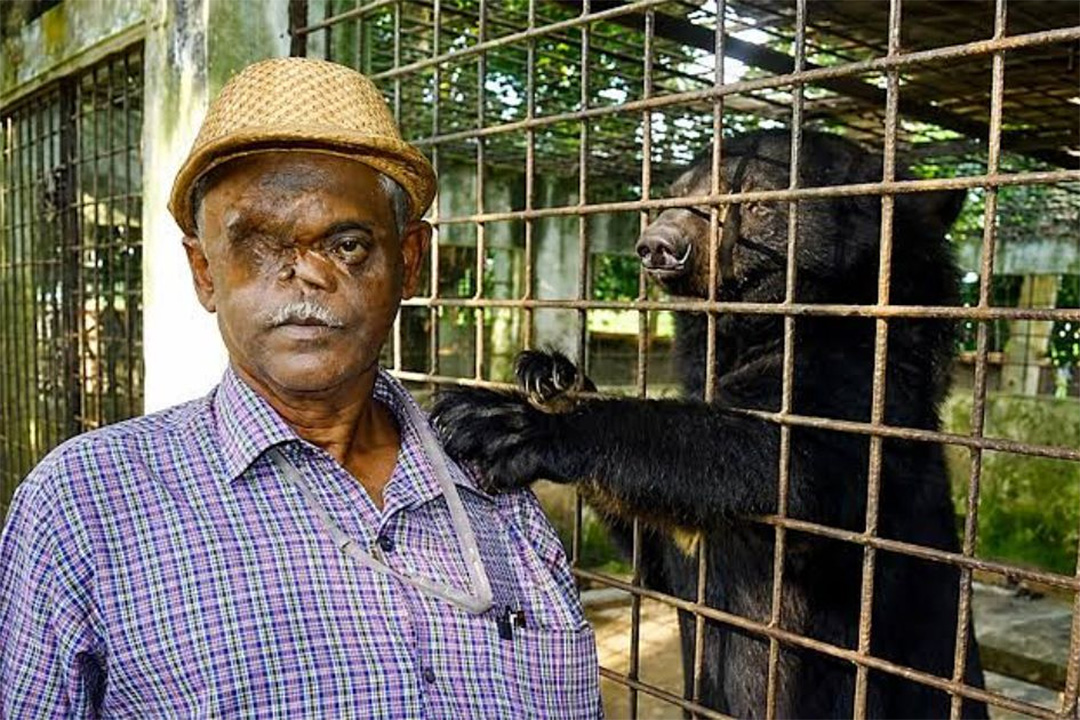
The center also had obvious shortcomings. It depended heavily on Deb’s income, his family’s labor, donations, and inconsistent official support. A visitor once complained publicly about small cages, noise, and deteriorating conditions. The criticism pointed to problems common at poorly funded private rescue centers: animals may remain longer than expected, suitable enclosures are expensive, and some patients cannot safely be released.
Deb worried about what would happen to the center without regular funding. Public agencies sent animals there, but the institution survived largely through personal effort. He argued that it needed steady financial and official support.
He also believed that a lack of resources was no reason to do nothing. His advice was blunt: “You just do it.”
For years, this was how the center operated. When a call came about an injured animal, Deb went to collect it. He found room for it in the house, obtained the food it needed, and paid what he could. Then he worked toward the day when its cage could be carried back to the forest and opened.
Cite this article
Rhett Ayers Butler (2026). Sitesh Ranjan Deb turned a hunter’s knowledge to saving wildlife. Mongabay Conservation news. DOI: https://doi.org/10.66709/news-323630Credits


