- Sweden has approved the EU-backed Nunasvaara South graphite mine by Australia-based battery anode and graphite company Talga Group on land Sámi reindeer herders use for winter grazing.
- The mining company told Mongabay it has designed the mine area to limit the impact on nature and it plans to shut down operations for six months of the year to allow reindeer to graze on their winter grounds.
- But Sámi residents, who depend on herding, told Mongabay they fear their reindeer will be displaced because their winter grazing grounds will be destroyed, and they criticize the company’s environmental safeguards.
- They also said the mine’s inclusion as a strategic project under the EU Critical Raw Minerals Act has allowed it to be fast-tracked without essential environmental safeguards and that the company has made little attempt to meaningfully communicate with affected communities.
Sweden has granted the Australia-based battery anode and graphite company, Talga Group, the necessary permits to move forward with its Nunasvaara South graphite mine near Vittangi in northern Sweden. The move comes after the mine, backed by the E.U., went through a community consultation process and studies to reduce its impacts, and after the Swedish Supreme Court dismissed a series of appeals by Indigenous Sámi people and environmental groups.
But various Indigenous Sámi leaders and activists are picking apart the company’s consultation process, studies and environmental safeguards as insufficient.
According to the Saami Council and community land analysis, company plans to share the mining area with reindeer herders for half the year will leave some grazing lands unusable and disturb habitats and rivers with air pollution. Compensation plans, sources told Mongabay, include schools the community already has and the company made little effort to meaningfully dialogue with communities according to international law. The council is also concerned EU backing of the project as a strategic project has rushed the permitting process.
“There are several groups in the community which will have nowhere to go in the winter,” Fredrik Prost, a Sámi artisan and handicraftsman from Viikusjärvi village, told Mongabay over a video call. “It might be the end for all of them or most of them. They have to stop herding.”
In an email to Mongabay, Talga insisted it has redesigned the mine area to minimize the negative impact on nature. “We have engaged with the Sami villages on an ongoing basis since we started the project in 2011 and we also have dedicated personnel and management systems for this purpose,” the spokesperson said. “While we are not always in agreement about everything, we have a good dialogue and we are confident that when all is said and done, we will be able to prove ourselves as a good and responsible partner.”

The spokesperson also said the project has a relatively small footprint compared with other mines in northern Sweden and it will serve as a crucial supply for the European battery market. The mine will use 149 hectares (368 acres) of land to extract up to 120,000 tons of graphite ore per year and sits among 89,200 hectares (220,418 acres) of winter grazing lands, according to a Mongabay estimate.
The mine is also located within the catchment area of the Torne River, with tributaries that are included in the E.U.-designated Natura 2000 Torne and Kalix river systems, according to the environmental permit. The river system is home to endemic and threatened species and habitats, such as the black salmon (Salmo salar), bullhead (Cottus gobio) and freshwater pearl mussel (Margaritifera margaritifera).
“Graphite mining is usually associated with emissions [sulfur oxide, nitrogen oxide, greenhouse gas], dust pollution and heavy water usage,” Sohini Bhattacharyya, a research scientist at Rice University in the U.S., told Mongabay over email. “The increased demand for graphite in recent times is particularly owing to its indispensability as an anode material in lithium-ion batteries.”
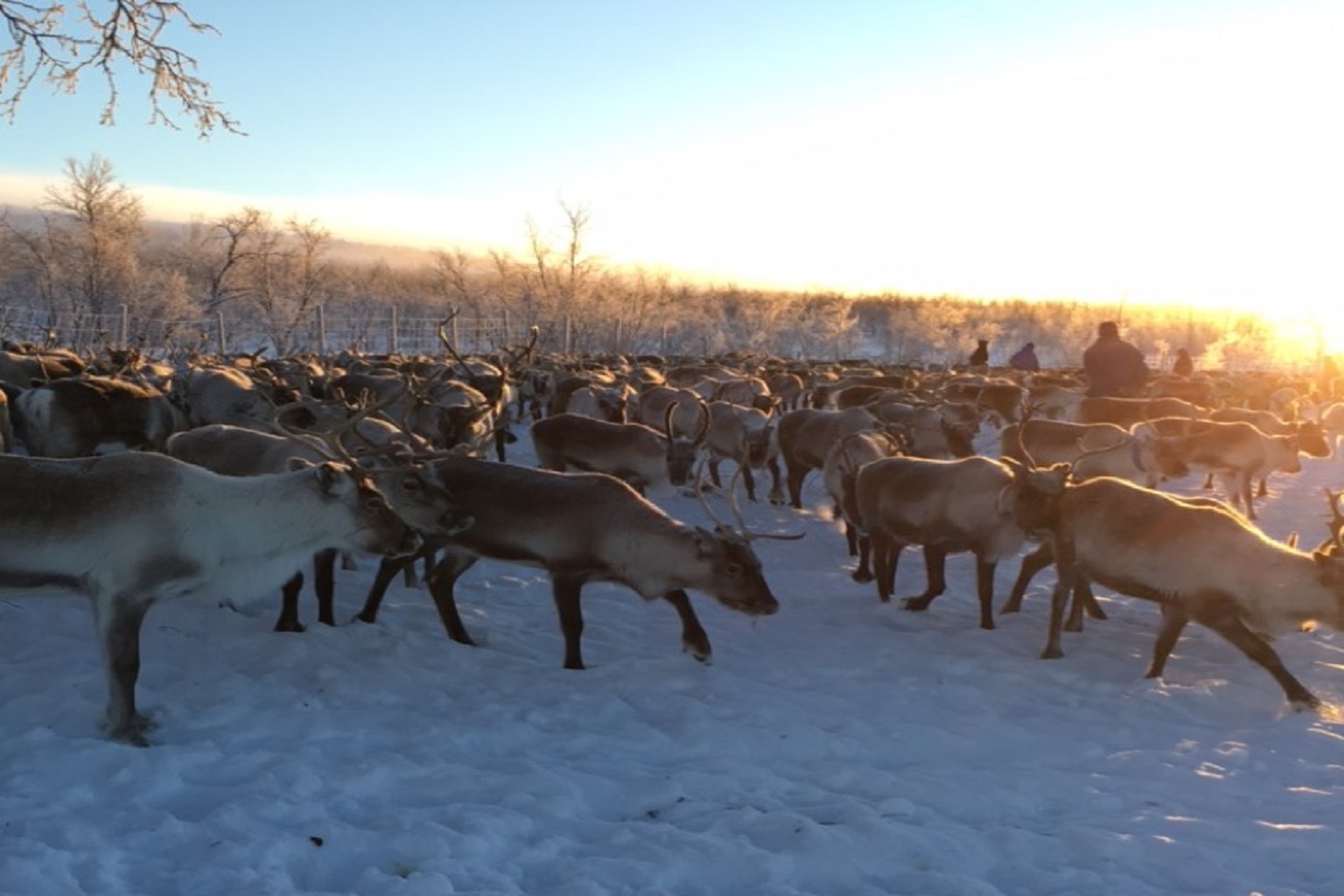
Reindeer (Rangifer tarandus) are nomadic and migrate between mountains and forests, seeking pine heaths, bogs and wetlands throughout the year, depending on the season and the availability of pasture. The semidomesticated species are sacred to Sámi people who depend on them for their livelihoods and cultural preservation. Without the reindeer, many Sámi say they would struggle to survive.
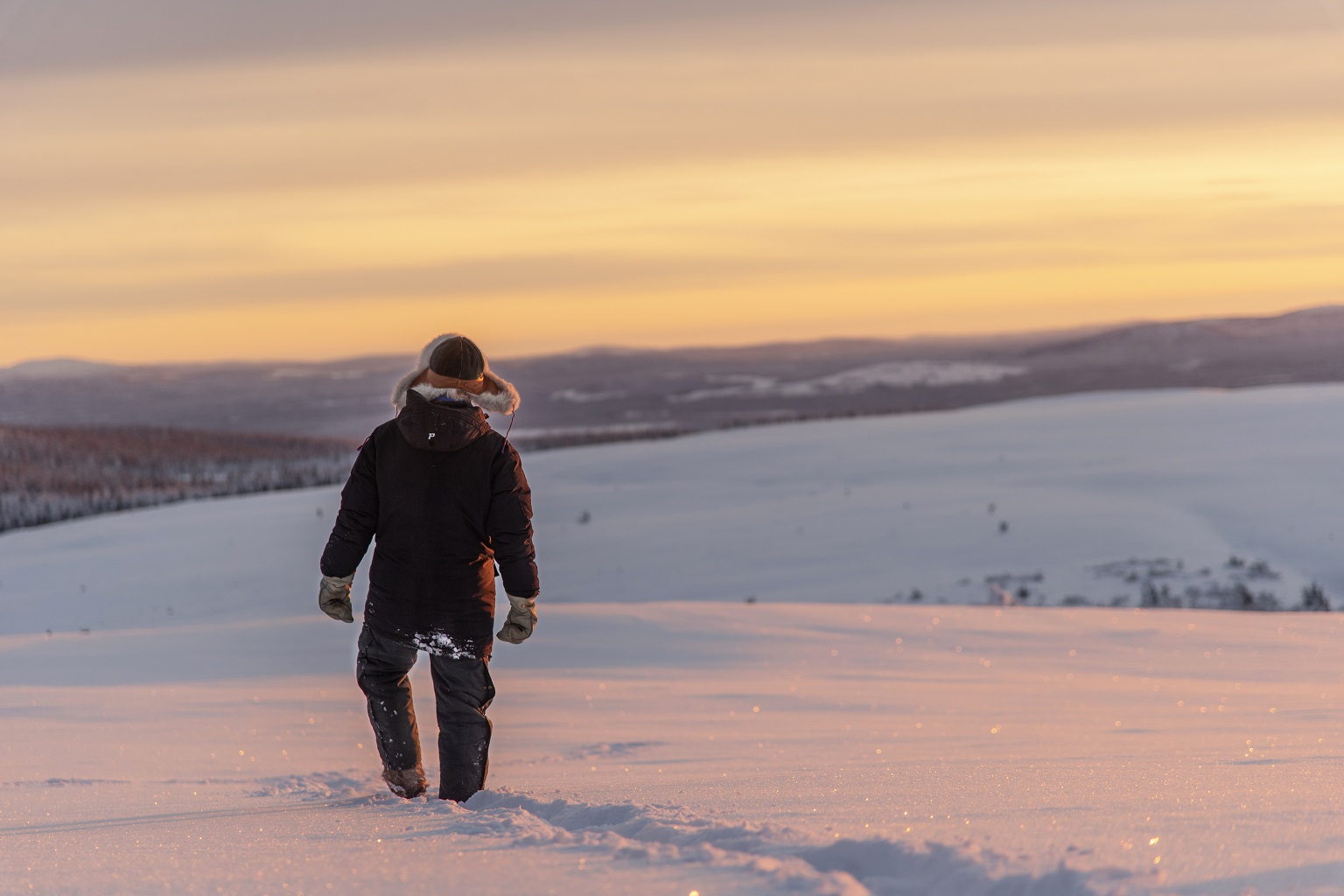
Sámi herders worried about their livelihood
Talga received an environmental permit, which allows the company to develop a mine, and a permit to operate in the EU-designated Natura 2000 protected area, despite the April 2023 impact assessment stating the Natura 2000 permit isn’t required as “no significant impact will arise.” After several appeals by Sámi people and environmental groups, which the Supreme Court dismissed, both permits were officially enforced in late 2024.
A reindeer husbandry analysis, prepared by the Talma community and published in 2019, states that the community opposed the construction of the mine. It concluded that mining and reindeer herding could not coexist in the area and, therefore, it could not identify any measures that could either avoid or remedy the predicted effects.
Nils Johanas Allas, a Sámi reindeer herder from Talma, had just returned home after spending three months in the mountains with his reindeer when he joined a video call with Mongabay. He said the reindeer have now been moved to their winter grazing area, where the company will begin drilling in a few days.
“The mine is going to be on our winter grazing land, and we will not be able to use the land anymore,” he said. “The reindeer will suffer if they cannot get enough food. This is our life. Reindeer are our life. If the reindeer suffer, we suffer.”
The company spokesperson told Mongabay it will refrain from mining during the winter grazing period. But Prost, who has little faith in the company’s promises, said even if they do stop mining for six months, “What’s the point? It’s a wasteland anyway. There’s no reindeer that can graze there.”
Graphite mining produces a lot of dust and black dirt, which covers the operations area, the sources said. They told Mongabay reindeer will not eat in areas that have been covered by this black dirt because the animals have a very strong sense of smell and can smell toxins and dirt.
“Have you been in Kiruna? It’s a lot of mines here and around all the mines; it’s very dirty. It’s black around the mine. You can’t have reindeer there, because the reindeer, when they eat, they use the smell, and if it’s dirt on the food, they will not eat,” Allas said.
He said the company has not spoken to his community, which the mine will directly affect, in about three years. And even then, there was never any meaningful dialogue. Sources said the project was approved without their free, prior and informed consent (FPIC). FPIC, a nonbinding element of international law, is not a legal obligation in Sweden, and the country has not ratified the ILO Convention 169, a binding treaty that establishes this right for Indigenous and tribal peoples.
“At first, when they came to talk to us, they saw the reindeer as a problem for the mine and said, ‘We can buy all your reindeer,’” he explained. “But without reindeer, we have no life.”
The Umeå District Court, the Ministry for Energy, Business and Industry and the European Commission did not respond to Mongabay’s requests for comment by the time of publication.
EU-backing
In June, the European Commission listed the Nunasvaara South project as a strategic critical raw material project under the Critical Raw Materials Act, an initiative to ensure the EU has access to the minerals it labels as critical for the green energy, digital, aerospace and weapons sectors. Talga Group will send the graphite to its Luleå Anode Refinery, where it plans to manufacture lithium-ion batteries.
The Saami Council wrote in a press release that the European Commission’s decision to include Nunasvaara South under its list of strategic projects undermines the rights of the Sámi people. “By fast-tracking these mining projects with an expedited 27-month permitting process, the EU prioritizes resource extraction over our fundamental rights to free, prior and informed consent,” it said. “This decision risks bypassing essential environmental safeguards and further marginalizing Sámi communities.”
The Nussir copper mine by Blue Moon Metals, a company that plans to place between 1 million and 2 million metric tons of mining waste annually at the bottom of Repparfjord, a nationally protected salmon fjord in the Norwegian Arctic that Indigenous Sámi fishers depend on for their livelihoods, is also on the EU’s list.
“I think it is very concerning that the EU as an institution has not seen a problem in getting behind these mining activities, which are on unceded Indigenous lands,” Aslak Holmberg, a member of the Saami Council, told Mongabay over a phone call. “Opposition to these mines has been very clearly articulated by the communities that would be impacted.”
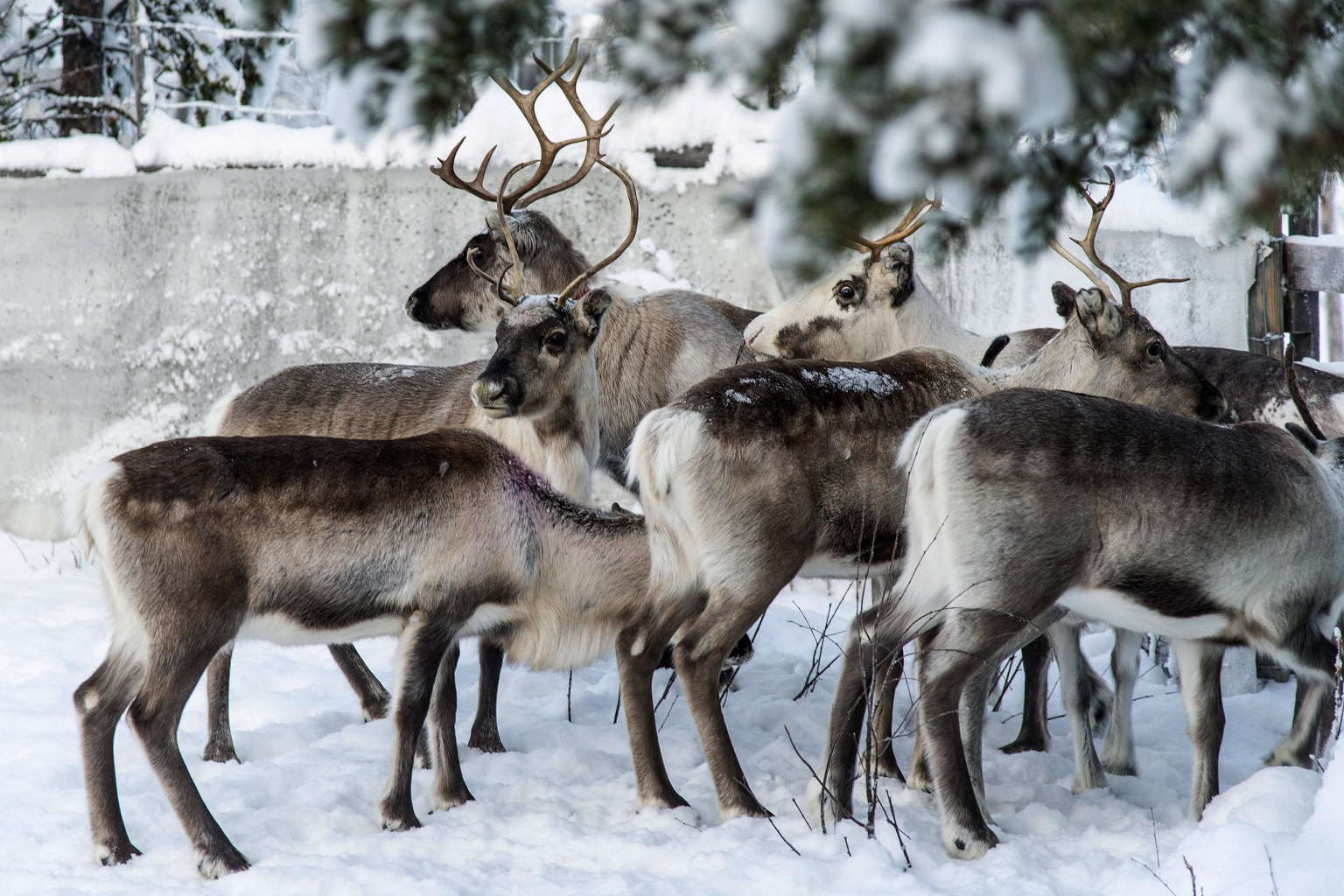
Banner image: Unusual weather patterns in Sweden’s arctic region seem to be jeopardizing the migrating reindeer’s traditional grazing grounds, as rainfall during the winter has led to thick layers of snowy ice that block access to food.
Citations:
Allard, C. (2018). The rationale for the duty to consult Indigenous Peoples: Comparative reflections from Nordic and Canadian legal contexts. Arctic Review on Law and Politics, 9, 25-43. doi:10.23865/arctic.v9.729
Bhattacharyya, S., Roy, S., Lin, X., Campagnol, N., Vlad, A., & Ajayan, P. M. (2025). Graphite: the new critical mineral. Nature Reviews Materials. doi: 10.1038/s41578-025-00848-5
Credits