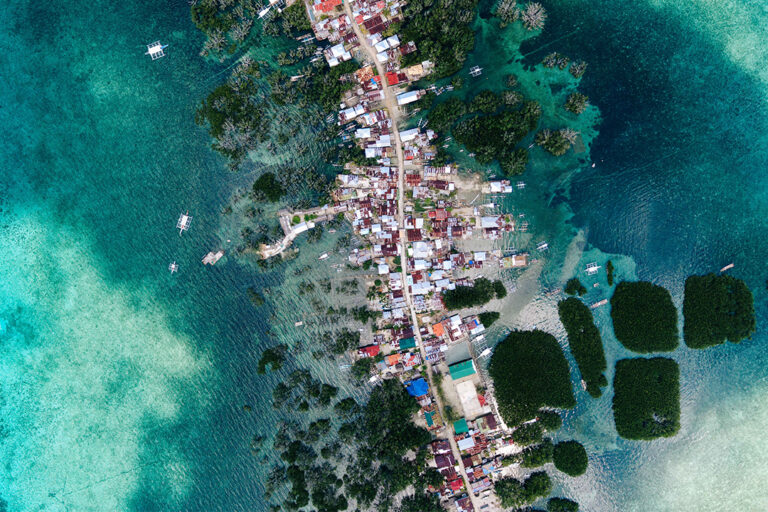
On Bikar Atoll and Jemo Islet of the Marshall Islands, seabirds are returning, forests are regrowing and coral reefs are recovering. And it all stems from the removal of a single invasive pest: rats.
Rats were once so abundant on Bikar and Jemo that they “utterly dominated the lower levels of the forest,” Paul Jacques, project manager with the nonprofit Island Conservation (IC), told Mongabay by email. “It was impossible to walk more than twenty metres [65 feet] without seeing a rat,” he added.
As omnivores, rats feasted on all that the islands had to offer, including coconut crabs, a key food for local communities, as well as the seeds and seedlings of native trees like Pisonia grandis, halting forest regeneration. They also ate the eggs and young of turtles and seabirds, devastating their populations.
In 2024, IC launched a rat eradication campaign on Bikar and Jemo using drones to deliver “conservation bait,” a poison designed specifically for rats.
The results have been dramatic, Jacques said.
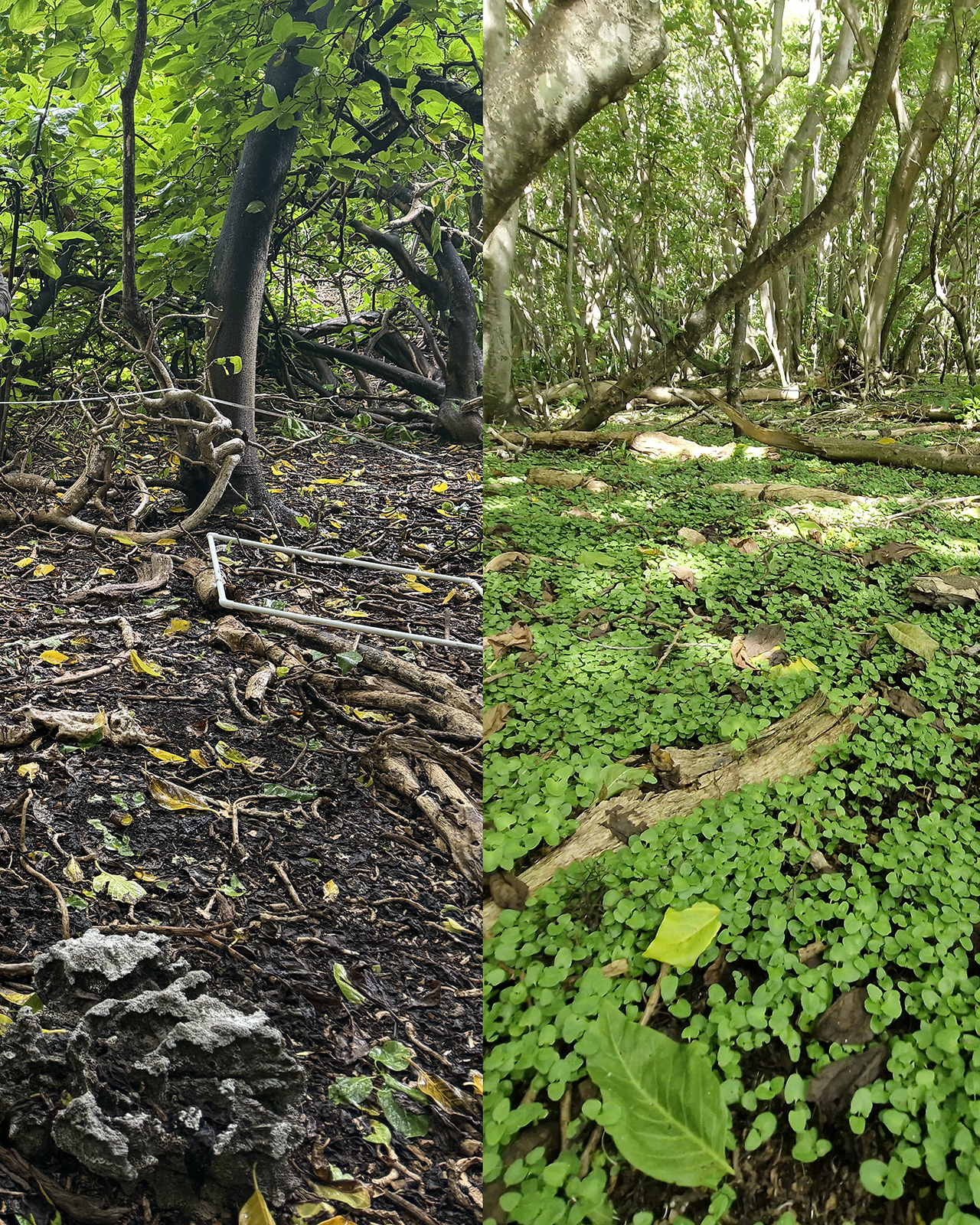
There were no Pisonia grandis seedlings in 2024; now, thousands are sprouting. The trees provide vital nesting habitat for seabirds, including red-footed boobies (Sula sula), white terns (Gygis alba) and black noddies (Anous minutus).
Seabirds are flocking back. In Bikar, for example, conservationists have observed a colony of about 2,000 sooty terns (Onychoprion fuscatus) feeding hundreds of chicks. Previously, there were none. At Jemo, white terns were seen “having a bumper nesting season” with dozens of small chicks, Jacques said.
The increasing seabird population can bring far-reaching benefits to both land and sea. Seabirds bring nitrogen-rich guano from the sea to land, fertilizing the very trees they need for habitat. Some excess nutrients leach back to sea, feeding kelp, sponges and the symbiotic algae that feed coral.
“Studies show that coral reefs around rat-free islands with abundant seabirds grow up to 4 times faster than those around rat-infested islands, and they also recover more quickly from the bleaching events caused by ocean warming,” Jacques told Mongabay.
Studies also show that removing rats and the commensurate increase in bird populations can boost carbon storage on such islands, helping to mitigate climate change. On Palmyra Atoll in the central Pacific, native trees increased by 5,000% in just four years of rat removal.
Local fish populations also benefit. Fish biomass near rat-free, seabird-rich islands can be nearly 50% higher than that near rat-infested islands. The fish in turn graze on mats of algae that could otherwise smother coral. With coral dying off globally amid increased warming and ocean acidification, Jacques said removing rats is key to improving the resiliency of coral atolls.
“Restoring islands is a crucial nature-based solution to the existential threat posed to atolls by rising sea levels and warming oceans.”
Banner image: A white tern chick. Photo courtesy of Bren Ram/ Island Conservation.
Credits